Posted in nature

Liminality

February is a liminal month, it holds the hope of spring alongside the grip of winter. Just when glimmers of warmer weathers arrival brings dull wet conditions, clear nights followed by cold frosty mornings bite you back to reality in the glimmering sunshine. Even my activities have a duality to them. February is the time when I organize my seeds, sew Sweetpeas and chillies as well as check my houseplants; however I want to continue hibernationing. I find myself quite hopeful in this month and overwhelmed at the same time.

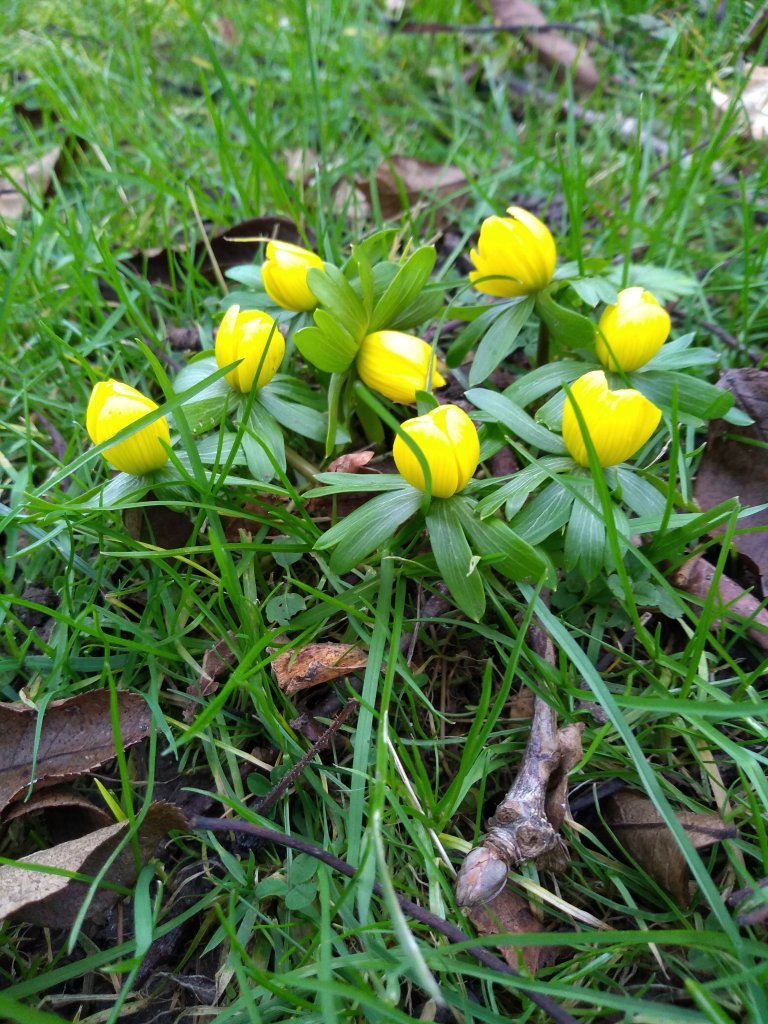
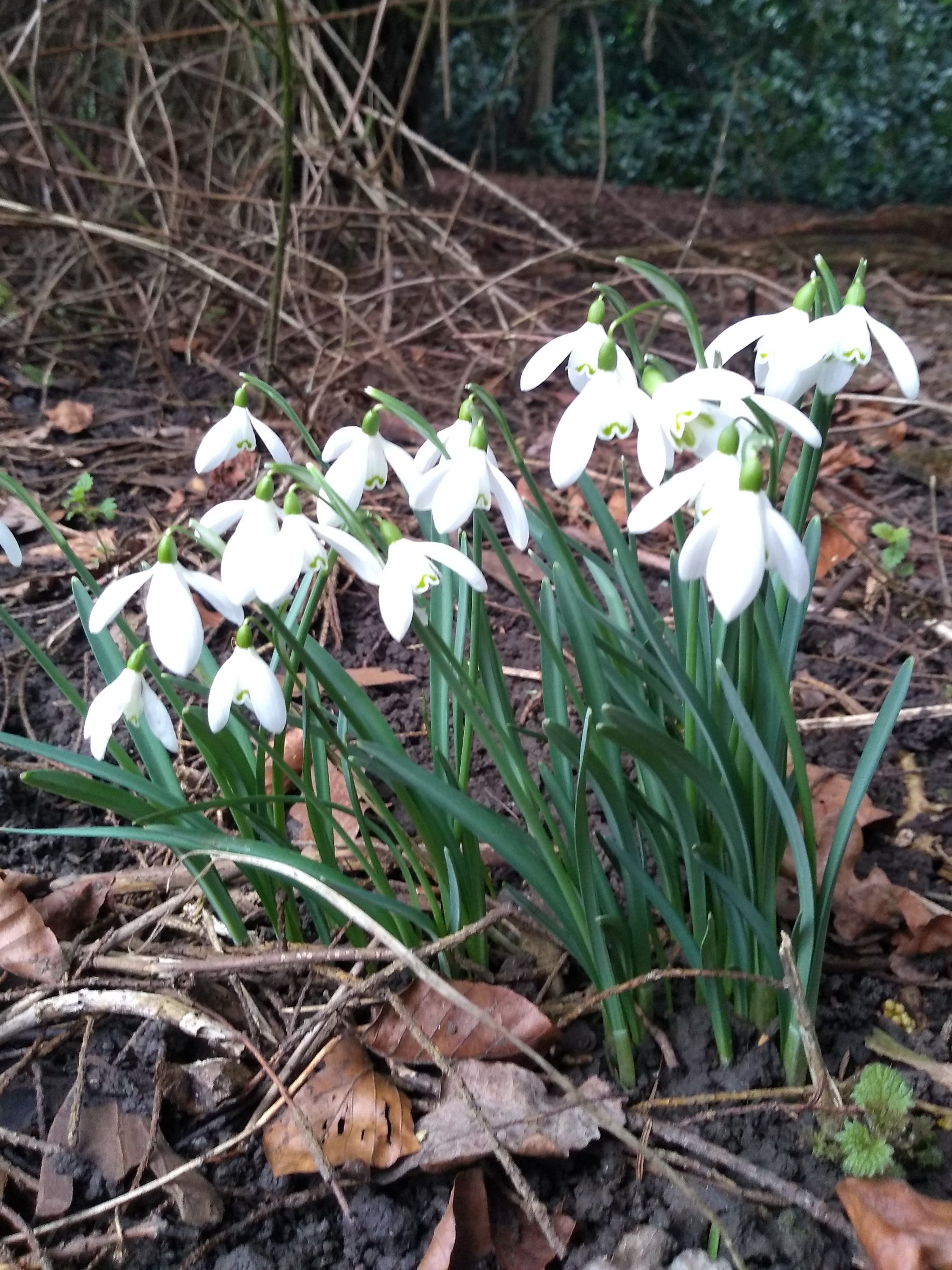
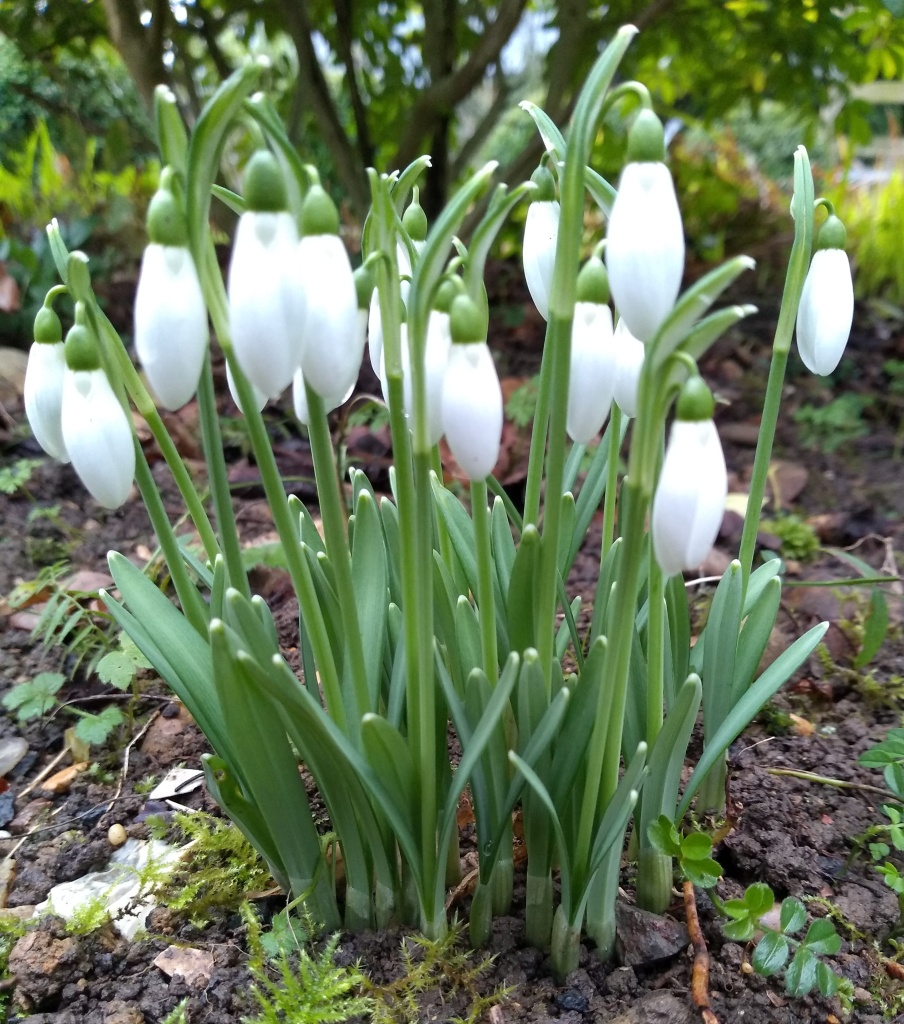
It is always lovely to see the first stirrings of spring, especially the arrival of Snowdrops, (Galanthus) and Winter aconites (Eranthis hyemalis). I often hear foxes  (Vulpes vulpes) calling at night at this time too. It’s no coincidence that the celebration of the lands awakening after winter, Imbolc, is on the 1st February. The biggest indicator that spring is on its way are the birds beginning to pair up; boldly singing to alert prospective mates of their whereabouts whilst also holding onto territory. I was fascinated, one rather cold but not frozen day, to see a Robin (Erithacus rubecula) defend a feeder, chasing off a Tree creeper (Certhia familiaris). I have never seen a Tree creeper venture onto a bird feeder before, nor a Robin actually (but I have previously seen the latter fight other birds for resources).

An image of a Tree creeper can be seen on the RSPB website here;

Other birds that have been particularly vocal in recent weeks have been the Mistle thrush (Turdus viscivorus), Great spotted Woodpecker (Dendrocopos major) and Dunnock (Prunella modularis).

The Mistle thrush is one of the UK’s largest songbirds, even larger than the Blackbird (Turdus
merula) with a body length of 27 cms and wingspan of 45 cms. Although similar in looks to the Song thrush (Turdus philomelos), it’s more grey tonally. While this bird is named due to its love of mistletoe (Phoradendron serotinum), it also eats worms, slugs, insects and berries and is found in parks, gardens, farmland and woodland often singing at the top of tall trees. It is not as commonly seen as the Song thrush as its status is Red under the Birds of Conservation Concern 5: the Red List for Birds. It has been a joy to hear the sound of the Mistle thrush as I worked, an example of which can be heard here.

I have also loved hearing a Great spotted Woodpecker (Dendrocopos major). Interestingly it has sung at the top of the same fir tree as the Mistle thrush, albeit at different moments. I also heard it drumming on the trunk of a dead and Oak (Quercus) tree that had a hole in the side, see below. Perhaps that is where the woodpecker lives.


The Great spotted woodpecker call can be heard on the Woodland trust website. 

Lastly, in a different garden, I was able to witness a Dunnock (Prunella modularis) singing sweetly, an example of this bird’s song, can be found on the RSPB website here .

At the end of January, once again I took part in the annual RSPB Big garden birdwatch; my results this year were-

1 Carrion crow (Corvus corone)
5 Goldfinch (Carduelis carduelis)
2 Wood pigeon (Columba palumbus)
3 Starlings (Sturnus vulgaris)
2 Magpie (Pica pica)
1 Blackbird (Turdus merula)
2 Great tit (Parus major)
1 Red kite (Milvus milvus)

Posted in nature

Many Bird to See

It’s hard to believe that it’s May already, the months are certainly rolling on quickly. I feel like I have only just left winter behind. The weather continues to be mixed with many heavy rain showers combined with thunder passing through. Temperatures have increased though with warmer sunny days reaching 18 degrees celsius, encouraging Tree (Bombus hypnorum) and Buff-tailed bumblebees (Bombus terrestris) to buzz about. I also noticed three Peacock (Aglais io) butterflies dancing around a couple of weeks ago; perhaps two males trying to attract a female? Plus I saw the first Holly blue (Celastrina argiolus) butterfly of the season as well.

Cherry blossom is blooming at the moment and Bluebells (Hyacinthoides non-scripta) are out in force too; it’s the height of their season which is quite a contrast from the beginning of the month when a few were slowly unfurling.

Birds are prominent at the moment as the dawn chorus is reaching its crescendo. Birdsong can be heard clearly throughout the day as I work in gardens. I have seen several House martins (Delichon urbicum) swoop past me. These summer visitors from Africa return to the same nests (made of mud) under ledges such as the eaves of houses or cliffs. I am very privileged to have seen so many lately as they are categorised red under the Birds of Conservation Concern 5: the Red List for Birds (2021) and therefore protected by the Wildlife and Countryside Act 1981. They eat flying insects so living in a rural area no doubt helps. House martins can be distinguished from similar birds using the Wildlife Trusts information here. There is a call to help reverse the decline of House martins; advice on ways to help them can be found on the RSPB website.

Another bird I came across recently which I haven’t observed before is the Rook (Corvus frugilegu). Not as common as some other Corvids their UK conservation status is amber. Similar to Carrion crows (Corvus corone) they are identifiable by their off white beaks. Their diet varies from fruit, nuts and grain to invertebrates and worms. Rooks are sociable birds. Unlike Crows which are seen by themselves or in pairs, Rooks are often seen in groups, just like Jackdaws (Corvus monedula). Infact groups of Rooks and Jackdaws can be seen together; this is how I saw the Rooks, alongside Jackdaws in a busy carpark where humans often dropped scraps of food.

Several Robin (Erithacus rubecula) couples and even one bold male Blackbird (Turdus merula) have come inches away from me to feed and collect food for their young as I work in gardens over the past few weeks. I like to think of their broods back in the nests as I see them fly away with the unearthed bounty towards hedges and trees nearby.

On the 28th March I got to see an amazing spectacle. Two Buzzards (Buteo buteo) were being faught off by a couple of Red kites (Milvus milvus). The thermals aided one Buzzard to appear to briefly hover over some fir trees. I was working in an area with a woodland where Red kites nest. The buzzards (which I often see at the other end of the wood) had ventured over the the Kite territory. Maybe the Red kites were protecting some young or eggs? This I was unable to determin, however the kites were clearly concerned about having the Buzzards near their territory. It was unusual to witness the Red kites attack another bird usually they are the ones being warned away. I frequently see birds attacking kites when they venture too near a nest (even though they don’t predate young but scavange for food). It was lovely to hear the Buzzards calling to one another, an example of which can be heard on the RSPB website along with a picture for identification.

Buzzards are now the most common birds of prey in the UK, and widespread across the land inhabiting woodland, moorland and farmland areas (after a comeback from years of persecution). They are brown in colour and they are 51-57cm in length with a wingspan between 113-128cm. Along with being predators they will also scavenge; their diet consists of birds as well as small mammals and invertebrates. Hardly surprising then that the Red Kites didn’t want them in their territory if they had a brood.

Since then, I have seen other Buzzards in a few areas near roads along with a male Sparrowhawk (Accipiter nisus) by the road side (near to where I had already witnessed a female (see previous post- Daffodils in Snow).

These are not the only large birds that feature prominently in my life at the moment. I have also been keeping an eye on the Peregrine falcon (Falco peregrinus) nest at St Albans abbey. So far Alban and Boudica have three eggs yet to hatch. Incubation usually takes about a month (29-32 days) for each egg, so they are due to hatch beginning of May and fledge by the start of July. This is the pairs second breeding season. Peregrines pair for life and return to the same nest site each year. Alban mostly hunts (birds or rodents) but does incubate the eggs too, enabling boudica to hunt occasionally. The live cam to watch them is here.

Posted in nature

Reawakening

There have been really cold moments this January, with temperatures barely reaching positive numbers here in the UK and some areas experiencing more snow; however nature has started to emerge once again.

On a walk a few weeks ago, I noticed Blackthorn (Prunus spinosa) buds ready to burst open and the tiny red female Hazel (Corylus avellana) flowers open alongside male catkins.

Blackthorn buds
Hazel flower and catkins

Cyclamen and Snowdrops (Galanthus) are also blooming now and even Daffodils (Narcissus) and Crocus are beginning to push through the now defrosted ground.

Last weekend was the annual RSPB’s Big Garden Birdwatch. My results this year were;
3 Wood pigeon (Columba palumbus)
5 Starlings (Sturnus vulgaris)
2 Blackbirds (Turdus merula)- 1 female and 1 male
2 Great tits (Parus major)
1 Magpie (Pica pica)
1 Robin (Erithacus rubecula)
3 Bluetits (Cyanistes caeruleus)
2 House sparrows (Passer domesticus)- 1 male and 1 female
2 Goldfinch (Carduelis carduelis) along with
2 Carrion crows (Corvus corone)

It’s hard to believe it’s now February. As usual during January I slowed and hunkered down, reflecting nature at this time. Yet the wild flowers are beginning to stir and birds pairing up. It isn’t long before spring arrives and I am already starting to plan what I shall grow on the allotment this year.

Posted in nature

Frosts, Fog and Snow Arrived

Cold weather from the north arrived over the past few weeks. Initially hard frosts covered the earth along with foggy mornings; then snow arrived overnight on the 11th December. Due to the below average temperatures it lasted for a week but once the warmer southern weather and rain arrived (last Sunday) the snow disappeared as quickly as it arrived; It was beautiful while it lasted.

Also I finally caught Covid (after avoiding it until now). Thankfully, apart from leaving me with a cough I am much better, however for a while my world was reduced to watching birds from my flat. The Rowan (Sorbus aucuparia) outside has been stripped of all berries, no doubt the snow last week was a factor as birds had less places to forage and migratory birds arrived. A group of Redwings (Turdus iliacus) visited the tree along with Starlings (Sturnus vulgaris) and also a Song thrush (Turdus philomelos). Further information on Redwings can be found via the RSPB website.

A Song thrush visiting a snowy Rowan tree while berries still hung from it.

It was also nice to see my resident Blue tits (Cyanistes caeruleus) and a Robin (Erithacus rubecula) appear too.

I can’t believe it’s the Winter Solstice already. I am looking forward to taking a few weeks off; I will take the time to relax, reflect and look to the year ahead.

Posted in Bookworm review, nature

February Arrives

As another month rolls on, an initial glance may suggest that nothing is changing. Bare trees and quiet gardens with cold weather still nipping at fingertips and noses still persist, while sunny days bring glorious colourful skies.

A stripey sunset.

However, upon closer inspection small changes can be seen. The striking yellow of Winter aconites (Eranthis hyemalis) as well as delicate Early crocuses (Crocus tommasinianus) are beginning to bloom alongside the snowdrops (Galanthus).

The tiny red female flowers of Hazels (Corylus) have opened joining the male catkins. Plus, Blackthorn (Prunus spinosa) buds are ready to burst open (in fact on one walk, I saw a single flower already blooming).

I even witnessed a Red admiral (Vanessa atalanta) visit a flowering Mahonia on one sunny day; clearly making use of the milder weather before sheltering once again.

However the main focus of my attention, over the past few weeks, have been birds.

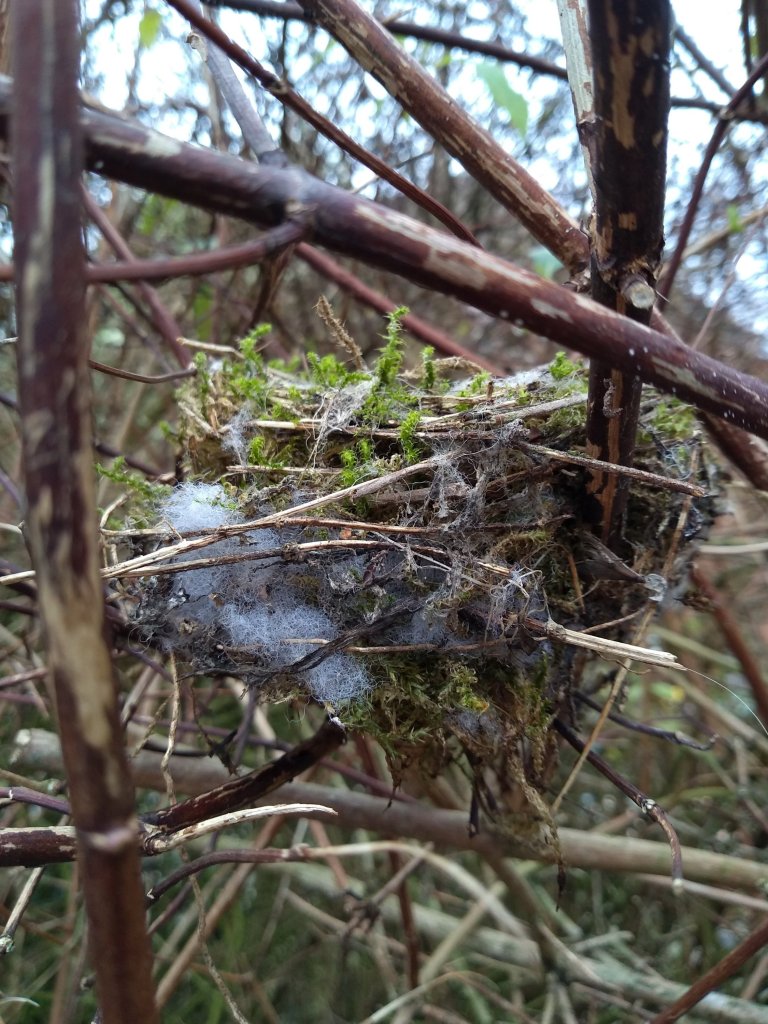
In one garden, I discovered a lovely little nest, from the previous year, in a shrub. Upon investigation I discovered it was either a Goldfinch (Carduelis carduelis) or Greenfinch (Chloris chloris) nest (most likely the former); it can be seen below.

I also saw a Lesser spotted woodpecker (Dendrocopos minor) perched on a tall tree in the distance. I was able to follow the sound of the drumming to watch it move around the trunk before flying off. Given the length of drumming and location of the red on it’s crown I was able to identify it as a male Lesser spotted woodpecker.

Then later in the week, while pruning roses, I watched a Wren (Troglodytes troglodytes) forage around the base of a hedge; I managed to film it briefly before it disappeared fully into the undergrowth.

I am currently reading ‘The Wren: A biography’ by Stephen Moss.

This charity shop find is a fascinating read. Chapters are set out month by month, each concentating on an aspect of a Wrens life. Included alongside facts about the Wren, are their involvement in human history, culture, literature, art and folklore together with beautiful illustrations. The chapter entitled February, for example, focuses on courtship and population. As with other books written by this author, such as ‘The Robin’, this book is definitely worth emmersing yourself in.

Lastly, once again I partook in the Big Garden Birdwatch. My results this year were-
7 Starlings (Sturnus vulgaris),
4 Magpies (Pica pica),
2 Bluetits (Cyanistes caeruleus),
2 Blackbirds (Turdus merula)- a male and female,
2 Wood pigeons (Columba palumbus),
1 Dunnock (Prunella modularis) as well as a Carrion crow (Corvus corone).

Although there weren’t any major surprises in what I saw, it was lovely that the Dunnock made an appearance (usually I only get to hear them). However the Red Kite (Milvus milvus), Ring-necked parakeets (Psittacula krameri), Great tit (Parus major) and Robin (Erithacus rubecula), that I regularly observe, all decided to have a lie in the previous weekend, most only making an appearance once my chosen hour had ended.

Posted in nature

Glimpses of Warmer Weather

Last week the sun shone and temperatures increased; in fact some days were unusually warm for the time of year. However, as gardeners will testify, you shouldn’t get too carried away, colder temperatures and frosts (that nip unprotected tender seedlings) can quickly return. It was lovely to see nature basking in the sunshine though (eager to enjoy the moments of glorious weather just like the rest of us) as winter flowering plants are joined by spring blooms and insects, amphibians and birds become more active.

Last week I noticed the dawn chorus begin in earnest. On Wednesday morning I managed to identify ten birds (by sound) when bird calls were heard alongside singing; those birds were Jackdaws (Corvus monedula), Crow (Corvus corone), Robin (Erithacus rubecula), Pigeon (Columba palumbus), Blue tit (Cyanistes caeruleus), Coal tit (Periparus ater), Great spotted Woodpecker (Dendrocopos major), Ring-necked parakeet (Psittacula krameri), Magpies (Pica pica) and Sparrows (Passer domesticus).

I even heard Skylarks (Alauda arvensis) singing throughout the day on several occasions. As these birds are red on the UK conservation status (and therefore protected by The Wildlife and Countryside Act 1981) it is always wonderful to hear these birds located in different places as I worked nearby.

Robins could be seen in pairs, relinquishing their incredibly territorial need to be the only robin within a garden and allowing a mate to feed alongside them. I also saw frogs and newts becoming active in ponds; it won’t be long before we see frogspawn.

At the beginning of the week, there was a gentle buzz of Honey bees (Apis mellifera) around several shrubs; the intoxicating aroma enticing them to feed on the nectar and collect pollen.

A Honeybee enjoying a Mahonia japonica.
A Sarcococca confusa visted by a Honeybee.

Lots of Buff-tailed bumblebee (Bombus terrestris) queens emerged too, taking advantage of all the crocuses and heathers currently in bloom.

The diminutive flowers of Heathers are perfect for the short tongues of Buff-tailed bumblebees.
A Buff-tailed bumblebee asleep in a crocus, presumably exhausted from a days foraging.

Another shrub that started to put on a show were Camellias. Although these are beautiful, they don’t appear to entice wildlife to them.

Frosts can quickly turn flowers brown, however no damage occurs to the plant as a whole.

Wildflower seedlings started too pop up in gardens, although not every seed requires soil. On a weekend walk I saw vivipary in action. Vivipary is the germination of seeds while they are still inside the seedhead rather than when they fall to the ground.

Vivipary occuring within a Teasel (Dipsacus).


The next tree that has begun to bloom is the blackthorn. Buds and flowers appear before leaves unfurl. This is the opposite to Hawthorn which also blossoms slightly later in the year.

Blackthorn (Prunus spinosa) have hermaphrodite flowers that bloom in March and April. The white blossom is a joyful sight in early spring.

Blackthorn are good trees for for wildlife, the flowers providing nectar and pollen for bees at this time of year. The leaves too are a food source for caterpillars of several moths, including the Magpie (Abraxas grossularia), Swallow-tailed (Ourapteryx sambucaria) and Yellow-tailed (Euproctis similis); plus caterpillars of the Black hairstreak (Satyrium pruni) and Brown hairstreak (Thecla betulae) butterflies also feed on the Blackthorn foliage. These trees also feed birds as they feast on the sloes and any hiding insects throughout autumn and winter. Their dense canopy even make great places to nest amongst.

Blackthorn wood, once associated with wands of witches, is used for walking sticks and tool handles because it is hard wearing.

Traditional remedies using blackthorn bark, blossom and sloes were made to aid digestion and rhumatism as well as cleanse the blood. These days sloes are used to flavour gin as well as make wines and preserves.

The trees are under treat from blossom wilt due fungal diseases, as with other fruit trees. They can also get ‘pocket plum’ if infected by the Taphrina pruni fungus which produces galls and causes the sloes to remain small and shriveled.

While many things were eager to get going last week, not everything wanted to wake up. It was sweet to notice a few Seven-spot ladybird (Coccinella septempunctata) still hiding away.

One ladybird tucked up within some poppy foliage.
Another trying to hide inside the stem of a climber.

I can appreciate their wanting to cosy up for a while longer, it’s often how I feel when my alarm goes off.

Posted in nature

Small Body, Big Voice

Once again, watching birds on my local Rowan tree has become my therapy as I remain inside more.

Last week, along with the usual suspects of Blue tits (Cyanistes caeruleus), Starlings (Sturnus vulgaris), a Robin (Erithacus rubecula) and Blackbird (Turdus merula) was a Song thrush (Turdus philomelos) feasting on some berries as well as a female Chaffinch (Fringilla coelebs) making a pit stop.

Another bird I noticed last week, while working in one garden, was a Wren (Troglodytes troglodytes). I followed a loud bird call towards a hedgerow where I managed to discover this distinctive small bird. It was wonderful being able to connect the call to a Wren; partly because I didn’t recognise the call but mainly because I got to see a Wren (highly unusual in itself, as they often hide themselves away). I wasn’t sure why it was emitting an alarm call, possibly a cat was on the other side of the hedge, hopefully I wasn’t the reason. Almost as soon I saw the Wren it disappeared further into the hedge; my fleeting glimpse ended. The Wren alarm call can be heard on the following link British birdsong.

Posted in nature

Further Easing into Summer

I am constantly amazed by the natural world. Last week I saw something that, as a gardener, I’m surprised I’ve never noticed before. A few White-tailed bumblebees (Bombus lucorum) flew to and from a nest in a wall, via the damp proofing brickwork, of an old house. What I wasn’t expecting to see were the blue pollen baskets.

I had never thought of pollen as anything other than varying shades of yellow. After researching this I found that different coloured pollen often shows up in nests and hives. Charts have been produced enabling beekeepers to identify which flowers their bees have visited by the colour and shade of the pollen found. The most likely candidates in this instance, given the time of year and dark blue shade, is Purple tansy (Phacelia tanacetifolia), see the North Shropshire Bee Keepers Association website.

Phacelia is loved by bees. These photos are from a neighbouring allotment plot.

As well as Phacelia other flowers currently blooming include;

– Hedge woundwort (Stachys sylvatica),

– Pineappleweed (Matricaria discoidea),

A close up view of Pineappleweed. When crushed, the flowers have a refreshing pineapple scent.

– Stinking iris also called Roast-beef plant (Iris foetidissima),

This plant has two colour variations. It thrives in shady areas.

– Scarlet pimpernel (Anagallis arvensis) and

– Pyramidal orchid (Anacamptis pyramidalis)

This orchid is attractive to butterflies and moths.

Birds are particularly noticeable at this time of year as they feed youngsters and defend territories. Last week I was able to listen to Song thrush (Turdus philomelos), Chiff chaff (Phylloscopus collybita), Robin (Erithacus rubecula) Great spotted woodpecker (Dendrocopos major) and Swifts (Apus apus).  I saw the Swifts’ arial display as they soared and dived in the distance while I ate lunch last Wednesday. They were too high and quick for me to identify visually but their vocalisations gave them away. The Swifts’ call can be heard on the RSPB website.

Ladybirds continued to show up last week, but mostly the Seven-spot ladybird (Coccinella septempunctata).

Eventually, the weather turned and rain finally arrived by Friday. It has been much needed and continued throughout the weekend. It was fantastic to watch thunder and lightening from the comfort of my sofa on Saturday afternoon.

Posted in nature

Birdwatching and Blooming Flowers

The annual Big Garden Birdwatch returned last weekend. As usual I took part on a Sunday morning. As with the previous year, there were lots of birds to see in my little patch, namely;

– 2 Blackbirds (Turdus merula)
– 3 Magpies (Pica pica)
– 7 Starlings (Sturnus vulgaris)
– 1 Robin (Erithacus rubecula)
– 1 Dunnock (Prunella modularis)
– 5 Blue Tits (Cyanistes caeruleus)
– 2 Great Tits (Parus major)
– 2 Wood Pigeons (Columba palumbus)
– 1 Carrion Crow (Corvus corone)
– 1 Ring necked parakeet (Psittacula krameri) and
– 3 Common Gulls (Larus canus)

There were a few changes to my 2019 list, the Dunnock, Ring necked parakeet and Common gulls were not visible during surveys before. Although I have noticed these birds in the area many times.

I enjoy purposely sitting for an hour on a Sunday morning observing birds, especially at this time of year. It is a lovely reminder that if you atune yourself to nature you will notice it even in the depths of winter.

One bird I have been hoping to see all winter were Redwings (Turdus iliacus). In previous years there have always been a few visitors to the Rowan (Sorbus) tree. However the berries were quickly eaten this Winter, which may explain why I haven’t seen any. Although perhaps they arrived when I wasn’t around to see them.

It was fantastic to witness more flowers popping up last week too, they were;

– Crocus vernus

-Anemone blanda

-Iris reticulata

– and Primroses (Primula vulgaris)

Spring really does feel as though it is around the corner now we have entered February.

Posted in nature

A London Adventure

Last week saw Snowdrops (Galanthus) in full bloom

and Winter aconites (Eranthis hyemalis) starting to show themselves.

Robins (Erithacus rubecula) continued to follow me around, in the hope of a tasty meal, as I worked. Plus I noticed a Goldfinch (Carduelis cardueli) sing loudly on top of a fir tree, along with a Jay (Garrulus glandarius) retrieve buried acorns from a lawn.

However trees grabbed most of my attention last week. On Tuesday I noticed some lichen and moss on an old apple tree.

I love the different textures shown here.

Saturday was a glorious day, wonderfully warm in the sunshine. I spent the day in London, enjoying a picnic besides the Thames in Island gardens, under a large London plane tree (Platanus × acerifolia)


These trees are a hybrid from the American sycamore (Platanus occidentalis) and Oriental Plane (Platanus orientalis). They were first discovered in the 17th century, although it is unlikely that trees from that century still exist. They are commonly found in cities, especially London, as this tree can tolerate pollution and compacted soil.
London planes have a beautiful silhouette. Their seed clusters (seen below) hang like balls, remain on branches until spring when they are released and become airborne.

Male flowers are yellow while the female ones, also on the same tree, are red.

A close up of the bark on the trunk.

This camouflage patterned trunk occurs as bark flakes, when the tree grows, revealing newer bark beneath; meaning that pollution captured within it is discarded regularly.