Posted in nature

Liminality

February is a liminal month, it holds the hope of spring alongside the grip of winter. Just when glimmers of warmer weathers arrival brings dull wet conditions, clear nights followed by cold frosty mornings bite you back to reality in the glimmering sunshine. Even my activities have a duality to them. February is the time when I organize my seeds, sew Sweetpeas and chillies as well as check my houseplants; however I want to continue hibernationing. I find myself quite hopeful in this month and overwhelmed at the same time.

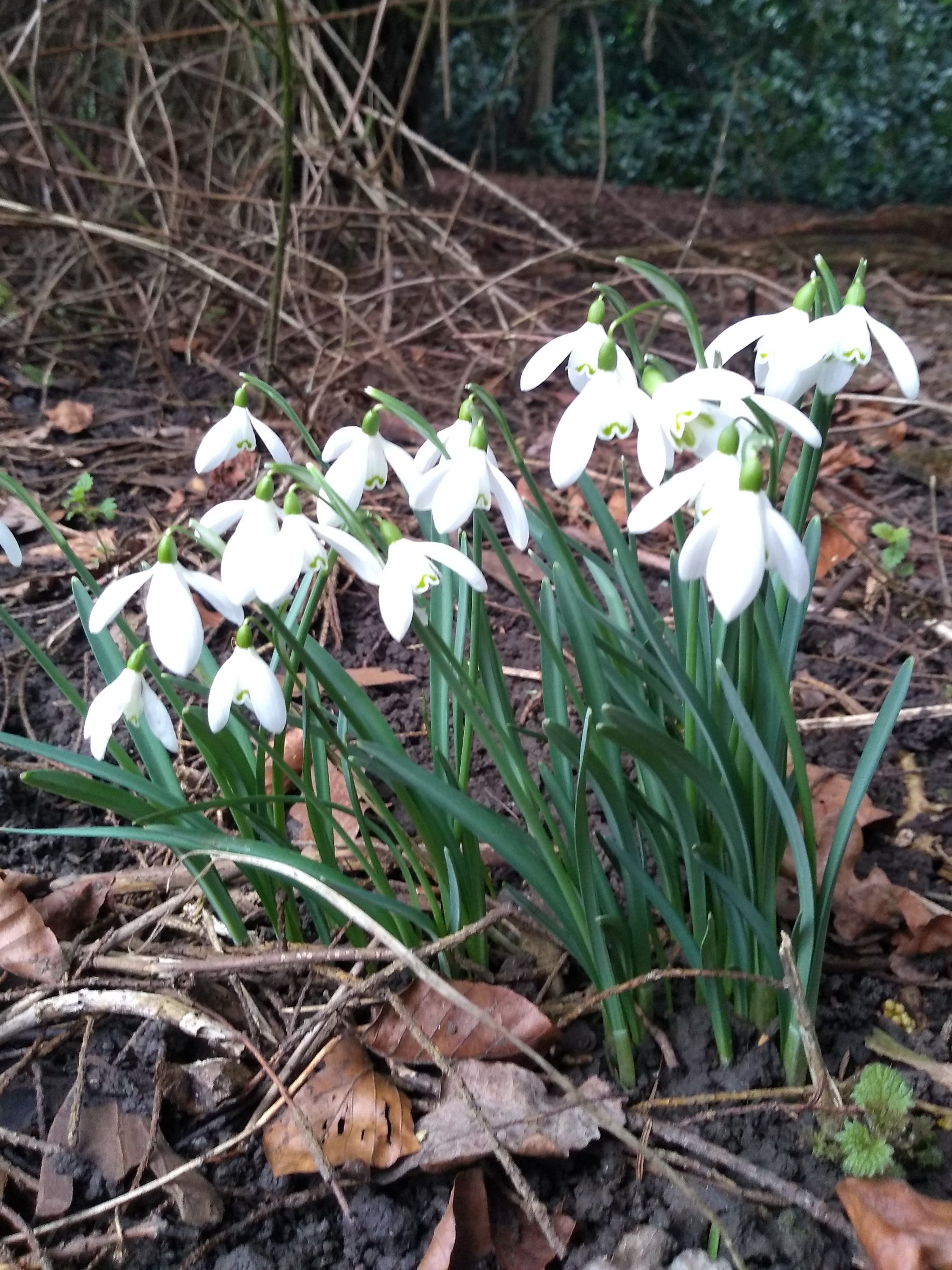
It is always lovely to see the first stirrings of spring, especially the arrival of Snowdrops, (Galanthus) and Winter aconites (Eranthis hyemalis). I often hear foxes  (Vulpes vulpes) calling at night at this time too. It’s no coincidence that the celebration of the lands awakening after winter, Imbolc, is on the 1st February. The biggest indicator that spring is on its way are the birds beginning to pair up; boldly singing to alert prospective mates of their whereabouts whilst also holding onto territory. I was fascinated, one rather cold but not frozen day, to see a Robin (Erithacus rubecula) defend a feeder, chasing off a Tree creeper (Certhia familiaris). I have never seen a Tree creeper venture onto a bird feeder before, nor a Robin actually (but I have previously seen the latter fight other birds for resources).

An image of a Tree creeper can be seen on the RSPB website here;

Other birds that have been particularly vocal in recent weeks have been the Mistle thrush (Turdus viscivorus), Great spotted Woodpecker (Dendrocopos major) and Dunnock (Prunella modularis).

The Mistle thrush is one of the UK’s largest songbirds, even larger than the Blackbird (Turdus
merula) with a body length of 27 cms and wingspan of 45 cms. Although similar in looks to the Song thrush (Turdus philomelos), it’s more grey tonally. While this bird is named due to its love of mistletoe (Phoradendron serotinum), it also eats worms, slugs, insects and berries and is found in parks, gardens, farmland and woodland often singing at the top of tall trees. It is not as commonly seen as the Song thrush as its status is Red under the Birds of Conservation Concern 5: the Red List for Birds. It has been a joy to hear the sound of the Mistle thrush as I worked, an example of which can be heard here.

I have also loved hearing a Great spotted Woodpecker (Dendrocopos major). Interestingly it has sung at the top of the same fir tree as the Mistle thrush, albeit at different moments. I also heard it drumming on the trunk of a dead and Oak (Quercus) tree that had a hole in the side, see below. Perhaps that is where the woodpecker lives.


The Great spotted woodpecker call can be heard on the Woodland trust website. 

Lastly, in a different garden, I was able to witness a Dunnock (Prunella modularis) singing sweetly, an example of this bird’s song, can be found on the RSPB website here .

At the end of January, once again I took part in the annual RSPB Big garden birdwatch; my results this year were-

1 Carrion crow (Corvus corone)
5 Goldfinch (Carduelis carduelis)
2 Wood pigeon (Columba palumbus)
3 Starlings (Sturnus vulgaris)
2 Magpie (Pica pica)
1 Blackbird (Turdus merula)
2 Great tit (Parus major)
1 Red kite (Milvus milvus)

Posted in Bookworm review, nature

February Arrives

As another month rolls on, an initial glance may suggest that nothing is changing. Bare trees and quiet gardens with cold weather still nipping at fingertips and noses still persist, while sunny days bring glorious colourful skies.

A stripey sunset.

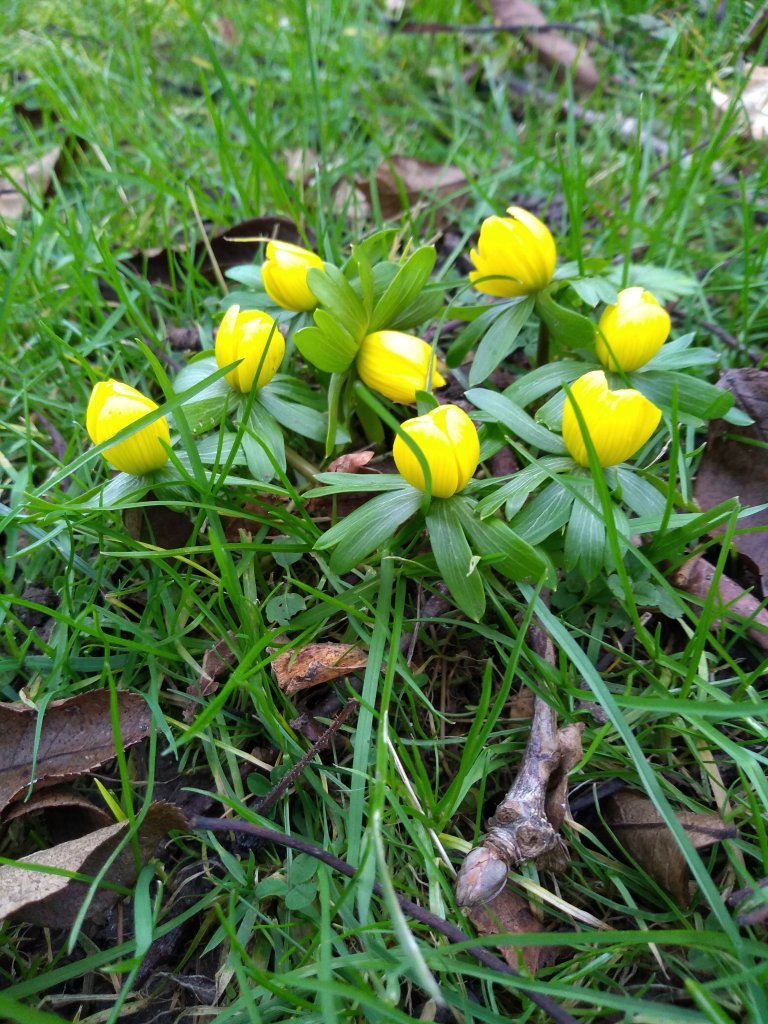
However, upon closer inspection small changes can be seen. The striking yellow of Winter aconites (Eranthis hyemalis) as well as delicate Early crocuses (Crocus tommasinianus) are beginning to bloom alongside the snowdrops (Galanthus).

The tiny red female flowers of Hazels (Corylus) have opened joining the male catkins. Plus, Blackthorn (Prunus spinosa) buds are ready to burst open (in fact on one walk, I saw a single flower already blooming).

I even witnessed a Red admiral (Vanessa atalanta) visit a flowering Mahonia on one sunny day; clearly making use of the milder weather before sheltering once again.

However the main focus of my attention, over the past few weeks, have been birds.

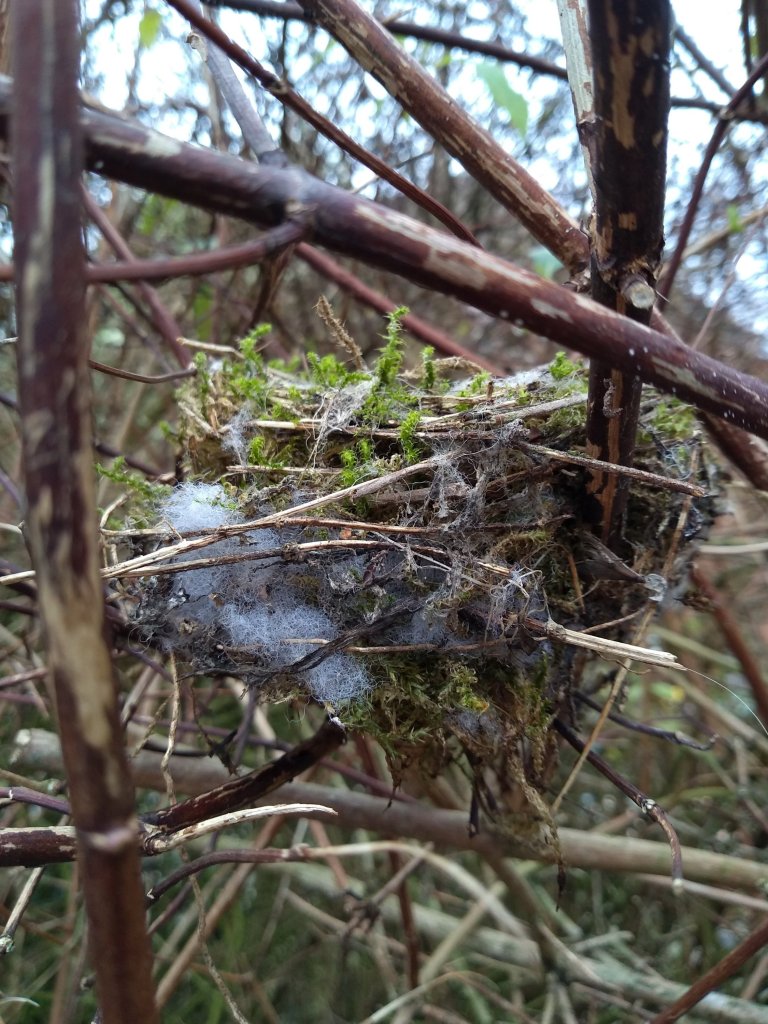
In one garden, I discovered a lovely little nest, from the previous year, in a shrub. Upon investigation I discovered it was either a Goldfinch (Carduelis carduelis) or Greenfinch (Chloris chloris) nest (most likely the former); it can be seen below.

I also saw a Lesser spotted woodpecker (Dendrocopos minor) perched on a tall tree in the distance. I was able to follow the sound of the drumming to watch it move around the trunk before flying off. Given the length of drumming and location of the red on it’s crown I was able to identify it as a male Lesser spotted woodpecker.

Then later in the week, while pruning roses, I watched a Wren (Troglodytes troglodytes) forage around the base of a hedge; I managed to film it briefly before it disappeared fully into the undergrowth.

I am currently reading ‘The Wren: A biography’ by Stephen Moss.

This charity shop find is a fascinating read. Chapters are set out month by month, each concentating on an aspect of a Wrens life. Included alongside facts about the Wren, are their involvement in human history, culture, literature, art and folklore together with beautiful illustrations. The chapter entitled February, for example, focuses on courtship and population. As with other books written by this author, such as ‘The Robin’, this book is definitely worth emmersing yourself in.

Lastly, once again I partook in the Big Garden Birdwatch. My results this year were-
7 Starlings (Sturnus vulgaris),
4 Magpies (Pica pica),
2 Bluetits (Cyanistes caeruleus),
2 Blackbirds (Turdus merula)- a male and female,
2 Wood pigeons (Columba palumbus),
1 Dunnock (Prunella modularis) as well as a Carrion crow (Corvus corone).

Although there weren’t any major surprises in what I saw, it was lovely that the Dunnock made an appearance (usually I only get to hear them). However the Red Kite (Milvus milvus), Ring-necked parakeets (Psittacula krameri), Great tit (Parus major) and Robin (Erithacus rubecula), that I regularly observe, all decided to have a lie in the previous weekend, most only making an appearance once my chosen hour had ended.

Posted in Allotment, nature

Witnessing the Solstice Dawn Arrive

On the eve of the Summer solstice I love to go to sleep early with my curtains open so I can wake up naturally and see the sunrise; it helps me align with the seasons and appreciate nature in a different way. This year I awoke at 3:50am and immediately opened the window so I could enjoy the dawn chorus. Initially the predominant birdsong was that of Blackbirds (Turdus merula), occasionally punctuated by the calls from a Wood pigeon (Columba palumbus), a murder of very vocal Carrion crows (Corvus corone), along with a male Pheasant (Phasianus colchicus) in the distance too. The crescendo came around 4:10am but it wasn’t until finally at 4:42am, when things had quietened, that I heard a few more birds singing. There was a lone Dunnock (Prunella modularis) and then a Greenfinch (Chloris chloris) at about 4:50am; followed much later by Blue tits (Cyanistes caeruleus) which I observed in the Rowan (Sorbus) tree nearby.

It’s interesting to notice an order to the bird song. Blackbirds are the first to be heard, almost like they are an alarm call for the other songbirds; clearly eager to catch the worms.

I also learnt another birdsong last week, heard around midday on Thursday. Hidden somewhere amongst the treeline next to a field, was a Common Whitethroat (Curruca communis); the song can be heard here on the RSPB website.

This warbler visits the UK from Southern Africa (from countries south of the Sahara) between April and October. Once the males arrive on these shores, they will establish territories and build nests for prospective partners (approximately ten to fourteen days before the females arrive).

These birds are about the same size as Great tits (Parus major) and named after the white plumage on their throats. Males can be differentiated from female due to their grey heads. They feed on insects as well as fruit and berries later in the year.

After being concerned that I wasn’t seeing many butterflies and ladybirds the previous week, last week
it finally became warm and sunny enough for them to venture out once again. It was lovely to witness a couple of Small tortoisehell butterflies (Aglais urticae) along with some bumblebees visit a Scabious plant in one garden.

Plus there was a loveliness of Seven-spot ladybirds (Coccinella septempunctata) at the allotment, hunting down on all the aphids which also appeared.

Posted in nature

Birdwatching and Blooming Flowers

The annual Big Garden Birdwatch returned last weekend. As usual I took part on a Sunday morning. As with the previous year, there were lots of birds to see in my little patch, namely;

– 2 Blackbirds (Turdus merula)
– 3 Magpies (Pica pica)
– 7 Starlings (Sturnus vulgaris)
– 1 Robin (Erithacus rubecula)
– 1 Dunnock (Prunella modularis)
– 5 Blue Tits (Cyanistes caeruleus)
– 2 Great Tits (Parus major)
– 2 Wood Pigeons (Columba palumbus)
– 1 Carrion Crow (Corvus corone)
– 1 Ring necked parakeet (Psittacula krameri) and
– 3 Common Gulls (Larus canus)

There were a few changes to my 2019 list, the Dunnock, Ring necked parakeet and Common gulls were not visible during surveys before. Although I have noticed these birds in the area many times.

I enjoy purposely sitting for an hour on a Sunday morning observing birds, especially at this time of year. It is a lovely reminder that if you atune yourself to nature you will notice it even in the depths of winter.

One bird I have been hoping to see all winter were Redwings (Turdus iliacus). In previous years there have always been a few visitors to the Rowan (Sorbus) tree. However the berries were quickly eaten this Winter, which may explain why I haven’t seen any. Although perhaps they arrived when I wasn’t around to see them.

It was fantastic to witness more flowers popping up last week too, they were;

– Crocus vernus

-Anemone blanda

-Iris reticulata

– and Primroses (Primula vulgaris)

Spring really does feel as though it is around the corner now we have entered February.

Posted in nature

Different sort of Easter chicks

After a busy seven days it is lovely to finally relax and reflect upon last weeks sightings.

Throughout the week I have seen Orange-tip (Anthocharis cardamines) and Brimstone butterflies (Gonepteryx rhamni) flying around as well as more Harlequin ladybirds (Harmonia axyridis). I have seen even more 7-spot ladybirds (Coccinella septempunctata), well into double figures. Ladybirds make me smile, a reaction than never diminishes. Something else that made me happy last week was seeing lots of tadpoles continuing to develop; it won’t be long before they become frogs feasting on slugs and snails.

On Thursday I walked home again, discovering yet more wildflowers blooming along the verge. The most prolific was Cow Parsley (Anthriscus sylvestris). Also called Queen Anne’s Lace or Wild Chervil it is pictured below amongst Dandelions (Taraxacum officinale) and White Dead-nettle (Lamium album).

Other flowers I saw along the way were;

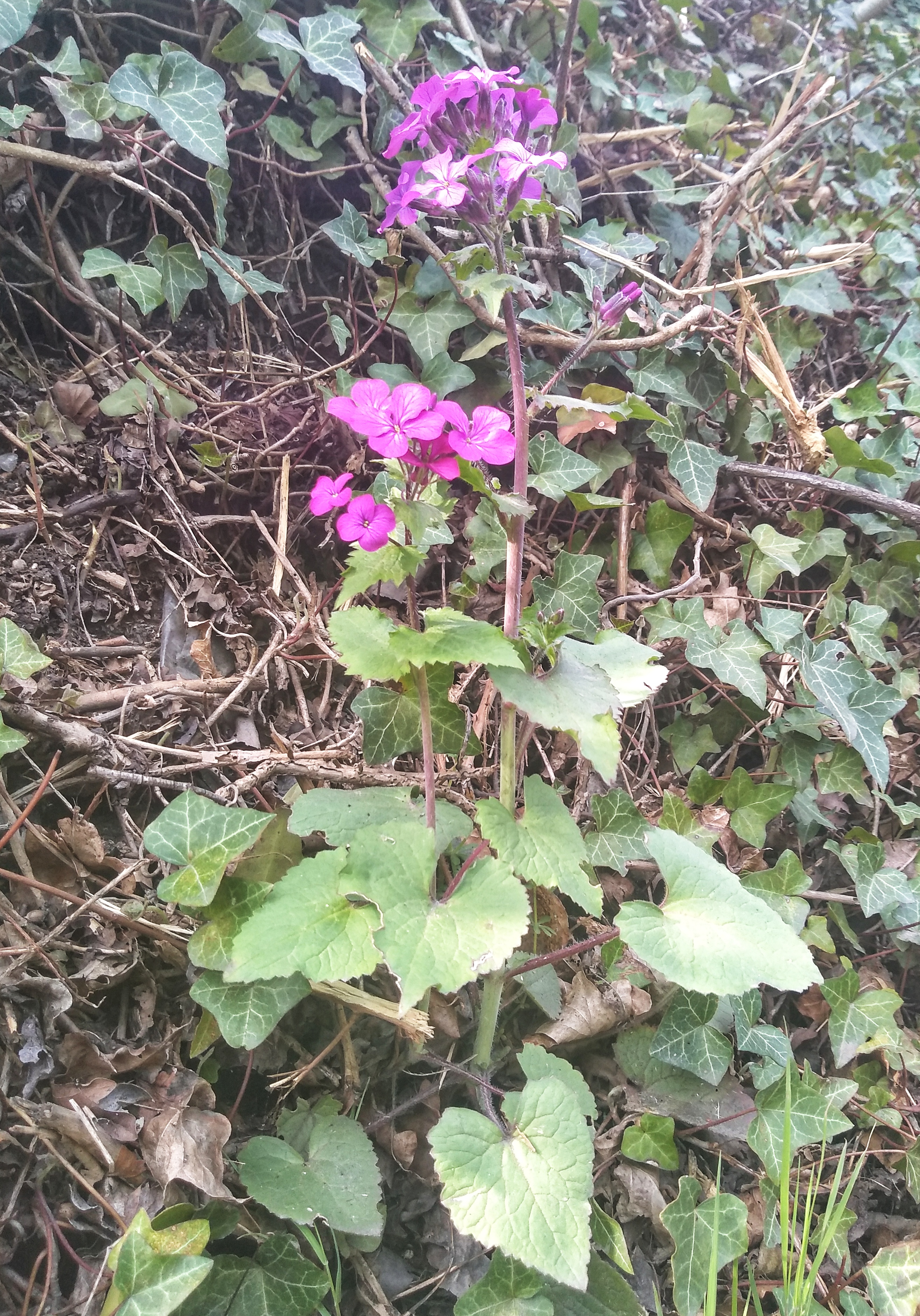
-Honesty/ Moonwort/Money plant (Lunaria annua)

-Herb Robert (Geranium robertianum)

-Dove’s foot cranesbill (Geranium molle)

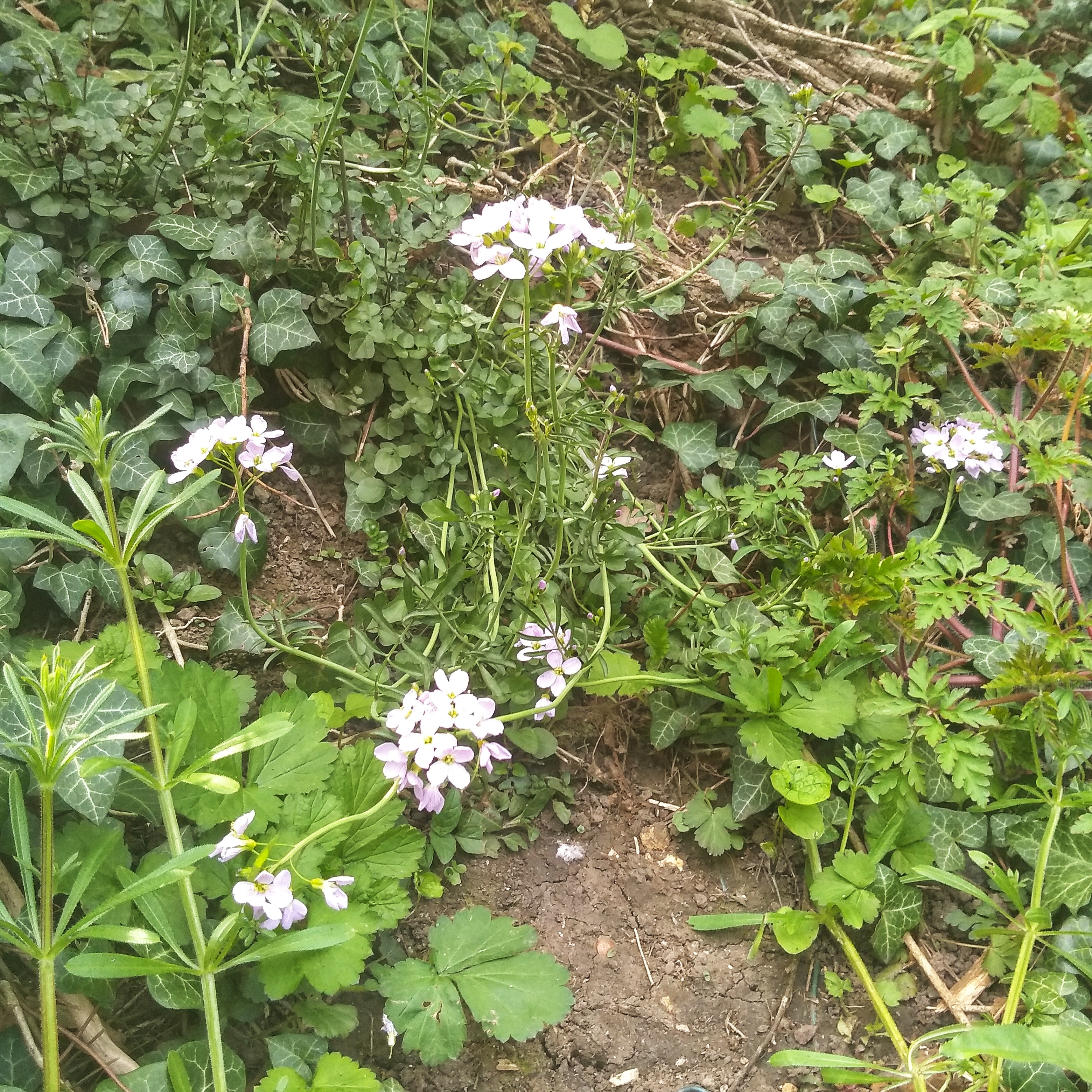
-Cuckooflower/ Lady’-smock (Cardamine pratensis)

-and Hedge garlic/ Garlic mustard (Alliaria petiolata).

I know this plant as Jack-by-the-hedge. I’m not entirely sure why it has this name. I guess it refers to being commonly found near hedgerows and Jack used to be a common name. Apparently the leaves, which have a mild garlic smell and taste, can be eaten in salads and sauces with meat or fish (Garlic mustard- Wildlife Trusts).

This week has been great for learning new bird sounds too. I have discovered a Dunnock (Prunella modularis) and a Green Woodpecker (Picus viridis) nearby without seeing them. Over the last few days I have heard another beautiful sound too. Each year I have Blue tits (Parus caeruleus) nesting under the eaves and it won’t be long before I hear their young. It is a fantastic sign of spring, better than anything the Easter bunny could bring (chocolate eggs are a close second though).

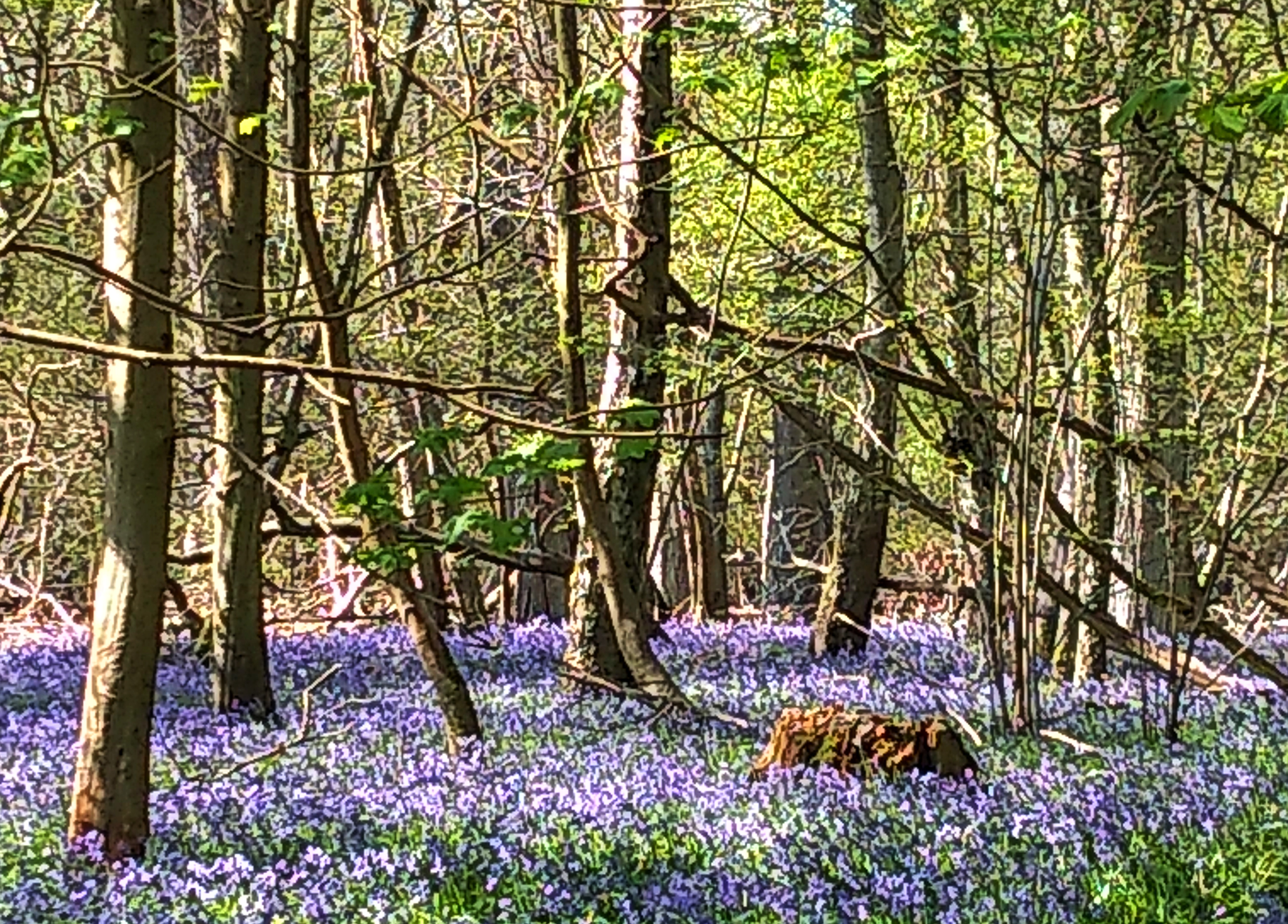
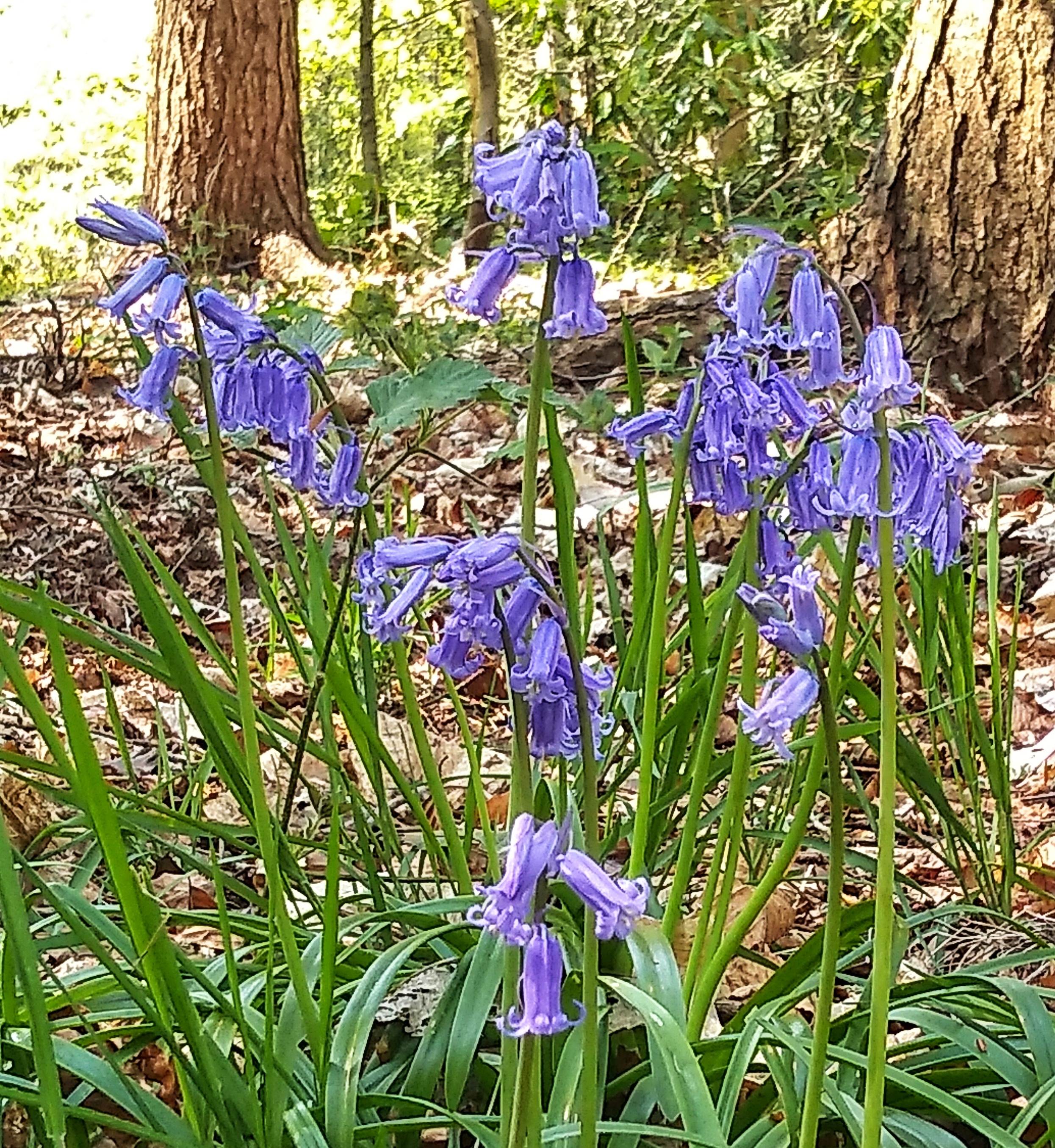
Yesterday I spent time visiting The Vyne (National Trust). The main attraction was the English Bluebells (Hyacinthoides non-scripta) on the woodland walk. The views were enchanting and smell delightful.

Also flowering near the Bluebells were Wood Anemones (Anemone nemorosa).

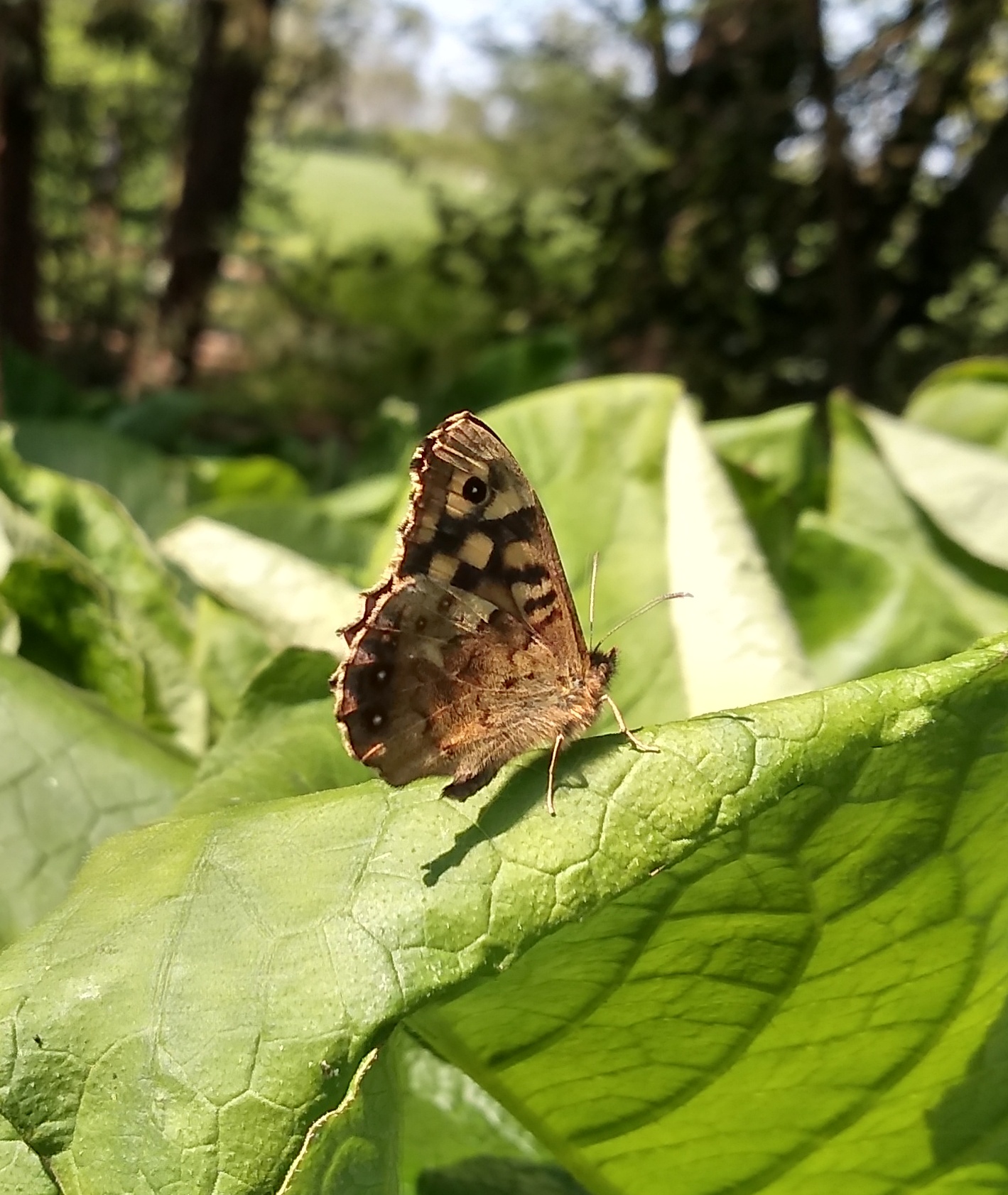
I spotted more Orange-tip butterflies there along with some Speckled wood butterflies (Pararge aegeria) flitting about.

It was a lovely way to spend a sunny Easter Sunday in good company.