Posted in Allotment, nature

Autumns Arrival

Now September has arrived, there is definitely an Autumnal feeling in the air. Similar to March, this month often has a transitional effect on me; especially once the Autumn equinox arrives on the 22nd. The nights are noticeably getting colder and drawing in. Over the past few weeks, some mornings have been misty and there has been a mixture of weather throughout the weeks; humid and stormy one moment and colder and sunny another. Spiders and their webs have become more visible, helped in part by morning dew, plus leaves are beginning to turn on some trees while autumn Cyclamen and crocuses (Colchicum autumnale) are starting to flower. I love September after the intense heat of August I long for a bit of relief.

On the allotment, autumn raspberries (Rubus idaeus) and apples are ready to pick along with pears, damsons (Prunus domestica subsp insititia),

Damsons ready to pick.

elderberries (Sambucus) and blackberries (Rubus). Conkers are falling now too, although the walnut and hazelnut harvests have passed.

Sweet chestnuts are almost ready to fall.

On the last bank holiday of the year (almost a month ago), I visited Minster-on-sea with my partner and his parents. It was an ideal day for walking along the beach searching for treasure, perhaps fossils, sharks teeth, sea glass, pieces of broken pottery and the occasional sea lego.  Washed up along the beach were lots of Slipper limpets (Crepidula fornicata). 

These limpets arrived on these shores from America via ships in the 1800s and thrived in the UK; especially southern England and Wales, where they have become a pest to muscle and oyster beds (competing for food and space). They are edible themselves.

It is usual to see individual empty shells, in fact they are found in huge numbers on beaches in the Solent. The common name of this sea snail refers to the appearance of an individual shell when it is viewed upside down; similarly the latin means small boot. When alive, these gastropod molluscs are rarely found alone (as shown in the photo above). Up to 12 Slipper limpets can be stacked together with the female, the largest and oldest, at the bottom; all the others are male or, in the case of the second from bottom, in the process of transforming into a female. When the one at the bottom dies and falls off, the next one up then becomes female. Further information on these fascinating creatures can be found in an article written by Nick Baker here.

The Slipper limpet isn’t the only snail that I noticed recently. I often get to see land snails but I noticed this beautiful orange coloured Brown lipped snail (Cepaea nemoralis) hanging around after a rainy morning. Snail shells can be very beautiful and I am intrigued by their structure.

Whatever your view on snails it’s hard to look at their shells without admiring the beauty.

I have become more aware of insects lately, mostly when cutting back perennials at work. Although I try to be careful as much as possible, occasionally I disturb a few. I always make a point of replacing or moving them to a safe place. Mostly it is ladybirds but I have also noticed a few other species, such as Common earwigs (Forficula auricularia) and the Rusty tussock (Orgyia antiqua) and Knot grass (Acronicta rumicis) moth caterpillars

Common earwigs feed on organic matter and like to hide away in dark areas of the garden (not in human ears).

Earwigs are useful garden recyclers.

Once eggs are laid, the females diligently clean them and constantly guards the nest only stopping when the young can fend for themselves. While the adults can nip humans and predators, it is only as a warning.


Caterpillars of the medium sized Rusty tussock moth can be seen between May and September.


The males and females of this moth, also called the Vapourer, look different from on another. The males are orangey-brown while the female has a more grey colouration and also lacks any significant wings; therefore it is only the males of this species that are active (mostly flying during the day). The young feed on broadleaf trees and shrubs in gardens and parks, as well as along hedgerows, heaths, moorland and woodland. The adult female and male moths can be seen here .

Knot grass caterpillars (see photo above) can often be found in late summer (and even as late as October in Southern Britain; although these are usually a second generation). Pupa of this moth survive the winter in leaf litter. The grey coloured adults (with a wingspan of 3-3.5 cms) can be seen from May through to September. The caterpillars can be observed on herbaceous or woody plants such as knotgrass (Polygonum aviculare), bramble (Rubus), hawthorn (Crataegus), common sorrel (Rumex acetosa), heather (Calluna), plantains (Plantago), docks (Rumex) and purple loosestrife (Lythrum salicaria). It makes sense therefore that this one was found nibbling on a raspberry leaf on the allotment. The numbers of this moth are declining and while they are still commonly found in gardens, heathland and grassland, it is thought that the  species is becoming vulnerable. I was happy to share my raspberry plant with this caterpillar; raspberries are my favourite fruit but it certainly wouldn’t do any major damage. A photo of the moth can be seen on the UK Moths website.

Sadly the results of the Butterfly count for this year came out last week. They confirmed people’s  suspicion that it hasn’t been good for butterflies and moths (as well as bees). Many butterfly and moth numbers continue to fall, and significantly so from previous years results, due to a variety of factors including the cold wet weather we’ve experienced this year. Further information can be found on the butterfly conservation website here.

Thankfully last Friday, I witnessed a wonderful sight during a warm sunny afternoon. A huge area of ivy in full bloom was covered in so many bees that it stopped me in my tracks. I stood nearby and listened to the wonderful buzzing sound, it was so relaxing. There were so many Ivy bees (Colletes hederae) alongside buff tailed bumblebees (Bombus terrestris) and honey bees (Apis mellifera) visiting the ivy flowers. It was the first time I was able to definitely identify ivy bees which was amazing (see below). 

First recorded in the UK in 2001, Ivy bees are becoming more common. They look very similar to honey bees but can be distinguished by the stripes on their abdomens; the bright yellow stripes are distinctly separate from the black ones than they are with honey bees. Unlike honey bees these are solitary, however there can be lots of nests close to one another and these bees will forage together when opportunity allows. As their name suggests, they feed predominantly on the nectar of ivy flowers and therefore their appearance coincides with this plant flowering (between September and November). I have been searching for a definite sighting of these bees for years and finally I have been rewarded for my patience.

I’ve found more galls, over the last few weeks, this time on the ground surrounding a few Pedunculate Oaks (Quercus robur).

These galls remind me a little of the Facehugger in the Alien film franchise.

They are produced by these trees as a result of the Knopper gall wasp (Andricus quercuscalicis) laying young in the acorns. As with the Oak apple gall wasps (Biorhiza pallida) mentioned in a previous post ‘Relaxing Evening Birdsong’ , they are not detrimental to these majestic trees and don’t appear on many of the fallen acorns.  Interestingly each generation of the wasp will change between sexual and asexual each alternate year.

I also saw my first Goldcrest (Regulus regulus) in a cypress tree near the beginning of the month. Although I could see the silhouette of this tiny bird moving around the top of the tree. I was only able to identify it using the Chirp-o-matic app on my phone, due to its loud singing. The Goldcrests song can be heard on the Woodland trust website here , where you can also see a photo of this diminutive bird. I wish I could have viewed it at closer range, then I would have been able to see the wonderful plumage on the crown (yellow for females and orange for males). The Goldcrest is the smallest bird in Britain, even smaller than the Wren (Troglodytes troglodytes). Hold a 20 pence piece in your hand, and you will have an idea of the birds weight (just 5 grams). They inhabit mixed woodland and conifers along with parks and gardens. The numbers of our resident birds increase with the migration of others from Scandinavian countries during the winter. They feed on insects and other invertebrates. It is always lovely when I am still able to witness new things in nature like this. It gives me a buzz, allowing me to learn through research.

Posted in Bookworm review, nature

February Arrives

As another month rolls on, an initial glance may suggest that nothing is changing. Bare trees and quiet gardens with cold weather still nipping at fingertips and noses still persist, while sunny days bring glorious colourful skies.

A stripey sunset.

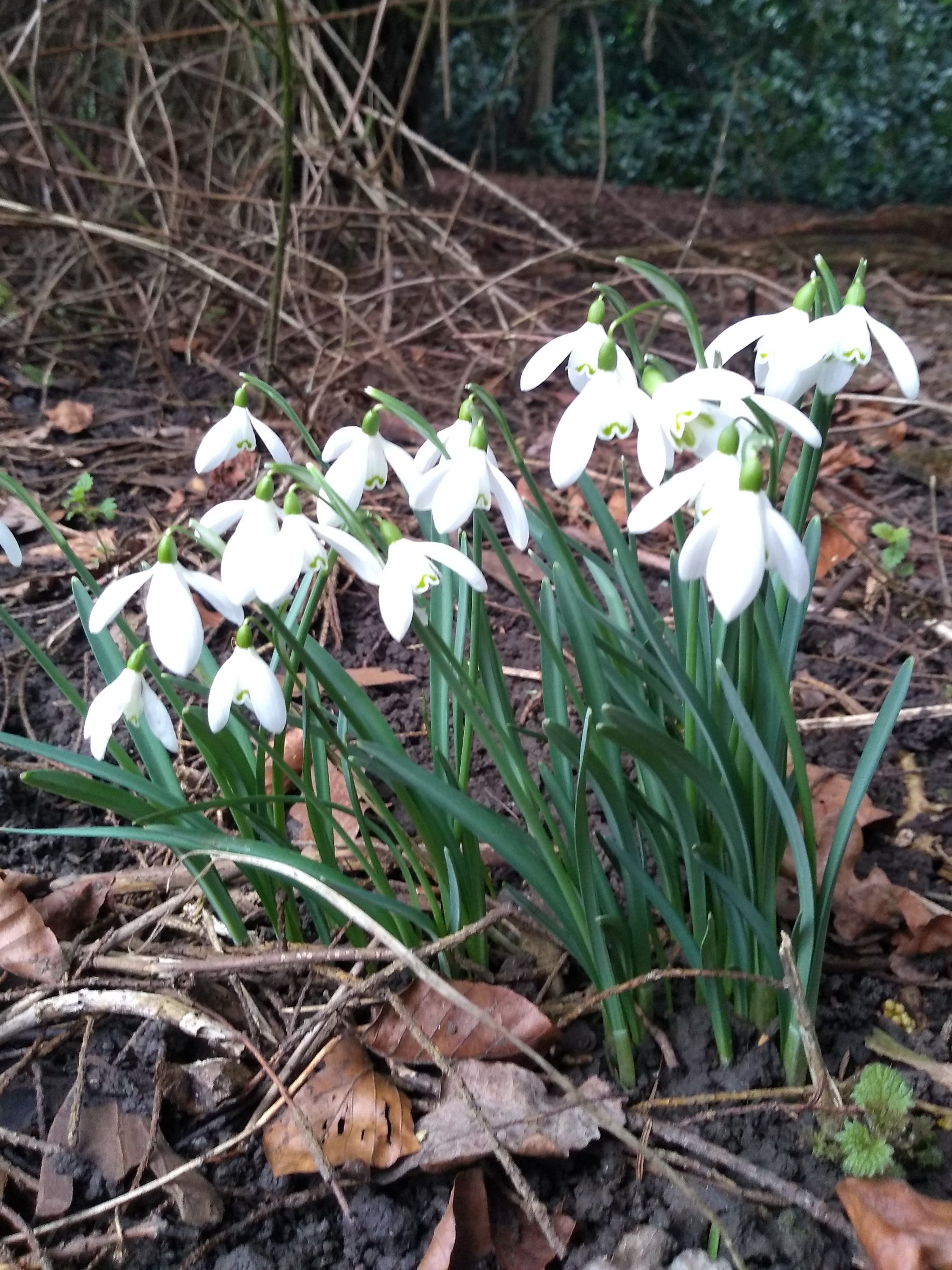
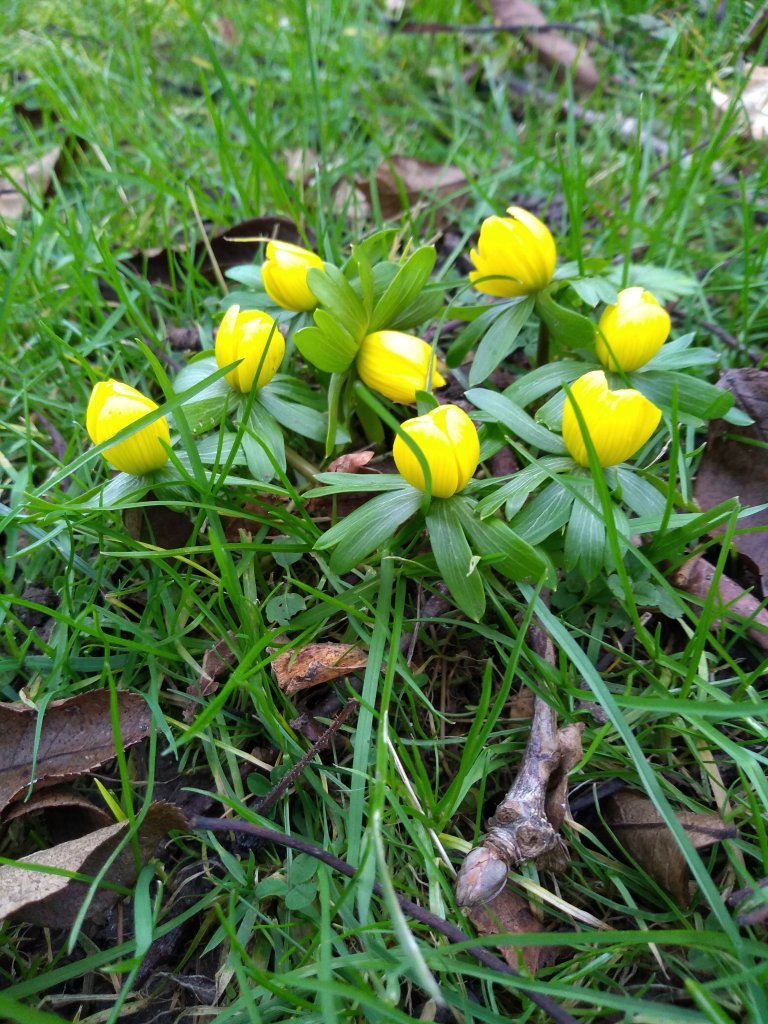
However, upon closer inspection small changes can be seen. The striking yellow of Winter aconites (Eranthis hyemalis) as well as delicate Early crocuses (Crocus tommasinianus) are beginning to bloom alongside the snowdrops (Galanthus).

The tiny red female flowers of Hazels (Corylus) have opened joining the male catkins. Plus, Blackthorn (Prunus spinosa) buds are ready to burst open (in fact on one walk, I saw a single flower already blooming).

I even witnessed a Red admiral (Vanessa atalanta) visit a flowering Mahonia on one sunny day; clearly making use of the milder weather before sheltering once again.

However the main focus of my attention, over the past few weeks, have been birds.

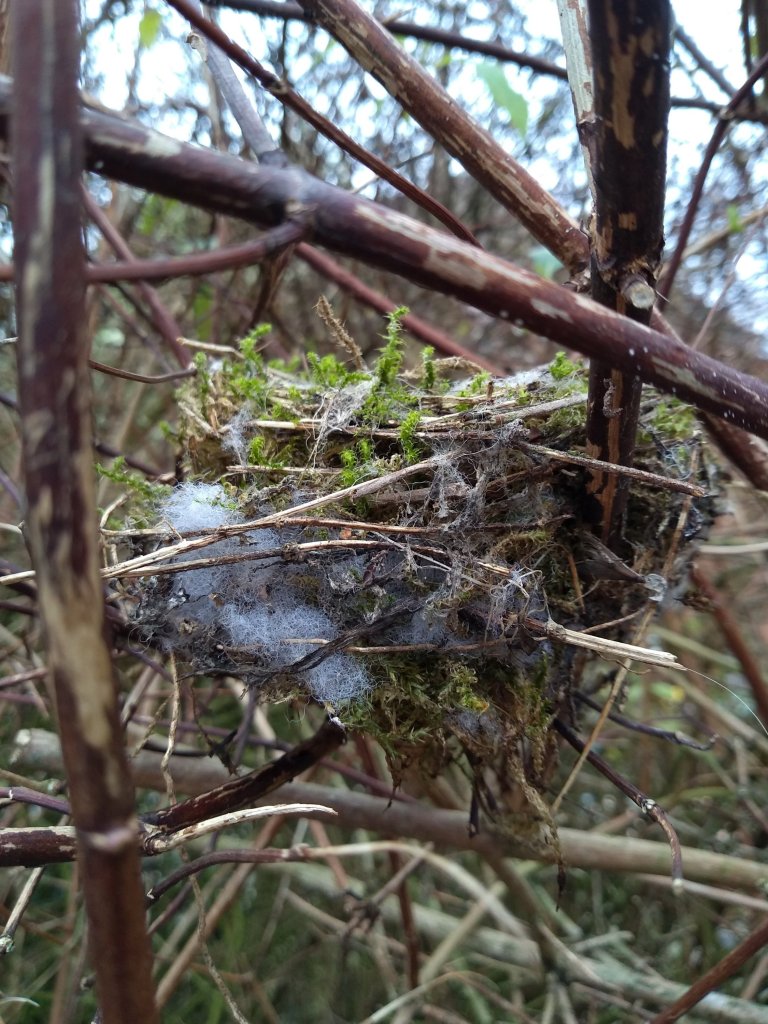
In one garden, I discovered a lovely little nest, from the previous year, in a shrub. Upon investigation I discovered it was either a Goldfinch (Carduelis carduelis) or Greenfinch (Chloris chloris) nest (most likely the former); it can be seen below.

I also saw a Lesser spotted woodpecker (Dendrocopos minor) perched on a tall tree in the distance. I was able to follow the sound of the drumming to watch it move around the trunk before flying off. Given the length of drumming and location of the red on it’s crown I was able to identify it as a male Lesser spotted woodpecker.

Then later in the week, while pruning roses, I watched a Wren (Troglodytes troglodytes) forage around the base of a hedge; I managed to film it briefly before it disappeared fully into the undergrowth.

I am currently reading ‘The Wren: A biography’ by Stephen Moss.

This charity shop find is a fascinating read. Chapters are set out month by month, each concentating on an aspect of a Wrens life. Included alongside facts about the Wren, are their involvement in human history, culture, literature, art and folklore together with beautiful illustrations. The chapter entitled February, for example, focuses on courtship and population. As with other books written by this author, such as ‘The Robin’, this book is definitely worth emmersing yourself in.

Lastly, once again I partook in the Big Garden Birdwatch. My results this year were-
7 Starlings (Sturnus vulgaris),
4 Magpies (Pica pica),
2 Bluetits (Cyanistes caeruleus),
2 Blackbirds (Turdus merula)- a male and female,
2 Wood pigeons (Columba palumbus),
1 Dunnock (Prunella modularis) as well as a Carrion crow (Corvus corone).

Although there weren’t any major surprises in what I saw, it was lovely that the Dunnock made an appearance (usually I only get to hear them). However the Red Kite (Milvus milvus), Ring-necked parakeets (Psittacula krameri), Great tit (Parus major) and Robin (Erithacus rubecula), that I regularly observe, all decided to have a lie in the previous weekend, most only making an appearance once my chosen hour had ended.

Posted in nature

Hints of Summer with Winter Showers; Must be April.

Last week had very mixed weather. Easter Sunday was sunny and warm (a hint that summer isn’t far away) replaced by snow showers and frost on Monday and Tuesday; eventually cold days with occasional sunny spells remained.

I took advantage of the glorious weather last Sunday and went for a walk around my local woodland park. More Brimstone (Gonepteryx rhamni) butterflies were flitting about, along with one Comma (Polygonia c-album) and several Peacock (Aglais io) butterflies too.
Blackthorn was still blossoming in earnest, attracting these butterflies as well as bees and hoverflies.

A Peacock butterfly feeding in the sun.

Pollinators weren’t the only wildlife noticeable; lots of Squirrels (Sciurus carolinensis) were running between and up the surrounding trees while birds were singing.

I even noticed a couple of Blackcaps (Sylvi atricapilla). I’m not sure if these birds are resident to the woodland or migrated from Europe or northern Africa. Since the 1960’s records of these Warblers remaining in the UK all year round exhist and since then numbers have increased. Those not living the UK full time visit from April or May and remain until September or October.

It is the first time I have ever seen Blackcaps (presumably a pair given how they were interacting with each other).
As they were so high up in the tree, completely unaware I was watching from below, I was unable to actually see their caps (males have black caps while females have a chestnut colouration to the top of their head) however I was able to identify them from their bird song. An example of this can be heard on the RSPB website.

This wasn’t the only amazing experience I had with a bird last week. On the following Tuesday I was privileged to witness a Wren (Troglodytes troglodytes) flying around me as I worked, singing as it did so. At one point it landed on a shrub within a few feet from me; I remained as still as I possibly could, watching this amazing spectacle. Usually remaining near cover Wrens are usually heard but not seen so this was lovely to see; plus I managed to obtain footage.

Posted in nature

Small Body, Big Voice

Once again, watching birds on my local Rowan tree has become my therapy as I remain inside more.

Last week, along with the usual suspects of Blue tits (Cyanistes caeruleus), Starlings (Sturnus vulgaris), a Robin (Erithacus rubecula) and Blackbird (Turdus merula) was a Song thrush (Turdus philomelos) feasting on some berries as well as a female Chaffinch (Fringilla coelebs) making a pit stop.

Another bird I noticed last week, while working in one garden, was a Wren (Troglodytes troglodytes). I followed a loud bird call towards a hedgerow where I managed to discover this distinctive small bird. It was wonderful being able to connect the call to a Wren; partly because I didn’t recognise the call but mainly because I got to see a Wren (highly unusual in itself, as they often hide themselves away). I wasn’t sure why it was emitting an alarm call, possibly a cat was on the other side of the hedge, hopefully I wasn’t the reason. Almost as soon I saw the Wren it disappeared further into the hedge; my fleeting glimpse ended. The Wren alarm call can be heard on the following link British birdsong.

Posted in nature

The Birds and the Bees

Two creatures were evident last week even though I didn’t actually see them.

Firstly Wrens (Troglodytes troglodytes) sung loudly in different areas, including near my home. It was a joy to hear them throughout the mornings.

These brown, diminutive birds with upturned tails, weigh about 7-10 grams; only Goldcrests (Regulus regulus)
are smaller. Wrens are rarely seen as their nests (made from moss and twigs) are positioned beneath shrubs or in rock crevices. Plus they mostly feed on insects and spiders and therefore remain hidden for a large amount of time. However they make their presence known due to their powerful song which can be heard at some distance. Their distinctive song contains a trill at the end, often discribed as sounding like a machine gun (see RSPB).

Secondly, on Thursday, I discovered that female Leaf-cutter bee(s) had visited one of the gardens I help look after. The evidence was semi-circular shapes cut around the edges of Broad-leaved enchanter’s nightshade (Circaea lutetiana) leaves.

The Broad-leaved enchanter’s nightshade is part of the Willowherb family.

The bits of leaf will have been carried to a nest, chewed and mixed with saliva to form walls to create the cells if the bees nest. Commonly Bee hotels are used by these solitary bees with lots of cells within each piece of bamboo or hole. Each cell contains an egg and pollen so that the larvae has a food source when it hatches. Although they become adults in autumn, the newly formed bees hibernate during winter, emerging in spring when the new generation repeats the process.

The most common Leaf-cutter bee found in gardens is the Patchwork leaf-cutter bee (Megachile centuncularis); for more information see The Bumblebee Conservation Trust.

Common plant leaves used for this purpose by Leaf-cutter bees are those from Roses, Wisteria, honeysuckle, several tree species and Willowherbs. As at least one bee was clearly using these plants for it’s nest, patches of these wild flowers were left at the back of the borders and the client was informed. Thankfully they are a fellow bee lover and happy to allow them to remain. I feel it’s important to point out, that no lasting damage is done to the plants. Therefore if you find such holes cut in your roses, please don’t panic.

I have yet to see a Leaf cutter bee, especially one ‘surfing’ with a leaf. I would love to see one of these bees so I got incredibly excited to see this evidence. Unfortunately my search was in vain but I am one step closer.

Posted in nature

Music to my Ears

While my colleagues listen to their music via headphones I prefer to listen to nature as I work; especially birdsong which I find uplifting. Recently I have started to really tune in and distinguish different songs and calls as I attempt to identify particular birds. By teaching myself I now recognise Great tit (Parus major) song, Coal Tit (Parus ater) song and Tawny Owl (Strix aluco) call. However I still find it difficult to pick out certain sounds which is why last Sunday I went to an ‘Introduction to bird calls and songs’ nature talk and walk at a local park. We were introduced to 12 birds that we would most likely hear during our afternoon stroll. Most were already familiar to me however I did learn the songs of Chiffchaff (Phylloscopus collybita) and Greenfinch (Carduelis chloris).

The birds we ended up hearing (above the wind and sirens) were;
-Woodpigeon (Columba Livia)
-Carion crow (Corvus corone)
-Magpie (Pica pica)
-Wren (Troglodytidae)
-Chiffchaff
-Blackbird (Turdus merula)
-Great Spotted Woodpecker (Dendrocopus major)
-Blackcap warbler (Sylvia atricapilla)
– and Song thrush (Turdus philomelos).

We also saw a (quiet) Jay (Garrulus glandarius) along with a Speckled wood butterfly (Pararge aegeria), Red admiral butterfly (Vanessa atalanta) and some White-tailed bumblebees (Bombus lucorum).

Last week I combined what I learned at this event with my previous knowledge; the birds I was confident I identified correctly were;
-Woodpigeons
-Magpies
-Blackbirds
-Robin (Erithacus rubecula)
-Ring necked parakeets (Psittacula krameri)
-Blue Tits (Parus caeruleus).
-Chiffchaffs
-Mallard (Anas platyrhynchos)
-Red kite (Milvus milvus)
-and House sparrows (Passer domesticus)

On several mornings I also watched the family of Blue tits on the Rowan tree as I ate breakfast. The parents had nested in the eaves around Easter (see Different sort of Easter Chicks) so it was great to discover they had a successfully reared a brood. I counted 6 fledged youngsters return to the tree and feed on insects together.

Blue Tit acrobatics- One of the youngsters feeding itself.

These weren’t the only sightings last week as I also saw;
-another Red Admiral butterfly

-a Cinnabar moth (Tyria jacobaeae)

-some Ivy-leaved toadflax (Cymbalaria muralis)

-Common spotted orchid (Dactylorhiza fuchsii)

-Pineappleweed (Matricaria discoidea)

-As well as a common frog (Rana temporaria)