Posted in Allotment, nature

March Arrives like a Lion

I’ve slowly started to emerge from hibernation now that Imbolc, the half way point between the Winter solstice and Spring equinox, (meaning ‘In the belly of the mother’- referring to the first stirrings of the years new growth) has passed; mirroring the snowdrops, winter aconites and hazel flowers (the first signs of the transition into the next season).

The scents of Daphne, Mahonia and Sarcococca fill the air alongside the arrival of other spring flowers; daffodils, cyclamen, crocus and hellebores. Willow (Salix) catkins are also opening while Blackthorn (Prunus spinosa) blossoms fill the roadsides with glorious white clouds.

Although it has still been too early for most allotment activities, the rhubarb has been emerging on the plot for the last month. I still haven’t cut back perennials as I want to allow cover for beneficial insects such as sheltering ladybirds (Coccinellidae) until the weather makes their survival easier. Instead February is mainly a month for planning the forthcoming years growing (thinking about chitting potatoes and planning seed sowing). One job I have begun however is the indoor Sweet pea and Chilli seed sowing. This small step gives me hope that I will soon be able to sow other seeds soon.

Although I am beginning to think ahead, I am still fondly holding on to snuggly sofa moments such as reading and partaking in arts and crafts, especially on wet days.

Through the winter I still immersed myself in nature. In January I pruned my apple tree on the allotment, blessing and giving thanks through Wassailing. Although symbolic, it was a nice way to feel deeply connected to the plot. I am grateful to be a guardian over it and receive the abundance of fruit, veg and flowers in return.

I saw quite a few foxes (Vulpes vulpes) over the winter too, including one on the allotment. It was such a beautiful moment to watch it foraging under trees.

Once again, I took part in the RSPB Big Garden Bird Watch in January. The list of birds I saw this time were;
4 Long-tailed tits (Aegithalos caudatus)
5 Starlings (Sturnus vulgaris)
1 Blackbird (Turdus merula)
3 Wood pigeons (Columba palumbus)
5 Sparrows (Passer domesticus)
2 Blue tits (Cyanistes caeruleus)
1 Greenfinch (Chloris chloris)
1 Great tit (Parus major)
6 Magpies (Pica pica)
1 Gull (Larinae) and
1 Red kite (Milvus milvus)

There is a small group of Ring-necked Parakeet (Psittacula krameri) that visit a nearby tree of late but frustratingly they didn’t show up during the observation hour.

During February, bird song continued to fill the skies, growing in frequency and volume. Also occasionally insects have boldly buzzed and fluttered about on the odd sunny days. Butterflies I noticed were a Brimstone (Gonepteryx rhamni) and Peacock (Aglais io); the latter I saved from an abandoned spider web.
I have also seen bees visiting mahonia, crocuses and hellebores, especially queen bumblebees.

Last week, I was excited to find some Jelly ear fungus (Auricularia auricula-judae) for the first time. They were growing on a Buddleia bush. Although this fungus is usually associated with elder (Sambucus) it can also be found on other hard woods like sycamore (Acer pseudoplatanus), ash (Fraxinus) and beech (Fagus) in damp shady conditions. Perhaps the fungus was thriving on the Buddleia, in the garden I visited, because of the recent weather as well as it being planted near a beech hedge.  Interestingly this fungus can continue to grow on dying wood that has been thawed, once frozen; hence it can survive really cold winters. The common name was given to this fungi because of how it looks and also its jelly-like texture.


Worryingly, it has been a very mild winter overall with lots of flooding occurring in Britain; certainly very different from last winter. So far the wet weather is continuing into March; hopefully the month will exit like a lamb and the roaring weather won’t continue too much in spring, as it will have an affect pollinators. We will have to see what the rest of 2024 has in store.

Posted in nature

Daffodils in Snow

Daffodils (Narcissus) began to bloom at the beginning of March, in time for St David’s day, together with Hellebores.  Since then wildflowers including Red dead nettle (Lamium purpureum), Speedwell (Veronica), Celandine (Ficaria verna), Dandelions (Taraxacum), Primroses, Cowslips (Primula veris), Daisies (Bellis perennis), Dog violets (Viola riviniana) and Winter aconites (Eranthis hyemalis) have joined them. It’s lovely to see all the colour developing, taking over from the Snowdrops (Galanthus nivalis) and early flowering Crocuses that have started to whither. I have even noticed Bluebell (Hyacinthoides non-scripta) leaves showing now too, it wont be long before they flower.

Blackthorn (Prunus spinosa), the first trees of the year to bloom are putting on a show, their blossom resembling white clouds lining the roads. Willow (Salix) aren’t far behind, their buds ready to burst open. Even Magnolias, Camelias and Forsythia (in gardens) are beginning to flower as well. The male catkins on Poplar trees are noticeable now too.

Red male Poplar catkins on a twig fallen in the strong winds.

I have also witnessed the first queen Buff-tailed (Bombus terrestris) bumblebees venturing out on the few warmer sunnier days that we have had. Seeking energy sources as the venture out from hibernation. I also noticed a Brimstone (Gonepteryx rhamni) butterfly flutter passed me last week while the previous Friday a Peacock (Aglais io) butterfly flew passed as I worked. It was also lovely to see lots of Smooth newt (Lissotriton vulgaris) in a garden pond last Wednesday. The newts were almost full sized and looked fully developed already.

Although 20th of March was the Spring equinox we experienced a cold northerly blast of weather a few weeks ago. The wintery showers that arrived brought snow. During this transitional time, March weather can be very mixed. Although spring has sprung, winters grasp still holds on; It was strange to see Daffodils poking above snow for a day.

During a few of the snowy days, I witnessed a wonderful sight of a female Sparrowhawk (Accipiter nisus) perched on top of a tree and later in flight as it swooped towards a smaller bird in a more wooded area of town. Presumably the weather had forced it out into the open to search for food. It’s size, together with its dark brown head back, tail and wings together with a pale breast made it clear to identify. Males are a bluey grey colouring with pale breasts and orange highlights. Males are about 25% smaller than the females, the size of a Collared dove (Streptopelia decaocto).

These birds are protected under the Wildlife and Countryside Act 1981 because they are Amber Under the Red List, Birds of Conservation Concern 5: (2021).

Often found in woodlands or open ground nearby, as well as gardens in urban settings, Sparrowhawks are the most commonly seen bird of prey in the UK. They can be seen throughout the year eating smaller birds, rodents and also rabbits when their regular food is scarce. In fact many years ago I witnessed a male Sparrowhawk take down a city pigeon (Columba livia). Although similar in size, and although the feral pigeon was doing its best to escape the Sparrowhawks clutches it didn’t win the fight.

Sparrowhawk breeding will occur between May and the end of July, laying 4-5 eggs.

Although mostly silent, these birds do have a call which can be heard on the RSPB website here.

Posted in nature

Bees in Winter

Honey bees (Apis mellifera) overwinter in hives, huddling round the queen to keep warm, occasionally venturing out on warmer days. Bumblebees (Bombus) on the other hand have an annual lifespan with new queens, having mated during the summer and autumn months, hibernating underground until spring when they can begin a new colony; also sometimes waking up too early on warm days and foraging.

However over the past 10 years, in urban areas of Southern England, a trend has been seen with certain bumblebee species.
Initially Buff-tailed bumblebees (Bombus terrestris), but since then Early bumblebees (Bombus pratorum) and Tree bumblebees (Bombus hypnorum) have begun to nest in winter rather than hibernate. Consequently winter flowering plants such as Mahonia and Winter Heathers (Erica), Winter honeysuckle (Lonicera fragrantissima), Winter aconite (Eranthis hyemalis), Hellebores (Helleborus) and Snowdrops (Galanthus) are garden essentials; enabling these bees to access pollen and nectar during the colder months.

Solitary bees on the other hand will survive throughout winter in burrows or cavities as eggs, with their own supply of nectar and pollen close to hand (as the adults don’t survive winter). These include Mining and Mason bees which emerge early in spring taking advantage of Willow (Salix), Blackthorn (Prunus spinosa) and Hawthorn (Crataegus monogyna) in bloom. Leafcutter and Carder bees emerge later still. The one exception are Furrow bees; like Bumblebees, the female will hibernate during winter and lay eggs in spring.

I have noticed lots of Mahonias blooming over the last few weeks, their bright yellow flowers and perfume is wonderful to experience during dull days. Somehow the colour shines more vividly against grey skies.

Mahonia x media

Another shrub that has been blooming recently is Viburnum farreri, it’s lovely scent wafting through the air too.

Posted in nature

A Splash of Purple

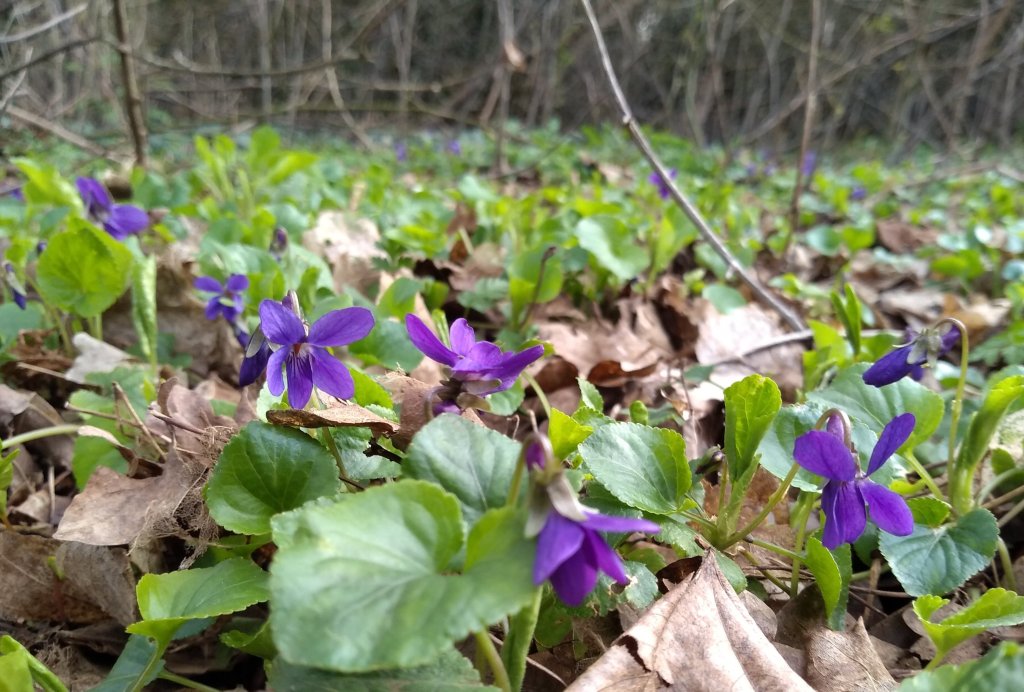
The Common Dog Violet (Viola riviniana) has begun to bloom, both in the wild (in woodlands, heaths and amongst hedgerows)
as well as gardens.

This splash of purple usually arrives in April and lasts until June. If you are lucky, you may notice certain Fritillary butterflies feed from and lay their eggs on this plant (a spectacle I’ve yet to witness).

Willows were blooming last week too. There is one mature Goat Willow (Salix caprea) that I see regularly as I work. Another common name for the Salix caprea is Pussy willow, due to the male catkins resemblance to cats paws before they bloom.

Only males catkins turn yellow once they open.

Willow trees are dioecious; therefore females catkins, grow on separate trees to the male ones. Unlike the male catkins shown above, female ones are green and longer in length. Catkins appear on the trees before the leaves do.

So many catkins were open that the tree seemed alive with the sound of bees.
I love the reddish tinge in the bark.

I am not sure how old this specific tree is but the species can live for about 300 years and grow up to 10 meters tall. The specimen in the garden I work at has definitely reached it full height.

The Kilmarnock willow (Salix caprea ‘Kilmarnock’) is a much smaller version of the Goat willow tree (grafted onto a dwarfing rootstock). I often see this tree in gardens and they were blooming last week too.

Unlike its larger counterpart, the Kilmarnock willow is a great addition to the average sized garden as it too is loved by bees.

The pollen covered Buff-tailed bumblebee pictured here clearly enjoyed visiting the male catkins on this Kilmarnock willow.

Goat willow trees are usually found in woodland, hedgerows and scrub, especially near waterways such as lakes, streams and canals.

Willows are a fantastic source of pollen and nectar for bees and other pollinators. They’re also a good food source for Sallow kitten (Furcula furcula), Sallow clearwing (Synanthedon flaviventris), Dusky clearwing (Paranthrene tabaniformis) and Lunar hornet clearwing (Sesia bembeciformis) moth caterpillars too. Even birds forage for insects amongst their branches.

As the wood burns well it is used to make charcoal. Plus it’s also used for wattle in timber frame houses.

My favourite fact is that the words witch, wicked and Wiccan are derived from Willow.

Traditionally, it was used to help treat toothache by chewing the bark and used to relieve diarrhoea, arthritis, sore throats, stop bleeding and clean wounds. In fact Aspirin, derived from salicin, was sourced from Willows.

The bacteria Brenneria salicis can cause Watermark disease in Willows which causes dieback and eventual death to the trees if left untreated.

If you are looking to add a small tree to your garden, the Kilmarnock willow is definitely worth looking into; unless you have a large garden then choose a mature male Goat willow instead (the bees will thank you for it).

Posted in nature

“Here’s Looking at you Kid.”

Bank holiday weekend was roasting, especially Sunday therefore I decided to take it easy so I wouldn’t overheat. Even though I didn’t go out, nature came to me. While looking out of the window I noticed a Red Underwing (Catocala nupta) moth trying to remain in shade on an outside wall. This large moth (6.5-7.5cm wingspan) has predominantly red underwings with black and white markings, hence it’s common name. The food of this moths larvae are
Willow (Salix) and Poplar (Populus) trees.

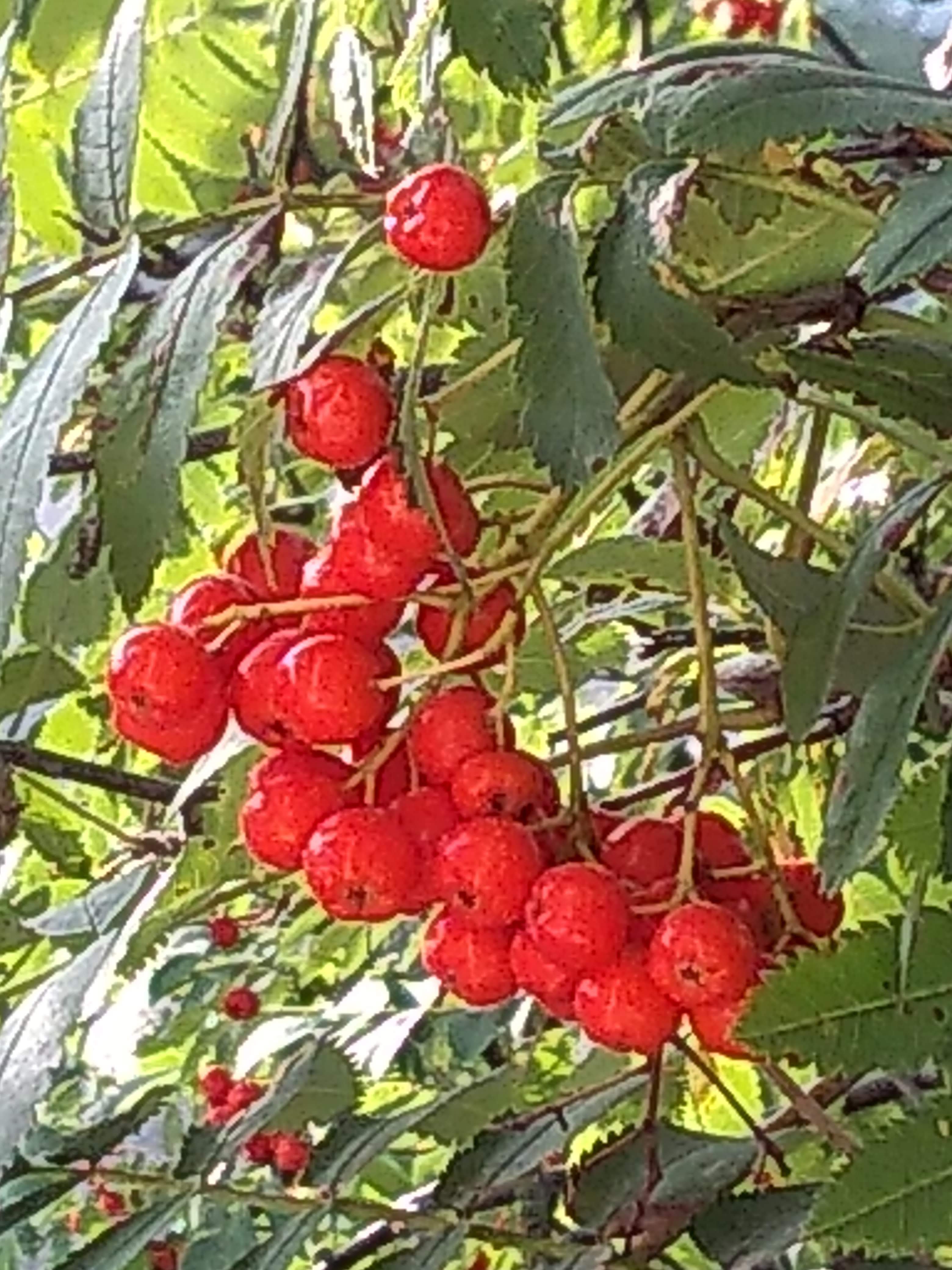
I also managed to photograph one of this years Blue tit (Cyanistes caeruleus) brood in the Rowan (Sorbus) tree outside. They are definitely looking more like the adults now.

It’s also lovely to see the Rowan is full of ripe berries ready for the Thrushes (Turdus philomelos) and also the Redwings (Turdus iliacus) that I usually see in winter.

Monday was slightly cooler although it was still hotter than I prefer it to be. However armed with suncream, hat and water I visited Ham House and Garden in London. While walking round the grounds, bees, crickets and the occasional Ring-necked parakeet (Psittacula krameri) could be heard.
There was an extensive kitchen garden with cut flower and edible flower areas which I particularly enjoyed viewing.
I saw lots of Honey bees (Apis mellifera) on Globe artichokes (Cynara cardunculus) within the kitchen garden.

There was another lovely sighting as I ate lunch too. Amongst the Wisteria (having a second flush of flowers) as well as some scaffolding was a Wood pigeon (Columba palumbus) sitting on it’s nest. It didn’t move other than to blink as it was no doubt observing us all eating trying to remain undetected.

Upon my return there was a Speckled bush cricket (Leptophyes punctatissima) in the hall to welcome me home. As there was no ovipositor on the end of the abdomen (the appendage from which the female lays eggs) I identified it as male.

Long weekends are lovely but they still pass quickly and Tuesday rolled around again, so I was back to work.
I didn’t notice as many butterflies last week, although bees are still prevalent. During the warmest part of the day, when I was once again wilting, I noticed how active the Honey bees were on the Sedums even though they are only just starting to bloom.

I also observed a Small Dusty Wave (Idaea seriata) moth later that evening. It’s caterpillars feed on herbaceous plants especially Ivy (Hedera helix).

The nice weather of sunshine and low 20s temperature continued to the latter part of the week.

Once again it was Honey bees I mostly noticed on Sedums as well as some visiting

-Rudbeckia laciniata ‘Herbstsonne’.

– and Erigeron karvinskianus.

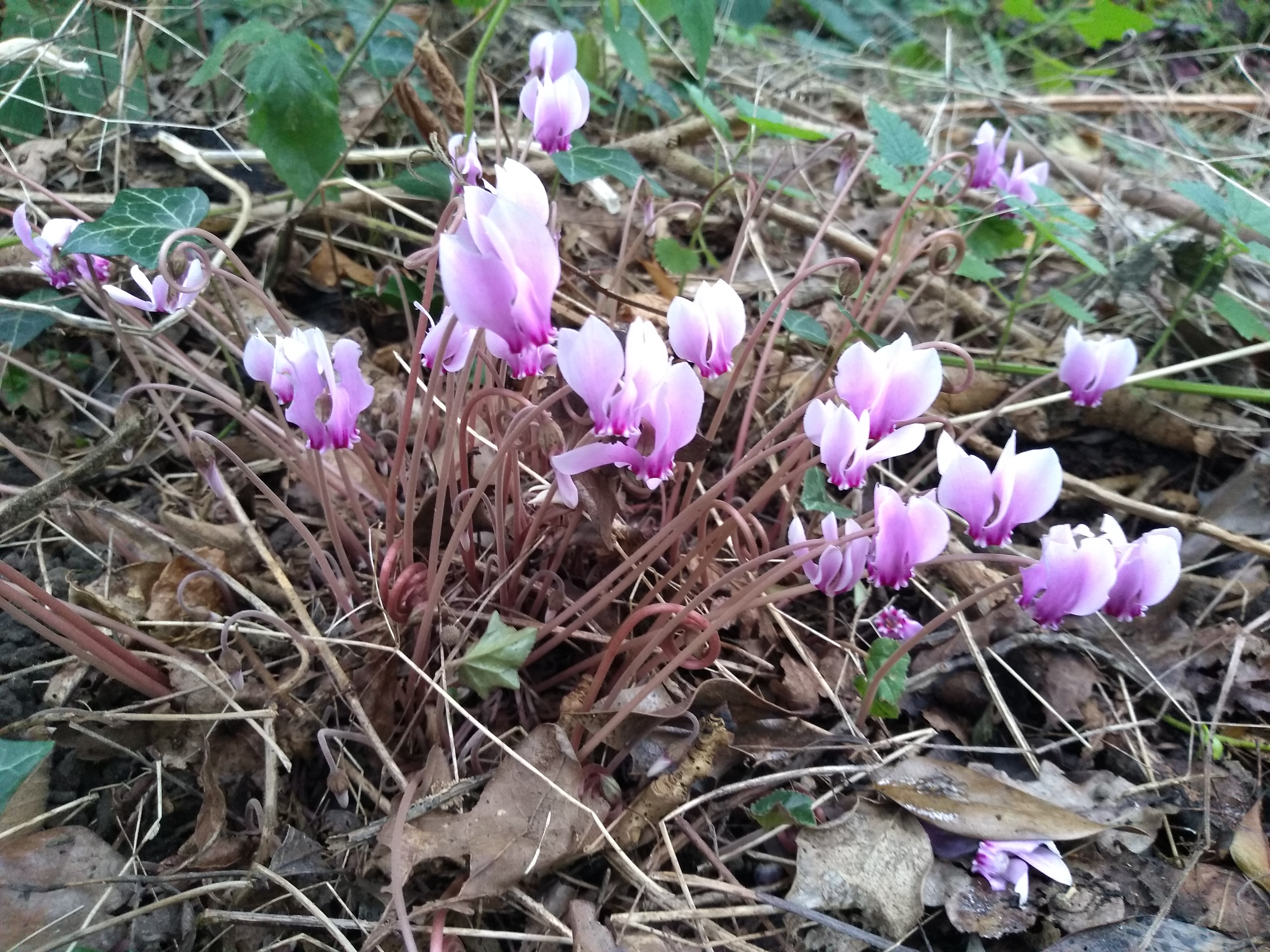
However there was one plant I noticed that surprised me. In a wooded area a small patch of Cyclamen hederifolium was poking it’s flowers above the leaf litter and Ivy; Yet another sign of late Summer and the beginning of Autumn.

Then just when I thought I wouldn’t get to catch a proper view of a butterfly, I managed to see a Small tortoiseshell (Aglais urticae) on a white Buddleja bush.

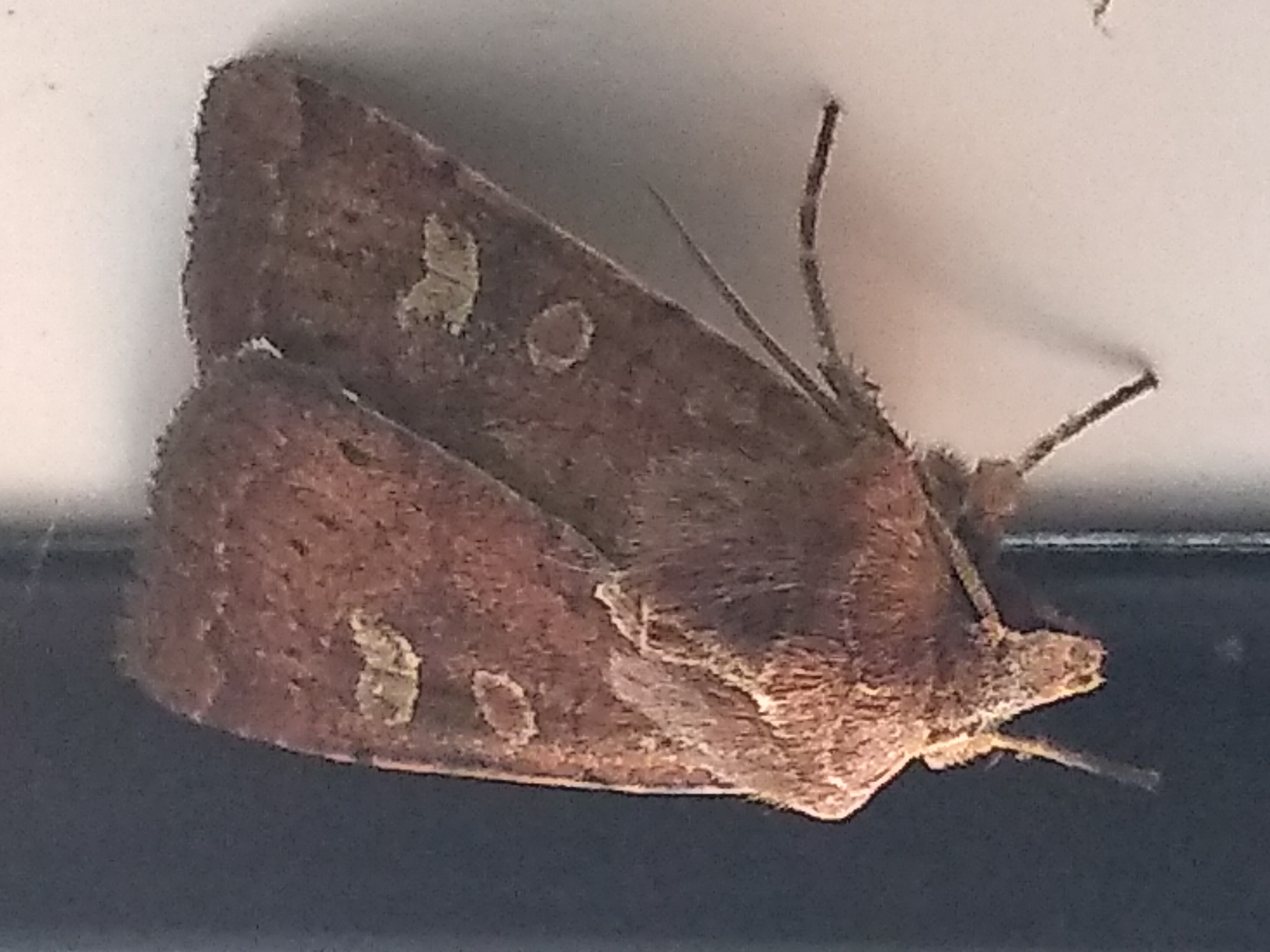
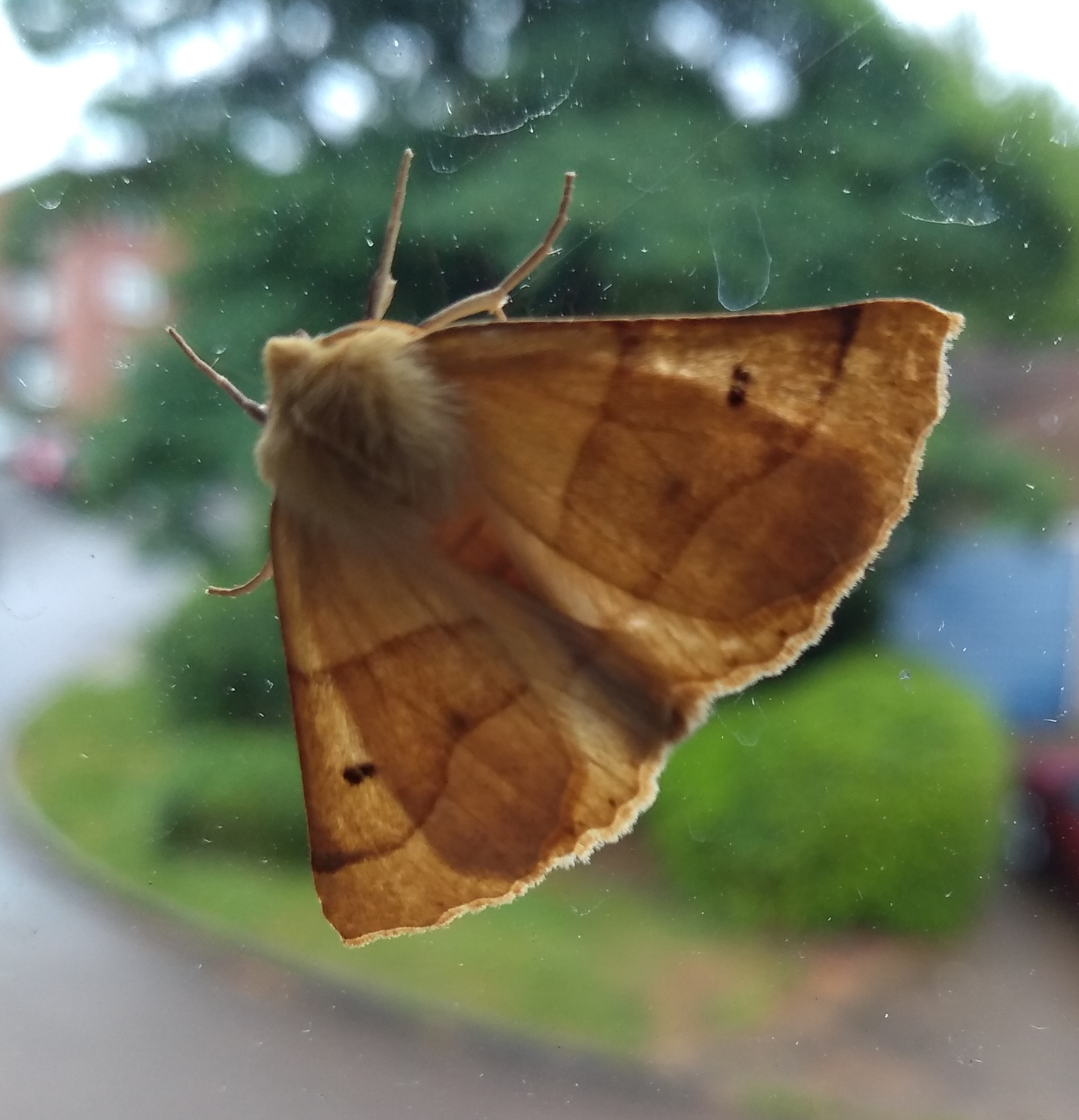
Lastly, I saw another moth in the hall, this time however it was a Square-spot Rustic (Xestia xanthographa) moth.

Posted in nature

The Heat Is On. 🔆🌡️⛈️☔

The weather last week was a mixed bag. Sunshine with the temperature rising into the thirties, fantastic storms and then dull days of rain. Thankfully it is a little cooler now; while I enjoy the sun, I wilt in muggy heat.

Given the weather there were still lots of butterflies around, mostly Peacock (Aglais io), Red admiral (Vanessa atalanta) and Small white (Pieris rapae). Unfortunately I haven’t managed to capture photos of any of these as they didn’t remain in situ for long. I see many white butterflies flit past me. It can be difficult to say if they are Large white (Pieris brassicae), Small white or female Orange tip (Anthocharis cardamines) butterflies because they disappear before I can identify them.

Happily I was able to photograph one butterfly on a Buddleia on Wednesday. The combination of the pattern in the underside, orange colouring I saw on the upper wings, together with the wing outline means the butterfly in the photo below is a Comma (Polygonia c-album).

Their Caterpillars usually feed on the Common nettles (Urtica dioica) but also Elms (Ulmus), Hops (Humulus lupulus) as well as Willows (Salix). Peacocks often visit Buddleia too. The Common Nettle is also the favoured food of Peacock Caterpillars; although they have been recorded feeding on hops and small nettle (Urtica urens) as well. As the common nettle is the favourite food of both Comma and Peacock caterpillars, what better reason is there for allowing some nettles to grow in a garden?

There were other observations last week too;
– a Harlequin ladybird (Harmonia axyridis) on some Lesser Burdock (Arctium minus),

– a Scalloped oak (Crocallis elinguaria) moth,

The caterpillars of these moths feed on honeysuckle (Lonicera), heather (Calluna vulgaris) and broadleaf trees like Oak (Quercus) and Birch (Betula).

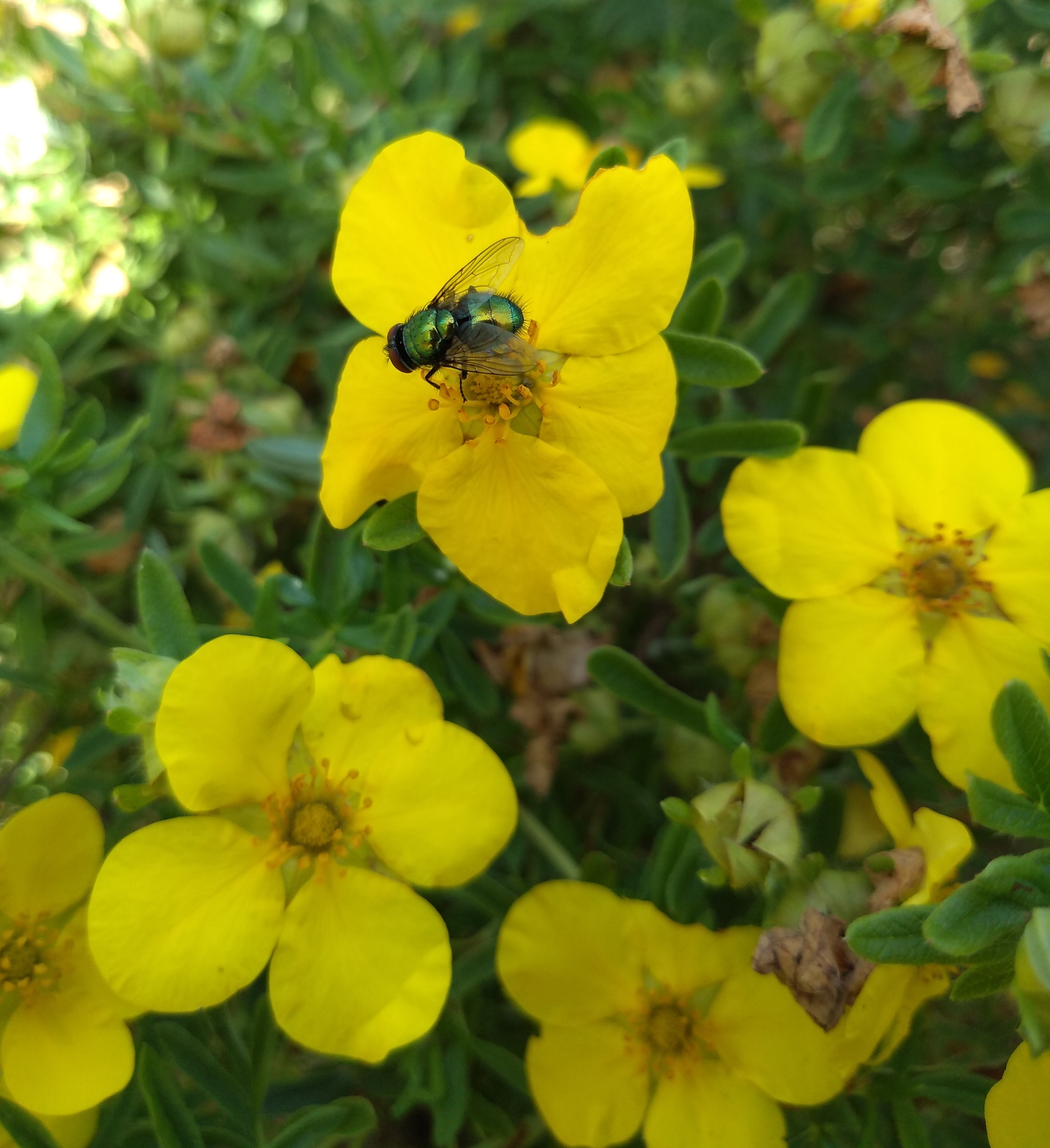
– plus a Long hoverfly (Sphaerophoria scripta), whose larvae feed on aphids, and a Common green bottle fly (Lucilia sericata) on a Potentilla plant.

Capturing the Common green bottle fly was accidental but it worked out really well. In the sun its glistening metallic colouring is highlighted against the yellow Potentilla flowers. Their maggots feed on dead tissue so their appearance is used to accurately determine time of death. Adult Common green bottle flies on the other hand are useful pollinators, as the last photo proves. Fascinating how different stages of this fly species exists alongside both death and life.