Posted in nature

Deer in Bluebell Woods

It was lovely to have a week off a few weeks ago. On one day I spent time walking around a Bluebell (Hyacinthoides non-scripta) wood with my partner. The sun shone through the deciduous trees giving a beautiful dappled light; perfect conditions for both Bluebells and Wild garlic (Allium ursinum) which bloom at the same time (sometimes together) in deciduous woods during May. However on our walk we only saw bluebells. I have come across Wild garlic before though. It is important not to confuse Wild garlic with Lily-of-the-valley (Convallaria majalis) before these plants bloom, as they have similar foliage and while Wild garlic is edible, Lily-of-the-valley is poisonous.

Blooms of Wild garlic are like all from the Alium family; completely different to the tiny bell shaped flowers of Lily-of-the-valley.

Once in bloom, Wild garlic is clearly identifiable (as shown above), plus it has a clear garlicky aroma when it is disturbed. The leaves can be eaten raw or cooked (blanched and eaten on their own like spinach or used as an ingredient). The flowers (wonderful for pollinators) are also edible and can be used in salads. An example of a recipe found on the Woodland trust website can be found here (together with information on responsible foraging). Wild garlic is one plant used to identify ancient woodland, with damp chalky soil, as it takes a long time to establish itself in great quantity.

Also along the walk, a male Tawny (Strix aluco) owl could be heard in the distance. Plus, on one Oak (Quercus) tree a Great spotted woodpecker (Dendrocopos major) was seen moments before it hid on the far side of the trunk. As we watched closely, we noticed a couple of Tree creepers (Certhia familiaris) too. These birds were climbing as well as flying to and from a hole left from where a branch had snapped away from the trunk. Presumably they had a nest there and were finding spiders and insects to feed their young. I was engrossed as I watched them for some time. Unfortunately the Woodpecker never returned into view but I thanked it for showing us the Tree creepers.

Around the edges of the woodland (near some fields) lots of ferns were unfurling. It was lovely to notice a Click beetle (Athous haemorrhoidalis) resting on a frond.

About 15mm in length, these beetles can be found in May through to August, amongst headgerows and in meadows. Their young larvae eat roots which means this insect can become a pest on root crops in this country. They received their common name due to the noise they make as they flick themselves into the air to upright themselves if they ever land on their backs (unfortunately we didn’t witness this).

As we were leaving, we eventually saw two Fallow deer (Dama dama). Even though deer are difficult to spot due to their cautious nature, I was hoping to see some on our walk (they are common in the area we visited). It was so amazing to have witnessed them eating, completely unaware of our presence. Fallow deer eat trees, grass, flowers, shrubs and brambles.

Another deer I have seen, in woodlands attached to gardens where I work, are Muntjac (Muntiacus reevesi). Both Fallows and Muntjacs were introduced into the UK from Asia and thrive in the UK. Deer can be seen as a nuisance if they enter gardens, however information on wildlife friendly ways to keep them away, the height of fencing required as well as deer resistant plants can be found on the RHS website, along with the British Deer Society .

Posted in Allotment, nature

What’s up Buttercup?

With May finally here, spring is now in full swing. Lots of things are growing on the allotment from seedlings to fruit, even the Rhubarb is almost ready to pick.

During a woodland walk, on the Easter weekend, I observed the first Speckled wood (Pararge aegeria) butterfly of the year. Plus local ornamental Cherry trees (Prunus) began their spectacular show at the same time; later joined by the flowers of the Hawthorn (Crataegus) , Rowan (Sorbus) and Horse chestnut (Aesculus hippocastanum).

Over the last few weeks, more wildflowers have started to bloom, including Buttercups (Ranunculus), Stitchwort (Stellaria), Ground-ivy (Glechoma hederacea) Honesty (Lunaria annua) and Hedge garlic (Alliaria petiolata) along with Cuckoo flower (Cardamine pratensis).

Ground-ivy
Cuckoo flower

Another butterfly that began to emerge recently is the Orange-tip (Anthocharis cardamines). Hedge garlic and Cuckoo flower are important food sources for Orange-tip caterpillars, so it is lovely to think these butterflies will be laying eggs on the plants I’ve noticed to ensure future generations; the verge not being mown, allowing both plants to develop, enabling this.

The ‘No mow May’ campaign is back this year. Encouraging us to avoid mowing lawns in order to encourage a wide variety of wildflowers to bloom (including rare ones), thus increasing the availability of pollen and nectar for pollinators as they start to emerge (along with helping butterfly populations, as discussed above). After several years of this campaign together with the every flower counts survey, improvements in wildflower growth have been recorded, as people report their sightings taken at this time.
An article from the Plantlife charity discusses their findings in more detail here.

Even leaving the humblest of flowers to flower on lawns, like Dandelions (Taraxacum), Daisies (Bellis perennis) and Buttercups helps.

Posted in Allotment, nature

Slugs and Snails

What a mixed bag of weather we’ve had in the UK recently. It seems strange experiencing the current dry, warm weather given the snow, frost and april showers we had during the previous weeks.

Deciduous trees are turning green, as leaves unfurl and wildflowers continue to bloom. Snake’s-head fritillary (Fritillaria meleagris), Speedwells (Veronica), White Dead-nettle (Lamium album), Red Dead-nettle (Lamium purpureum), Yellow archangel (Lamium galeobdolon), Forget-me-nots (Myosotis) and Cowslips (Primula veris) are all flowering at the moment, with English Blubells (Hyacinthoides non-scripta) beginning to open up too.

Dainty Cowslips found on a verge.

Last week I caught a glimpse of a blue butterfly, my first sighting of the year, most likely a Holly blue (Celastrina argiolus). I also found another Red kite (Milvus milvus) feather as I worked last Tuesday (see below).

Even Tadpoles have begun to emerge, including in the pond we have near our plot on the allotment; hopefully they will help keep the slug and snail numbers down this year.

Slugs and snails have been in the news a lot this month because the Metaldehyde slug pellets ban has finally come into force in the UK. Perhaps we could view these creatures in a different way, after all they do good in nature; we can’t blame them going for an easy meal of soft tender leaves which just happen to be our prized plants. Interestingly only a small number of the 44 species in the UK are responsible for the damage we experience in gardens while the others feed on dead organic matter. I read an interesting article by Dr Andrew Salisbury, from the RHS, in The Guardian on this subject.

On my allotment I find wool pellets, copper barriers and cloches are helpful; along with growing seedlings on in pots before planting them out. Transplanting larger, stronger plants is better as they are able to withstand any damage, I also spend time collecting slugs and snails from hidden damp dark places and moving them to an area far away where they will cause less damage to crops. Encouraging predators (frogs, toads, hedgehogs, birds, slow worms (Anguis fragilis) and ground beetles) is always a great idea too, along with not having areas for them to hide near vulnerable plants.

A biological control that can be used, for slugs only, are Nematodes (Phasmarhabditis hermaphrodita). Watered into the ground these eventually kill the slugs as they infect them with bacteria once they’ve entered the slugs body. I have never gone for this option as I find the other measures suffice.

The other option is to grow plants which slugs and snails do not eat. Ones I’ve noticed they avoid include Ajuga, Aquilegia, Digitalis, Fuchsia, Geum Penstemon and Pulmonaria (further examples can be found on the internet).


Posted in nature

An Interaction with a Blackbird

I can’t believe March has arrived already. Blackthorn (Prunus spinosa), Sweet violet (Viola odorata) and Daffodils are in full bloom.

It wasn’t so long ago that we had the stormy weather and Snowdrops were at their best; the year seems to be advancing in leaps and bounds now.

The temperature last Thursday reached 16°C which encouraged butterflies to flutter about. I noticed several Brimstones (Gonepteryx rhamni) as well as the Red admiral (Vanessa atalanta) below.

A Red admiral feeding from a Daphne, a delight for the senses, both visual and aroma.

Along with these beautiful sightings, there were a couple of amazing nature experiences that particularly stood out over the past few weeks.

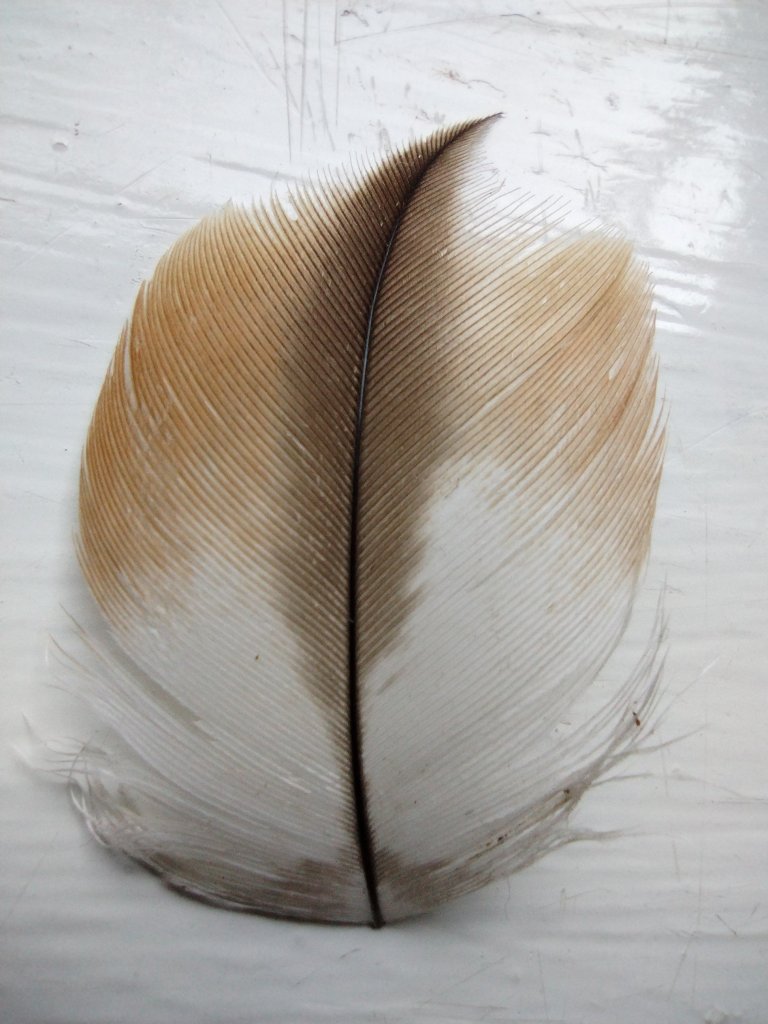
The first was due to the recent storms. While clearing up tree debris a few days later, I found a Red kite (Milvus milvus) feather which had blown to the ground. I have since added it to my version of a nature table (a vintage printing tray) along with my other treasure finds.

I love the shape, colour and pattern of this Red kite feather.

The second took place last Wednesday. While carefully tidying up another garden, to allow for the new spring growth which is already appearing, I noticed a young male Blackbird (Turdus merula) following and closely foraging next to me, just like Robins (Erithacus rubecula) often do in gardens. At one point, it appeared to watch me as I worked (seemingly unphased as I kept my movements to a minimum, so as to not alarm him). Eventually it moved further away but started to make a low repetitive ‘pok pok’ call, at both me and my colleague who was a short distance away (presumably thinking we were predators). This interactive experience was particularly moving; I am used to Robins being close by and making themselves known but never a Blackbird before. The call I heard the blackbird make can be heard on the Sussex Wildlife Trust website.

Posted in nature

Relaxing Holiday Adventures

Over the last few weeks Buddleja have been in flower, encouraging butterflies to visit and making them more visible. I have begun to notice Red admirals (Vanessa atalanta) and Peacocks (Aglais io) alongside Large (Pieris brassicae) and Small white (Pieris rapae) butterflies.

Having some time off work enabled me to take more walks. In my local woodland park I started to see a lot more Commas (Polygonia c-album) and Small heath (Coenonympha pamphilus) butterflies too. On a few occasions they flitted around me as I stopped to watch them; an absolutely joyful experience, almost like they were interacting with me in their own way.

Thankfully in the two weeks, I managed to venture further afield. On one occasion, I saw a Ringlet (Aphantopus hyperantus) butterfly while visiting an Arboretum in Herefordshire.

Woodlands are their habitat and they can be seen during July and August. The Caterpillars of this butterfly feed on various grasses, such as Tufted Hair-grass (Deschampsia cespitosa), Common Couch (Elytrigia repens), and other meadow grasses (Poa spp.).

Spending some time away on holiday gave me the chance to explore other environments, including those next to water, thus enabling me to notice different wildflowers.

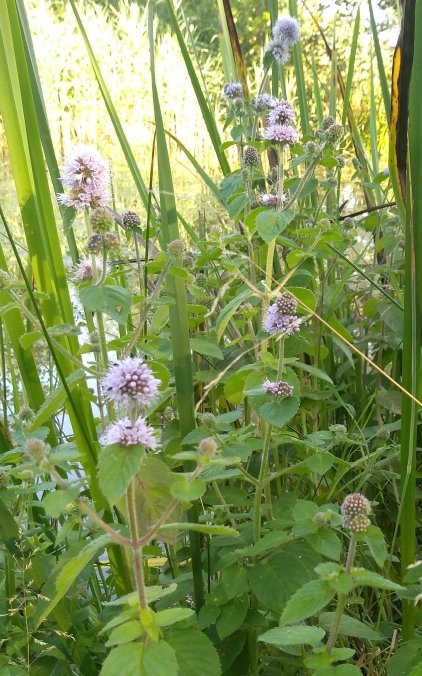
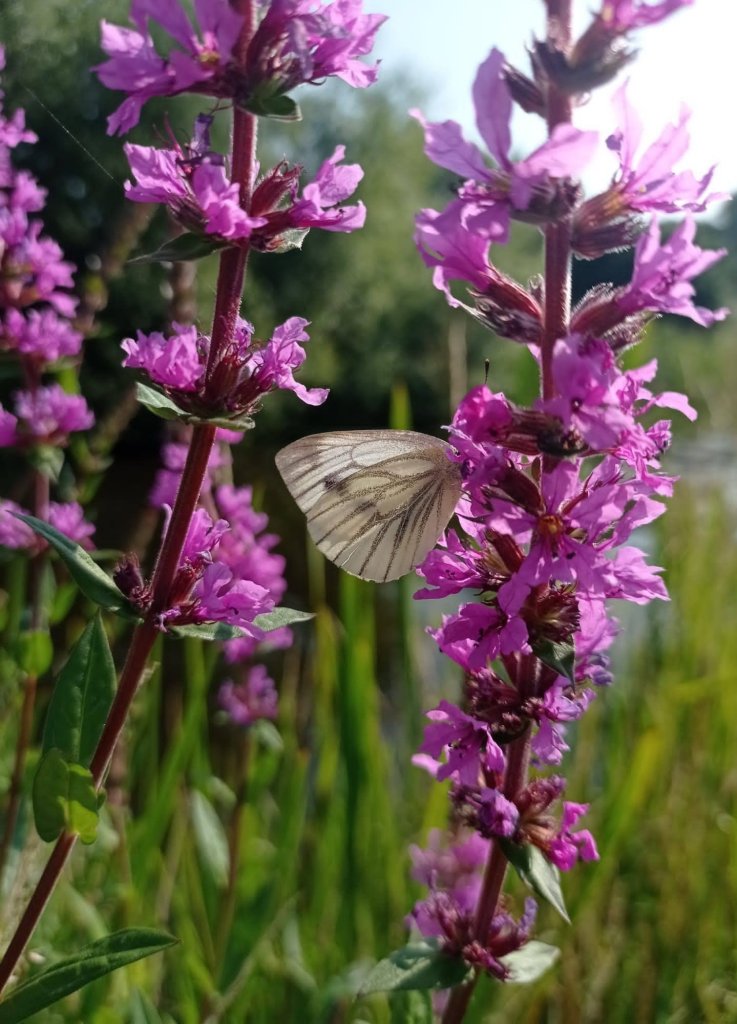
One walk took me past a canal. Water mint (Mentha aquatica) and Purple Loosestrife (Lythrum salicaria) were growing all down the canal edge.

Water mint

Both plants grow in shallow water and boggy conditions so are often found in fens and marshes as well as along the margins of ponds, streams, rivers and of course canals, as I discovered. They require habitats with full sun or dapled shade to bloom and are great for pollinators. Water mint flowers from the beginning of July up to November while Purple loosestrife only blooms between June and August. Purple Loosestrife can be visited by insects with long tongues and particularly enjoyed by butterflies and Red-tailed Bumblebees (Bombus lapidarius). It is also eaten by caterpillars of the Small Elephant Hawk-moths (Deilephila porcellus).

A Large white butterfly visiting some Purple Loosestrife.

As well as butterflies there were several dragonflies and damselflies, including this Blue-tailed damselfly (Ischnura elegans) dancing over the water.

This Blue-tailed damselfly was seen resting on a nettle leaf.

However, most of the bees I saw on that walk were interested in the plant I encountered at the first lock, Himalayan balsam (Impatiens glandulifera).

While the lock was completely swamped by this plant, it was only section I saw it in. It’s the first time I had come across Himalayan balsam, although I know of its reputation.

The pretty flower of the Himalayan balsam is popular with pollinators, especially bees. Here a bee is seen climbing into the flower to obtain nectar and pollen.

First introduced into the UK in 1839, from the Himalayas, this plant soon escaped formal gardens and naturalized in the wild becoming a nuisance in waterways. It grows fast and can become invasive very quickly as, up to 800 seeds from each pod, explode as far as 7 meters from the parent plant and even travel downstream. It isn’t long before a thicket is created where the plant out-competes other species to reduce biodiversity, cause erotion of riverbanks and affect water quality. All this means it is considered a weed in waterways and often removed by work-parties whenever possible. In fact it had been previously cleared from a lot of this canal. Control methods include pulling and cutting before they get a chance to set seed. It can take a few growing seasons before control over this plant is established. Management of this plant is mentioned under schedule 9 of the Wildlife and Countryside Act 1981. Interestingly, in Hertfordshire, control of this plant involves collection of the flowers to produce pink Gin (further information can be found at Herts Wildlife Trust).

The following week I visited a beach in Kent, it was so relaxing to hear the sounds of the seaside. One plant I noticed growing amongst the rocky area near the shingle was Alfalfa (Medicago sativa).

I know this plant as a green manure on allotments and gardens, adding nitrogen to soil for crops the following season. It’s also used as silage for livestock in agriculture plus alfalfa sprouts are used in some cuisines. I have never seen it in the wild or even flowering. There wasn’t a great swathe of it so clearly the plants were due to the odd escapee into the wild; perhaps a few seeds having blown there or been disposed by a bird. It was certainly good for local pollinators.

A Small white butterfly visiting the Alfalfa.
Posted in nature

Bring me Sunshine 🦋

The last few weeks have been opposites in terms of the weather. A wet previous week turned into the hottest of the year so far (with no relief overnight). Although too hot for my comfort, it was perfect weather for butterflies, and a great start for the Big Butterfly Count. Finally I was beginning to witness an increase in the amount of butterflies. I was getting worried this years reduction in butterfly sightings (due to the cold spring and wet summer experienced in 2021 up to this point) would continue. However by the end of the first week, I saw a Speckled wood (Pararge aegeria) and a Brimstone (Gonepteryx rhamni). Then, while on a walk around my local woodland park (early on the following, sunny and very warm, Sunday morning) I witnessed lots of butterflies making the most of the sunshine.

In one open area of the park, the grass had been allowed to grow, with many species of wildflower blooming amongst it. One of the plants I saw was Common centuary (Centaurium erythraea) which blooms between May and October. Overshadowed by the other wildflowers and grasses, initially this shorter plant was difficult to spot; in fact had it not been next to a mown walkway, I may not have seen it. Thankfully it’s pink and yellow colouration stood out enough, from the more muted colours surrounding it, as I wondered past trying to identify butterflies.

Common centuary represents delicacy and felicity in the Victorian Language of Flowers.

This plant is found in a many places, from heathlands and woodlands to cliff tops and quarries. A natural meteorologist, the flower closes when the weather is dull and damp to reopen once the weather brightens up. While I’m not sure this is a practical weather indicator to use (when a simple observation of the sky, in that moment, will give you the information you require) it’s a pretty cool reaction to weather conditions.

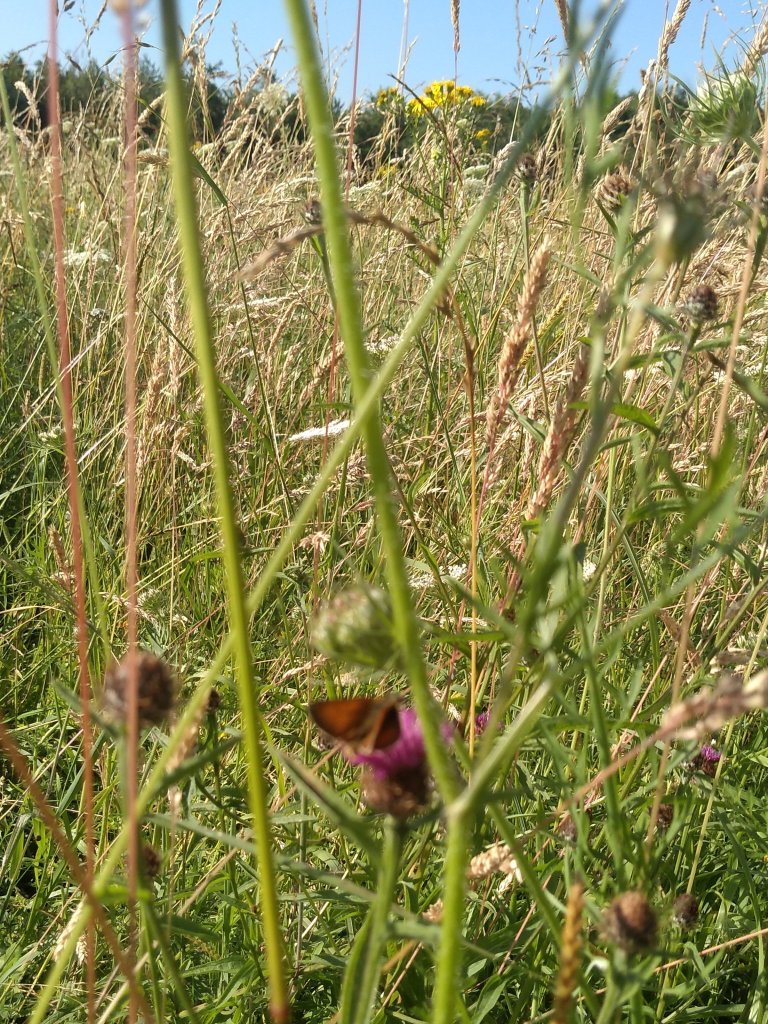
There were many butterflies flitting about on that Sunday morning. Most prominent were Gatekeepers (Pyronia tithonus), Small skippers (Thymelicus sylvestris)

A small skipper visiting some Knapweed (Centaurea).

and Small heath (Coenonympha pamphilus) butterflies; probably due to the grass being allowed to grow fully. All these species of butterfly are associated with grassland and their caterpillars feed on grasses.
Marbled white (Melanargia galathea) caterpillars also feed on grasses while the adults feed on many purple coloured flowers, including knapweeds; so it was lovely to see one of these butterflies flying around the meadow too.

Another plant that was growing amongst the long grass was Ragwort (Jacobaea vulgaris). This is a favourite nectar source of the Gatekeeper butterfly, along with other plants including Bramble (Rubus fruticosus), Wild marjoram (Origanum vulgare) and Wood sage (Teucrium scorodonia).

Ragwort is great for many pollinators, including these Small heath butterflies.

I also got to see another insect with a strong connection to Ragwort, a caterpillar of the day flying moth, the Cinnabar (Tyria jacobaeae).

This wasn’t the only caterpillar I noticed. Earlier in the week, I saw a caterpillar of the Knot grass moth (Acronicta rumicis), seen below on a bramble leaf.

This caterpillar will be part of this years second brood, the adults of which appear in August and September. The Caterpillars have a varied diet, eating a wide range of herbaceous plants; this one clearly eating out (and pooping on) bramble. The photo of the adult moth can be seen at Uk Moths.

Posted in Allotment, nature

I’m Yellow and Black but not a Bee; What am I?

Cooler temperatures and very wet weather meant that insect observations were few and far between last week.

In sunnier moments, bees were still visible but I haven’t noticed many moths, butterflies or ladybirds recently; I do hope that changes soon.

However there were a few momentous insect observations last week. I discovered a Mining bee nest on the allotment. As there was an Ashy mining bee (Andrena cineraria) on the plot last year then it could be evidence of another one making its home there.

The other insect, one I got to learn about later in the week, was a stunning parasitic wasp; possibly an Amblyteles armatorius (however identification is difficult to be completely certain).

If it was an Amblyteles armatorius then it’s hosts can be several species of moth caterpillar, such as the Yellow Underwing (Noctua pronuba).

The yellow and black parasitic wasp was 15mm in length (antennae included) and is often seen in June; although there is a second generation later in the year too. Adults can be noticed feeding on pollen from plants with umbellifer flowers such as Cow parsley (Anthriscus sylvestris) or Hogweed (Heracleum sphondylium). There was Lovage (Levisticum officinale) in flower in the garden where the parasitic wasp was noticed, so perhaps it had visited that before flying off to find another plant.

Posted in nature

Delayed April Showers in May

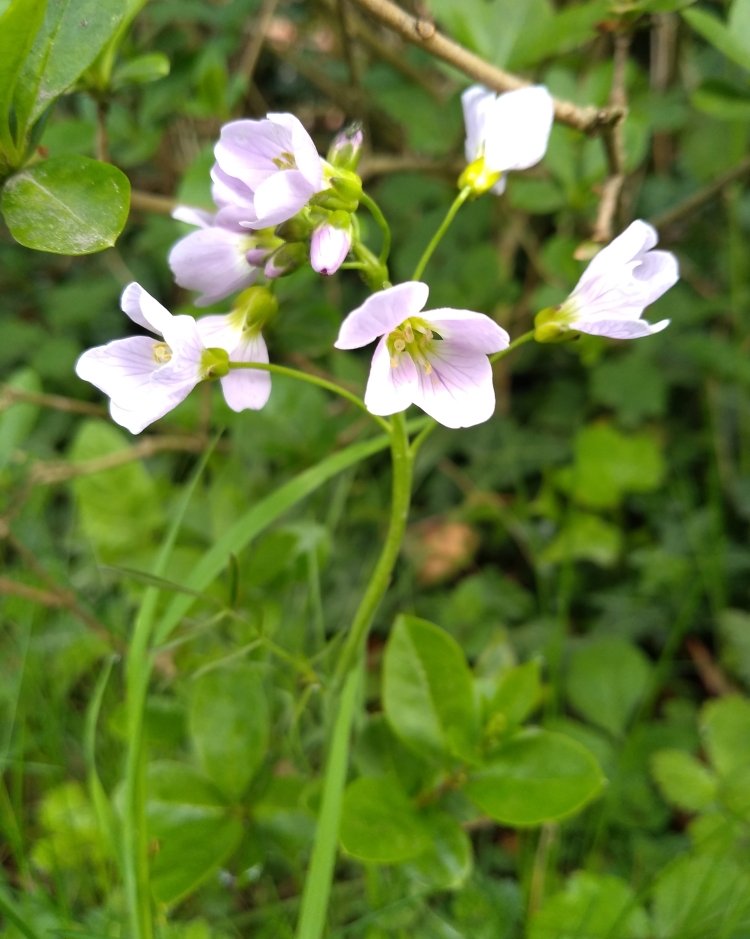
Rain showers continued to fall, reviving the ground at last. Between the downpours I noticed Cuckooflowers (Cardamine pratensis) begin to bloom last week.

So named because it flowers from late April, around the time male Cuckoos (Cuculus canorus) are heard in the UK once the birds return from Africa; signs that spring is well underway.

The last time I heard Cuckoos was in Shropshire many years ago. At the time, I only heard the males call of “cuck-oo’ in the distance. I have never witnessed the females call which can be heard here (Garden birds). I have never seen these birds either; perhaps one day, although their conservation status in the UK remains red (reasons for this is explained by the BTO website).

I love witnessing wildflowers being pollinated; yet more proof that patches of wildflowers are essential for pollinators. Last Sundays walk resulted in such a sighting. As I walked past an area where White dead-nettles (Lamium album) were blooming I became aware of a gentle buzz. A solitary Common Carder Bee (Bombus pascuorum) was visiting the patch of flowers.

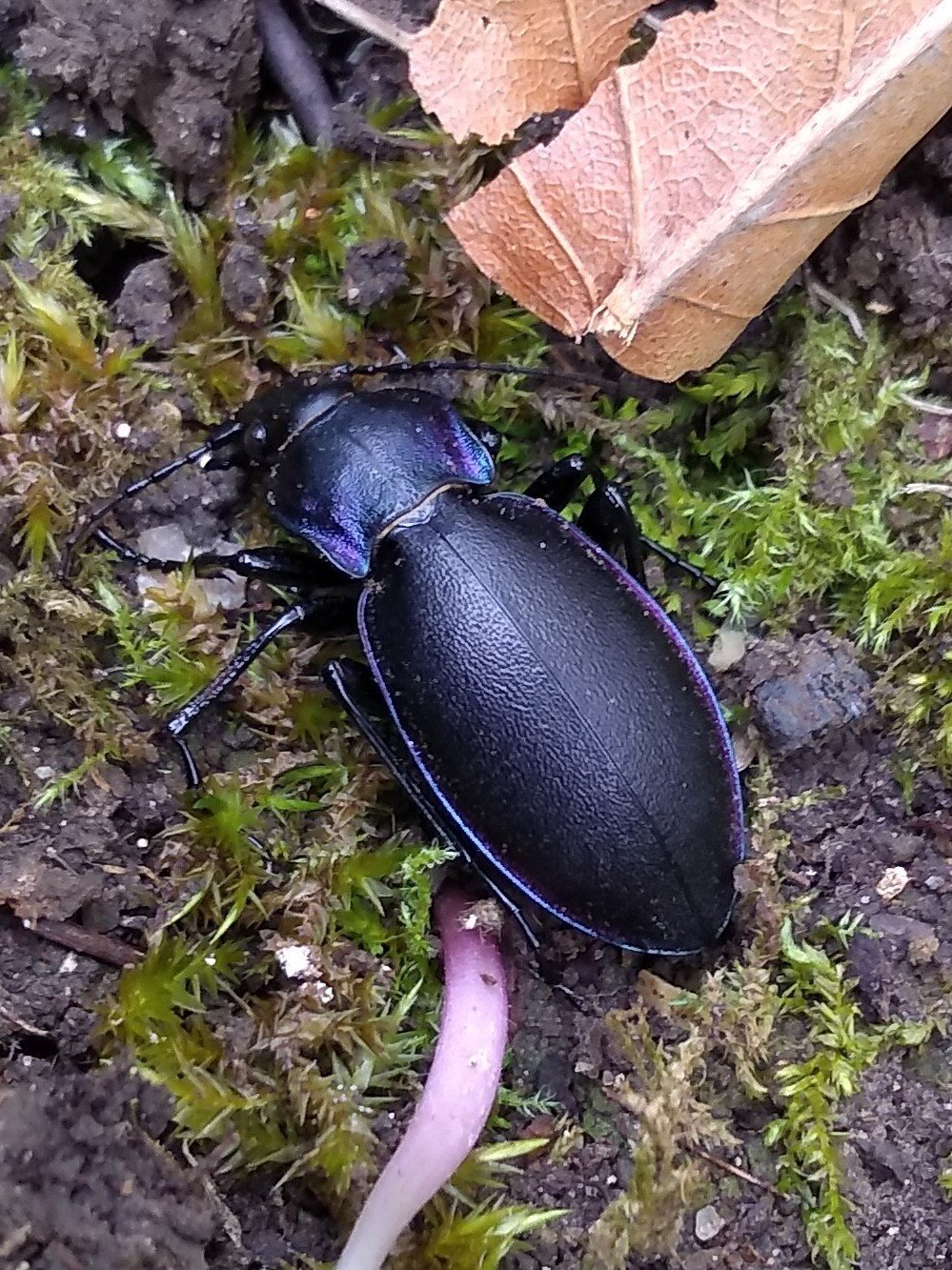
An insect that I became aware of later in the week was a Violet ground beetle. I have never seen one of these beetles before; it was so mesmerising as it glistened in the daylight.

It could have been one of two species of Violet ground beetle, either Carabus violaceus or Carabus problematicus, as they are difficult to tell apart (it’s all down to the amount of dimples and ridges apparently). As both can be found in gardens, if I had to make an educated guess, I would say it was a Carabus violaceus ground beetle (the more common of the two, especially in gardens). The Carabus violaceus can also inhabit farmland and meadows where as Carabus problematicus is predominantly found in woods and heathland.

Active at night, it doesn’t fly but will rely on running fast to capture pray and find shelter if disturbed. During the day, it predominantly hides under logs or stones; however I noticed this one when I moved a clump of soil. I was very conscious of taking its photo as quickly as possible before I covered it up once again. This adult beetle, along with their larvae, feeds on other insects alongside slugs, snail and worms.

Posted in nature

Flowers Bloom in Spite of the Weather

Much needed rain arrived last Wednesday evening, lasting through the night; followed by another short downpour later in the week. Unfortunately, these weren’t enough to replenish the parched ground which currently resembles crazy paving. It’s hard to believe we experienced a cold damp winter when cracks in the earth are so deep.

Somehow, even with of the lack of rain, wildflowers still bloom regardless. Buttercups (Ranunculus), Cow parsley (Anthriscus sylvestris) and Stitchwort (Stellaria) have joined the early spring bloomers; replacing the faded Lesser Celandine (Ficaria verna). Unlike the pinks of the ornamental Cherry trees (currently blooming), the predominant colours lower to the ground are blue, yellow and white.

Another plant I noticed was Ground ivy (Glechoma hederacea).

Usually found on damp ground, amongst woodlands, hedgerows, wasteland and in lawns, It’s violet flowers appear between March and June. Surprisingly, it was flowering last week, even with the current dry conditions.

The common name, Ground ivy, is rather misleading as it belongs to the same family as dead-nettles (Lamiaceae) and isn’t ivy. This evergreen perennial most likely obtained the name due to its spreading nature, which occurs overground, rooting from stolons. In fact this plant has numerous common names including, Alehoof, Gill-over-the-ground, Creeping Charlie, Run-away Robin and even (during medieval times) Our Lady’s Vine. A more comprehensive list can be viewed on the RHS website, along with how to grow it if you want to introduce it into your garden.

This herb releases a scent when disturbed. As I crushed some leaves, the smell reminded me of a slightly medicinal thyme aroma, actually quite pleasant.

In times past Ground ivy was used to flavour beer, thanks to its bitter taste (before it was replaced with hops) and as a rennet substitute in cheese making.

I am always intreagued at a plants ability to thrive in unusual places or difficult situations; I love spotting plants growing in such circumstances. Last week I was amazed to see a foxglove (Digitalis) growing without soil on an old wall.

Normally I would only see plants such as Buddleja, Ferns or Yellow corydalis (Pseudofumaria lutea) thriving in this way; their shallow root systems able to anchor themselves amongst the bricks.

Last week wasn’t solely dominated by plant observations. After the previous weeks sighting of the Tawny Mining bee (Andrena fulva), see Auburn Beauty Spotted, it was nice to follow up with sightings of some Mining bee nests. Unfortunately I don’t know whether these nests had or were housing Tawny or Ashy Andrena cineraria) mining bees.

The second nest was spotted on Saturday, while going for a lovely walk with friends. On that sunny day we also witnessed three Speckled wood (Pararge aegeria) butterflies flitting about; clearly enjoying the sunshine and great company as much as I was.

Posted in nature

Flowers to Lift the Spirit


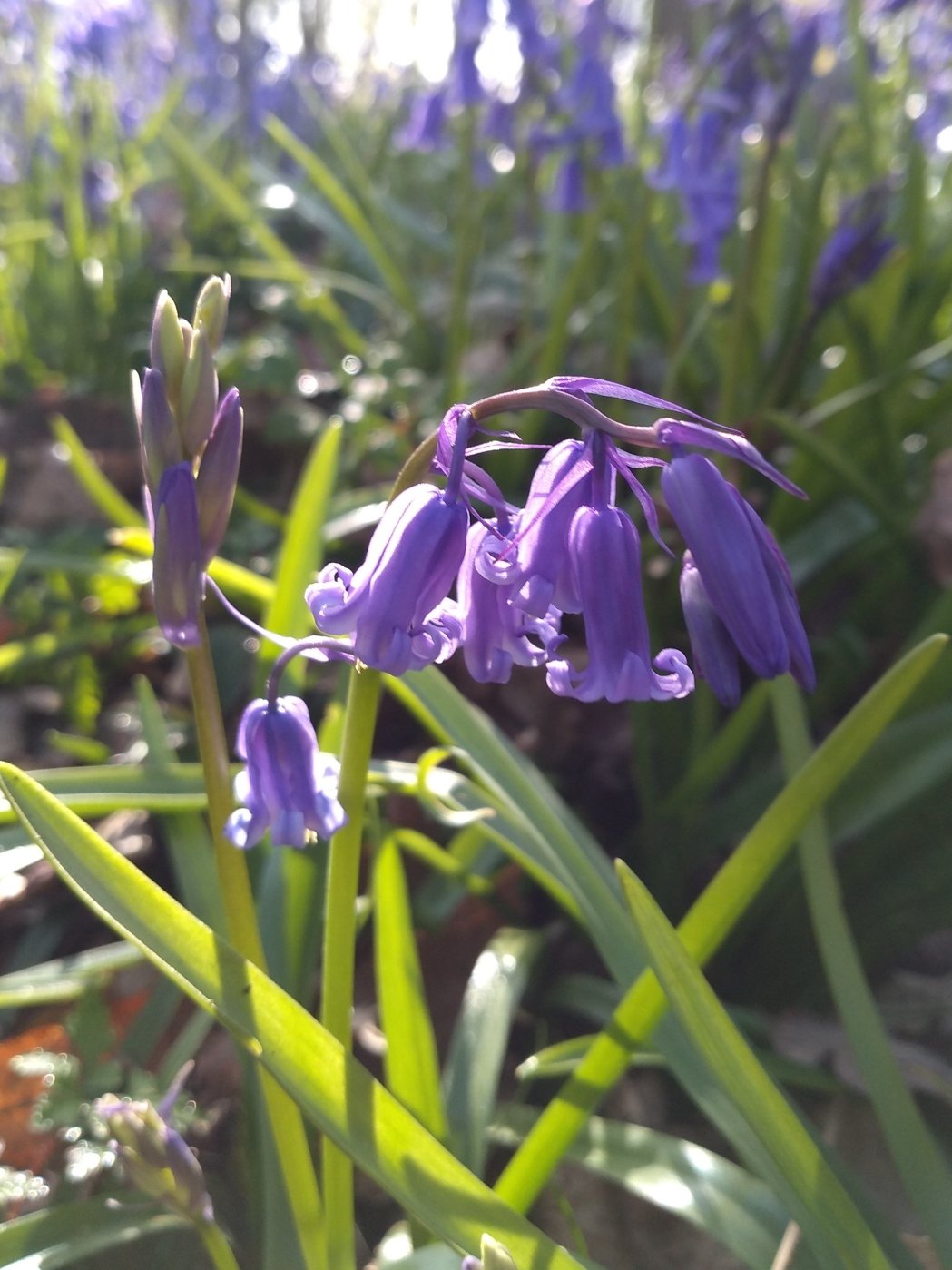
Last week the Bluebells (Hyacinthoides non-scripta) were just beginning to open. I always look forward to seeing these delicate flowers appear; it brings such joy to see their destinctive shade of blue on mass. Although not yet in full bloom, as I knelt down to take photographs I caught their delicate aroma.

Then later the same day, I got my first sighting of a Common carder (Bombus pascuorum) bee of the year, as it took advantage of the apple tree blosom.

I will never tire of hearing birdsong, it’s a wonderful soundtrack to have as I work. Not only is birdsong relaxing to me but it gives me the opportunity to keep learning too. The bird I became most aware of last Tuesday was the Nuthatch (Sitta europaea). Amongst all the birds I could here on that day, this was the clearest (it can be heard here on the RSPB website).

Unfortunately I didn’t get to see it. Having never seen one before I would have loved to see it’s mostly bluish grey and chestnut plumage (with hints white along with a black stripe across the eyes).

Similar in size to a Great tit (Parus major) these birds resemble a small Woodpecker as they climb trees. Nuthatches can be seen clinging to trunks or branches, as they climb up or down headfirst (the only British bird to descend trees in this way). They forage for insects and invertebrates, as well as feast on seeds and nuts (including beechmasts, hazel nuts and acorns) using tree crevices to store food for later. They also bury food and hide it beneath stones.

Nuthatches are found in mixed  broadleaf woodlands, parkland or urban gardens which have sufficient tree cover; occasionally eating from bird feeders. They particularly like areas with mature Oak (Quercus) trees. There was an established Oak nearby where I worked, so perhaps that’s where it was singing from.

They remain close to the nesting site where they fledged and are mostly seen in England and Wales; although their range is expanding into Scotland. Nests are holes in trees such as old Woodpecker nests.