Posted in nature

Amazing Insects

The first of August is the start of the harvest and autumn is beginning to set in slowly now; a time I enjoy.

The weather has recently changed in the south, we have had rain over the past few weeks, meaning the parched lawns are beginning to green up once again and require cutting. I have never known a year where we haven’t cut the majority of lawns for such an extended period over the summer; usually it isn’t until the end of July into August when this occurs.

The wetter conditions are making it difficult to pick a time to undertake the Big Butterfly Count this year, although I am still seeing various butterflies and day flying moths around at the moment; Including the Jersey tiger moth (Euplagia quadripunctaria).

This beautiful medium sized moth (between 5.2 to 6.5 cm in length) is often seen in the south with the range growing upwards towards London and now Hertfordshire; found in Gardens, hedgerows and coastal areas. The caterpillars can be found between September through to the following May, surviving winter as larvae. The adults often visit Buddleia while the food source for caterpillars are Common Nettle (Urtica dioica), White Dead-nettle (Lamium album), Borage (Borago officinalis), plantains (Plantago Spp.), Ground-ivy (Glechoma hederacea) and Bramble (Rubus fruiticosus) amongst other herbaceous plants.

I have also seen a small copper (Lycaena phlaeas) butterfly recently.

This small (3.2- 3.5 cm) orange coloured butterfly can be found on waste ground as well as heath, moor, grass and woodland environments where the soil is chalky and the ground poor in nutrients. The caterpillars eat Sorrels and Broad-leaved Dock (Rumex obtusifolius).

This has been a wonderful year for ladybirds due to the very hot weather at the beginning of spring causing a huge increase in aphids. Out of the 46 different types in the UK, I mostly see Six-spot and Harlequin ladybirds.  A couple of weeks ago I noticed another as it flew into the van; the 14 Spot ladybird (Propylea quattuordecimpunctata).

Much smaller than the six-spotted ladybird, this yellow and black beetle can be seen throughout the UK from May to September.

I finally saw a flower crab spider (Misumena vatia) while pruning a shrub too. As seen in the photo below, they are often white but the females of the species can change their colour to a yellow tint in order to blend into its surroundings better.

Usually noticed between May and August they are commonly seen in southern England. The different sexes differ in size, the males are half the size of the females which are between 9 to 11mm in length. These spiders will wait and ambush prey rather than spin webs and can eat various insects including moths and bees,

Posted in Allotment, nature

Slugs and Snails

What a mixed bag of weather we’ve had in the UK recently. It seems strange experiencing the current dry, warm weather given the snow, frost and april showers we had during the previous weeks.

Deciduous trees are turning green, as leaves unfurl and wildflowers continue to bloom. Snake’s-head fritillary (Fritillaria meleagris), Speedwells (Veronica), White Dead-nettle (Lamium album), Red Dead-nettle (Lamium purpureum), Yellow archangel (Lamium galeobdolon), Forget-me-nots (Myosotis) and Cowslips (Primula veris) are all flowering at the moment, with English Blubells (Hyacinthoides non-scripta) beginning to open up too.

Dainty Cowslips found on a verge.

Last week I caught a glimpse of a blue butterfly, my first sighting of the year, most likely a Holly blue (Celastrina argiolus). I also found another Red kite (Milvus milvus) feather as I worked last Tuesday (see below).

Even Tadpoles have begun to emerge, including in the pond we have near our plot on the allotment; hopefully they will help keep the slug and snail numbers down this year.

Slugs and snails have been in the news a lot this month because the Metaldehyde slug pellets ban has finally come into force in the UK. Perhaps we could view these creatures in a different way, after all they do good in nature; we can’t blame them going for an easy meal of soft tender leaves which just happen to be our prized plants. Interestingly only a small number of the 44 species in the UK are responsible for the damage we experience in gardens while the others feed on dead organic matter. I read an interesting article by Dr Andrew Salisbury, from the RHS, in The Guardian on this subject.

On my allotment I find wool pellets, copper barriers and cloches are helpful; along with growing seedlings on in pots before planting them out. Transplanting larger, stronger plants is better as they are able to withstand any damage, I also spend time collecting slugs and snails from hidden damp dark places and moving them to an area far away where they will cause less damage to crops. Encouraging predators (frogs, toads, hedgehogs, birds, slow worms (Anguis fragilis) and ground beetles) is always a great idea too, along with not having areas for them to hide near vulnerable plants.

A biological control that can be used, for slugs only, are Nematodes (Phasmarhabditis hermaphrodita). Watered into the ground these eventually kill the slugs as they infect them with bacteria once they’ve entered the slugs body. I have never gone for this option as I find the other measures suffice.

The other option is to grow plants which slugs and snails do not eat. Ones I’ve noticed they avoid include Ajuga, Aquilegia, Digitalis, Fuchsia, Geum Penstemon and Pulmonaria (further examples can be found on the internet).


Posted in nature

Early blooms

It was lovely to see some flowers beginning to show themselves last Tuesday.

Wildflowers I noticed as I walked were,

Cow parsley (Anthriscus sylvestris),
Daisies (Bellis perennis),
Red deadnettle (Lamium purpureum),
and White deadnettle (Lamium album).

However I also saw flowers in gardens too. The cultivated plants that were also blooming were

Small white periwinkle (Vinca minor f. alba)
as well as Snowdrops (Galanthus).
Posted in nature

April Showers Finally Arrive.

The proverb ‘March winds and April showers brings forth May flowers’ came to mind several times in the past week. Now that May has arrived, I look forward to seeing what will bloom this month.

Due to the amount of rain within the week, observations were few and far between; although I occasionally noticed bees flying around during dry periods when the sun shone.

I saw several Common carder bees (Bombus pascuorum) visiting an expanse area of White dead-nettle (Lamium album).

Bees also visited Welsh poppies (Papaver cambricum) which were blooming early.

They tend to start flowering between June to August. I love the golden shades of yellow and orange produced by this plant. Their chearful appearance, is perhaps why clients often like having these in their gardens. 

I learnt some more wildflowers last week. It’s always lovely to expand my knowledge of wildflowers.

I found two in some borders, Hedgerow crane’s-bill (Geranium pyrenaicum) and

Lamb’s lettuce (Valerianella locusta).

The last one I saw was in a lawn, under the canopy of a tree, it was Meadow Saxifrage (Saxifraga granulata).

Posted in nature

The Importance of Nature during Uncertain Times

So much has happened in the world over the last fortnight. Changes are moving so quickly, that I have felt overwhelmed and struggled with my mental health, like a lot of people right now. Consequently I nearly didn’t write this latest post. However I remembered why this blog is so important to me. During my darkest hours nature helps me overcome depression and anxiety; so here it is, better late than never.

Lots of plants were starting to bloom last week.

– Forget-me-not (Myosotis),

– Green alkanet (Pentaglottis sempervirens),

– White dead-nettle (Lamium album,

– Red dead-nettle (Lamium purpureum), 

Brunnera macrophylla

Aubrieta deltoidea

– and Vinca minor were all flowering.

Bindweed (Calystegia sepium) is growing too.

When I found it on the allotment, initially my heart sank slightly; it means lots of work to control it organically. Yet I decided to see if it has a good side, after all it is a wild flower. Look up Bindweed on the internet and you find countless references to it being a horrible weed in gardens together with how to exterminate it (both traditionally and organically). I must admit I find it hard to like the plant but I wanted to challenge my views (gained from years of trying to get rid of it from people’s gardens). The Gatekeeper (Pyronia tithonus) or Hedge Brown butterfly, Bees along with Hoverflies pollinate its large white bell shaped flowers. Moths too visit the flowers because they are also open at night-time. Bindweed is also food for the Convolvulus Hawk Moth (Agrius convolvuli) larvae.

Something else I discovered last week was the Bumblebee mite (Parasitus fucorum).

A Buff-tailed bumblebee visiting some Aubretia. Bumblebee mites can be seen clinging onto the bee.

They hitch a ride on the queen so that they’re taken to a new nest; once there it feeds on wax, pollen, nest debris as well as other small insects. They do not feed on the bees themselves. It is the first time I have noticed mites on a bee. I clearly saw four in total (two either side) just behind the head, on the thorax. It looked like the bee, which remained in the same spot for at least an hour, was attempting to groom itself so presumably the mites were irritating it even though they doesn’t harm the bee itself.

Posted in nature

Different sort of Easter chicks

After a busy seven days it is lovely to finally relax and reflect upon last weeks sightings.

Throughout the week I have seen Orange-tip (Anthocharis cardamines) and Brimstone butterflies (Gonepteryx rhamni) flying around as well as more Harlequin ladybirds (Harmonia axyridis). I have seen even more 7-spot ladybirds (Coccinella septempunctata), well into double figures. Ladybirds make me smile, a reaction than never diminishes. Something else that made me happy last week was seeing lots of tadpoles continuing to develop; it won’t be long before they become frogs feasting on slugs and snails.

On Thursday I walked home again, discovering yet more wildflowers blooming along the verge. The most prolific was Cow Parsley (Anthriscus sylvestris). Also called Queen Anne’s Lace or Wild Chervil it is pictured below amongst Dandelions (Taraxacum officinale) and White Dead-nettle (Lamium album).

Other flowers I saw along the way were;

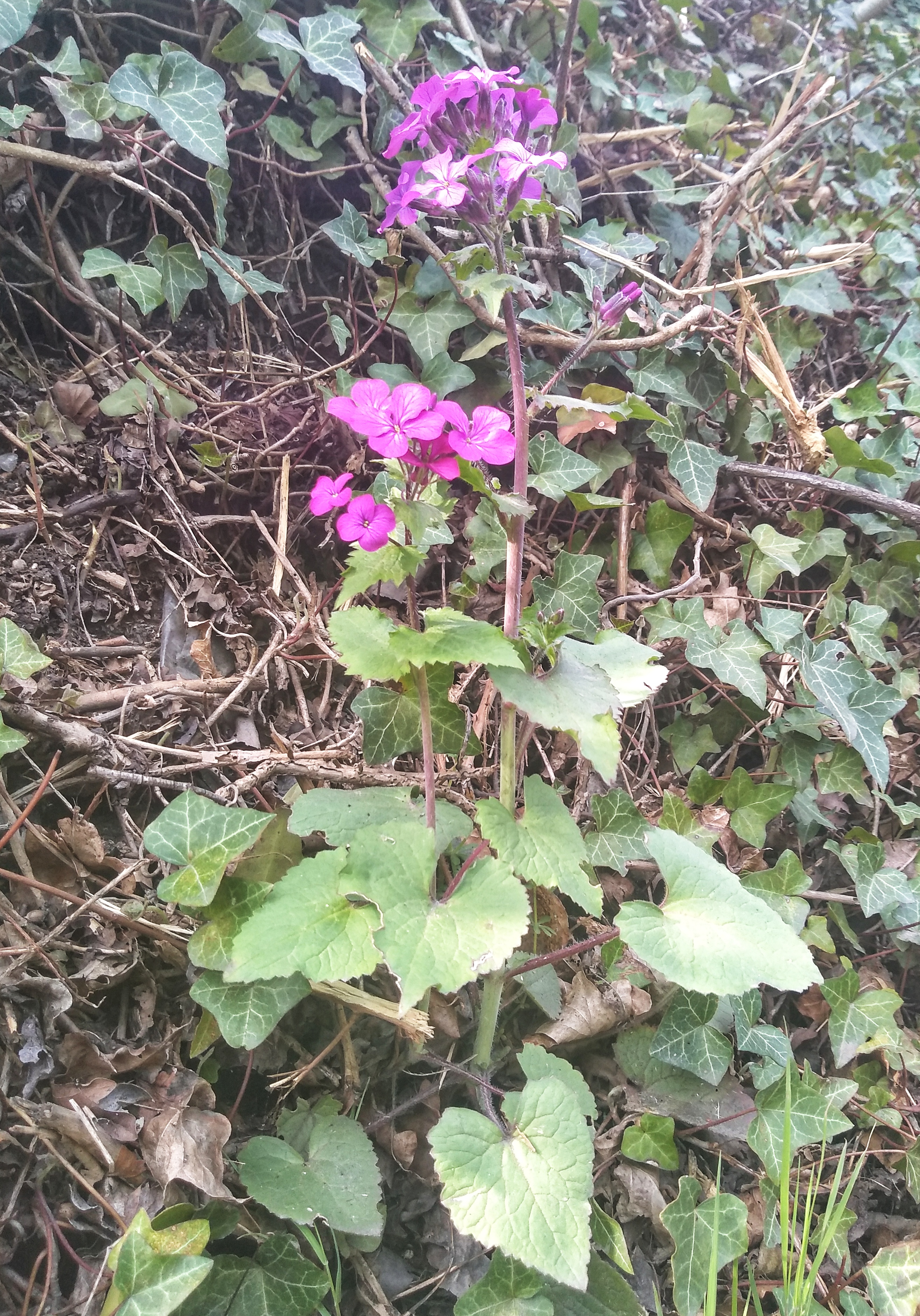
-Honesty/ Moonwort/Money plant (Lunaria annua)

-Herb Robert (Geranium robertianum)

-Dove’s foot cranesbill (Geranium molle)

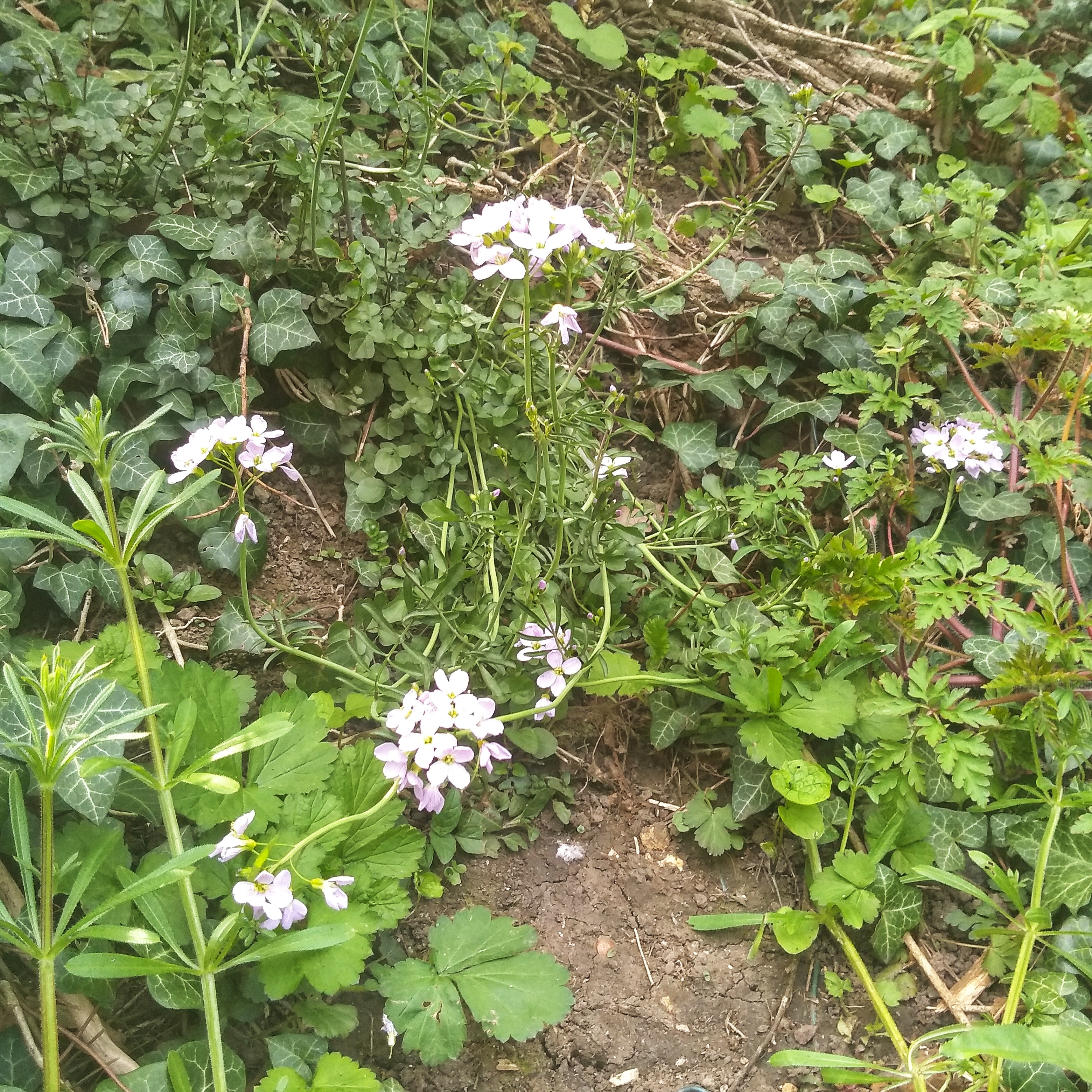
-Cuckooflower/ Lady’-smock (Cardamine pratensis)

-and Hedge garlic/ Garlic mustard (Alliaria petiolata).

I know this plant as Jack-by-the-hedge. I’m not entirely sure why it has this name. I guess it refers to being commonly found near hedgerows and Jack used to be a common name. Apparently the leaves, which have a mild garlic smell and taste, can be eaten in salads and sauces with meat or fish (Garlic mustard- Wildlife Trusts).

This week has been great for learning new bird sounds too. I have discovered a Dunnock (Prunella modularis) and a Green Woodpecker (Picus viridis) nearby without seeing them. Over the last few days I have heard another beautiful sound too. Each year I have Blue tits (Parus caeruleus) nesting under the eaves and it won’t be long before I hear their young. It is a fantastic sign of spring, better than anything the Easter bunny could bring (chocolate eggs are a close second though).

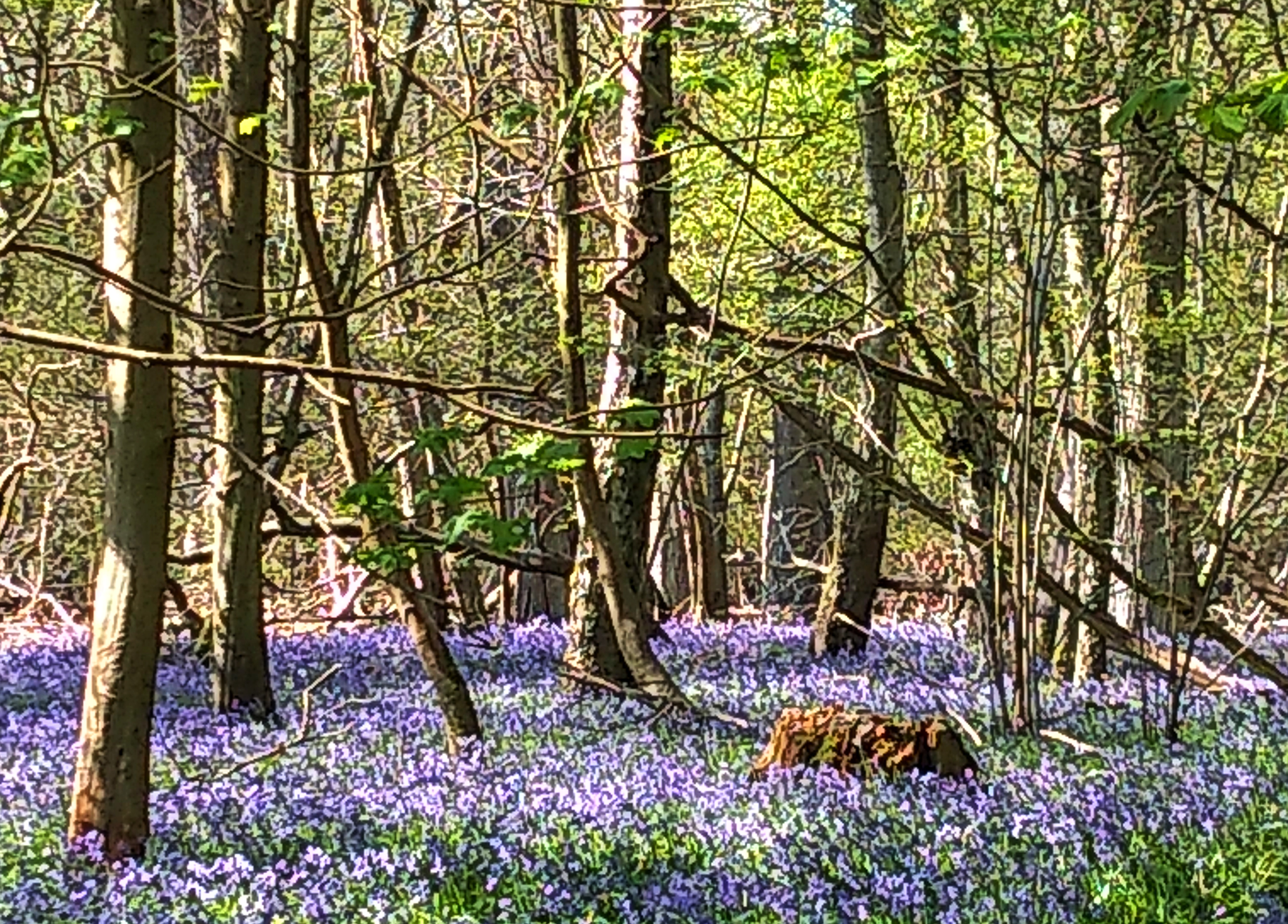
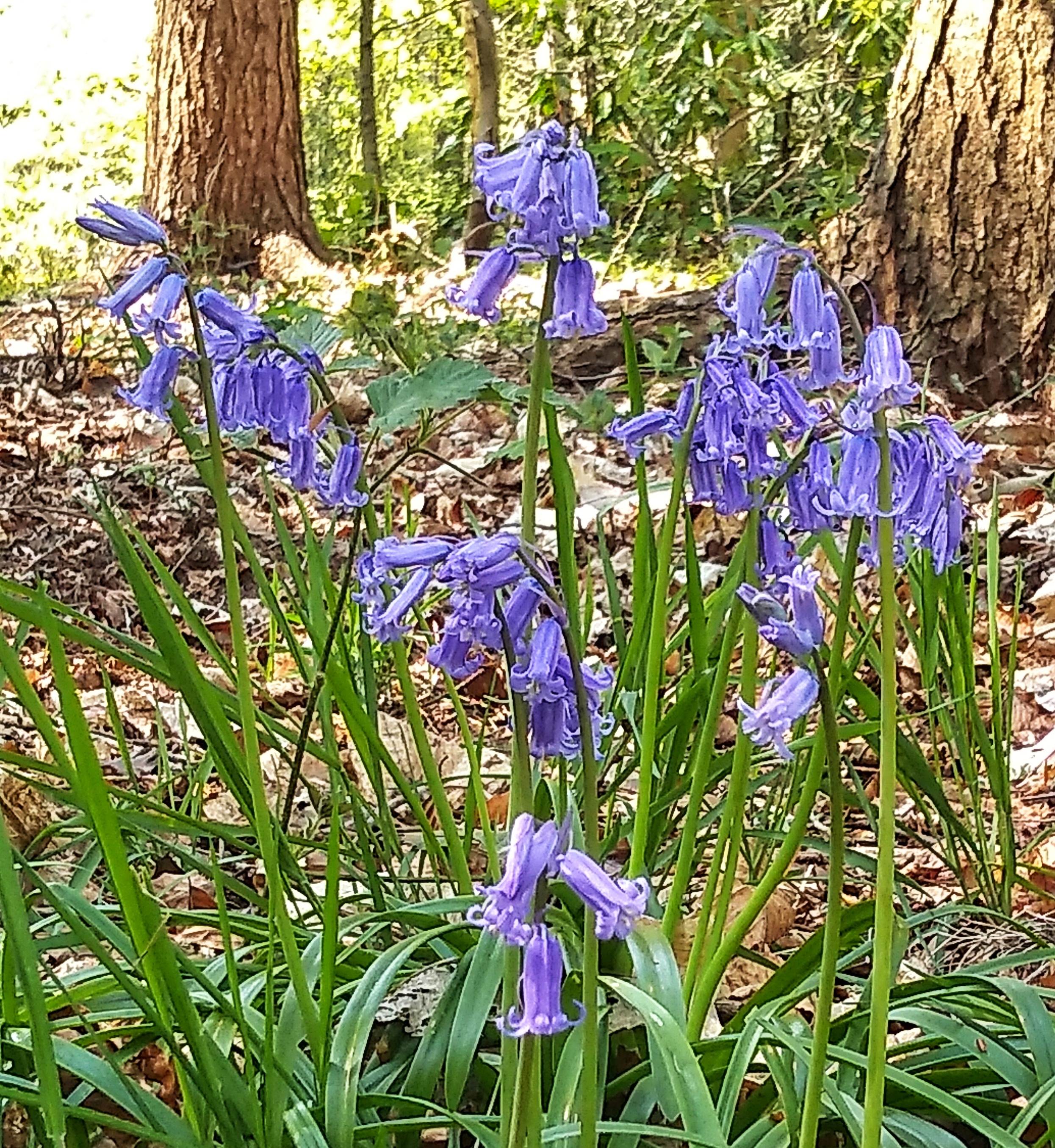
Yesterday I spent time visiting The Vyne (National Trust). The main attraction was the English Bluebells (Hyacinthoides non-scripta) on the woodland walk. The views were enchanting and smell delightful.

Also flowering near the Bluebells were Wood Anemones (Anemone nemorosa).

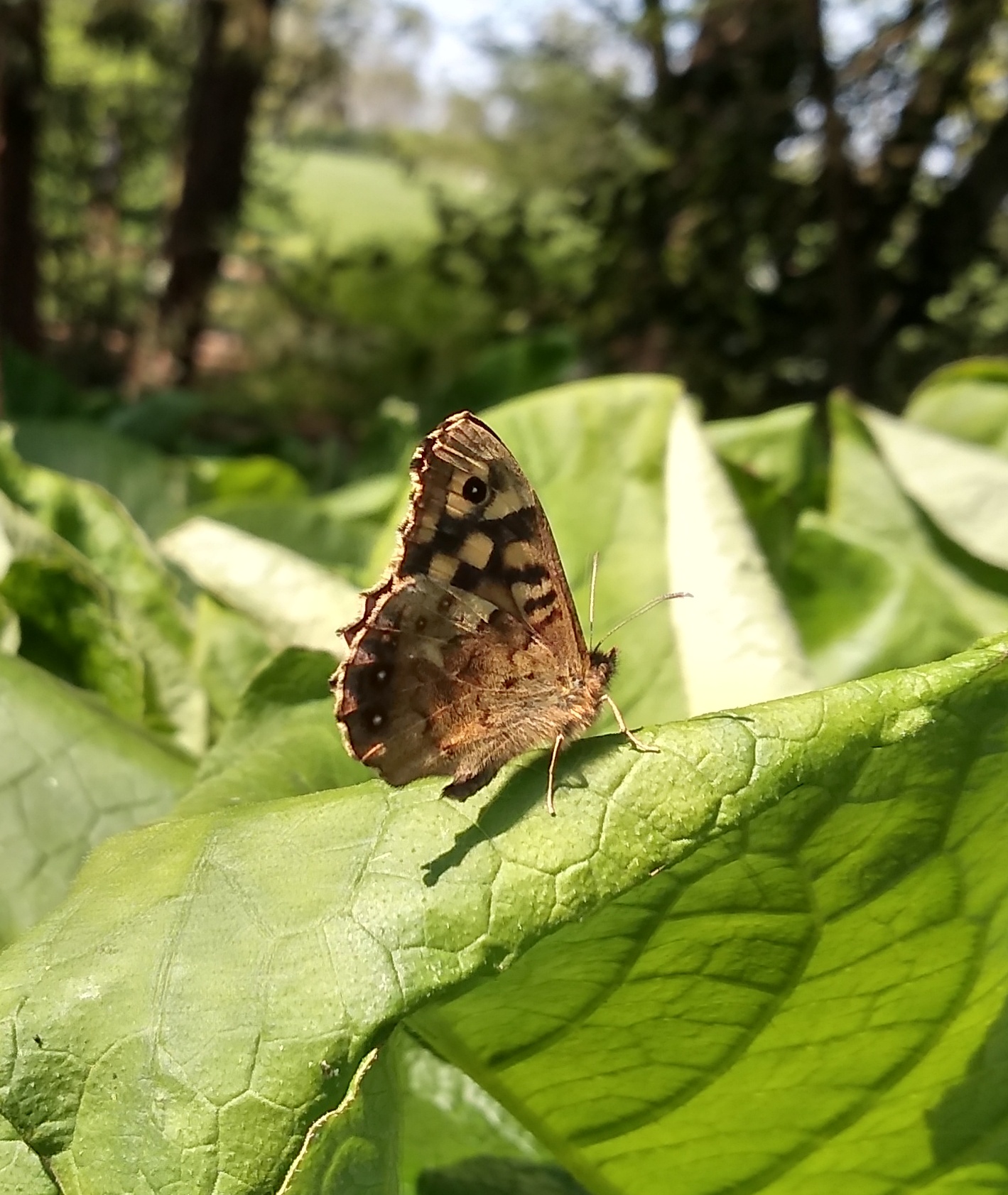
I spotted more Orange-tip butterflies there along with some Speckled wood butterflies (Pararge aegeria) flitting about.

It was a lovely way to spend a sunny Easter Sunday in good company.