Posted in nature

Springing Forward

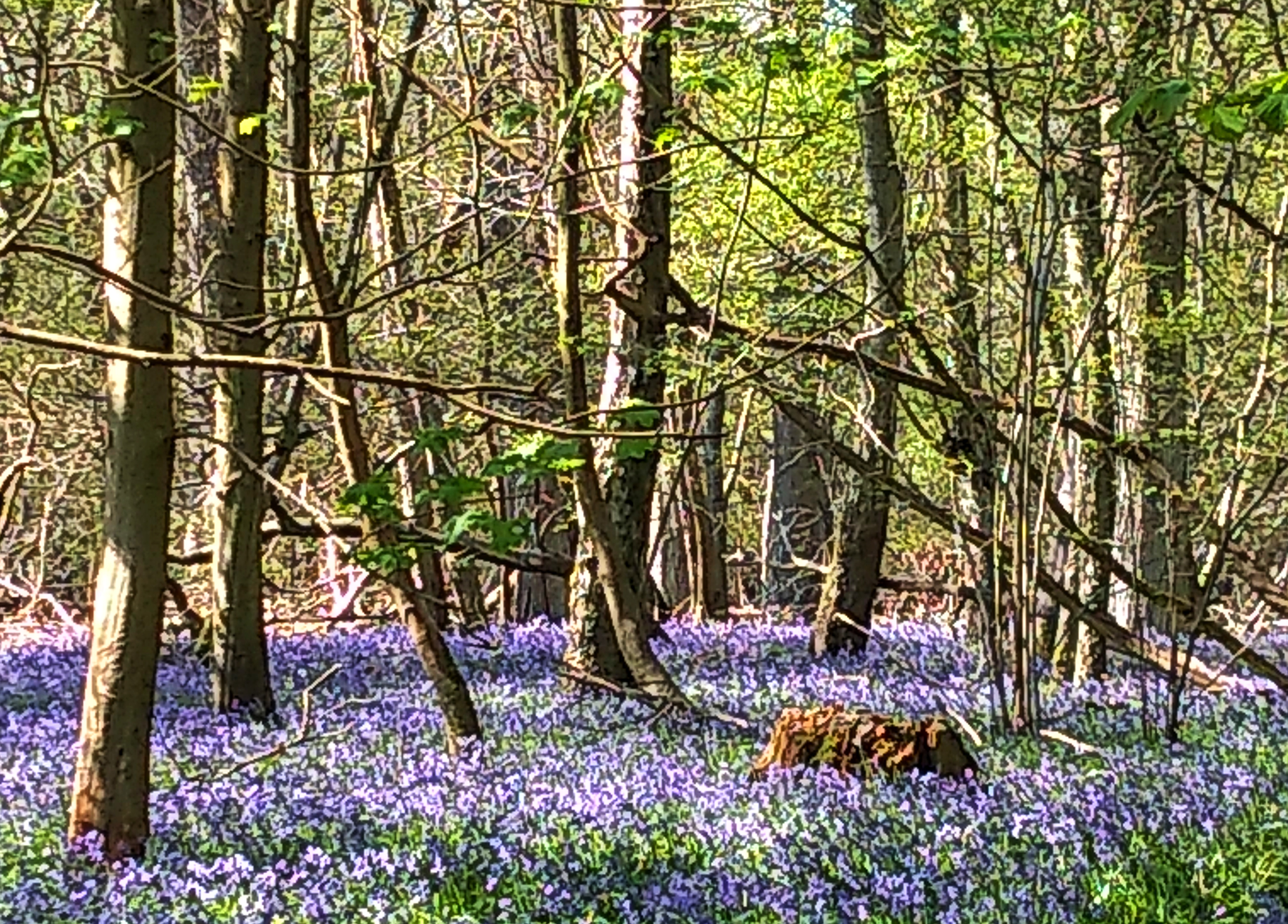
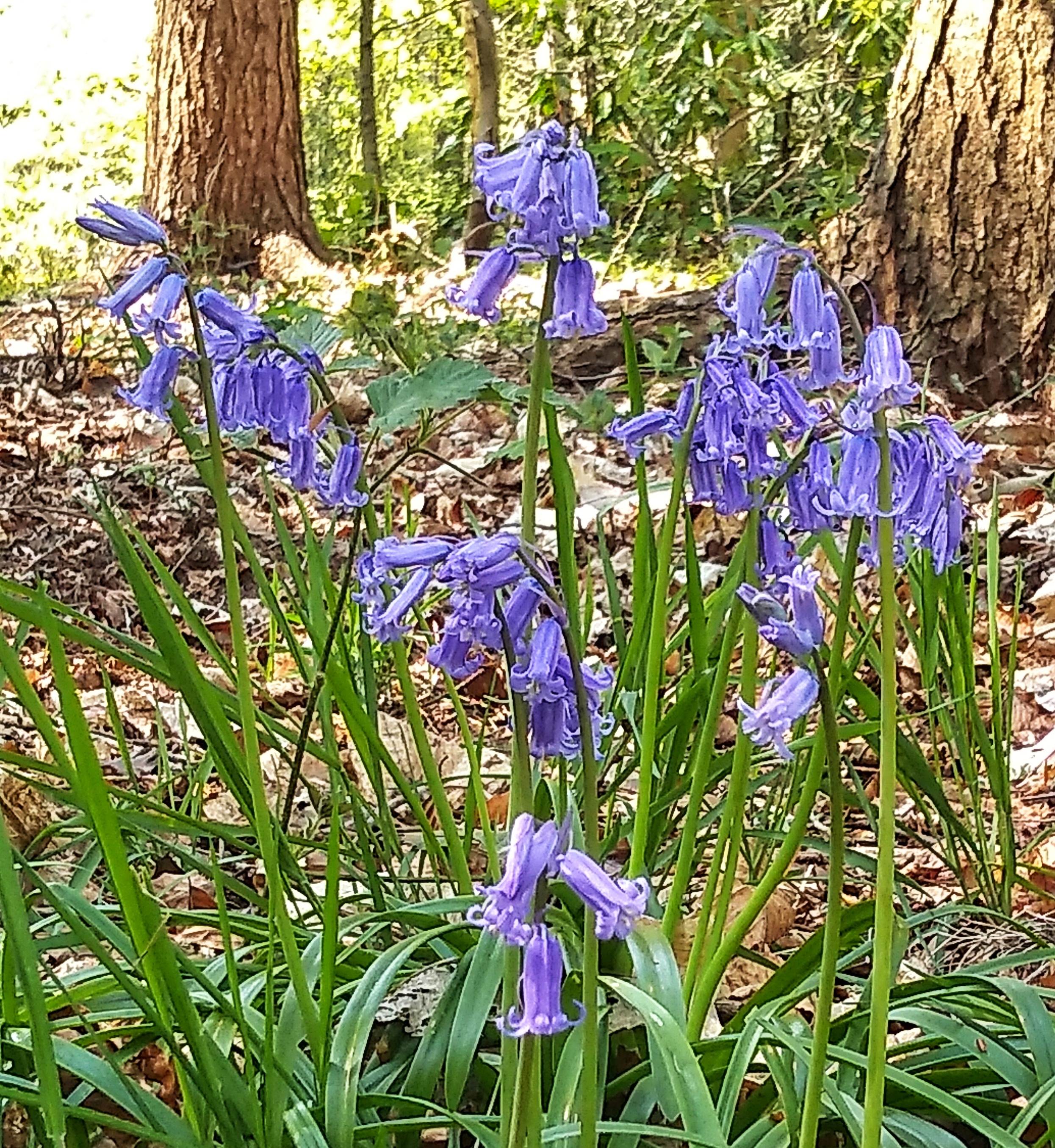
Spring is in full swing now. The Spring equinox has passed, clocks have been changed to welcome in British summer time, april showers often appear (and disappear just as quickly) and the Bluebell (Hyacinthoides non-scripta) season has begun. It has been a while since my last post and a lot has happened since then.
Back in early march, I noticed lots of frogspawn appear, they have since developed into tadpoles and some now resemble small versions of the adults. Male Smooth newts (also called Common newts- Lissotriton vulgaris) were undertaking courtship displays, swishing their tails to waft pheromones towards the females. The video below shows this courtship display; I managed to capture it back on the 7th of march.


Newt eggs are laid individually wrapped in the foliage of aquatic plants and therefore not as obvious as frogspawn. I haven’t noticed any Efts (young newts) yet though but hopefully I will soon.

Hawthorn (Crataegus) blossom has replaced those of Blackthorn (Prunus spinosa) now. Plus alongside the flowering Bluebells, many more spring flowers are currently blooming including, Cuckoo flower (Cardamine pratensis), Lesser stitchwort (Stellaria graminea) and Cow parsley (Anthriscus sylvestris).

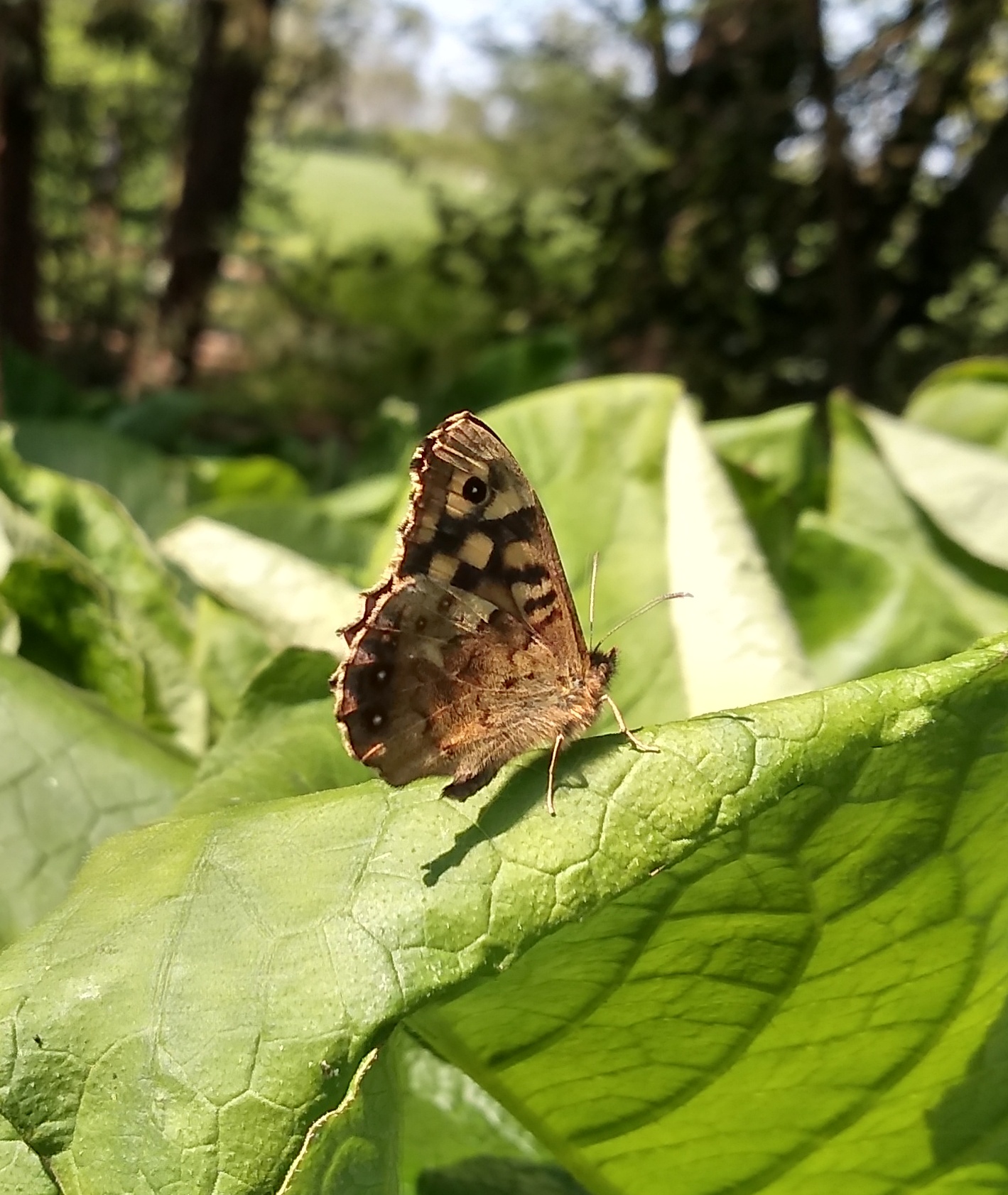
Butterflies are more noticeable these days. Recently I have seen Holly blue (Celastrina argiolus), Speckled wood (Pararge aegeria) and Small tortoiseshell (Aglais urticae) butterflies, as well as plenty more Brimstone (Gonepteryx rhamni).

More bee species have emerged over the past month; even the Leafcutter (Megachilidae) bees from the bee hotel on the allotment. Together with Red tailed bumblebees (Bombus lapidarius), Buff tailed bumblebees (Bombus terrestris), a Common carder bumblebee (Bombus pascuorum), and an Ashy mining bee (Andrena cineraria) I also noticed a Tawny Mining Bee (Andrena fulva)- The latter (shown below) was seen carefully exiting a hole on the side of the Wrekin.

I visited the Wrekin in Shropshire last weekend. A woodland surrounds the base of the hill which is quite a contrast from the more open areas at the top. Here Wood sorrel (Oxalis acetosella), an ancient forest indicator, could be seen blooming alongside ferns and moss. It was lovely to see patches of bluebells while listening to water trickling down the hillside (from the previous nights downpour).

Wood sorrel


At the summit of the igneous bedrock, Common heather (Calluna vulgaris) and Bilberry (Vaccinium myrtillus) are seen growing. Both plants grow on nutrient poor acidic soil. The Bilberries (also called Whinberry or Wimberry in Shropshire) were flowering but the edible fruit will be ripe in the summer.

Bilberry shrubs in flower.


It was also wonderful to see a couple of Buzzards (Buteo buteo) soaring and hovering around, ignoring us humans that had completed the ascent.

Lastly, since the Spring equinox, I have been watching the Peregrine falcons (Falco peregrinus) at St Albans cathedral on the live webcam here. Once again the pair have three eggs, the same as last year. Currently we are all waiting to see if they all successfully hatch and fledge. It is far more entertaining than any tv drama.

Posted in Allotment, nature

Slugs and Snails

What a mixed bag of weather we’ve had in the UK recently. It seems strange experiencing the current dry, warm weather given the snow, frost and april showers we had during the previous weeks.

Deciduous trees are turning green, as leaves unfurl and wildflowers continue to bloom. Snake’s-head fritillary (Fritillaria meleagris), Speedwells (Veronica), White Dead-nettle (Lamium album), Red Dead-nettle (Lamium purpureum), Yellow archangel (Lamium galeobdolon), Forget-me-nots (Myosotis) and Cowslips (Primula veris) are all flowering at the moment, with English Blubells (Hyacinthoides non-scripta) beginning to open up too.

Dainty Cowslips found on a verge.

Last week I caught a glimpse of a blue butterfly, my first sighting of the year, most likely a Holly blue (Celastrina argiolus). I also found another Red kite (Milvus milvus) feather as I worked last Tuesday (see below).

Even Tadpoles have begun to emerge, including in the pond we have near our plot on the allotment; hopefully they will help keep the slug and snail numbers down this year.

Slugs and snails have been in the news a lot this month because the Metaldehyde slug pellets ban has finally come into force in the UK. Perhaps we could view these creatures in a different way, after all they do good in nature; we can’t blame them going for an easy meal of soft tender leaves which just happen to be our prized plants. Interestingly only a small number of the 44 species in the UK are responsible for the damage we experience in gardens while the others feed on dead organic matter. I read an interesting article by Dr Andrew Salisbury, from the RHS, in The Guardian on this subject.

On my allotment I find wool pellets, copper barriers and cloches are helpful; along with growing seedlings on in pots before planting them out. Transplanting larger, stronger plants is better as they are able to withstand any damage, I also spend time collecting slugs and snails from hidden damp dark places and moving them to an area far away where they will cause less damage to crops. Encouraging predators (frogs, toads, hedgehogs, birds, slow worms (Anguis fragilis) and ground beetles) is always a great idea too, along with not having areas for them to hide near vulnerable plants.

A biological control that can be used, for slugs only, are Nematodes (Phasmarhabditis hermaphrodita). Watered into the ground these eventually kill the slugs as they infect them with bacteria once they’ve entered the slugs body. I have never gone for this option as I find the other measures suffice.

The other option is to grow plants which slugs and snails do not eat. Ones I’ve noticed they avoid include Ajuga, Aquilegia, Digitalis, Fuchsia, Geum Penstemon and Pulmonaria (further examples can be found on the internet).


Posted in nature

Increased Sunshine to Lift the Spirits.

With an increase in sunnier moments last week the more life is seemed to come out to enjoy the sun’s rays. Amidst these strange times I am especially glad I can enjoy nature therapy. In particular seeing Bumblebees flying around makes me smile. Along with several Buff-tailed Bumblebees (Bombus terrestris), I also saw a Hairy-footed flower bee (Anthophora plumipes) last Wednesday.

A Hairy-footed flower bee visiting Lungwort (Pulmonaria officinalis).
A Buff-tailed Bumblebee (Bombus terrestris) pollinating Winter heath (Erica Carnea).

In fact Wednesday was a very productive day for sightings. I saw my first lacewing (Neuroptera) of the season, which was hitching a ride in the van. I also saw a couple of 7-spot ladybirds (Coccinella septempunctata) amongst some Heuchera

Last week was great for counting frogs (Rana temporaria) too. On Wednesday there were seven attempting to remain shaded by a pile of scaffolding boards in a garden attached to a new build development. Consequently the frogs were moved to a quieter area so that access could be gained to the garden. Even on Thursday, as I worked next to a pond, I observed tadpoles emerge; It was fascinating to see the process unfold. I couldn’t count the total number of tadpoles but the pond was full of them as well as frogspawn; as it had been the previous year. Plus I even found a frog on the allotment.

As well as amphibians and insect sightings, further flowers blooming were,
Glory of the snow (Chionodoxa luciliae)

Anemone apennina and

Two-leaf squill, also called Alpine squill (Scilla bifolia)

Posted in nature

Amphibians and Insects

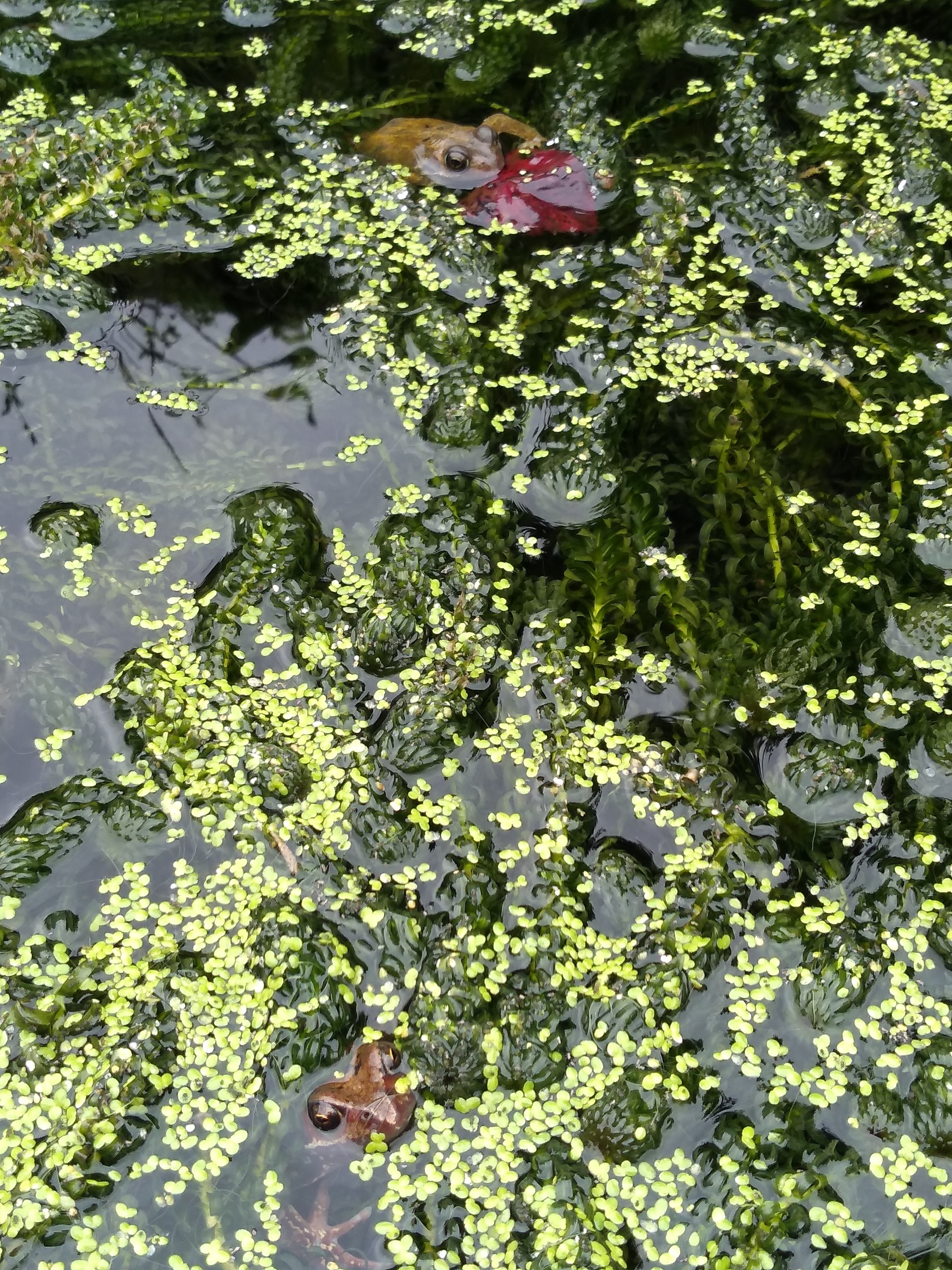
My week started and ended working next to ponds. The first was a small natural pond with a couple of frogs (Rana temporaria) sitting in it.

The other was a large disused outdoor swimming pool. In its neglected state rainwater collects within the concrete walls and nature is taking over. Given the murkiness of the water I was unable to obtain decent photos of my findings; however I saw another frog, (surrounded by lots and lots of tadpoles) along with a dragonfly nymph and a newt. It should be interesting to discover how many tadpoles survive to adulthood.

For the rest of the week insects were centre stage, especially on Wednesday when flying ants took to the sky. Flying ant season really tests my resolve to work through my dislike of ants (which originated in childhood). Thankfully I now find them more fascinating than loathsome, mostly.

The other insects I saw that day were;
– A (Chrysotoxum cautum) hoverfly on some Pyracantha.

– Honey bees (Apis mellifera) and a Red-tailed bumblebee (Bombus lapidarius) visiting a Geranium ‘Rozanne’ plant.

– Lavender (Lavandula) full of bees and butterflies, including more Honey bees as well as Buff-tailed bumblebees (Bombus terrestris), Meadow browns (Maniola jurtina) and a Ringlet (Aphantopus hyperantus) butterfly.

The Meadow brown butterflies also enjoyed visiting the Echinops bannaticus flowers too.

Even as I returned home I noticed a Willow Beauty (Peribatodes rhomboidaria) moth on the hall window.

The adults feed on Creeping thistle (Cirsium arvense) and Ragwort (Senecio jacobaea) both of these plants are common around this area. The caterpillars feed on various trees, shrubs as well as climbers ranging from Yew (Taxus baccata), Birch (Betula), ivy (Hedera helix), honeysuckle (Lonicera) and the wild Clematis, Traveller’s joy (Clematis vitalba).

The previous day I came across more insects that I was previously unaware of.

The first one was the Common red soldier beetle (Rhagonycha fulva).

It is a beneficial insect as adults eat aphids and are pollinators (feeding on nectar and pollen from open flat flowers such daisies and hogweed) while the larvae feed on slugs and snails along with other ground dwelling invertebrates.

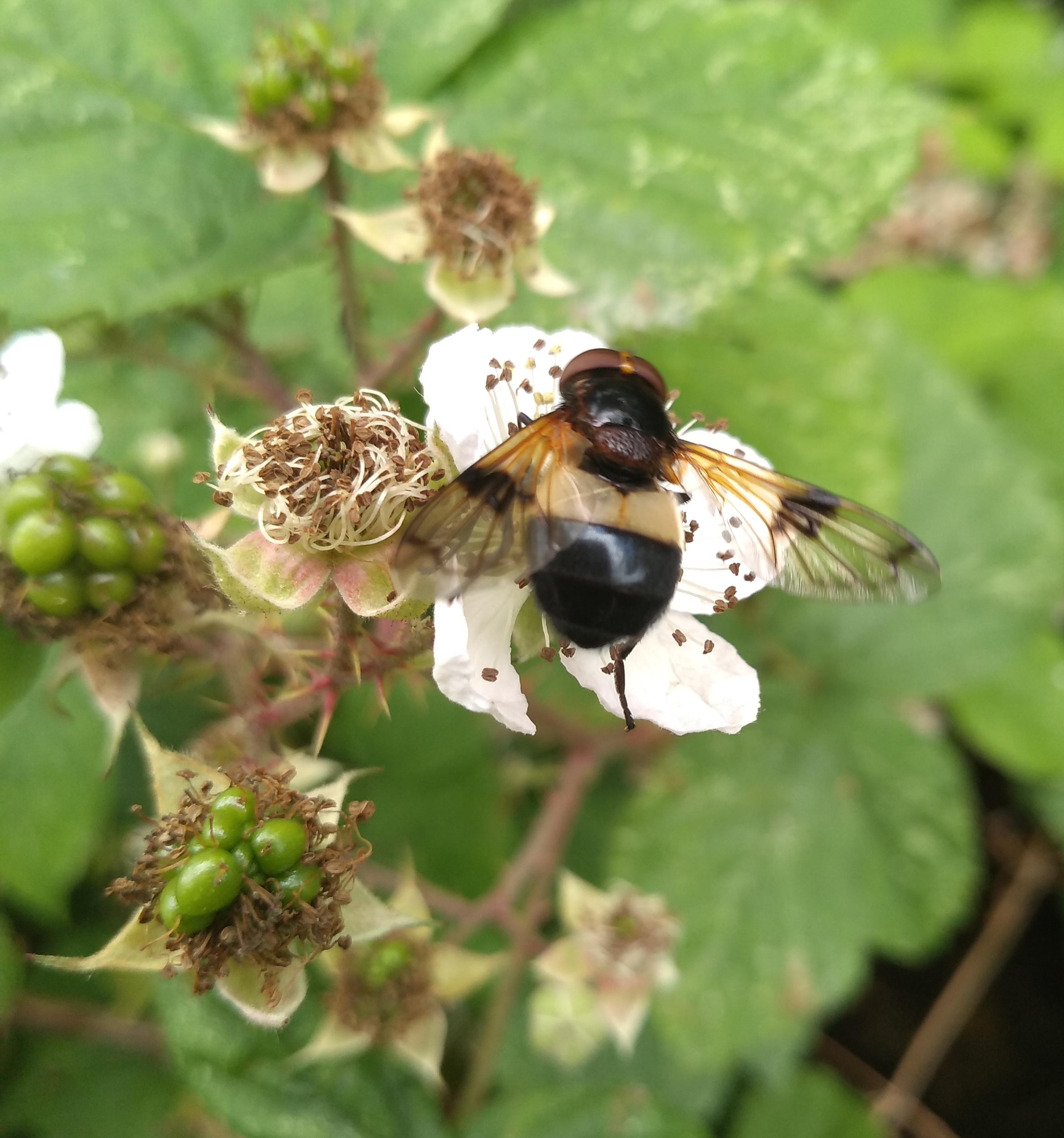
The other insect I saw on Tuesday was a female Volucella pellucens hoverfly feeding on nectar and pollen from Bramble (Rubus fruticosus).

These hoverflies also pollinate umbellifers; However as larvae they inhabit Bumblebee and wasp nests eating any waste produced along with their hosts larvae.

Posted in nature

Different sort of Easter chicks

After a busy seven days it is lovely to finally relax and reflect upon last weeks sightings.

Throughout the week I have seen Orange-tip (Anthocharis cardamines) and Brimstone butterflies (Gonepteryx rhamni) flying around as well as more Harlequin ladybirds (Harmonia axyridis). I have seen even more 7-spot ladybirds (Coccinella septempunctata), well into double figures. Ladybirds make me smile, a reaction than never diminishes. Something else that made me happy last week was seeing lots of tadpoles continuing to develop; it won’t be long before they become frogs feasting on slugs and snails.

On Thursday I walked home again, discovering yet more wildflowers blooming along the verge. The most prolific was Cow Parsley (Anthriscus sylvestris). Also called Queen Anne’s Lace or Wild Chervil it is pictured below amongst Dandelions (Taraxacum officinale) and White Dead-nettle (Lamium album).

Other flowers I saw along the way were;

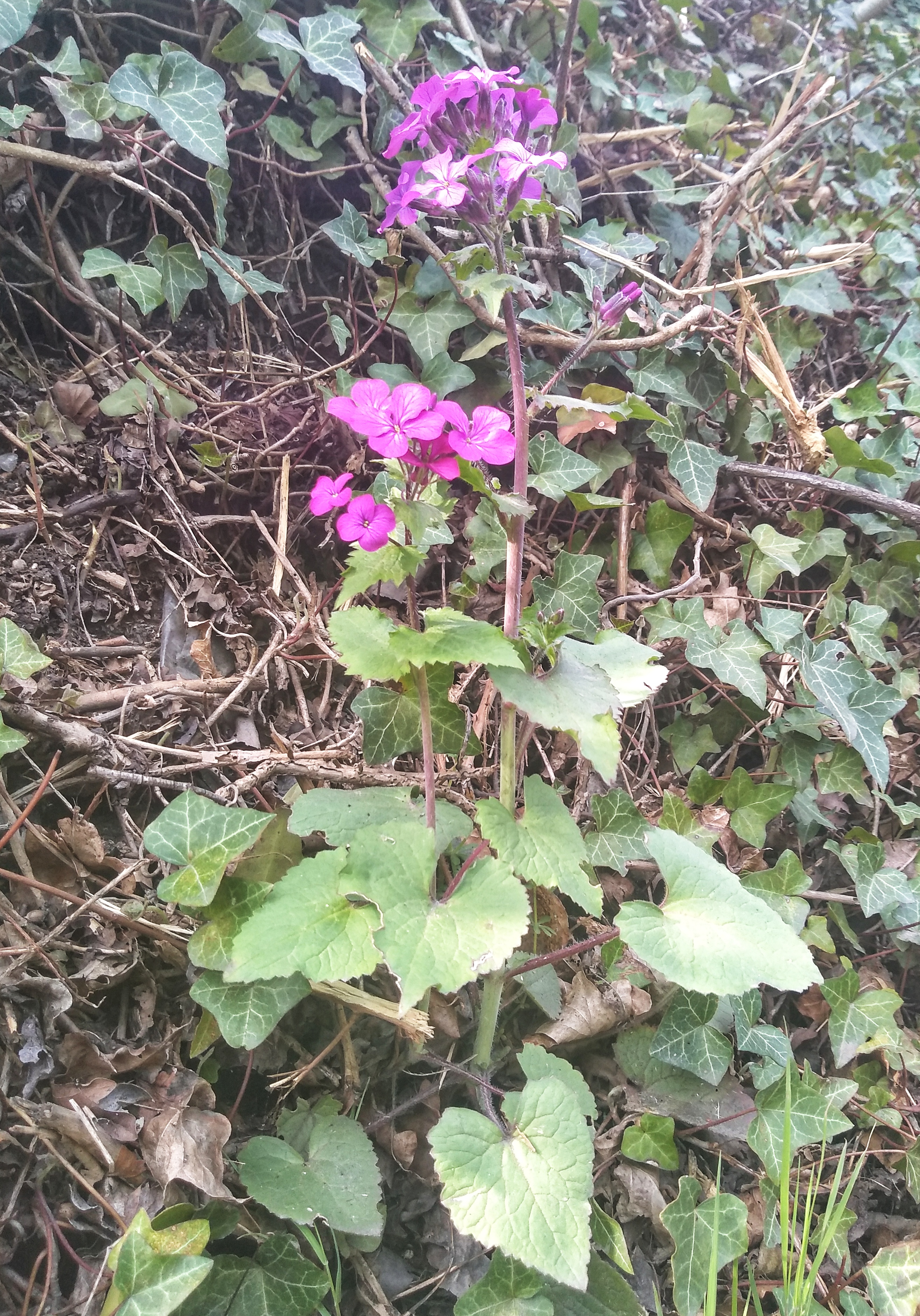
-Honesty/ Moonwort/Money plant (Lunaria annua)

-Herb Robert (Geranium robertianum)

-Dove’s foot cranesbill (Geranium molle)

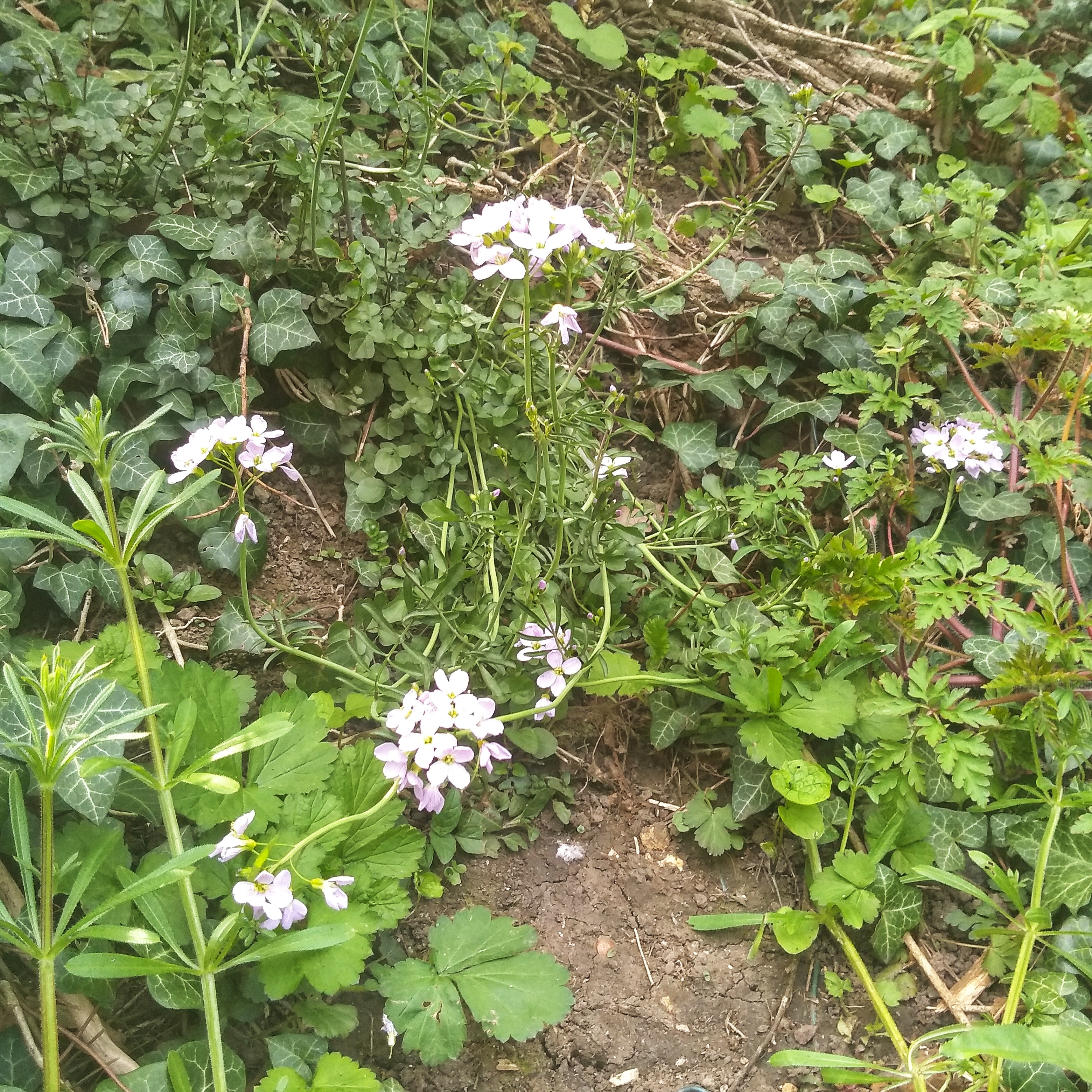
-Cuckooflower/ Lady’-smock (Cardamine pratensis)

-and Hedge garlic/ Garlic mustard (Alliaria petiolata).

I know this plant as Jack-by-the-hedge. I’m not entirely sure why it has this name. I guess it refers to being commonly found near hedgerows and Jack used to be a common name. Apparently the leaves, which have a mild garlic smell and taste, can be eaten in salads and sauces with meat or fish (Garlic mustard- Wildlife Trusts).

This week has been great for learning new bird sounds too. I have discovered a Dunnock (Prunella modularis) and a Green Woodpecker (Picus viridis) nearby without seeing them. Over the last few days I have heard another beautiful sound too. Each year I have Blue tits (Parus caeruleus) nesting under the eaves and it won’t be long before I hear their young. It is a fantastic sign of spring, better than anything the Easter bunny could bring (chocolate eggs are a close second though).

Yesterday I spent time visiting The Vyne (National Trust). The main attraction was the English Bluebells (Hyacinthoides non-scripta) on the woodland walk. The views were enchanting and smell delightful.

Also flowering near the Bluebells were Wood Anemones (Anemone nemorosa).

I spotted more Orange-tip butterflies there along with some Speckled wood butterflies (Pararge aegeria) flitting about.

It was a lovely way to spend a sunny Easter Sunday in good company.