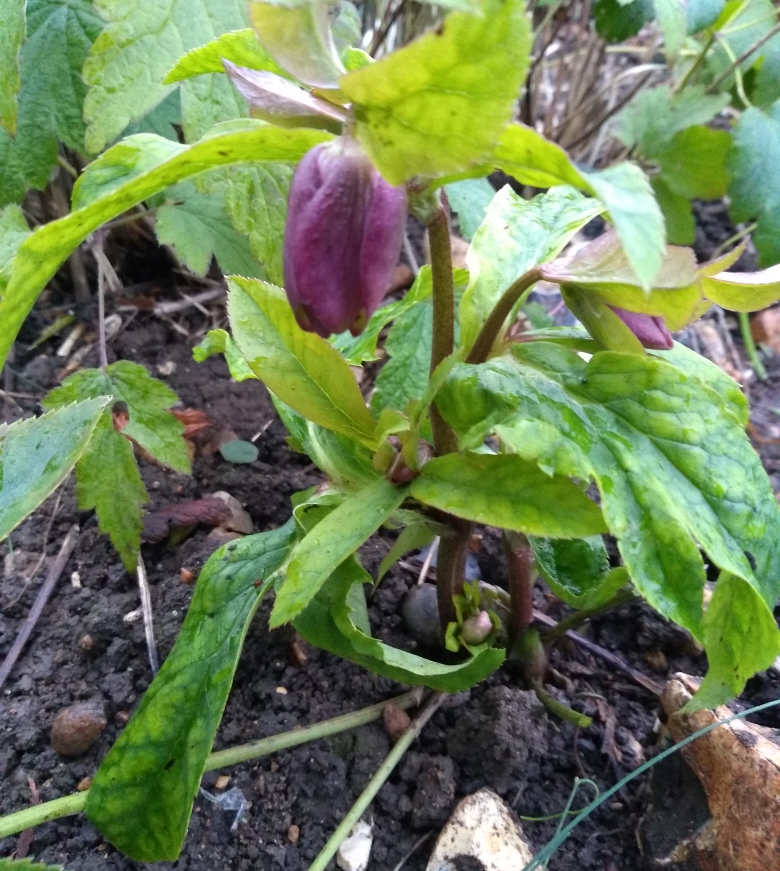
Posted in nature

Liminality

February is a liminal month, it holds the hope of spring alongside the grip of winter. Just when glimmers of warmer weathers arrival brings dull wet conditions, clear nights followed by cold frosty mornings bite you back to reality in the glimmering sunshine. Even my activities have a duality to them. February is the time when I organize my seeds, sew Sweetpeas and chillies as well as check my houseplants; however I want to continue hibernationing. I find myself quite hopeful in this month and overwhelmed at the same time.

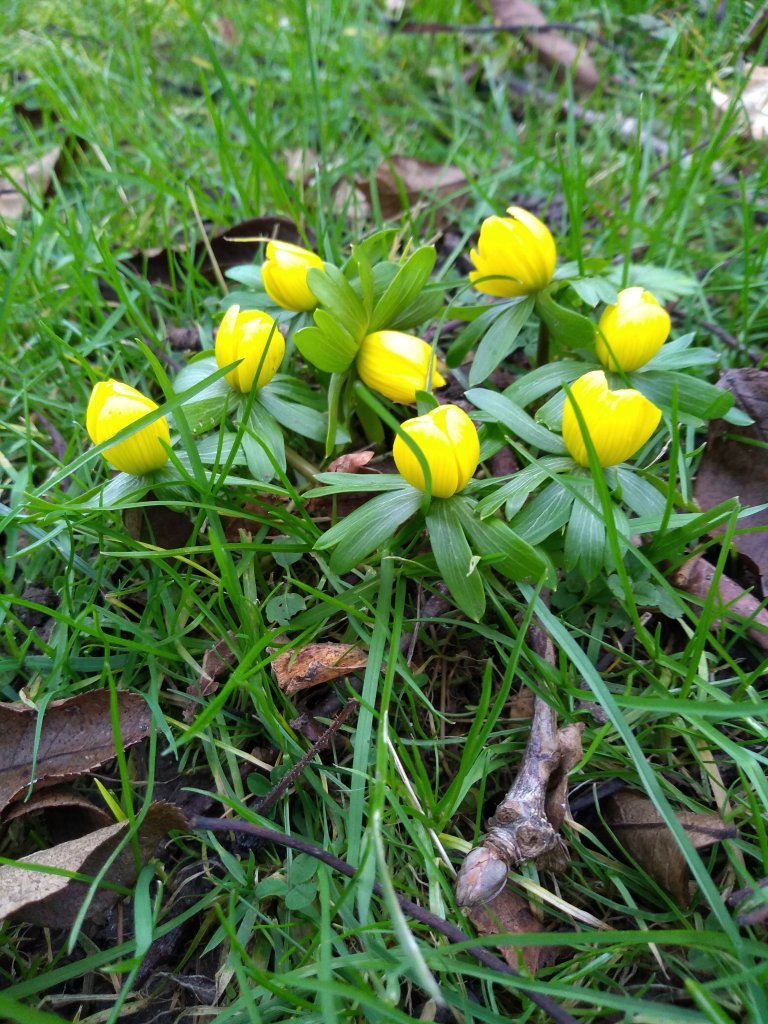
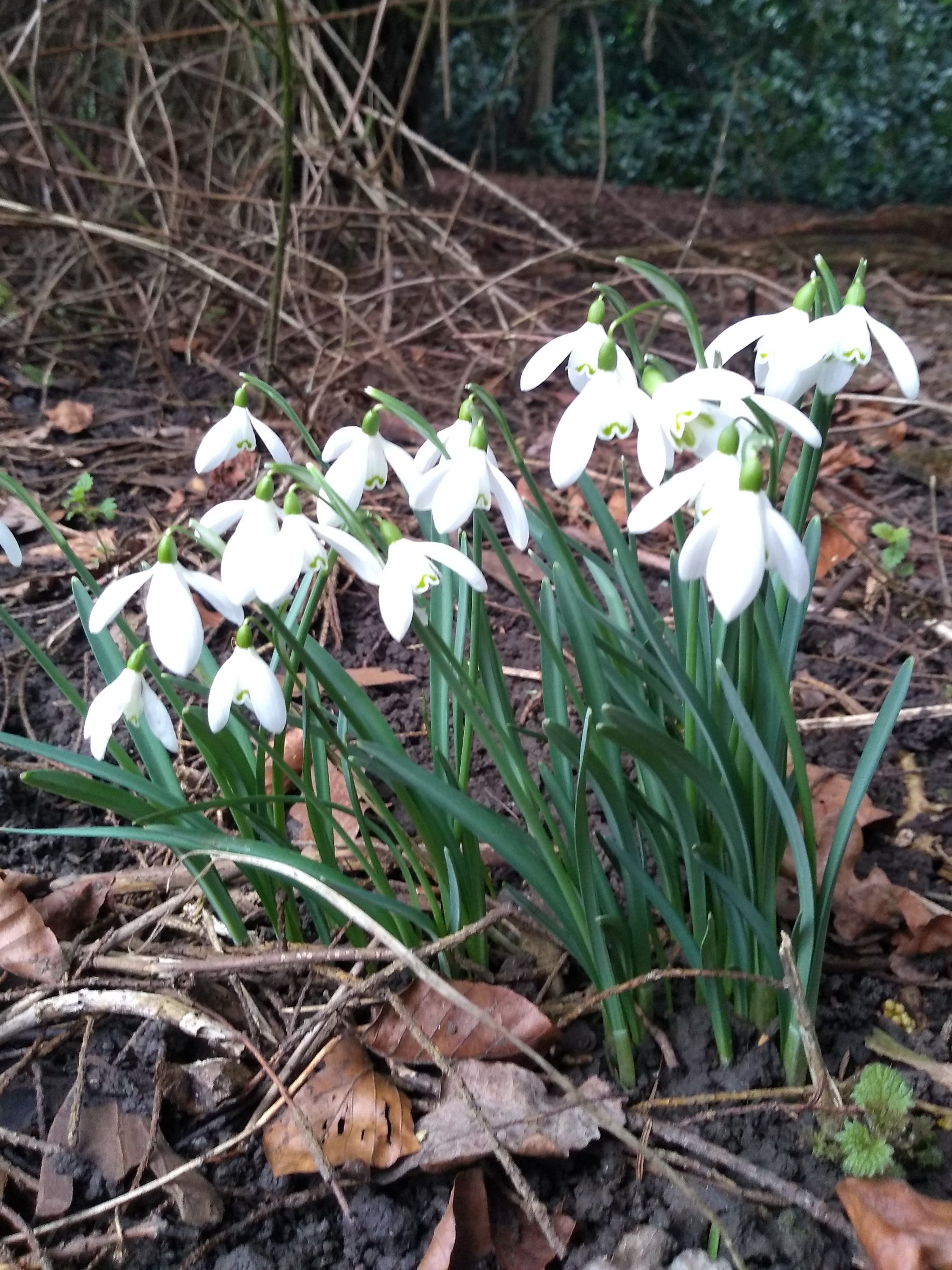
It is always lovely to see the first stirrings of spring, especially the arrival of Snowdrops, (Galanthus) and Winter aconites (Eranthis hyemalis). I often hear foxes  (Vulpes vulpes) calling at night at this time too. It’s no coincidence that the celebration of the lands awakening after winter, Imbolc, is on the 1st February. The biggest indicator that spring is on its way are the birds beginning to pair up; boldly singing to alert prospective mates of their whereabouts whilst also holding onto territory. I was fascinated, one rather cold but not frozen day, to see a Robin (Erithacus rubecula) defend a feeder, chasing off a Tree creeper (Certhia familiaris). I have never seen a Tree creeper venture onto a bird feeder before, nor a Robin actually (but I have previously seen the latter fight other birds for resources).

An image of a Tree creeper can be seen on the RSPB website here;

Other birds that have been particularly vocal in recent weeks have been the Mistle thrush (Turdus viscivorus), Great spotted Woodpecker (Dendrocopos major) and Dunnock (Prunella modularis).

The Mistle thrush is one of the UK’s largest songbirds, even larger than the Blackbird (Turdus
merula) with a body length of 27 cms and wingspan of 45 cms. Although similar in looks to the Song thrush (Turdus philomelos), it’s more grey tonally. While this bird is named due to its love of mistletoe (Phoradendron serotinum), it also eats worms, slugs, insects and berries and is found in parks, gardens, farmland and woodland often singing at the top of tall trees. It is not as commonly seen as the Song thrush as its status is Red under the Birds of Conservation Concern 5: the Red List for Birds. It has been a joy to hear the sound of the Mistle thrush as I worked, an example of which can be heard here.

I have also loved hearing a Great spotted Woodpecker (Dendrocopos major). Interestingly it has sung at the top of the same fir tree as the Mistle thrush, albeit at different moments. I also heard it drumming on the trunk of a dead and Oak (Quercus) tree that had a hole in the side, see below. Perhaps that is where the woodpecker lives.


The Great spotted woodpecker call can be heard on the Woodland trust website. 

Lastly, in a different garden, I was able to witness a Dunnock (Prunella modularis) singing sweetly, an example of this bird’s song, can be found on the RSPB website here .

At the end of January, once again I took part in the annual RSPB Big garden birdwatch; my results this year were-

1 Carrion crow (Corvus corone)
5 Goldfinch (Carduelis carduelis)
2 Wood pigeon (Columba palumbus)
3 Starlings (Sturnus vulgaris)
2 Magpie (Pica pica)
1 Blackbird (Turdus merula)
2 Great tit (Parus major)
1 Red kite (Milvus milvus)

Posted in Allotment, nature

March Arrives like a Lion

I’ve slowly started to emerge from hibernation now that Imbolc, the half way point between the Winter solstice and Spring equinox, (meaning ‘In the belly of the mother’- referring to the first stirrings of the years new growth) has passed; mirroring the snowdrops, winter aconites and hazel flowers (the first signs of the transition into the next season).

The scents of Daphne, Mahonia and Sarcococca fill the air alongside the arrival of other spring flowers; daffodils, cyclamen, crocus and hellebores. Willow (Salix) catkins are also opening while Blackthorn (Prunus spinosa) blossoms fill the roadsides with glorious white clouds.

Although it has still been too early for most allotment activities, the rhubarb has been emerging on the plot for the last month. I still haven’t cut back perennials as I want to allow cover for beneficial insects such as sheltering ladybirds (Coccinellidae) until the weather makes their survival easier. Instead February is mainly a month for planning the forthcoming years growing (thinking about chitting potatoes and planning seed sowing). One job I have begun however is the indoor Sweet pea and Chilli seed sowing. This small step gives me hope that I will soon be able to sow other seeds soon.

Although I am beginning to think ahead, I am still fondly holding on to snuggly sofa moments such as reading and partaking in arts and crafts, especially on wet days.

Through the winter I still immersed myself in nature. In January I pruned my apple tree on the allotment, blessing and giving thanks through Wassailing. Although symbolic, it was a nice way to feel deeply connected to the plot. I am grateful to be a guardian over it and receive the abundance of fruit, veg and flowers in return.

I saw quite a few foxes (Vulpes vulpes) over the winter too, including one on the allotment. It was such a beautiful moment to watch it foraging under trees.

Once again, I took part in the RSPB Big Garden Bird Watch in January. The list of birds I saw this time were;
4 Long-tailed tits (Aegithalos caudatus)
5 Starlings (Sturnus vulgaris)
1 Blackbird (Turdus merula)
3 Wood pigeons (Columba palumbus)
5 Sparrows (Passer domesticus)
2 Blue tits (Cyanistes caeruleus)
1 Greenfinch (Chloris chloris)
1 Great tit (Parus major)
6 Magpies (Pica pica)
1 Gull (Larinae) and
1 Red kite (Milvus milvus)

There is a small group of Ring-necked Parakeet (Psittacula krameri) that visit a nearby tree of late but frustratingly they didn’t show up during the observation hour.

During February, bird song continued to fill the skies, growing in frequency and volume. Also occasionally insects have boldly buzzed and fluttered about on the odd sunny days. Butterflies I noticed were a Brimstone (Gonepteryx rhamni) and Peacock (Aglais io); the latter I saved from an abandoned spider web.
I have also seen bees visiting mahonia, crocuses and hellebores, especially queen bumblebees.

Last week, I was excited to find some Jelly ear fungus (Auricularia auricula-judae) for the first time. They were growing on a Buddleia bush. Although this fungus is usually associated with elder (Sambucus) it can also be found on other hard woods like sycamore (Acer pseudoplatanus), ash (Fraxinus) and beech (Fagus) in damp shady conditions. Perhaps the fungus was thriving on the Buddleia, in the garden I visited, because of the recent weather as well as it being planted near a beech hedge.  Interestingly this fungus can continue to grow on dying wood that has been thawed, once frozen; hence it can survive really cold winters. The common name was given to this fungi because of how it looks and also its jelly-like texture.


Worryingly, it has been a very mild winter overall with lots of flooding occurring in Britain; certainly very different from last winter. So far the wet weather is continuing into March; hopefully the month will exit like a lamb and the roaring weather won’t continue too much in spring, as it will have an affect pollinators. We will have to see what the rest of 2024 has in store.

Posted in nature

Daffodils in Snow

Daffodils (Narcissus) began to bloom at the beginning of March, in time for St David’s day, together with Hellebores.  Since then wildflowers including Red dead nettle (Lamium purpureum), Speedwell (Veronica), Celandine (Ficaria verna), Dandelions (Taraxacum), Primroses, Cowslips (Primula veris), Daisies (Bellis perennis), Dog violets (Viola riviniana) and Winter aconites (Eranthis hyemalis) have joined them. It’s lovely to see all the colour developing, taking over from the Snowdrops (Galanthus nivalis) and early flowering Crocuses that have started to whither. I have even noticed Bluebell (Hyacinthoides non-scripta) leaves showing now too, it wont be long before they flower.

Blackthorn (Prunus spinosa), the first trees of the year to bloom are putting on a show, their blossom resembling white clouds lining the roads. Willow (Salix) aren’t far behind, their buds ready to burst open. Even Magnolias, Camelias and Forsythia (in gardens) are beginning to flower as well. The male catkins on Poplar trees are noticeable now too.

Red male Poplar catkins on a twig fallen in the strong winds.

I have also witnessed the first queen Buff-tailed (Bombus terrestris) bumblebees venturing out on the few warmer sunnier days that we have had. Seeking energy sources as the venture out from hibernation. I also noticed a Brimstone (Gonepteryx rhamni) butterfly flutter passed me last week while the previous Friday a Peacock (Aglais io) butterfly flew passed as I worked. It was also lovely to see lots of Smooth newt (Lissotriton vulgaris) in a garden pond last Wednesday. The newts were almost full sized and looked fully developed already.

Although 20th of March was the Spring equinox we experienced a cold northerly blast of weather a few weeks ago. The wintery showers that arrived brought snow. During this transitional time, March weather can be very mixed. Although spring has sprung, winters grasp still holds on; It was strange to see Daffodils poking above snow for a day.

During a few of the snowy days, I witnessed a wonderful sight of a female Sparrowhawk (Accipiter nisus) perched on top of a tree and later in flight as it swooped towards a smaller bird in a more wooded area of town. Presumably the weather had forced it out into the open to search for food. It’s size, together with its dark brown head back, tail and wings together with a pale breast made it clear to identify. Males are a bluey grey colouring with pale breasts and orange highlights. Males are about 25% smaller than the females, the size of a Collared dove (Streptopelia decaocto).

These birds are protected under the Wildlife and Countryside Act 1981 because they are Amber Under the Red List, Birds of Conservation Concern 5: (2021).

Often found in woodlands or open ground nearby, as well as gardens in urban settings, Sparrowhawks are the most commonly seen bird of prey in the UK. They can be seen throughout the year eating smaller birds, rodents and also rabbits when their regular food is scarce. In fact many years ago I witnessed a male Sparrowhawk take down a city pigeon (Columba livia). Although similar in size, and although the feral pigeon was doing its best to escape the Sparrowhawks clutches it didn’t win the fight.

Sparrowhawk breeding will occur between May and the end of July, laying 4-5 eggs.

Although mostly silent, these birds do have a call which can be heard on the RSPB website here.

Posted in nature

Reawakening

There have been really cold moments this January, with temperatures barely reaching positive numbers here in the UK and some areas experiencing more snow; however nature has started to emerge once again.

On a walk a few weeks ago, I noticed Blackthorn (Prunus spinosa) buds ready to burst open and the tiny red female Hazel (Corylus avellana) flowers open alongside male catkins.

Blackthorn buds
Hazel flower and catkins

Cyclamen and Snowdrops (Galanthus) are also blooming now and even Daffodils (Narcissus) and Crocus are beginning to push through the now defrosted ground.

Last weekend was the annual RSPB’s Big Garden Birdwatch. My results this year were;
3 Wood pigeon (Columba palumbus)
5 Starlings (Sturnus vulgaris)
2 Blackbirds (Turdus merula)- 1 female and 1 male
2 Great tits (Parus major)
1 Magpie (Pica pica)
1 Robin (Erithacus rubecula)
3 Bluetits (Cyanistes caeruleus)
2 House sparrows (Passer domesticus)- 1 male and 1 female
2 Goldfinch (Carduelis carduelis) along with
2 Carrion crows (Corvus corone)

It’s hard to believe it’s now February. As usual during January I slowed and hunkered down, reflecting nature at this time. Yet the wild flowers are beginning to stir and birds pairing up. It isn’t long before spring arrives and I am already starting to plan what I shall grow on the allotment this year.

Posted in nature

An Interaction with a Blackbird

I can’t believe March has arrived already. Blackthorn (Prunus spinosa), Sweet violet (Viola odorata) and Daffodils are in full bloom.

It wasn’t so long ago that we had the stormy weather and Snowdrops were at their best; the year seems to be advancing in leaps and bounds now.

The temperature last Thursday reached 16°C which encouraged butterflies to flutter about. I noticed several Brimstones (Gonepteryx rhamni) as well as the Red admiral (Vanessa atalanta) below.

A Red admiral feeding from a Daphne, a delight for the senses, both visual and aroma.

Along with these beautiful sightings, there were a couple of amazing nature experiences that particularly stood out over the past few weeks.

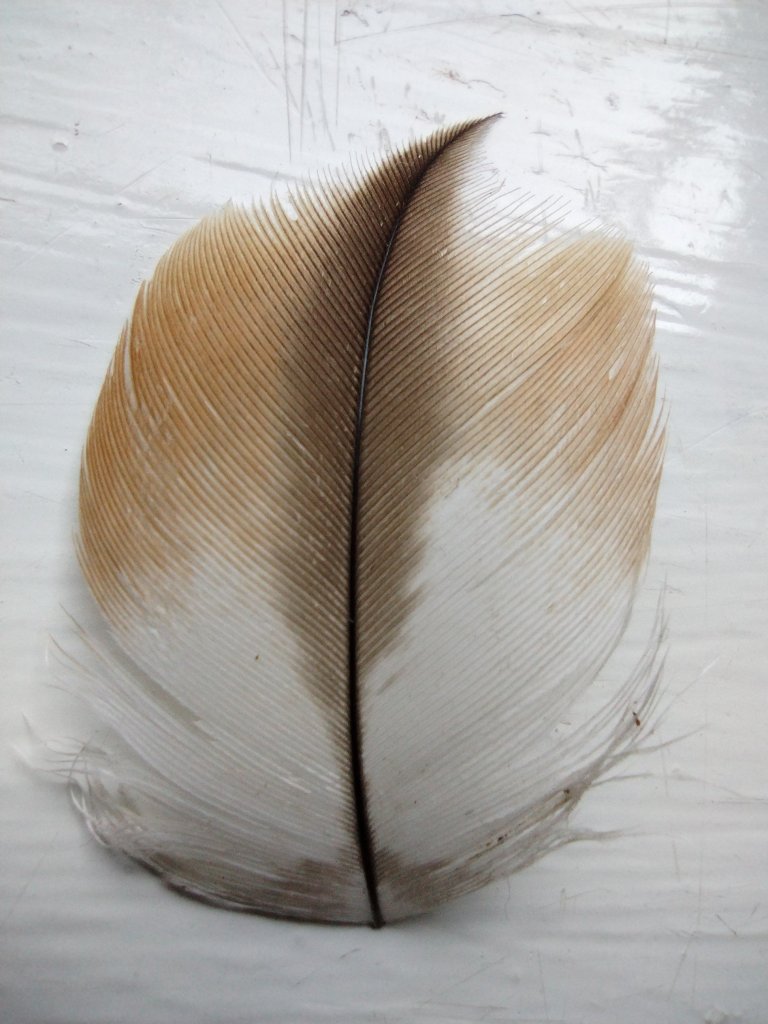
The first was due to the recent storms. While clearing up tree debris a few days later, I found a Red kite (Milvus milvus) feather which had blown to the ground. I have since added it to my version of a nature table (a vintage printing tray) along with my other treasure finds.
I love the shape, colour and pattern of this Red kite feather.

The second took place last Wednesday. While carefully tidying up another garden, to allow for the new spring growth which is already appearing, I noticed a young male Blackbird (Turdus merula) following and closely foraging next to me, just like Robins (Erithacus rubecula) often do in gardens. At one point, it appeared to watch me as I worked (seemingly unphased as I kept my movements to a minimum, so as to not alarm him). Eventually it moved further away but started to make a low repetitive ‘pok pok’ call, at both me and my colleague who was a short distance away (presumably thinking we were predators). This interactive experience was particularly moving; I am used to Robins being close by and making themselves known but never a Blackbird before. The call I heard the blackbird make can be heard on the Sussex Wildlife Trust website.

Posted in Bookworm review, nature

February Arrives

As another month rolls on, an initial glance may suggest that nothing is changing. Bare trees and quiet gardens with cold weather still nipping at fingertips and noses still persist, while sunny days bring glorious colourful skies.

A stripey sunset.

However, upon closer inspection small changes can be seen. The striking yellow of Winter aconites (Eranthis hyemalis) as well as delicate Early crocuses (Crocus tommasinianus) are beginning to bloom alongside the snowdrops (Galanthus).
The tiny red female flowers of Hazels (Corylus) have opened joining the male catkins. Plus, Blackthorn (Prunus spinosa) buds are ready to burst open (in fact on one walk, I saw a single flower already blooming).

I even witnessed a Red admiral (Vanessa atalanta) visit a flowering Mahonia on one sunny day; clearly making use of the milder weather before sheltering once again.

However the main focus of my attention, over the past few weeks, have been birds.

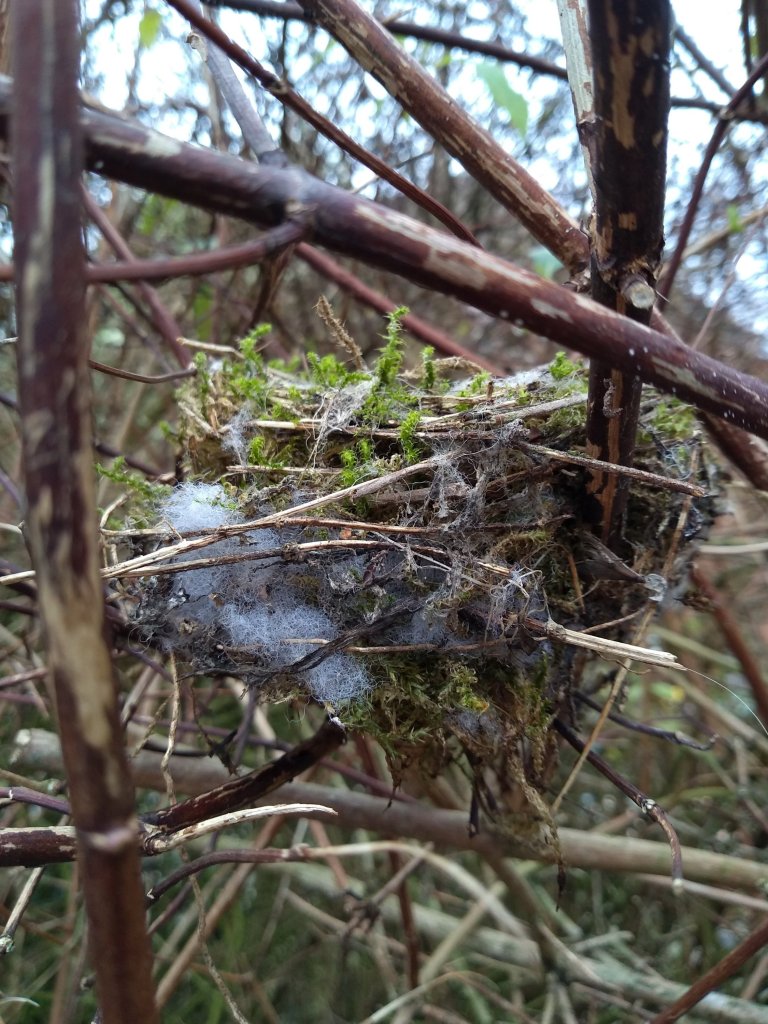
In one garden, I discovered a lovely little nest, from the previous year, in a shrub. Upon investigation I discovered it was either a Goldfinch (Carduelis carduelis) or Greenfinch (Chloris chloris) nest (most likely the former); it can be seen below.

I also saw a Lesser spotted woodpecker (Dendrocopos minor) perched on a tall tree in the distance. I was able to follow the sound of the drumming to watch it move around the trunk before flying off. Given the length of drumming and location of the red on it’s crown I was able to identify it as a male Lesser spotted woodpecker.

Then later in the week, while pruning roses, I watched a Wren (Troglodytes troglodytes) forage around the base of a hedge; I managed to film it briefly before it disappeared fully into the undergrowth.

I am currently reading ‘The Wren: A biography’ by Stephen Moss.

This charity shop find is a fascinating read. Chapters are set out month by month, each concentating on an aspect of a Wrens life. Included alongside facts about the Wren, are their involvement in human history, culture, literature, art and folklore together with beautiful illustrations. The chapter entitled February, for example, focuses on courtship and population. As with other books written by this author, such as ‘The Robin’, this book is definitely worth emmersing yourself in.

Lastly, once again I partook in the Big Garden Birdwatch. My results this year were-
7 Starlings (Sturnus vulgaris),
4 Magpies (Pica pica),
2 Bluetits (Cyanistes caeruleus),
2 Blackbirds (Turdus merula)- a male and female,
2 Wood pigeons (Columba palumbus),
1 Dunnock (Prunella modularis) as well as a Carrion crow (Corvus corone).

Although there weren’t any major surprises in what I saw, it was lovely that the Dunnock made an appearance (usually I only get to hear them). However the Red Kite (Milvus milvus), Ring-necked parakeets (Psittacula krameri), Great tit (Parus major) and Robin (Erithacus rubecula), that I regularly observe, all decided to have a lie in the previous weekend, most only making an appearance once my chosen hour had ended.

Posted in Allotment, nature

Emergence from Wintering

It’s lovely to write for my blog after so long. I have enjoyed a quiet period for a month or so; slowly taking time for self care, reflection and planning the allotment during a time when I suffer with Seasonal affective disorder (SAD).

I love this time of year. I love reading while snuggling under a blanket. I love the sights, sounds and general feeling of winter (especially in the new year after the distracting lights of Christmas) however my brain doesn’t. Each year from the beginning of October to the end of February I indergo a form of wintering. While wildlife winters through hibernation, migration or seeing the winter out with reduced activity. As hibernation is not possible, for me it is the latter; embracing the darker, quiter months as I spend most of my time at home. I have come to realise this wintering is essential in order for me to maintain a healthy mind.

I am still affected by the reduced amount of light but now I am able to see the other side of the winter solstice. For information on and how to find help for SAD, please follow the following links;

Mental Health Foundation

Mind

At this time nature becomes more important then ever to me. I look for small moments of comfort each day. Some of the wonderful nature I have witnessed during December and so far in January have been;

– The growth and blooming of early flowering plants. A reminder that gardens never completely sleep. Occasionally I’ve noticed a foraging Buff-tailed bumblebee queen visit them too.

The emergence of Snowdrops (Galanthus).
Other bulbs beginning to show themselves like these daffodils (Narcissus).
Helleborus beginning to bloom.

– The intoxicating scent of the Sarcococca which is located by the entrance to my flat.
– Birds being more visible and starting to get more vocal. I especially enjoy hearing and seeing Carrion crows (Corvus corone), one of my favourite birds, at this time.
– Foxes (Vulpes vulpes) being visible as they search for food during the day and hearing a female fox at night (January and February are their mating season).
– The beauty of frosts, together with the knowledge it will be a cold but very sunny day.
– Glorious sunrises and sunsets.

The sun captured moments before it disappeared below the horizon.

– Night sky delights.

The Wolf moon, the first full moon of 2022.

– Trees silhouetted against the sky. This also allows you to notice nests too.

The large object in the tree is a Drey.

Squirrels and their homes are also easier to spot now (as shown in the last photo). A squirrel’s Drey, for both Greys (Sciurus carolinensis) and Reds (Sciurus vulgaris) are approximately the size of footballs. They are located near trunks where branches fork outwards and located about six meters above ground. They can be differentiated from bird nests which are often smaller, tidier and found further along branches and higher up the tree. Dreys are made with soft materials like moss, feathers, grass, leaves (not usually seen in bird nests) bark or pine needles. However, if squirrels find natural holes in trees, such as those made by woodpeckers, then they will make use of these too. Squirrels will have separate summer and winter dreys, the latter are more weather resistant while the summer ones are more airy.

Posted in nature

Bees in Winter

Honey bees (Apis mellifera) overwinter in hives, huddling round the queen to keep warm, occasionally venturing out on warmer days. Bumblebees (Bombus) on the other hand have an annual lifespan with new queens, having mated during the summer and autumn months, hibernating underground until spring when they can begin a new colony; also sometimes waking up too early on warm days and foraging.

However over the past 10 years, in urban areas of Southern England, a trend has been seen with certain bumblebee species.
Initially Buff-tailed bumblebees (Bombus terrestris), but since then Early bumblebees (Bombus pratorum) and Tree bumblebees (Bombus hypnorum) have begun to nest in winter rather than hibernate. Consequently winter flowering plants such as Mahonia and Winter Heathers (Erica), Winter honeysuckle (Lonicera fragrantissima), Winter aconite (Eranthis hyemalis), Hellebores (Helleborus) and Snowdrops (Galanthus) are garden essentials; enabling these bees to access pollen and nectar during the colder months.

Solitary bees on the other hand will survive throughout winter in burrows or cavities as eggs, with their own supply of nectar and pollen close to hand (as the adults don’t survive winter). These include Mining and Mason bees which emerge early in spring taking advantage of Willow (Salix), Blackthorn (Prunus spinosa) and Hawthorn (Crataegus monogyna) in bloom. Leafcutter and Carder bees emerge later still. The one exception are Furrow bees; like Bumblebees, the female will hibernate during winter and lay eggs in spring.

I have noticed lots of Mahonias blooming over the last few weeks, their bright yellow flowers and perfume is wonderful to experience during dull days. Somehow the colour shines more vividly against grey skies.

Mahonia x media

Another shrub that has been blooming recently is Viburnum farreri, it’s lovely scent wafting through the air too.

Posted in nature

Early blooms

It was lovely to see some flowers beginning to show themselves last Tuesday.

Wildflowers I noticed as I walked were,

Cow parsley (Anthriscus sylvestris),
Daisies (Bellis perennis),
Red deadnettle (Lamium purpureum),
and White deadnettle (Lamium album).

However I also saw flowers in gardens too. The cultivated plants that were also blooming were

Small white periwinkle (Vinca minor f. alba)
as well as Snowdrops (Galanthus).
Posted in nature

Gardens and Nature Never Sleep

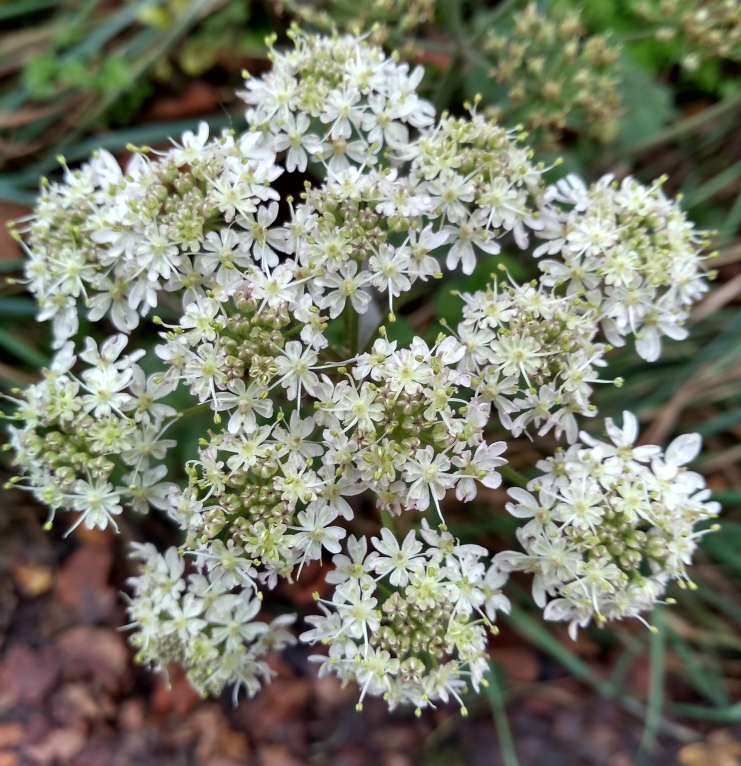
It is always nice to see flowers begin to bloom while others, that have performed throughout the year, wain. On one walk last week I came across a patch of Common Hogweed (Heracleum sphondylium) flowering.

It usually blooms between June and September so it must have been having one last flourish.
Common hogweed is from the same plant family as Ground elder (Aegopodium podagraria) and Cow parsley (Anthriscus sylvestris). All three native umbellifer plants are great for pollinators like hoverflies, Soldier beetles, some butterflies along with short-tongued bees, because these insects need flat flowers in order to gain access to pollen and nectar. Common hogweed is a tall wildflower growing up to six feet in damp conditions along waysides, open woodland, next to riverbanks and amongst rough grassland. It is also called Cow parsnip and had some other interesting names in the past, including Limberscrimps (in Cornwall), Wippul-Squip (Northamptonshire), Cowbumble (gloucestershire).

Gardens also continue to show signs of life at this time. The phrase ‘putting gardens to bed’ in winter is often a misnomer and rarely happens. They are never entirely in hibernation as something is usually awake, even if it is only visiting birds. Plus winter or spring flowering plants begin to bloom and grow now. Last week I noticed Hellebores starting to flower

along with Snowdrops (Galanthus)

and Daffodils (Narcissus)

peaking through the soil.

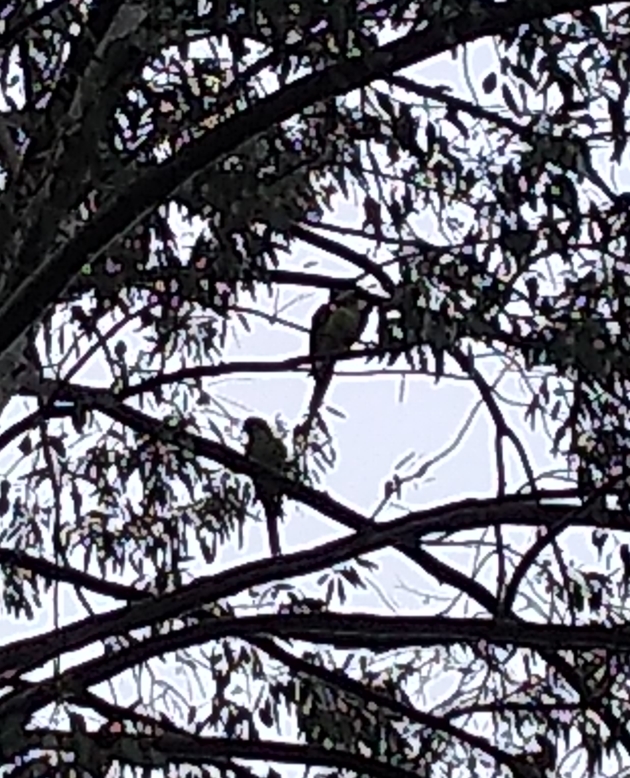
A bird that is easier to see these days are Ring-necked parakeets (Psittacula krameri). They were particularly prominent in one garden I worked at last week where a group kept flying between several trees, before eventually settling within a Eucalyptus tree.

Two parakeets silhouetted in a Eucalyptus tree.

These birds and trees were introduced into this country from warmer areas of the world, yet both species can cope with the colder uk climate.

The evergreen Eucalyptus tree leaves are a bluish green colour when mature. Eucalyptus oil is obtained from the mature leaves, known for its antiseptic properties together with a distinctive aroma.  Immature leaves are more rounded and a bluish shade. The tree flowers from July to October and are especially liked by bees and other pollinators.

Ring-necked parakeets (Psittacula krameri) are parrots that originated from Asia. The history of their introduction to the UK is explained by the RSPB here.

These birds have successfully breeded in this country for years to become a familiar sight in the south-east, particularly urban areas of Hertfordshire, Kent, Surrey and Sussex; their range extending further and further from London. Although they can be observed (and more often heard) throughout the year winter, when the trees are bare, is the best time to see them perched upon branches; unless you are lucky enough to have them visiting bird tables in your garden. They eat a variety of food, having developed an omnivorous diet as they naturalised over here (even though they remain vegetarian in Asia). While they usually eat seeds, fruit, nuts and berries they have been known to feast on scraps left out, including meat scraps. In fact it’s believed they can survive UK winters because they feed from bird tables.

Ring-necked parakeets are very social and can be seen in large flocks containing hundreds of birds. This can make them very noisy and therefore a nuisance in some peoples eyes. Yet whatever your opinion on these birds there is no denying their beautiful colours which seem to become more vivid at this time of year. Even on bleak days beauty exists; sometimes you just have to amend your focus to see it.