Posted in nature

Allotment of Dreams

If I create a wildlife friendly allotment nature will come. My allotment is really filling up and blooming now even though I’ve only had it since February. Most of the plants are from seed, cuttings or rescued from other gardens. For the first year I plan to let the plants develop before harvesting properly.

We’ve had so much rain in recent days that I didn’t need to visit the allotment to water during the week. So last Saturday was the first time in seven days that I visited my plot to undertake major garden tasks. It was the summer solstice and the weather was glorious.

As I walked around to check how things were, I noticed a large number of wildlife; nature had come.

The first things I saw were two Small tortoiseshell Butterflies (Aglais urticae) pollinating the Thyme ‘Lemon curd’ (Thymus ‘Lemon curd’)

whilst Oedemera beetles were taking advantage of the Dandelions (Taraxacum officinale) left on the grassy walkways.

Several Buff-tailed bumblebees (Bombus terrestris) busily flew between the flowers on a neighbouring allotment’s Hebe and flowers on my patch, including the Lacy Phacelia (Phacelia tanacetifolia)

as well as the Borage (Borago officinalis).

A Honey bee (Apis mellifera) also visited the Borage.

There was even a solitary bee buzzing about; an Ashy mining bee (Andrena cineraria) pollinating the Hebe.

Most likely this is the bee that was accidentally unearthed the previous weekend while getting rid of bindweed from around the potatoes (see photo below).

I had contacted the Bumblebee Conservation Trust to see if they could identify this silvery bee, if indeed it was a bee. Stephanie Miles answered my query explaining; ‘This is indeed a bee! It’s a male solitary bee of the genus Andrena. When these bees first hatch from the pupa they’re completely silver-haired, like this – over a day or so they dry out, lay down pigmentation, and the normal colour appears. Once the normal colour appears they can be identified to species level. You disturbed this one before it was quite ready to be seen in public!’ Therefore the Ashy mining bee seen on the Hebe seems a likely candidate.

Seven-spot ladybirds (Coccinella septempunctata) in different stages of development were resting on potato, Calendula (Calendula officinalis) and Borage foliage. There were newly formed adults along with the larvae.

A young Seven-spot ladybird before the recognisable red and black beetle develops fully.

Outside of my allotment wildflowers that are beginning to bloom included;

– Ladies bedstraw (Galium verum),

– Rosebay Willowherb (Chamaenerion angustifolium),

– Spear-leaved Willowherb (Epilobium lanceolatum),

– Creeping thistle (Cirsium arvense),

– Spear thistle (Cirsium vulgare),


– Hedge bindweed (Calystegia sepium)

– and Self-heal (Prunella vulgaris).

Posted in nature

Early Transition into Summer.

Last week began with Spring bank holiday monday. I went for a socially distant walk around the village with my partner. Thankfully he was very patient as I constantly stopped to take photos with my phone.

There were lots of sights and sounds to observe and it really felt like a summers day (which aren’t far off). Some I have noticed for a while like Orange-tip Butterflies (Anthocharis cardamines), Red-tailed bumblebees (Bombus lapidarius), Skylarks (Alauda arvensis), Red kites (Milvus milvus) and House sparrows (Passer domesticus).

Yet amongst the Elderflowers (Sambucus nigra) and Brambles (Rubus fruticosus), which are blooming at this time of year,

These flowers are great for making Elderflower cordial.
Looks like there will be lots of Blackberries this year.

were many more plants flowering too. The explosion of colour within our countryside is fantastic for pollinators. One insect I saw on Mondays walk, in a field busily pollinating Buttercups (Ranunculus), was the False oil beetle (Oedemera nobilis). This very small beetle is a vibrant metallic green colour. When it’s wings glistened in the sun, they changed from mid to light green.

Unfortunately this is the best photo I managed to get of this tiny beetle.

Upon my return to work, I noticed other insects flying about. Several small tortoiseshell Butterflies (Aglais urticae) were too quick for me to photograph, however I did capture Common carder bees (Bombus pascuorum) on Common comfrey (Symphytum officinale) and

a Cream Spot Ladybird (Calvia quattuordecimguttata)

Once again, another ladybird determined to get my attention by falling on my sunglasses while I wore them.

The Cream Spot ladybird has fourteen spots and survives winter in tree bark and Beech masts. Although it is usually found amongst hedgerows rather than gardens.

Wildflowers that were in full bloom last week were;

-Purple toadflax (Linaria purpurea),

-Field scabious (Knautia arvensis),

– Common stork’s-bill (Erodium cicutarium),

This plant is a good food source for Brown argus Butterfly (Aricia agestis) caterpillars, along with Meadow and Dove’s-foot Crane’s-bills (mentioned below). This butterfly is often found in southern chalk and limestone grassland but it can also inhabit places with disturbed soil like verges and coastal areas. In fact this plant was found on disturbed soil edging a field.

-Meadow crane’s-bill (Geranium pratense),

-Creeping cinquefoil (Potentilla reptans),

-Common poppy (Papaver rhoeas),

-Dove’s-foot Crane’s-bill (Geranium molle),

-Field bindweed (Convolvulus arvensis),

-Common mallow (Malva sylvestris),

-Creeping woodsorrel (Oxalis corniculata),

-Birds-foot trefoil (Lotus corniculatus) and

-White clover (Trifolium repens).

Found amongst lawns, this is a wonderful food source for the Common blue butterfly (Polyommatus icarus) and some bumblebees

Recent weather conditions have caused dryness within nature that normally exists during summertime. Water is already required and talk of conserving water has already begun to help prevent restrictions later in the year. I shall be interested to see how nature deals with this early warm dry weather, especially with less human disturbance due to lockdown. Will it be another great year for butterflies? I look forward to discovering more as we spring into summer.

Posted in nature

“Here’s Looking at you Kid.”

Bank holiday weekend was roasting, especially Sunday therefore I decided to take it easy so I wouldn’t overheat. Even though I didn’t go out, nature came to me. While looking out of the window I noticed a Red Underwing (Catocala nupta) moth trying to remain in shade on an outside wall. This large moth (6.5-7.5cm wingspan) has predominantly red underwings with black and white markings, hence it’s common name. The food of this moths larvae are
Willow (Salix) and Poplar (Populus) trees.

I also managed to photograph one of this years Blue tit (Cyanistes caeruleus) brood in the Rowan (Sorbus) tree outside. They are definitely looking more like the adults now.

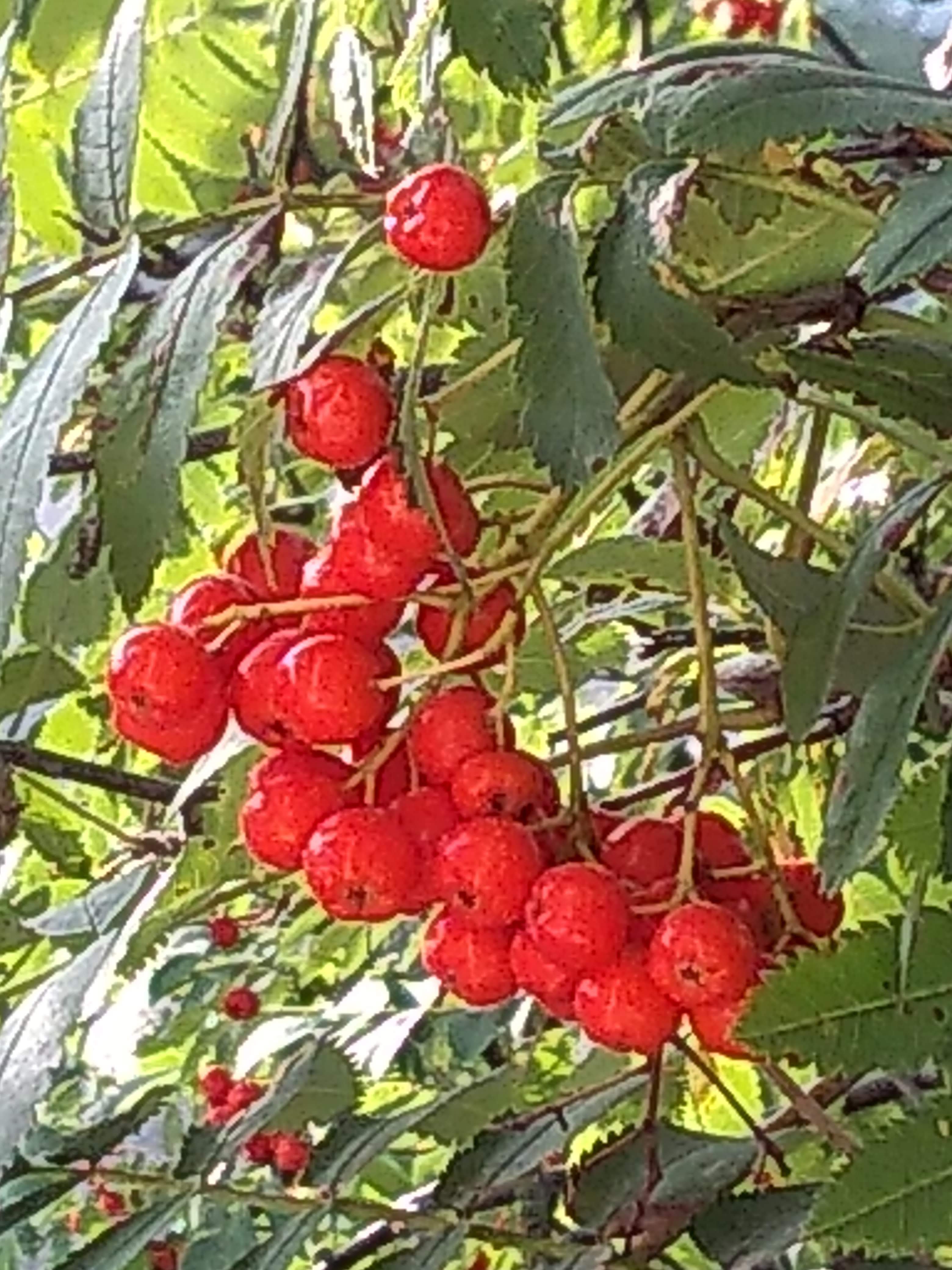
It’s also lovely to see the Rowan is full of ripe berries ready for the Thrushes (Turdus philomelos) and also the Redwings (Turdus iliacus) that I usually see in winter.

Monday was slightly cooler although it was still hotter than I prefer it to be. However armed with suncream, hat and water I visited Ham House and Garden in London. While walking round the grounds, bees, crickets and the occasional Ring-necked parakeet (Psittacula krameri) could be heard.
There was an extensive kitchen garden with cut flower and edible flower areas which I particularly enjoyed viewing.
I saw lots of Honey bees (Apis mellifera) on Globe artichokes (Cynara cardunculus) within the kitchen garden.

There was another lovely sighting as I ate lunch too. Amongst the Wisteria (having a second flush of flowers) as well as some scaffolding was a Wood pigeon (Columba palumbus) sitting on it’s nest. It didn’t move other than to blink as it was no doubt observing us all eating trying to remain undetected.

Upon my return there was a Speckled bush cricket (Leptophyes punctatissima) in the hall to welcome me home. As there was no ovipositor on the end of the abdomen (the appendage from which the female lays eggs) I identified it as male.

Long weekends are lovely but they still pass quickly and Tuesday rolled around again, so I was back to work.
I didn’t notice as many butterflies last week, although bees are still prevalent. During the warmest part of the day, when I was once again wilting, I noticed how active the Honey bees were on the Sedums even though they are only just starting to bloom.

I also observed a Small Dusty Wave (Idaea seriata) moth later that evening. It’s caterpillars feed on herbaceous plants especially Ivy (Hedera helix).

The nice weather of sunshine and low 20s temperature continued to the latter part of the week.

Once again it was Honey bees I mostly noticed on Sedums as well as some visiting

-Rudbeckia laciniata ‘Herbstsonne’.

– and Erigeron karvinskianus.

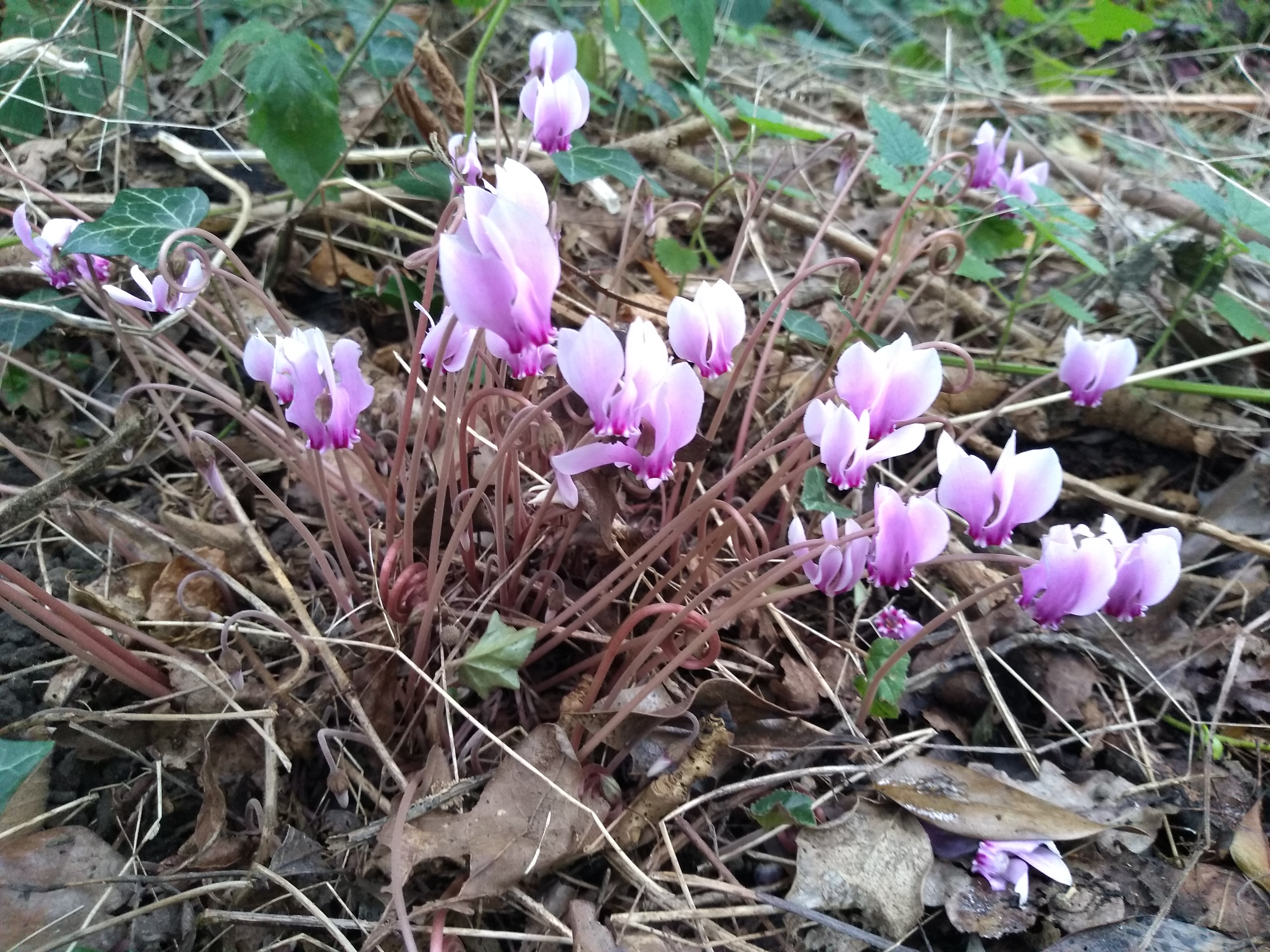
However there was one plant I noticed that surprised me. In a wooded area a small patch of Cyclamen hederifolium was poking it’s flowers above the leaf litter and Ivy; Yet another sign of late Summer and the beginning of Autumn.

Then just when I thought I wouldn’t get to catch a proper view of a butterfly, I managed to see a Small tortoiseshell (Aglais urticae) on a white Buddleja bush.

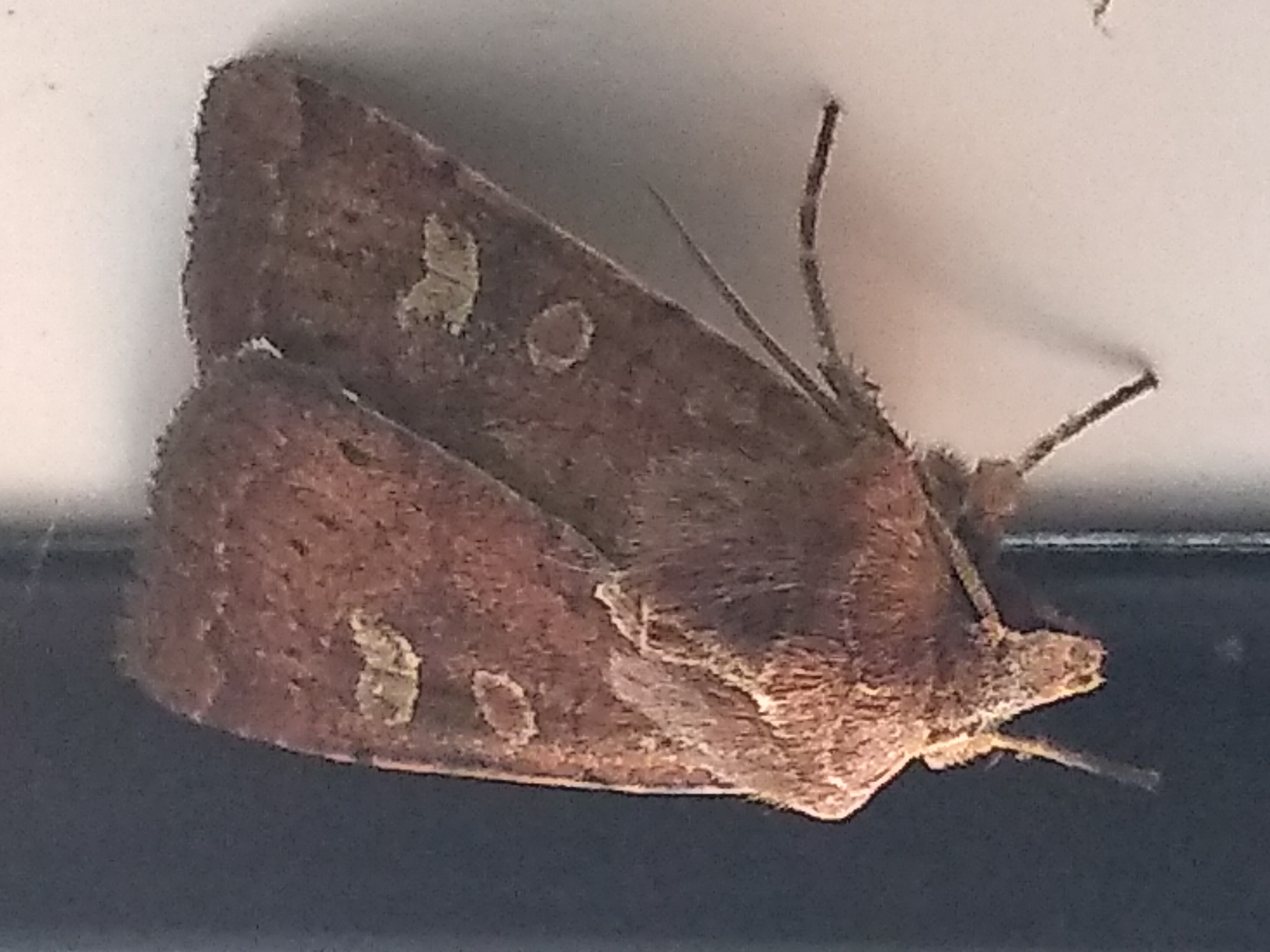
Lastly, I saw another moth in the hall, this time however it was a Square-spot Rustic (Xestia xanthographa) moth.

Posted in nature

A Magical Week

I have begun to notice a chill in the mornings as the nights grow colder. I love the promise of Autumn. It doesn’t quite feel autumnal yet (especially as the weather has warmed up again this weekend) but some changes are occurring. Conkers and beech masts have started dropping and fungi are appearing in some lawns. A couple of times I have come across fairy rings; in both instances the Marasmius oreades fungi was the cause (sadly no magical elvish, fairy or pixie dancing).

The week continued with more observations of Painted lady (Vanessa cardui) butterflies. On Monday there were two visiting a Buddleja bush along with a Small tortoiseshell (Aglais urticae) and a Large white (Pieris brassicae).
Then on Friday, in different gardens, more were flitting about. On one occasion, during the morning, I saw a Painted lady on a Ceratostigma willmottianum.

In the second half of the week I noticed more butterflies including a Green-veined white (Pieris napi) on Verbena bonariensis

and a Small tortoiseshell visiting an Erysimum ‘Bowles’s Mauve’.

Throughout last week I saw lots of pollinators busily collecting nectar and pollen.
On Monday I noticed lots of small flies and Buff-tailed bumblebees (Bombus terrestris) pollinating Marigold (Tagetes) flowers. Perhaps they are enticed by their overwhelming aroma which even I found hard to ignore.

Then on Wednesday there was a Common carder (Bombus pascuorum) bee flying between Nandina domesticas and several Agapanthus africanus.

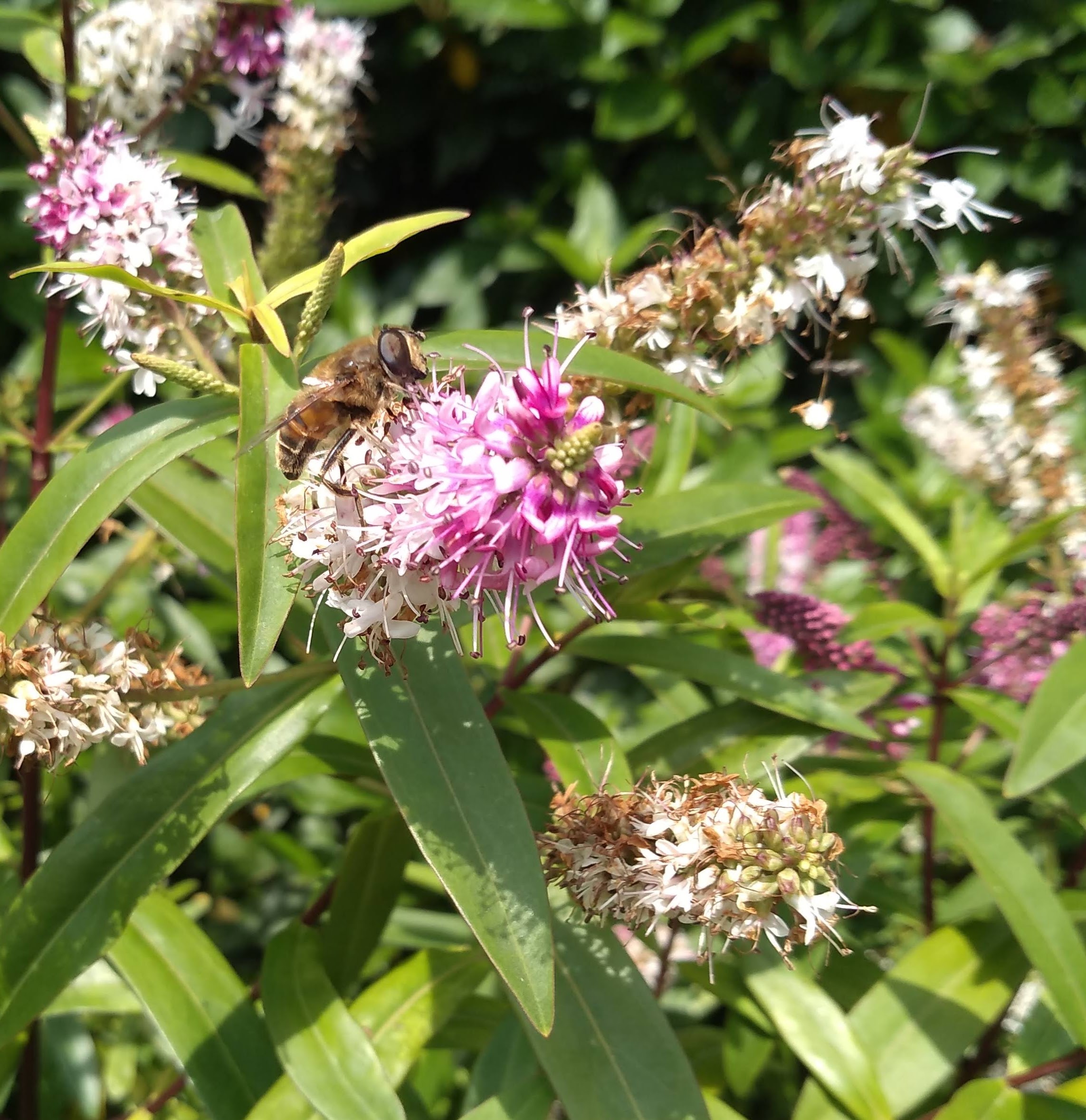
On Friday while working near some Hebe ‘Great Orme’ there were lots of honey bees (Apis mellifera) as well as a Hornet mimic hoverfly (Volucella zonaria).

Another interesting thing I noticed last week was a Red campion (Silene dioica) plant growing on an old moss covered log.

With no soil surrounding its roots clearly it was receiving sufficient moisture and nutrients from this unusual source. It has been flowering healthily all summer but I hadn’t realised it had been relying on the log for its growth until then. I found this plants ability for survival amazing and will closely watch its development.

Lastly I have been aware of how wonderful hardy Fuchsias (Fuchsia magellanica) are currently looking. Although I don’t see pollinators visiting the flowers, there have been a couple of times, in the past, when I have seen Elephant Hawk-moth (Deilephila elpenor) caterpillars feeding on Fushia plants. (See Elephant Hawk-moth).

These caterpillars also eat Himalayan balsam (Impatiens glandulifera) and Willowherbs including Enchanter’s nightshade (Circaea lutetiana) and Rosebay willowherb (Epilobium angustifolium). This beautiful pink and olive green moth flies at night and therefore feeds on Honeysuckle (Lonicera).

Across the way from this hardy Fushia there was a Honeysuckle growing along the wall so it would have been a fantastic place for these moths to inhabit. Unfortunately I didn’t come across any Elephant Hawk-moths this year but hopefully I will in years to come (and I am sure it will feel magical).

Posted in nature

The Ladies Arrived

I finally got to see a some Painted lady (Vanessa cardui) butterflies, in fact there were three visiting a Buddleia I was working near. I thought I caught a glimpse of one last week (but couldn’t be sure) however this was a definite sighting.

I got to see them again on Tuesday together with a Large white (Pieris brassicae), Small tortoiseshell (Aglais urticae) and a Red admiral (Vanessa atalanta) on the same Buddleia.

Plus earlier on Tuesday I got to see two Small white (Pieris rapae) butterflies, a Holly blue (Celastrina argiolus) along with a Meadow brown (Maniola jurtina) butterfly.

Also on Tuesday I got to feast on my first blackberries (Rubus) of the season and see an Oak bush (Meconema thalassinum) cricket in the hallway upon my return from work.

Wednesday was a washout and Thursday quiet too therefore it was nice to have some wildlife sightings on Friday morning before the rain returned.

While I ate breakfast, I observed the young Bluetits (Cyanistes caeruleus) visit the Rowan (Sorbus) tree. I noticed that their plumage was more like the adults, no longer predominantly green.

Then just before lunch, I noticed a Red-tailed (Bombus lapidarius) bumblebee and a Heath bumblebee (Bombus jonellus) visiting some Thyme (Thymus).

The Heath bumblebee visiting some Thyme.
Posted in nature

Who you Gonna Call? 🎶👻🎵

It was a slow start to last week, not brightening up until later on.
Yet as I waited for the bus to work on Monday I saw some Common yarrow (Achillea millefolium).

It would have been flowering since June but the council have allowed the verges to grow long enough for it to fully bloom around the bus stop. Once in folklore it was believed to bring good luck and wellbeing if you carried it with you.

Tuesday was a washout so it was nice when I started to see bees and butterflies flying around from Wednesday onwards.

I noticed a different butterfly to those I usually identify.
There were two Gatekeepers (Pyronia tithonus) also called Hedge brown butterflies basking on some Bergamot (Monarda).

Bergamot is also called Bee balm because it is loved by bees.

The Gatekeeper in the previous photo is a male due to the pattern on the upper wings. Wing patterns vary within the genders, dependent on high temperature conditions while the butterfly is in the chrysalis stage of development.
The caterpillars feed on long grasses such as Couch-grass (Elymus repens) or fescues (Festuca) while the adults like the nectar of Wild marjoram (Origanum vulgare), Common ragwort (Jacobaea vulgaris) or Bramble (Rubus fruticosus).

The name Gatekeeper made me remember Sigourney Weaver’s character Dana (who is possessed by Zuul the gatekeeper for Gozer) in Ghostbusters; therefore I have had the theme tune in my head ever since. Thankfully I like this earworm as it reminds me of an enjoyable childhood film. 🎶

In the same border I also noticed Buff-tailed bumblebees (Bombus terrestris) and Garden bumblebees (Bombus hortorum) on a Catmint (Nepeta × faassenii) plant.

On Thursday I was working near a pond and came across a dragonfly which I have been unable to completely identify.

The leg stripes rule it out as a Ruddy darter (Sympetrum sanguineum); however given the position I took the photo from, I can not see the frons (area on the face above the mouth parts) well enough to be certain if it is a female Vagrant (Sympetrum vulgatum) or a female or immature male Common darter (Sympetrum striolatum).

Friday was the opposite of Tuesday, both for the weather and successfull nature observing. In fact during the afternoon in the space of twenty minutes I saw a Large white (Pieris brassicae), Small tortoiseshell (Aglais urticae), Red admiral (Vanessa atalanta), Comma (Polygonia c-album), Meadow brown (Maniola jurtina)
along with three Peacock (Aglais io) butterflies.

I managed to obtain a photo of the Comma on a purple Buddleia as well as (finally) manage to capture the elusive Peacock on a white Buddleia.

I had to photograph something else from that garden too. A Chinese trumpet vine (Campsis grandiflora) plant was arching over the wall from the neighbours.

The gorgeous colour of the flowers took my breath away, especially set against the white house and sunny blue sky. I couldn’t resist sharing its beauty.

Lastly I have ended a tiring week relaxing at a cafe drinking a mocha. Once again my spirits were lifted as I watched a Wagtail (Motacilla alba) hoping to benefit from dropped crumbs; it was a lovely thing to see.

Posted in nature

An Enchanting Week

My interest in plants extends to herbal medicine and floral folklore. Often found in gardens, such plants are easily accessible.

I find poisonous plants fascinating too. I would like to visit the Chelsea Physics garden as well as the Alnwick Poison Garden in Northumberland. Over the past week, a few wild flowers that I have noticed blooming would probably be found in these gardens, these are;

– White bryony (Bryonia dioica) scrambling over Dogwood (Cornus). White Bryony has poisonous berries and the plant has a very strong unpleasant purgative affect. A few deaths linked to this plant have been recorded.

– Woody Nightshade (Solanum dulcamara).

Also called Bittersweet the plant would make someone incredibly ill; the berries if eaten would cause vomiting and convulsions. There have been a few deaths linked to this plant. It is from the same family as Deadly nightshade (Atropa belladonna, See Woodland Trust).

I saw other wildflowers blooming too such as the intriguingly named Enchanter’s nightshade (Circaea lutetiana). Confusingly this flower isn’t from the nightshade family at all but is actually a Willowherb. One folkloric belief was that this plant would give protection against Elvish spells.

I also saw Field bindweed (Convolvulus arvensis) along the verges.

I continued to see many birds and insects throughout the week. After many days since the last time, I was happy to see the juvenile Blue tits (Cyanistes caeruleus) back in the Rowan tree (Sorbus). Also on Monday I had a Juvenile Robin (Erithacus rubecula) follow me around. Clearly the instincts for locating food near gardeners starts early.

The first moth I saw last week was an adult female Bee moth (Aphomia sociella). These moths are so called because they lay eggs in bee and wasp nests and also bee hives. Their larvae eat the comb, causing damage and are therefore a pest for beekeepers.

Other moths I saw were two Rosy tabby (Endotricha flammealis) moths

and a Dark arches (Apamea monoglypha) moth.

On Wednesday I was working near a fantastic old Sweet chestnut (Castanea sativa) tree. Countless Honey bees (Apis mellifera) and Marmalade hoverflies (Episyrphus balteatus) were busy flying to and fro pollinating the flowers.

As the summer continues more and more butterflies become visible. I have seen lots more Meadow brown (Maniola jurtina), Small tortoiseshell (Aglais urticae) and Large white butterflies (Pieris brassicae). One of them seen here on some lavender (Lavandula).

Also on Wednesday I observed two butterflies that I have never seen before, a Marbled white (Melanargia galathea) on Verbena bonariensis

and a Small skipper butterfly (Thymelicus sylvestris), also seen on the Verbena bonariensis.

Later on the same day I also saw ten Azure damselflies (Coenagrion puella) around the pond.

On Friday morning, as I was going to work, I had to usher a Common green lacewing (Chrysoperla carnea) outside so it could find some aphids to munch on.

Then lastly on Friday I saw a Harlequin ladybird (Harmonia axyridis) on Brunnera macrophylla ‘Jack Frost’.