Posted in nature

Amazing Insects

The first of August is the start of the harvest and autumn is beginning to set in slowly now; a time I enjoy.

The weather has recently changed in the south, we have had rain over the past few weeks, meaning the parched lawns are beginning to green up once again and require cutting. I have never known a year where we haven’t cut the majority of lawns for such an extended period over the summer; usually it isn’t until the end of July into August when this occurs.

The wetter conditions are making it difficult to pick a time to undertake the Big Butterfly Count this year, although I am still seeing various butterflies and day flying moths around at the moment; Including the Jersey tiger moth (Euplagia quadripunctaria).

This beautiful medium sized moth (between 5.2 to 6.5 cm in length) is often seen in the south with the range growing upwards towards London and now Hertfordshire; found in Gardens, hedgerows and coastal areas. The caterpillars can be found between September through to the following May, surviving winter as larvae. The adults often visit Buddleia while the food source for caterpillars are Common Nettle (Urtica dioica), White Dead-nettle (Lamium album), Borage (Borago officinalis), plantains (Plantago Spp.), Ground-ivy (Glechoma hederacea) and Bramble (Rubus fruiticosus) amongst other herbaceous plants.

I have also seen a small copper (Lycaena phlaeas) butterfly recently.

This small (3.2- 3.5 cm) orange coloured butterfly can be found on waste ground as well as heath, moor, grass and woodland environments where the soil is chalky and the ground poor in nutrients. The caterpillars eat Sorrels and Broad-leaved Dock (Rumex obtusifolius).

This has been a wonderful year for ladybirds due to the very hot weather at the beginning of spring causing a huge increase in aphids. Out of the 46 different types in the UK, I mostly see Six-spot and Harlequin ladybirds.  A couple of weeks ago I noticed another as it flew into the van; the 14 Spot ladybird (Propylea quattuordecimpunctata).

Much smaller than the six-spotted ladybird, this yellow and black beetle can be seen throughout the UK from May to September.

I finally saw a flower crab spider (Misumena vatia) while pruning a shrub too. As seen in the photo below, they are often white but the females of the species can change their colour to a yellow tint in order to blend into its surroundings better.

Usually noticed between May and August they are commonly seen in southern England. The different sexes differ in size, the males are half the size of the females which are between 9 to 11mm in length. These spiders will wait and ambush prey rather than spin webs and can eat various insects including moths and bees,

Posted in nature

Reflecting on a Blooming Lovely Week

I am watching Wimbledon while eating lovely sweet strawberries. The window is open so I can hear the birds singing outside; thankfully the temperature has dropped and it is feeling fresher now. It is a lovely summers day to reflect upon the things I saw last week. More flowers blooming along the roadside include Hedge bindweed (Calystegia sepium) Creeping thistles (Cirsium arvense), Spear thistle (Cirsium vulgare), Field Scabious (Knautia arvensis), Ragwort (Senecio jacobaea) and Rosebay willowherb (Chamerion angustifolium). Creeping thistle seeds are a great food source for birds that make their home on farmland, while Spear thistle seeds are good for Goldfinch (Carduelis carduelis) and the nectar enjoyed by the Small copper (Lycaena phlaeas) butterfly. Ragwort (considered harmful to horses and livestock) is great for bees and the Cinnabar moth (Tyria jacobaeae) caterpillars. Even the Field Scabious is a useful food source for bees and butterflies.

Now that July has arrived, my butterfly and moth observations have increased. I have seen,

– A couple of Double-striped Pug (Gymnoscelis rufifasciata) moths

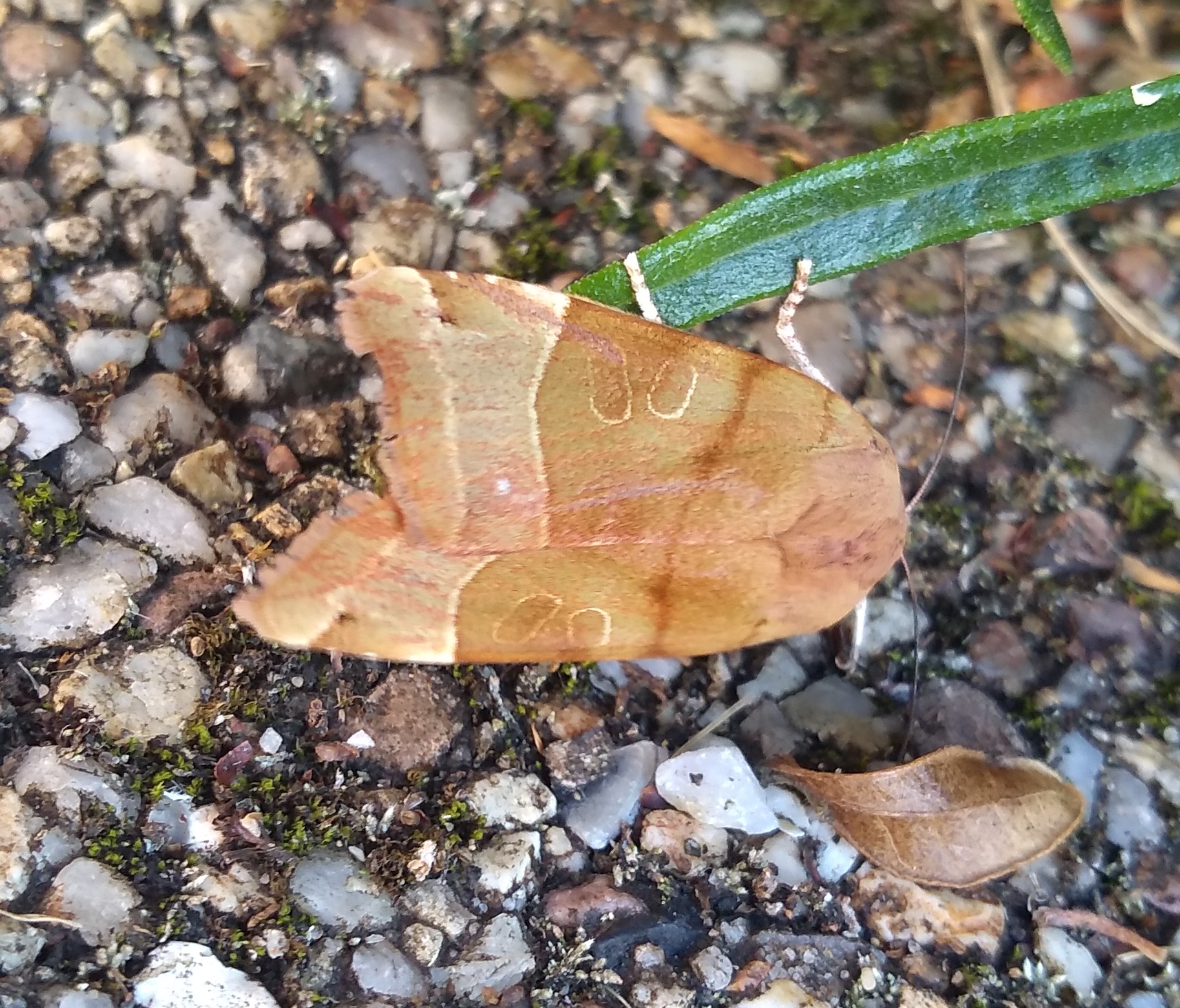
– Broad-bordered yellow Underwing (Noctua fimbriata) moth

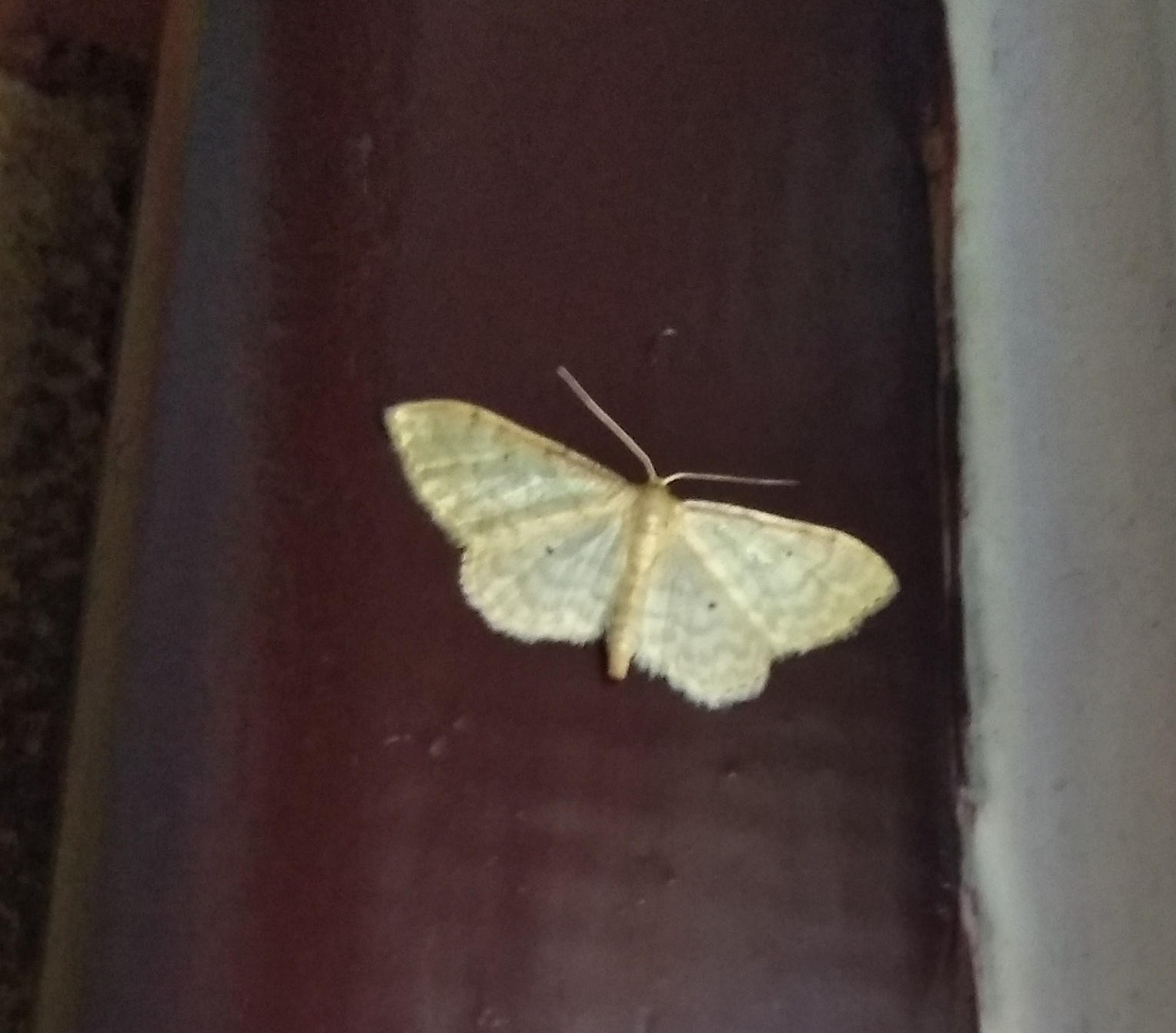
– Least Carpet (Idaea rusticata) moth

– Plain Wave (Idaea straminata) moth

– Two Large yellow underwing (Noctua pronuba) moths

– Along with several that were photo shy including a White Plume (Pterophorus pentadactyla) moth and a couple of Large white (Pieris brassicae) butterflies, three female and one male Meadow brown (Maniola jurtina) butterflies, a Comma (Polygonia c-album) butterfly near a patch of nettles (which are great food for their caterpillars) as well as two Large tortoisehell (Nymphalis polychloros) butterflies. Other butterflies I saw were,

– A Ringlet (Aphantopus hyperantus) butterfly

– Small tortoisehell (Aglais urticae) butterfly on Verbena bonariensis

– Red admiral (Vanessa atalanta) butterfly on wall by Climbing Hydrangea (Hydrangea anomala subsp. petiolaris)

These weren’t the only insects I noticed throughout the past week as I also saw,

– Two immature male Large red damselflies (Pyrrhosoma nymphula)

– Two Azure damselflies (Coenagrion puella) on Water lily (Nymphaeaceae)

– One Harlequin ladybird (Harmonia axyridis) on a Red valerian (Centranthus ruber) leaf.

– Honey bees (Apis mellifera) on an Eryngium bourgatii

-Lots of Honey bees and hoverflies (Syrphidae) on lavender (Lavandula) which is in full bloom.

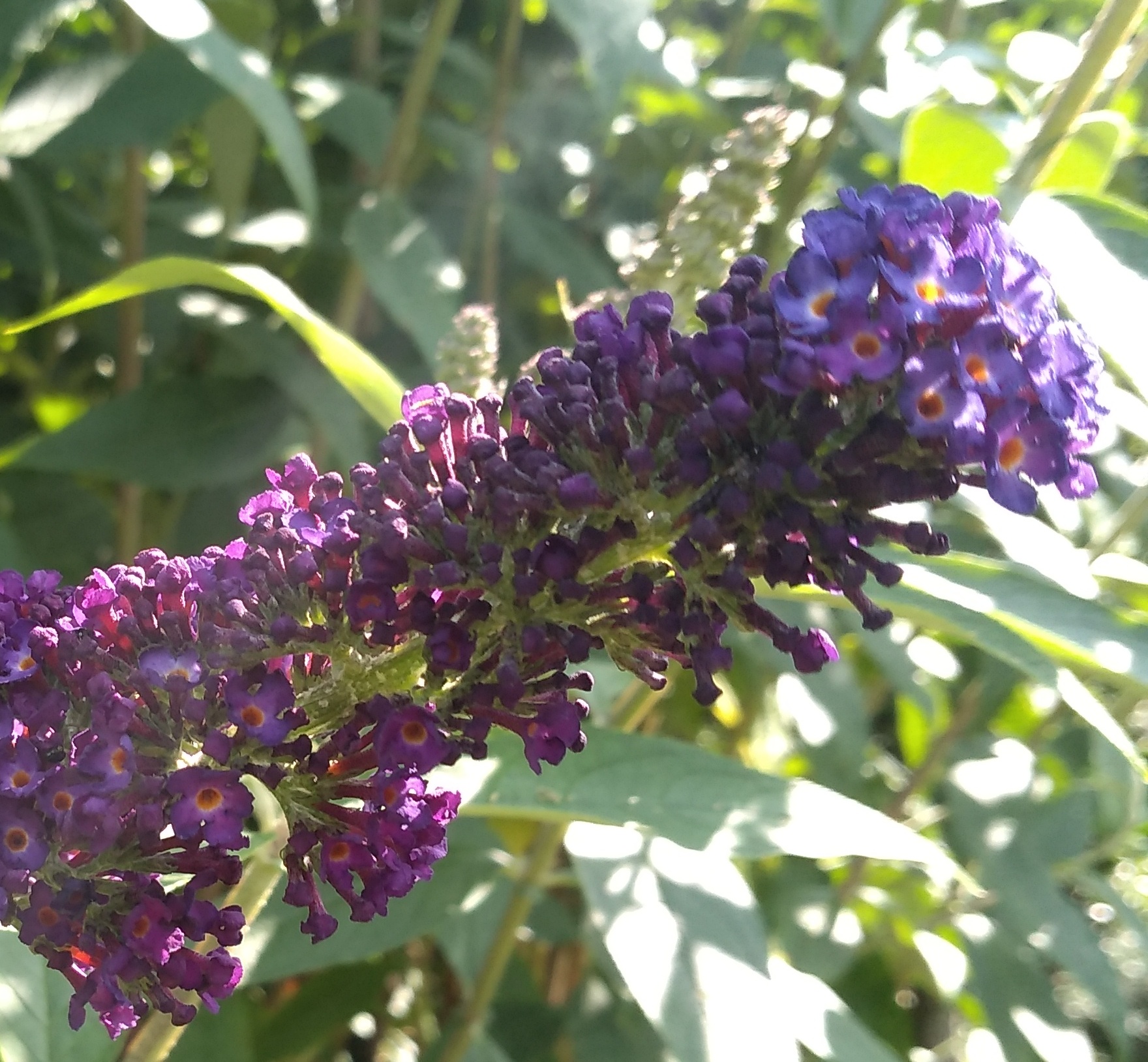
I am keeping my eye on a large mature Butterfly bush Buddleja davidii ‘Black Knight’ that is starting to flower. A few years ago I took some cuttings from this Buddleja and successfully grew one of my own. My Buddleja is only about a foot tall but it will be flowering soon. I look forward to seeing visitors arrive on both shrubs.

Lastly I couldn’t resist adding a few photos of some Cornflower (Centaurea cyanus) someone had planted in their vegetable patch. While I didn’t see any insects visiting it my attention was drawn to the cheery vivid blue flowers, they were so beautiful.