Posted in nature

Liminality

February is a liminal month, it holds the hope of spring alongside the grip of winter. Just when glimmers of warmer weathers arrival brings dull wet conditions, clear nights followed by cold frosty mornings bite you back to reality in the glimmering sunshine. Even my activities have a duality to them. February is the time when I organize my seeds, sew Sweetpeas and chillies as well as check my houseplants; however I want to continue hibernationing. I find myself quite hopeful in this month and overwhelmed at the same time.

It is always lovely to see the first stirrings of spring, especially the arrival of Snowdrops, (Galanthus) and Winter aconites (Eranthis hyemalis). I often hear foxes  (Vulpes vulpes) calling at night at this time too. It’s no coincidence that the celebration of the lands awakening after winter, Imbolc, is on the 1st February. The biggest indicator that spring is on its way are the birds beginning to pair up; boldly singing to alert prospective mates of their whereabouts whilst also holding onto territory. I was fascinated, one rather cold but not frozen day, to see a Robin (Erithacus rubecula) defend a feeder, chasing off a Tree creeper (Certhia familiaris). I have never seen a Tree creeper venture onto a bird feeder before, nor a Robin actually (but I have previously seen the latter fight other birds for resources).

An image of a Tree creeper can be seen on the RSPB website here;

Other birds that have been particularly vocal in recent weeks have been the Mistle thrush (Turdus viscivorus), Great spotted Woodpecker (Dendrocopos major) and Dunnock (Prunella modularis).

The Mistle thrush is one of the UK’s largest songbirds, even larger than the Blackbird (Turdus
merula) with a body length of 27 cms and wingspan of 45 cms. Although similar in looks to the Song thrush (Turdus philomelos), it’s more grey tonally. While this bird is named due to its love of mistletoe (Phoradendron serotinum), it also eats worms, slugs, insects and berries and is found in parks, gardens, farmland and woodland often singing at the top of tall trees. It is not as commonly seen as the Song thrush as its status is Red under the Birds of Conservation Concern 5: the Red List for Birds. It has been a joy to hear the sound of the Mistle thrush as I worked, an example of which can be heard here.

I have also loved hearing a Great spotted Woodpecker (Dendrocopos major). Interestingly it has sung at the top of the same fir tree as the Mistle thrush, albeit at different moments. I also heard it drumming on the trunk of a dead and Oak (Quercus) tree that had a hole in the side, see below. Perhaps that is where the woodpecker lives.


The Great spotted woodpecker call can be heard on the Woodland trust website. 

Lastly, in a different garden, I was able to witness a Dunnock (Prunella modularis) singing sweetly, an example of this bird’s song, can be found on the RSPB website here .

At the end of January, once again I took part in the annual RSPB Big garden birdwatch; my results this year were-

1 Carrion crow (Corvus corone)
5 Goldfinch (Carduelis carduelis)
2 Wood pigeon (Columba palumbus)
3 Starlings (Sturnus vulgaris)
2 Magpie (Pica pica)
1 Blackbird (Turdus merula)
2 Great tit (Parus major)
1 Red kite (Milvus milvus)

Posted in Allotment, nature

Latest on the Allotment

After a slow start, due to the weather, things are growing nicely on the organic, no dig, wildlife friendly allotment.

The view of the allotment from the Buddleia shrub.
The view of the allotment from the apple tree.

While most of the soft fruit season has come to an end (apart from the autumn raspberries), the plums and apples continue to develop and are something to look forward to later in the season.

Thankfully the rhubarb has recovered a bit after a disappointing harvest. Rhubarb doesn’t like growing in waterlogged soil and although we have sandy free draining soil, I think it ended up being too wet over the winter. The rhubarb was on the plot when we took it over four years ago and had grown very large. Every five years Rhubarb can be divided when the growth has become weaker or leaves are overcrowded so I will do this around November and hopefully this will invigorate its growth next year.

The slightly depleted Rhubarb patch.

The vegetables remain on a three yearly rotation to maintain soil health and keep viruses at bay. Main crop potatoes, kale (Cottagers and Cavolo Nero), beetroot, radishes and courgettes are doing well as usual. This years addition are carrots. I always like to try something different each year and It’s been a while since I tried growing these; so far they are surviving. They are in a raised bed and were sown later and sparsely to help avoid detection by carrot fly (Psila rosae). They are also in a mixed raised bed which also helps. 

Along with covering vulnerable plants and growing sacrificial plants such as nasturtium (Tropaeolum majus) and marigolds (Tagetes), I intersperse herbs and other flowers in between the vegetables to help prevent too much loss from pests. I usually find beneficial insects soon appear when needed; there are lots of ladybirds on the plot at the moment. I also find the best way to deal with slugs and snails is to collect them and place them elsewhere; plus any plants with soft young growth are protected by copper tape on old pots and thorny material. I do allow some slugs to remain on the allotment however. The Leopard slug (Limax maximus) is one beneficial slug to have in a garden as they don’t eat living plant matter. They are great for the compost and also eat the eggs of other slugs.
Thorny material protecting new growth from slug and snail damage. Also a plastic bottle (with the bottom cut off) to allow water to be directed to the roots.
Copper tape around an old pot (with the bottom cut off) used as a guard around the base of an annual while it establishes itself.

We have a lot of wildlife visiting the allotment. There is often evidence of a fox (Vulpes vulpes) visitor (which we have seen on other plots). Plus we often see grasshoppers and Common blue Damselflies (Enallagma
cyathigerum) and frogs (at the moment we regularly notice one adult and one youngster hopping around). Last saturday, the sun was out and there was an abundance of bees on the Catmint (Nepeta), Red clover (Trifolium pratense), Lavender and Buddleia.

The wild area on the plot contains a bug hotel and is located near to a neighbouring pond. This is where the red clover grows.

This year, I decided to undertake the Big Butterfly Count at the allotment. The butterflies seen were;

2 Small skippers (Thymelicus sylvestris),
1 Comma (Polygonia c-album),
2 Gatekeepers (Pyronia tithonus),
1 Peacock (Aglais io) and 2 Large whites (Pieris brassicae)

Given the abundance of Cabbage whites (Pieris brassicae) nearby I have made sure my kale is covered up.

The perennial kale mixed in with the cut flower patch.

I find it reassuring to have seen so many butterflies and bees at the weekend, especially as overall there seems to be a reduction in numbers this year; partly due to the frequency of wet days.

I have noticed lots of moths this year too. Perhaps the most exotic looking one I have seen so far is the Scarlet tiger moth (Callimorpha dominula).

The creamy coloured spots on the top of the forewings can sometimes have a more vivid yellow tint.
The red underwings can be seen here. I also managed to capture some of the shimmering blues and greens of the forewings when the sun shone on the moth.

This moth is medium sized, at 23- 27mm (across the wings). It flies during the day and night through May and June; often noticed while resting on plants. The caterpillars of this moth feed on Comfrey (Symphytum), Hemp Agrimony (Eupatorium cannabinum),  Common Nettle (Urtica dioica), Bramble (Rubus fruticosus), Honeysuckle (Lonicera), Meadowsweet (Filipendula ulmaria) and Green alkanet (Pentaglottis sempervirens); they can be seen from August until May, overwintering into the following year. The habitats where the Scarlet tiger moth will be found are in areas of wetland, riverbanks, woodlands, gardens as well as coastal areas.

One sound and aerial display of summer which I enjoy is the return of Swifts (Apus apus). I have even been lucky enough to see them catching insects as they swoop over a pond (sometimes just skimming the water) along with another flock soaring high up the sky. I always treasure seeing these amazing birds as they are on the red list for Birds of Conservation Concern 5: (2021). A few things we can do to help them is to put up appropriate nest boxes, as well as adding swift bricks to new builds, giving them somewhere to raise their young. The RSPB also have a citizen science project where you can record their presence. Further information on how you can take part, can be found here.
Having arrived in Britain in April and May, it won’t be long before they return to Africa as they only remain here until August. Most of their time is spent on the wing, only stopping to nest in roofs especially of old buildings such as churches. If this isn’t incredible enough when feeding the young they regurgitate a bolus, (a pellet formed in the back of the birds throat) containing between three hundred to one thousand insects mixed with saliva. More information on swifts, including how to identify them can be found on the RSPB website, where you can also hear a recording of their distinctive call.

Swifts are not the only thing I have noticed around ponds lately. I recently learnt about another pond invertebrate, the Common backswimmer (Notonecta glauca). So called because they swim on their back just beneath the surface of the water. Not only do they feed on insects, but also tadpoles and small fish. They suck out the contents of their prey’s body after injecting it with toxic saliva. Found all year round they moult a few times before reaching their final length of one and half centimetres. It was quite fascinating to observe them swimming around.

Posted in Allotment, nature

Build it and They Will Come

August disappeared quickly and September is zooming by, even the Autumn equinox has been and gone. Apart from the heatwave a few weeks ago (with the highest temperatures of the year being reached) it is beginning to feel autumnal. Fungi has appeared, leaves have started turning, plus nights are drawing in and cooler misty mornings have returned highlighting once hidden spiders and their cobwebs.

Foraging blackberries had begun early this year but the extreme heat meant that the remaining flowers and berries dried up; the same is true of elderberries, although sloes, haws, rosehips and rowan berries are abundant. Unlike last year, apple and pear trees, that I see regularly, have struggled with the weather this year as well. Thankfully harvesting on the allotment is still going strong; potatoes, kale, beetroot, radishes, chillies, courgettes and rhubarb have been keeping us fed. The popping corn will soon be ready too. I have also been harvesting calendula, lavender and other herbs recently.

There has been a few changes on my plot. I had finally collected enough items to be able to construct ‘the bug snug’. 

It is an addition to the wildlife section containing wildflowers and long grass (which also links to a pond on the adjoining plot). I know we have a couple of frogs visiting us so hopefully it encourages more to inhabit our allotment (to help keep slug and snail population down). I still hear the grasshopper when we are nearby too. There has also been evidence of a fox visitor; random toys get left near the water I leave out, along with poo on the grassy paths between plots.

Last week I also noticed that the Bee house, at the opposite end of the plot, was finally being used.

I found it hard to contain my excitement as it has been there for a few years and I was beginning to think it would never be used. There is evidence that it has been used by a Leaf-cutter bee and Mason bees too. Although it is difficult to know which ones specifically, the most commonly found in gardens are the Patchwork leaf-cutter bees (Megachile centuncularis) and Red mason bees (Osmia bicornis). As the name suggests Leaf-cutter bees used leaf particles to plug one piece of bamboo while those used by the Mason bees were plugged with soil. Each cell contains larvae as well as some pollen and nectar for the developing young. Male bees fly out before the females as they are near the entrance. The developing bees will remain there over winter and emerge as adults next spring, at the around April.

In other news… While clearing a gravel footpath of wildflowers at work, I accidentally disturbed a Devil’s coach-horse beetle (Staphylinus olens). I stopped weeding that section to enable it to hide for the rest of the day.

Devil’s coach-horse beetle

These beetles can raise their abdomens (resembling a scorpion), release an odour and even bite when they need to defend themselves (thankfully it didn’t feel threatened by my presence). They grow up to 2cms 8mm in length and are commonly found in gardens from April till October (when accidentally disturbed as they are active at night). The young overwinter in the soil as pupae until the following spring when they emerge as adults. The adults can fly but usually quickly run away from danger or to catch prey eating larvae, insects, spiders and slugs.

The Big butterfly count results came out this month. The long term trend of many species of butterfly and daytime flying moths recorded continue to fall, although the numbers were the highest since 2022 (with an average of 12 butterflies being spotted compared to 9 back then). The most commonly recorded were Red admiral (Vanessa atalanta), Gatekeeper (Pyronia tithonus), Small and Large whites (Pieris rapae and Pieris brassicae) as well as Holly blue (Celastrina argiolus). While those which are in significant decline are Ringlet (Aphantopus hyperantus), Common blue (Polyommatus icarus) and Speckled wood (Pararge aegeria). Over the last few days I have seen several Red admirals and even one Speckled wood making the most of the Autumn sun.

Upon visiting the Chiltern Open Air museum on the last bank holiday weekend, we walked through the meadow and woodland that is there. In the woodland, a couple of Silver-washed fritillary (Argynnis paphia) butterflies fluttered in amongst the brambles (the flowers of which give nectar for these fritillaries along with thistle blooms.

Silver-washed Fritillary

There were lots of Dog violets (Viola riviniana) on the woodland floor too, which is the food source for their caterpillars. The wingspan of this butterfly is between 7.2cms and 7cms 6mm. They are found in most areas of the UK (apart from Scotland) and often in oak woodland.

The meadow was full of wildflowers, but it was particularly lovely to see
Harebell (Campanula rotundifolia) and Wild basil (Clinopodium vulgare) amongst them.

Harebell

The delicate looking Harebells bloom from late summer into autumn. They can be used as an indicator of dry nutrient poor chalky limestone soil which they require to thrive. Along with dry undisturbed grassland and heathland Harebells will flower in walls, cliffs and even on sand dunes.

Wild basil

Wild basil is a mound forming perennial which also likes the same soil conditions as the Harebell. This wildflower can be seen blooming in July, August and September.

It was lovely to see Tansy (Tanacetum vulgare) growing in the wild too; found in a few areas including near the iron age roundhouse located on the museum grounds.

Tansy

It starts flowering in July through to October. While used as an insect repellent to keep ants and flies away, some insects, especially the Tansy beetle (Chrysolina graminis) are resistant to the toxins produced by the plant. Tansy beetles are endangered in the UK; only found in two places in York along the River Ouse and in Cambridgeshire at the Woodwalton Fen nature reserve. We are at risk of losing this once common beetle due to habitat loss (wetlands), where their entire lifecycle occurs, and loss of suitable food source (mainly Tansy); however in the Fens its been seen eating Water mint (Mentha aquatica) and Gypsywort (Lycopus europaeus) too. It’s conservation status is known to be Nationally Scarce and is a
UK BAP priority species that is
Protected in the UK under the Wildlife and Countryside Act, 1981.  More can be found on this beautiful beetle on the Buglife website (see web pages below), including how to help with its conservation.

The Tansy beetle

Tansy beetle conservation

Posted in Allotment, nature

A Couple of Welcome Visitors

During the previous week there were the few days of unusually high temperatures for the time of year; a final flourish for late summer?

The heat encouraged lots of bees, especially Honey bees (Apis mellifera) to visit Hylotelephium (once called Sedums) which began to bloom. The sound was amazing and it was so relaxing to work near them; you could almost feel the buzz it was so intense.

How many bees can you spot?

Things have been ticking over nicely on the allotment for the past month. Corn and Squash are developing nicely while the supply of Sweetpeas and Beetroot keep coming. Plus the Potatoes have been dug up and Apples are ready to pick too.

Time spent planning next years harvest is in full swing, while changes to the allotment occur. I began to create a space for a wild flower area next to a patch of long grass, where a resident frog is no doubt loving the huge supply of slugs this year. Plus work has begun on transforming the veg patches into raised beds.

Away from the allotment, on Friday 10th September, I noticed a rather large moth in the hallway. It was an Old lady/ black underwing (Mormo maura) moth. The wingspan of the Mormo maura is between 55 and 65mm.

The common name of Old Lady is due to the colouration and pattern on the forewings, which resemble the shawls of old Victorian ladies. There is only one generation per year and adults fly between July and August; as I noticed this one in September it must be near the end of its lifespan. A nocturnal moth it is attracted to light (and sugar if you place feeding stations for moths). Clearly the open window had encouraged it into the building. The main habitat for this moth are gardens and waste ground, particularly in damp locations. In spring, after overwintering, the caterpillars will feed on various trees and shrubs, such as Blackthorn (Prunus spinosa).

Then last Friday, another moth found its way to the hall. Also a nocturnal moth attracted by light, the Snout moth (Hypena proboscidalis), so called for obvious reasons.

There are two generations per year of the Hypena proboscidalis, adults initially fly between June and August and again later in autumn. The wingspan of the Snout moth is approximately 30 to 38mm. Like the Old lady moth it also frequents gardens and wasteland, along with woodlands; essentially it can be found anywhere nettles (Urtica dioica) are found, which the caterpillars feed on.

Posted in Allotment, nature

Butterfly Numbers Flying High.

With Buddleia, Lavender and Verbena bonariensis in full bloom at the moment butterfly sightings have increased significantly.

Along with plenty of Peacocks (Aglais io), Red Admirals (Vanessa atalanta) and Large whites (Pieris brassicae), I noticed a few other butterflies last week.

The first was a Gatekeeper (Pyronia tithonus) visiting Shasta daisies (Leucanthemum × superbum),

but I also saw a Comma butterfly (Polygonia c-album) pollinating some Verbena bonariensis too.

Along with these butterflies, the European gypsy moth (Lymantria dispar) reappeared, still under the Rhubarb patch on the allotment (see my ‘All you Need is Love and Nature.’ post from the 29th June 2020). However it was no longer a caterpillar but in the next stage of its life cycle, a pupa hanging from a Rhubarb leaf.

It can be in the Pupal stage for a fortnight so I will keep checking for its emergence as the adult moth, so I can hopefully see it take place. As I don’t exactly know when the Pupal stage began I’m not sure how soon it will occur. The male and female moths look very different so can be easily identified, plus the females don’t fly (see Butterfly Conservation); therefore if no moth is found then it was probably a male that has flown away.

The last insect that was noticeable last week was a Common red soldier beetle (Rhagonycha fulva).

It is always great to see these beetles as the are beneficial insects which predate aphids while their larvae eat
invertebrate pests, slugs and snails.

Posted in nature

Amphibians and Insects

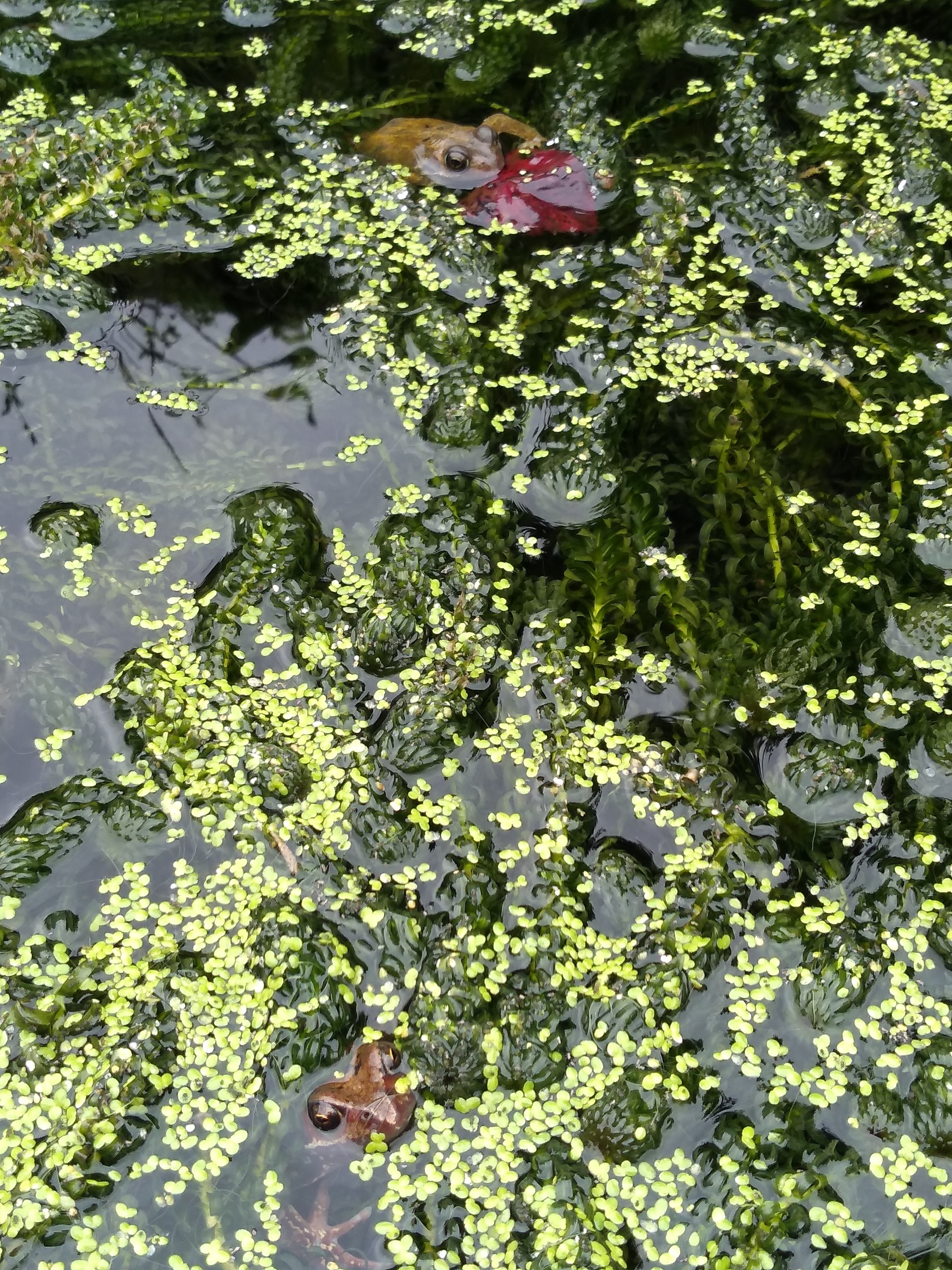
My week started and ended working next to ponds. The first was a small natural pond with a couple of frogs (Rana temporaria) sitting in it.

The other was a large disused outdoor swimming pool. In its neglected state rainwater collects within the concrete walls and nature is taking over. Given the murkiness of the water I was unable to obtain decent photos of my findings; however I saw another frog, (surrounded by lots and lots of tadpoles) along with a dragonfly nymph and a newt. It should be interesting to discover how many tadpoles survive to adulthood.

For the rest of the week insects were centre stage, especially on Wednesday when flying ants took to the sky. Flying ant season really tests my resolve to work through my dislike of ants (which originated in childhood). Thankfully I now find them more fascinating than loathsome, mostly.

The other insects I saw that day were;
– A (Chrysotoxum cautum) hoverfly on some Pyracantha.

– Honey bees (Apis mellifera) and a Red-tailed bumblebee (Bombus lapidarius) visiting a Geranium ‘Rozanne’ plant.

– Lavender (Lavandula) full of bees and butterflies, including more Honey bees as well as Buff-tailed bumblebees (Bombus terrestris), Meadow browns (Maniola jurtina) and a Ringlet (Aphantopus hyperantus) butterfly.

The Meadow brown butterflies also enjoyed visiting the Echinops bannaticus flowers too.

Even as I returned home I noticed a Willow Beauty (Peribatodes rhomboidaria) moth on the hall window.

The adults feed on Creeping thistle (Cirsium arvense) and Ragwort (Senecio jacobaea) both of these plants are common around this area. The caterpillars feed on various trees, shrubs as well as climbers ranging from Yew (Taxus baccata), Birch (Betula), ivy (Hedera helix), honeysuckle (Lonicera) and the wild Clematis, Traveller’s joy (Clematis vitalba).

The previous day I came across more insects that I was previously unaware of.

The first one was the Common red soldier beetle (Rhagonycha fulva).

It is a beneficial insect as adults eat aphids and are pollinators (feeding on nectar and pollen from open flat flowers such daisies and hogweed) while the larvae feed on slugs and snails along with other ground dwelling invertebrates.

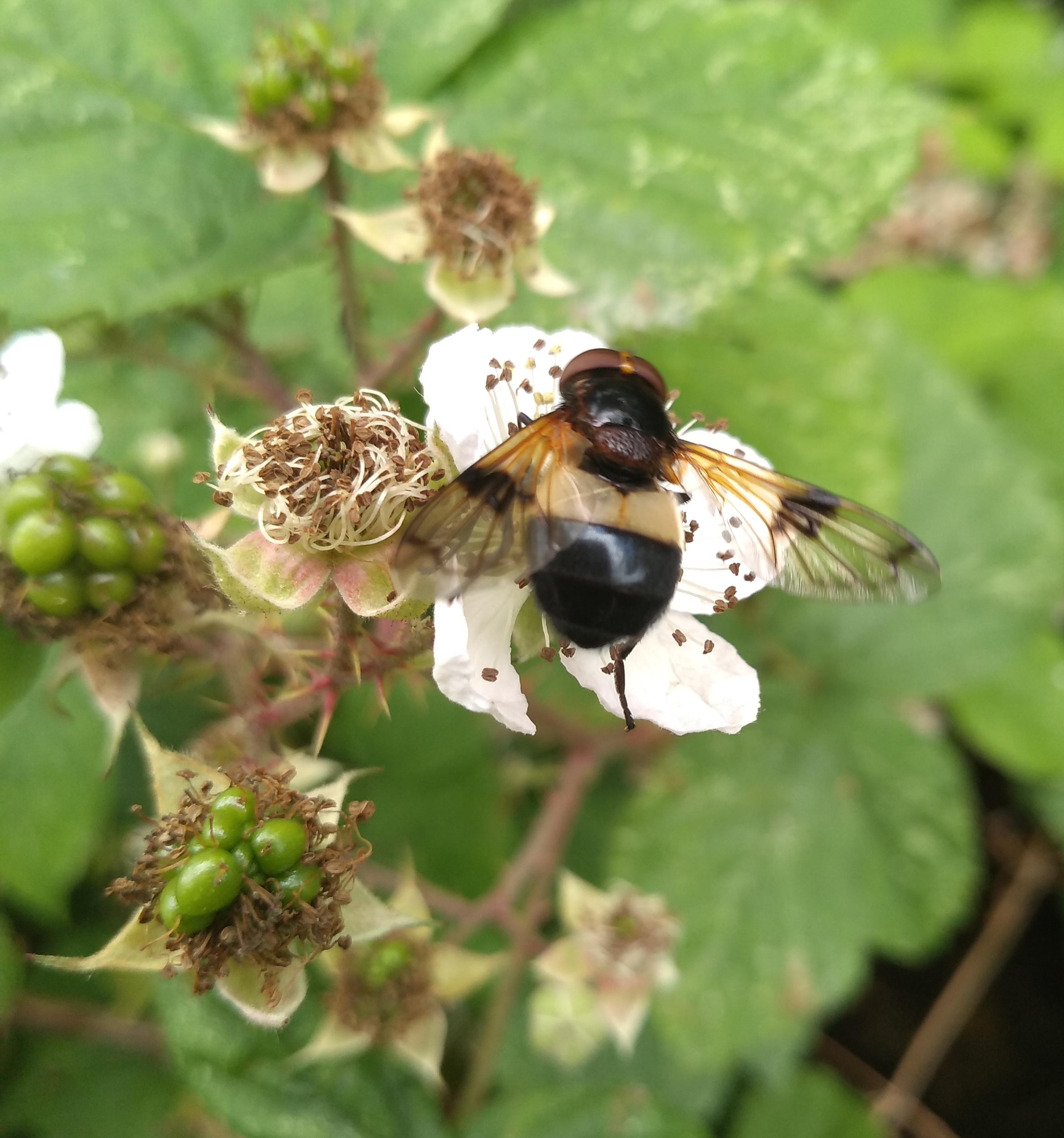
The other insect I saw on Tuesday was a female Volucella pellucens hoverfly feeding on nectar and pollen from Bramble (Rubus fruticosus).

These hoverflies also pollinate umbellifers; However as larvae they inhabit Bumblebee and wasp nests eating any waste produced along with their hosts larvae.

Posted in nature

Different sort of Easter chicks

After a busy seven days it is lovely to finally relax and reflect upon last weeks sightings.

Throughout the week I have seen Orange-tip (Anthocharis cardamines) and Brimstone butterflies (Gonepteryx rhamni) flying around as well as more Harlequin ladybirds (Harmonia axyridis). I have seen even more 7-spot ladybirds (Coccinella septempunctata), well into double figures. Ladybirds make me smile, a reaction than never diminishes. Something else that made me happy last week was seeing lots of tadpoles continuing to develop; it won’t be long before they become frogs feasting on slugs and snails.

On Thursday I walked home again, discovering yet more wildflowers blooming along the verge. The most prolific was Cow Parsley (Anthriscus sylvestris). Also called Queen Anne’s Lace or Wild Chervil it is pictured below amongst Dandelions (Taraxacum officinale) and White Dead-nettle (Lamium album).

Other flowers I saw along the way were;

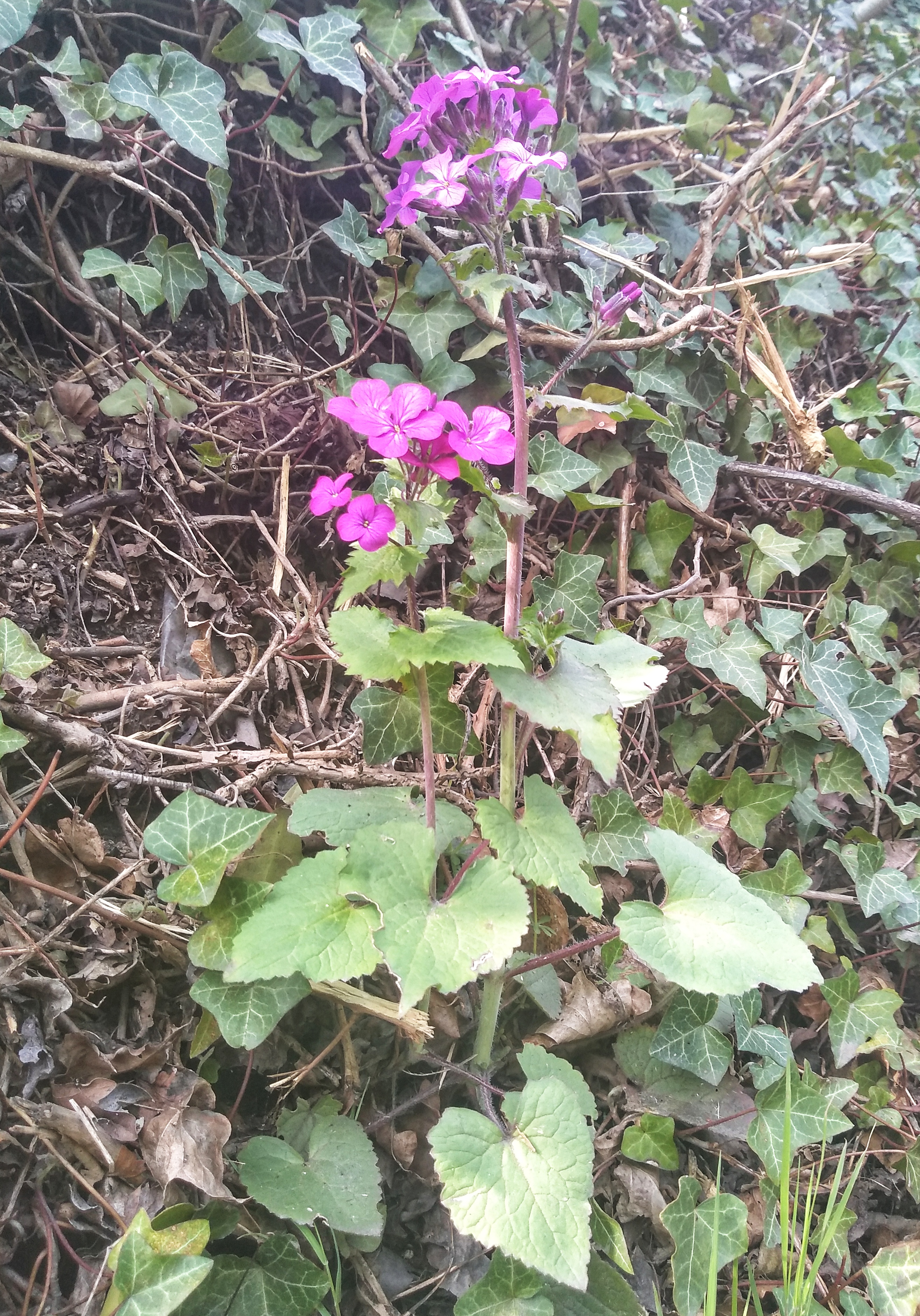
-Honesty/ Moonwort/Money plant (Lunaria annua)

-Herb Robert (Geranium robertianum)

-Dove’s foot cranesbill (Geranium molle)

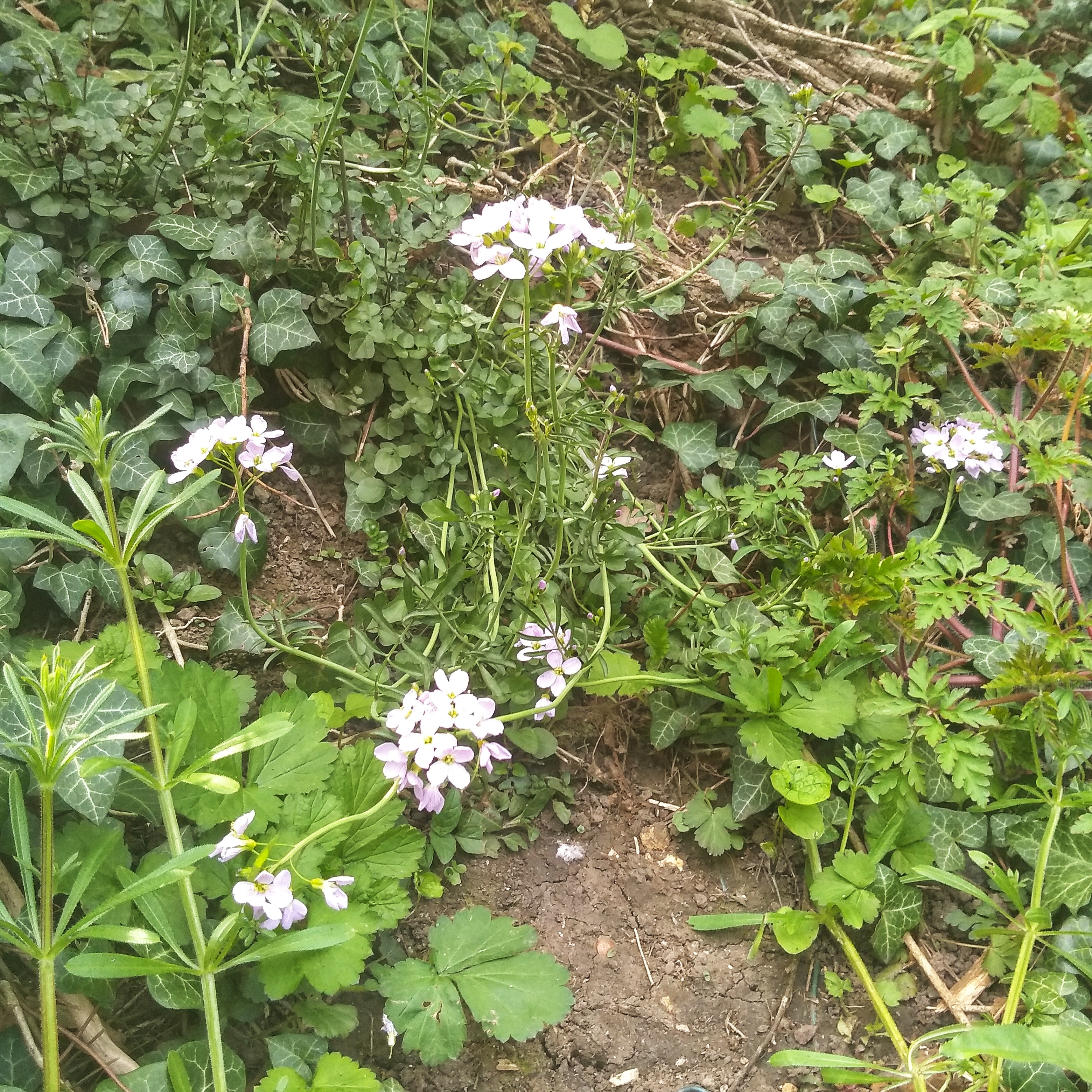
-Cuckooflower/ Lady’-smock (Cardamine pratensis)

-and Hedge garlic/ Garlic mustard (Alliaria petiolata).

I know this plant as Jack-by-the-hedge. I’m not entirely sure why it has this name. I guess it refers to being commonly found near hedgerows and Jack used to be a common name. Apparently the leaves, which have a mild garlic smell and taste, can be eaten in salads and sauces with meat or fish (Garlic mustard- Wildlife Trusts).

This week has been great for learning new bird sounds too. I have discovered a Dunnock (Prunella modularis) and a Green Woodpecker (Picus viridis) nearby without seeing them. Over the last few days I have heard another beautiful sound too. Each year I have Blue tits (Parus caeruleus) nesting under the eaves and it won’t be long before I hear their young. It is a fantastic sign of spring, better than anything the Easter bunny could bring (chocolate eggs are a close second though).

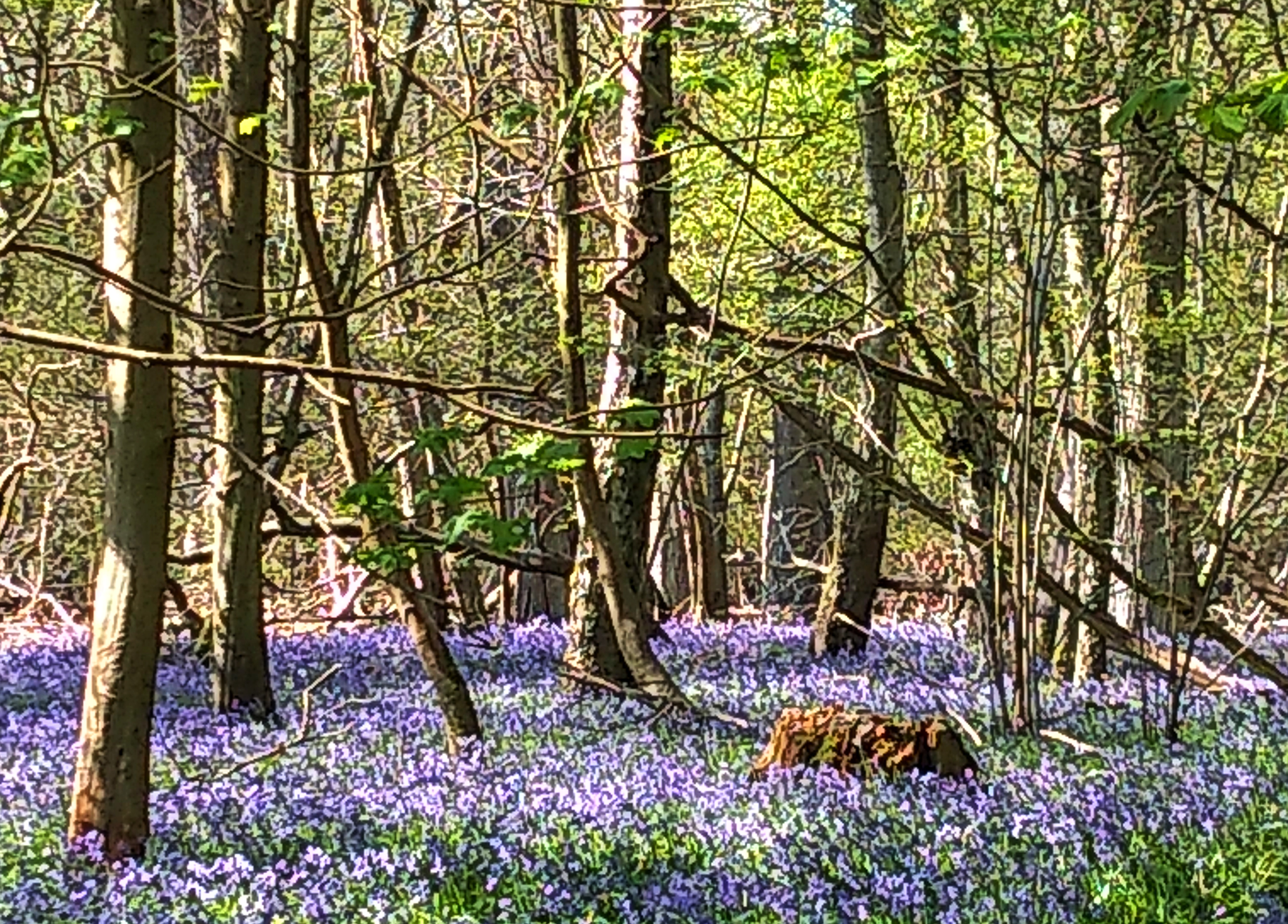
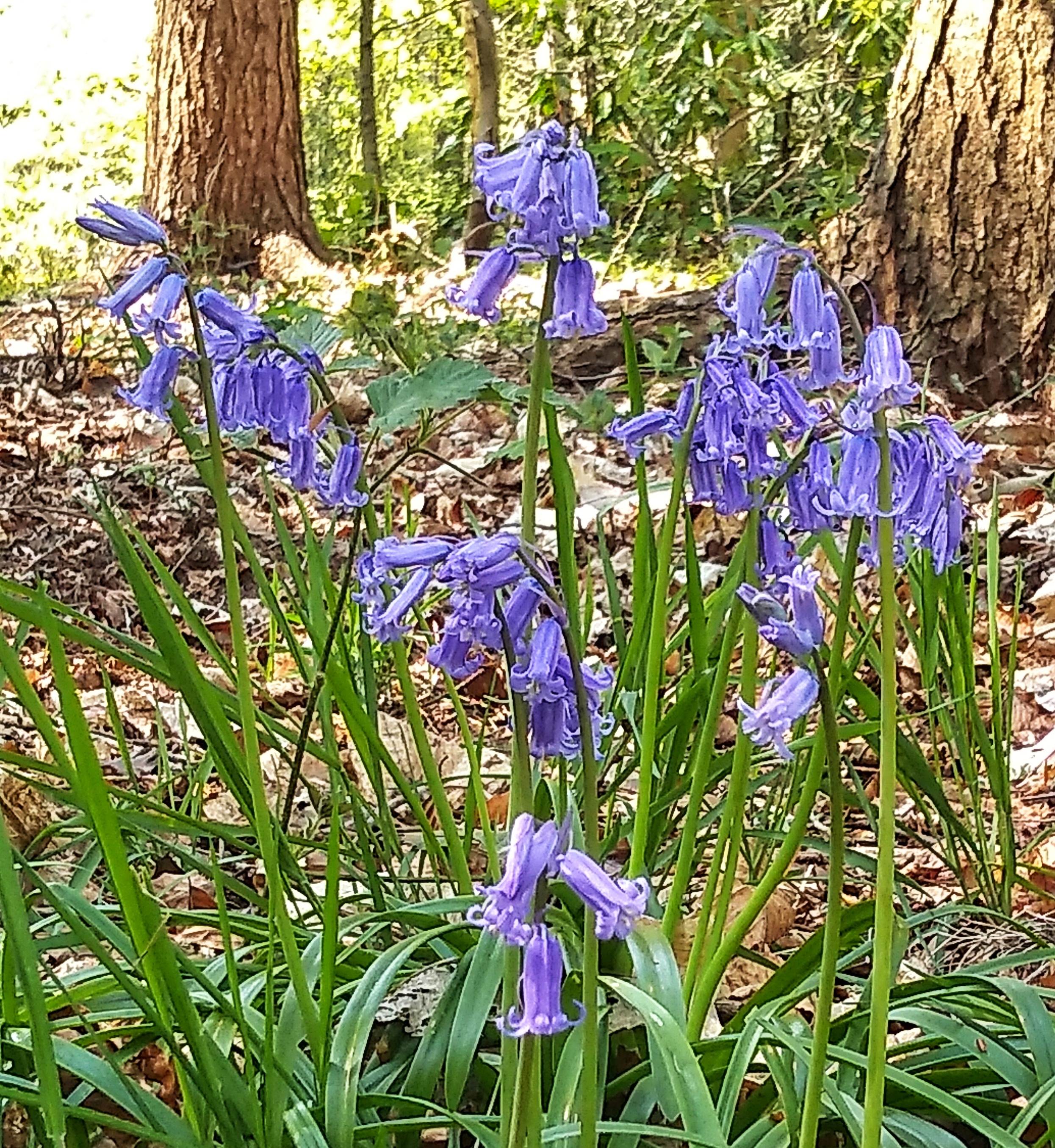
Yesterday I spent time visiting The Vyne (National Trust). The main attraction was the English Bluebells (Hyacinthoides non-scripta) on the woodland walk. The views were enchanting and smell delightful.

Also flowering near the Bluebells were Wood Anemones (Anemone nemorosa).

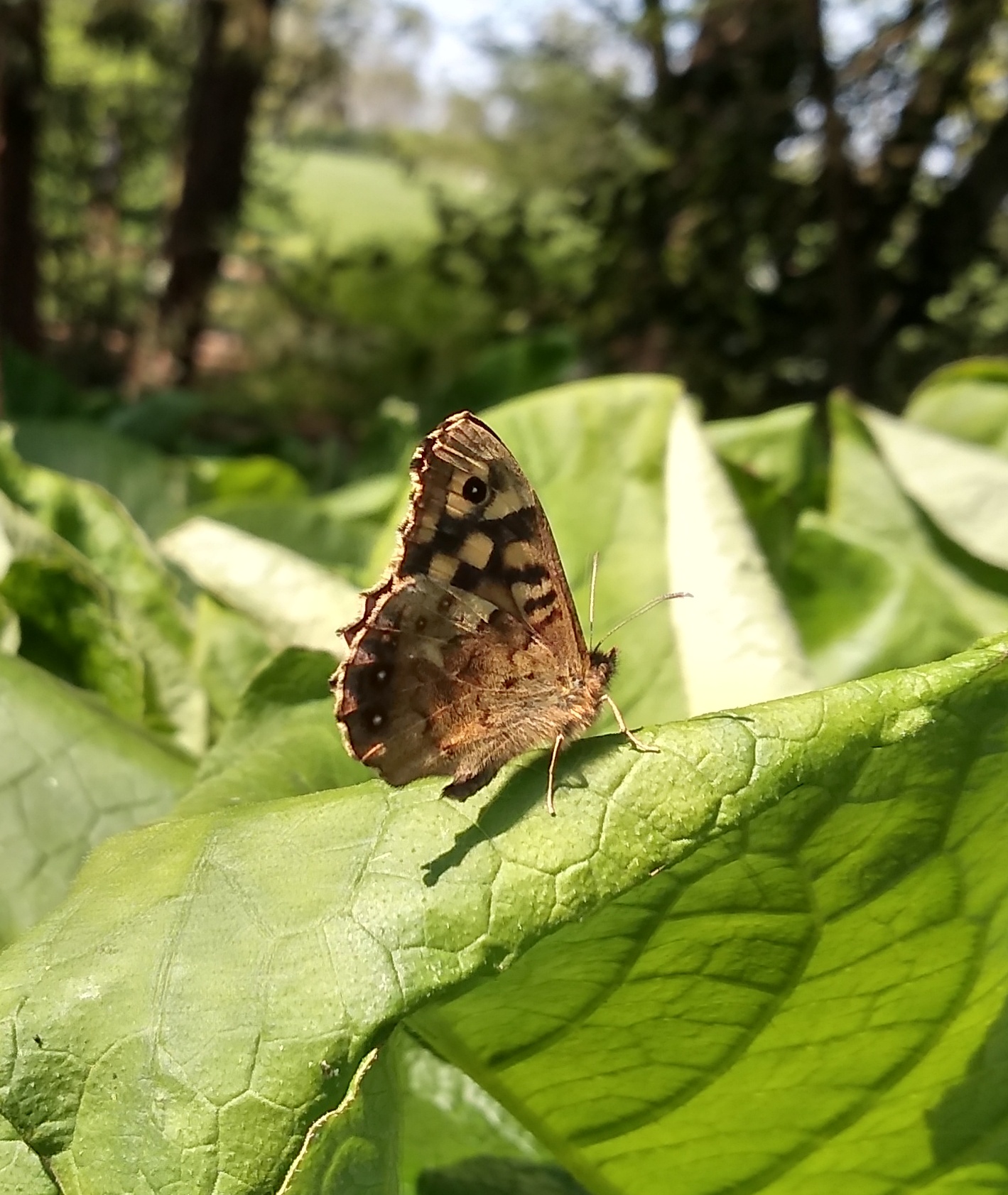
I spotted more Orange-tip butterflies there along with some Speckled wood butterflies (Pararge aegeria) flitting about.

It was a lovely way to spend a sunny Easter Sunday in good company.