Posted in Allotment, nature

Very Very Hot Summer Days

Within the past month the temperature has reached the highest on record in the UK at 40.2 Celsius. Here in the south, rain still evades us leading to hosepipe bans in some counties. Plus as I write this blog another heatwave begins. While the parched grass will recover once rain eventually falls, and some insects may benefit from these conditions, this drought is not good for nature in general (including humans due to amber and red heat warnings for health issues and fires). We need to use resources more thoughtfully and manage the land better so that nature (to me humans are part of nature not separate from it) isn’t placed under unnecessary pressure due to extreme weather conditions anymore.

Most wildlife isn’t adapted to this current weather and certainly has no chance against wild fires, especially Badgers (Meles meles) and Hedgehogs (Erinaceus europaeus– whose numbers have been in decline for many years for other reasons too). Even birds with second broods will be finding these times difficult; that is why it’s so important to place water sources at both ground level and higher up for birds and Hedgehogs at this time. Plus insects like Butterflies and Bees suffer when flowers start to whither early due to water shortage. Nature can recover from the odd hot dry year but unfortunately this is a trend, year on year, due to climate change so we need to be concerned and act now. Stephen Moss has written a wonderful article regarding this issue recently, it can be read here.

Given the information from the article mentioned above, it will be interesting to see how this prolonged drought will affect the results of the Big Butterfly Count this year (which took place from the 15th July to the 7th August) and consequently next years results too.

I have undertaken a few counts this year. The first time I looked out for Butterflies was on a warm afternoon, in a garden containing a Buddleia along with some Lavender (Lavandula) and Mint (Mentha) that was flowering. During that time, I identified;
5 Red admirals (Vanessa atalanta)
5 Commas (Polygonia c-album)
2 Peacock (Aglais io)
5 Gate keepers (Pyronia tithonus)
1 Meadow brown (Maniola jurtina)
2 Small tortoishell (Aglais urticae)
together with 1 Hummingbird Hawkmoth (Macroglossum stellatarum). The Hummingbird Hawkmoth is fascinating. I have observed two individuals visiting Buddleia this year in different gardens that I work at. It is so amazing to watch it collect nectar as it hovers next to flowers.

On separate occasions (at the previously mentioned garden) I also noticed a Large skipper (Ochlodes sylvanus) and a Ringlet (Aphantopus hyperantus) too. That garden also has an allotment attached to it where I got to observe the full lifecycle of a ladybird on one bean plant (thanks to the Blackfly being present). On this occasion it was the Harlequin (Harmonia axyridis) ladybird.

Larvae (on the right, looking for Blackfly to munch on) and on the left a pupae (from which the adult emerges).
An adult Harlequin ladybird.

My second Butterfly Count was during a morning as I picked Blackberries (Rubus) at the local woodland park, where I saw
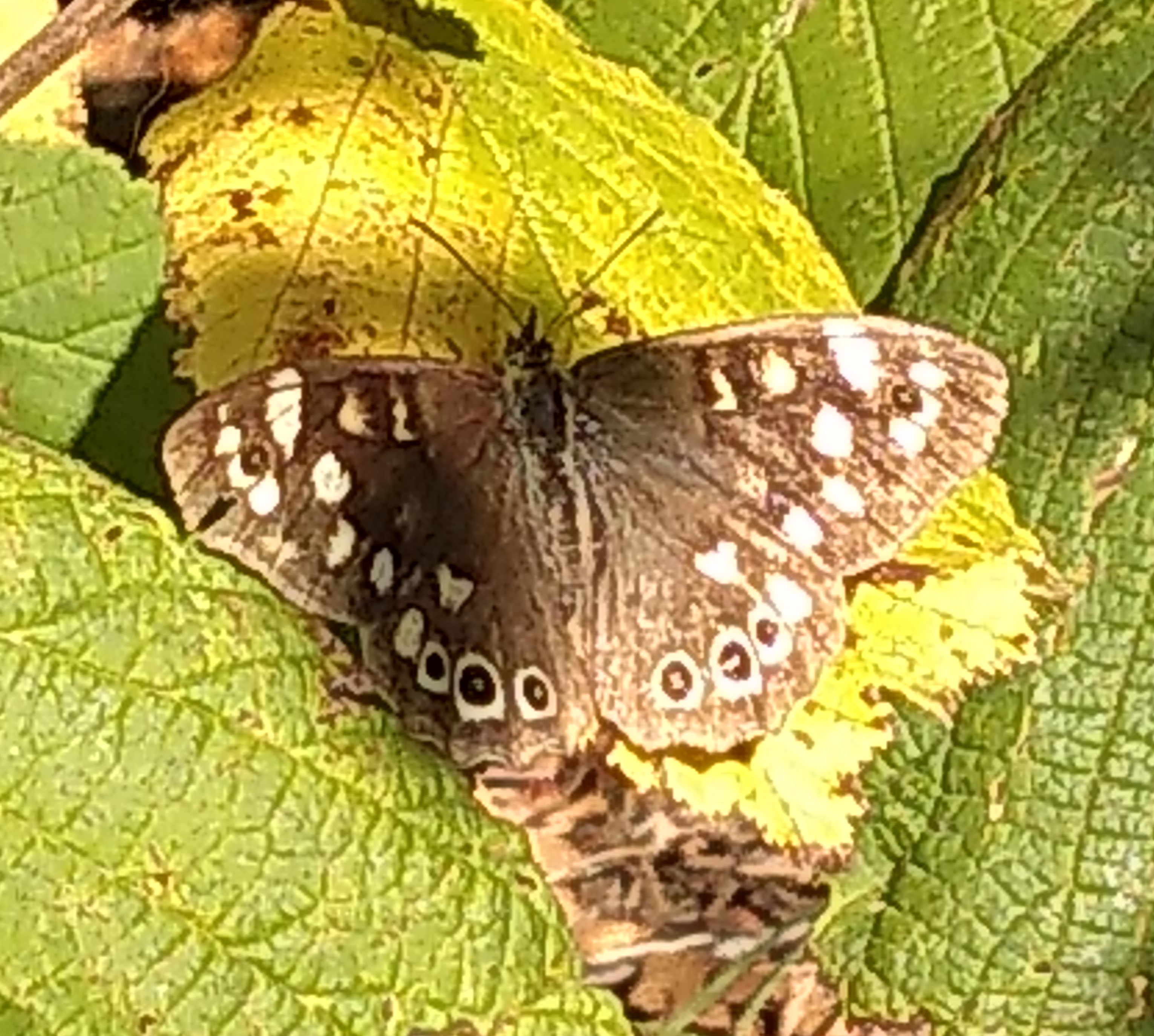
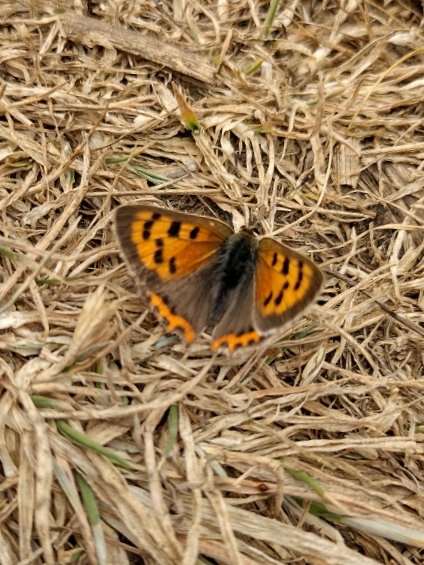
5 Gatekeepers, 1 Speckled wood (Pararge aegeria) and 1 Small copper (Lycaena phlaeas).

Speckled wood
Small copper

The Small copper is one I had never seen before. It is a small butterfly with a wingspan of 32-35mm. The caterpillars feed on Common Sorrel (Rumex acetosa), Sheep’s Sorrel (R. acetosella) and sometimes the Broad-leaved Dock (R. obtusifolius). They can be found in heath, moor and grassland together with woodland clearings or on waste ground.

At my allotment I have seen lots of Cabbage whites, along with the odd Peacock and Small tortoishell as well as a small blue Butterfly (that never settled so I was unable to identify it properly but was most likely a Holly blue- Celastrina argiolus). Thankfully I have also noticed plenty of bees during my butterfly observations, including honey, bumblebees and solitary bees.

Lughnasadh (also known as Lammas) a time when harvests begin to be ready for picking, occurred at the beginning of August. During this time I love to wander through natural environments, spending time observing the changes of the seasons. On my walk the previous weekend I observed Sloes (from Blackthorn- Prunus spinosa) and Elderberries (from Elder- Sambucus) already ripening alongside the Blackberries.

I must confess that I often struggle to enjoy the hottest days of summer. To me extremely hot temperatures are often overwhelming and I would love nothing better than to hibernate underground during the hottest times. I find the days exhausting and uncomfortable (due to the constant itchiness and sore skin). At these moments I rely on my mental strength to keep in mind that ‘this too shall pass’. I also try to remind myself that I love the changing seasons, including summer, and all they bring with them. Gratitude helps as each day I look for the little things that bring me joy such as the shining sun, the amazingly beautiful wildlife around me and the cooler night time temperatures. So until the heat reduces significantly I will keep taking things slowly, keep hydrated, take plenty of rest and be kind to myself. I am under no pressure to get things done at this time which is why this post took so long to complete.

Posted in nature

Nature’s Bounty

During this current heatwave cooler early mornings have been my saviour. Last Saturday I was awake early, as usual, so managed to get lots done before the heat became too exhausting. Long gone are the days when I used to be a night owl. I walked to the allotment just after 8am and noticed nature’s bounty was almost ready to harvest. Not only were Blackberries and Hazelnuts nearly ready to eat but other edibles too. Some of the edibles mentioned below require cooking before they can be eaten; a link for further information is given for each one. Also it’s important not to harvest too much when foraging, please leave some for the wildlife, thank you.

The things I saw were,

– Blackberries

https://www.woodlandtrust.org.uk/trees-woods-and-wildlife/plants/wild-flowers/bramble/

– Hazelnuts

https://www.woodlandtrust.org.uk/trees-woods-and-wildlife/british-trees/a-z-of-british-trees/hazel/

– Sloes

https://www.woodlandtrust.org.uk/trees-woods-and-wildlife/british-trees/a-z-of-british-trees/blackthorn/

– Elderberries

https://www.woodlandtrust.org.uk/trees-woods-and-wildlife/british-trees/a-z-of-british-trees/elder/

– Hawthorn haws

https://www.woodlandtrust.org.uk/trees-woods-and-wildlife/british-trees/a-z-of-british-trees/hawthorn/

– Acorns

https://www.woodlandtrust.org.uk/blog/2019/09/are-acorns-edible-and-other-acorn-facts/

and Rowan berries

https://www.woodlandtrust.org.uk/trees-woods-and-wildlife/british-trees/a-z-of-british-trees/rowan/
Posted in nature

What a Difference a Month Makes

A month ago I had a weeks holiday. Signs of autumn were beginning to mingle with late summer. Now October is here autumn has definitely arrived.

As I had another week off I decided to revisit my local park, observing changes from a month ago.

In September Roesel’s bush crickets (Metrioptera roeselii) were chirping everywhere, butterflies were flitting about and some flowers still bloomed amongst the meadow (see Relaxing into Autumn).

Upon my return last Tuesday the only sounds I heard were birds singing and the meadow area had been cut and baled. Cobwebs were visible in the long dew dampened grass around the edges of the woodland too.

Hawkweed, Ragwort (Jacobaea vulgaris), Red clover (Trifolium pratense) and Yarrow (Achillea millefolium) were only just flowering still while the Ivy (Hedera) was in full bloom.

Ivy is fantastic for pollinators at this of year. I saw a few hoverflies flying to and from several flowers but the Honey bees (Apis mellifera), that were still active from the nearby hives would probably visit them too.

It was lovely to see dried seedheads of Wild carrot (Daucus carota)

and Cow parsley (Anthriscus sylvestris)

as I wondered around the park. They look beautiful but they are useful for insects to shelter in as well. In fact I noticed a ladybird snuggling amongst one of the Cow parsley seedheads. I also discovered field mushrooms (Agaricus campestris) growing amongst the grass.

Trees and shrubs were starting to show autumnal colours along with their ripe fruits. I found elderberries, sloe as well as haws on the Hawthorn (Crataegus monogyna) alongside Rosehips. However there were no longer any blackberries left on the brambles.

I noticed the leaves of one Horse chestnut tree (Aesculus hippocastanum) affected by the Horse chestnut leaf miner (Cameraria ohridella) moth.

Similarly there was evidence of caterpillars (most likely another moth) having been on a Silver maple (Acer saccharinum) tree.

The eggs and excrement are still visible on the nibbled leaves.

I ended my weeks holiday with a visit the Horniman museum in London.

On route to the train station I saw a Brown rat (Rattus norvegicus) running across a path. It attempted to cross the road until either the traffic or pedestrians scared it into fleeing towards a nearby hedge. Once I arrived in London I realised that I never see rats in the underground any more. I used to enjoy seeing them scurrying between the tracks. I have owned pet rats for many years so I find wild rats intriguing. I also like to watch Squirrels as rodents tend to act in similar ways to one another. After lunch I observed two Grey Squirrels (Sciurus carolinensis) scamper about.

The nearest squirrel had an acorn in its mouth and appeared to bury it in different places. I once saw a television programme on squirrels in which one was observed ‘pretending’ to bury a nut in several places while in the presence of other squirrels to avoid their stash being taken. Presumably this was occurring with the squirrels I was watching on Friday.

There is a butterfly house and aquarium at the Horniman museum. The butterflies were looking a little aged with their wings rather worn, however they were still beautiful. As soon as I entered the butterfly house a Malachite butterfly (Siproeta stelenes) landed on me which felt wonderfully welcoming.

The photo below shows a selection of the many butterflies I saw.

Feeding on the fruit are one Blue morpho (Morpho peleides), one Brown clipper (Parthenos Sylvia philippinensis), two Blue clipper (Parthenos Sylvia) and three Owl butterflies (Caligo memnon).

There were lots to see in the aquarium as well but my favourites were the White spotted jellyfish (Phyllorhiza punctata); watching them was so relaxing.

Even at the weekend nature was visible. As I ate breakfast on Saturday morning I heard and watched a group of Coal tits (Periparus ater) on the Rowan tree (Sorbus aucuparia) outside. I have never seen Coal tits on this tree before, I hope to see them again.

Another animal I became aware of last week was a Red fox (Vulpes vulpes). I first noticed it on my way home on Wednesday night and again on Sunday morning. It was making itself known on Saturday night too as it was being very vocal.

Posted in nature

Relaxing into Autumn

September is here. While meteorological autumn has already begun (1st) it won’t be long before astronomical autumn arrives (23rd) too.

I love this time of year; for me it’s the time for taking stock and starting new adventures (a feeling probably ingrained from my educational years). I particularly look forward to planning changes in the garden and start making Christmas presents at this point in the year. Plus Autumn is my favourite season, the fresher sunny mornings and the warm leaf colours.

Along with the signs of autumn (including Blackberries, Elderberries and Sloes ripening) I have noticed a change in how the days feel within the past few weeks.
As the school year begins I had a week off to relax after a long hectic summer.

At the start the week I decided to walk round the local woodland park. It was a warm, dry and sunny day on Monday. Once I entered the meadow area I was aware of a loud chorus amongst the uncut grass. Upon closer inspection I discovered the wonderful chirps were being made by lots of Roesel’s bush crickets (Metrioptera roeselii).

The flowers still blooming were; Hawkweed, Red clover (Trifolium pratense), Ragwort (Senecio jacobaea), Yarrow (Achillea millefolium) and Chicory (Cichorium intybus).

Lots of Honey bees (Apis mellifera) and several Small white butterflies (Pieris rapae) were flitting between the flowers especially the Chicory. The blue flowers of the Chicory really stood out in the sunshine.

I even got to see a Speckled wood butterfly (Pararge aegeria) resting in the sun on the edge of the wood.

One thing came as a surprise as I wondered through this oasis of calm. It was fantastic to discover a notice about Skylarks (Alauda arvensis) nesting in area.

As they are on the Red list Bird of Conservation Concern it was nice to learn that they have made a home nearby.

Although I didn’t go away on holiday I planned to visit a few places before the weather turned. One place I finally visited was the Chelsea Physic Garden in London. Although it was later in the season there was still lots to see. Initially I looked round the glasshouses within the Tropical Corridor. There were lots of plants from around the world which required extra protection. I am a big fan of cacti so I liked seeing them planted naturally rather than in pots. There were lots of Pelargoniums as well. One whose leaves I particularly enjoyed smelling was Pelargonium ‘Chocolate peppermintwhich reminded me After Eights.
Within the same glasshouse I got so see a Common carder bee (Bombus pascuorum) enjoying the flowers of the Pelargonium quercifolium ‘Royal oak’.

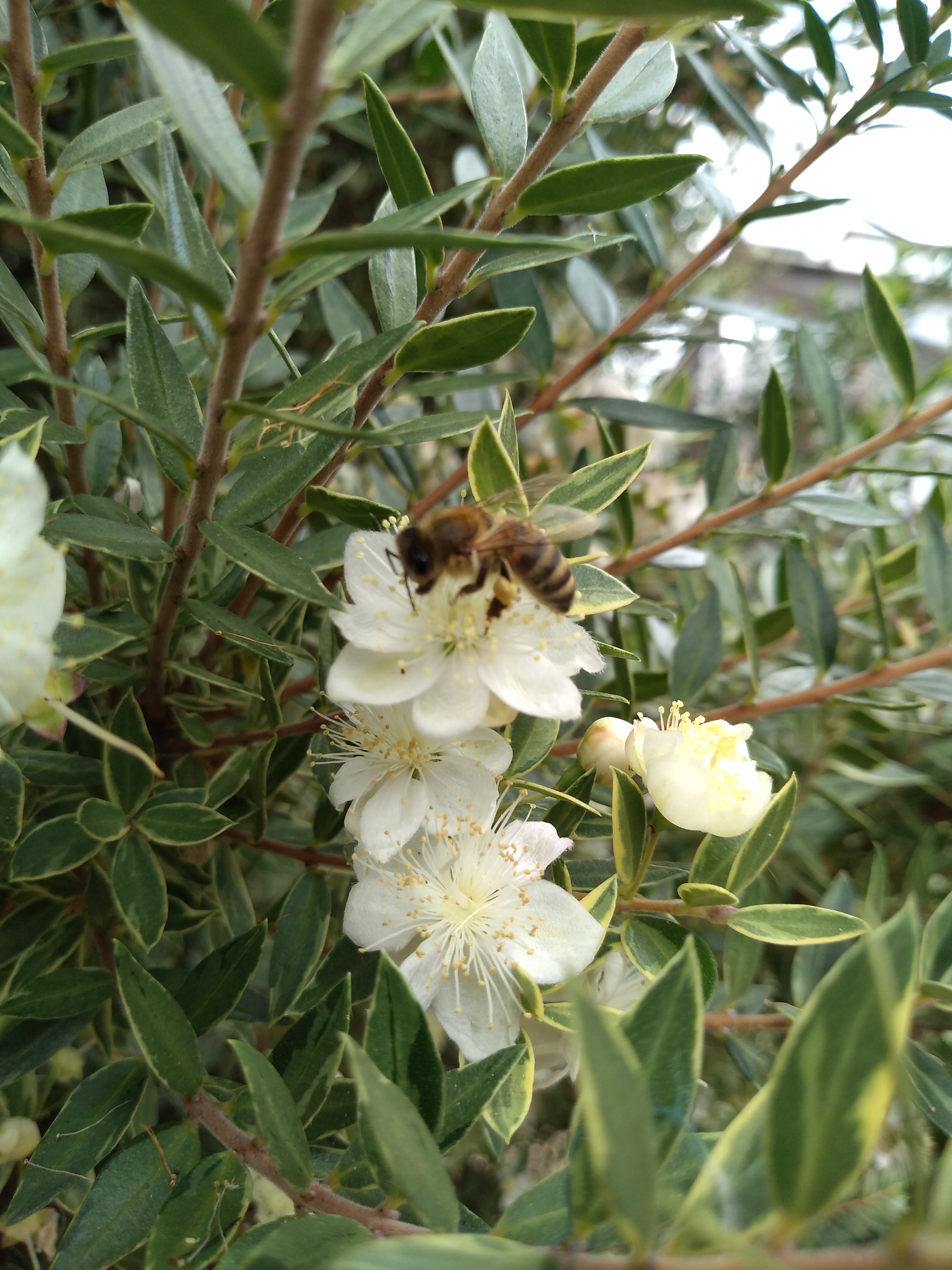
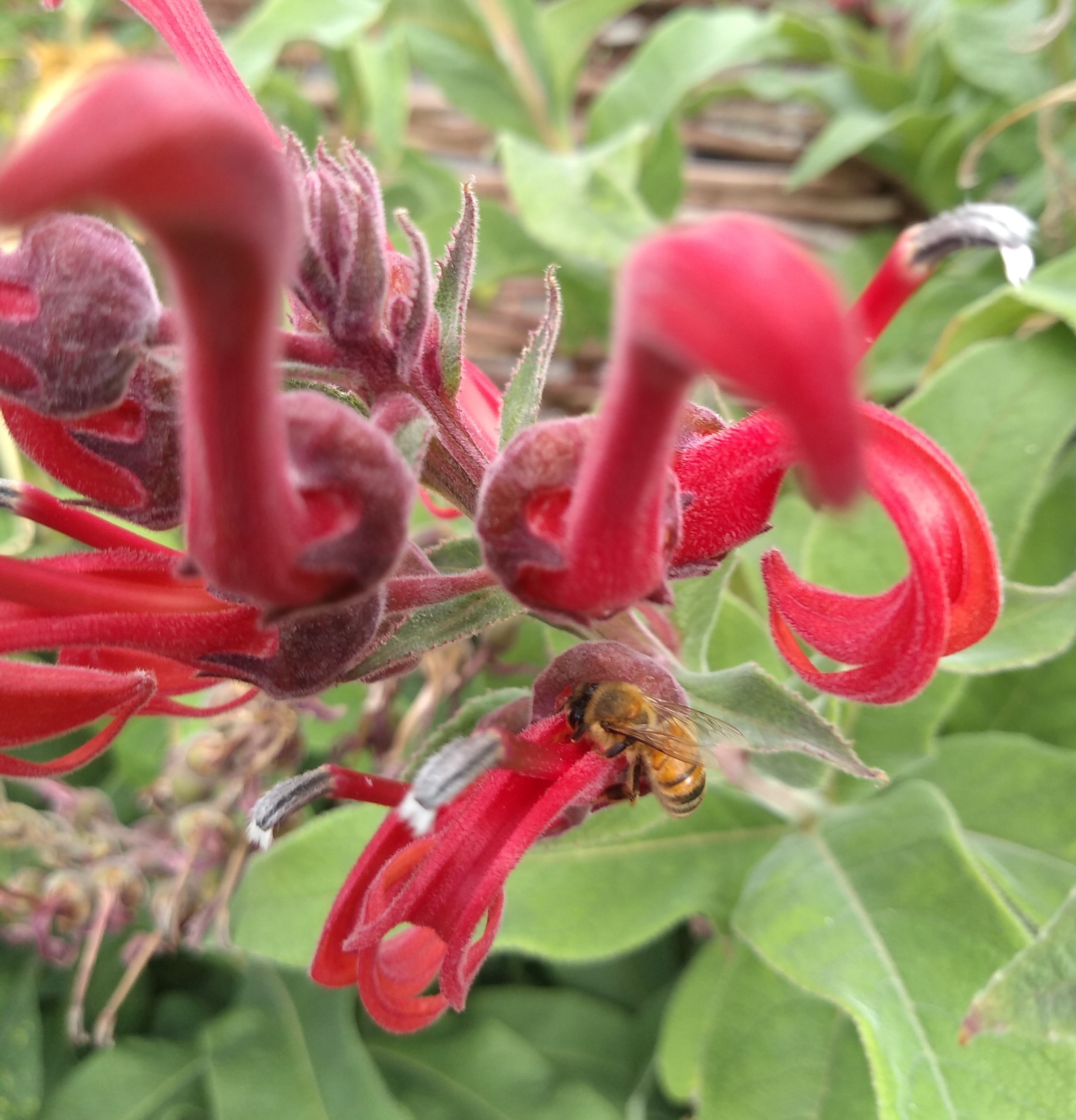
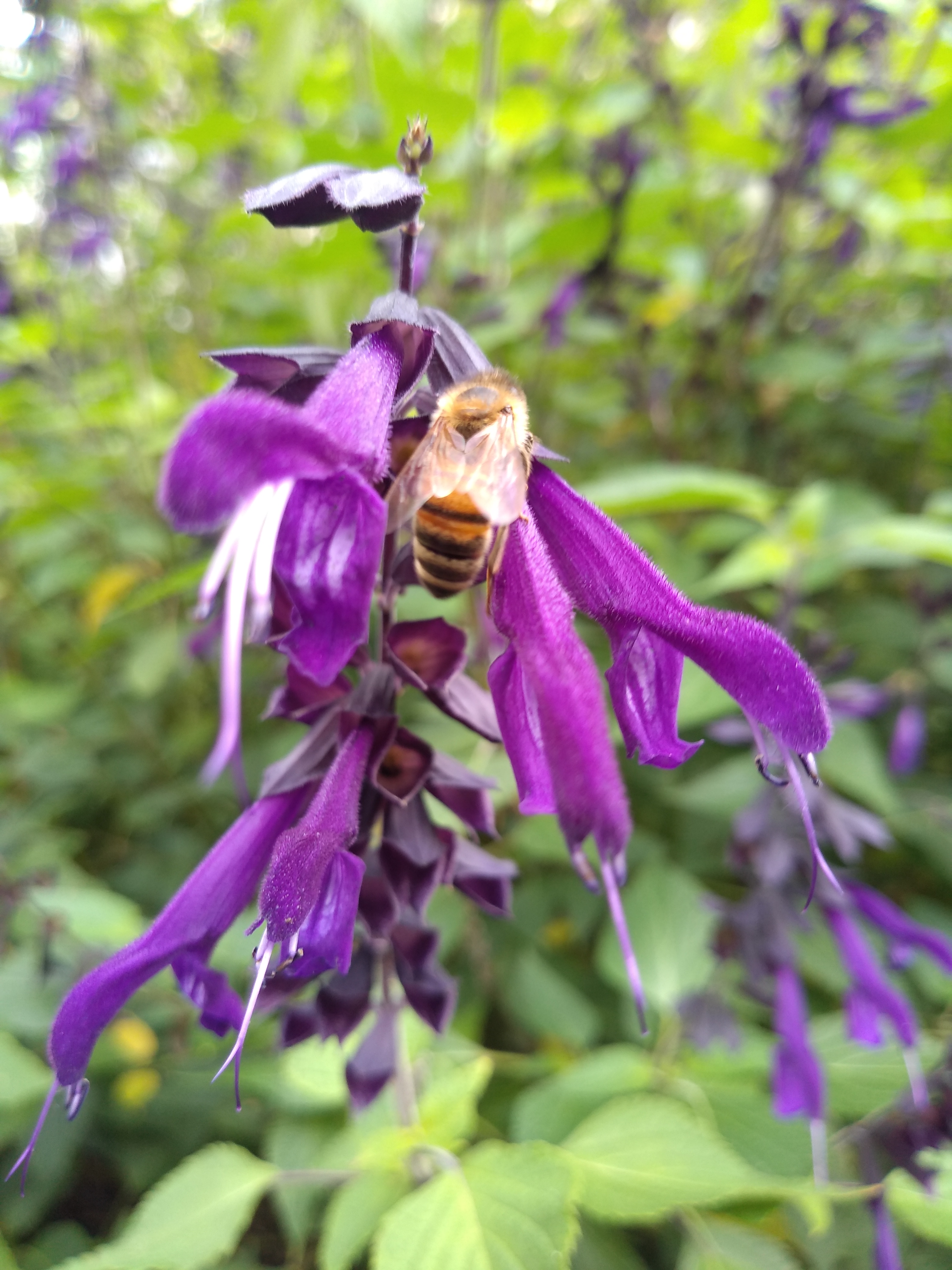
After the glasshouses I walked around the Garden of Medicinal plants. There were Honey bees buzzing around lots of plants in this section. I found them visiting a;
Myrtus communis var. tarentina ‘variegata

Lobelia tupa,

Salvia stachydifolia,

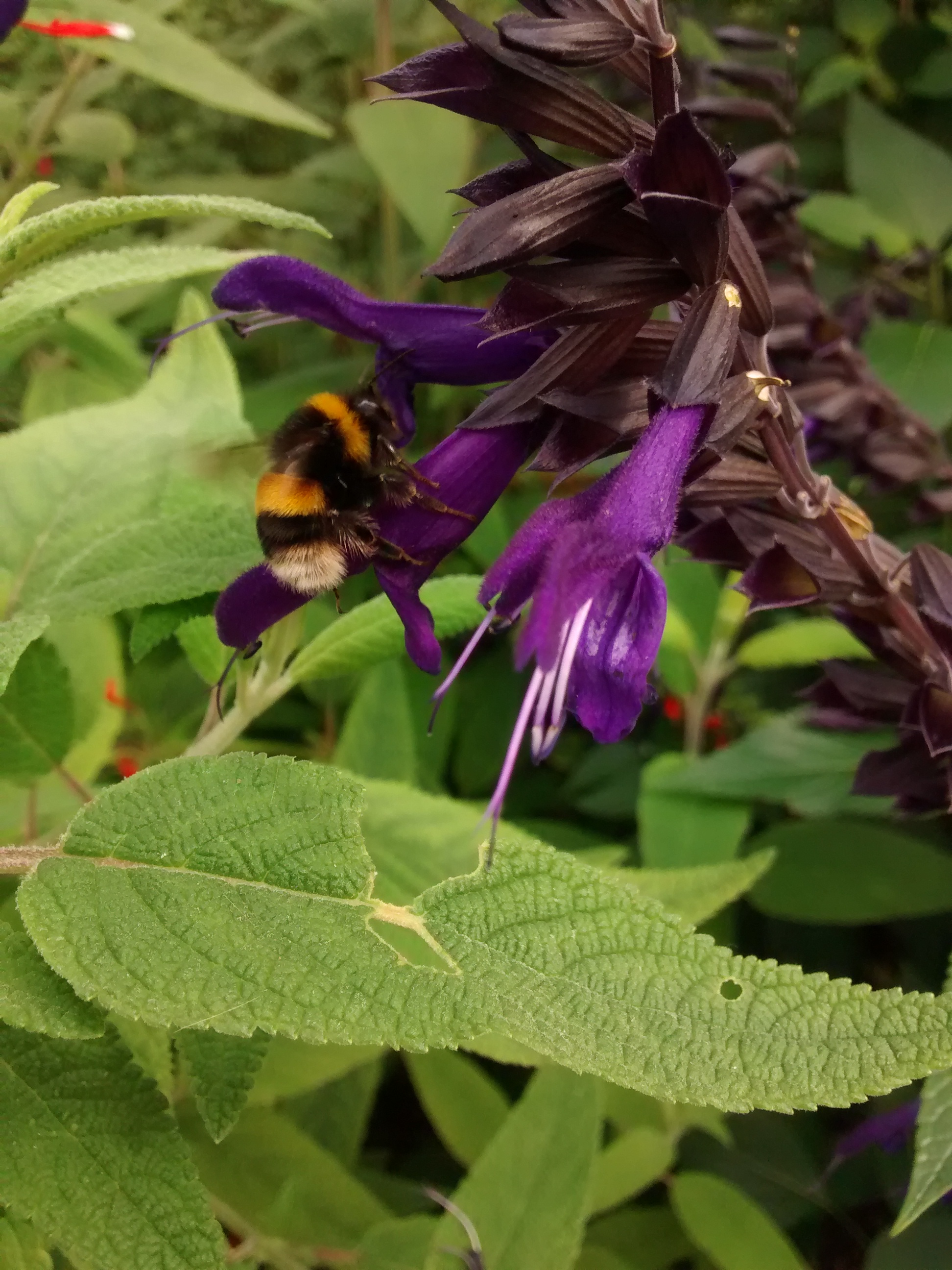
and a Salvia amistad; along with a Buff-tailed bumblebee (Bombus terrestris)

It was also lovely to watch some Dunnocks (Prunella modularis) as I ate lunch. Normally shy birds I usually only hear them sing in early spring, however these clearly weren’t bothered about us.

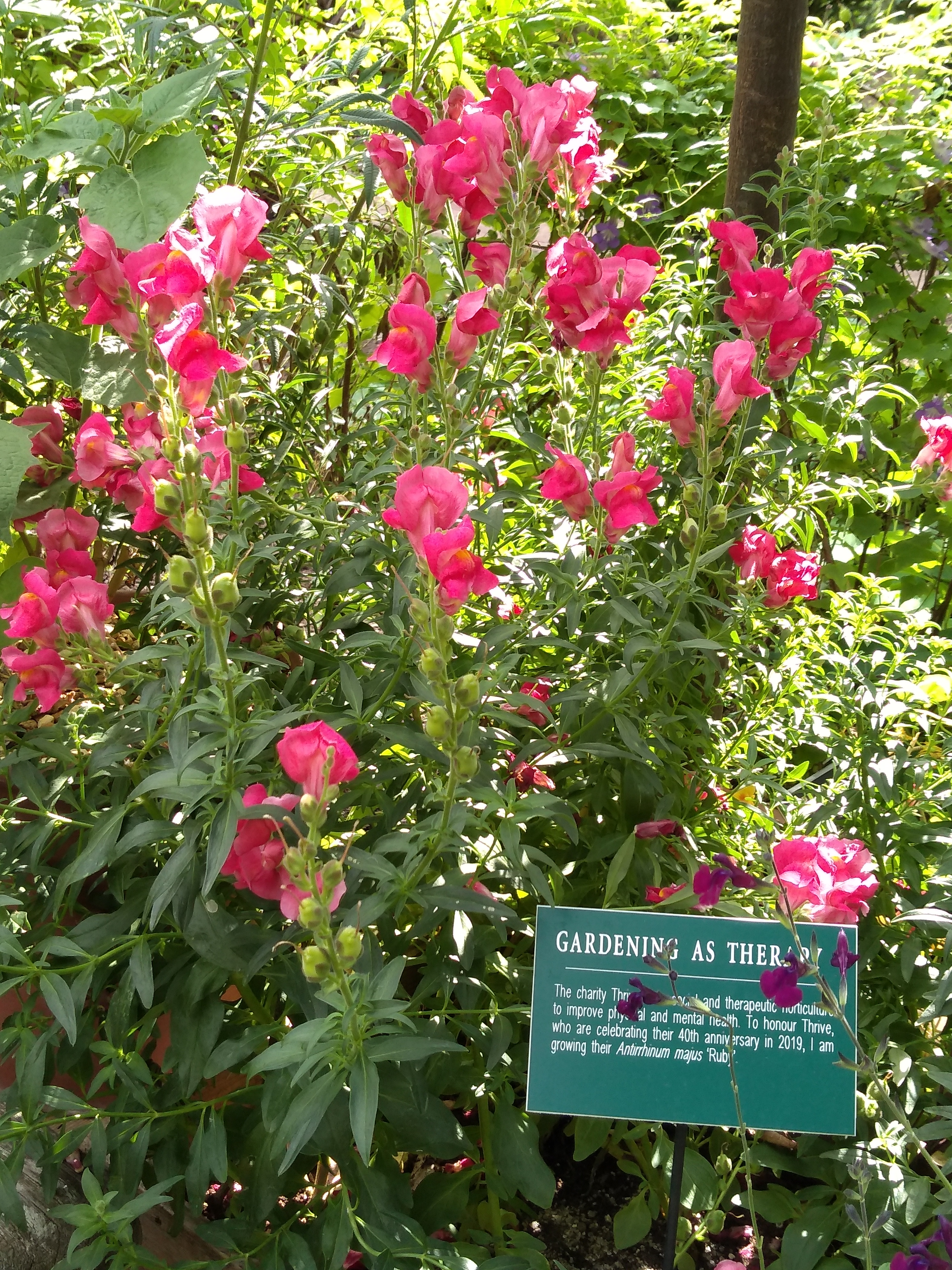
The next stop was to the Mental Wellbeing garden. I particularly enjoyed this small garden dedicated to improving mental health. It concentrated on the senses so there were plants you could feel, smell as well as view. Colour was important; along with soothing green foliage there were calming blues and purples along with joyful yellows and oranges. There was even a reference to garden therapy which is close to my heart along with a dedication to the charity Thrive. (See Thrive).

Wildlife can also have a positive affect on mental health so it was great to see insects in this space too. There was;
– an unidentifiable bumblebee investigating a Morning Glory (Ipomoea purpurea ‘Grandpa Ott’) flower covered in pollen.

– plus a Green aphid on a beautiful sweet pea (Lathyrus odoratus ‘Matucana’).

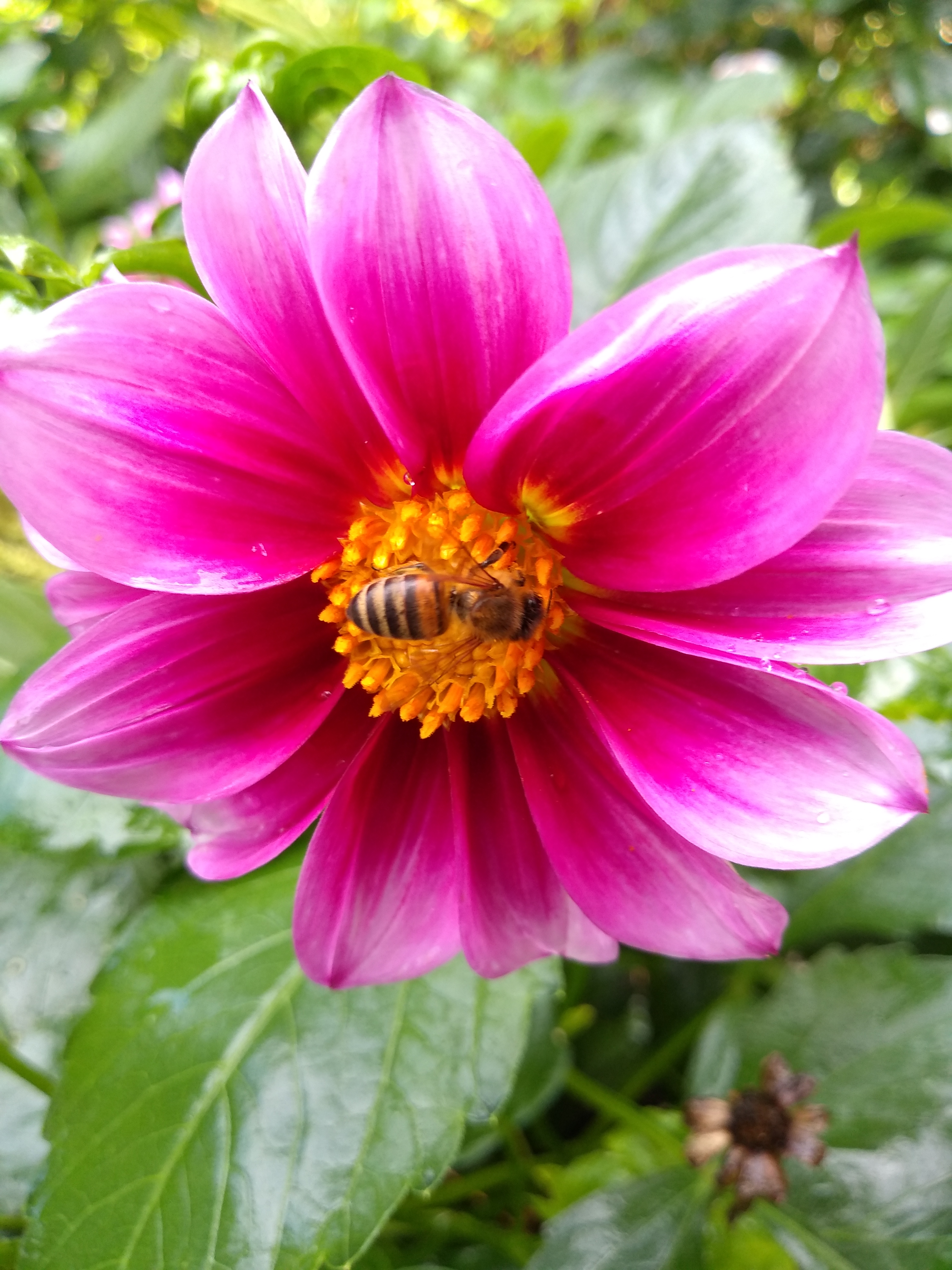
I continued to notice more insects as I kept walking around; starting with the Dicotyledon Order Beds, where I saw a Honey bee on a dahlia,

through to the Garden of Edible Plants. In the tea bed, which was near Fortune’s Tank Pond, a male Common darter dragonfly (Sympetrum striolatum) was resting on a metal teapot shaped frame holding up Nettles (Urtica dioica) inside. The nettles were meant to be there as nettle tea can be a diuretic.

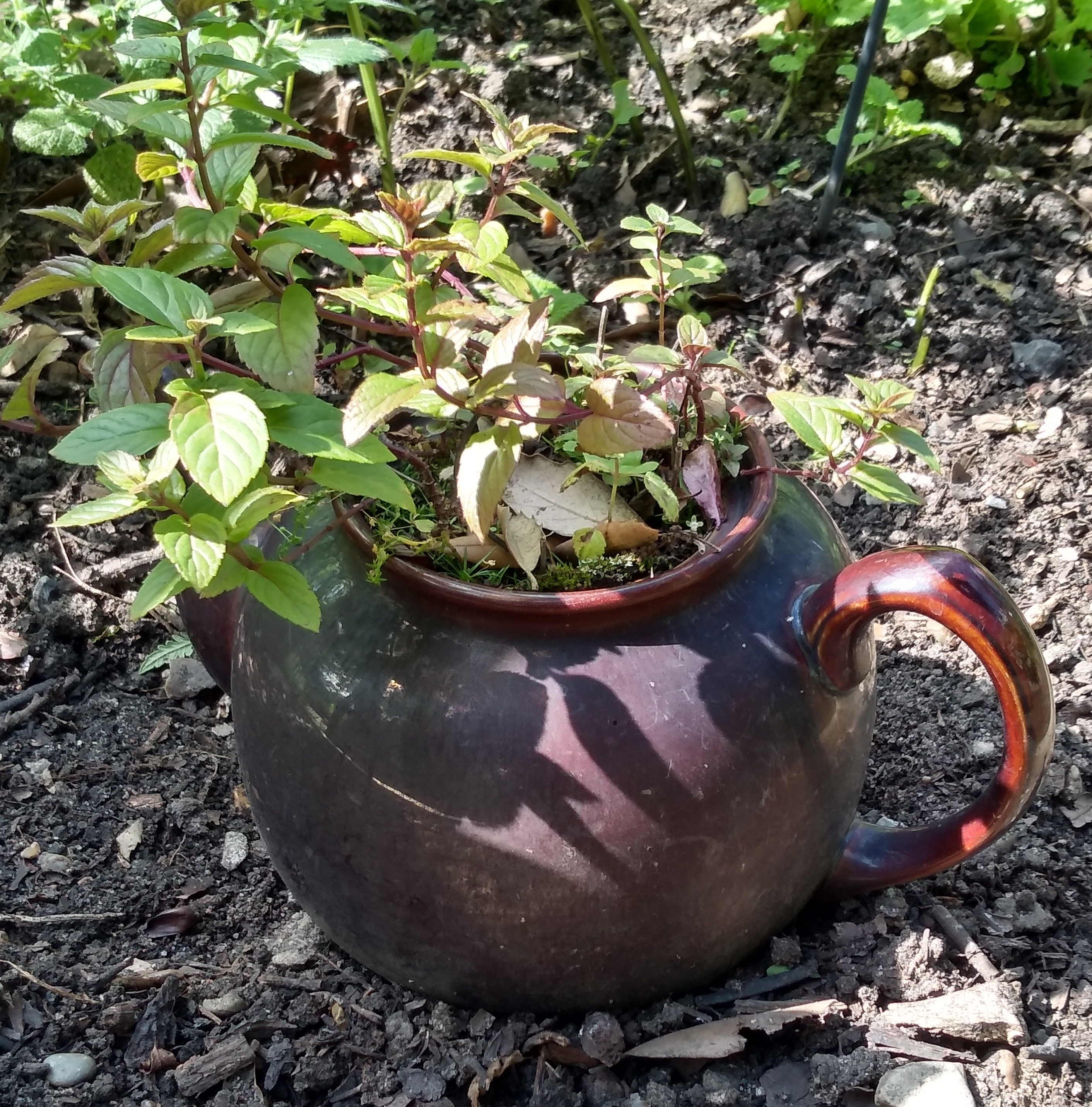
There were some interesting containers used as pots in this bed. Mint (Mentha) was growing in a teapot

and a tea plant (Camellia sinensis) was planted in a tea chest.

These unusual pots gave me some ideas for my own garden.

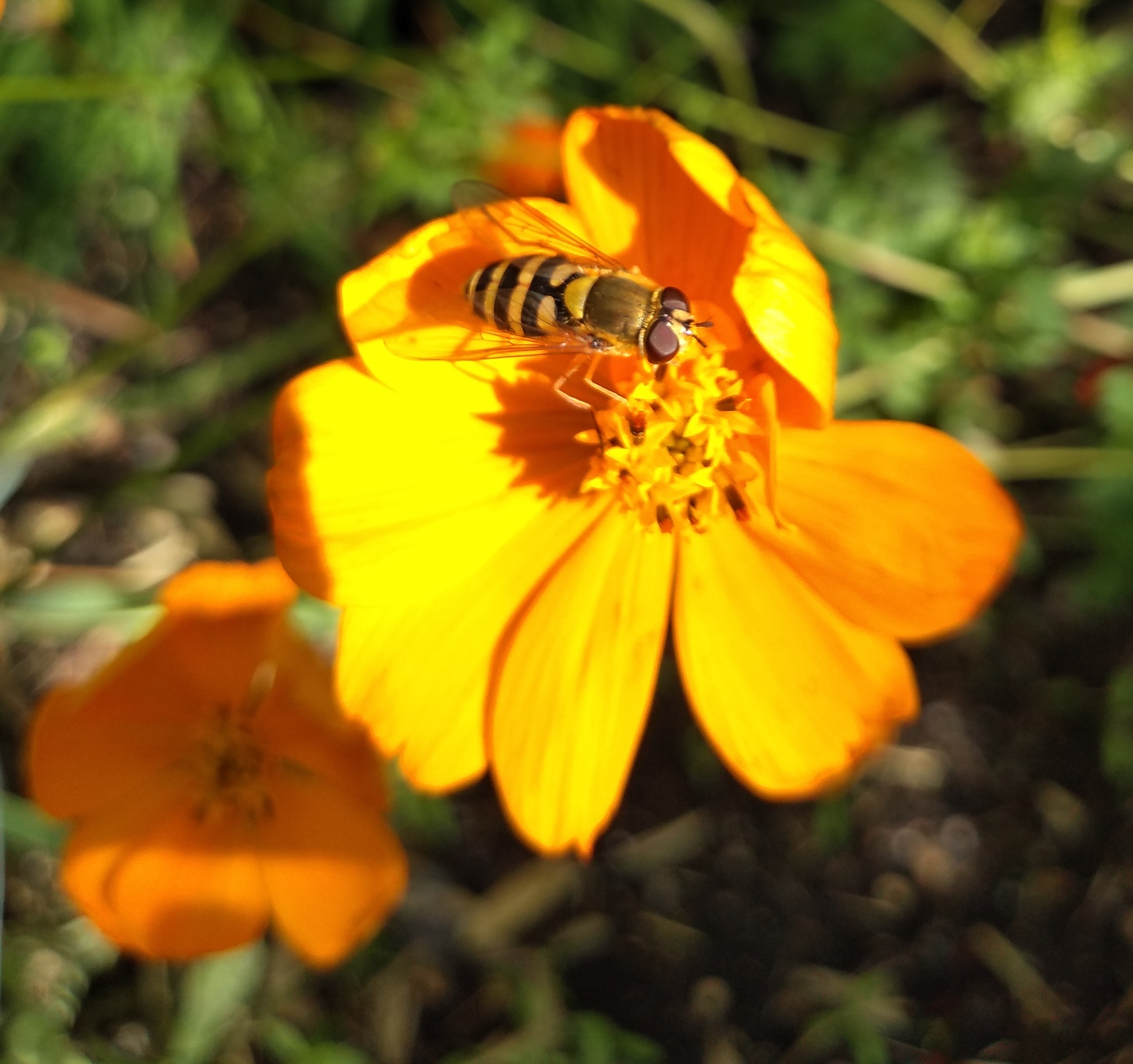
Another area I was very interested in seeing was the dyers bed. I would love to try colouring fabric or yarn with natural dyes so I wanted to see which plants were there. On the yellow cosmos (cosmos sulphureus) was a female Syrphus ribesii hoverfly.

The flowers of this Cosmos are used to create a yellow- orange dye. I think I may try dying with this plant if dye is amazing as the flowers.

I meandered further round the other sections of the garden ending in the community garden. Alongside edibles were wildflowers that can be used as herbal medicine.

I love this sign.

Along with plants such as Chamomile (Chamaemelum nobile) and evening primrose (Oenothera biennis) were Herb robert (Geranium robertianum) whose crushed
leaves can aid wound repair and the aroma believed to repel mosquitos. Another so called weed I found there was Plantain (Plantago major). When used as a soothing poultice the leaves
are useful for calming insect bites and inflammation.

I ended the week beside the sea in Hampshire. I always look for seaglass along beaches and Saturdays hunt was plentiful. The weather was lovely on Saturday; sunny and warm with a gentle breeze. Along with the soothing sound of the waves I could hear Herring gulls (Larus argentatus). This was the perfect end to my week off and the start of Autumn.