September brought in a change of weather; stormy wetter conditions set in along with cooler mornings. Earlier in the month, I was lucky enough to witness a mini murmuration of Starlings (Sturnus vulgaris) as they flew away from a storm that was rolling in. The commotion they produced made me look up; there were about 30 to 40 of them grouped together before they eventually headed off.
Hedgerow foraging has been mixed due to the dryness earlier on in the year. There are fewer conkers but the Horse chestnuts (Aesculus hippocastanum) showed signs of stress as the leaves began to brown off at the end of August. While there have been plenty of blackberries this year, most were smaller and dried up. Plus elderberries ripened a month earlier than usual. There have been plenty of walnuts and acorns though.
Fungi has begun to appear lately. One I spotted on an Ash tree (Fraxinus) was the Shaggy bracket (Inonotus hispidus).
Commonly found on deciduous trees, mostly Ash but also Planes (Platanus), Walnut (Juglans regia) and Apple (malus), it is inedible; attacking the trees heartwood, entering through a wound. It starts off with a velvety look (as seen in the photo) but eventually becomes brittle and black.
Now September has arrived, there is definitely an Autumnal feeling in the air. Similar to March, this month often has a transitional effect on me; especially once the Autumn equinox arrives on the 22nd. The nights are noticeably getting colder and drawing in. Over the past few weeks, some mornings have been misty and there has been a mixture of weather throughout the weeks; humid and stormy one moment and colder and sunny another. Spiders and their webs have become more visible, helped in part by morning dew, plus leaves are beginning to turn on some trees while autumn Cyclamen and crocuses (Colchicum autumnale) are starting to flower. I love September after the intense heat of August I long for a bit of relief.
On the allotment, autumn raspberries (Rubus idaeus) and apples are ready to pick along with pears, damsons (Prunus domestica subsp insititia),
Damsons ready to pick.
elderberries (Sambucus) and blackberries (Rubus). Conkers are falling now too, although the walnut and hazelnut harvests have passed.
Sweet chestnuts are almost ready to fall.
On the last bank holiday of the year (almost a month ago), I visited Minster-on-sea with my partner and his parents. It was an ideal day for walking along the beach searching for treasure, perhaps fossils, sharks teeth, sea glass, pieces of broken pottery and the occasional sea lego. Washed up along the beach were lots of Slipper limpets (Crepidula fornicata).
These limpets arrived on these shores from America via ships in the 1800s and thrived in the UK; especially southern England and Wales, where they have become a pest to muscle and oyster beds (competing for food and space). They are edible themselves.
It is usual to see individual empty shells, in fact they are found in huge numbers on beaches in the Solent. The common name of this sea snail refers to the appearance of an individual shell when it is viewed upside down; similarly the latin means small boot. When alive, these gastropod molluscs are rarely found alone (as shown in the photo above). Up to 12 Slipper limpets can be stacked together with the female, the largest and oldest, at the bottom; all the others are male or, in the case of the second from bottom, in the process of transforming into a female. When the one at the bottom dies and falls off, the next one up then becomes female. Further information on these fascinating creatures can be found in an article written by Nick Baker here.
The Slipper limpet isn’t the only snail that I noticed recently. I often get to see land snails but I noticed this beautiful orange coloured Brown lipped snail (Cepaea nemoralis) hanging around after a rainy morning. Snail shells can be very beautiful and I am intrigued by their structure.
Whatever your view on snails it’s hard to look at their shells without admiring the beauty.
I have become more aware of insects lately, mostly when cutting back perennials at work. Although I try to be careful as much as possible, occasionally I disturb a few. I always make a point of replacing or moving them to a safe place. Mostly it is ladybirds but I have also noticed a few other species, such as Common earwigs (Forficula auricularia) and the Rusty tussock (Orgyia antiqua) and Knot grass (Acronicta rumicis) moth caterpillars
Common earwigs feed on organic matter and like to hide away in dark areas of the garden (not in human ears).
Earwigs are useful garden recyclers.
Once eggs are laid, the females diligently clean them and constantly guards the nest only stopping when the young can fend for themselves. While the adults can nip humans and predators, it is only as a warning.
Caterpillars of the medium sized Rusty tussock moth can be seen between May and September.
The males and females of this moth, also called the Vapourer, look different from on another. The males are orangey-brown while the female has a more grey colouration and also lacks any significant wings; therefore it is only the males of this species that are active (mostly flying during the day). The young feed on broadleaf trees and shrubs in gardens and parks, as well as along hedgerows, heaths, moorland and woodland. The adult female and male moths can be seen here .
Knot grass caterpillars (see photo above) can often be found in late summer (and even as late as October in Southern Britain; although these are usually a second generation). Pupa of this moth survive the winter in leaf litter. The grey coloured adults (with a wingspan of 3-3.5 cms) can be seen from May through to September. The caterpillars can be observed on herbaceous or woody plants such as knotgrass (Polygonum aviculare), bramble (Rubus), hawthorn (Crataegus), common sorrel (Rumex acetosa), heather (Calluna), plantains (Plantago), docks (Rumex) and purple loosestrife (Lythrum salicaria). It makes sense therefore that this one was found nibbling on a raspberry leaf on the allotment. The numbers of this moth are declining and while they are still commonly found in gardens, heathland and grassland, it is thought that the species is becoming vulnerable. I was happy to share my raspberry plant with this caterpillar; raspberries are my favourite fruit but it certainly wouldn’t do any major damage. A photo of the moth can be seen on the UK Moths website.
Sadly the results of the Butterfly count for this year came out last week. They confirmed people’s suspicion that it hasn’t been good for butterflies and moths (as well as bees). Many butterfly and moth numbers continue to fall, and significantly so from previous years results, due to a variety of factors including the cold wet weather we’ve experienced this year. Further information can be found on the butterfly conservation website here.
Thankfully last Friday, I witnessed a wonderful sight during a warm sunny afternoon. A huge area of ivy in full bloom was covered in so many bees that it stopped me in my tracks. I stood nearby and listened to the wonderful buzzing sound, it was so relaxing. There were so many Ivy bees (Colletes hederae) alongside buff tailed bumblebees (Bombus terrestris) and honey bees (Apis mellifera) visiting the ivy flowers. It was the first time I was able to definitely identify ivy bees which was amazing (see below).
First recorded in the UK in 2001, Ivy bees are becoming more common. They look very similar to honey bees but can be distinguished by the stripes on their abdomens; the bright yellow stripes are distinctly separate from the black ones than they are with honey bees. Unlike honey bees these are solitary, however there can be lots of nests close to one another and these bees will forage together when opportunity allows. As their name suggests, they feed predominantly on the nectar of ivy flowers and therefore their appearance coincides with this plant flowering (between September and November). I have been searching for a definite sighting of these bees for years and finally I have been rewarded for my patience.
I’ve found more galls, over the last few weeks, this time on the ground surrounding a few Pedunculate Oaks (Quercus robur).
These galls remind me a little of the Facehugger in the Alien film franchise.
They are produced by these trees as a result of the Knopper gall wasp (Andricus quercuscalicis) laying young in the acorns. As with the Oak apple gall wasps (Biorhiza pallida) mentioned in a previous post ‘Relaxing Evening Birdsong’ , they are not detrimental to these majestic trees and don’t appear on many of the fallen acorns. Interestingly each generation of the wasp will change between sexual and asexual each alternate year.
I also saw my first Goldcrest (Regulus regulus) in a cypress tree near the beginning of the month. Although I could see the silhouette of this tiny bird moving around the top of the tree. I was only able to identify it using the Chirp-o-matic app on my phone, due to its loud singing. The Goldcrests song can be heard on the Woodland trust website here , where you can also see a photo of this diminutive bird. I wish I could have viewed it at closer range, then I would have been able to see the wonderful plumage on the crown (yellow for females and orange for males). The Goldcrest is the smallest bird in Britain, even smaller than the Wren (Troglodytes troglodytes). Hold a 20 pence piece in your hand, and you will have an idea of the birds weight (just 5 grams). They inhabit mixed woodland and conifers along with parks and gardens. The numbers of our resident birds increase with the migration of others from Scandinavian countries during the winter. They feed on insects and other invertebrates. It is always lovely when I am still able to witness new things in nature like this. It gives me a buzz, allowing me to learn through research.
Since the Equinox on the 23rd September, there have been a few misty mornings and the leaves are beginning to loose their green colouring. Autumn cyclamen (Cyclamen hederifolium) and Crocuses (Colchicum autumnale) have been blooming for a few weeks now and even mushrooms are beginning to emerge. A few I have found recently include;
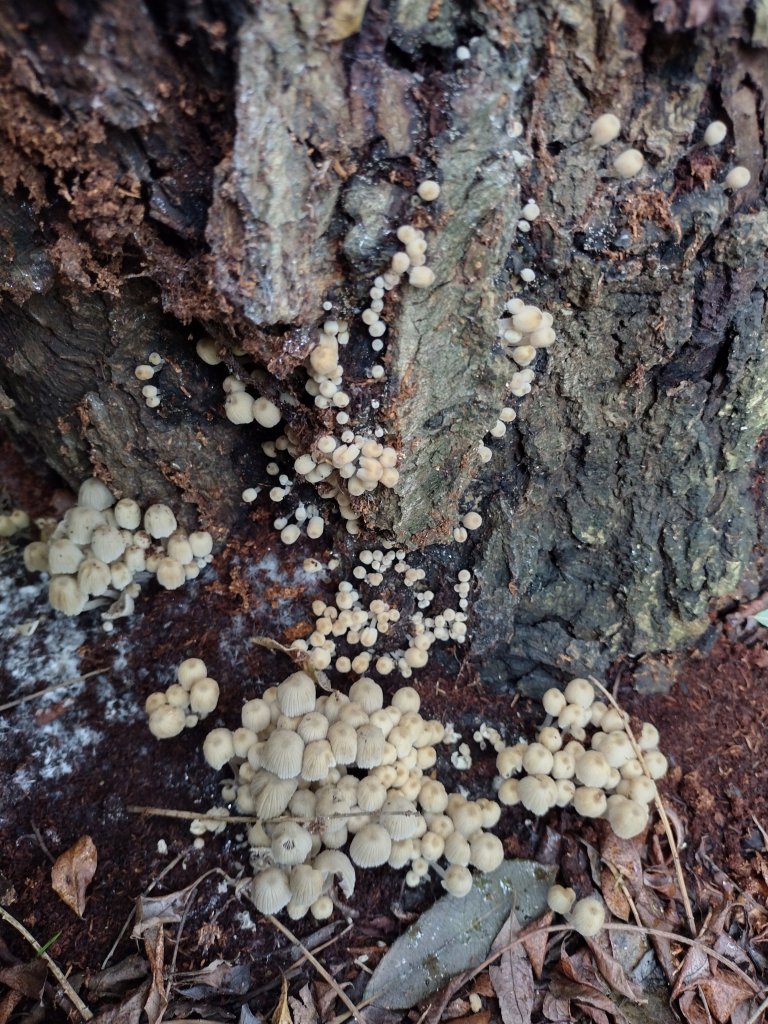
Ruby Bolete (Hortiboletus rubellus). Found amongst Lambs-ear (Stachys byzantina) in a garden near a Beech (Fagus sylvatica) hedge. Possibly a group of Fairy inkcap (Coprinellus disseminatus)? Found at the base of a tree.
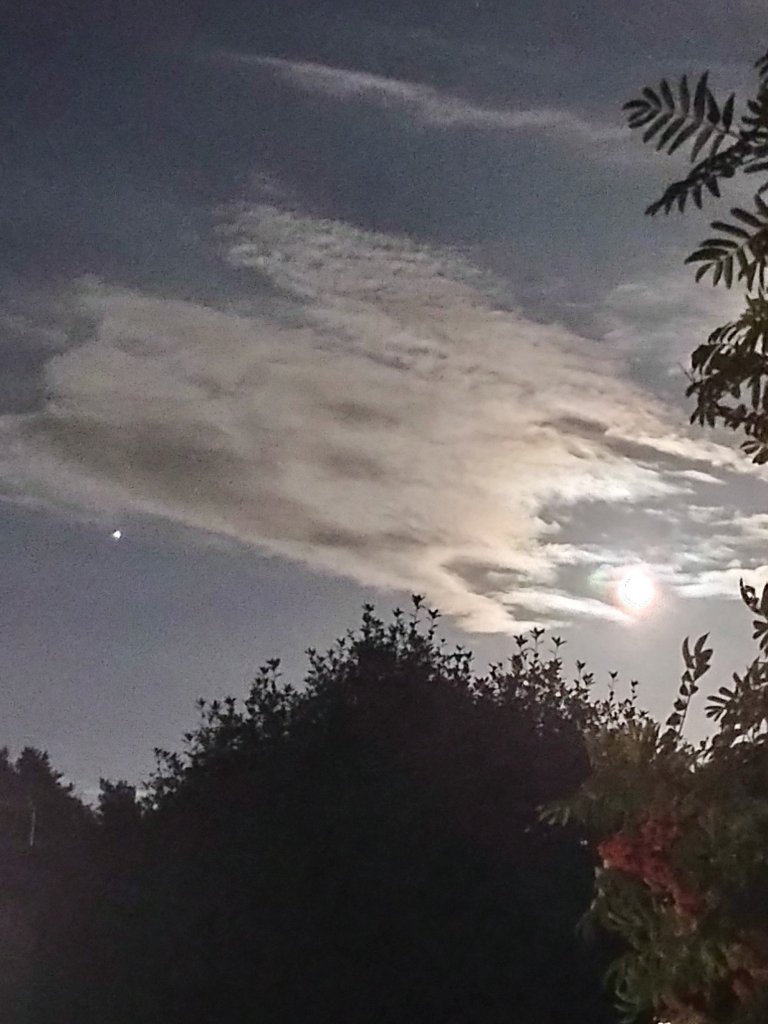
Evenings are noticebly drawing in earlier these days. Saturn is still visible with the naked eye at this time, as is Jupiter. The latter can be seen very clearly, in fact only the moon is brighter in the night sky at the moment. I managed to capture an image on the 10th September which can be seen below.
The tiny dot of Jupiter (left) in the early evening alongside the full ‘Hunters’ moon before being obscured by cloud.
Also in September my partner and I went on a break for a few days to the north east of England. We stayed in a lovely vintage caravan near Durham. On the first day we spent the morning exploring the city, after which we walked alongside the River Wear; there was lots of Himalayan balsam (Impatiens glandulifera) in flower (both along the river bank as well as beside the pathway). We walked to Durham University’s Botanic Garden to have lunch. While we were there we witnessed a Stoat (Mustela erminea) under aerial attack from a Magpie (Pica pica) as we sat in the North American Arboretum (no photo evidence unfortunately). This was our first encounter with a Stoat. Similar to Weasels (Mustela nivalis) Stoats can be easily distinguished from them due to the black tip on their longer tail. The Woodland trust has an article about how to differentiate them on their website.
Then in the afternoon we went to Seaham beach to search for seaglass. A well known area for seaglass searchers, Seaham beaches are noted on maps as being glass beaches due to the huge amount of glass pebbles (of various colours) that can be found there. The glass was discarded into the sea from the Seaham Bottle Works which used to be in the area (between 1853 and 1921. It is known that 20,000,000 hand-blown bottles a year were produced at the height of manufacturing at the factory). It was a quiet sunny day when we visited the area and the sound of the waves crashing against the beach was mesmerising.
We found lots of seaglass including some rare red pieces as well as some that were made up of two colours.
While we stopped for a coffee at the local cafe, we saw a Purple sandpiper (Calidris maritima) with a large group of Gulls (Larinae). Similar in appearance to Gulls, the Sandpiper was larger, speckled and greyer as shown in the following image (taken from the visitor notice board next to the cafe).
This wading bird is a winter visitor in the north east of England. It’s numbers are at a vulnerable level, therefore it is red on the UK conservation status list. They will eat Winkles (Littorina littorea), insects, spiders, crustaceans and also plants.
On the Wednesday, we drove up to Northumberland to visit Lindisfarne. As we drove to the village we got to see the location of Vera’s house (from the ITV detective series Vera). This dwelling is privately owned but it’s possible to park nearby and view it from a distance.
The Snook Tower and stable (left) next to Snook House (right) is Grade ll listed and thought to have been a windmill or watchtower. Both buildings date from the early to mid 1800s.
There was lots of wildlife to see on the journey towards and around the village too. On the way across the causeway, we noticed a Curlew (Numenius arquata) amongst other wading birds. As with the Sandpiper, the Curlew is also red on the UK conservation status list. Approximately 30% of Western Europe’s flocks will overwinter in the UK, unfortunately there was a sign warning of Bird (Avian) flu on the island. Bird flu has been rampant in the UK this year which doesn’t bode well for lots of birds but it is particularly foreboding for many waders and seabird populations. The Curlew’s down curved bill was the give away to its identification. They search for worms, shellfish and shrimps in the nature reserve along the causeway. The RSPB gives a description of Curlew’s here.
It was amazing to witness lots of European grey seals (Halichoerus grypus) as we wondered down by the islands beaches, searching for more seaglass. It is possible to witness them swimming nearby, next to the sandbanks and nature reserve beaches which they inhabit. It is also possible to hear them, unfortunately I was unable to obtain a great video of this; however I found a recording online here, of Grey Seals Singing on the Mewstone in South Devon which gives you an idea of what they sounded like on our visit to Lindisfarne.
The three markings in the sea (top) are actually the best image (on full zoom) of the Seals I could obtain. However you could visibly identify their bobbing heads looking from side to side as well as them diving and resurfacing.
Pups start to be born in September so perhaps we could hear the young with the females, or maybe the adults were singing to one another. Whatever the reason for their beautiful vocalisations, it was absolutely amazing to listen to the haunting sound.
As well as these creatures, we got to see some flora as we investigated the island too. There was;
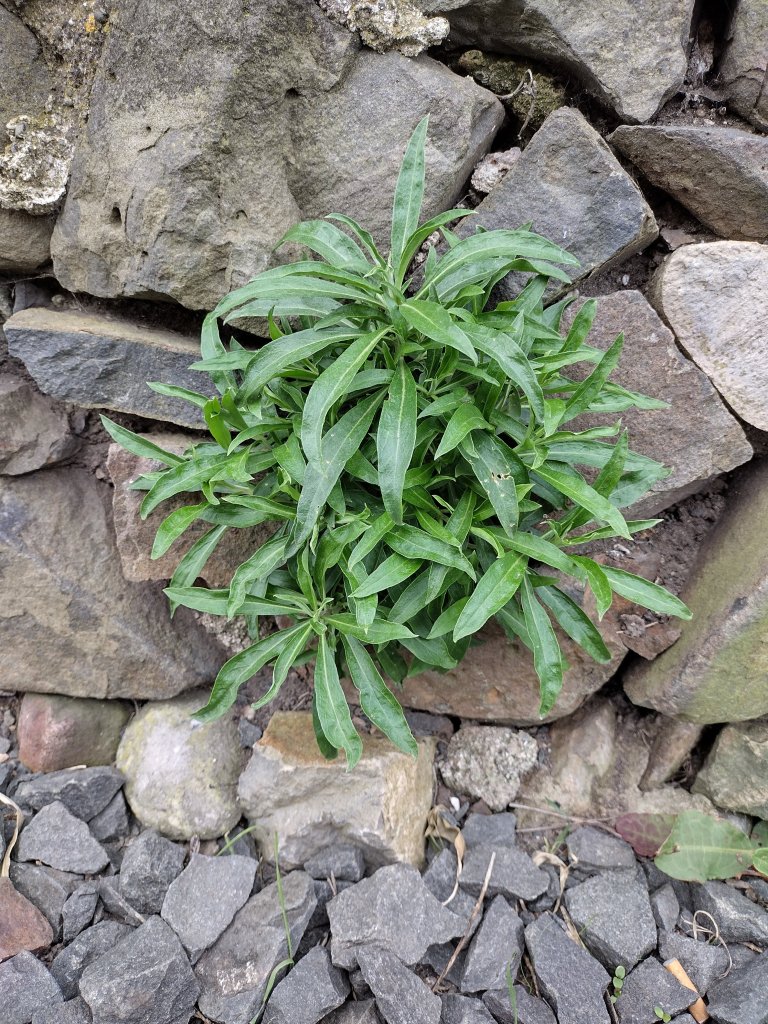
Sea thrift (Armeria maritima)Sea campion (Silene uniflora)Wallflower (Erysimon cheiri), not in flowerSea mayweed (Tripleurospermum maritimu) and Sea spleenwort (Asplenium marinum) alongside some Common orange lichen (Xanthoria parietina).
It was lovely to get away for a couple of days while witnessing wildlife that I had never seen before. Relaxing by the sea, especially on Lindisfarne was so rejuvenating. Obviously two full days with travelling time either side wasn’t long enough, but there’s always next years adventure.
September is here. While meteorological autumn has already begun (1st) it won’t be long before astronomical autumn arrives (23rd) too.
I love this time of year; for me it’s the time for taking stock and starting new adventures (a feeling probably ingrained from my educational years). I particularly look forward to planning changes in the garden and start making Christmas presents at this point in the year. Plus Autumn is my favourite season, the fresher sunny mornings and the warm leaf colours.
Along with the signs of autumn (including Blackberries, Elderberries and Sloes ripening) I have noticed a change in how the days feel within the past few weeks.
As the school year begins I had a week off to relax after a long hectic summer.
At the start the week I decided to walk round the local woodland park. It was a warm, dry and sunny day on Monday. Once I entered the meadow area I was aware of a loud chorus amongst the uncut grass. Upon closer inspection I discovered the wonderful chirps were being made by lots of Roesel’s bush crickets (Metrioptera roeselii).
The flowers still blooming were; Hawkweed, Red clover (Trifolium pratense), Ragwort (Senecio jacobaea), Yarrow (Achillea millefolium) and Chicory (Cichorium intybus).
Lots of Honey bees (Apis mellifera) and several Small white butterflies (Pieris rapae) were flitting between the flowers especially the Chicory. The blue flowers of the Chicory really stood out in the sunshine.
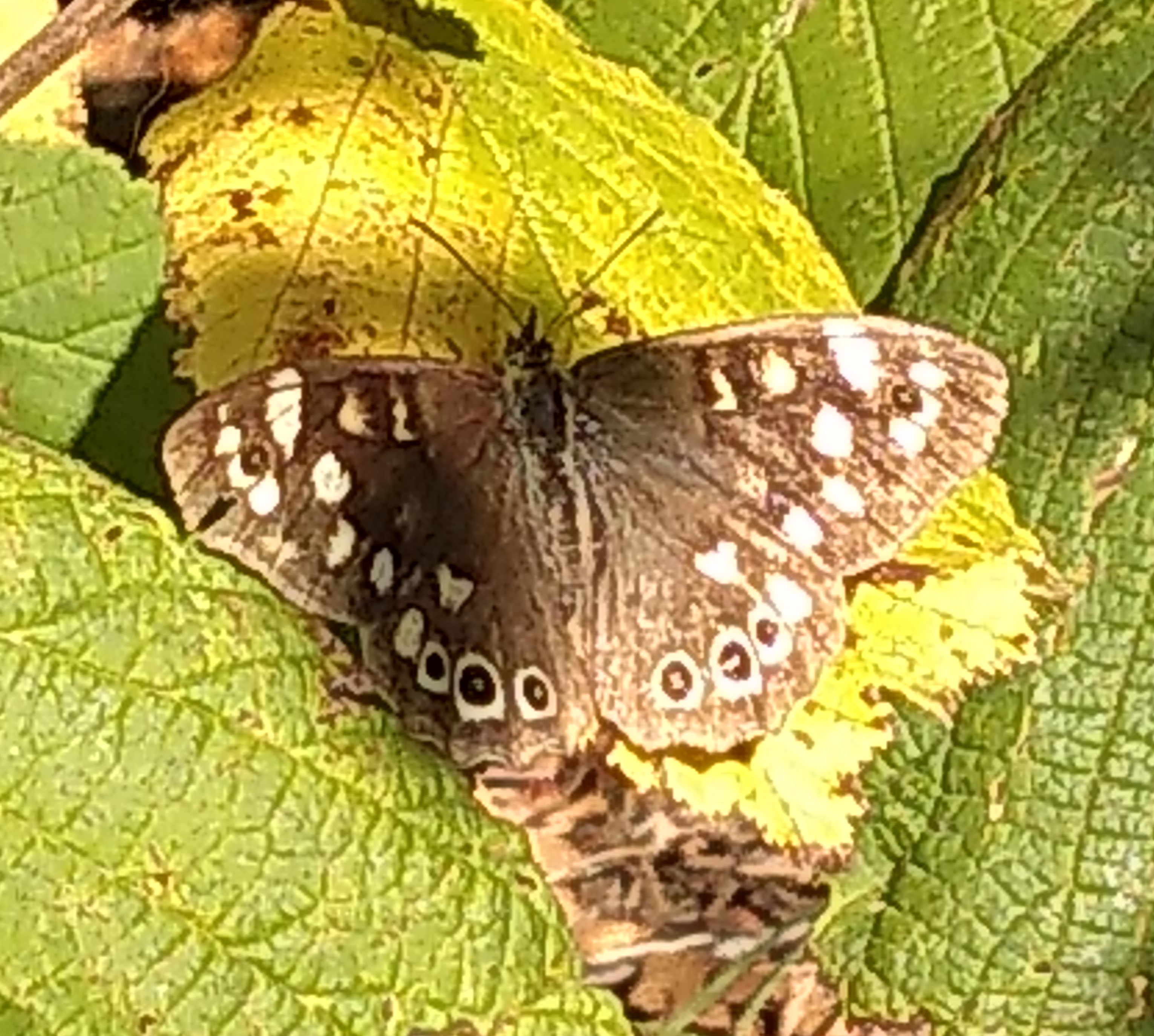
I even got to see a Speckled wood butterfly (Pararge aegeria) resting in the sun on the edge of the wood.
One thing came as a surprise as I wondered through this oasis of calm. It was fantastic to discover a notice about Skylarks (Alauda arvensis) nesting in area.
As they are on the Red list Bird of Conservation Concern it was nice to learn that they have made a home nearby.
Although I didn’t go away on holiday I planned to visit a few places before the weather turned. One place I finally visited was the Chelsea Physic Garden in London. Although it was later in the season there was still lots to see. Initially I looked round the glasshouses within the Tropical Corridor. There were lots of plants from around the world which required extra protection. I am a big fan of cacti so I liked seeing them planted naturally rather than in pots. There were lots of Pelargoniums as well. One whose leaves I particularly enjoyed smelling was Pelargonium ‘Chocolate peppermint‘ which reminded me After Eights.
Within the same glasshouse I got so see a Common carder bee (Bombus pascuorum) enjoying the flowers of the Pelargonium quercifolium ‘Royal oak’.
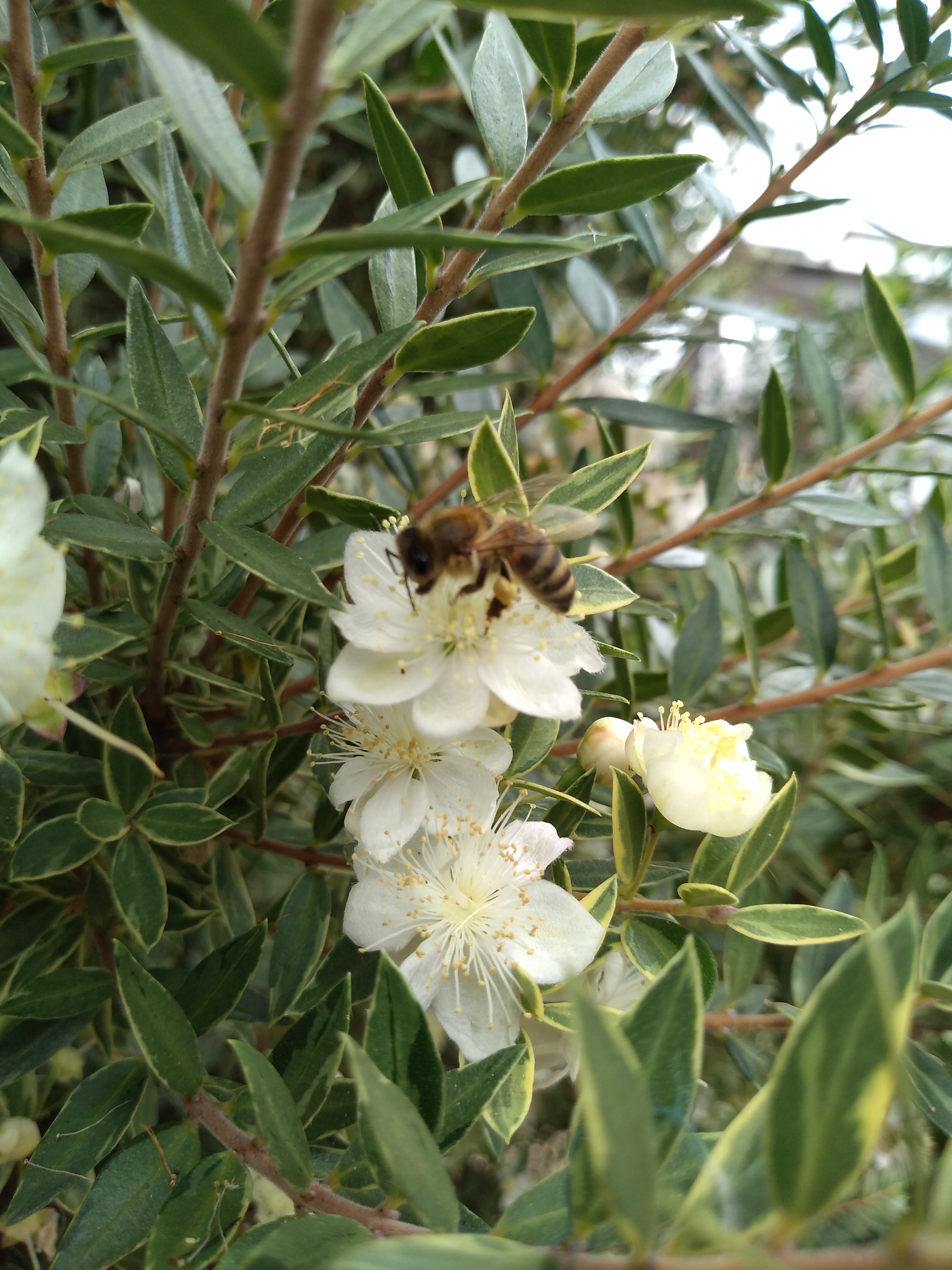
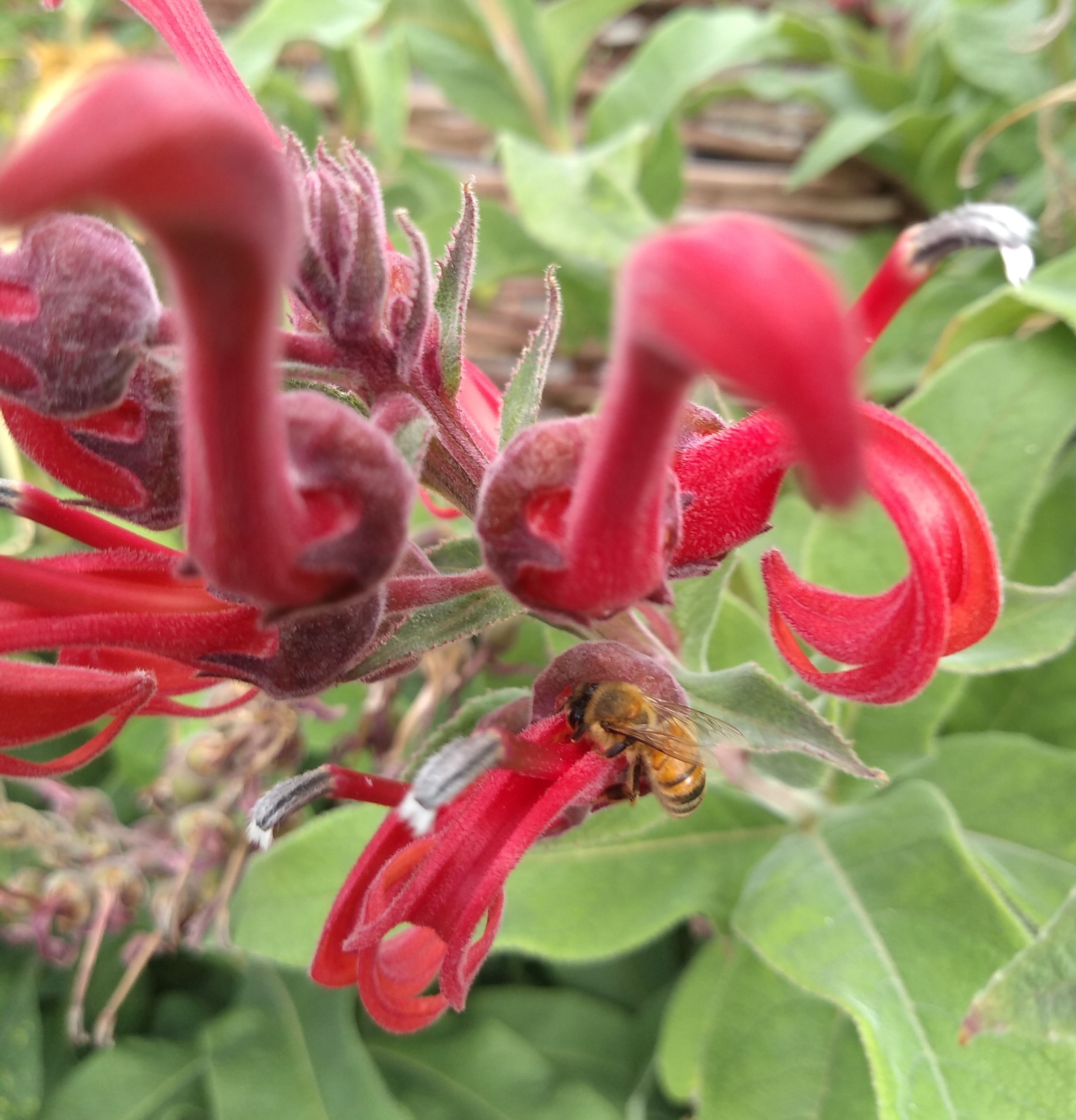
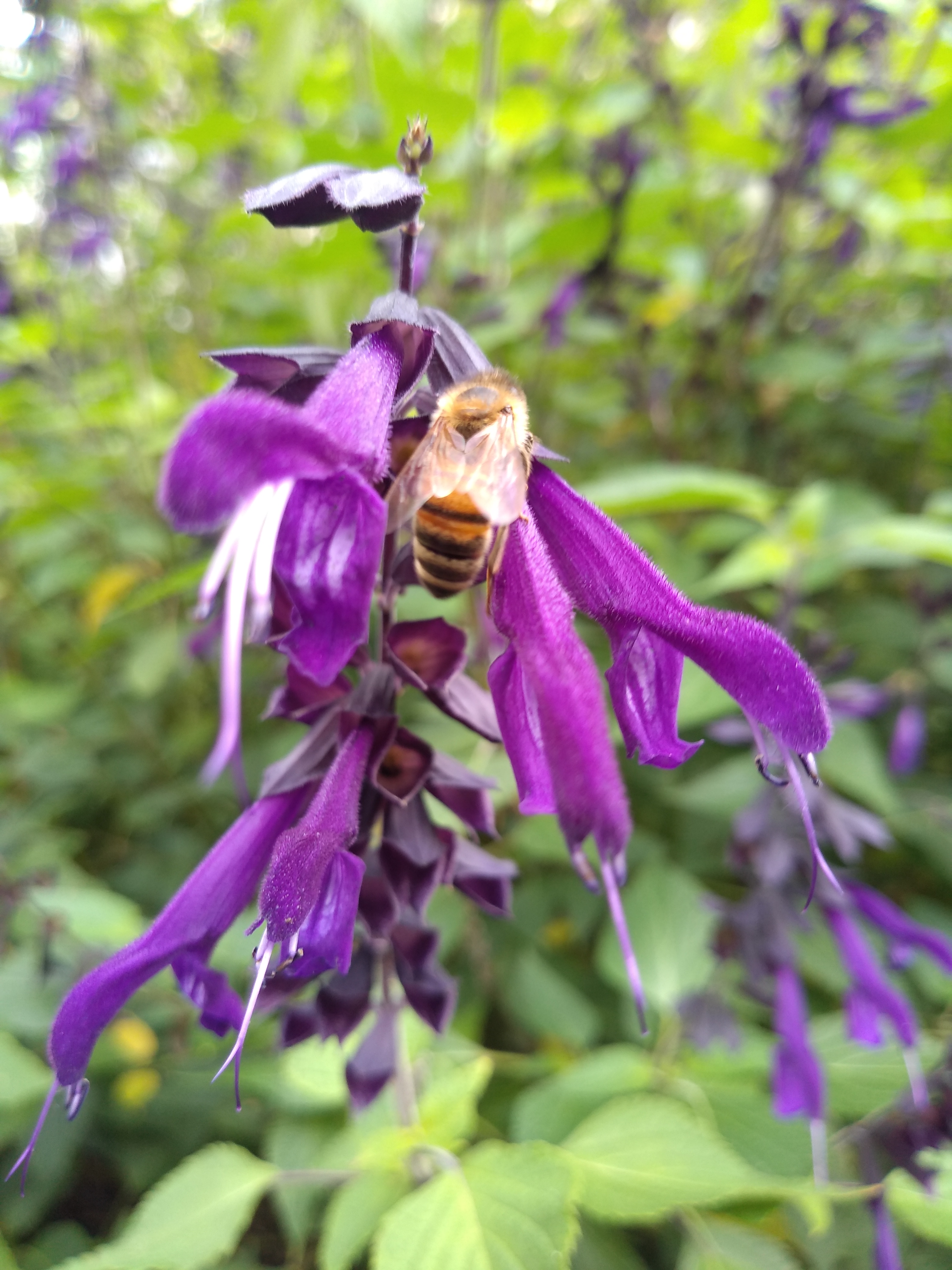
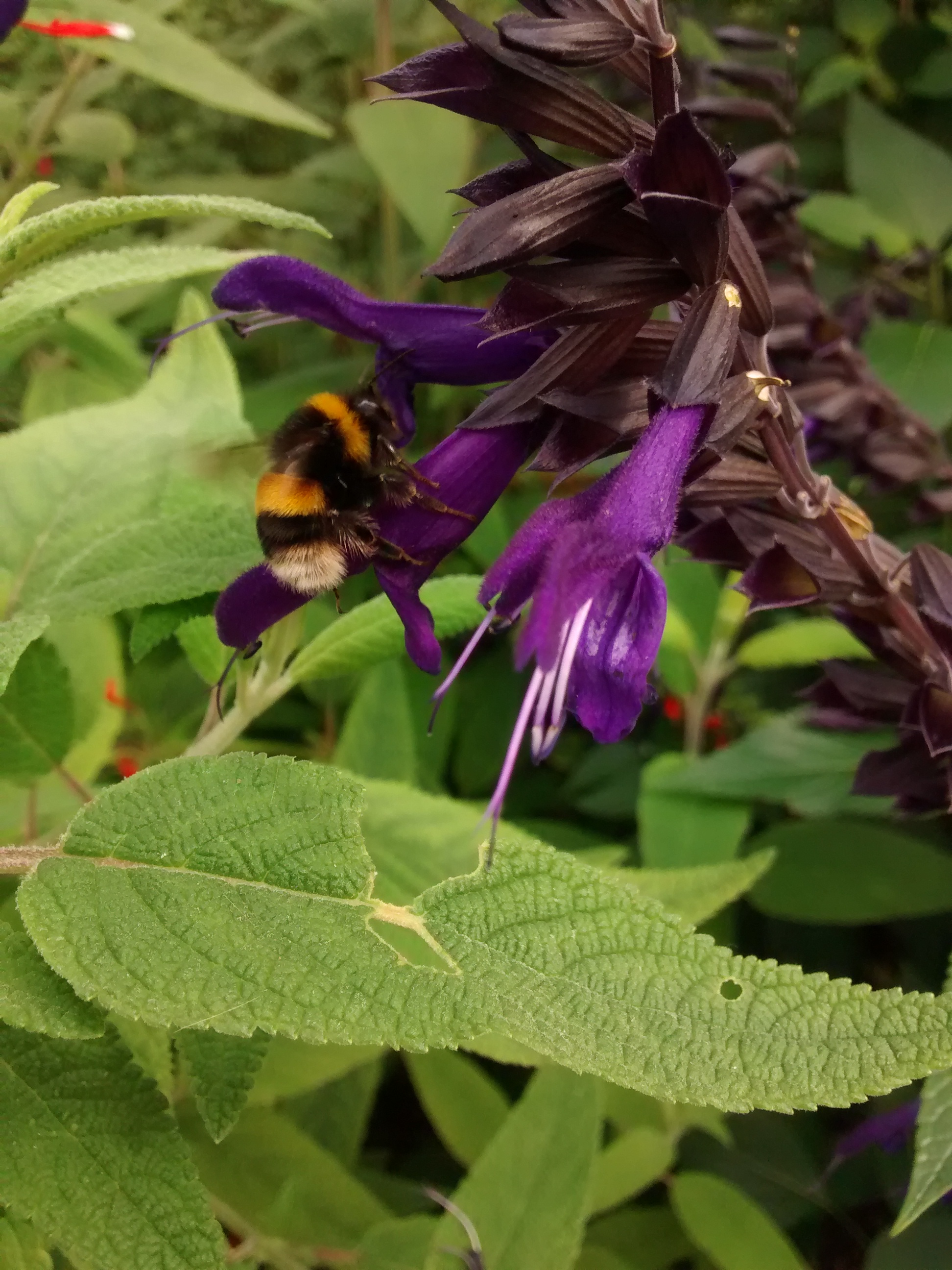
After the glasshouses I walked around the Garden of Medicinal plants. There were Honey bees buzzing around lots of plants in this section. I found them visiting a;
– Myrtus communis var. tarentina ‘variegata‘
– Lobelia tupa,
– Salvia stachydifolia,
– and a Salvia amistad; along with a Buff-tailed bumblebee (Bombus terrestris)
It was also lovely to watch some Dunnocks (Prunella modularis) as I ate lunch. Normally shy birds I usually only hear them sing in early spring, however these clearly weren’t bothered about us.
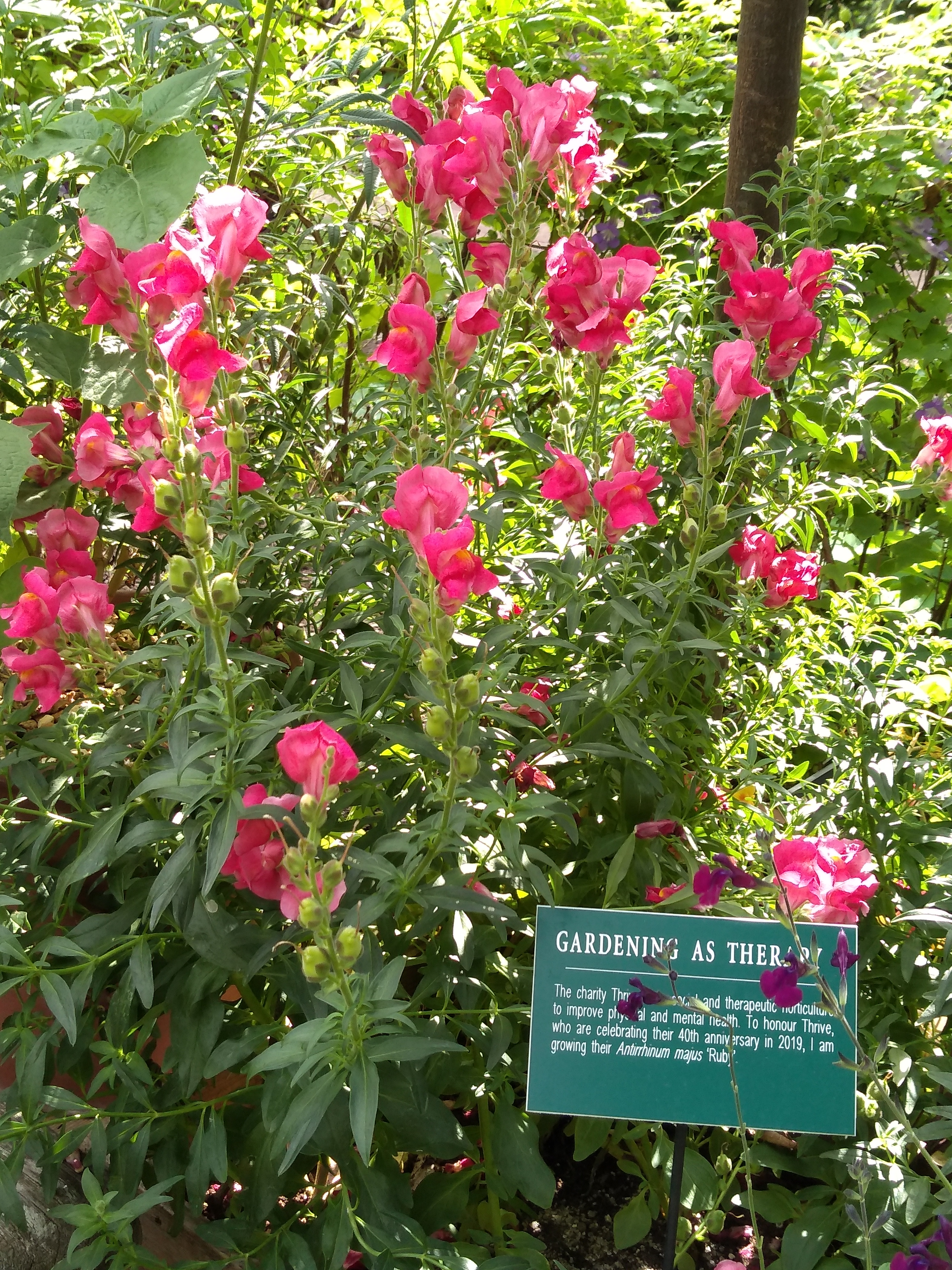
The next stop was to the Mental Wellbeing garden. I particularly enjoyed this small garden dedicated to improving mental health. It concentrated on the senses so there were plants you could feel, smell as well as view. Colour was important; along with soothing green foliage there were calming blues and purples along with joyful yellows and oranges. There was even a reference to garden therapy which is close to my heart along with a dedication to the charity Thrive. (See Thrive).
Wildlife can also have a positive affect on mental health so it was great to see insects in this space too. There was;
– an unidentifiable bumblebee investigating a Morning Glory (Ipomoea purpurea ‘Grandpa Ott’) flower covered in pollen.
– plus a Green aphid on a beautiful sweet pea (Lathyrus odoratus ‘Matucana’).
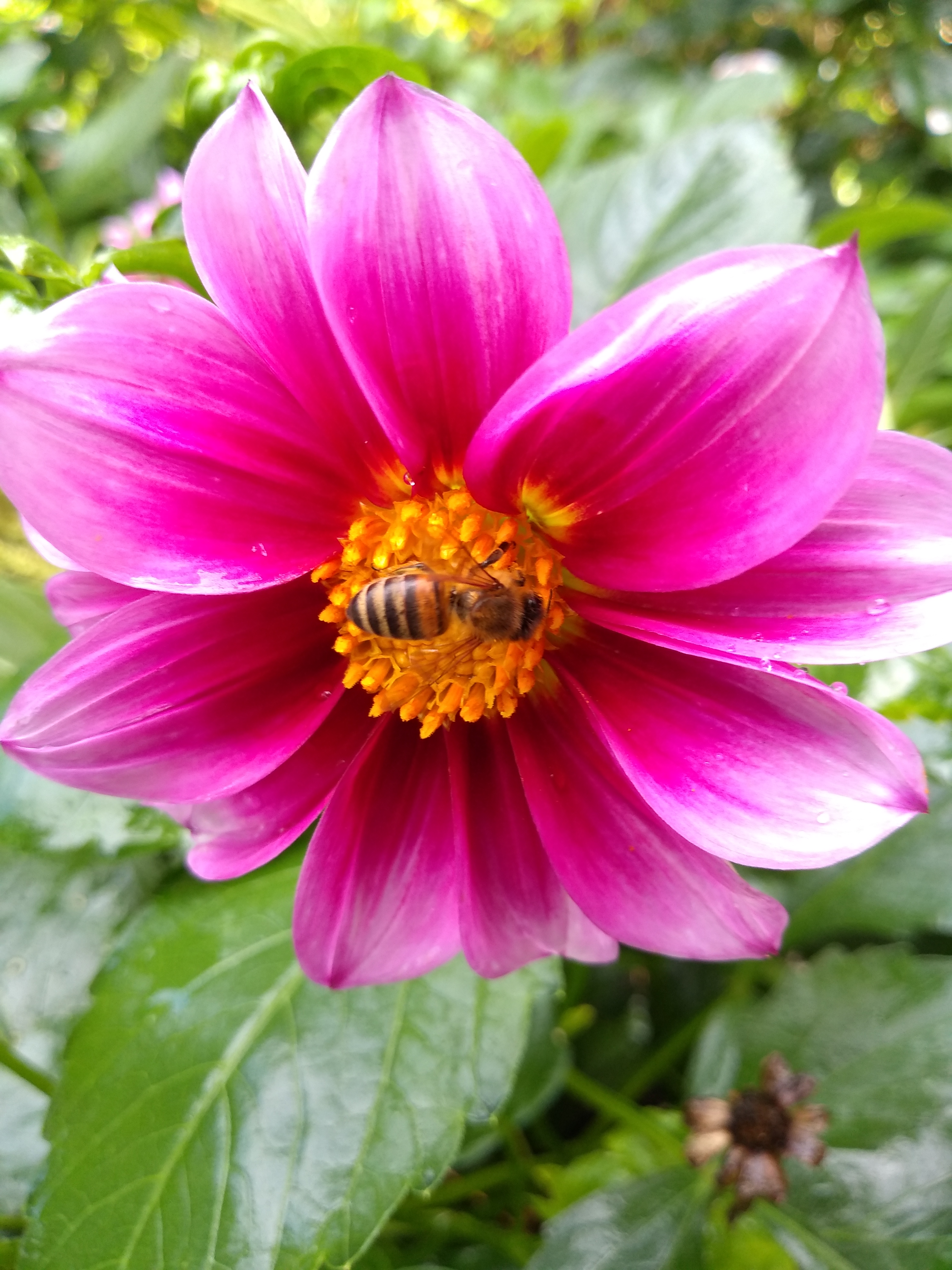
I continued to notice more insects as I kept walking around; starting with the Dicotyledon Order Beds, where I saw a Honey bee on a dahlia,
through to the Garden of Edible Plants. In the tea bed, which was near Fortune’s Tank Pond, a male Common darter dragonfly (Sympetrum striolatum) was resting on a metal teapot shaped frame holding up Nettles (Urtica dioica) inside. The nettles were meant to be there as nettle tea can be a diuretic.
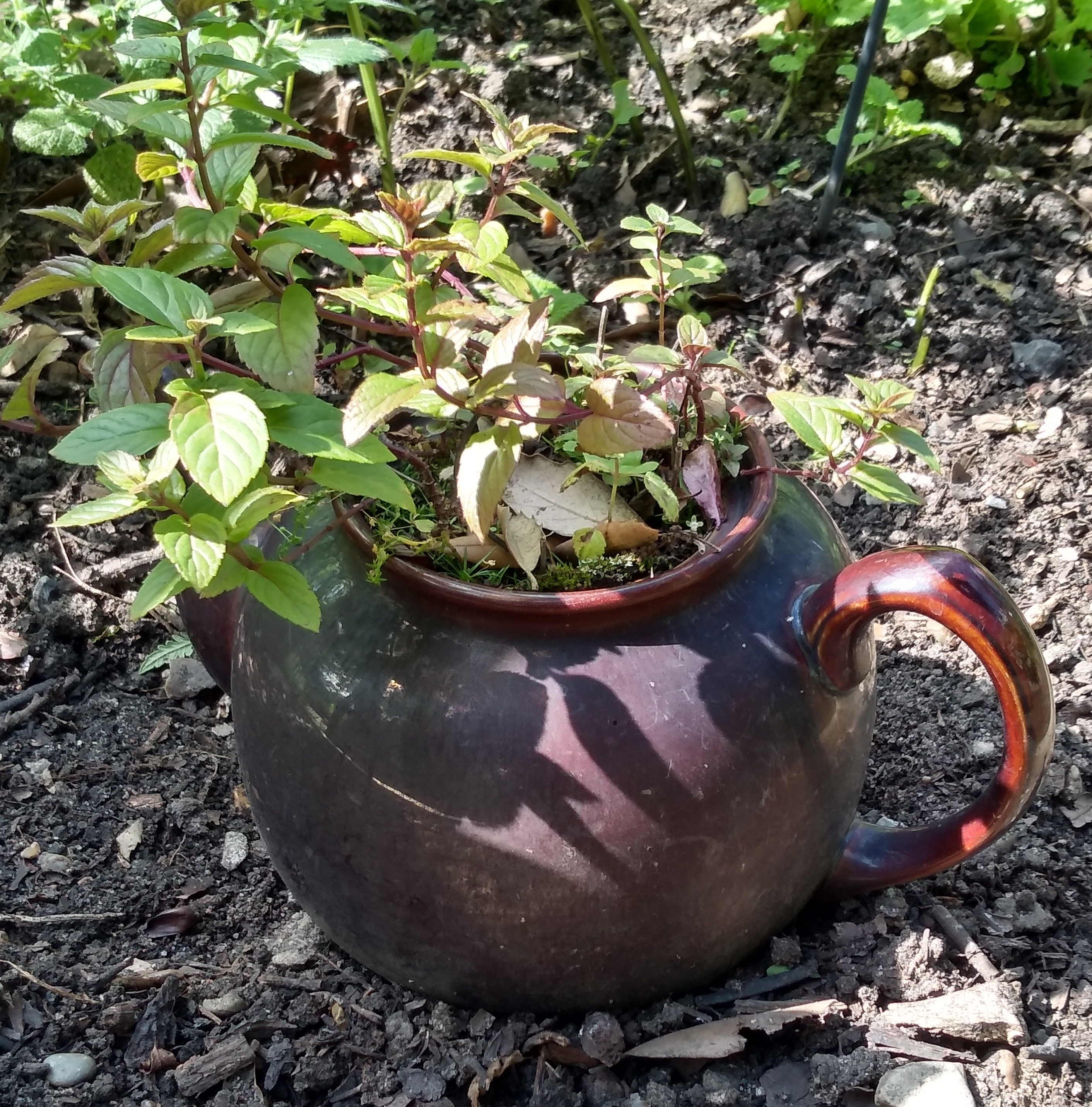
There were some interesting containers used as pots in this bed. Mint (Mentha) was growing in a teapot
and a tea plant (Camellia sinensis) was planted in a tea chest.
These unusual pots gave me some ideas for my own garden.
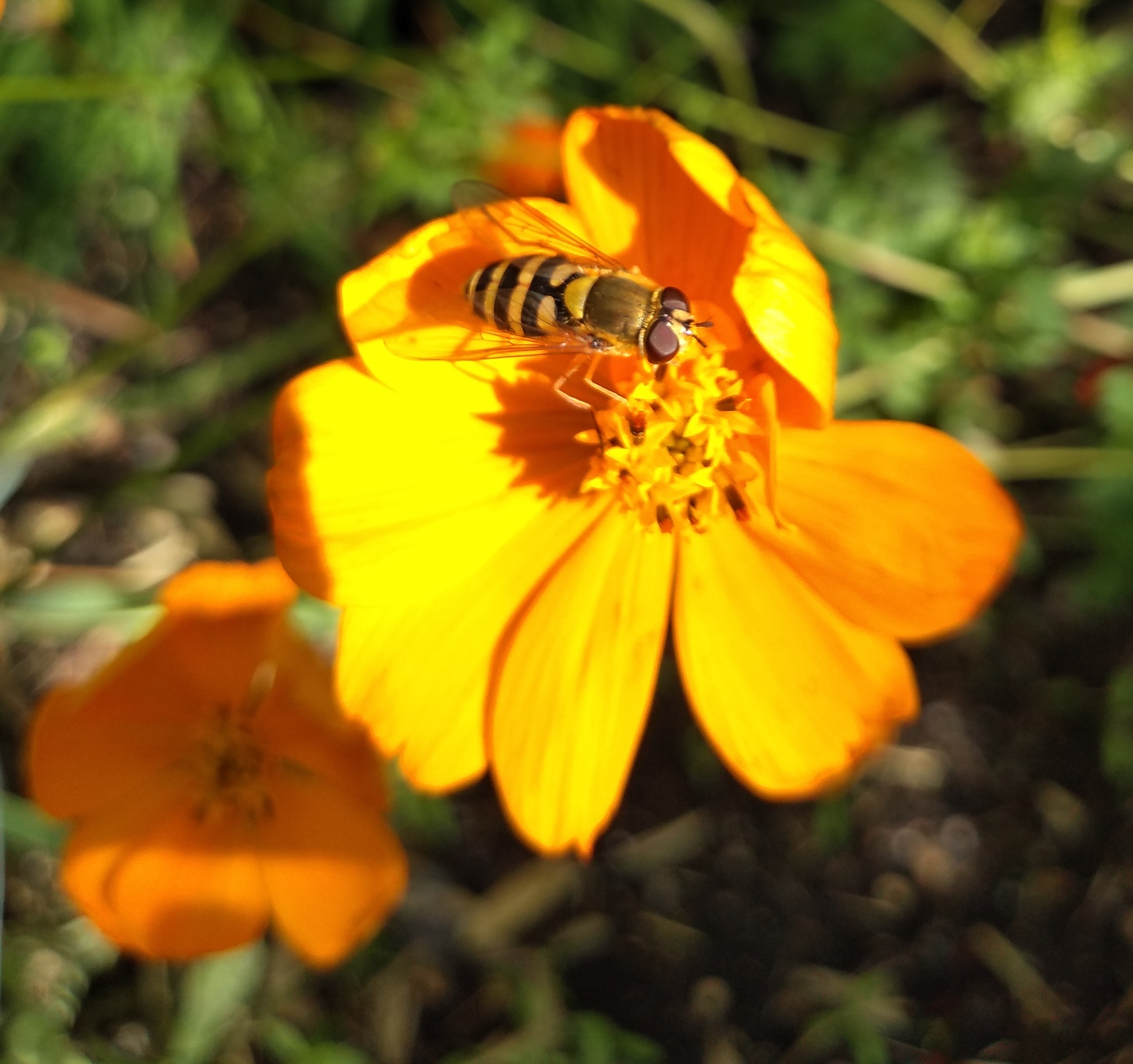
Another area I was very interested in seeing was the dyers bed. I would love to try colouring fabric or yarn with natural dyes so I wanted to see which plants were there. On the yellow cosmos (cosmos sulphureus) was a female Syrphus ribesii hoverfly.
The flowers of this Cosmos are used to create a yellow- orange dye. I think I may try dying with this plant if dye is amazing as the flowers.
I meandered further round the other sections of the garden ending in the community garden. Alongside edibles were wildflowers that can be used as herbal medicine.
I love this sign.
Along with plants such as Chamomile (Chamaemelum nobile) and evening primrose (Oenothera biennis) were Herb robert (Geranium robertianum) whose crushed
leaves can aid wound repair and the aroma believed to repel mosquitos. Another so called weed I found there was Plantain (Plantago major). When used as a soothing poultice the leaves
are useful for calming insect bites and inflammation.
I ended the week beside the sea in Hampshire. I always look for seaglass along beaches and Saturdays hunt was plentiful. The weather was lovely on Saturday; sunny and warm with a gentle breeze. Along with the soothing sound of the waves I could hear Herring gulls (Larus argentatus). This was the perfect end to my week off and the start of Autumn.
















 Bee in the Moment