Posted in Allotment, nature

A Couple of Welcome Visitors

During the previous week there were the few days of unusually high temperatures for the time of year; a final flourish for late summer?

The heat encouraged lots of bees, especially Honey bees (Apis mellifera) to visit Hylotelephium (once called Sedums) which began to bloom. The sound was amazing and it was so relaxing to work near them; you could almost feel the buzz it was so intense.

How many bees can you spot?

Things have been ticking over nicely on the allotment for the past month. Corn and Squash are developing nicely while the supply of Sweetpeas and Beetroot keep coming. Plus the Potatoes have been dug up and Apples are ready to pick too.

Time spent planning next years harvest is in full swing, while changes to the allotment occur. I began to create a space for a wild flower area next to a patch of long grass, where a resident frog is no doubt loving the huge supply of slugs this year. Plus work has begun on transforming the veg patches into raised beds.

Away from the allotment, on Friday 10th September, I noticed a rather large moth in the hallway. It was an Old lady/ black underwing (Mormo maura) moth. The wingspan of the Mormo maura is between 55 and 65mm.

The common name of Old Lady is due to the colouration and pattern on the forewings, which resemble the shawls of old Victorian ladies. There is only one generation per year and adults fly between July and August; as I noticed this one in September it must be near the end of its lifespan. A nocturnal moth it is attracted to light (and sugar if you place feeding stations for moths). Clearly the open window had encouraged it into the building. The main habitat for this moth are gardens and waste ground, particularly in damp locations. In spring, after overwintering, the caterpillars will feed on various trees and shrubs, such as Blackthorn (Prunus spinosa).

Then last Friday, another moth found its way to the hall. Also a nocturnal moth attracted by light, the Snout moth (Hypena proboscidalis), so called for obvious reasons.

There are two generations per year of the Hypena proboscidalis, adults initially fly between June and August and again later in autumn. The wingspan of the Snout moth is approximately 30 to 38mm. Like the Old lady moth it also frequents gardens and wasteland, along with woodlands; essentially it can be found anywhere nettles (Urtica dioica) are found, which the caterpillars feed on.

Posted in nature

Pretty in Pink

Some late summer flowering plants such as Lavender, Buddleia and Nepeta have begun to wane; however others were starting to look their best. One which started performing last week was Hylotelephium spectabile (‘Brilliant’ series), also referred to as Sedums, Stonecrop or Ice plants.

Loved by pollinators (especially bees) Sedum are great plants to grow in gardens to extend the nectar and pollen season.

These hardy perennials die back to ground level over winter; however until then the seedheads can be left for structural interest allowing hiding places for hibernating insects. They are succulents and therefore like well drained soil in full sun or partial shade. Once established they can cope with dry conditions, continuing to flower until November.

Mature plants can begin to flop, so to prevent this the Chelsea Chop can be carried out. This technique of cutting every stem by a third enables the plant to grow with a bushier habit as well as prolong the flowering period. It is called the Chelsea Chop because this job is done in the last week of May, when the RHS Chelsea flower show takes place. This technique can be used with other perennials that bloom later in the year too. Further information on this can be found on the RHS website.

These Sedums look wonderful in herbaceous borders alongside other fantastic pollinator plants which flower at this time of year.

Hylotelephium spectabile (‘Brilliant’ series) alongside Asters and Echinacea
Hylotelephium spectabile (‘Brilliant’ series) planted with Geranium ‘Rozanne’
and Ceratostigma willmottianum.
Geranium ‘Rozanne’
Ceratostigma willmottianum
Posted in nature

Cozy Evening Reflections

I am feeling cozy, sitting on the sofa, as I reflect on last weeks observations on a dark evening.

Along with the earlier sunsets, fresh mornings have begun to take hold too. I have been noticing a lot of changes occurring with trees throughout the week. Their leaves are turning autumnal and I have been able to pick fresh apples as I work. Lots of conkers are falling around the bus stop too.

One of the apple trees with lovely sweet apples is pictured below. There were other trees with Russet and Cox apples.

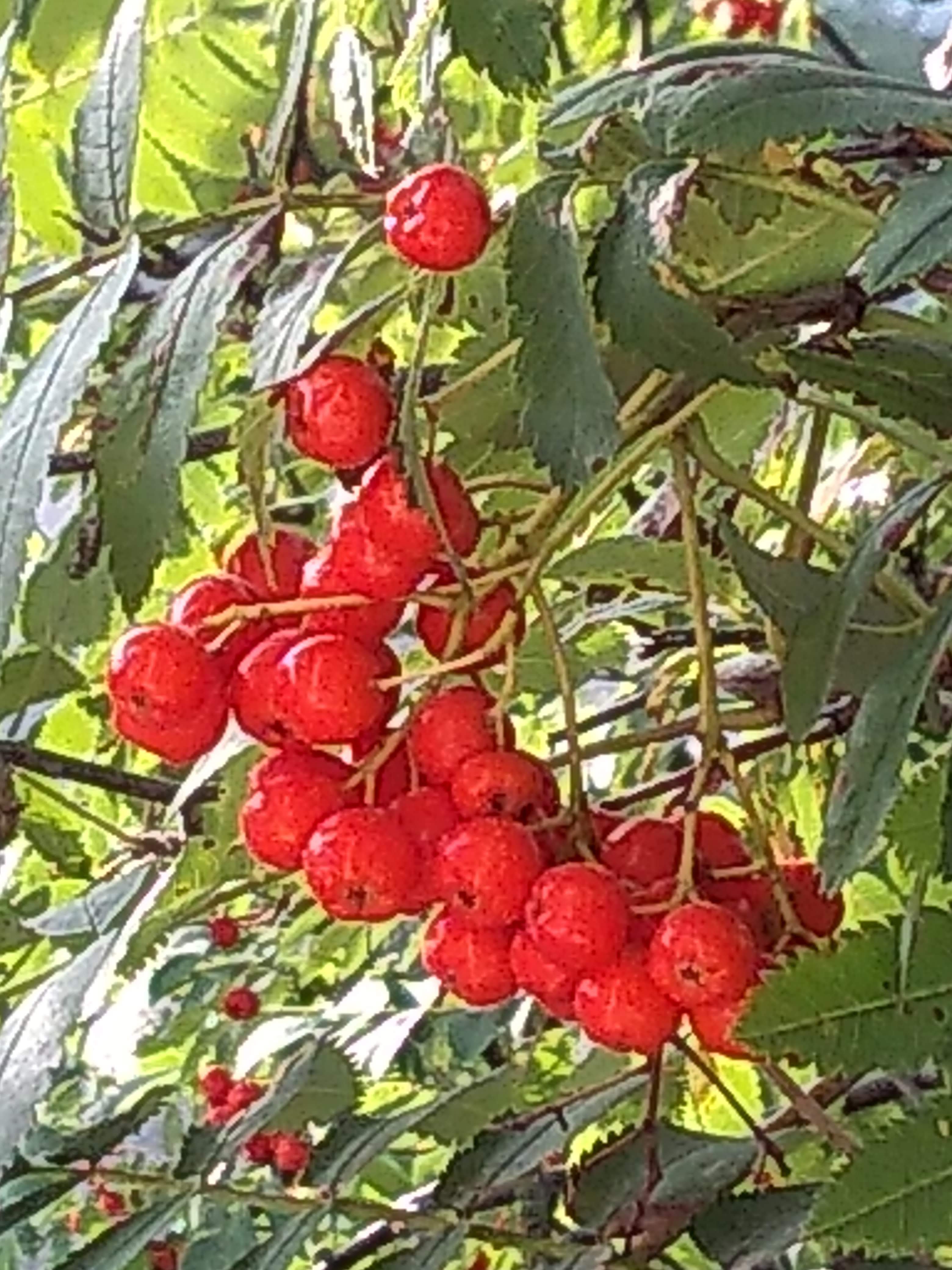
The Rowan tree outside my home continues to have Blue tits (Cyanistes caeruleus) feeding on insects. Plus I have also seen a Robin (Erithacus rubecula) and two Long tailed tits (Aegithalos caudatus) eating insects on it’s branches, along with a Blackbird (Turdus merula) feasting in the berries.

Mr Blackbird wasn’t camera shy.

I still saw Small white (Pieris rapae), Red admiral (Vanessa atalanta) and Painted lady (Vanessa cardui) butterflies as they took advantage of the late flowering perennials.

On Wednesday I noticed a Painted lady butterfly as well as a Common carder bee (Bombus pascuorum) visiting some Ceratostigma willmottianum which is still blooming while the leaves are turning red.

Some plants have been flowering all summer, such as Geraniums and Verbena bonariensis, and now bloom alongside Sedums, Asters and Autumn crocus (Colchicum autumnale) painting gardens in muted colours.

Sedums and Verbena bonariensis looking lovely amongst ornamental grasses.

Geranium still flowering.

A Painted lady butterfly collecting nectar from an Aster flower.

Autumn crocuses blooming in the lawn.

Cutting back faded perennials was one of last weeks jobs which meant I disturbed a lot of Seven-spot ladybirds (Coccinella septempunctata). So I spent quite a bit of time rescuing them from garden waste bins too.

Lastly, as I walked home late on Wednesday, I ended up seeing a beetle walking across the path in the moonlight and enjoyed the view of the Waxing gibbous moon amongst the clouds.

Posted in nature

“Here’s Looking at you Kid.”

Bank holiday weekend was roasting, especially Sunday therefore I decided to take it easy so I wouldn’t overheat. Even though I didn’t go out, nature came to me. While looking out of the window I noticed a Red Underwing (Catocala nupta) moth trying to remain in shade on an outside wall. This large moth (6.5-7.5cm wingspan) has predominantly red underwings with black and white markings, hence it’s common name. The food of this moths larvae are
Willow (Salix) and Poplar (Populus) trees.

I also managed to photograph one of this years Blue tit (Cyanistes caeruleus) brood in the Rowan (Sorbus) tree outside. They are definitely looking more like the adults now.

It’s also lovely to see the Rowan is full of ripe berries ready for the Thrushes (Turdus philomelos) and also the Redwings (Turdus iliacus) that I usually see in winter.

Monday was slightly cooler although it was still hotter than I prefer it to be. However armed with suncream, hat and water I visited Ham House and Garden in London. While walking round the grounds, bees, crickets and the occasional Ring-necked parakeet (Psittacula krameri) could be heard.
There was an extensive kitchen garden with cut flower and edible flower areas which I particularly enjoyed viewing.
I saw lots of Honey bees (Apis mellifera) on Globe artichokes (Cynara cardunculus) within the kitchen garden.

There was another lovely sighting as I ate lunch too. Amongst the Wisteria (having a second flush of flowers) as well as some scaffolding was a Wood pigeon (Columba palumbus) sitting on it’s nest. It didn’t move other than to blink as it was no doubt observing us all eating trying to remain undetected.

Upon my return there was a Speckled bush cricket (Leptophyes punctatissima) in the hall to welcome me home. As there was no ovipositor on the end of the abdomen (the appendage from which the female lays eggs) I identified it as male.

Long weekends are lovely but they still pass quickly and Tuesday rolled around again, so I was back to work.
I didn’t notice as many butterflies last week, although bees are still prevalent. During the warmest part of the day, when I was once again wilting, I noticed how active the Honey bees were on the Sedums even though they are only just starting to bloom.

I also observed a Small Dusty Wave (Idaea seriata) moth later that evening. It’s caterpillars feed on herbaceous plants especially Ivy (Hedera helix).

The nice weather of sunshine and low 20s temperature continued to the latter part of the week.

Once again it was Honey bees I mostly noticed on Sedums as well as some visiting

-Rudbeckia laciniata ‘Herbstsonne’.

– and Erigeron karvinskianus.

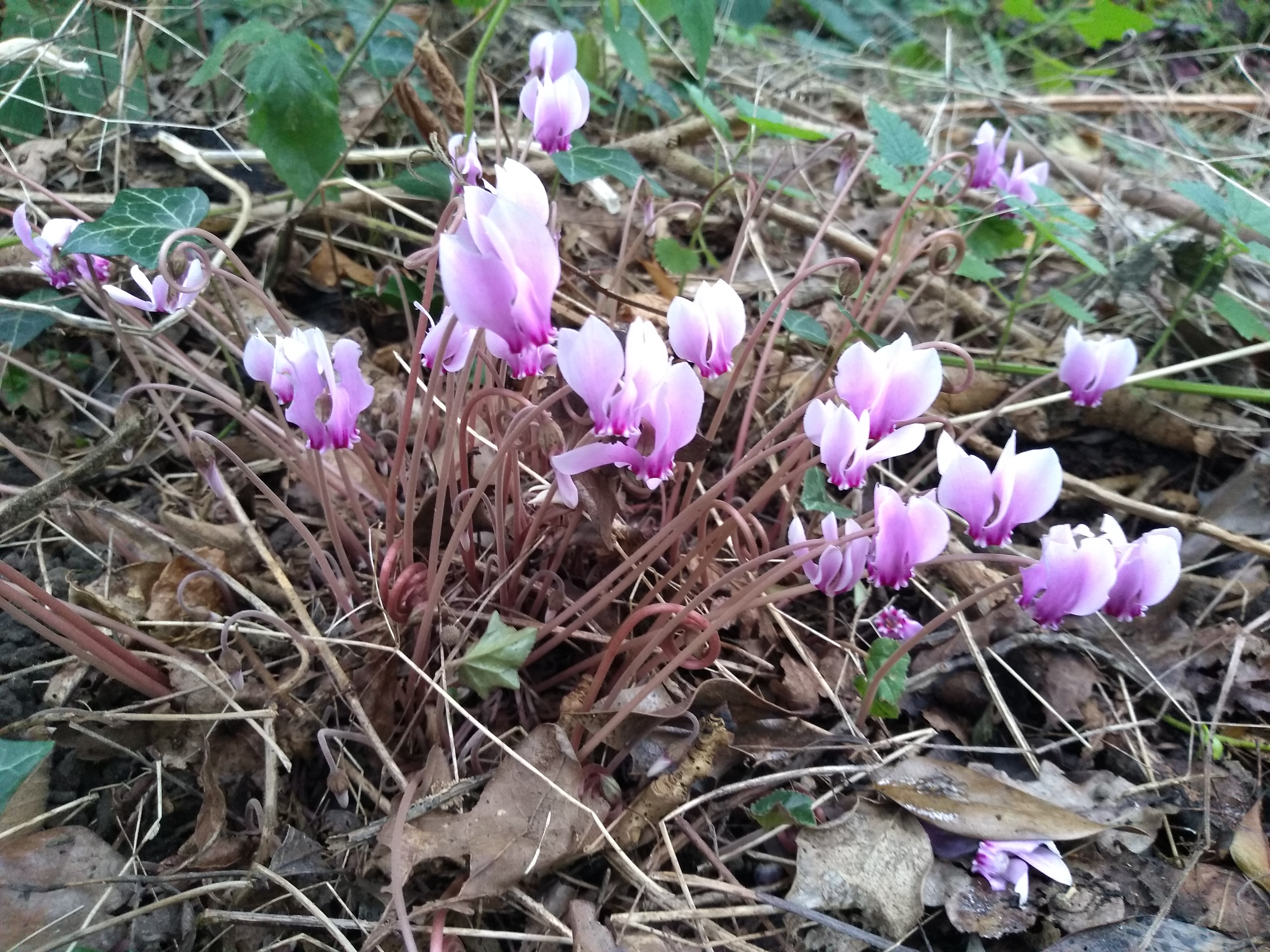
However there was one plant I noticed that surprised me. In a wooded area a small patch of Cyclamen hederifolium was poking it’s flowers above the leaf litter and Ivy; Yet another sign of late Summer and the beginning of Autumn.

Then just when I thought I wouldn’t get to catch a proper view of a butterfly, I managed to see a Small tortoiseshell (Aglais urticae) on a white Buddleja bush.

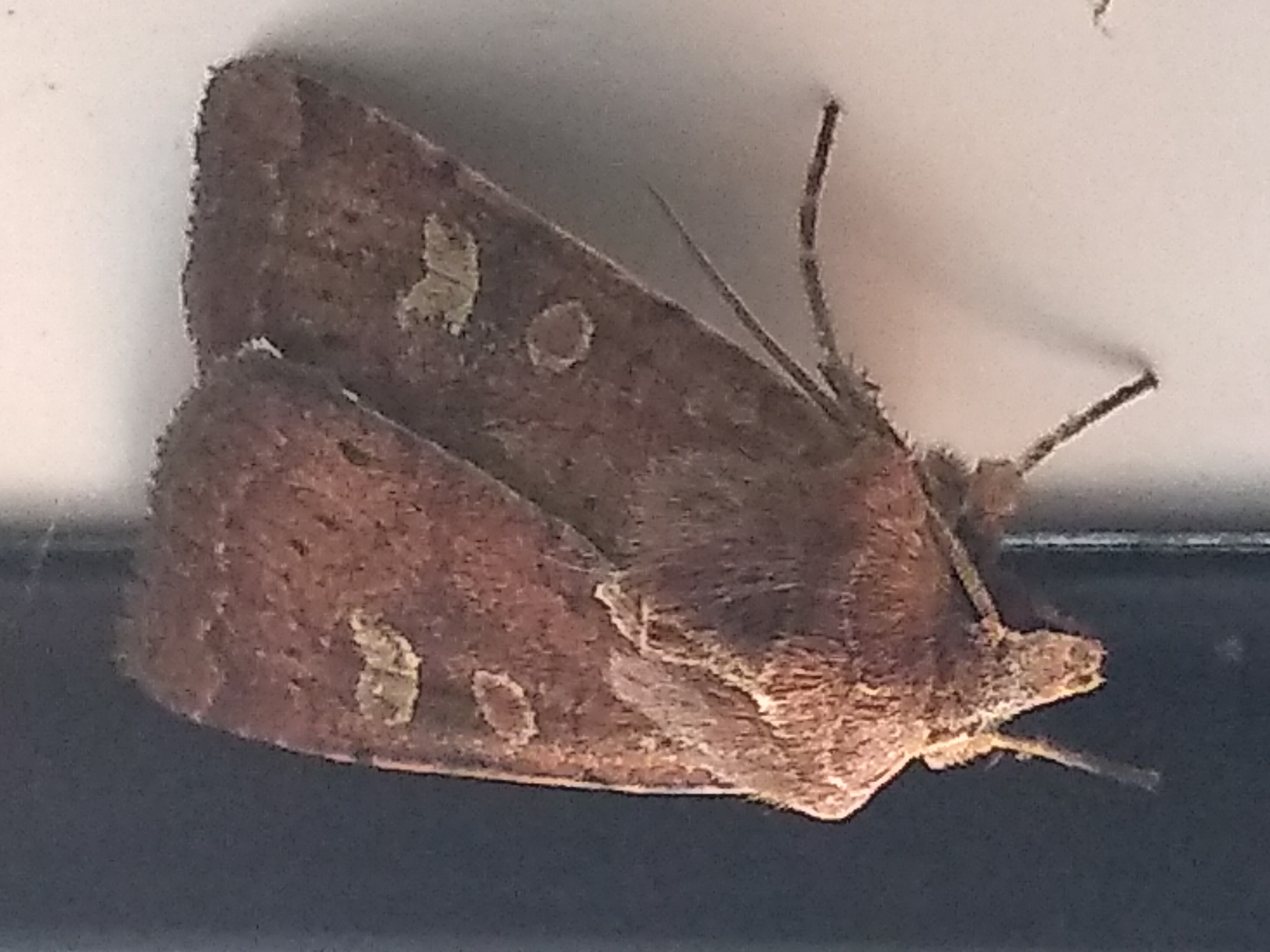
Lastly, I saw another moth in the hall, this time however it was a Square-spot Rustic (Xestia xanthographa) moth.