Posted in nature

Further Easing into Summer

I am constantly amazed by the natural world. Last week I saw something that, as a gardener, I’m surprised I’ve never noticed before. A few White-tailed bumblebees (Bombus lucorum) flew to and from a nest in a wall, via the damp proofing brickwork, of an old house. What I wasn’t expecting to see were the blue pollen baskets.

I had never thought of pollen as anything other than varying shades of yellow. After researching this I found that different coloured pollen often shows up in nests and hives. Charts have been produced enabling beekeepers to identify which flowers their bees have visited by the colour and shade of the pollen found. The most likely candidates in this instance, given the time of year and dark blue shade, is Purple tansy (Phacelia tanacetifolia), see the North Shropshire Bee Keepers Association website.

Phacelia is loved by bees. These photos are from a neighbouring allotment plot.

As well as Phacelia other flowers currently blooming include;

– Hedge woundwort (Stachys sylvatica),

– Pineappleweed (Matricaria discoidea),

A close up view of Pineappleweed. When crushed, the flowers have a refreshing pineapple scent.

– Stinking iris also called Roast-beef plant (Iris foetidissima),

This plant has two colour variations. It thrives in shady areas.

– Scarlet pimpernel (Anagallis arvensis) and

– Pyramidal orchid (Anacamptis pyramidalis)

This orchid is attractive to butterflies and moths.

Birds are particularly noticeable at this time of year as they feed youngsters and defend territories. Last week I was able to listen to Song thrush (Turdus philomelos), Chiff chaff (Phylloscopus collybita), Robin (Erithacus rubecula) Great spotted woodpecker (Dendrocopos major) and Swifts (Apus apus).  I saw the Swifts’ arial display as they soared and dived in the distance while I ate lunch last Wednesday. They were too high and quick for me to identify visually but their vocalisations gave them away. The Swifts’ call can be heard on the RSPB website.

Ladybirds continued to show up last week, but mostly the Seven-spot ladybird (Coccinella septempunctata).

Eventually, the weather turned and rain finally arrived by Friday. It has been much needed and continued throughout the weekend. It was fantastic to watch thunder and lightening from the comfort of my sofa on Saturday afternoon.

Posted in nature

Working with Insects can be Frustrating

More colour is showing up along the road as the purple of the Common mallow (Malva sylvestris) blooms amongst Common Poppies (Papaver rhoeas) and Ox-eye daisies (Leucanthemum vulgare); a lovely sight as I travel on the bus.

Another plant that is flowering on the verges and lawns now is White Clover (Trifolium repens).

I first saw it on Monday, at the bus stop, as I listened to a Goldfinch (Carduelis carduelis).

The Goldfinch can just be heard singing above the drone of the traffic.

A group of Goldfinches is a ‘Charm’ from the old English word c’irm, referring to their singing.

Last monday was the day for noticing Goldfinch as later in the morning I watched a couple of Goldfinch on a nest in a Buddleia (Buddleja davidii).

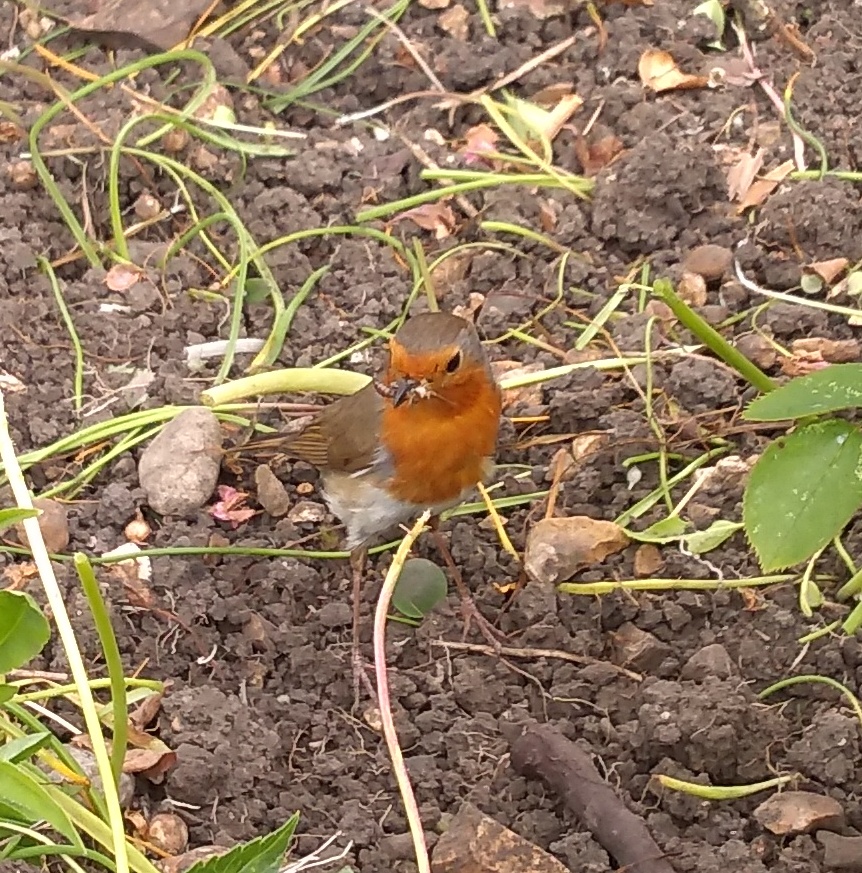
They weren’t the only birds I noticed that day. In the afternoon a Robin (Erithacus rubecula) kept me company as I weeded. It was quite fearless, frequently getting close to me to collect food as I worked.

I noticed some Scarlet Pimpernel (Anagallis arvensis) flowering too. Other common names for it include Poor man’s Barometer or Shepherd’s clock because the flowers open in sunny weather and close when it is dull.

As it was a a warm sunny day lots of bees were out. On the Catmint (Nepeta) there were Early Bumblebees (Bombus pratorum), White-tailed Bumblebees (Bombus lucorum), Tree Bumblebees (Bombus hypnorum) and Honey Bees (Apis mellifera).

A White-tailed bumblebee busy working.

As the week went on I continued to notice a greater variety of bees visiting the garden;

– Tree Bumblebees, Early Bumblebees, White-tailed Bumblebees as well as female Red tailed bumblebees (Bombus lapidarius) on a weigela.

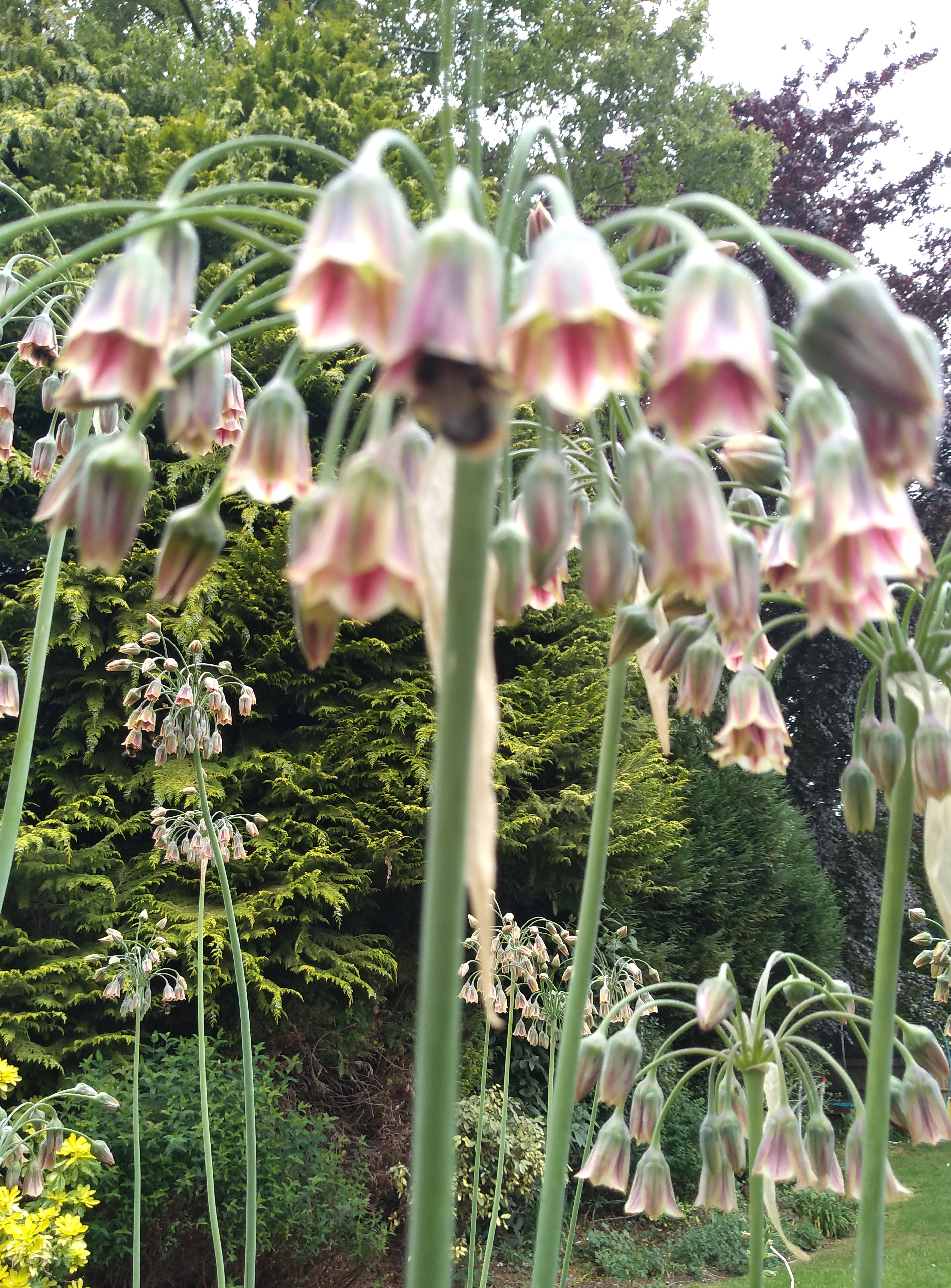
-Early Bumblebees and White-tailed Bumblebees on some Pale Garlic (Allium paniculatum).

This is the best photo I managed to obtain. The saying about not working with children or animals (or in this case insects) came to mind on Tuesday and Wednesday; descent photos were severely lacking midweek.

On Thursday, as I undertook more weeding, I unfortunately disturbed a beautiful White plume moth (Pterophorus pentadactyla) in the border. The caterpillars, which are green and yellow, feed on bindweed so this was a welcome sighting.