
Since the Equinox on the 23rd September, there have been a few misty mornings and the leaves are beginning to loose their green colouring. Autumn cyclamen (Cyclamen hederifolium) and Crocuses (Colchicum autumnale) have been blooming for a few weeks now and even mushrooms are beginning to emerge. A few I have found recently include;

(Hortiboletus rubellus). Found amongst Lambs-ear (Stachys byzantina) in a garden near a Beech (Fagus sylvatica) hedge.
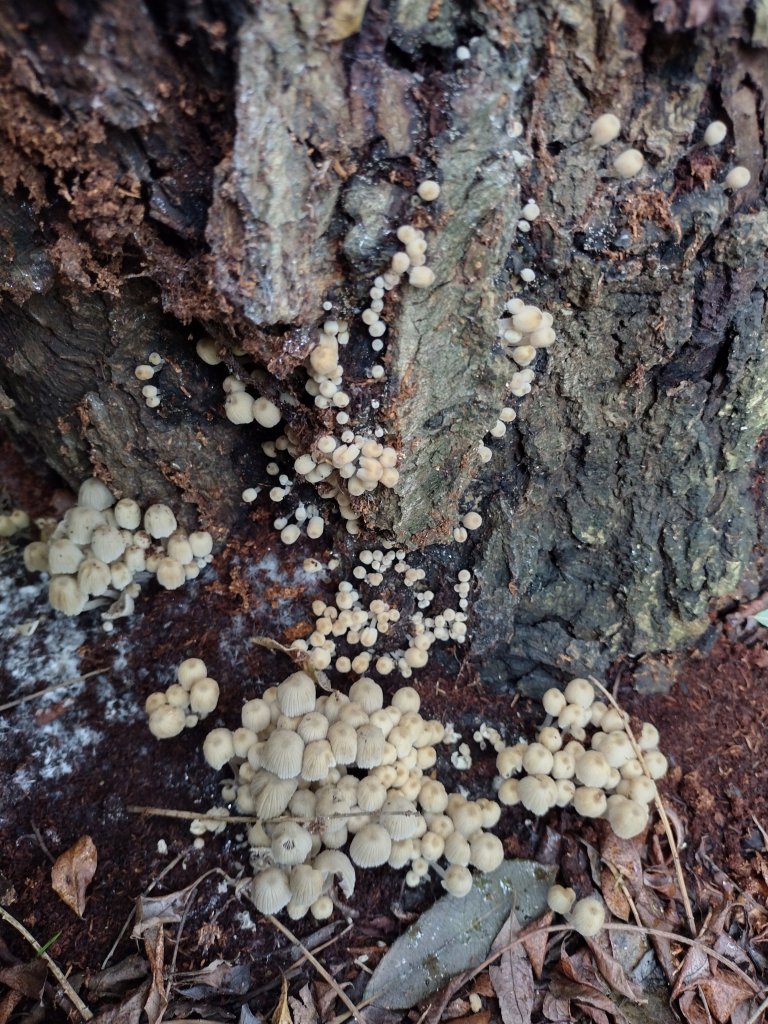
(Coprinellus disseminatus)? Found at the base of a tree.
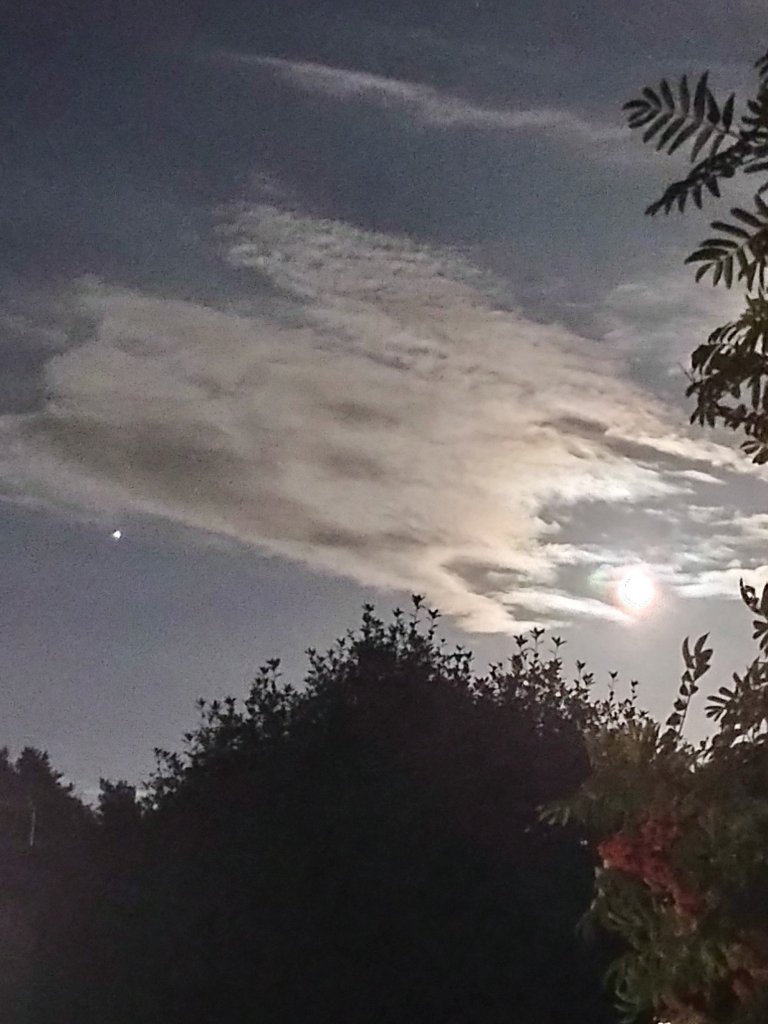
Evenings are noticebly drawing in earlier these days. Saturn is still visible with the naked eye at this time, as is Jupiter. The latter can be seen very clearly, in fact only the moon is brighter in the night sky at the moment. I managed to capture an image on the 10th September which can be seen below.
Also in September my partner and I went on a break for a few days to the north east of England. We stayed in a lovely vintage caravan near Durham. On the first day we spent the morning exploring the city, after which we walked alongside the River Wear; there was lots of Himalayan balsam (Impatiens glandulifera) in flower (both along the river bank as well as beside the pathway). We walked to Durham University’s Botanic Garden to have lunch. While we were there we witnessed a Stoat
(Mustela erminea) under aerial attack from a Magpie (Pica pica) as we sat in the North American Arboretum (no photo evidence unfortunately). This was our first encounter with a Stoat. Similar to Weasels (Mustela nivalis) Stoats can be easily distinguished from them due to the black tip on their longer tail. The Woodland trust has an article about how to differentiate them on their website.
Then in the afternoon we went to Seaham beach to search for seaglass. A well known area for seaglass searchers, Seaham beaches are noted on maps as being glass beaches due to the huge amount of glass pebbles (of various colours) that can be found there. The glass was discarded into the sea from the Seaham Bottle Works which used to be in the area (between 1853 and 1921. It is known that 20,000,000 hand-blown bottles a year were produced at the height of manufacturing at the factory). It was a quiet sunny day when we visited the area and the sound of the waves crashing against the beach was mesmerising.

While we stopped for a coffee at the local cafe, we saw a Purple sandpiper (Calidris maritima) with a large group of Gulls (Larinae). Similar in appearance to Gulls, the Sandpiper was larger, speckled and greyer as shown in the following image (taken from the visitor notice board next to the cafe).

This wading bird is a winter visitor in the north east of England. It’s numbers are at a vulnerable level, therefore it is red on the UK conservation status list. They will eat Winkles (Littorina littorea), insects, spiders, crustaceans and also plants.
On the Wednesday, we drove up to Northumberland to visit Lindisfarne. As we drove to the village we got to see the location of Vera’s house (from the ITV detective series Vera). This dwelling is privately owned but it’s possible to park nearby and view it from a distance.

There was lots of wildlife to see on the journey towards and around the village too. On the way across the causeway, we noticed a Curlew (Numenius arquata) amongst other wading birds. As with the Sandpiper, the Curlew is also red on the UK conservation status list. Approximately 30% of Western Europe’s flocks will overwinter in the UK, unfortunately there was a sign warning of Bird (Avian) flu on the island. Bird flu has been rampant in the UK this year which doesn’t bode well for lots of birds but it is particularly foreboding for many waders and seabird populations. The Curlew’s down curved bill was the give away to its identification. They search for worms, shellfish and shrimps in the nature reserve along the causeway. The RSPB gives a description of Curlew’s here.
It was amazing to witness lots of European grey seals (Halichoerus grypus) as we wondered down by the islands beaches, searching for more seaglass. It is possible to witness them swimming nearby, next to the sandbanks and nature reserve beaches which they inhabit. It is also possible to hear them, unfortunately I was unable to obtain a great video of this; however I found a recording online here, of Grey Seals Singing on the Mewstone in South Devon which gives you an idea of what they sounded like on our visit to Lindisfarne.

Pups start to be born in September so perhaps we could hear the young with the females, or maybe the adults were singing to one another. Whatever the reason for their beautiful vocalisations, it was absolutely amazing to listen to the haunting sound.
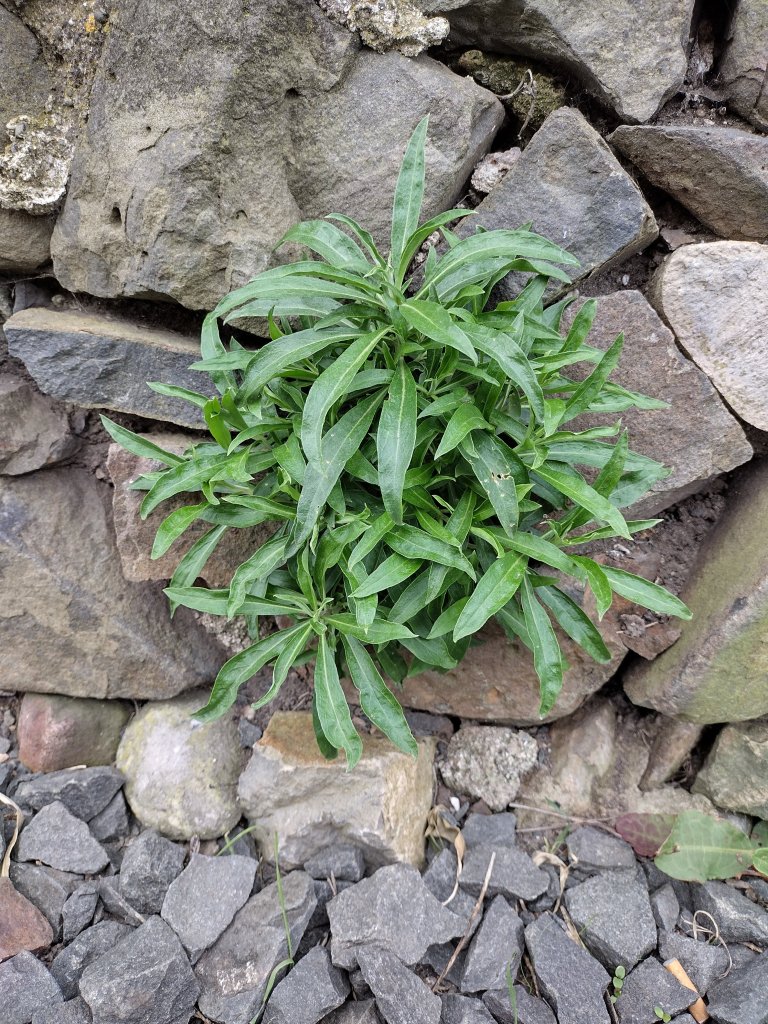
As well as these creatures, we got to see some flora as we investigated the island too. There was;




It was lovely to get away for a couple of days while witnessing wildlife that I had never seen before. Relaxing by the sea, especially on Lindisfarne was so rejuvenating. Obviously two full days with travelling time either side wasn’t long enough, but there’s always next years adventure.


 Bee in the Moment