I can’t believe March has arrived already. Blackthorn (Prunus spinosa), Sweet violet (Viola odorata) and Daffodils are in full bloom.
It wasn’t so long ago that we had the stormy weather and Snowdrops were at their best; the year seems to be advancing in leaps and bounds now.
The temperature last Thursday reached 16°C which encouraged butterflies to flutter about. I noticed several Brimstones (Gonepteryx rhamni) as well as the Red admiral (Vanessa atalanta) below.
A Red admiral feeding from a Daphne, a delight for the senses, both visual and aroma.
Along with these beautiful sightings, there were a couple of amazing nature experiences that particularly stood out over the past few weeks.
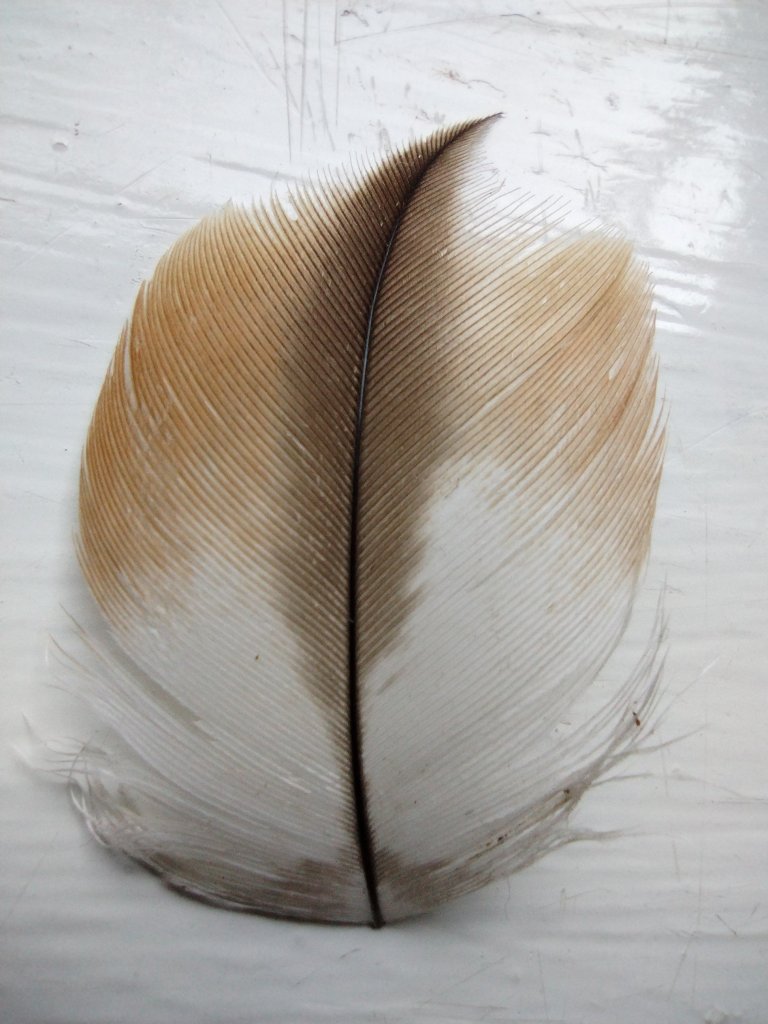
The first was due to the recent storms. While clearing up tree debris a few days later, I found a Red kite (Milvus milvus) feather which had blown to the ground. I have since added it to my version of a nature table (a vintage printing tray) along with my other treasure finds.
I love the shape, colour and pattern of this Red kite feather.
The second took place last Wednesday. While carefully tidying up another garden, to allow for the new spring growth which is already appearing, I noticed a young male Blackbird (Turdus merula) following and closely foraging next to me, just like Robins (Erithacus rubecula) often do in gardens. At one point, it appeared to watch me as I worked (seemingly unphased as I kept my movements to a minimum, so as to not alarm him). Eventually it moved further away but started to make a low repetitive ‘pok pok’ call, at both me and my colleague who was a short distance away (presumably thinking we were predators). This interactive experience was particularly moving; I am used to Robins being close by and making themselves known but never a Blackbird before. The call I heard the blackbird make can be heard on the Sussex Wildlife Trust website.
On the 31st January, I undertook the RSPBs Big Garden bird watch. Most birds, I’d normally see, were clearly hiding but I did notice some within the hour. Those birds I saw were; 1 Carrion crow (Corvuscorone), 2 Robins (Erithacusrubecula), 1 Coal tit (Periparusater), 1 Blackbird (Turdusmerula) and 2 Mistle thrush (Turdus viscivorus). I enjoy taking part in this citizen science project each year; it’s interesting to see how the results differ each time.
Due to the frozen ground last week, I was still able to go for my regular exercise in the local woodland park. Various tree species were waking up from their winter sleep. Beech (Fagus) and Oak (Quercus) had started budding while others were developing catkins.
Last years leaves and new buds on a Beech tree.Old Oak leaves alongside new buds.
As well as the Hazel (Corylus avellana) other trees had catkins hanging from them too. Hazel catkins are the earliest to flower in the year, from January to March (see my previous post A Snowy Adventure).
Then the Alder (Alnus glutinosa) is the next tree to bloom with both male and female catkins. The male catkins are longer than the female ones which flower from February to March. Also hanging from the Alder trees were some small dark brown shapes. These woody cone-like fruit develop from the previous seasons fertilised female catkins; these can remain on the tree (even when the seeds have been shed) well into the following year alongside the newly formed catkins. I also noticed leaf buds growing on the trees last week too. When the buds burst, I shall update the Woodland trust Nature’s calendar with my findings.
Unfortunately I was unable to capture decent photos on location so I collected part of a fallen branch to take home.
One small female catkin above a group of larger male catkins. On the tree (before fertilisation when they develop into the rounder, woody fruit) the female catkins point upwards while the male ones hang down. A magnified view of two unfertilised female catkins.A leaf bud with one of last years fertilised female catkins.A magnified view of the Alder tree seeds that had remained in last seasons female catkin.
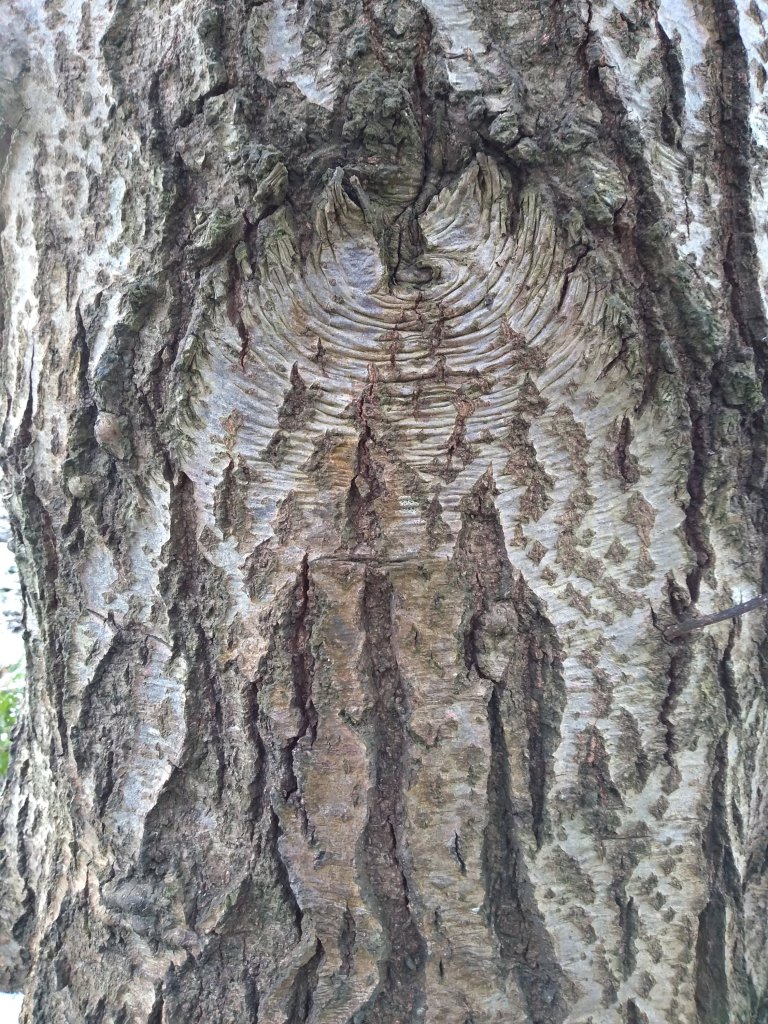
I find Alder trees fascinating and the rough, fissured bark beautiful.
Alder are native to Britain and found on wet land, next to water or in marshes and woodlands. They naturally thrive in moist conditions although can also grow in drier areas such as the edges of mixed woodland. Alder wood is durable when wet and actually becomes stronger rather than rot when submerged in water; a characteristic that makes them useful in flood mitigation, boat building, sluice gates, and even the construction of Venice which is mostly built on Alder piles. Alder wood is also used in the creation of charcoal, gunpowder and making clogs.
The pale wood turns a deep orange colour at the point at which it’s cut (while the rest of the wood remains pale); leading to a superstition, in Ireland, that it was bad luck to walk past an Alder tree on your travels. However, traditionally alder branches were also taken into houses to prevent Woodworm. Alder wood is particularly liked by various species of beetle larvae (collectively referred to as Woodworm). It is hoped that the beetles will lay eggs in the Alder rather than the furniture or fixtures; the branches once infested can then be removed.
There is also a traditional use for Alder flowers as a green dye; believed to be used as camouflage by outlaws like Robin hood and fairies.
For fun, I looked up Alder wands used in the Harry potter series. Only one is mentioned, that owned by Quirinus Quirrell. The wands qualities are described on the Wizarding world website.
The roots of Alder are nitrogen fixers. Nitrogen from the air is fixed into the soil, replenishing the levels and aiding soil fertility, through the bacterium Frankia alni.
As well as improving soil, Alder are great for wildlife too. The seeds are eaten by Redpoll (Acanthis flammea), Siskin (Spinus spinus) and Goldfinch (Carduelis carduelis). The leaves are food for the caterpillars of the Alder kitten (Furcula bicuspis), Pebble hook-tip (Drepana falcataria), Autumn green carpet (Chloroclysta miata) and Blue-bordered carpet (Plemyria rubiginata) moths. Bees visit the catkins for an early source of nectar plus Alders provide habitats for the Checkered skipper (Carterocephalus palaemon) butterfly, Small pearl-bordered fritillary (Boloria selene) butterfly, some species of Crane fly, Otters (which create nests amongst the roots) along with mosses, lichens and fungi that like damp conditions.
However, these trees are also threatened through infection by the Phytophthora fungus (together with some other broadleaf tree species). In Alder this disease is referred to as Alder dieback and eventually causes the death of any infected tree. For more information see the Forest research website. There aren’t many Alders in my local woodland park compared to other tree species so it would be sad to see them disappear. Given my newly acquired knowledge I will keep a special lookout for any ill health in these trees; thankfully no infection is being exhibited at the moment.
As with the first of March, this week ended with sunshine; although there have been moments of heavy rain as well. Meteorological Spring has begun and things are certainly waking up in the gardens. My Scilla have started to bloom and the Anemone blanda are looking magestic too.
ScillaAnemone blanda
Wild flowers are starting to grow now as well; particularly Hairy bittercress (Cardaminehirsuta) and Common chickweed (Stellaria media).
When the sun was out, I noticed bees foraging. I have seen an Early bumblebee (Bombus pratorum) and a few Buff-tailed bumblebees (Bombus terrestris) visiting flowers. Early bumblebees are one of the smallest in the uk and emerge from hibernation in March, before many other species are seen.
A Bombus terrestris visiting a Spring crocus (Crocus vernus)
I managed to spend Saturday at the allotment. It’s only the second week on a new plot. After an initial viewing the previous Saturday, my partner and I spent five productive hours this weekend; pruning the apple tree, removing grass from the weedsheet covered beds and sorting the compost bins. No Robins (Erithacus rubecula) visited as earth was disturbed but we did have some friendly Jackdaws (Corvusmonedula).
Our allotment helpers
I also treated myself, and pollinators, to a Fuji cherry (Prunusincisa) ‘Kojo-no-mai’. It is the only thing flowering on the allotment at the moment (until we start growing cut flowers, fruit, herbs and vegetables) so it looked wonderful blooming in the sun.
I celebrated the start of a new year by visiting RHS Wisley. It was a lovely way to end my holiday, as I walked round the winter garden, knot garden, herbaceous borders, Enchanted Botanical Christmas in The Glasshouse and the evening event Glow 2019.
The Winter garden was full of life, colour and perfume. Some plants I noticed were:
– Helleborus Walberton’s Rosemary = ‘Walhero’
– Helleborus ‘Verboom Beauty’
– Edgeworthia chrysantha ‘Red Dragon’
– Cornus sanguinea ‘Anny’s Winter Orange’
– Hamamelis × intermedia ‘Harry’
– Pinus mugo ‘Winter Gold’
– Iris lazica
– Galanthus ‘Magnet’
– Daphne bholua ‘Hazel Edwards’
–Viburnum × bodnantense ‘Charles Lamont’
– Erica carnea
Along with plants, there were some birds in the garden too. I saw Robins (Erithacus rubecula)
and a couple of Pied Wagtails (Motacilla alba).
Between the winter garden and herbaceous borders is the knot garden containing evergreen and deciduous shrubs as possible replacements for Buxus as topiary and small hedges (see below). The RHS are investigating alternatives to box because of the loss of Buxus through Box blight and Box tree Caterpillar.
I was also interested in seeing the herbaceous borders at RHS Wisley. Obviously the Perennials have died back by winters arrival but I was glad to see that they hadn’t been tidied or ‘put to bed’ . Instead, the perennials had been left for the insects and birds; to be cut back in spring. I think the borders looked beautiful and the seedheads very architectural.
Lastly I have included a couple of highlights from the glasshouse and glow exhibits.
I saw contrasting images last week which made me think of feeding birds with plants from the garden.
I first observed the Rowan (Sorbus) tree outside, now stripped bare of it’s berries, before noticing some Cotoneaster
and Ivy (Hedera) full of berries. Clearly the pollinators had been busy during the Summer and Autumn months.
Along with supplementary food, on the ground and bird feeders, birds can also rely on trees and other plants in the garden for food in winter. Along with the examples already mentioned there are other berries, fruit, seeds and nuts which are enjoyed by birds.
Some other plants providing fruit and berries are;
Hawthorn (Crataegus)
Honeysuckle (Lonicera)
Guelder rose (Viburnum opulus)
Dog rose (Rosa canina) Berberis
Bird cherry (Prunus padus)
Crab apple (Malus sylvestris)
Blackthorn (Prunus spinosa) Pyracantha
Sarcococca hookeriana Mahonia
Leaving seedheads on perennials not only provides food for birds, they also give shelter to beneficial insects. In fact a little bit of leaf litter also has this affect which in turn helps feed birds who eat the insects.
Common birds to see in winter include;
Redwings (Turdus iliacus)
Waxwings (Bombycilla)
Starlings (Sturnidae
Blackbirds (Turdus merula
Robins (Erithacus rubecula
Chaffinches (Fringillacoelebs)
Bramblings (Fringilla)
Goldfinches (Carduelis carduelis)
Bullfinches (Pyrrhula pyrrhula)
Dunnocks (Prunella modularis)
Goldcrests (Regulus regulus)
Blue tits (Cyanistescaeruleus)
Long-tailed tits (Aegithaloscaudatus)
Coal tits (Periparus ater)
Great tits (Parus major)
Fieldfares (Turdus pilaris)
The RSPB Big Garden Birdwatch, which takes place on the 25-27th Jan 2020, has been going for over 40 years. Surveying birds visiting your Garden or local park for one hour is calming and enjoyable. This citizen science continues to give the charity useful information on the numbers of birds in the UK.
Further information on feeding birds can be found in the book, ‘RSPB Pocket Bird Feeder Guide’ by Robert Burton (published by Dorking Kindersley) or on the Gardeners World website.






 Bee in the Moment