Posted in nature

A Snowy Adventure

The previous Sunday brought a little light relief as snow covered most of the UK. My childhood excitement of seeing the snow returned, so the days exercise was a walk through the local woodland park.

As I wondered past trees I began to notice odd glimpses of colour amongst the white and greys. Upon closer inspection I could see catkins already dangling along with female flowers ready to bloom on the Hazel (Corylus avellana) trees.

The male catkins are more showy than the tiny female flowers (which appear at the end of buds and harder to spot).
A very enlarged photo showing the red styles of the female flowers.

I also saw female flowers and cones on several Scots pine (Pinus sylvestris).

A closer view of the female flowers at the end of new shoots.

Surprisingly, given it was still snowing at the time, lots of birds were about too. I saw Redwing (Turdus iliacus), Blue tits (Cyanistes caeruleus), a small group of noisy Long tailed tits (Aegithalos caudatus) as well as a male Chaffinch (Fringilla coelebs) amongst the trees.

Redwings are migratory birds, from Iceland, Scandinavia and even Russia. Named after the red area under the wings, they can be seen in the UK between October and spring.

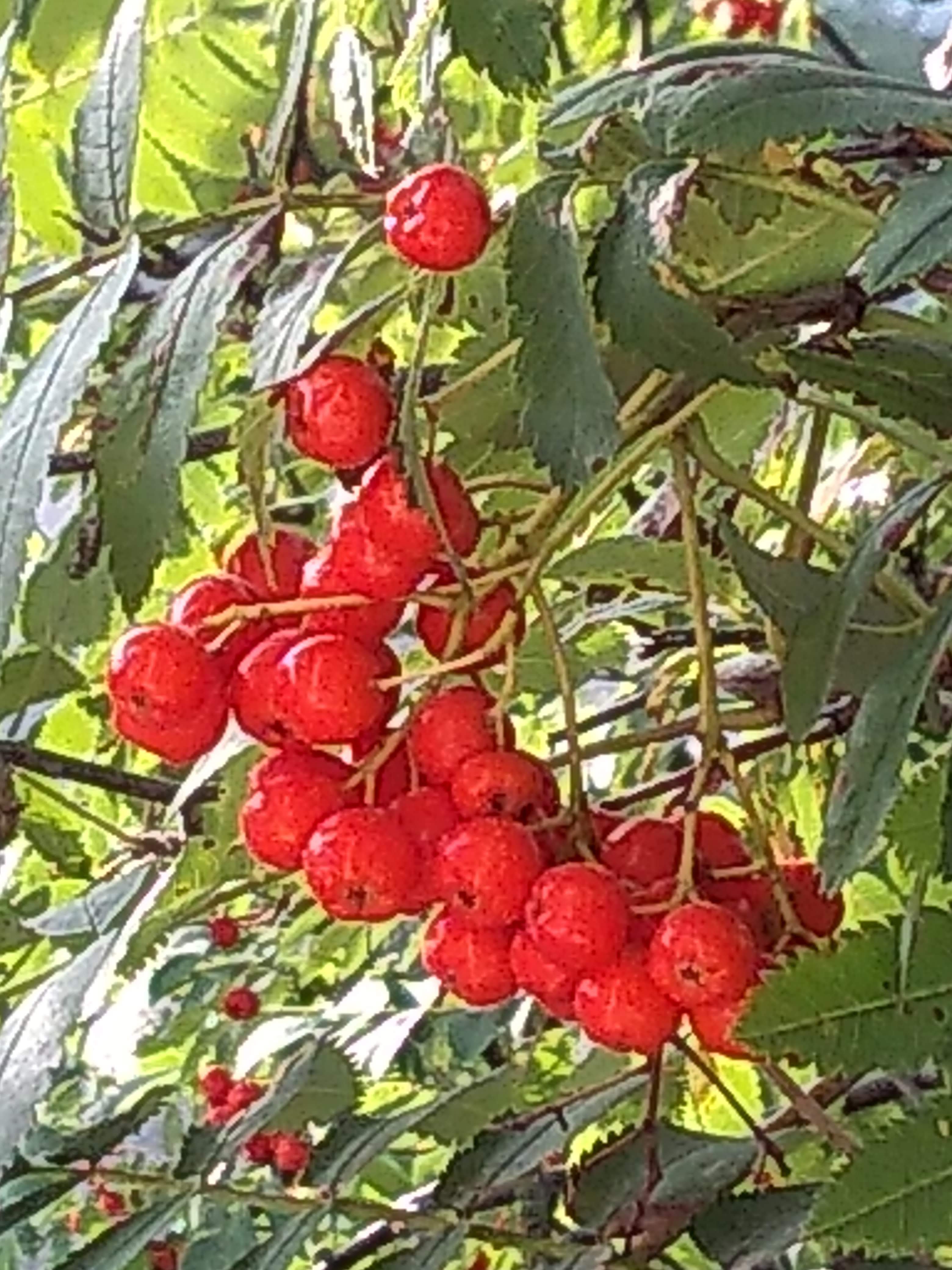
Throughout the week, as the snow slowly disappeared, I saw different birds visiting my Rowan (Sorbus) tree. I had never seen a Mistle thrush (Turdus viscivorus)
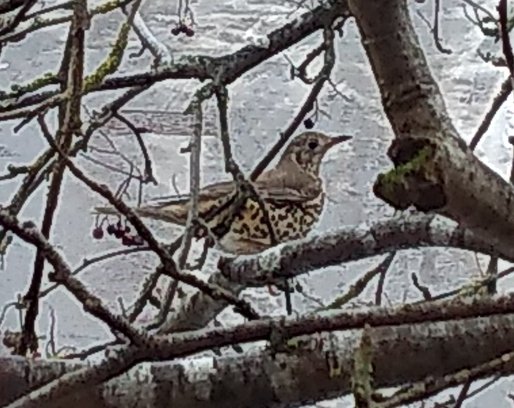
or male Chaffinch (Fringilla coelebs) visit the tree before.

Perhaps the reduced availability of food, during the snowy weather, made them search further afield than usual. Thankfully they found the remaining, mostly dried, berries on the Rowan tree outside my window.

Mistle thrush, so named because of their love of eating mistletoe (and guarding trees where it grows) also visit Rowan and Holly (Ilex) trees for their berries as well as eat worms, slugs and insects. They are larger and duller in colour than Song thrush (Turdus philomelos). Their spots are darker and rounder plus they have white tips to their tails. In fact they are larger than Blackbirds (unlike Song thrushes).

Wonderfully, there were even more flowers blooming in the garden too. I saw

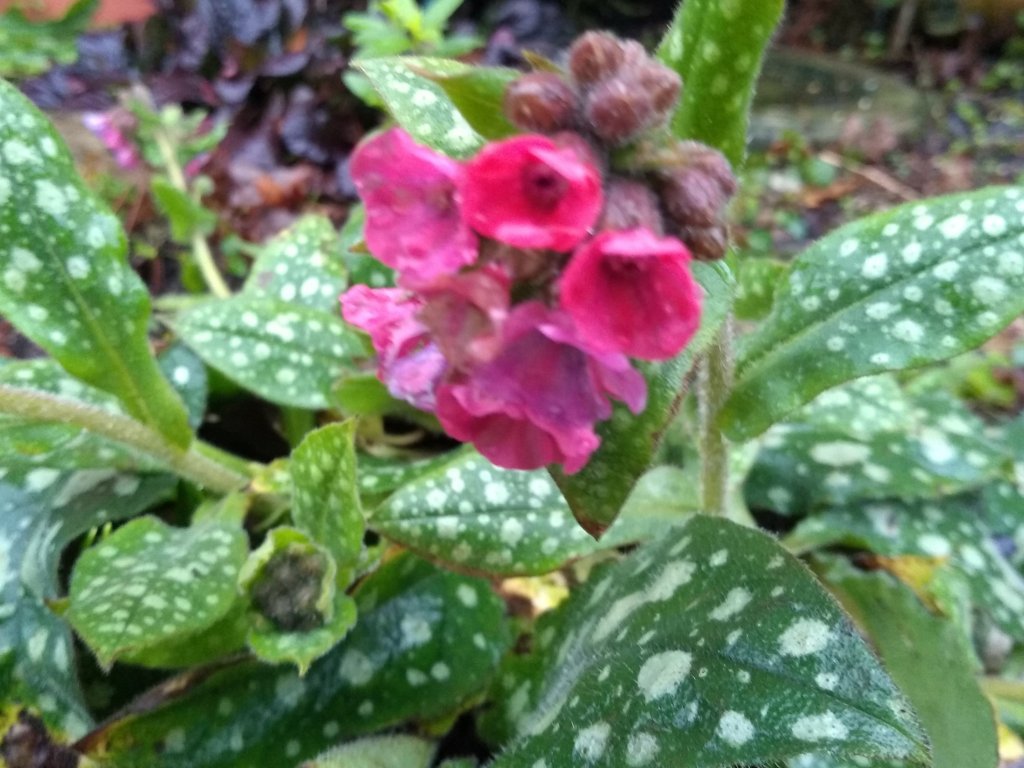
Lungwort (Pulmonaria officinalis),
Crocus and

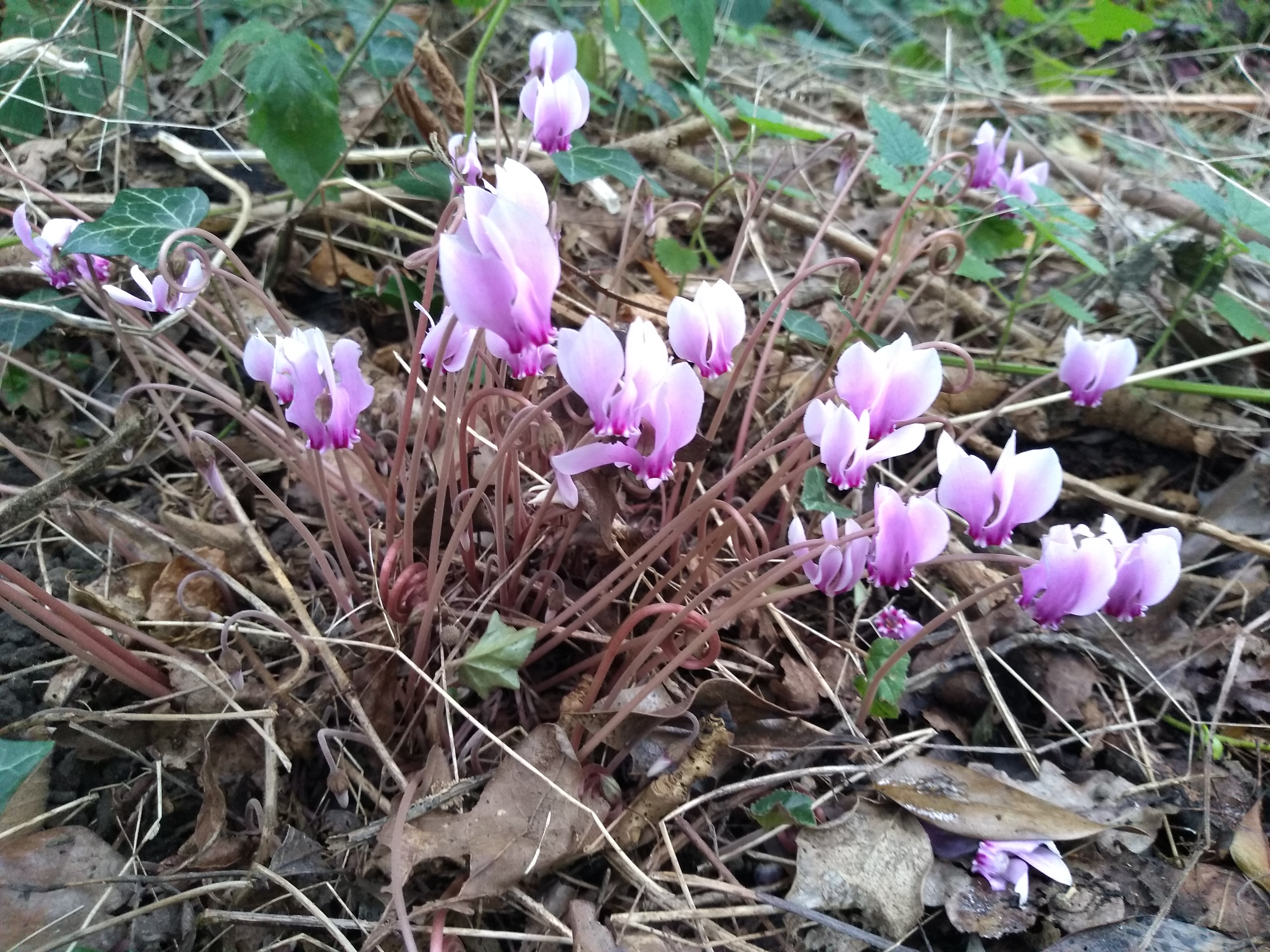
lots of Cyclamen.

Posted in nature

More Fabulous Fungi

The autumn colours were glorious last week; particularly the Acers like the Acer dissectum below.

Another tree that I loved seeing was a Tulip tree (Liriodendron tulipfera).

This tree is so called because the flowers look similar to tulips. I have never noticed it flower but I will try to remember to keep an eye out for them next summer.

The recent wet weather has had opposite affects on wildlife. I haven’t seen many pollinators lately but have continued to see lots of fungi. Infact the timing of this wet weather has meant it’s been a bumper year for fungi.

The few pollinators that I have noticed include Common wasps (Vespula vulgaris) on some Ivy (Hedera helix) flowers

and one White tailed bumblebee (Bombus lucorum) on Monday.

I also saw a couple of moths at the end of the week too. The first one was a Winter moth (Operophtera brumata)

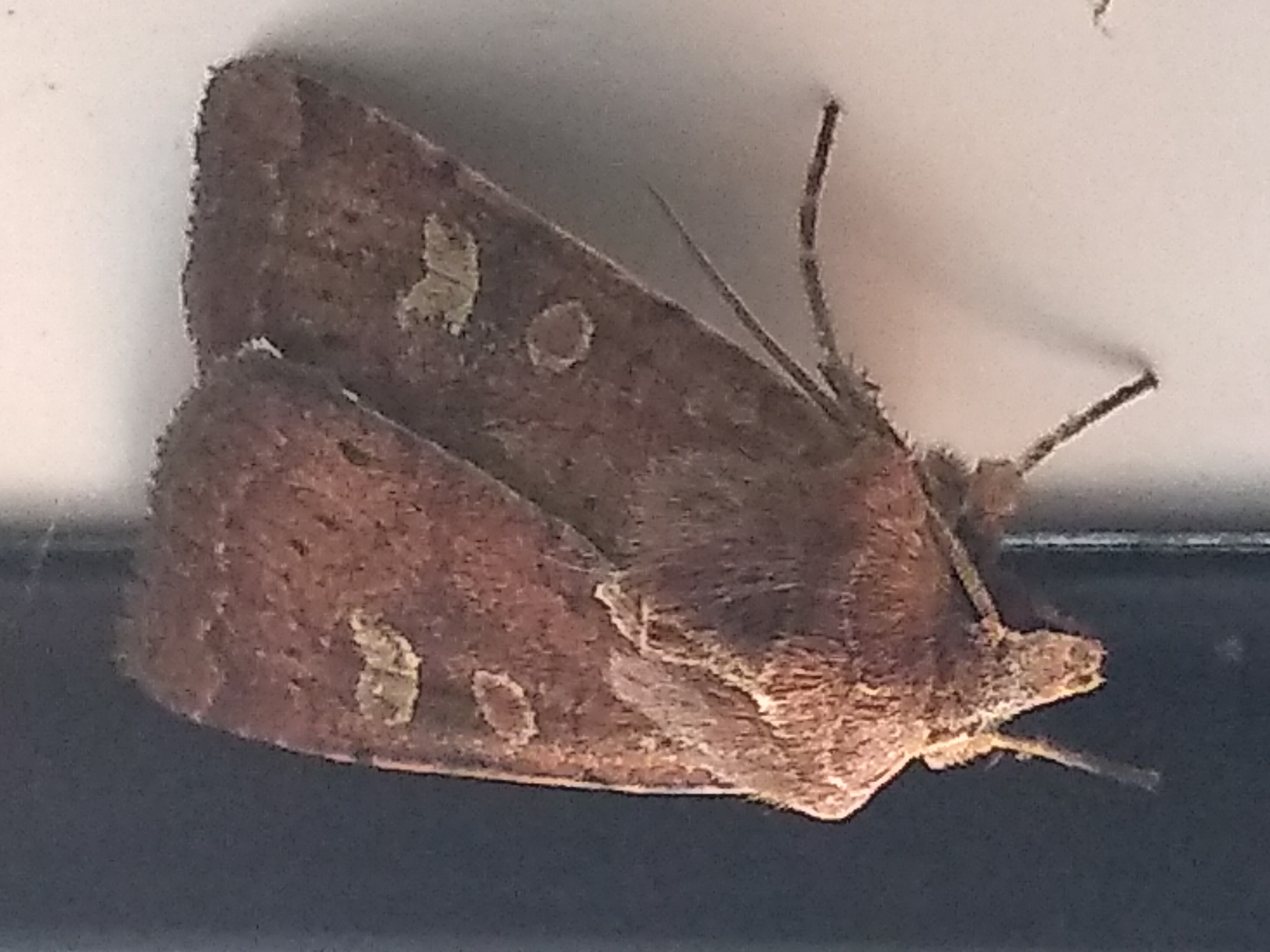
and the second one was a Scarce bordered straw (Helicoverpa armigera). The latter moth is a migrant visiting the UK.

I was a little surprised to see some Feverfew (Tanacetum parthenium) still flowering in one garden. I enjoy seeing this daisy like wild flower and like it’s common name Bachelor buttons.

The mushrooms I noticed last week were varied in size and colour.

*Once again, please do not use this post as a guide to edible mushrooms.*

I have managed to identify some but have placed question marks next to those I am unsure of.

The mushrooms I saw last week were;

– the Common puffball (Lycoperdon perlatum).

[The second photo was from a few days later. I noticed that they had matured, ready to release their spores].

-Orange Bonnet (Mycena acicula)

-Purple brittlegill (Russula atropurpurea)

-Turkey tail (Trametes versicolor)

-Lilac bonnet (Mycena pura)?

-Rosy bonnet (Mycena rosea)

-Milking bonnet (Mycena galopus)?

-Horse mushroom (Agaricus arvensis)?

-and Cortinarius umbrinolens?

The week ended with a brief visit from a Jay (Garrulus glandarius) to the Rowan tree outside my home. I can’t wait to see if I get Redwings (Turdus iliacus) visit soon as well. I usually have a few snacking on the berries each year; hopefully they come before all the berries disappear. The UK conservation status of this thrush is red so it’s always special to see them. Redwings look similar to thrushes but have a splash of red under their wings.

Posted in nature

“Here’s Looking at you Kid.”

Bank holiday weekend was roasting, especially Sunday therefore I decided to take it easy so I wouldn’t overheat. Even though I didn’t go out, nature came to me. While looking out of the window I noticed a Red Underwing (Catocala nupta) moth trying to remain in shade on an outside wall. This large moth (6.5-7.5cm wingspan) has predominantly red underwings with black and white markings, hence it’s common name. The food of this moths larvae are
Willow (Salix) and Poplar (Populus) trees.

I also managed to photograph one of this years Blue tit (Cyanistes caeruleus) brood in the Rowan (Sorbus) tree outside. They are definitely looking more like the adults now.

It’s also lovely to see the Rowan is full of ripe berries ready for the Thrushes (Turdus philomelos) and also the Redwings (Turdus iliacus) that I usually see in winter.

Monday was slightly cooler although it was still hotter than I prefer it to be. However armed with suncream, hat and water I visited Ham House and Garden in London. While walking round the grounds, bees, crickets and the occasional Ring-necked parakeet (Psittacula krameri) could be heard.
There was an extensive kitchen garden with cut flower and edible flower areas which I particularly enjoyed viewing.
I saw lots of Honey bees (Apis mellifera) on Globe artichokes (Cynara cardunculus) within the kitchen garden.

There was another lovely sighting as I ate lunch too. Amongst the Wisteria (having a second flush of flowers) as well as some scaffolding was a Wood pigeon (Columba palumbus) sitting on it’s nest. It didn’t move other than to blink as it was no doubt observing us all eating trying to remain undetected.

Upon my return there was a Speckled bush cricket (Leptophyes punctatissima) in the hall to welcome me home. As there was no ovipositor on the end of the abdomen (the appendage from which the female lays eggs) I identified it as male.

Long weekends are lovely but they still pass quickly and Tuesday rolled around again, so I was back to work.
I didn’t notice as many butterflies last week, although bees are still prevalent. During the warmest part of the day, when I was once again wilting, I noticed how active the Honey bees were on the Sedums even though they are only just starting to bloom.

I also observed a Small Dusty Wave (Idaea seriata) moth later that evening. It’s caterpillars feed on herbaceous plants especially Ivy (Hedera helix).

The nice weather of sunshine and low 20s temperature continued to the latter part of the week.

Once again it was Honey bees I mostly noticed on Sedums as well as some visiting

-Rudbeckia laciniata ‘Herbstsonne’.

– and Erigeron karvinskianus.

However there was one plant I noticed that surprised me. In a wooded area a small patch of Cyclamen hederifolium was poking it’s flowers above the leaf litter and Ivy; Yet another sign of late Summer and the beginning of Autumn.

Then just when I thought I wouldn’t get to catch a proper view of a butterfly, I managed to see a Small tortoiseshell (Aglais urticae) on a white Buddleja bush.

Lastly, I saw another moth in the hall, this time however it was a Square-spot Rustic (Xestia xanthographa) moth.

Posted in nature

🐝Beeing Happy in the Sunshine 🌞

The warmer weather this week brought with it many bee sightings, including Honey bees (Apis mellifera). The plants where they were most abundant were the Californian Lilac (the Ceanothus seen in the first photo) and the Cotoneaster in the second photo. Both Shrubs, full of small flowers, are loved by Honey bees. In fact there were so many bees on them that the amazing buzzing sound filled the air.

There were also lots of Tree bumblebees (Bombus hypnorum) on the Cotoneaster too, as shown below.

This hasn’t been the only time I noticed Tree Bumblebees this week. This the weekend I was walking around a local charity allotment when I saw a bird box being occupied by bees. This is a commonly used structure for Tree Bumblebees.

I was also lucky to notice three female Hairy-footed flower bees (Anthophora plumipes) while weeding a border. These are solitary bees who care for their own young; however they can live within close proximity to one another. The three that I noticed had nests in the bare earth about 10cms apart. The females are black with yellow legs. Unfortunately I was not able to obtain a decent photo of them for this post.

Other observations this week have included more Seven-spot ladybirds (Coccinella septempunctata), Holly blue butterflies (Celastrina argiolus) and Orange-tip butterflies (Anthocharis cardamines).

I have also managed to go on a couple of short walks this week and discovered more wildflowers blooming. These were;

– Ox-eye daisy (Leucanthemum vulgare).

The Ox-eye daisy flowers were originally used for the ‘He loves me, he loves me not’ petal plucking activity.

* Dog-rose (Rosa canina). The hips from this plant are enjoyed by blackbirds (Turdus merula), Redwings. (Turdus iliacus) and Waxwings (Bombycilla garrulus). They are also used to make syrups and jellies to be used in winter (due to the very high vitamin C content). The hips from this rose also contain irritating hairs which can be used as itching powder.

-Smooth sow-thistle (Sonchus oleraceus)

– Common Vetch (Vicia sativa). This plant is a member of the Legume family so it causes nitrogen fixation in the soil therefore it can be used as a soil fertilizer.

On my way home from one of my walks I manage to capture this Grey squirrel (Sciurus carolinensis) on a photo too.

This weekend I saw this Feral Pigeon (Columba livia domestica) as I enjoyed a coffee.

I couldn’t resist adding this photo, sadly it doesn’t do it justice. When the sun shone, the green and purple neck feathers where incredibly vibrant and against the unusual white; I thought it was beautiful.