Posted in Allotment, nature

Latest on the Allotment

After a slow start, due to the weather, things are growing nicely on the organic, no dig, wildlife friendly allotment.

The view of the allotment from the Buddleia shrub.
The view of the allotment from the apple tree.

While most of the soft fruit season has come to an end (apart from the autumn raspberries), the plums and apples continue to develop and are something to look forward to later in the season.

Thankfully the rhubarb has recovered a bit after a disappointing harvest. Rhubarb doesn’t like growing in waterlogged soil and although we have sandy free draining soil, I think it ended up being too wet over the winter. The rhubarb was on the plot when we took it over four years ago and had grown very large. Every five years Rhubarb can be divided when the growth has become weaker or leaves are overcrowded so I will do this around November and hopefully this will invigorate its growth next year.

The slightly depleted Rhubarb patch.

The vegetables remain on a three yearly rotation to maintain soil health and keep viruses at bay. Main crop potatoes, kale (Cottagers and Cavolo Nero), beetroot, radishes and courgettes are doing well as usual. This years addition are carrots. I always like to try something different each year and It’s been a while since I tried growing these; so far they are surviving. They are in a raised bed and were sown later and sparsely to help avoid detection by carrot fly (Psila rosae). They are also in a mixed raised bed which also helps. 

Along with covering vulnerable plants and growing sacrificial plants such as nasturtium (Tropaeolum majus) and marigolds (Tagetes), I intersperse herbs and other flowers in between the vegetables to help prevent too much loss from pests. I usually find beneficial insects soon appear when needed; there are lots of ladybirds on the plot at the moment. I also find the best way to deal with slugs and snails is to collect them and place them elsewhere; plus any plants with soft young growth are protected by copper tape on old pots and thorny material. I do allow some slugs to remain on the allotment however. The Leopard slug (Limax maximus) is one beneficial slug to have in a garden as they don’t eat living plant matter. They are great for the compost and also eat the eggs of other slugs.

Thorny material protecting new growth from slug and snail damage. Also a plastic bottle (with the bottom cut off) to allow water to be directed to the roots.
Copper tape around an old pot (with the bottom cut off) used as a guard around the base of an annual while it establishes itself.

We have a lot of wildlife visiting the allotment. There is often evidence of a fox (Vulpes vulpes) visitor (which we have seen on other plots). Plus we often see grasshoppers and Common blue Damselflies (Enallagma
cyathigerum) and frogs (at the moment we regularly notice one adult and one youngster hopping around). Last saturday, the sun was out and there was an abundance of bees on the Catmint (Nepeta), Red clover (Trifolium pratense), Lavender and Buddleia.

The wild area on the plot contains a bug hotel and is located near to a neighbouring pond. This is where the red clover grows.

This year, I decided to undertake the Big Butterfly Count at the allotment. The butterflies seen were;

2 Small skippers (Thymelicus sylvestris),
1 Comma (Polygonia c-album),
2 Gatekeepers (Pyronia tithonus),
1 Peacock (Aglais io) and 2 Large whites (Pieris brassicae)

Given the abundance of Cabbage whites (Pieris brassicae) nearby I have made sure my kale is covered up.

The perennial kale mixed in with the cut flower patch.

I find it reassuring to have seen so many butterflies and bees at the weekend, especially as overall there seems to be a reduction in numbers this year; partly due to the frequency of wet days.

I have noticed lots of moths this year too. Perhaps the most exotic looking one I have seen so far is the Scarlet tiger moth (Callimorpha dominula).

The creamy coloured spots on the top of the forewings can sometimes have a more vivid yellow tint.
The red underwings can be seen here. I also managed to capture some of the shimmering blues and greens of the forewings when the sun shone on the moth.

This moth is medium sized, at 23- 27mm (across the wings). It flies during the day and night through May and June; often noticed while resting on plants. The caterpillars of this moth feed on Comfrey (Symphytum), Hemp Agrimony (Eupatorium cannabinum),  Common Nettle (Urtica dioica), Bramble (Rubus fruticosus), Honeysuckle (Lonicera), Meadowsweet (Filipendula ulmaria) and Green alkanet (Pentaglottis sempervirens); they can be seen from August until May, overwintering into the following year. The habitats where the Scarlet tiger moth will be found are in areas of wetland, riverbanks, woodlands, gardens as well as coastal areas.

One sound and aerial display of summer which I enjoy is the return of Swifts (Apus apus). I have even been lucky enough to see them catching insects as they swoop over a pond (sometimes just skimming the water) along with another flock soaring high up the sky. I always treasure seeing these amazing birds as they are on the red list for Birds of Conservation Concern 5: (2021). A few things we can do to help them is to put up appropriate nest boxes, as well as adding swift bricks to new builds, giving them somewhere to raise their young. The RSPB also have a citizen science project where you can record their presence. Further information on how you can take part, can be found here.
Having arrived in Britain in April and May, it won’t be long before they return to Africa as they only remain here until August. Most of their time is spent on the wing, only stopping to nest in roofs especially of old buildings such as churches. If this isn’t incredible enough when feeding the young they regurgitate a bolus, (a pellet formed in the back of the birds throat) containing between three hundred to one thousand insects mixed with saliva. More information on swifts, including how to identify them can be found on the RSPB website, where you can also hear a recording of their distinctive call.

Swifts are not the only thing I have noticed around ponds lately. I recently learnt about another pond invertebrate, the Common backswimmer (Notonecta glauca). So called because they swim on their back just beneath the surface of the water. Not only do they feed on insects, but also tadpoles and small fish. They suck out the contents of their prey’s body after injecting it with toxic saliva. Found all year round they moult a few times before reaching their final length of one and half centimetres. It was quite fascinating to observe them swimming around.

Posted in Allotment, nature

Blossom Watching

Warm sunny weather has finally replaced the wet conditions we seemed to be stuck in all May.

As I write this, meteorological summer has begun so the change in weather is rather fitting.

It has been fascinating to follow the seasons so far this year; paying particular attention to the timing of tree blossom arrival. After the Blackthorn (Prunus spinosa), the ornamental Cherries (Prunus) took over alongside the Crab apples (Malus). Then for the last few weeks Rowan (Sorbus), Horse chestnuts (Aesculus hippocastanum) and Hawthorn (Crataegus) have been blooming and continue to do so.

More wild flowers are joining in the visual performance as Red clover (Trifolium pratense) and Common vetch (Vicia sativa) started putting on a show too.

Even on the allotment, the Lacy Phacelia (Phacelia tanacetifolia) has begun to bloom alongside the vibrant Geums, which is a great combination.

The bees have been enjoying their nectar and pollen, along with a Hairy shield bug (Dolycoris baccarum) who came to visit on them Saturday (see photo below).

We do have blackthorn hedges nearby so I guess it had been overwintering on those.

I’ve noticed that the Chive flowers are particularly loved by worker Red tailed bumblebees (Bombus lapidarius); this isn’t too much of a surprise as I know they have short tongues, plus once they have found a good food source they will repeatedly visit the same plant.

Seven-spot ladybirds (Coccinella septempunctata) numbers are increasing on allotment too. Plus one Female Wolf spider (Pardosa amentata) carrying a blue egg sac was spotted.

It is always a joy to share my plot with beneficial insects, as I don’t use insecticides.

It was nice to have a long weekend, it gave me a chance to walk through the local woodland park which I hadn’t done for a few weeks. Lots of butterflies were flitting about, including one Speckled wood butterfly (Pararge aegeria).

Posted in nature

Tolkien’s Words of Wisdom are Still Appropriate.

Last week ended with a wonderful announcement in the news, the Great fox-spider (Alopecosa fabrilis), presumed extinct since 1993, has been refound alive (see the BBC News report). This highlights, both the amazing work undertaken by naturalists, as well as the importance of protecting wildlife and their habitats.

As an amateur naturalist and gardener, I haven’t undertaken such groundbreaking work but I try to do my bit whenever and wherever I can. I think of J.R.R. Tolkien’s quote ‘Even the smallest person can change the course of the future.’ from The Fellowship of the Ring (The Lord of the Rings trilogy) in these moments. We can all play a small part in saving nature’s wonderful diversity so that it has a future.

With this at the forefront of my mind I think back to one small act I hope made a difference last week. I noticed a female Common carder bee (Bombus pascuorum), identified by the white hairs on the sides of its thorax. It isn’t unusual to see these females fly this late in the season, (possibly a new queen getting ready for hibernation before starting a new nest in spring). However the one I saw was very still; I was concerned it was worn out and required help so I gathered some Verbena bonariensis and Salvia flowers to revive it. Thankfully my instinct was probably correct because it fed from the nectar contained within the posy I laid next to it.

Along with some cultivated plants, a few wild flowers were still blooming, Red clover (Trifolium pratense) and Yarrow (Achillea millefolium). Even though the latter flowers through to November, Red clover usually only blooms until October. The Common carder bee feeds from the Red clover flowers along with Honeybees (Apis mellifera) and Red-tailed bumblebees (Bombus lapidarius).

I also learnt some new fungi last week. The Golden waxcap (Hygrocybe chlorophana) which grows on grassland.

This fungi is on red list for threatened fungi in some European countries such as poland and Switzerland but not in the UK

Plus the other fungi I noticed, the Shaggy scalycap (Pholiota squarrosa) at the base of a tree stump.

This is often found next to broadleaf trees stumps, particularly beech (Fagus), and occasionally spruces (Picea) between August and November. 
Posted in nature

Things Come in Threes

At least in several gardens last week, things with three leaves appeared as several Trefoils began to flower.

In some lawns the yellow flowering Slender hop clover (Trifolium micranthum) has shown itself along with Red clover (Trifolium pratense).

Slender hop clover
Red clover

Red clover is also called Bee-bread (along with White clover- Trifolium repens) due to its popularity with bees. It’s nectar is especially loved by Common carder bees (Bombus pascuorum), Honeybees (Apis mellifera) and Red-tailed bumblebees (Bombus lapidarius). Red clover, which is less commonly found in nature than White clover, is used for livestock feed and crop rotation (due to its nitrogen fixation abilities). It is also used in herbal medicine to treat respiratory and skin ailments,along with menopausal and PMS symptoms because the flower contains isoflavones. When taken internally, isoflavones become phytoestrogens which has similar affects in the body as estrogen (see Plantlife)

I will have to wait a little longer to see White clover flowering as it blooms from June. However White clover is commonly found in verges and grassland so I’m sure to see some eventually.

Unfortunately I have never spotted a four leaf clover (or five leaved). I am ever hopeful, just for the challenge because they are so hard to spot in the wild.
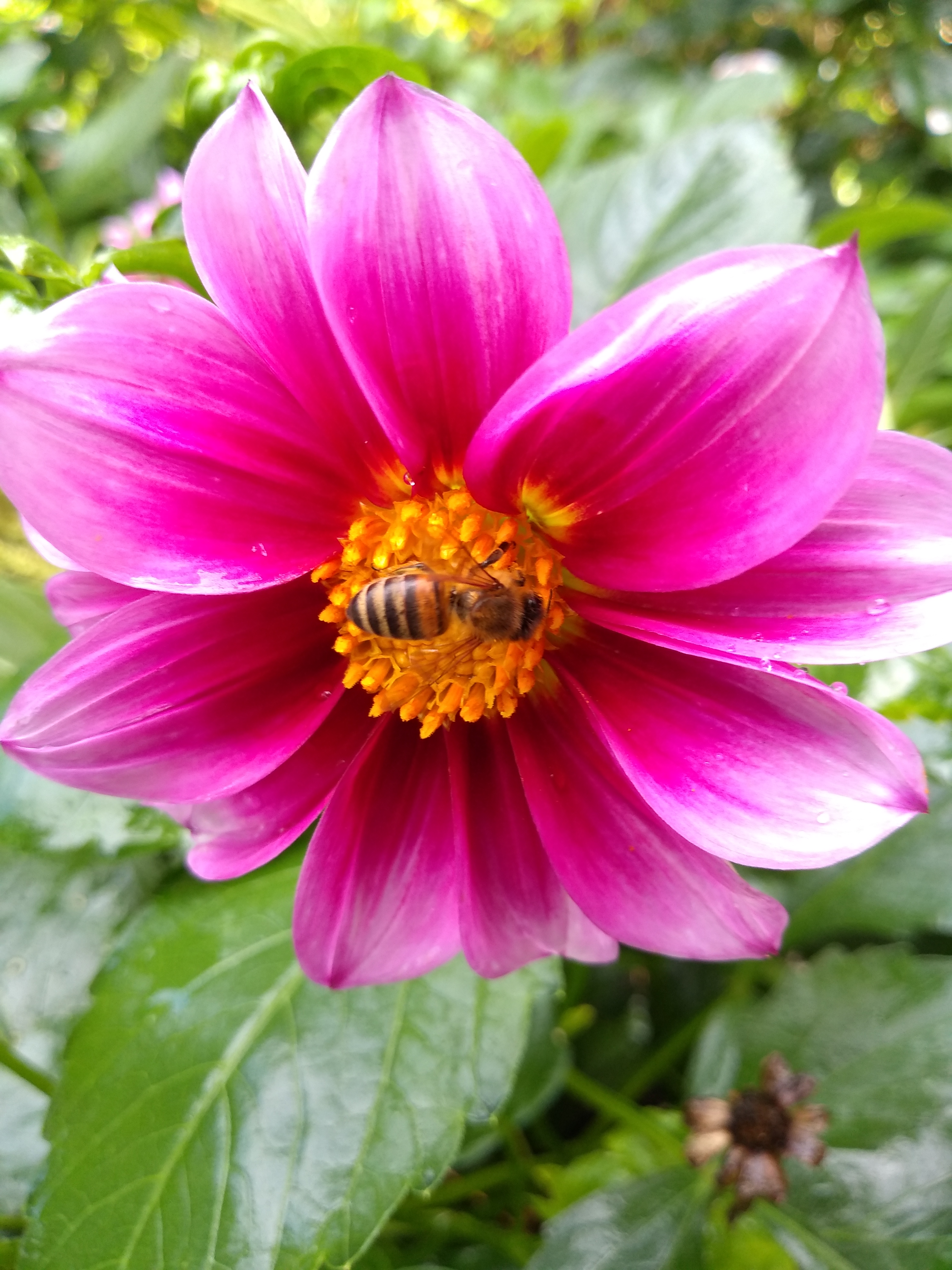
Several trees are blooming at the moment. Along with Hawthorn (Crataegus monogyna- the May tree flowers referred to in the rhyme ‘Cast ne’er a clout ere May is out’) the Horse chestnut (Aesculus hippocastanum) is also in flower; they have white flowers with a pink tinge.

I also see the Red horse chestnut tree (Aesculus x carnea Briotii) on my travels, both trees have very showy flowers.

It was great to see lots of bees about last week and various species too.

The first type of bee I saw was a Hairy-footed flower bee (Anthophora plumipes) around some forget me nots (Myosotis).

I also noticed lots of Buff-tailed bumblebees (Bombus terrestris),
Honey bees and Early bumblebees (Bombus pratorum) throughout the week too.

This Cotoneaster hedge was alive with Honey bees. Make sure the sound is on to listen to their relaxing buzzing.
The Early bumblebees were also visiting the Cotoneaster flowers.
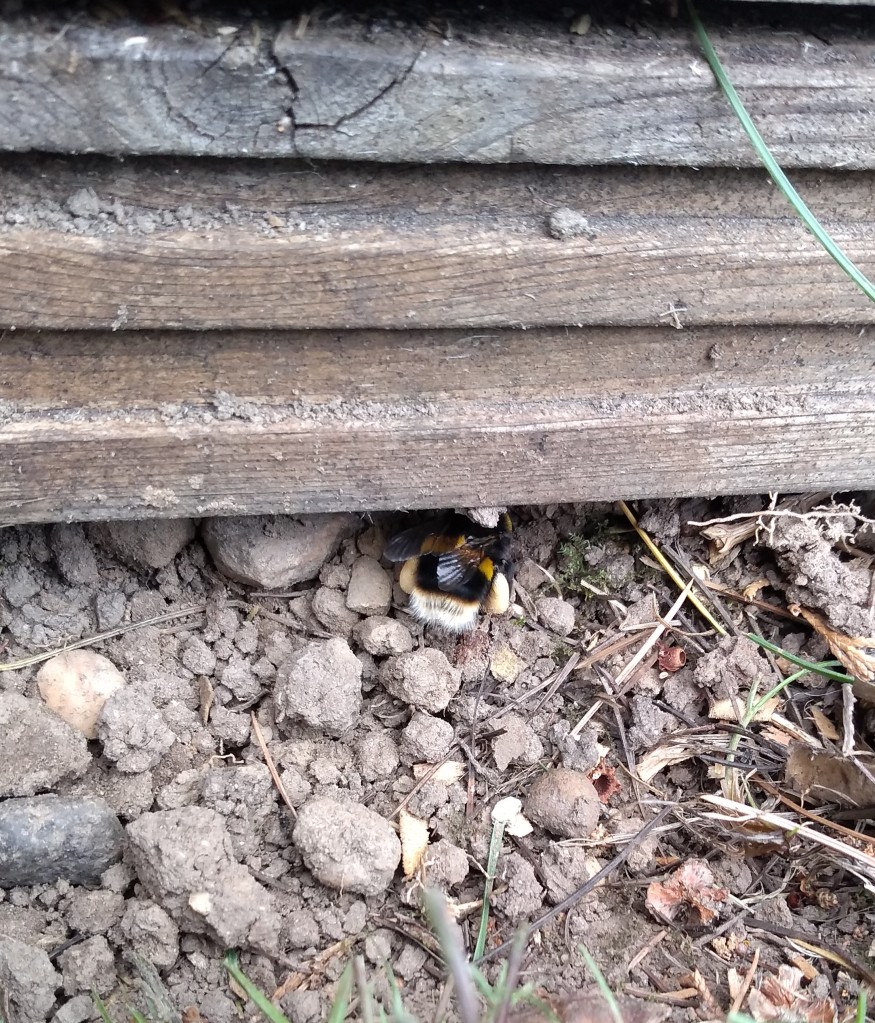
I noticed five Buff-tailed bumblebees coming and going from a nest under some decking in one garden.
Posted in nature

What a Difference a Month Makes

A month ago I had a weeks holiday. Signs of autumn were beginning to mingle with late summer. Now October is here autumn has definitely arrived.

As I had another week off I decided to revisit my local park, observing changes from a month ago.

In September Roesel’s bush crickets (Metrioptera roeselii) were chirping everywhere, butterflies were flitting about and some flowers still bloomed amongst the meadow (see Relaxing into Autumn).

Upon my return last Tuesday the only sounds I heard were birds singing and the meadow area had been cut and baled. Cobwebs were visible in the long dew dampened grass around the edges of the woodland too.

Hawkweed, Ragwort (Jacobaea vulgaris), Red clover (Trifolium pratense) and Yarrow (Achillea millefolium) were only just flowering still while the Ivy (Hedera) was in full bloom.

Ivy is fantastic for pollinators at this of year. I saw a few hoverflies flying to and from several flowers but the Honey bees (Apis mellifera), that were still active from the nearby hives would probably visit them too.

It was lovely to see dried seedheads of Wild carrot (Daucus carota)

and Cow parsley (Anthriscus sylvestris)

as I wondered around the park. They look beautiful but they are useful for insects to shelter in as well. In fact I noticed a ladybird snuggling amongst one of the Cow parsley seedheads. I also discovered field mushrooms (Agaricus campestris) growing amongst the grass.

Trees and shrubs were starting to show autumnal colours along with their ripe fruits. I found elderberries, sloe as well as haws on the Hawthorn (Crataegus monogyna) alongside Rosehips. However there were no longer any blackberries left on the brambles.

I noticed the leaves of one Horse chestnut tree (Aesculus hippocastanum) affected by the Horse chestnut leaf miner (Cameraria ohridella) moth.

Similarly there was evidence of caterpillars (most likely another moth) having been on a Silver maple (Acer saccharinum) tree.

The eggs and excrement are still visible on the nibbled leaves.

I ended my weeks holiday with a visit the Horniman museum in London.

On route to the train station I saw a Brown rat (Rattus norvegicus) running across a path. It attempted to cross the road until either the traffic or pedestrians scared it into fleeing towards a nearby hedge. Once I arrived in London I realised that I never see rats in the underground any more. I used to enjoy seeing them scurrying between the tracks. I have owned pet rats for many years so I find wild rats intriguing. I also like to watch Squirrels as rodents tend to act in similar ways to one another. After lunch I observed two Grey Squirrels (Sciurus carolinensis) scamper about.

The nearest squirrel had an acorn in its mouth and appeared to bury it in different places. I once saw a television programme on squirrels in which one was observed ‘pretending’ to bury a nut in several places while in the presence of other squirrels to avoid their stash being taken. Presumably this was occurring with the squirrels I was watching on Friday.

There is a butterfly house and aquarium at the Horniman museum. The butterflies were looking a little aged with their wings rather worn, however they were still beautiful. As soon as I entered the butterfly house a Malachite butterfly (Siproeta stelenes) landed on me which felt wonderfully welcoming.

The photo below shows a selection of the many butterflies I saw.

Feeding on the fruit are one Blue morpho (Morpho peleides), one Brown clipper (Parthenos Sylvia philippinensis), two Blue clipper (Parthenos Sylvia) and three Owl butterflies (Caligo memnon).

There were lots to see in the aquarium as well but my favourites were the White spotted jellyfish (Phyllorhiza punctata); watching them was so relaxing.

Even at the weekend nature was visible. As I ate breakfast on Saturday morning I heard and watched a group of Coal tits (Periparus ater) on the Rowan tree (Sorbus aucuparia) outside. I have never seen Coal tits on this tree before, I hope to see them again.

Another animal I became aware of last week was a Red fox (Vulpes vulpes). I first noticed it on my way home on Wednesday night and again on Sunday morning. It was making itself known on Saturday night too as it was being very vocal.

Posted in nature

Relaxing into Autumn

September is here. While meteorological autumn has already begun (1st) it won’t be long before astronomical autumn arrives (23rd) too.

I love this time of year; for me it’s the time for taking stock and starting new adventures (a feeling probably ingrained from my educational years). I particularly look forward to planning changes in the garden and start making Christmas presents at this point in the year. Plus Autumn is my favourite season, the fresher sunny mornings and the warm leaf colours.

Along with the signs of autumn (including Blackberries, Elderberries and Sloes ripening) I have noticed a change in how the days feel within the past few weeks.
As the school year begins I had a week off to relax after a long hectic summer.

At the start the week I decided to walk round the local woodland park. It was a warm, dry and sunny day on Monday. Once I entered the meadow area I was aware of a loud chorus amongst the uncut grass. Upon closer inspection I discovered the wonderful chirps were being made by lots of Roesel’s bush crickets (Metrioptera roeselii).

The flowers still blooming were; Hawkweed, Red clover (Trifolium pratense), Ragwort (Senecio jacobaea), Yarrow (Achillea millefolium) and Chicory (Cichorium intybus).

Lots of Honey bees (Apis mellifera) and several Small white butterflies (Pieris rapae) were flitting between the flowers especially the Chicory. The blue flowers of the Chicory really stood out in the sunshine.

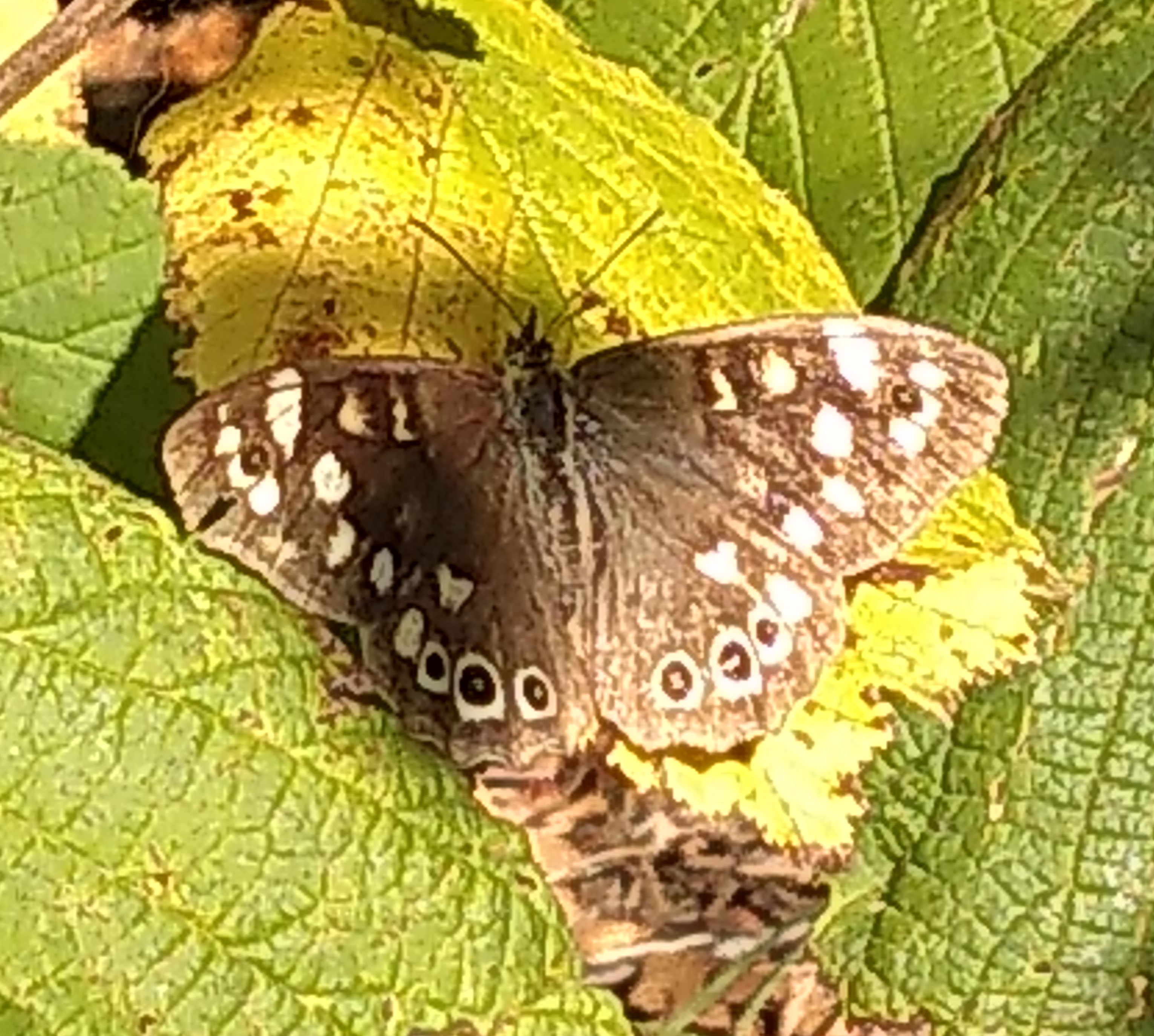
I even got to see a Speckled wood butterfly (Pararge aegeria) resting in the sun on the edge of the wood.

One thing came as a surprise as I wondered through this oasis of calm. It was fantastic to discover a notice about Skylarks (Alauda arvensis) nesting in area.

As they are on the Red list Bird of Conservation Concern it was nice to learn that they have made a home nearby.

Although I didn’t go away on holiday I planned to visit a few places before the weather turned. One place I finally visited was the Chelsea Physic Garden in London. Although it was later in the season there was still lots to see. Initially I looked round the glasshouses within the Tropical Corridor. There were lots of plants from around the world which required extra protection. I am a big fan of cacti so I liked seeing them planted naturally rather than in pots. There were lots of Pelargoniums as well. One whose leaves I particularly enjoyed smelling was Pelargonium ‘Chocolate peppermintwhich reminded me After Eights.
Within the same glasshouse I got so see a Common carder bee (Bombus pascuorum) enjoying the flowers of the Pelargonium quercifolium ‘Royal oak’.

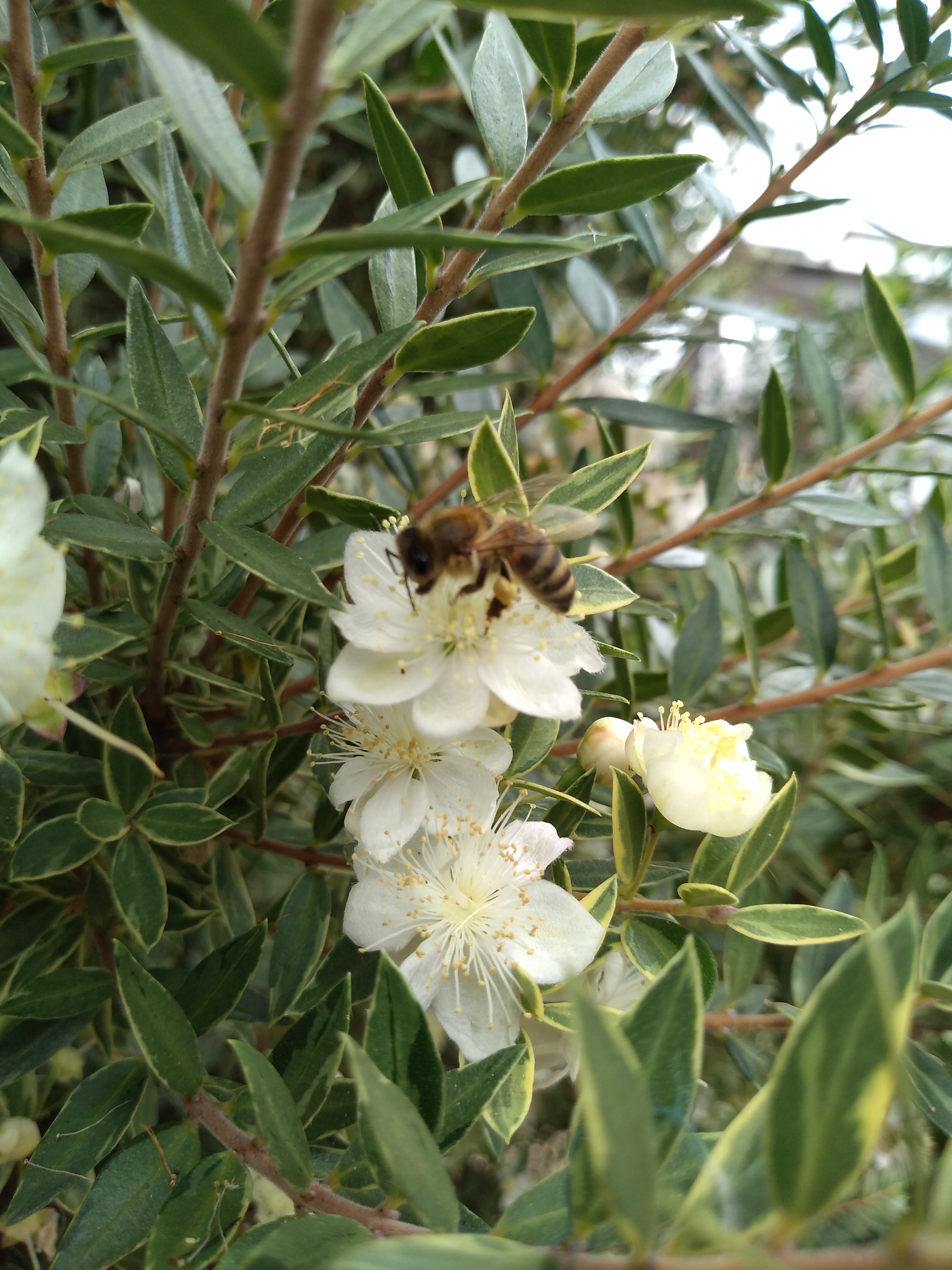
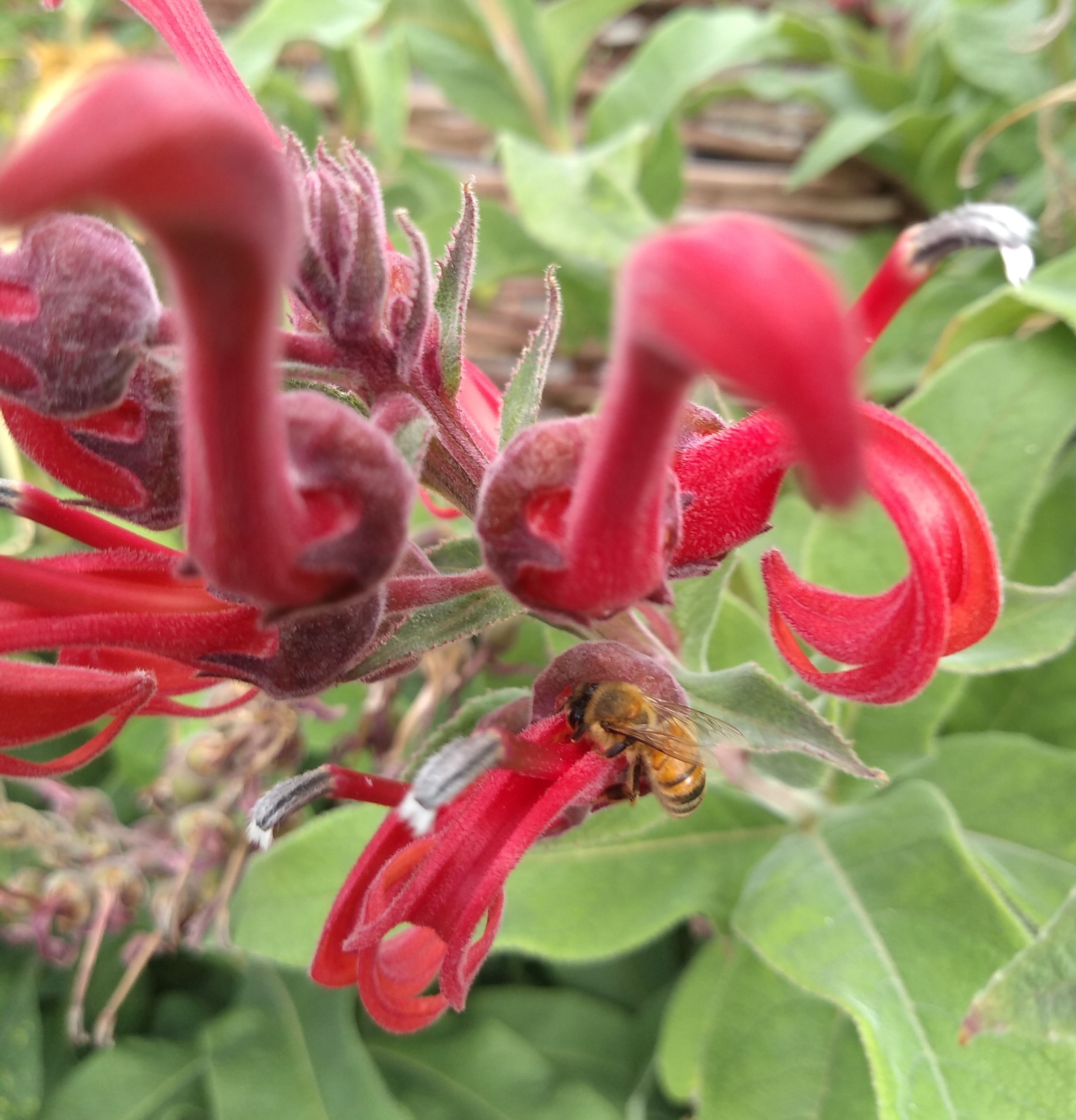
After the glasshouses I walked around the Garden of Medicinal plants. There were Honey bees buzzing around lots of plants in this section. I found them visiting a;
Myrtus communis var. tarentina ‘variegata

Lobelia tupa,

Salvia stachydifolia,

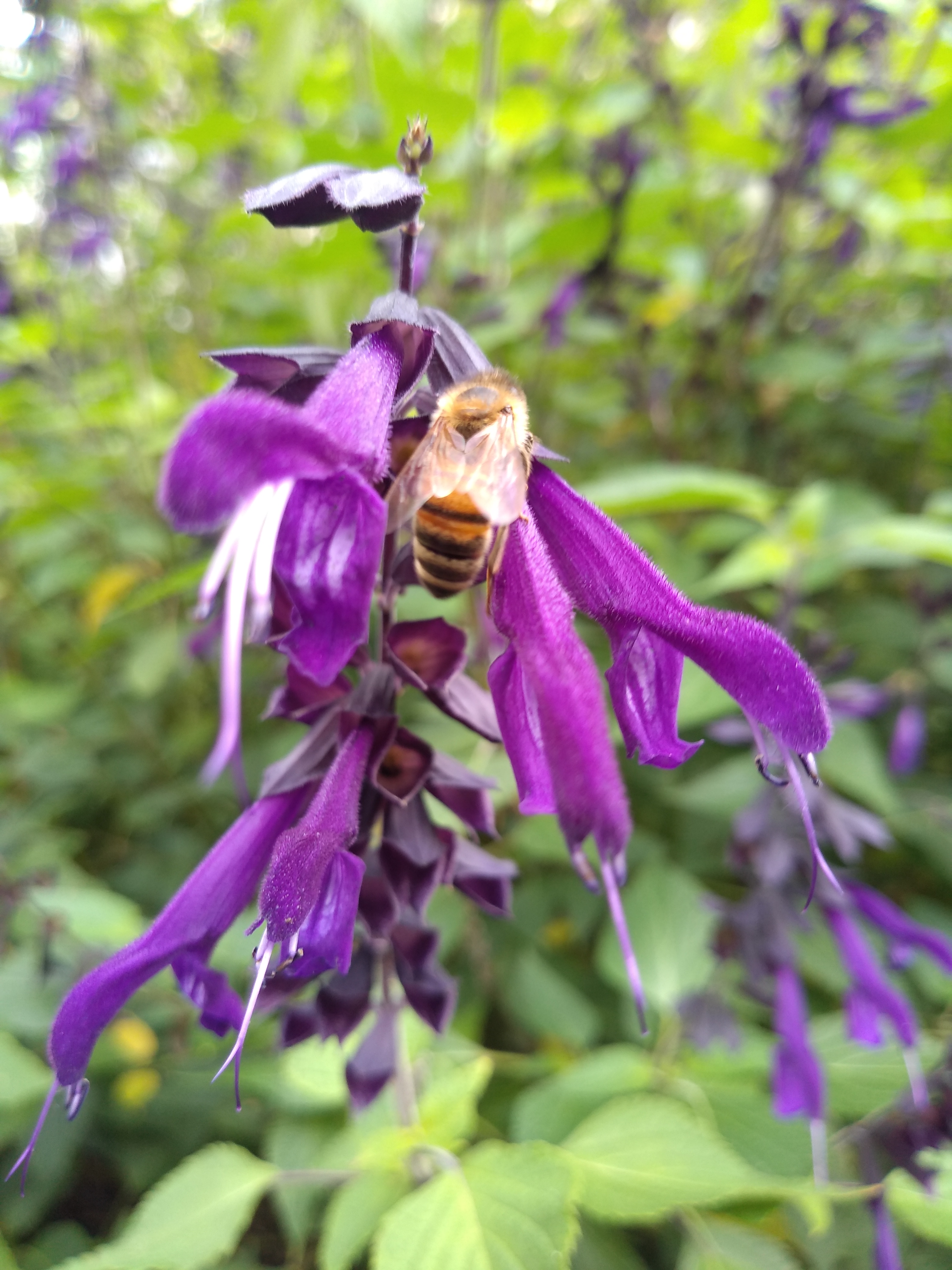
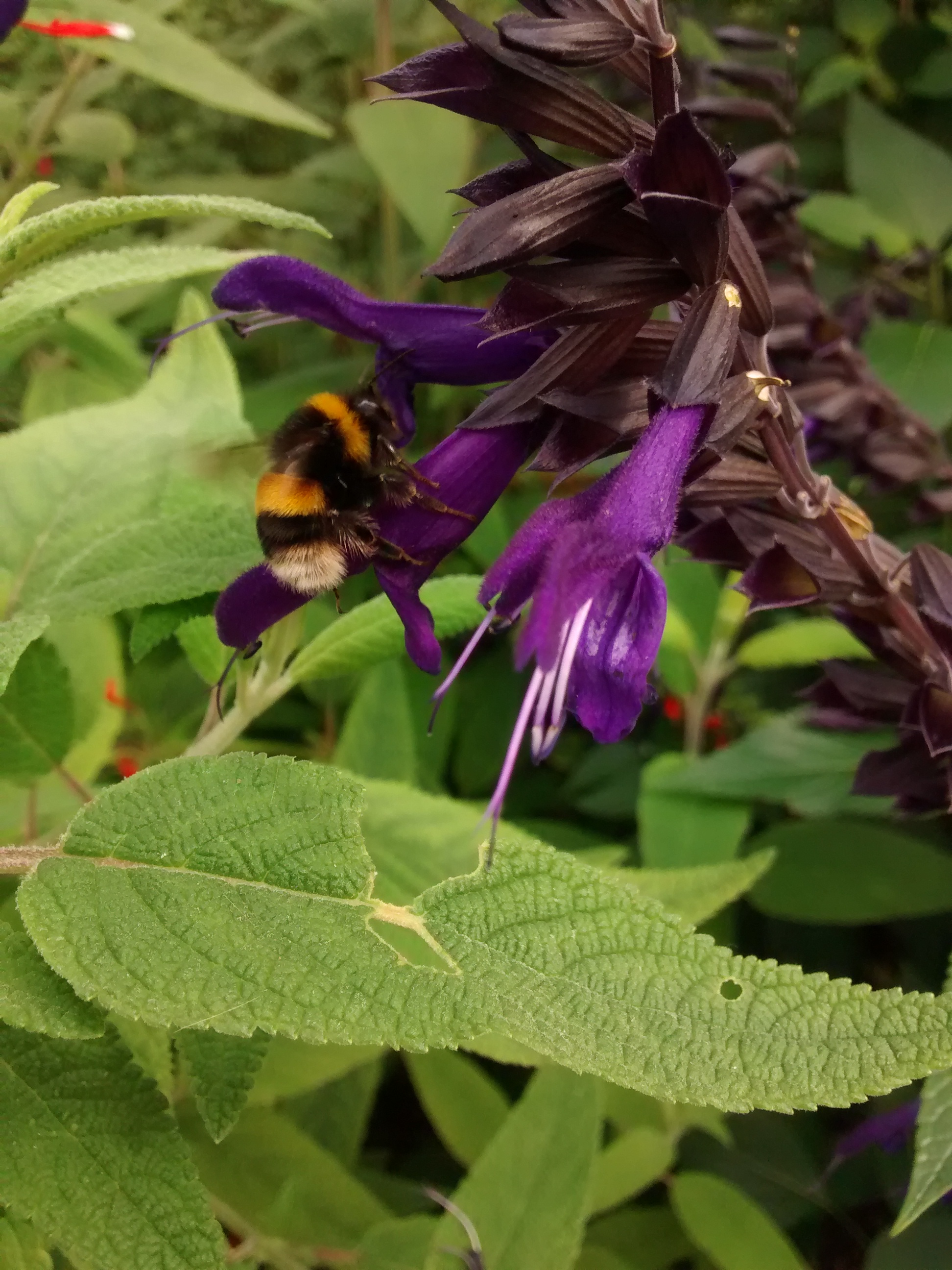
and a Salvia amistad; along with a Buff-tailed bumblebee (Bombus terrestris)

It was also lovely to watch some Dunnocks (Prunella modularis) as I ate lunch. Normally shy birds I usually only hear them sing in early spring, however these clearly weren’t bothered about us.

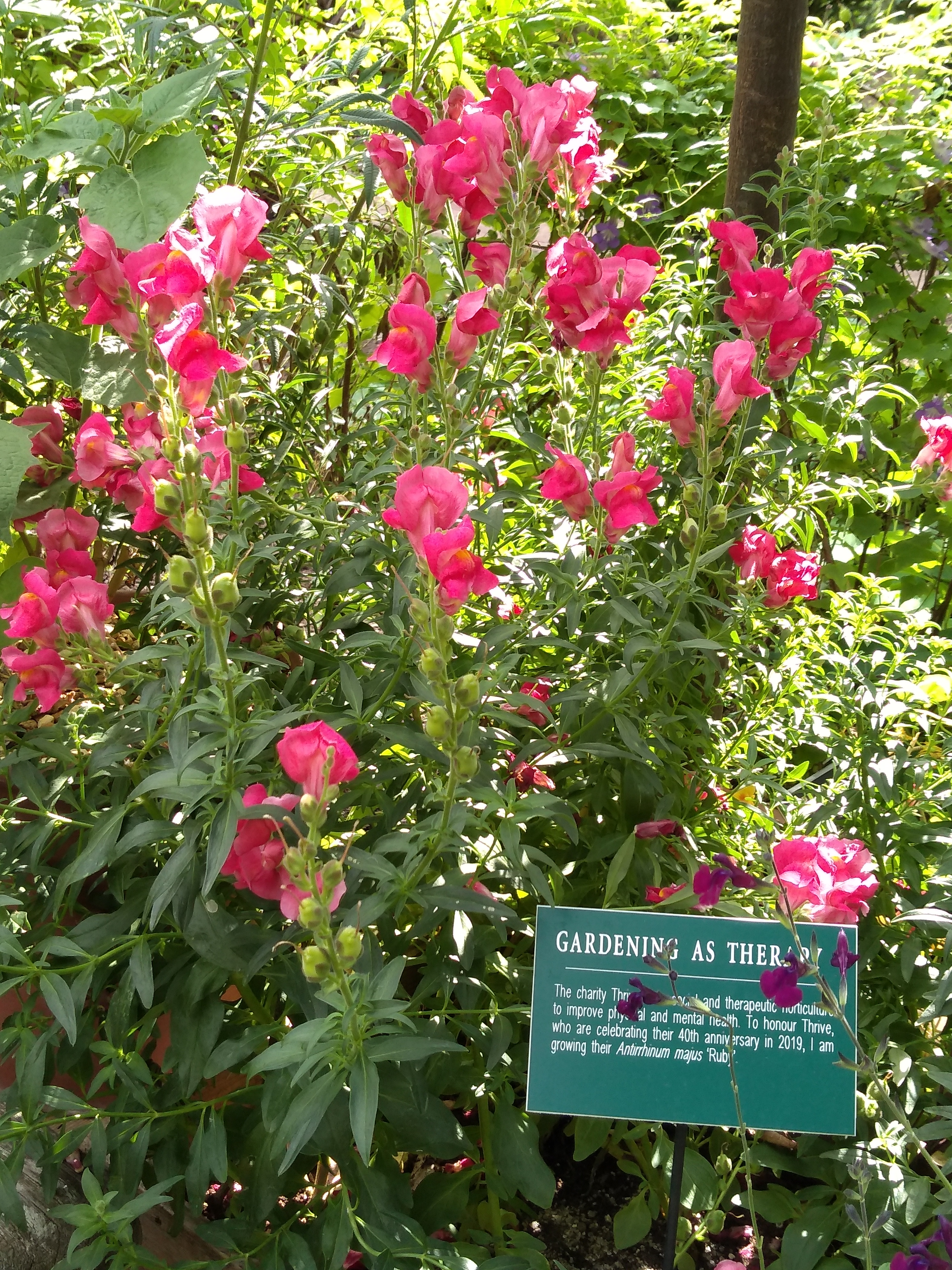
The next stop was to the Mental Wellbeing garden. I particularly enjoyed this small garden dedicated to improving mental health. It concentrated on the senses so there were plants you could feel, smell as well as view. Colour was important; along with soothing green foliage there were calming blues and purples along with joyful yellows and oranges. There was even a reference to garden therapy which is close to my heart along with a dedication to the charity Thrive. (See Thrive).

Wildlife can also have a positive affect on mental health so it was great to see insects in this space too. There was;
– an unidentifiable bumblebee investigating a Morning Glory (Ipomoea purpurea ‘Grandpa Ott’) flower covered in pollen.

– plus a Green aphid on a beautiful sweet pea (Lathyrus odoratus ‘Matucana’).

I continued to notice more insects as I kept walking around; starting with the Dicotyledon Order Beds, where I saw a Honey bee on a dahlia,

through to the Garden of Edible Plants. In the tea bed, which was near Fortune’s Tank Pond, a male Common darter dragonfly (Sympetrum striolatum) was resting on a metal teapot shaped frame holding up Nettles (Urtica dioica) inside. The nettles were meant to be there as nettle tea can be a diuretic.

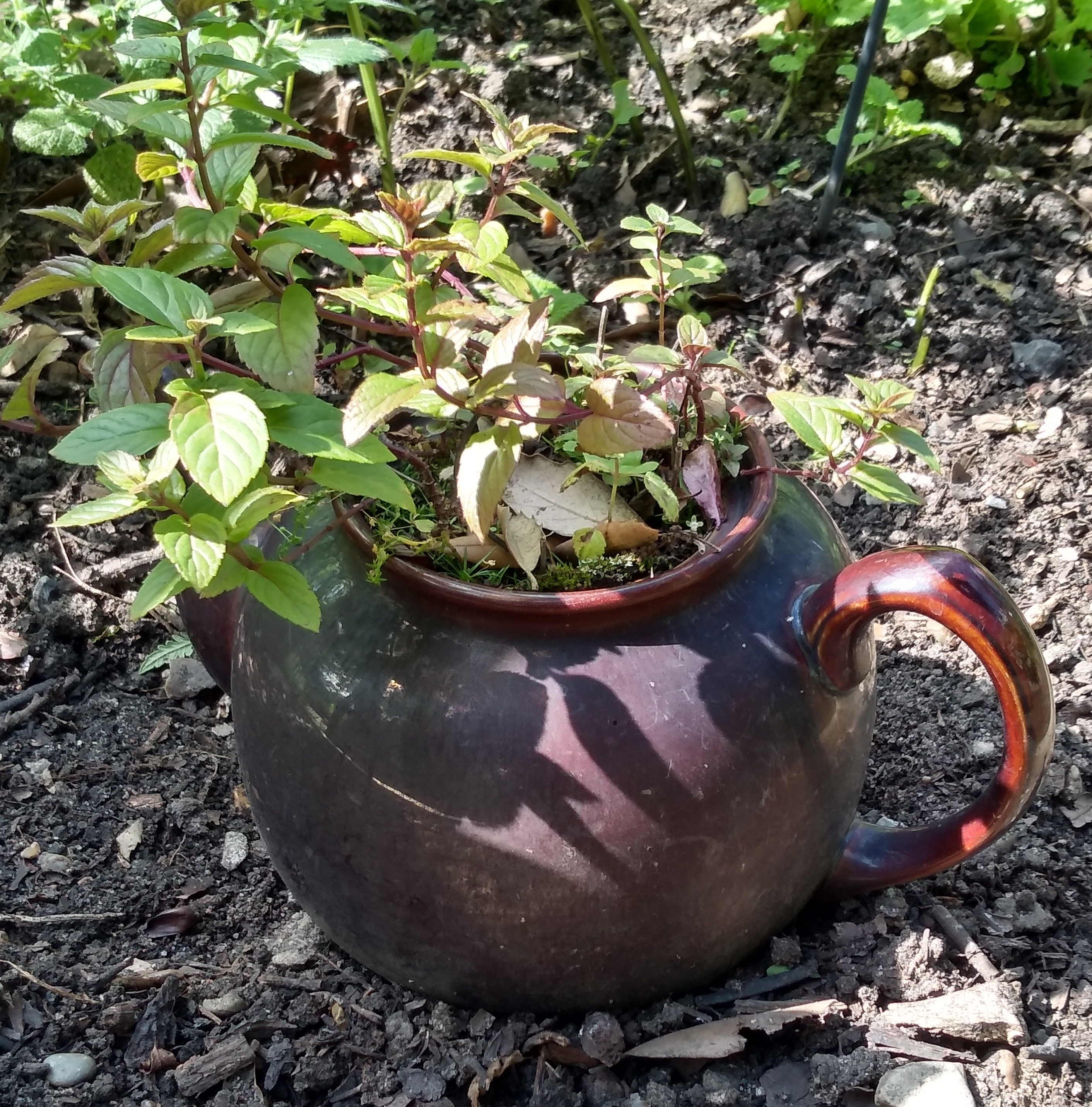
There were some interesting containers used as pots in this bed. Mint (Mentha) was growing in a teapot

and a tea plant (Camellia sinensis) was planted in a tea chest.

These unusual pots gave me some ideas for my own garden.

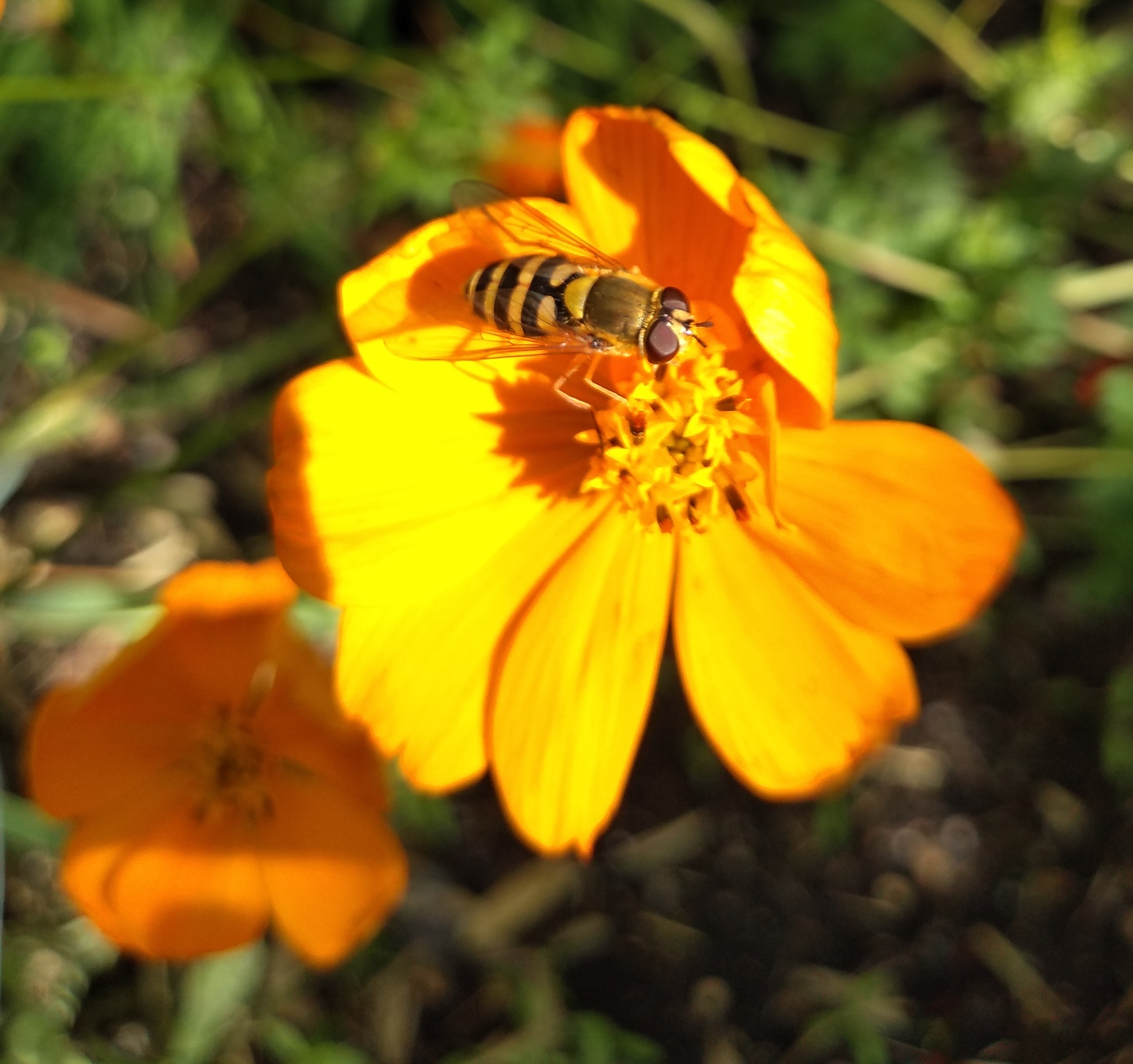
Another area I was very interested in seeing was the dyers bed. I would love to try colouring fabric or yarn with natural dyes so I wanted to see which plants were there. On the yellow cosmos (cosmos sulphureus) was a female Syrphus ribesii hoverfly.

The flowers of this Cosmos are used to create a yellow- orange dye. I think I may try dying with this plant if dye is amazing as the flowers.

I meandered further round the other sections of the garden ending in the community garden. Alongside edibles were wildflowers that can be used as herbal medicine.

I love this sign.

Along with plants such as Chamomile (Chamaemelum nobile) and evening primrose (Oenothera biennis) were Herb robert (Geranium robertianum) whose crushed
leaves can aid wound repair and the aroma believed to repel mosquitos. Another so called weed I found there was Plantain (Plantago major). When used as a soothing poultice the leaves
are useful for calming insect bites and inflammation.

I ended the week beside the sea in Hampshire. I always look for seaglass along beaches and Saturdays hunt was plentiful. The weather was lovely on Saturday; sunny and warm with a gentle breeze. Along with the soothing sound of the waves I could hear Herring gulls (Larus argentatus). This was the perfect end to my week off and the start of Autumn.

Posted in nature

The Very Hungry Caterpillar

The weather at the beginning of last week started nicely. Early on a sunny Monday morning I spotted seven Large white (Pieris brassicae) butterfly caterpillars on a Nasturtium (Tropaeolum) plant.
Used as a companion plant near brassicas this plant has been sacrificed to prevent the butterfly eggs being laid on the cabbages.

Unknown to me at the time, I also photographed some caterpillar faeces as well as an undeveloped egg on the leaf. I don’t remember the loved childhood picture book, The Very Hungry Caterpillar mention poo (although I’m sure children would have loved that addition to the story).

As with elsewhere in the country, the weather continued to be unsettled throughout the week. Tuesday was mostly overcast but the bees were still out foraging. As the lavender (Lavandula) was over lots of Honeybees (Apis mellifera) started visiting the Echinops bannaticus.

Later the same day I managed to see another Male Gatekeeper (Pyronia tithonus) butterfly too, this time visiting a Geranium.

Plus on Thursday I noticed a Holly blue (Celastrina argiolus) butterfly on some Verbena bonariensis. I haven’t seen Holly blue butterflies since spring, so that was nice.

Unfortunately on Wednesday I managed to disturb a Silver Y (Autographa gamma) moth.

Although this isn’t a great photo, it is clear enough to be able to identify the moth. I managed to identify it because of the shape and light colouring along with the unbroken y shaped silver marking on each forewing. This moth is a migrant, visiting from the continent. It can be seen here with the wings vibrating to warm up it’s flight muscles before flying off.

The week ended with a visit to the Royal Botanical Gardens, Kew on Saturday. There were some insects braving the stronger winds and the afternoon rain.

Amongst the Wildflower meadow surrounding The Hive experience the flowers still blooming were; Red Campion (Silene dioica), Red clover (Trifolium pratense), Ragwort (Senecio jacobaea), Yellow toadflax (Linaria vulgaris), Creeping buttercup (Ranunculus repens), Yarrow (Achillea millefolium), Flatweed (Hypochaeris radicata) and Wild marjoram (Origanum vulgare).

Yarrow and Yellow toadflax along the path.

A Volucella inanis Hoverfly visiting the Wild marjoram.

In the Agius Evolution Garden there were lots of bees visiting the Salvias as well as a Buff-tailed bumblebee (Bombus terrestris) on a hollyhock (Alcea)

and a Honey bee (Apis mellifera) visiting a Wallflower (Erysimum).

Posted in nature

Blooms, Bees and Bugs

There were lots of observations last week. As the weather continued to warm up further I saw even more bees and Seven-spot Ladybirds (Coccinella septempunctata).

I also noticed more wildflowers as I walked to work on Tuesday. This relaxed start to the day enabled me to observe;
– White Campion (Silene latifolia).

This flower is great for moths as the flower’s scent is obvious at night.

– Wood Avens (Geum urbanum)

– Cleavers (Galium aparine) with its tiny white flowers.

– Black medick (Medicago lupulina)

– and Annual honesty (Lunaria annua)

During my journey, I also heard a Coal Tit (Periparus ater) singing. Similar to the Great Tit’s (Parus major) song but faster and higher pitched, it is not a bird I hear often.

On Wednesday afternoon I observed lots of insects. Two that were camera shy were a Hawthorn Shield Bug (Acanthosoma haemorrhoidale) and Violet Ground Beetle (Carabus violaceus).

Other sightings which I managed to photograph were;

– Early Bumblebees (Bombus pratorum) on Rosemary
(Rosmarinus officinalis) and on Ajuga reptans ‘Atropurpurea’ (a cultivated variety of Bugle).

The Early Bumblebee is the UK’s smallest Bumblebee.

I also saw Rosemary Beetles (Chrysolina americana) on a few Rosemary plants.

This pest is beautiful when it glistens in the sun. Thankfully the amount I found didn’t warrant drastic intervention. The RHS is undertaking a survey to discover their advancement within the UK (see Royal Horticultural Society) so I uploaded my findings.

I also found an insect on some lavender (Lavandula) that I didn’t recognise.

This terrible photo is due to the constant movement of the plant in the breeze (it was the best one I managed to take). I only include it as a demonstration on the brilliance of the Natural History Museum. Occasionally I have difficulty in identifying my findings and at that point I rely on the Natural History Museum’s identification service. I was clutching at straws that they could see through the blurred image and be able to identify the bug. To my surprise they managed to tell me it was a Cinnamon bug (Corizus hyoscyami). If you ever need help identifying insects then I highly recommend this brilliant service (see Natural History Museum).

I saw yet more bees on Friday, including a Honey bee (Apis mellifera) on a Cornflower (Centaurea cyanus) plant

along with a
Buff-tailed bumblebee (Bombus terrestris) on Welsh poppy (Meconopsis cambrica)

Even yesterday, as I visited Shaw’s Corner (a lovely small National Trust house and garden) I noticed more wildlife;
-Common Bird’s-foot Trefoil (Lotus corniculatus)

-Red Clover (Trifolium pratense)

– and some wild Bugle (Ajuga Reptans) amongst the grass which had purposely been left long.

Plus I also noticed a Marmalade Hoverfly (Episyrphus balteatus) and a Tree bumblebee (Bombus hypnorum) on some Dog rose (Rosa canina)

as well as a Red-headed Cardinal Beetle (Pyrochroa serraticornis) balancing precariously on a blade of grass.