Posted in nature

Bring me Sunshine 🦋

The last few weeks have been opposites in terms of the weather. A wet previous week turned into the hottest of the year so far (with no relief overnight). Although too hot for my comfort, it was perfect weather for butterflies, and a great start for the Big Butterfly Count. Finally I was beginning to witness an increase in the amount of butterflies. I was getting worried this years reduction in butterfly sightings (due to the cold spring and wet summer experienced in 2021 up to this point) would continue. However by the end of the first week, I saw a Speckled wood (Pararge aegeria) and a Brimstone (Gonepteryx rhamni). Then, while on a walk around my local woodland park (early on the following, sunny and very warm, Sunday morning) I witnessed lots of butterflies making the most of the sunshine.

In one open area of the park, the grass had been allowed to grow, with many species of wildflower blooming amongst it. One of the plants I saw was Common centuary (Centaurium erythraea) which blooms between May and October. Overshadowed by the other wildflowers and grasses, initially this shorter plant was difficult to spot; in fact had it not been next to a mown walkway, I may not have seen it. Thankfully it’s pink and yellow colouration stood out enough, from the more muted colours surrounding it, as I wondered past trying to identify butterflies.

Common centuary represents delicacy and felicity in the Victorian Language of Flowers.

This plant is found in a many places, from heathlands and woodlands to cliff tops and quarries. A natural meteorologist, the flower closes when the weather is dull and damp to reopen once the weather brightens up. While I’m not sure this is a practical weather indicator to use (when a simple observation of the sky, in that moment, will give you the information you require) it’s a pretty cool reaction to weather conditions.

There were many butterflies flitting about on that Sunday morning. Most prominent were Gatekeepers (Pyronia tithonus), Small skippers (Thymelicus sylvestris)
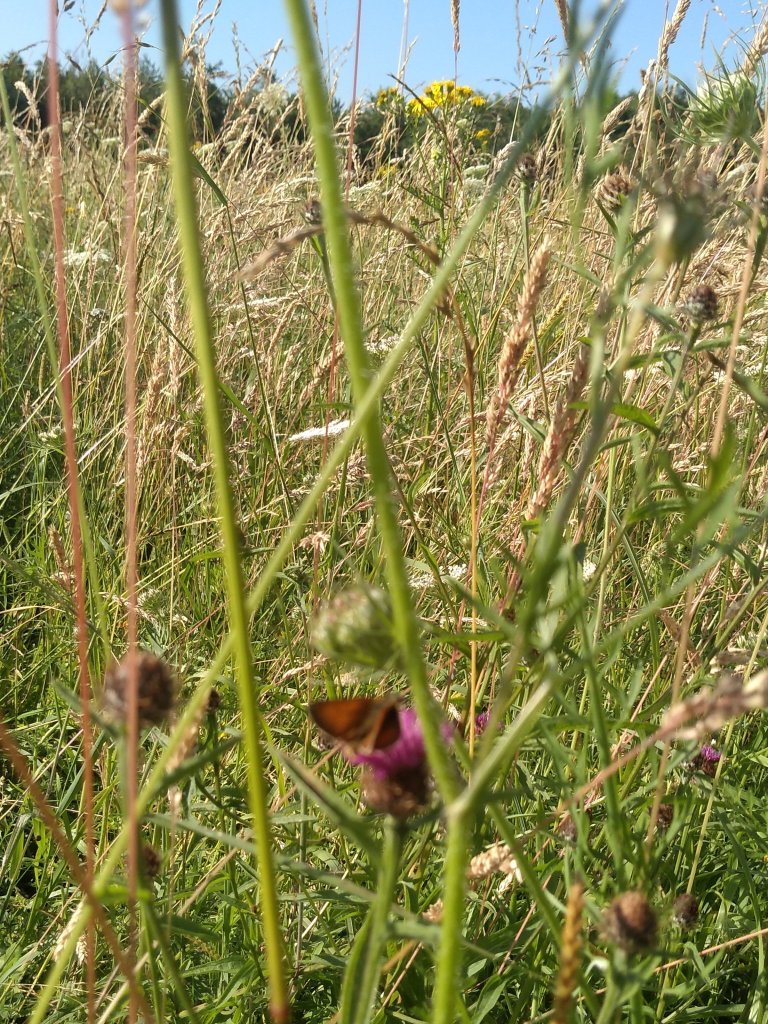
A small skipper visiting some Knapweed (Centaurea).

and Small heath (Coenonympha pamphilus) butterflies; probably due to the grass being allowed to grow fully. All these species of butterfly are associated with grassland and their caterpillars feed on grasses.
Marbled white (Melanargia galathea) caterpillars also feed on grasses while the adults feed on many purple coloured flowers, including knapweeds; so it was lovely to see one of these butterflies flying around the meadow too.

Another plant that was growing amongst the long grass was Ragwort (Jacobaea vulgaris). This is a favourite nectar source of the Gatekeeper butterfly, along with other plants including Bramble (Rubus fruticosus), Wild marjoram (Origanum vulgare) and Wood sage (Teucrium scorodonia).

Ragwort is great for many pollinators, including these Small heath butterflies.

I also got to see another insect with a strong connection to Ragwort, a caterpillar of the day flying moth, the Cinnabar (Tyria jacobaeae).

This wasn’t the only caterpillar I noticed. Earlier in the week, I saw a caterpillar of the Knot grass moth (Acronicta rumicis), seen below on a bramble leaf.

This caterpillar will be part of this years second brood, the adults of which appear in August and September. The Caterpillars have a varied diet, eating a wide range of herbaceous plants; this one clearly eating out (and pooping on) bramble. The photo of the adult moth can be seen at Uk Moths.

Posted in nature

What a Difference a Month Makes

A month ago I had a weeks holiday. Signs of autumn were beginning to mingle with late summer. Now October is here autumn has definitely arrived.

As I had another week off I decided to revisit my local park, observing changes from a month ago.

In September Roesel’s bush crickets (Metrioptera roeselii) were chirping everywhere, butterflies were flitting about and some flowers still bloomed amongst the meadow (see Relaxing into Autumn).

Upon my return last Tuesday the only sounds I heard were birds singing and the meadow area had been cut and baled. Cobwebs were visible in the long dew dampened grass around the edges of the woodland too.

Hawkweed, Ragwort (Jacobaea vulgaris), Red clover (Trifolium pratense) and Yarrow (Achillea millefolium) were only just flowering still while the Ivy (Hedera) was in full bloom.

Ivy is fantastic for pollinators at this of year. I saw a few hoverflies flying to and from several flowers but the Honey bees (Apis mellifera), that were still active from the nearby hives would probably visit them too.

It was lovely to see dried seedheads of Wild carrot (Daucus carota)

and Cow parsley (Anthriscus sylvestris)

as I wondered around the park. They look beautiful but they are useful for insects to shelter in as well. In fact I noticed a ladybird snuggling amongst one of the Cow parsley seedheads. I also discovered field mushrooms (Agaricus campestris) growing amongst the grass.
Trees and shrubs were starting to show autumnal colours along with their ripe fruits. I found elderberries, sloe as well as haws on the Hawthorn (Crataegus monogyna) alongside Rosehips. However there were no longer any blackberries left on the brambles.

I noticed the leaves of one Horse chestnut tree (Aesculus hippocastanum) affected by the Horse chestnut leaf miner (Cameraria ohridella) moth.

Similarly there was evidence of caterpillars (most likely another moth) having been on a Silver maple (Acer saccharinum) tree.

The eggs and excrement are still visible on the nibbled leaves.

I ended my weeks holiday with a visit the Horniman museum in London.

On route to the train station I saw a Brown rat (Rattus norvegicus) running across a path. It attempted to cross the road until either the traffic or pedestrians scared it into fleeing towards a nearby hedge. Once I arrived in London I realised that I never see rats in the underground any more. I used to enjoy seeing them scurrying between the tracks. I have owned pet rats for many years so I find wild rats intriguing. I also like to watch Squirrels as rodents tend to act in similar ways to one another. After lunch I observed two Grey Squirrels (Sciurus carolinensis) scamper about.

The nearest squirrel had an acorn in its mouth and appeared to bury it in different places. I once saw a television programme on squirrels in which one was observed ‘pretending’ to bury a nut in several places while in the presence of other squirrels to avoid their stash being taken. Presumably this was occurring with the squirrels I was watching on Friday.

There is a butterfly house and aquarium at the Horniman museum. The butterflies were looking a little aged with their wings rather worn, however they were still beautiful. As soon as I entered the butterfly house a Malachite butterfly (Siproeta stelenes) landed on me which felt wonderfully welcoming.

The photo below shows a selection of the many butterflies I saw.

Feeding on the fruit are one Blue morpho (Morpho peleides), one Brown clipper (Parthenos Sylvia philippinensis), two Blue clipper (Parthenos Sylvia) and three Owl butterflies (Caligo memnon).

There were lots to see in the aquarium as well but my favourites were the White spotted jellyfish (Phyllorhiza punctata); watching them was so relaxing.

Even at the weekend nature was visible. As I ate breakfast on Saturday morning I heard and watched a group of Coal tits (Periparus ater) on the Rowan tree (Sorbus aucuparia) outside. I have never seen Coal tits on this tree before, I hope to see them again.

Another animal I became aware of last week was a Red fox (Vulpes vulpes). I first noticed it on my way home on Wednesday night and again on Sunday morning. It was making itself known on Saturday night too as it was being very vocal.

Posted in nature

Amphibians and Insects

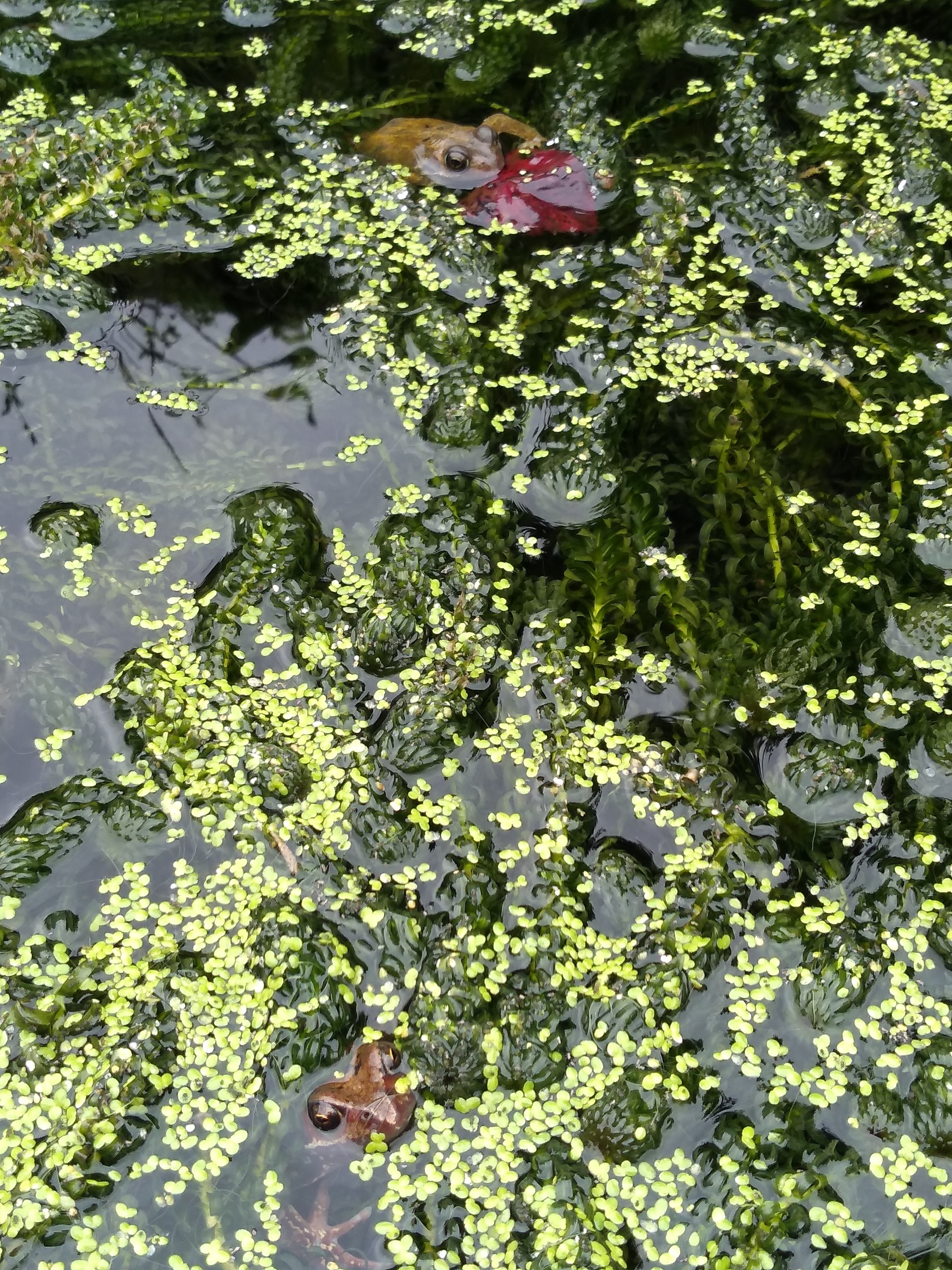
My week started and ended working next to ponds. The first was a small natural pond with a couple of frogs (Rana temporaria) sitting in it.

The other was a large disused outdoor swimming pool. In its neglected state rainwater collects within the concrete walls and nature is taking over. Given the murkiness of the water I was unable to obtain decent photos of my findings; however I saw another frog, (surrounded by lots and lots of tadpoles) along with a dragonfly nymph and a newt. It should be interesting to discover how many tadpoles survive to adulthood.

For the rest of the week insects were centre stage, especially on Wednesday when flying ants took to the sky. Flying ant season really tests my resolve to work through my dislike of ants (which originated in childhood). Thankfully I now find them more fascinating than loathsome, mostly.

The other insects I saw that day were;
– A (Chrysotoxum cautum) hoverfly on some Pyracantha.

– Honey bees (Apis mellifera) and a Red-tailed bumblebee (Bombus lapidarius) visiting a Geranium ‘Rozanne’ plant.

– Lavender (Lavandula) full of bees and butterflies, including more Honey bees as well as Buff-tailed bumblebees (Bombus terrestris), Meadow browns (Maniola jurtina) and a Ringlet (Aphantopus hyperantus) butterfly.

The Meadow brown butterflies also enjoyed visiting the Echinops bannaticus flowers too.

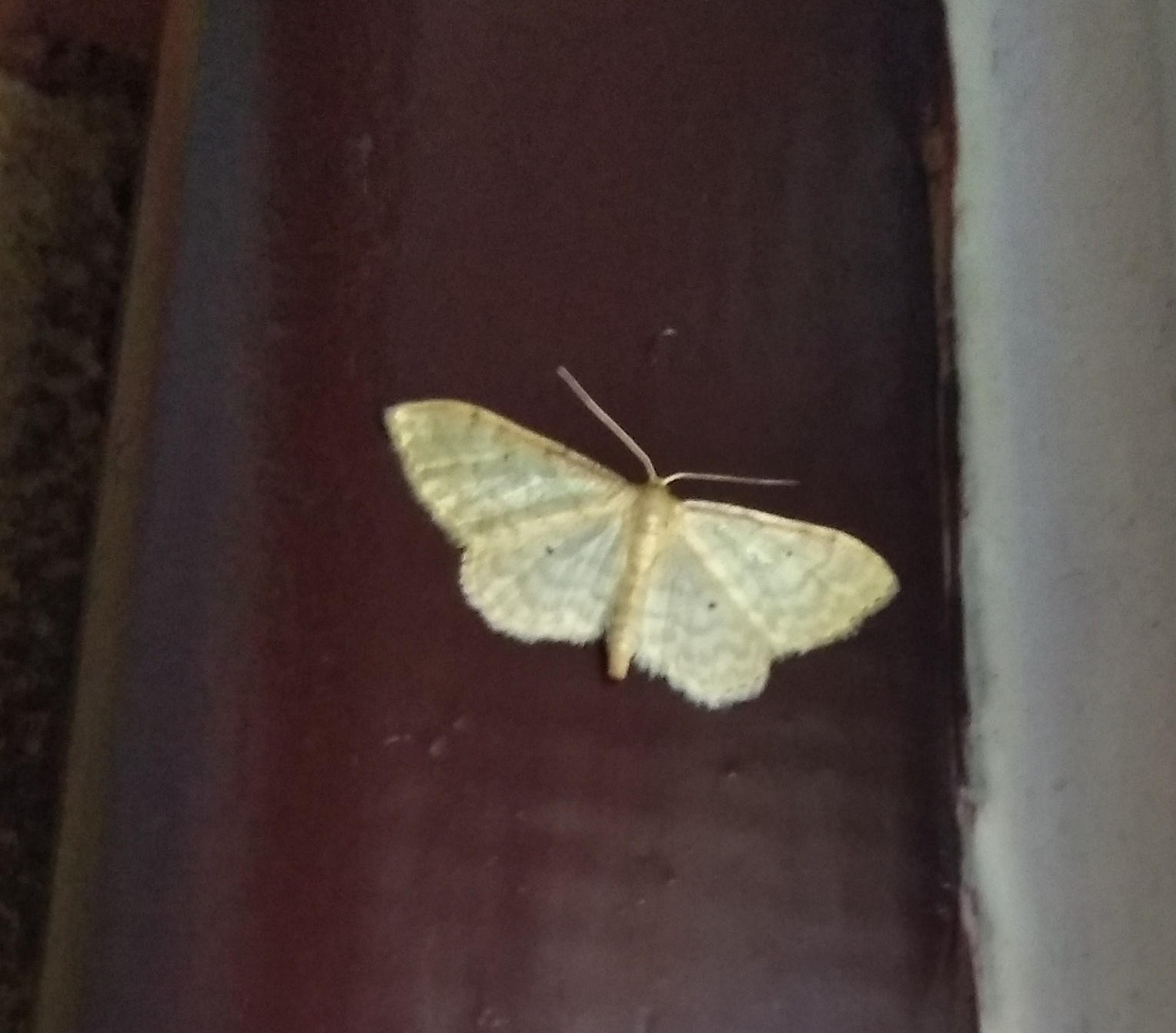
Even as I returned home I noticed a Willow Beauty (Peribatodes rhomboidaria) moth on the hall window.

The adults feed on Creeping thistle (Cirsium arvense) and Ragwort (Senecio jacobaea) both of these plants are common around this area. The caterpillars feed on various trees, shrubs as well as climbers ranging from Yew (Taxus baccata), Birch (Betula), ivy (Hedera helix), honeysuckle (Lonicera) and the wild Clematis, Traveller’s joy (Clematis vitalba).

The previous day I came across more insects that I was previously unaware of.

The first one was the Common red soldier beetle (Rhagonycha fulva).

It is a beneficial insect as adults eat aphids and are pollinators (feeding on nectar and pollen from open flat flowers such daisies and hogweed) while the larvae feed on slugs and snails along with other ground dwelling invertebrates.

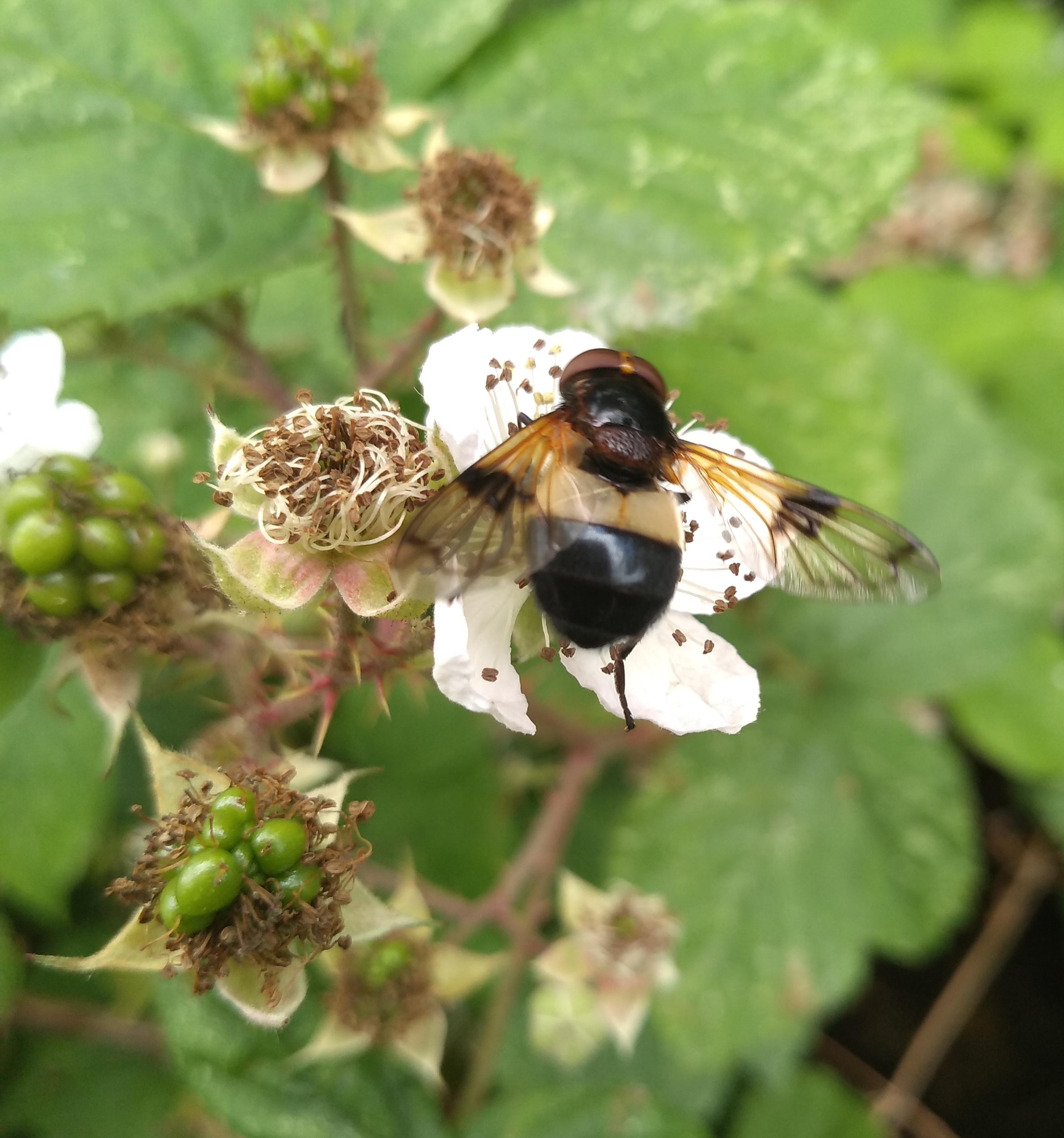
The other insect I saw on Tuesday was a female Volucella pellucens hoverfly feeding on nectar and pollen from Bramble (Rubus fruticosus).

These hoverflies also pollinate umbellifers; However as larvae they inhabit Bumblebee and wasp nests eating any waste produced along with their hosts larvae.

Posted in nature

Reflecting on a Blooming Lovely Week

I am watching Wimbledon while eating lovely sweet strawberries. The window is open so I can hear the birds singing outside; thankfully the temperature has dropped and it is feeling fresher now. It is a lovely summers day to reflect upon the things I saw last week. More flowers blooming along the roadside include Hedge bindweed (Calystegia sepium) Creeping thistles (Cirsium arvense), Spear thistle (Cirsium vulgare), Field Scabious (Knautia arvensis), Ragwort (Senecio jacobaea) and Rosebay willowherb (Chamerion angustifolium). Creeping thistle seeds are a great food source for birds that make their home on farmland, while Spear thistle seeds are good for Goldfinch (Carduelis carduelis) and the nectar enjoyed by the Small copper (Lycaena phlaeas) butterfly. Ragwort (considered harmful to horses and livestock) is great for bees and the Cinnabar moth (Tyria jacobaeae) caterpillars. Even the Field Scabious is a useful food source for bees and butterflies.

Now that July has arrived, my butterfly and moth observations have increased. I have seen,

– A couple of Double-striped Pug (Gymnoscelis rufifasciata) moths

– Broad-bordered yellow Underwing (Noctua fimbriata) moth

– Least Carpet (Idaea rusticata) moth

– Plain Wave (Idaea straminata) moth

– Two Large yellow underwing (Noctua pronuba) moths

– Along with several that were photo shy including a White Plume (Pterophorus pentadactyla) moth and a couple of Large white (Pieris brassicae) butterflies, three female and one male Meadow brown (Maniola jurtina) butterflies, a Comma (Polygonia c-album) butterfly near a patch of nettles (which are great food for their caterpillars) as well as two Large tortoisehell (Nymphalis polychloros) butterflies. Other butterflies I saw were,

– A Ringlet (Aphantopus hyperantus) butterfly

– Small tortoisehell (Aglais urticae) butterfly on Verbena bonariensis

– Red admiral (Vanessa atalanta) butterfly on wall by Climbing Hydrangea (Hydrangea anomala subsp. petiolaris)

These weren’t the only insects I noticed throughout the past week as I also saw,

– Two immature male Large red damselflies (Pyrrhosoma nymphula)

– Two Azure damselflies (Coenagrion puella) on Water lily (Nymphaeaceae)

– One Harlequin ladybird (Harmonia axyridis) on a Red valerian (Centranthus ruber) leaf.

– Honey bees (Apis mellifera) on an Eryngium bourgatii

-Lots of Honey bees and hoverflies (Syrphidae) on lavender (Lavandula) which is in full bloom.

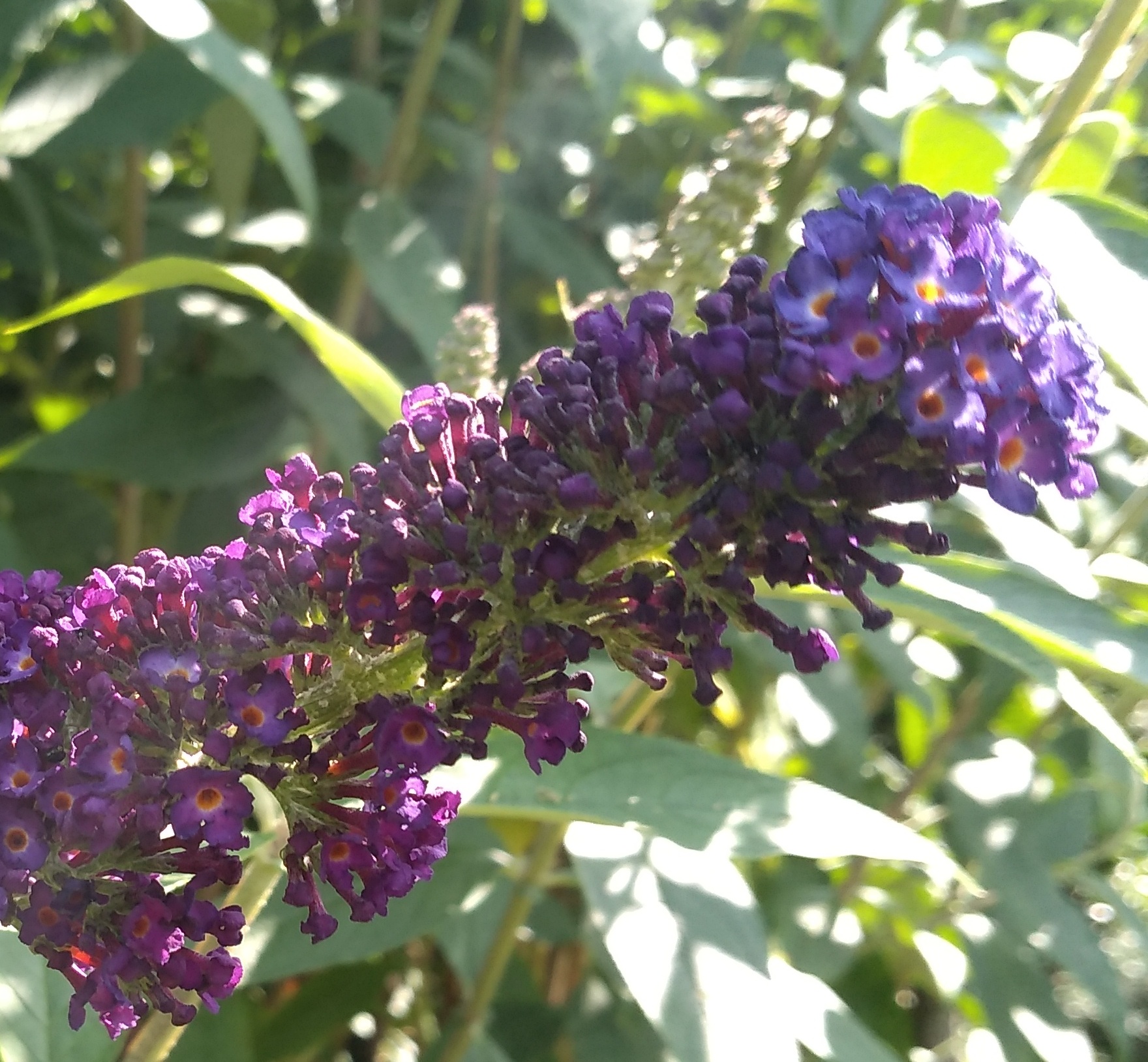
I am keeping my eye on a large mature Butterfly bush Buddleja davidii ‘Black Knight’ that is starting to flower. A few years ago I took some cuttings from this Buddleja and successfully grew one of my own. My Buddleja is only about a foot tall but it will be flowering soon. I look forward to seeing visitors arrive on both shrubs.

Lastly I couldn’t resist adding a few photos of some Cornflower (Centaurea cyanus) someone had planted in their vegetable patch. While I didn’t see any insects visiting it my attention was drawn to the cheery vivid blue flowers, they were so beautiful.