Posted in Allotment, nature

I’m Yellow and Black but not a Bee; What am I?

Cooler temperatures and very wet weather meant that insect observations were few and far between last week.

In sunnier moments, bees were still visible but I haven’t noticed many moths, butterflies or ladybirds recently; I do hope that changes soon.

However there were a few momentous insect observations last week. I discovered a Mining bee nest on the allotment. As there was an Ashy mining bee (Andrena cineraria) on the plot last year then it could be evidence of another one making its home there.

The other insect, one I got to learn about later in the week, was a stunning parasitic wasp; possibly an Amblyteles armatorius (however identification is difficult to be completely certain).

If it was an Amblyteles armatorius then it’s hosts can be several species of moth caterpillar, such as the Yellow Underwing (Noctua pronuba).

The yellow and black parasitic wasp was 15mm in length (antennae included) and is often seen in June; although there is a second generation later in the year too. Adults can be noticed feeding on pollen from plants with umbellifer flowers such as Cow parsley (Anthriscus sylvestris) or Hogweed (Heracleum sphondylium). There was Lovage (Levisticum officinale) in flower in the garden where the parasitic wasp was noticed, so perhaps it had visited that before flying off to find another plant.

Posted in Allotment, nature

Spectacular Sighting

Last week began with me spotting a Grey heron (Ardea cinerea), presumably trying to catch fish while standing in the local river, as I walked passed to the first job of the day.

Yet the rest of the week remained fairly quiet until Friday morning arrived.

This is when I saw a Swallow tail (Ourapteryx sambucaria) moth.

As the moth ages it’s cream coloured wings lighten.

This one had been disturbed because they are night flying moths. The caterpillars overwinter in tree bark, and feed on Broadleaf trees such as Hawthorn (Crataegus monogyna) and Horse Chestnut (Aesculus hippocastanum) along with Ivy (Hedera helix).

Afterwards, at my allotment on Saturday I noticed a Parasitic wasp (Hymenoptera) on my Echinacea purpura PowWow wild berry, although I’m not sure which one.

There are 40 families of parasitic wasp in the UK and Ireland, from which 6,500 species have been recorded. I am pretty convinced that the one I saw wasn’t the Braconid Dinocampus coccinellae which causes the host, a dead Seven-spot ladybird (Coccinella septempunctata), to remain in situ over the wasp’s pupa cocoon as protection until it hatches. Nor does it appear to be Cotesia glomerata. This parasitic wasp lays it’s young in Large white (Pieris brassicae) caterpillars which dies as the young develops. Once they emerge they cocoon themselves beneath the caterpillar until they finally transform into adult wasps. I have Seven-spot ladybirds as well as Large white caterpillars at my plot but neither appear to be affected. Interestingly parasitic wasps can become hosts themselves. The parasitic wasps of parasitic wasps are called hyperparasoids.

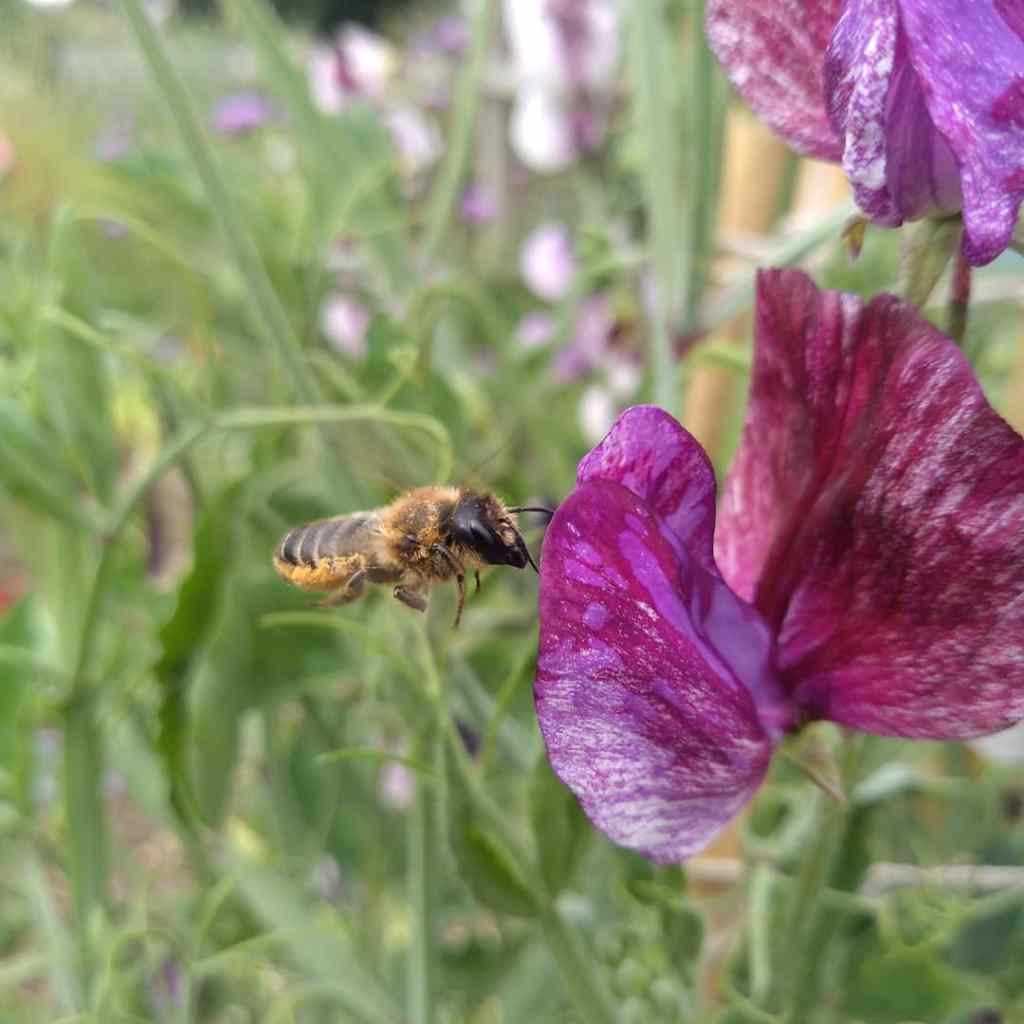
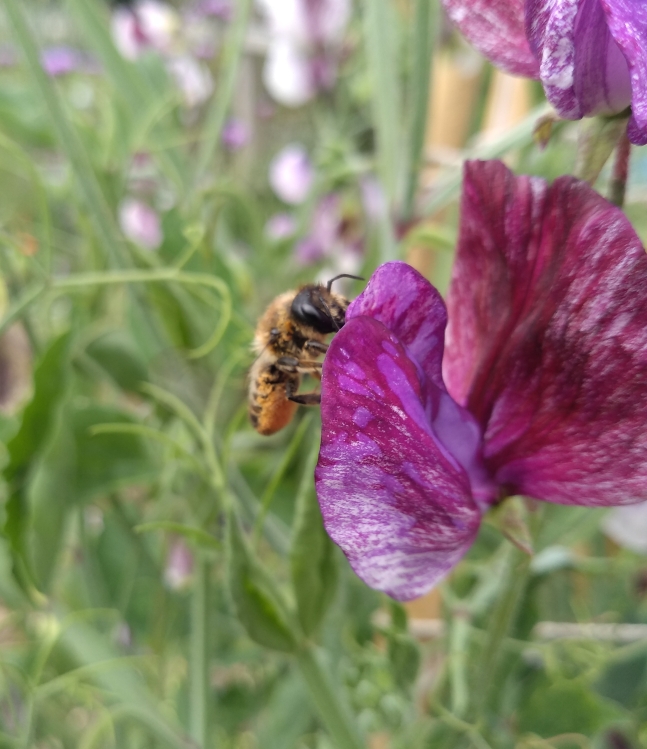
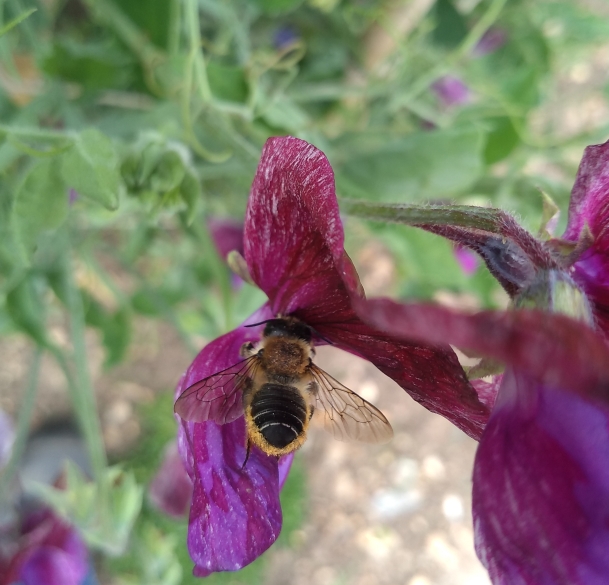
However this wasn’t the highlight of my week. Also at the allotment on Saturday I finally got to see a Leaf-cutter bee. I was so excited to see this spectacular sighting but had to stay quiet and still while I attempted to capture a photo of it.

There are different Leaf-cutter bees in the UK but the one I saw was a Patchwork Leaf-cutter (Megachile centuncularis) bee. It was visiting my sweetpeas, collecting pollen and nectar for her young. The orange pollen brush underneath the abdomen clearly identifying it as a female of this species. The only thing left on my must see list, when it comes to Leaf-cutter bees, is to see one carrying a piece of leaf and also a nest. I do have a bee hotel on the allotment so here’s hoping.