Posted in nature

Even Nature Turned Blue for the NHS.

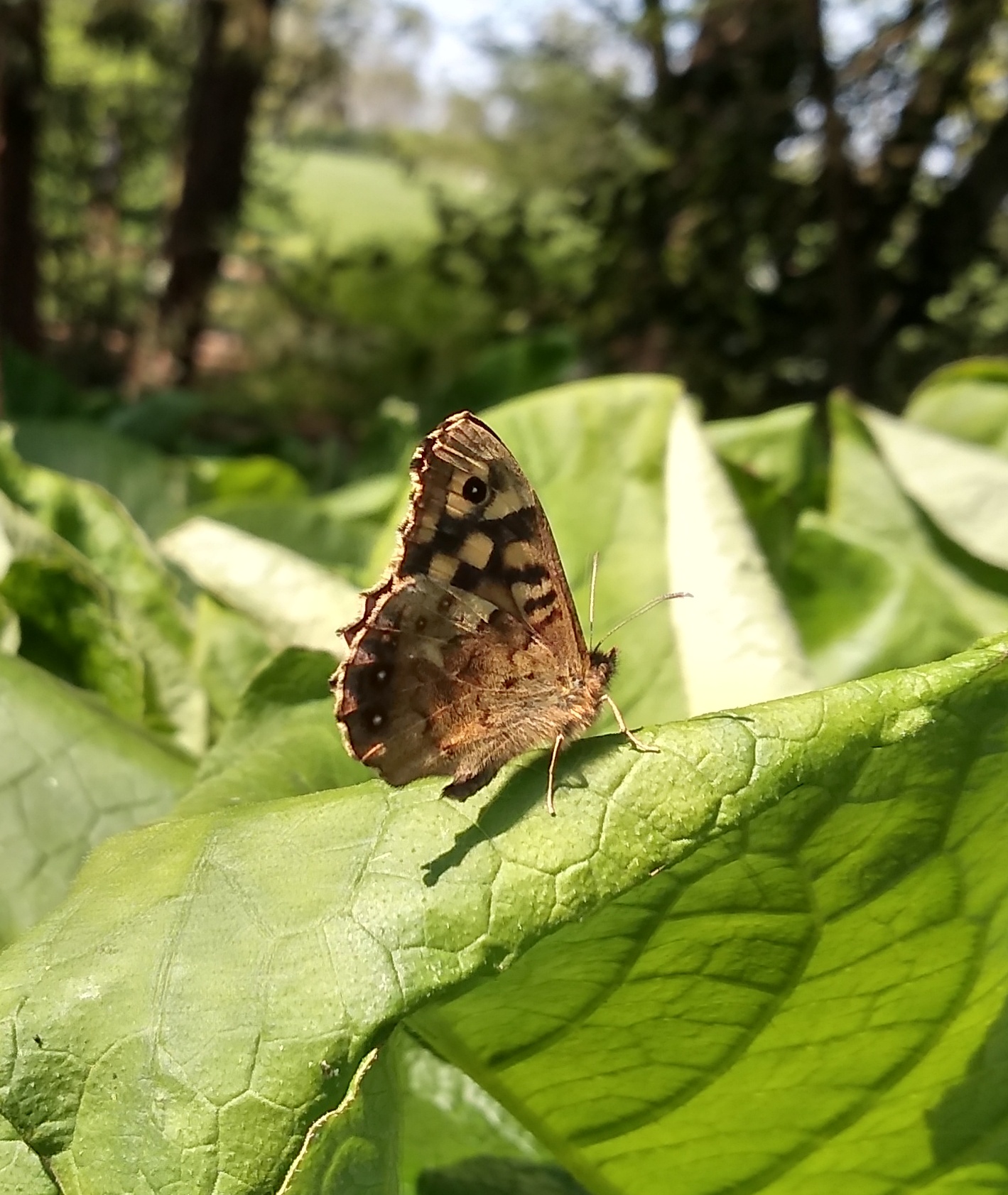
While flowers dominated my thoughts last week, there were moments when I enjoyed observing bees and butterflies too. I saw my first male Orange-tip butterfly (Anthocharis cardamines) and female Red-tailed bumblebee (Bombus lapidarius) of the season; both visiting Dandelions (Taraxacum officinale). Other butterflies I noticed were more Speckled woods (Pararge aegeria) and Peacocks (Aglais io). All were too busy making the most of the sun to remain still long enough for me to photograph them.

After threatening to rain last Sunday, with distant thunder in the afternoon and evening, wet weather eventually arrived the following weekend. On Friday it rained late in the day through to Saturday afternoon. The ground loved that sustained soaking and together with all the sunshine we’ve had recently the grass is beginning to flourish. Thankfully lots of wild flowers bloom despite the lack of water, including;

– Ivy-leaved toadflax which is also called Kenilworth ivy (Cymbalaria muralis),

– Lords and ladies, otherwise known as Cuckoo-pint (Arum maculatum),

– Ribwort plantain (Plantago lanceolata),

The seedheads are great for feeding birds in winter.

– Dog’s mercury (Mercurialis perennis),

The tiny flowers are easy to miss amongst the leaves.

– Ox-eye daisy (Leucanthemum vulgare) and

– Cuckoo flower (Cardamine pratensis).

The name for this comes from the belief that this plant blooms at the same time the first Cuckoo arrives in the UK.

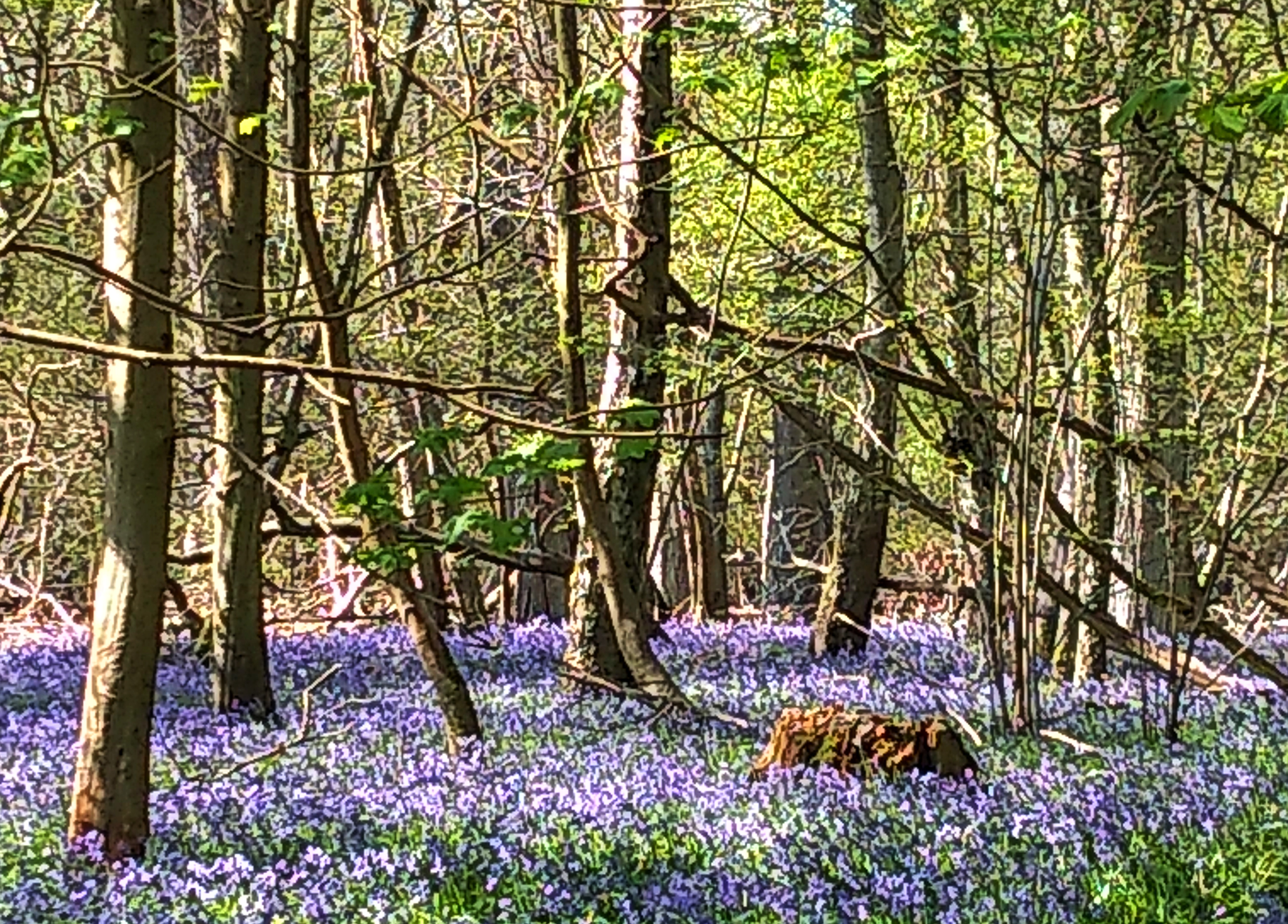
The main spring spectacle of the English countryside however are English Bluebell (Hyacinthoides non-scripta) woods in full bloom. Photos of these have filled social media over the past week. I am lucky enough to live near to several woods where English bluebells flower, however due to the lockdown this year I have to make do with spotting the ones amongst the headgerow, on my way to the allotment. Thankfully even small scale sightings of these flowers makes my heart soar. Swathes of these beauties are an indicator of ancient woodland (they are slow growers with seeds taking five years to become bulbs, which then flower). 

English bluebells continue to be under threat from the Spanish bluebell (Hyacinthoides hispanica) escaping from gardens, brought to these shores by the Victorians, which readily hybridise with English ones to produce the Hybrid bluebell (Hyacinthoides x massartiana). However, this isn’t the only threat to our native Bluebell. Habitat destruction is another reason for their decline. Simply walking on them can prevent them from flourishing for years afterwards as photosynthesis is prevented and the plant is weakened. They are a protected species under the ‘Wildlife and Countryside Act (1981)’. This means that people can be prosecuted for removing the plants and bulbs from their habitat and/ or selling them. 

It is possible to tell the English and Spanish Bluebells apart.
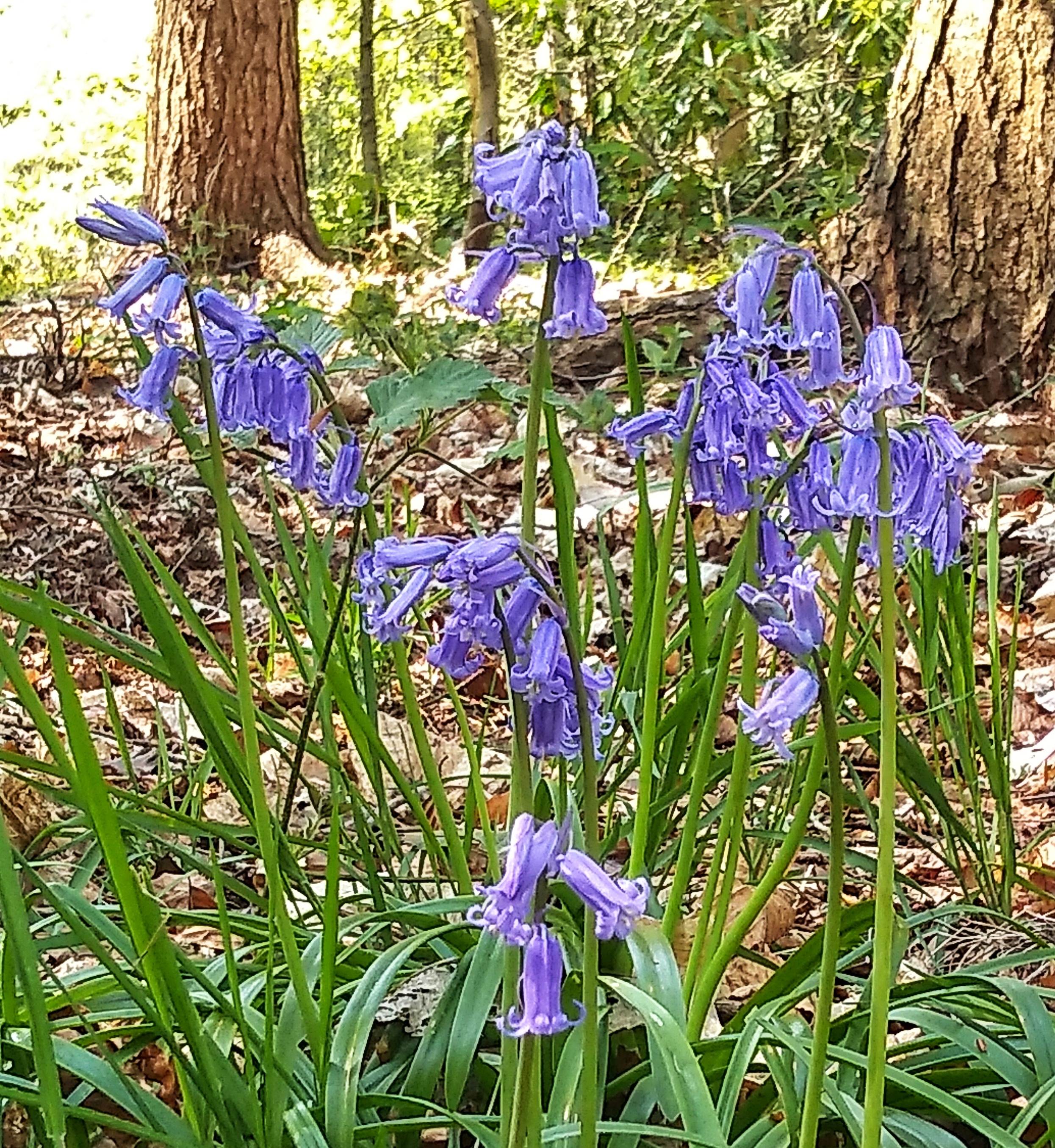
English Bluebells are a deep violet shade of blue with creamy-white pollen. The leaves are narrow (1-1.5mm wide) as are the flowers. The tips of each petal (six in total) curl up and inwards. The scented flowers grow on one side of the stem causing it to arch over to the one side (referred to as inflorescence).

Spanish bluebell flowers are pale blue (but can be pink or white), have a wider open bell shape with flared petal tips and bloom all around the stem, which therefore remains upright. The leaves are also wider (by 3cms) than its English counterpart and the flowers have no scent. 

Unsurprisingly the hybrids possess characteristics of both parents, however their appearance tends to be more like the English Bluebell meaning distinguishing the two can sometimes be difficult. 

Last week I saw both English and Spanish Bluebells on my daily exercise.

English Bluebells are great for long-tongued bumblebees. However previously I have seen evidence of short-tongued bumblebees visiting Bluebells. Unable to reach the nectar in the traditional method, I noticed a hole in the base of the flower where a bee had obtained the nectar without pollinating it. This is referred to as ‘nectar robbing’.
Spanish bluebells found in a garden.

Bluebells are interwoven into our culture. In the past the sap was used to glue feathers to arrows and in book binding. Plus the Elizabethans used the bulbs to starch collar and sleeve ruffs.

In folklore they are associated with fairies while in the language of flowers (popular in the Victorian era) they represent humility, constancy, gratitude and everlasting love. What better flower to have bloom during this difficult time when we are showing our appreciation for the NHS and other frontline workers. It seems even nature has turned blue in solidarity.

Posted in nature

Is this a Weed? 🌱

Weeds are plants growing in the wrong place, or at least where we don’t want them to grow. After all weeds don’t exist without humans. We determine when a plant is a weed because we view them negatively rather than see their beauty or positive attributes. Usually wild flowers are called weeds when they grow in our gardens but it is possible for cultivated plants to become a nuisance and therefore a weed too.

I am often asked “Is this a weed?” I answer with the plants name and supply information on their growing habits together with their positive attributes (and any negative ones). For example, Dandelions (Taraxacum officinale) unwanted in immaculate lawns are great for early foraging bees (when there aren’t many other flowers about). Euphorbia characias subsp. wulfenii however is bought from garden centres and then freely self seeds where you don’t want it to. Then there are some Marmite plants like Forget-me-nots (Myosotis arvensis) that split opinion and therefore allowed in some gardens but not others.

Historically, some plants regarded as a nuisance now weren’t always disliked. They once had medical, culinary, cosmetic uses or were used as dyes; uses that now are not commonly known. What have the Romans done for us? Add bringing Ground elder (Aegopodium podagraria) to Britain to the list. Once used by the Romans as a herb and medicine (see Alys Fowler’s Guardian article).

I love wild flowers and am happy to allow space for them in a wildlife garden. One wildflower I leave is Garlic mustard (Alliaria petiolata) because it is eaten by Orange tip and Green-veined white caterpillars. Whilst nectar rich flowers are needed in gardens for butterflies, their caterpillars have specific plant requirements without which you won’t get more adults.

So when did our obsession for weeding begin? There is an fascinating extract from ‘The Climate Change Garden’ by Sally Morgan and Kim Stoddart.

‘much of what we consider traditional advice nowadays is based on the comparatively recent practices of Victorian country houses… Prior to this very controlled Victorian approach, in which outside spaces were kept meticulously tidy, the gardens of everyday working folk (aka peasants) exhibited a more free-spirited, practically-minded ethos. Their gardens had a much more ‘higgledy piggledy’ planting of crops, flowers and weeds, many of which were important for both their culinary and medicinal uses in the home.’ p116

So it’s something else the Victorians invented.

I find the subject of ‘weeds’ fascinating. Four wonderful books on the subject that I’ve read recently are,

1. ‘Weeds’ by Nina Edwards
2. ‘Weeds’ by Richard Mabey (For historical and cultural information.)

3. ‘Wild about Weeds; Garden Design with Rebel Plants’ by Jack Wallington (Which shows how to incorporate ‘weeds’ into garden design.)

4. ‘The Climate Change Garden’ mentioned above. It has a chapter entitled ‘Working with Wildlife’ (about wildlife gardening) as well as other chapters on how to adapt garden practices to future proof against long-term changes in climate, from flooding or drought to the importance of trees in combating climate change.

Reading these books will give you a different perspective on ‘weeds’.

Posted in nature

National Tree Week (23/11/19-01/12/19)

Meteorological winter has begun. Rather appropriately Autumn turned wintery yesterday as we had a very cold and frosty start to the morning. Apparently it was the coldest night since February.

National tree week ends today too. Started by the Tree Council in 1975 it’s a time to focus on the importance of tree planting along with celebrate these amazing plants. The week coincides with the best time of year to plant trees. This time round there has been a specific emphasis on promoting the usefulness of trees in combating climate change (by pollution and carbon dioxide absorption).

I have planted many trees in the past, however last week the main job continued to be leaf collection.

A little momento of some beautiful leaves.

While most trees shed leaves consistently over a period of time, in my experience, leaf drop of English/ Pedunculate Oak (Quercus robur) and European Beech (Fagus sylvatica) tends to occur in one go at the end of Autumn. This has certainly been true this year, as we collected huge amounts of leaves from large Oak and Beech trees in many gardens; their beautiful rich autumnal colours like carpets on the ground.

Both these deciduous trees are from the Fagaceae family which explains their similarities. Both grow to great heights, have dense canopies and can exhibit marcescence (where some dead leaves are retained on the trees throughout winter).

Both trees are great for wildlife too. Beech nuts are eaten by Deer, Badgers (Meles meles), Grey squirrels (Sciurus carolinensis), Mice, Chaffinches (Fringilla coelebs) and Brambling (Fringilla montifringilla). Even the foliage is food for caterpillars of several species of moth like the Barred hook-tip (Drepana cultraria) and Olive crescent (Trisateles emortualis). Beech trees create a vital habitat for butterflies along woodland edges as well; including Orange-tip (Anthocharis cardamines) and Gatekeepers (Pyronia tithonus). Plus ectomycorrhizal truffle fungi grow beneath them. Turned into hedges, Beech can also create a habitat for birds.

As with the European Beech, the Pedunculate Oak supports a variety of fungi, animals, birds- particularly Jays (Garrulus glandarius) and insects such as Stag beetles (Lucanus cervus)
and the Purple hairstreak (Neozephyrus quercus) and Purple emperor (Apatura iris) butterflies. In fact of all the native British trees the Pedunculate Oak supports more wildlife than any other tree. Even its leaf litter and dead wood is full of life. I love these wonderful trees, especially ancient oaks. I enjoy thinking of all the hidden life existing alongside me as I work in the gardens. Also they are wonderful trees to hug. 🌳🤗

Posted in nature

The Heat Is On. 🔆🌡️⛈️☔

The weather last week was a mixed bag. Sunshine with the temperature rising into the thirties, fantastic storms and then dull days of rain. Thankfully it is a little cooler now; while I enjoy the sun, I wilt in muggy heat.

Given the weather there were still lots of butterflies around, mostly Peacock (Aglais io), Red admiral (Vanessa atalanta) and Small white (Pieris rapae). Unfortunately I haven’t managed to capture photos of any of these as they didn’t remain in situ for long. I see many white butterflies flit past me. It can be difficult to say if they are Large white (Pieris brassicae), Small white or female Orange tip (Anthocharis cardamines) butterflies because they disappear before I can identify them.

Happily I was able to photograph one butterfly on a Buddleia on Wednesday. The combination of the pattern in the underside, orange colouring I saw on the upper wings, together with the wing outline means the butterfly in the photo below is a Comma (Polygonia c-album).

Their Caterpillars usually feed on the Common nettles (Urtica dioica) but also Elms (Ulmus), Hops (Humulus lupulus) as well as Willows (Salix). Peacocks often visit Buddleia too. The Common Nettle is also the favoured food of Peacock Caterpillars; although they have been recorded feeding on hops and small nettle (Urtica urens) as well. As the common nettle is the favourite food of both Comma and Peacock caterpillars, what better reason is there for allowing some nettles to grow in a garden?

There were other observations last week too;
– a Harlequin ladybird (Harmonia axyridis) on some Lesser Burdock (Arctium minus),

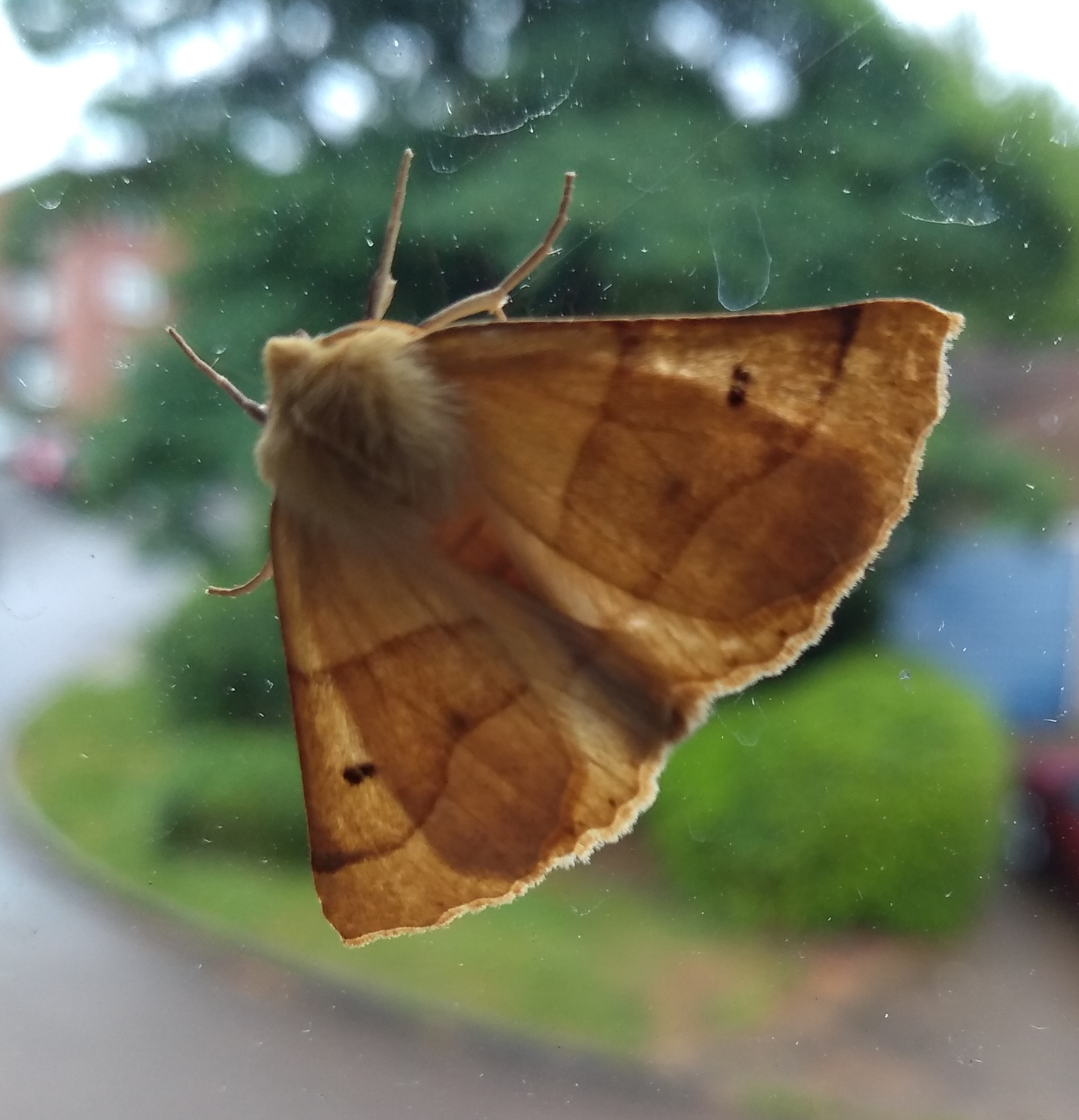
– a Scalloped oak (Crocallis elinguaria) moth,

The caterpillars of these moths feed on honeysuckle (Lonicera), heather (Calluna vulgaris) and broadleaf trees like Oak (Quercus) and Birch (Betula).

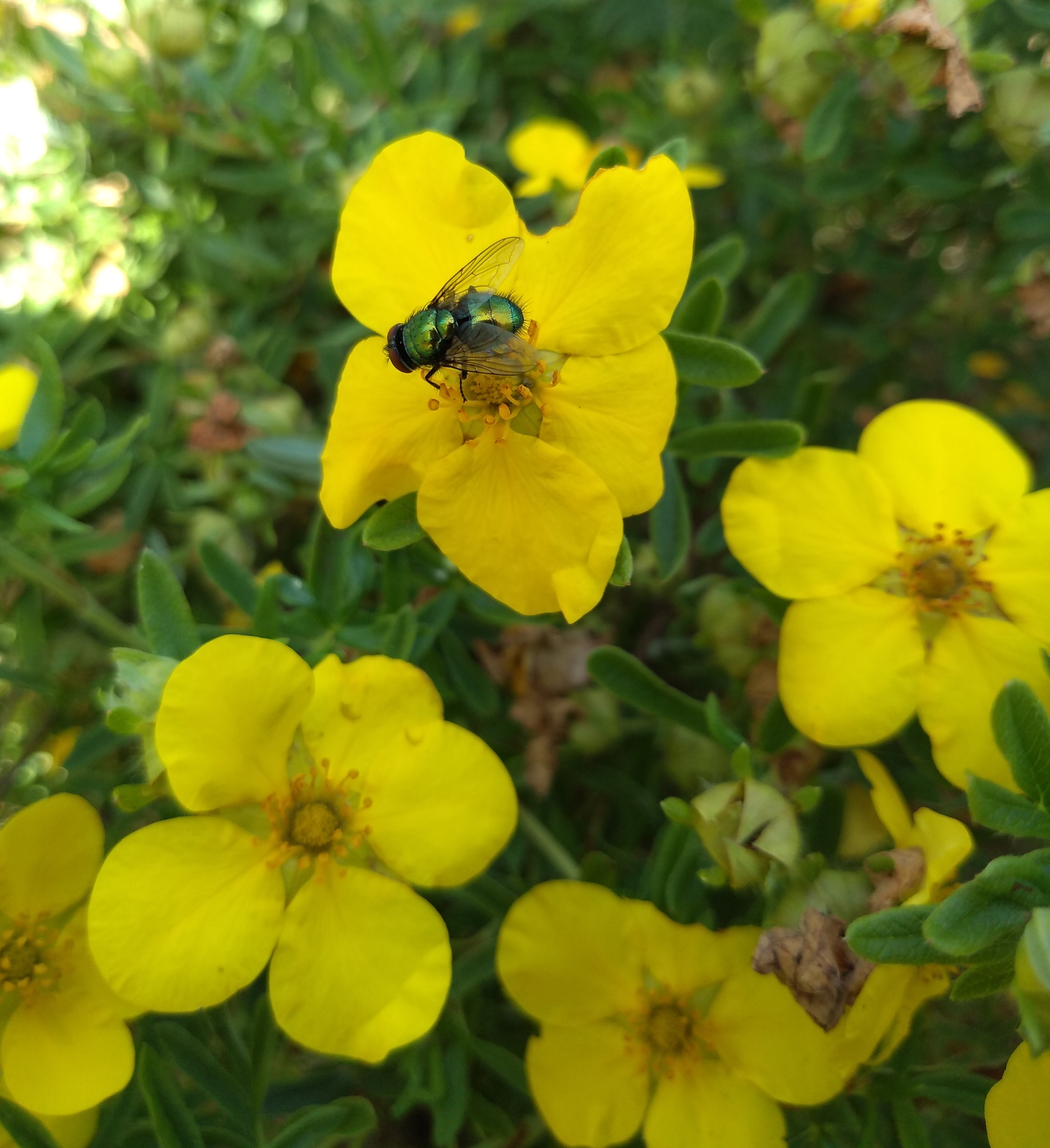
– plus a Long hoverfly (Sphaerophoria scripta), whose larvae feed on aphids, and a Common green bottle fly (Lucilia sericata) on a Potentilla plant.

Capturing the Common green bottle fly was accidental but it worked out really well. In the sun its glistening metallic colouring is highlighted against the yellow Potentilla flowers. Their maggots feed on dead tissue so their appearance is used to accurately determine time of death. Adult Common green bottle flies on the other hand are useful pollinators, as the last photo proves. Fascinating how different stages of this fly species exists alongside both death and life.

Posted in nature

🐝Beeing Happy in the Sunshine 🌞

The warmer weather this week brought with it many bee sightings, including Honey bees (Apis mellifera). The plants where they were most abundant were the Californian Lilac (the Ceanothus seen in the first photo) and the Cotoneaster in the second photo. Both Shrubs, full of small flowers, are loved by Honey bees. In fact there were so many bees on them that the amazing buzzing sound filled the air.

There were also lots of Tree bumblebees (Bombus hypnorum) on the Cotoneaster too, as shown below.

This hasn’t been the only time I noticed Tree Bumblebees this week. This the weekend I was walking around a local charity allotment when I saw a bird box being occupied by bees. This is a commonly used structure for Tree Bumblebees.

I was also lucky to notice three female Hairy-footed flower bees (Anthophora plumipes) while weeding a border. These are solitary bees who care for their own young; however they can live within close proximity to one another. The three that I noticed had nests in the bare earth about 10cms apart. The females are black with yellow legs. Unfortunately I was not able to obtain a decent photo of them for this post.

Other observations this week have included more Seven-spot ladybirds (Coccinella septempunctata), Holly blue butterflies (Celastrina argiolus) and Orange-tip butterflies (Anthocharis cardamines).

I have also managed to go on a couple of short walks this week and discovered more wildflowers blooming. These were;

– Ox-eye daisy (Leucanthemum vulgare).

The Ox-eye daisy flowers were originally used for the ‘He loves me, he loves me not’ petal plucking activity.

* Dog-rose (Rosa canina). The hips from this plant are enjoyed by blackbirds (Turdus merula), Redwings. (Turdus iliacus) and Waxwings (Bombycilla garrulus). They are also used to make syrups and jellies to be used in winter (due to the very high vitamin C content). The hips from this rose also contain irritating hairs which can be used as itching powder.

-Smooth sow-thistle (Sonchus oleraceus)

– Common Vetch (Vicia sativa). This plant is a member of the Legume family so it causes nitrogen fixation in the soil therefore it can be used as a soil fertilizer.

On my way home from one of my walks I manage to capture this Grey squirrel (Sciurus carolinensis) on a photo too.

This weekend I saw this Feral Pigeon (Columba livia domestica) as I enjoyed a coffee.

I couldn’t resist adding this photo, sadly it doesn’t do it justice. When the sun shone, the green and purple neck feathers where incredibly vibrant and against the unusual white; I thought it was beautiful.

Posted in nature

Bee friendly plant

Along with male Orange-tip (Anthocharis cardamines) and Holly Blue (Celastrina argiolus) butterflies, I have now seen a Peacock butterfly (Aglais io) flitting around as I garden. Yet while butterflies have been camera shy I have managed to capture bees so far his week.

Comfrey has started to flower. It is a great plant for organic gardening; used as a compost activator or to make a liquid fertilizer containing nitrogen, phosphorus and potassium. Comfrey is also loved by bees, as proved by the following photos.

Photo 1; Red-tailed bumblebee (Bombus lapidarius) on Creeping Comfrey (Symphytum grandiflorum)

Photos 2 and 3; a Buff-tailed bumblebee
(Bombus terrestris) enjoying Common Comfrey (Symphytum orientale).

Posted in nature

Visions in blue

I may be having trouble photographing Orange-tip butterflies (Anthocharis cardamines) but I have managed to capture this Female Holly Blue (Celastrina argiolus) resting on a box (Buxus) hedge. I have noticed quite a few of these beautiful butterflies, both male and female, flitting around the garden this week.

Posted in nature

Different sort of Easter chicks

After a busy seven days it is lovely to finally relax and reflect upon last weeks sightings.

Throughout the week I have seen Orange-tip (Anthocharis cardamines) and Brimstone butterflies (Gonepteryx rhamni) flying around as well as more Harlequin ladybirds (Harmonia axyridis). I have seen even more 7-spot ladybirds (Coccinella septempunctata), well into double figures. Ladybirds make me smile, a reaction than never diminishes. Something else that made me happy last week was seeing lots of tadpoles continuing to develop; it won’t be long before they become frogs feasting on slugs and snails.

On Thursday I walked home again, discovering yet more wildflowers blooming along the verge. The most prolific was Cow Parsley (Anthriscus sylvestris). Also called Queen Anne’s Lace or Wild Chervil it is pictured below amongst Dandelions (Taraxacum officinale) and White Dead-nettle (Lamium album).

Other flowers I saw along the way were;

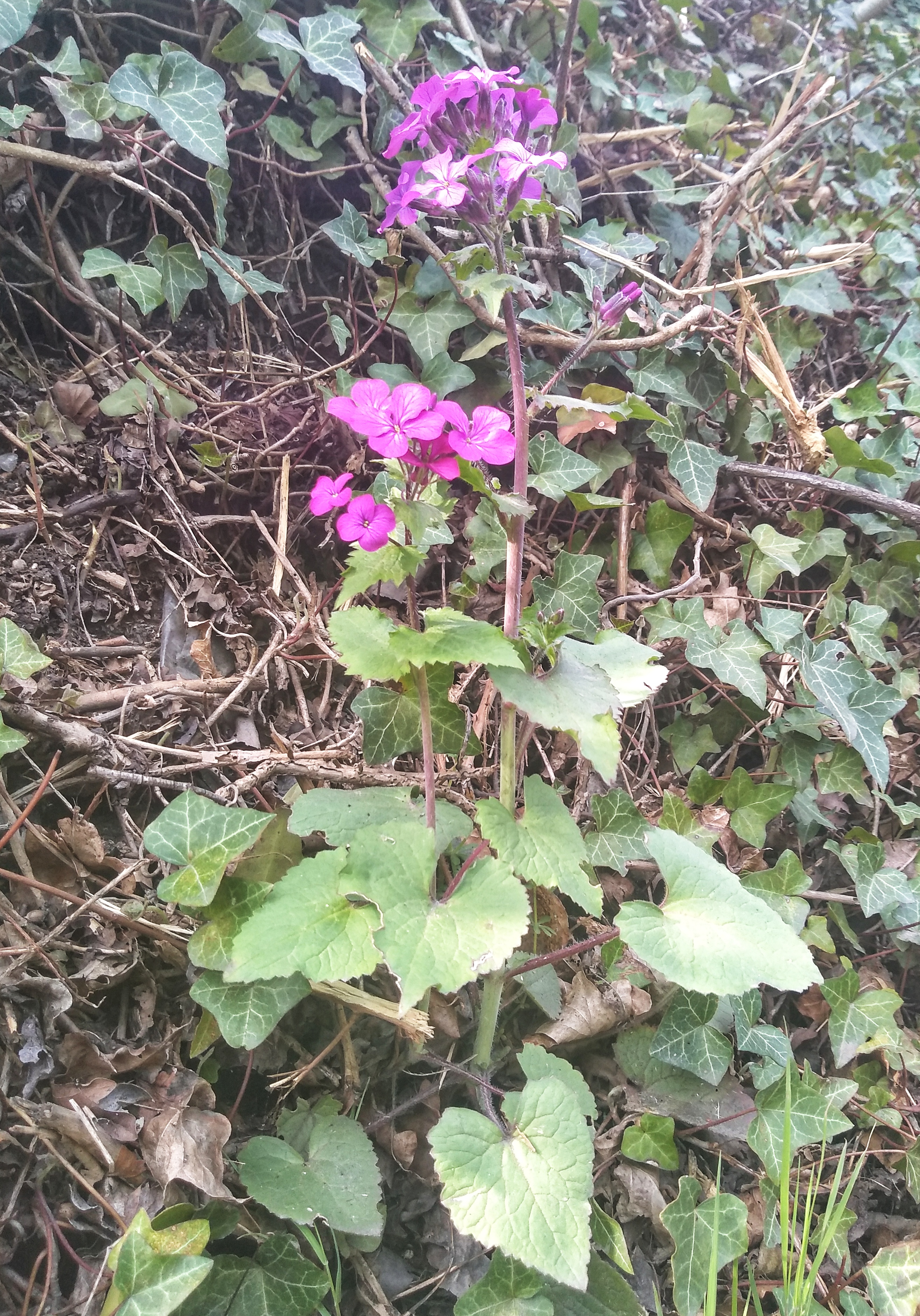
-Honesty/ Moonwort/Money plant (Lunaria annua)

-Herb Robert (Geranium robertianum)

-Dove’s foot cranesbill (Geranium molle)

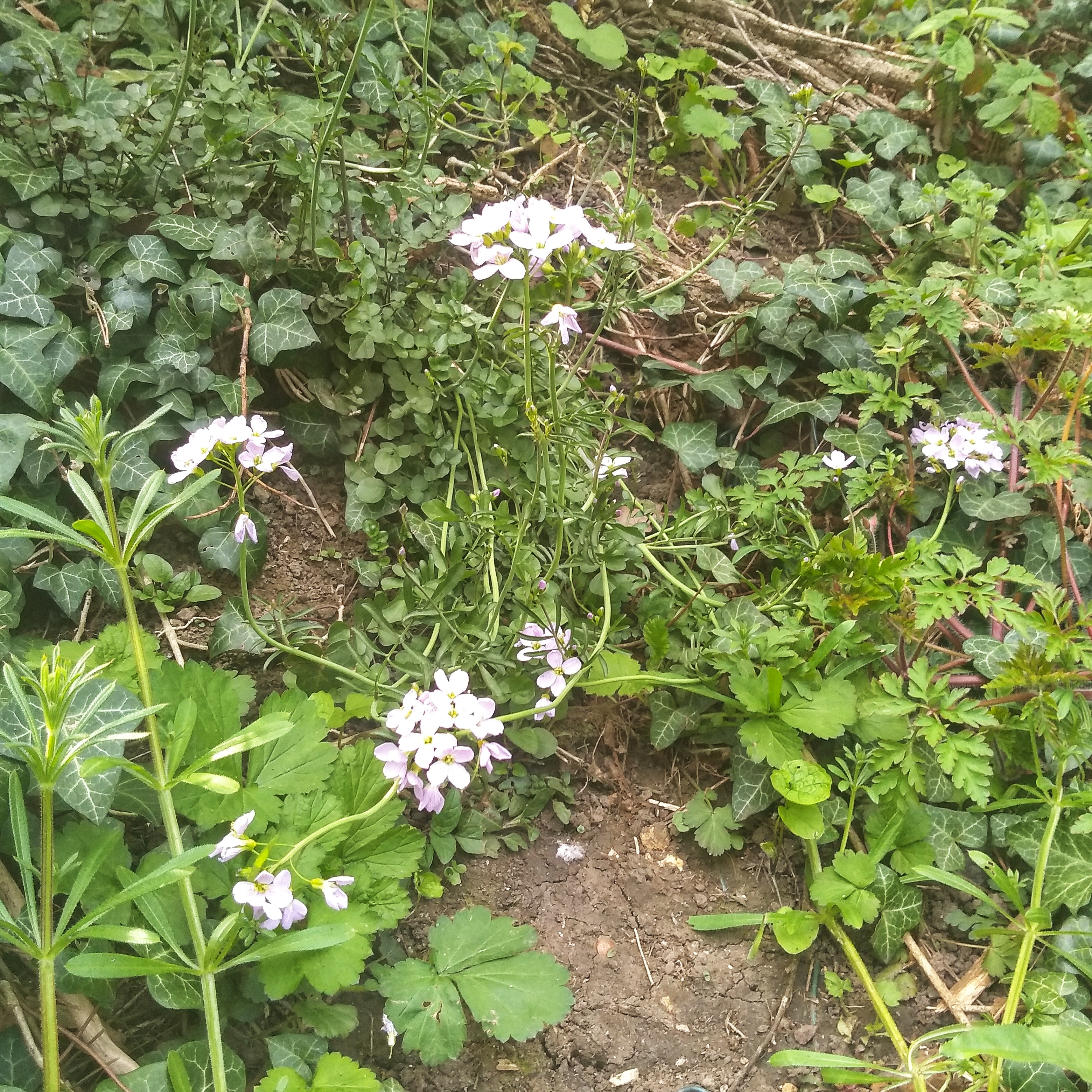
-Cuckooflower/ Lady’-smock (Cardamine pratensis)

-and Hedge garlic/ Garlic mustard (Alliaria petiolata).

I know this plant as Jack-by-the-hedge. I’m not entirely sure why it has this name. I guess it refers to being commonly found near hedgerows and Jack used to be a common name. Apparently the leaves, which have a mild garlic smell and taste, can be eaten in salads and sauces with meat or fish (Garlic mustard- Wildlife Trusts).

This week has been great for learning new bird sounds too. I have discovered a Dunnock (Prunella modularis) and a Green Woodpecker (Picus viridis) nearby without seeing them. Over the last few days I have heard another beautiful sound too. Each year I have Blue tits (Parus caeruleus) nesting under the eaves and it won’t be long before I hear their young. It is a fantastic sign of spring, better than anything the Easter bunny could bring (chocolate eggs are a close second though).

Yesterday I spent time visiting The Vyne (National Trust). The main attraction was the English Bluebells (Hyacinthoides non-scripta) on the woodland walk. The views were enchanting and smell delightful.

Also flowering near the Bluebells were Wood Anemones (Anemone nemorosa).

I spotted more Orange-tip butterflies there along with some Speckled wood butterflies (Pararge aegeria) flitting about.

It was a lovely way to spend a sunny Easter Sunday in good company.