Posted in Allotment, nature

Here today, gone tomorrow

How is it nearly July? The passage of time has certainly flown by, for me, but then the growing season is in full swing and has kept me busy.

In April, a few weeks of unusually warm weather for the time of year  ended with April showers. Since then there have been occasional periods of heavy rain, however it remained largely dry here in southern England. A couple of weeks ago (as well as this coming Monday) we had another very hot period of high temperatures. The weather remains warm, so colder mornings are refreshing. It was the sunniest spring on record and continues to be incredibly dry here in the south.

Early warm spring weather has meant that fruit picking this year has been very good. So far the strawberry, currants, gooseberry and raspberry harvests  have been great. There are plenty of apples and plums developing too.

The allotment is coming along, we had to hold out planting for a while due to the drought we had early spring. I took advantage of that to add  another wildlife area. The shed casts a shadow so I have been unsure what to do with it; now there is a dead hedge, stumpery, log pile and hedgehog house along with nettles and a few other plants to encourage insects, beetles and other invertebrates.

I have noticed a variety of insects this year. Lots of Brimstones (Gonepteryx rhamni) in spring have now been replaced by Commas (Polygonia c-album), Speckled woods (Pararge aegeria), Large whites (Pieris brassicae) and Peacock (Aglais io) butterflies.

Bees have been evident too; Ashy mining bees (Andrena cineraria) in particular. I saw a group of about 20 in one garden.

A buff tailed bee (Bombus terrestris) snoozing in a foxglove.

Juvenile ladybirds have also been evident, arriving soon after aphids show up, now becoming adults.


Mullein Moth (Cucullia verbasci) caterpillars were around one week in April and then disappeared in early June, presumably eaten by birds.

These vibrant caterpillars turn into a brown coloured moth.

Although the caterpillars had eaten a lot of the leaves, the plant survived and has begun to bloom now. It never ceases to fascinate me how the moths found the plant in the first place and how the birds found the caterpillars with no need for chemicals to control so-called pests. The adult Mullien moths are nocturnal, flying in April and May.

I have also learnt about another spider, the Cucumber spider (Araniella cucurbitina); named because of their vibrant green abdomens they are commonly found in the UK, especially in woodlands and hedgerows.

Larger than actual size. Males are about 3.5- 4mm while the larger females are between 4- 6mm.


In May, we met friends at Black park in Slough. It was wonderful to see the emergence of adult dragonflies from their nymph form, species unknown.

Posted in nature

Amphibians and Insects

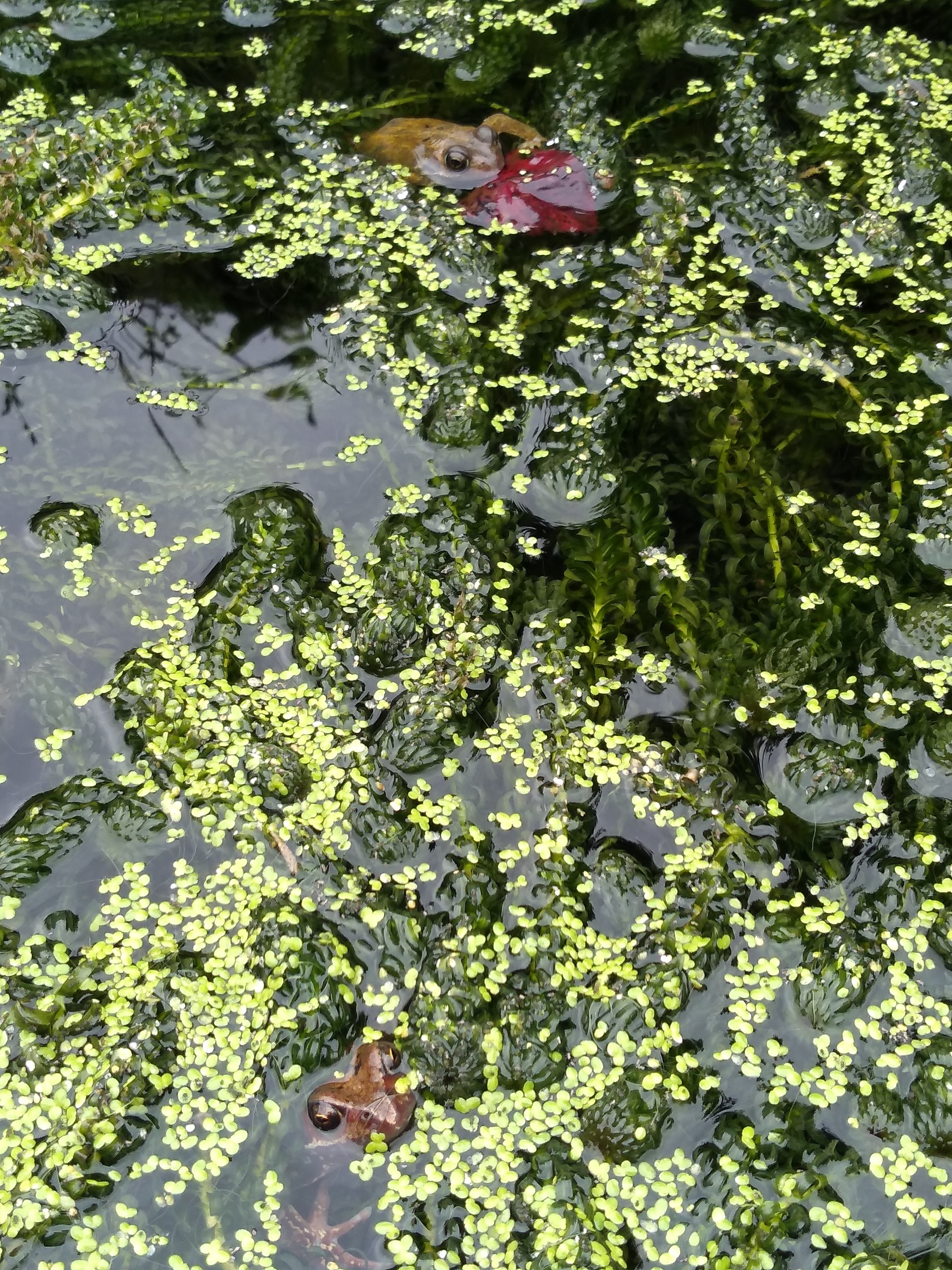
My week started and ended working next to ponds. The first was a small natural pond with a couple of frogs (Rana temporaria) sitting in it.

The other was a large disused outdoor swimming pool. In its neglected state rainwater collects within the concrete walls and nature is taking over. Given the murkiness of the water I was unable to obtain decent photos of my findings; however I saw another frog, (surrounded by lots and lots of tadpoles) along with a dragonfly nymph and a newt. It should be interesting to discover how many tadpoles survive to adulthood.

For the rest of the week insects were centre stage, especially on Wednesday when flying ants took to the sky. Flying ant season really tests my resolve to work through my dislike of ants (which originated in childhood). Thankfully I now find them more fascinating than loathsome, mostly.

The other insects I saw that day were;
– A (Chrysotoxum cautum) hoverfly on some Pyracantha.

– Honey bees (Apis mellifera) and a Red-tailed bumblebee (Bombus lapidarius) visiting a Geranium ‘Rozanne’ plant.

– Lavender (Lavandula) full of bees and butterflies, including more Honey bees as well as Buff-tailed bumblebees (Bombus terrestris), Meadow browns (Maniola jurtina) and a Ringlet (Aphantopus hyperantus) butterfly.

The Meadow brown butterflies also enjoyed visiting the Echinops bannaticus flowers too.

Even as I returned home I noticed a Willow Beauty (Peribatodes rhomboidaria) moth on the hall window.

The adults feed on Creeping thistle (Cirsium arvense) and Ragwort (Senecio jacobaea) both of these plants are common around this area. The caterpillars feed on various trees, shrubs as well as climbers ranging from Yew (Taxus baccata), Birch (Betula), ivy (Hedera helix), honeysuckle (Lonicera) and the wild Clematis, Traveller’s joy (Clematis vitalba).

The previous day I came across more insects that I was previously unaware of.

The first one was the Common red soldier beetle (Rhagonycha fulva).

It is a beneficial insect as adults eat aphids and are pollinators (feeding on nectar and pollen from open flat flowers such daisies and hogweed) while the larvae feed on slugs and snails along with other ground dwelling invertebrates.

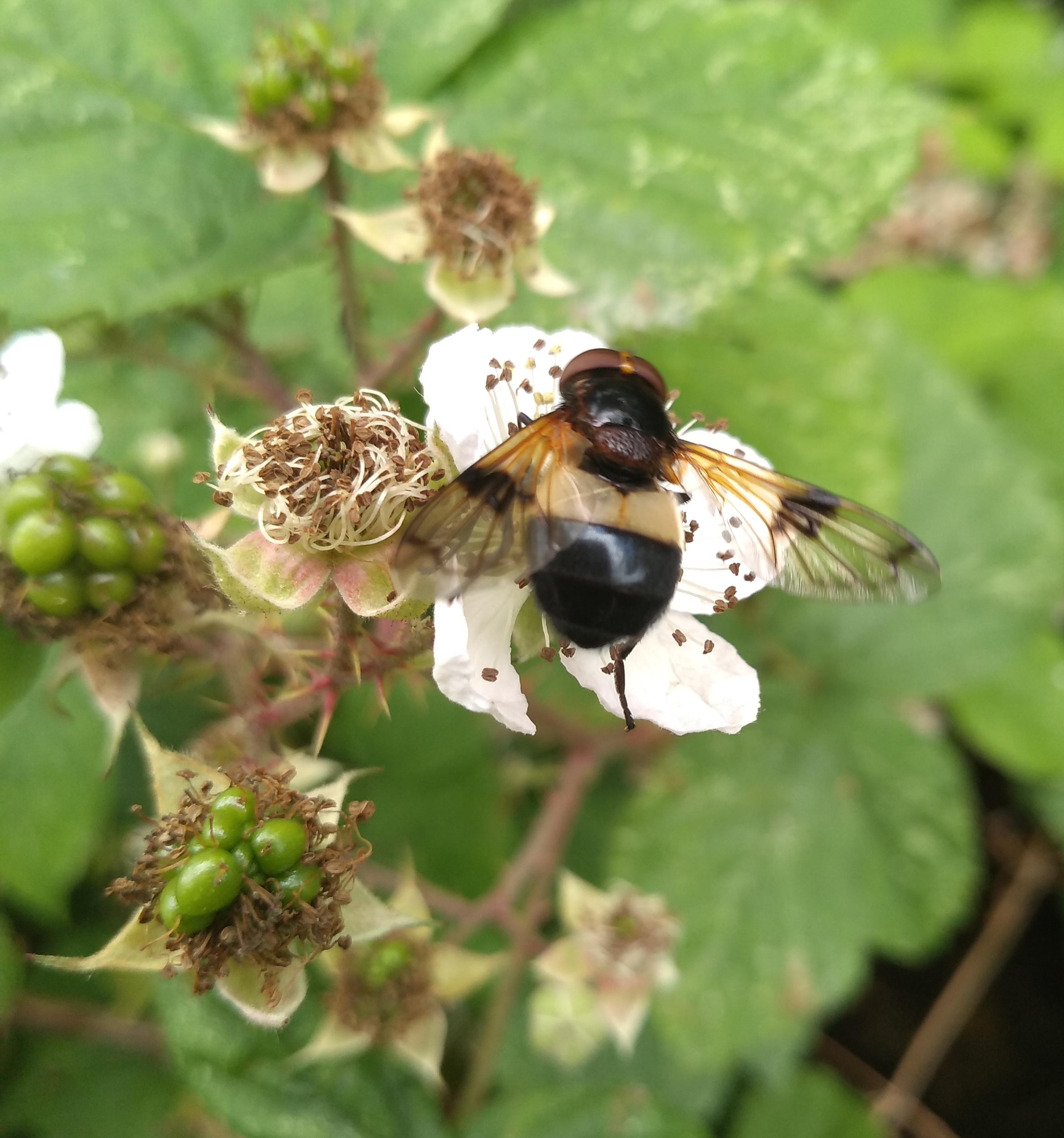
The other insect I saw on Tuesday was a female Volucella pellucens hoverfly feeding on nectar and pollen from Bramble (Rubus fruticosus).

These hoverflies also pollinate umbellifers; However as larvae they inhabit Bumblebee and wasp nests eating any waste produced along with their hosts larvae.

Posted in nature

More Wonderful Singing

Last Monday lunchtime I got to hear a wonderful song. A Song thrush (Turdus philomelos) was singing loudly from an Oak (Quercus) tree. It’s repeated phrases made it easy to identify even though I couldn’t locate it visually. Their conservation status in the UK is red (see RSPB) so was nice to hear it. I have also seen one in the past but observations of Song thrushes are rare for me.

I haven’t noticed the young Bluetits (Cyanistes caeruleus) in the Rowan (Sorbus) tree for several days now. However while I ate my breakfast on Wednesday I
briefly saw a young Jay (Garrulus glandarius) instead. It didn’t remain for long, perhaps realising that it hadn’t landed on an Oak tree (a favourite of Jays as they love acorns). It was a great sighting; unfortunately in my sleepy state I wasn’t quick enough to get a photo.

The observations for the rest of the week were of insects. On my way to work I saw a Riband Wave moth (Idaea aversata).

Plants which their caterpillars feed on are Wood Aven (Geum urbanum), Primrose (Primula vulgaris), dandelions (Taraxacum) and dock (Rumex). I also saw another Cinnabar moth (Tyria jacobaeae) on my travels. Common Ragwort (Jacobaea vulgaris) is the main food source for their caterpillars. I often see these wildflowers around this area. I love to learn about plants that are beneficial for wildlife so I can undertake wildlife-friendly weeding. I allow ‘weeds’ to flower, remove seed heads before they set seed and control them via digging to prevent them from taking over a patch. With the exception of a few (which could remain in wild uncultivated areas of a garden) I find wildflowers can complement a border. I read an interesting article about this subject yesterday (see The Guardian).

I recently discovered that the collective noun for a group of Ladybirds is a loveliness. I saw loveliness of Seven spot ladybirds (Coccinella septempunctata) on a geranium on Tuesday afternoon.

They were a bit pale so it is possible they had only recently emerged; their wings not hardened properly or developed from pink to bright red. At one point I counted 10 and eventually noticed a Green shield bug (Palomena prasina) nymph too.

This wasn’t the only encounter with ladybirds last week. On Thursday a Harlequin ladybird (Harmonia axyridis) larvae attached itself to my colleague’s t-shirt.

I have started noticing more moths lately, especially different species. I tried to discover the collective noun for moths. I couldn’t find an official word but one suggestion online was a whisper of moths which I like.

Another moth that I saw was a Large Yellow Underwing (Noctua pronuba).

Unfortunately it had a slightly damaged wing. It must have been disturbed because it isn’t a day flying moth. It soon sought shelter under the Hebe I photographed it resting on.