Posted in nature

False Autumn

It might be the start of meteorological autumn but it’s still too early for leaves to start falling from trees; yet over the past few weeks this has been occurring. Referred to as false autumn, this leaf (and acorn) drop is occurring as a result of the extreme temperatures and drought we’ve experienced this year. It is a sign of stress as trees attempt to conserve water and energy. Current lower morning temperatures have also lead to an autumnal feeling. Thankfully we are now experiencing rainfall so perhaps this will prevent trees from showing further signs of stress even though it doesn’t stop us being in drought. Hopefully autumnal colour won’t be affected too much and we will still witness the spectacular seasonal colours this year.

A couple of weeks ago my partner and I went for a walk to spot Saturn ascending in the sky at dusk; we visited the local woodland park. At nine o’clock, on one of the hottest days of the year, the temperature was quite pleasant. As we walked through the woodland to an open area, where we could view the planet, we got to experience bats flying close by (the following videos is of some footage I managed to obtain).

Without a Bat detector, I have no way of correctly identifying the species out of the 18 that roost in the UK. According to the information I found on the Hertfordshire and Middlesex Bat Group website, the ones we most likely encountered in the area are either the Common Pipistrelle (Pipistrellus pipistrellus) or Soprano Pipistrelle (Pipistrellus pygmaeus). Regardless of the species, just experiencing the creatures flying nearby to capture insects was amazing. I haven’t witnessed bats in fight since I was a child.

It’s still possible to see some butterflies and bees at this time of year so late year flowering plants are essential.

A Common carder bee visiting a group of Aster flowers.

White tailed bumblebees (Bombus lucorum), Buff tailed bumblebees (Bombus terrestris), Red tailed bumblebees (Bombus lapidarius), Common carder bees (Bombus pascuorum) and even some Honey bees (Apis mellifera) still forage in September. The Butterfly Conservation charity produced a photo (see below) of common butterflies and moths to see at this time of year.

During the previous week I was still noticing several Hummingbird hawk moths (Macroglossum stellatarum) too. These moths have been quite prevalent this year.

On one occasion I managed to get a video of a Hummingbird hawk moth visiting a Buddleia.
Posted in nature

The Autumnal Equinox

The first day of astronomical autumn arrived last Tuesday with the Autumnal Equinox. From the Latin ‘aequus’ (equal) and ‘nox’ (night) equinox refers to the equal length of daylight and nighttime hours, after which nights draw in.

The shortening of daylight leads to the reduction of photosynthesis in deciduous trees, a change in leaf colour and eventual leaf drop. This beautiful spectacle is one sign of phenological autumn, along with other ecological and biological signs such as bird migration.

Unlike the other autumnal timings (meteorological and astronomical) there is no set date for phenological autumn. Therefore dates can change each year as weather and the climate impacts on it. The timing of the phenological signs can even differ from decade to decade.

For more information on phenology and how it has changed over time, please see the BBC website.

Phenological changes are studied by scientists who analyse data recorded by citizen scientists on the Nature’s Calendar, via the Woodland Trust, (signs of Spring are also recorded this way).

As I compose this post, I am aware of the mist outside, it certainly feels like an autumn morning. The weather this coming weekend is due to be cold and wet, giving me the perfect opportunity to cosy up and input my collected data to Nature’s calendar.

Posted in nature

Unusual Trees for Suburban Gardens

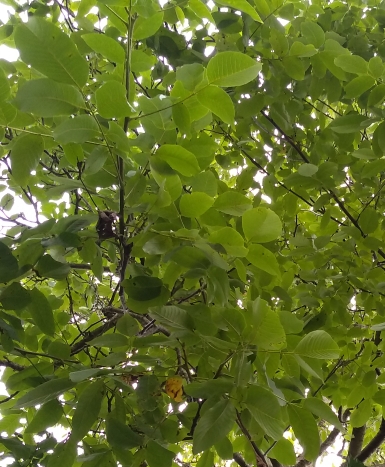
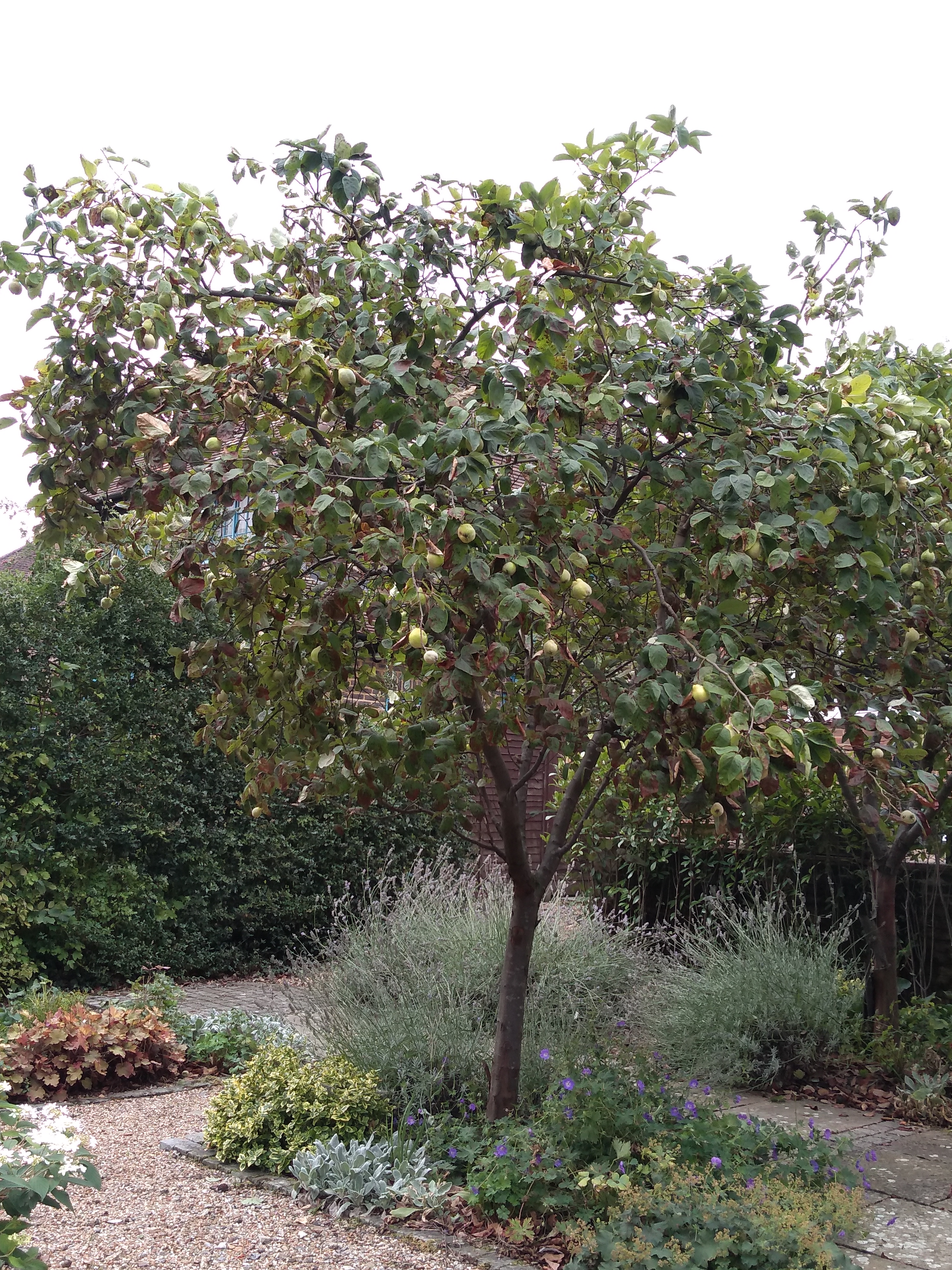
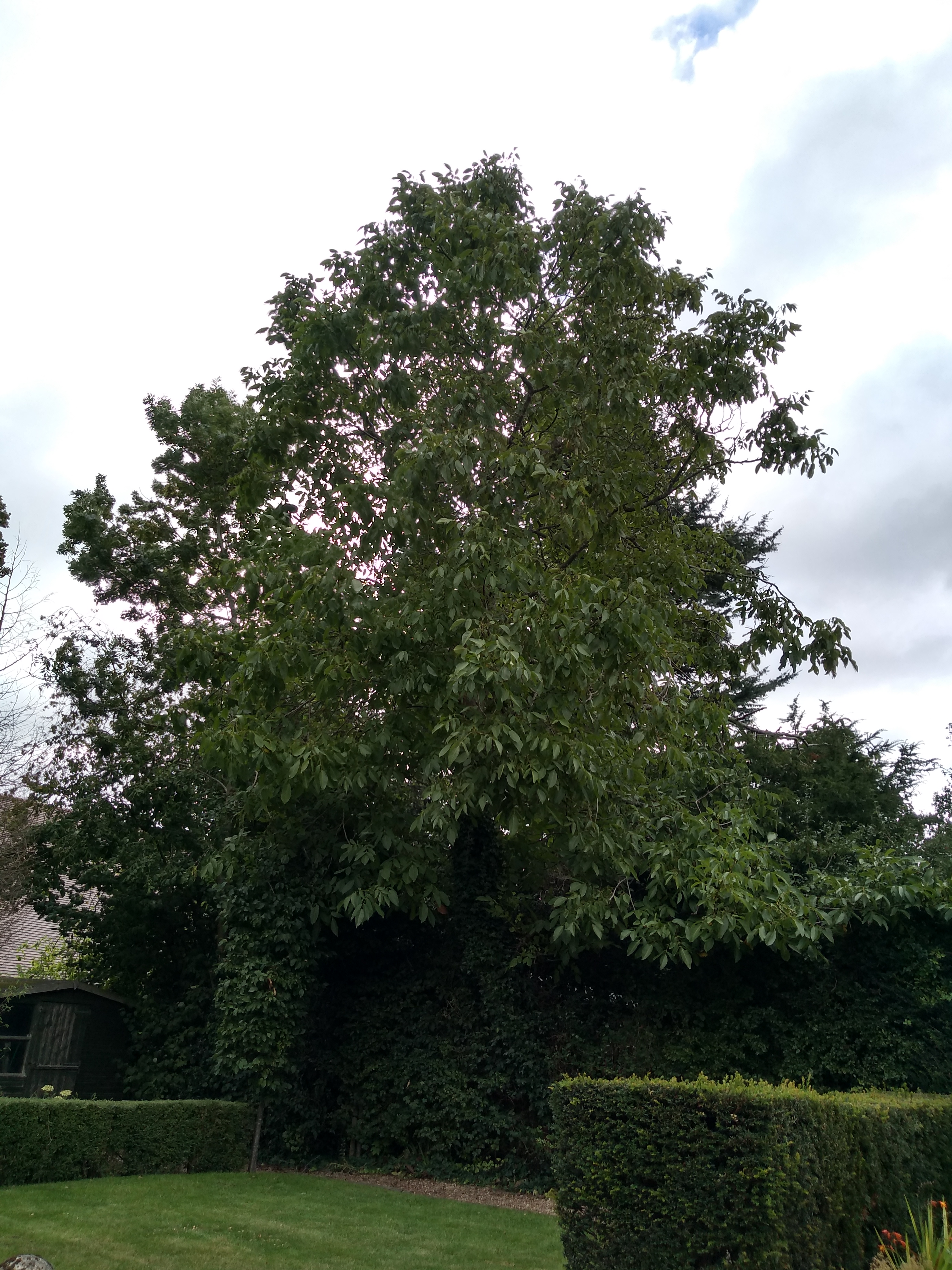
I’m lucky to work in a wide variety of gardens and occasionally come across trees which aren’t normally found in smaller suburban settings. Last week three such trees, a Walnut (Juglans regia), Quince (Cydonia oblonga) and Sweet Chestnut (Castanea sativa) were showing evidence that Autumn had arrived. Interestingly all three have links to, or were introduced to Britain by, the Romans (just like Ground Elder, Aegopodium podagraria, which they ate).

The Latin name for Walnut translates to ‘Royal nut of Jupiter’ and is referred to as ‘food of the gods, medicine for the people’. However, you’ll be lucky to get your hands on any before Squirrels (or Mice) do.

Presumably that’s the reason why these trees have naturalised in UK gardens and parks so well; as hidden walnuts are left to germinate and grow into mature trees.

The leaves of Walnut trees are a good source of food for some micro moths too.

The Sweet chestnut is another tree introduced into this country by the Romans. These days roasted Chestnuts are associated with winter and Christmas. They contain Vitamins C and Bs along with the minerals magnesium, potassium and iron.

I remember collecting Chestnuts at a local wood when I was young; I particularly enjoyed eating them raw. These days, on the odd occasion when I do discover a Chestnut tree, the nuts are usually too small to eat. Horse Chestnut (Aesculus hippocastanum) trees on the other hand are more commonly found around Britain. I noticed that Conker season had also begun last week, as I traveled to and from work. There are several myths linked with Conkers (see The Woodland Trust).

The last of the unusual trees I saw last week was the Quince. This tree is a lot smaller than the ones previously mentioned, making collection of the fruit easier. In fact the garden I worked at has four planted in a formal arrangement.

Quince fruit have tough flesh with skin that turns yellow as it ripens and has a honey aroma. They need to be cooked to soften and become edible.

Recipes for Quince Jam and Jelly can be found on the internet. Originally from Turkey and Asia, recipes using Quince can be found in Roman cooking.

There were other Autumnal signs around last week, along with the ones mentioned above, including the appearance of fungi and leaves falling. Autumn is definitely settling in even though Meteorological Autumn didn’t start until this Tuesday (1st September) with Astronomical Autumn (the Autumn Equinox) to follow on the 22nd September.