Posted in Allotment, nature

March Arrives like a Lion

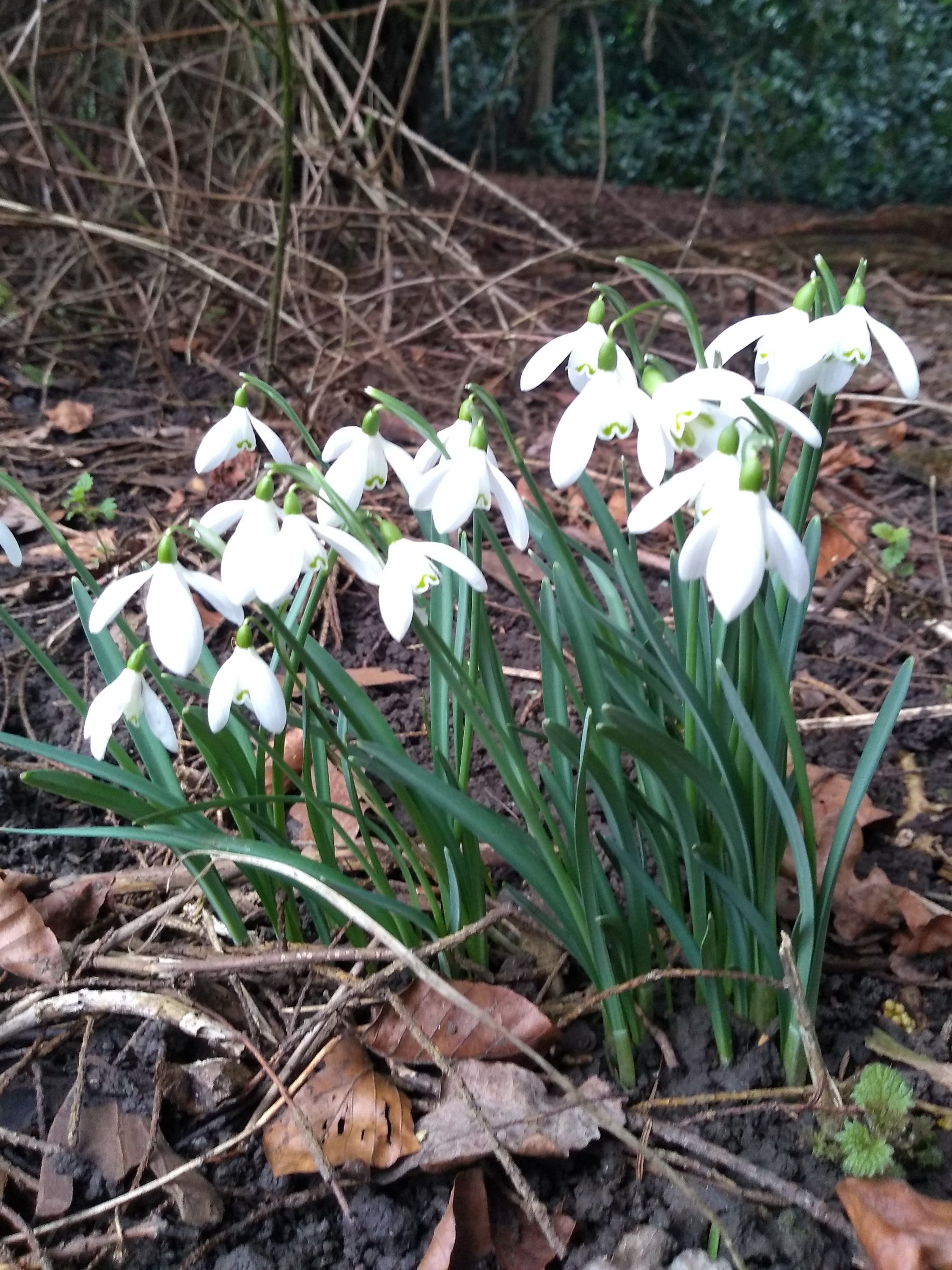
I’ve slowly started to emerge from hibernation now that Imbolc, the half way point between the Winter solstice and Spring equinox, (meaning ‘In the belly of the mother’- referring to the first stirrings of the years new growth) has passed; mirroring the snowdrops, winter aconites and hazel flowers (the first signs of the transition into the next season).

The scents of Daphne, Mahonia and Sarcococca fill the air alongside the arrival of other spring flowers; daffodils, cyclamen, crocus and hellebores. Willow (Salix) catkins are also opening while Blackthorn (Prunus spinosa) blossoms fill the roadsides with glorious white clouds.

Although it has still been too early for most allotment activities, the rhubarb has been emerging on the plot for the last month. I still haven’t cut back perennials as I want to allow cover for beneficial insects such as sheltering ladybirds (Coccinellidae) until the weather makes their survival easier. Instead February is mainly a month for planning the forthcoming years growing (thinking about chitting potatoes and planning seed sowing). One job I have begun however is the indoor Sweet pea and Chilli seed sowing. This small step gives me hope that I will soon be able to sow other seeds soon.

Although I am beginning to think ahead, I am still fondly holding on to snuggly sofa moments such as reading and partaking in arts and crafts, especially on wet days.

Through the winter I still immersed myself in nature. In January I pruned my apple tree on the allotment, blessing and giving thanks through Wassailing. Although symbolic, it was a nice way to feel deeply connected to the plot. I am grateful to be a guardian over it and receive the abundance of fruit, veg and flowers in return.

I saw quite a few foxes (Vulpes vulpes) over the winter too, including one on the allotment. It was such a beautiful moment to watch it foraging under trees.

Once again, I took part in the RSPB Big Garden Bird Watch in January. The list of birds I saw this time were;
4 Long-tailed tits (Aegithalos caudatus)
5 Starlings (Sturnus vulgaris)
1 Blackbird (Turdus merula)
3 Wood pigeons (Columba palumbus)
5 Sparrows (Passer domesticus)
2 Blue tits (Cyanistes caeruleus)
1 Greenfinch (Chloris chloris)
1 Great tit (Parus major)
6 Magpies (Pica pica)
1 Gull (Larinae) and
1 Red kite (Milvus milvus)

There is a small group of Ring-necked Parakeet (Psittacula krameri) that visit a nearby tree of late but frustratingly they didn’t show up during the observation hour.

During February, bird song continued to fill the skies, growing in frequency and volume. Also occasionally insects have boldly buzzed and fluttered about on the odd sunny days. Butterflies I noticed were a Brimstone (Gonepteryx rhamni) and Peacock (Aglais io); the latter I saved from an abandoned spider web.
I have also seen bees visiting mahonia, crocuses and hellebores, especially queen bumblebees.

Last week, I was excited to find some Jelly ear fungus (Auricularia auricula-judae) for the first time. They were growing on a Buddleia bush. Although this fungus is usually associated with elder (Sambucus) it can also be found on other hard woods like sycamore (Acer pseudoplatanus), ash (Fraxinus) and beech (Fagus) in damp shady conditions. Perhaps the fungus was thriving on the Buddleia, in the garden I visited, because of the recent weather as well as it being planted near a beech hedge.  Interestingly this fungus can continue to grow on dying wood that has been thawed, once frozen; hence it can survive really cold winters. The common name was given to this fungi because of how it looks and also its jelly-like texture.


Worryingly, it has been a very mild winter overall with lots of flooding occurring in Britain; certainly very different from last winter. So far the wet weather is continuing into March; hopefully the month will exit like a lamb and the roaring weather won’t continue too much in spring, as it will have an affect pollinators. We will have to see what the rest of 2024 has in store.

Posted in Bookworm review, nature

February Arrives

As another month rolls on, an initial glance may suggest that nothing is changing. Bare trees and quiet gardens with cold weather still nipping at fingertips and noses still persist, while sunny days bring glorious colourful skies.

A stripey sunset.

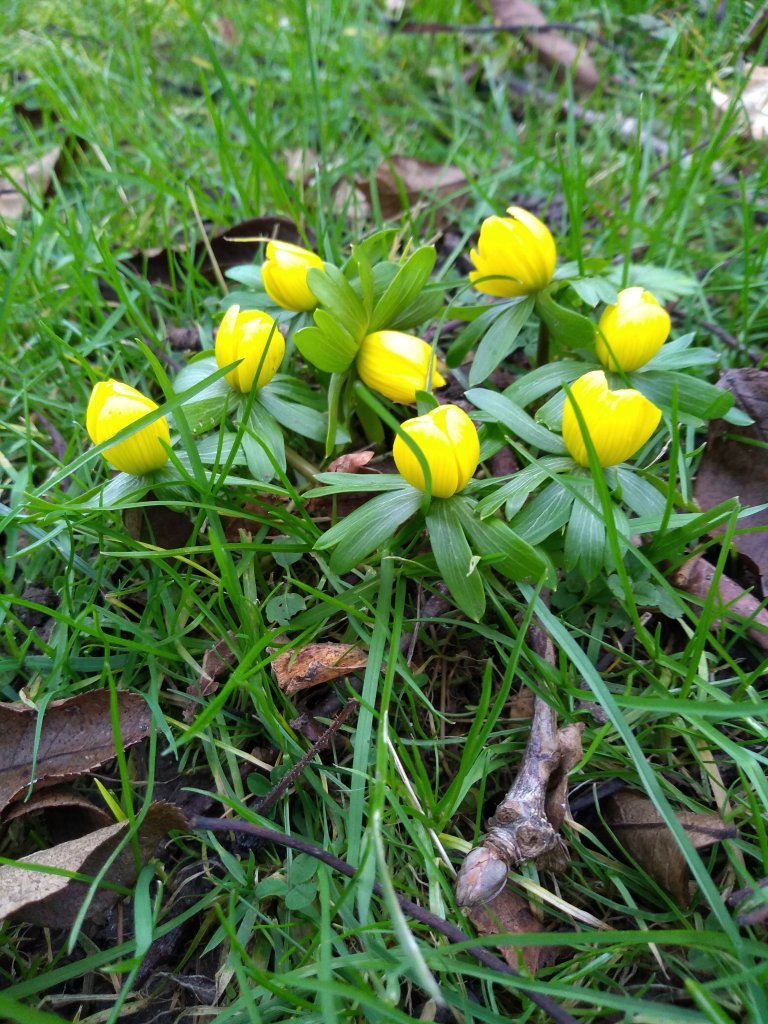
However, upon closer inspection small changes can be seen. The striking yellow of Winter aconites (Eranthis hyemalis) as well as delicate Early crocuses (Crocus tommasinianus) are beginning to bloom alongside the snowdrops (Galanthus).

The tiny red female flowers of Hazels (Corylus) have opened joining the male catkins. Plus, Blackthorn (Prunus spinosa) buds are ready to burst open (in fact on one walk, I saw a single flower already blooming).

I even witnessed a Red admiral (Vanessa atalanta) visit a flowering Mahonia on one sunny day; clearly making use of the milder weather before sheltering once again.

However the main focus of my attention, over the past few weeks, have been birds.

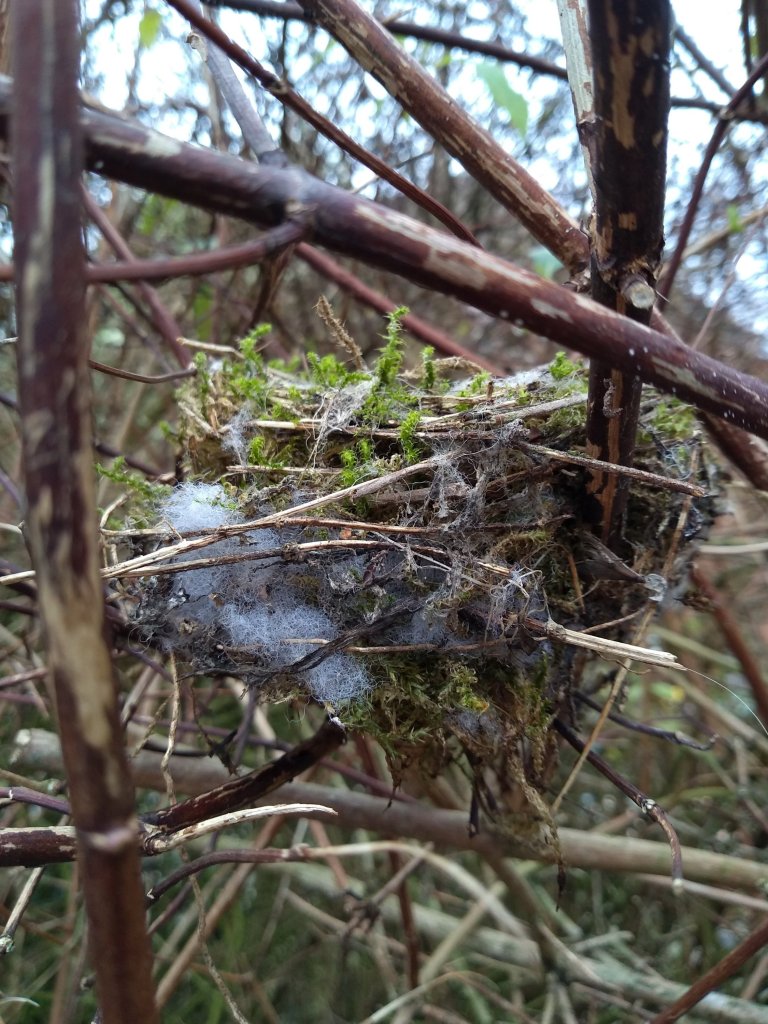
In one garden, I discovered a lovely little nest, from the previous year, in a shrub. Upon investigation I discovered it was either a Goldfinch (Carduelis carduelis) or Greenfinch (Chloris chloris) nest (most likely the former); it can be seen below.

I also saw a Lesser spotted woodpecker (Dendrocopos minor) perched on a tall tree in the distance. I was able to follow the sound of the drumming to watch it move around the trunk before flying off. Given the length of drumming and location of the red on it’s crown I was able to identify it as a male Lesser spotted woodpecker.

Then later in the week, while pruning roses, I watched a Wren (Troglodytes troglodytes) forage around the base of a hedge; I managed to film it briefly before it disappeared fully into the undergrowth.

I am currently reading ‘The Wren: A biography’ by Stephen Moss.

This charity shop find is a fascinating read. Chapters are set out month by month, each concentating on an aspect of a Wrens life. Included alongside facts about the Wren, are their involvement in human history, culture, literature, art and folklore together with beautiful illustrations. The chapter entitled February, for example, focuses on courtship and population. As with other books written by this author, such as ‘The Robin’, this book is definitely worth emmersing yourself in.

Lastly, once again I partook in the Big Garden Birdwatch. My results this year were-
7 Starlings (Sturnus vulgaris),
4 Magpies (Pica pica),
2 Bluetits (Cyanistes caeruleus),
2 Blackbirds (Turdus merula)- a male and female,
2 Wood pigeons (Columba palumbus),
1 Dunnock (Prunella modularis) as well as a Carrion crow (Corvus corone).

Although there weren’t any major surprises in what I saw, it was lovely that the Dunnock made an appearance (usually I only get to hear them). However the Red Kite (Milvus milvus), Ring-necked parakeets (Psittacula krameri), Great tit (Parus major) and Robin (Erithacus rubecula), that I regularly observe, all decided to have a lie in the previous weekend, most only making an appearance once my chosen hour had ended.

Posted in Allotment, nature

Magic on the Winter Solstice

As a gardener and wildlife lover following the seasons is important to me. I celebrate seasonal festivals throughout the year to acknowledge the importance of nature in my life.

During the winter solstice I take time out to observe the sunrise, reflect on the past twelve months as well as think about the year to come. I also go for a walk to collect greenery for my home and give presents to the local wildlife. This year I planted some Heather and Mahonia for any winter foraging bumblebees and made fat balls for my bird feeder.

I am glad that even in tier 4 I can still go for walks amongst nature and visit my allotment for exercise; for me these are essential for healthy body and mind.

Last week I checked on plant growth on my plot. I currently have seedlings and cuttings safe in a small greenhouse; all remain healthy and continue to grow. I also noticed buds on my fruit trees along with borage still growing in the beds.

On monday I also witnessed a Kestrel (Falco tinnunculus) hover above a road (More information on Kestrels can be found at the RSPB). I don’t get to see these amazingly beautiful birds often enough. It was a magical sight on the longest day of the year which began with me watching the sunrise at Stonehenge (online) while at home and listening to bird song; plenty of positivity on a gloomy day.

Posted in nature

A Rare Visit

Last Sunday five Greenfinch (Chloris chloris) came to visit the Rowan tree outside my flat. Seeing these lovely finches is a rare occurrence for me, I tend to hear their wheezy call rather than see them; although even this isn’t often. The Greenfinch call can be heard on the RSPB website.

Along with Chaffinch (Fringilla coelebs) the greatest decline in bird numbers over the years has been in Greenfinches; due to the parasite Trichomonas gallinae. This parasite was first recorded in the UK in 2005 and believed to be transmitted via bird saliva around food and water sources especially in gardens. Greenfinch are social birds that often rely on garden feeding stations and bird baths. It is incredibly important to keep on top of good hygiene around these areas, if you feed birds, in order to prevent the spread of this parasite. Clean bird feeders, tables and bird baths thoroughly each week and fill little and often is the best strategy to combat it’s spread. For further information see the BBC news report on the Trichomonas gallinae parasite.

On a more positive note from last week, it was lovely to hear the occasional gentle buzzing of a Buff-tailed bumblebee (Bombus terrestris) around Mahonia japonicas which are currently blooming; it is such a relaxing sound.

Unfortunately the bee was camera shy.

This plant is great for bumblebees and will flower well into spring. If like me, you prefer not to have spiky plants in your garden then there is a Mahonia for you. Mahonia eurybracteata subsp. ganpinensis ‘Soft Caress’ (see the RHS website) is smaller than Mahonia japonica and as the name suggests can be handled without risk of skin being punctured. Along with Heathers (see my post from 18th November this year What Present Would you Buy for Bees?) this plant is on my list of must buys.

Posted in nature

I Spy… Something Beginning With B

The mild temperature continued last week. When the sun came out on Wednesday and Friday mornings it almost felt like spring. Bees foraged on both days. Wednesday was the busiest as a [1] Buff-tailed Bumblebee (Bombus terrestris) and about five [2] Honeybees (Apis mellifera) were visiting a Winter honeysuckle (Lonicera fragrantissima).

[1]

[2]

While on Friday another Buff-tailed Bumblebee was collecting nectar from a Mahonia. I found the perfume from these shrubs hard to ignore so I am not surprised that the bees were intoxicated by them too. However I have never seen Honey bees active in January before.

Other things I noticed last week, usually associated with Spring, were lawns full of daisies (Bellis perennis) along with a Great tit (Parus major) loudly singing it’s repetitive two syllable song ‘tea-cher, tea-cher’.

[3]

Should I be concerned that I am noticing lots of spring activity in January? It is lovely to be reminded that Spring isn’t far away but hopefully it won’t be a continuing annual trend.

Posted in nature

Growing Food for Birds

I saw contrasting images last week which made me think of feeding birds with plants from the garden.
I first observed the Rowan (Sorbus) tree outside, now stripped bare of it’s berries, before noticing some Cotoneaster

and Ivy (Hedera) full of berries. Clearly the pollinators had been busy during the Summer and Autumn months.

Along with supplementary food, on the ground and bird feeders, birds can also rely on trees and other plants in the garden for food in winter. Along with the examples already mentioned there are other berries, fruit, seeds and nuts which are enjoyed by birds.

Some other plants providing fruit and berries are;
Hawthorn (Crataegus)
Honeysuckle (Lonicera)
Guelder rose (Viburnum opulus)
Dog rose (Rosa canina)
Berberis
Bird cherry (Prunus padus)
Crab apple (Malus sylvestris)
Blackthorn (Prunus spinosa)
Pyracantha
Sarcococca hookeriana
Mahonia

Plants providing seeds and nuts include;
Oak (Quercus)
Beech (Fagus)
Hazel (Corylus)
Spindle (Euonymus europaeus)
Teasel (Dipsacus)
Sunflower (Helianthus)
Miscanthus
Bergamot (Monarda)
Verbena bonariensis
Lavender (Lavandula)
Yarrow (Achillea millefolium)
Asters

Leaving seedheads on perennials not only provides food for birds, they also give shelter to beneficial insects. In fact a little bit of leaf litter also has this affect which in turn helps feed birds who eat the insects.

Common birds to see in winter include;
Redwings (Turdus iliacus)
Waxwings (Bombycilla)
Starlings (Sturnidae
Blackbirds (Turdus merula
Robins (Erithacus rubecula
Chaffinches (Fringilla coelebs)
Bramblings (Fringilla)
Goldfinches (Carduelis carduelis)
Bullfinches (Pyrrhula pyrrhula)
Dunnocks (Prunella modularis)
Goldcrests (Regulus regulus)
Blue tits (Cyanistes caeruleus)
Long-tailed tits (Aegithalos caudatus)
Coal tits (Periparus ater)
Great tits (Parus major)
Fieldfares (Turdus pilaris)

The RSPB Big Garden Birdwatch, which takes place on the 25-27th Jan 2020, has been going for over 40 years. Surveying birds visiting your Garden or local park for one hour is calming and enjoyable. This citizen science continues to give the charity useful information on the numbers of birds in the UK.

Further information on feeding birds can be found in the book, ‘RSPB Pocket Bird Feeder Guide’ by Robert Burton (published by Dorking Kindersley) or on the Gardeners World website.