Posted in nature

Liminality

February is a liminal month, it holds the hope of spring alongside the grip of winter. Just when glimmers of warmer weathers arrival brings dull wet conditions, clear nights followed by cold frosty mornings bite you back to reality in the glimmering sunshine. Even my activities have a duality to them. February is the time when I organize my seeds, sew Sweetpeas and chillies as well as check my houseplants; however I want to continue hibernationing. I find myself quite hopeful in this month and overwhelmed at the same time.

It is always lovely to see the first stirrings of spring, especially the arrival of Snowdrops, (Galanthus) and Winter aconites (Eranthis hyemalis). I often hear foxes  (Vulpes vulpes) calling at night at this time too. It’s no coincidence that the celebration of the lands awakening after winter, Imbolc, is on the 1st February. The biggest indicator that spring is on its way are the birds beginning to pair up; boldly singing to alert prospective mates of their whereabouts whilst also holding onto territory. I was fascinated, one rather cold but not frozen day, to see a Robin (Erithacus rubecula) defend a feeder, chasing off a Tree creeper (Certhia familiaris). I have never seen a Tree creeper venture onto a bird feeder before, nor a Robin actually (but I have previously seen the latter fight other birds for resources).

An image of a Tree creeper can be seen on the RSPB website here;

Other birds that have been particularly vocal in recent weeks have been the Mistle thrush (Turdus viscivorus), Great spotted Woodpecker (Dendrocopos major) and Dunnock (Prunella modularis).

The Mistle thrush is one of the UK’s largest songbirds, even larger than the Blackbird (Turdus
merula) with a body length of 27 cms and wingspan of 45 cms. Although similar in looks to the Song thrush (Turdus philomelos), it’s more grey tonally. While this bird is named due to its love of mistletoe (Phoradendron serotinum), it also eats worms, slugs, insects and berries and is found in parks, gardens, farmland and woodland often singing at the top of tall trees. It is not as commonly seen as the Song thrush as its status is Red under the Birds of Conservation Concern 5: the Red List for Birds. It has been a joy to hear the sound of the Mistle thrush as I worked, an example of which can be heard here.

I have also loved hearing a Great spotted Woodpecker (Dendrocopos major). Interestingly it has sung at the top of the same fir tree as the Mistle thrush, albeit at different moments. I also heard it drumming on the trunk of a dead and Oak (Quercus) tree that had a hole in the side, see below. Perhaps that is where the woodpecker lives.


The Great spotted woodpecker call can be heard on the Woodland trust website. 

Lastly, in a different garden, I was able to witness a Dunnock (Prunella modularis) singing sweetly, an example of this bird’s song, can be found on the RSPB website here .

At the end of January, once again I took part in the annual RSPB Big garden birdwatch; my results this year were-

1 Carrion crow (Corvus corone)
5 Goldfinch (Carduelis carduelis)
2 Wood pigeon (Columba palumbus)
3 Starlings (Sturnus vulgaris)
2 Magpie (Pica pica)
1 Blackbird (Turdus merula)
2 Great tit (Parus major)
1 Red kite (Milvus milvus)

Posted in nature

Reawakening

There have been really cold moments this January, with temperatures barely reaching positive numbers here in the UK and some areas experiencing more snow; however nature has started to emerge once again.

On a walk a few weeks ago, I noticed Blackthorn (Prunus spinosa) buds ready to burst open and the tiny red female Hazel (Corylus avellana) flowers open alongside male catkins.

Blackthorn buds
Hazel flower and catkins

Cyclamen and Snowdrops (Galanthus) are also blooming now and even Daffodils (Narcissus) and Crocus are beginning to push through the now defrosted ground.

Last weekend was the annual RSPB’s Big Garden Birdwatch. My results this year were;
3 Wood pigeon (Columba palumbus)
5 Starlings (Sturnus vulgaris)
2 Blackbirds (Turdus merula)- 1 female and 1 male
2 Great tits (Parus major)
1 Magpie (Pica pica)
1 Robin (Erithacus rubecula)
3 Bluetits (Cyanistes caeruleus)
2 House sparrows (Passer domesticus)- 1 male and 1 female
2 Goldfinch (Carduelis carduelis) along with
2 Carrion crows (Corvus corone)

It’s hard to believe it’s now February. As usual during January I slowed and hunkered down, reflecting nature at this time. Yet the wild flowers are beginning to stir and birds pairing up. It isn’t long before spring arrives and I am already starting to plan what I shall grow on the allotment this year.

Posted in nature

Autumn is Finally Settling in.

Since the Equinox on the 23rd September, there have been a few misty mornings and the leaves are beginning to loose their green colouring. Autumn cyclamen (Cyclamen hederifolium) and Crocuses (Colchicum autumnale) have been blooming for a few weeks now and even mushrooms are beginning to emerge. A few I have found recently include;

Ruby Bolete
(Hortiboletus rubellus). Found amongst Lambs-ear (Stachys byzantina) in a garden near a Beech (Fagus sylvatica) hedge.
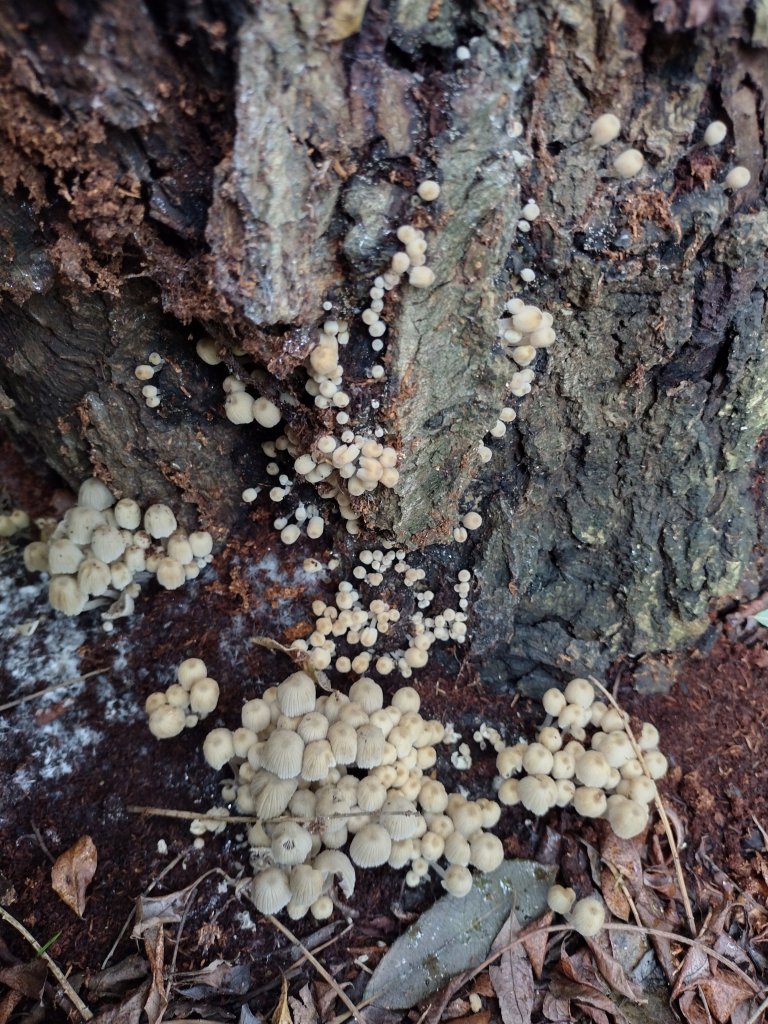
Possibly a group of Fairy inkcap
(Coprinellus disseminatus)? Found at the base of a tree.

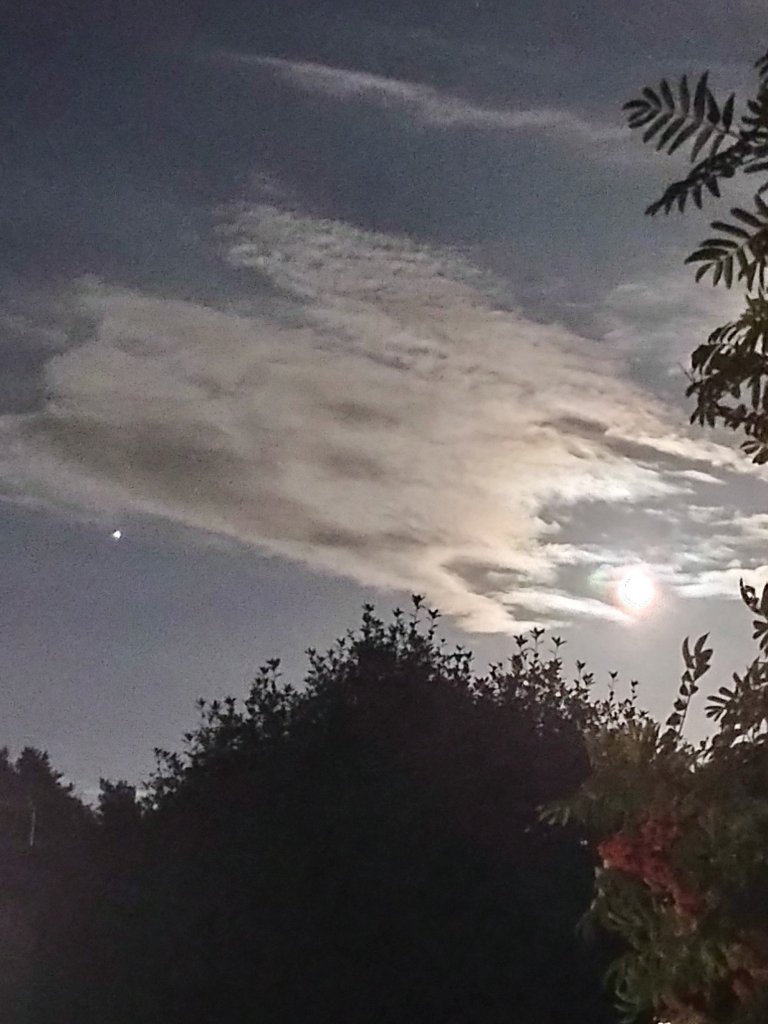
Evenings are noticebly drawing in earlier these days. Saturn is still visible with the naked eye at this time, as is Jupiter. The latter can be seen very clearly, in fact only the moon is brighter in the night sky at the moment. I managed to capture an image on the 10th September which can be seen below.

The tiny dot of Jupiter (left) in the early evening alongside the full ‘Hunters’ moon before being obscured by cloud.

Also in September my partner and I went on a break for a few days to the north east of England. We stayed in a lovely vintage caravan near Durham. On the first day we spent the morning exploring the city, after which we walked alongside the River Wear; there was lots of Himalayan balsam (Impatiens glandulifera) in flower (both along the river bank as well as beside the pathway). We walked to Durham University’s Botanic Garden to have lunch. While we were there we witnessed a Stoat
(Mustela erminea) under aerial attack from a Magpie (Pica pica) as we sat in the North American Arboretum (no photo evidence unfortunately). This was our first encounter with a Stoat. Similar to Weasels (Mustela nivalis) Stoats can be easily distinguished from them due to the black tip on their longer tail. The Woodland trust has an article about how to differentiate them on their website.

Then in the afternoon we went to Seaham beach to search for seaglass. A well known area for seaglass searchers, Seaham beaches are noted on maps as being glass beaches due to the huge amount of glass pebbles (of various colours) that can be found there. The glass was discarded into the sea from the Seaham Bottle Works which used to be in the area (between 1853 and 1921. It is known that 20,000,000 hand-blown bottles a year were produced at the height of manufacturing at the factory). It was a quiet sunny day when we visited the area and the sound of the waves crashing against the beach was mesmerising.

We found lots of seaglass including some rare red pieces as well as some that were made up of two colours.

While we stopped for a coffee at the local cafe, we saw a Purple sandpiper (Calidris maritima) with a large group of Gulls (Larinae). Similar in appearance to Gulls, the Sandpiper was larger, speckled and greyer as shown in the following image (taken from the visitor notice board next to the cafe).

This wading bird is a winter visitor in the north east of England. It’s numbers are at a vulnerable level, therefore it is red on the UK conservation status list. They will eat Winkles (Littorina littorea), insects, spiders, crustaceans and also plants.

On the Wednesday, we drove up to Northumberland to visit Lindisfarne. As we drove to the village we got to see the location of Vera’s house (from the ITV detective series Vera). This dwelling is privately owned but it’s possible to park nearby and view it from a distance.

The Snook Tower and stable (left) next to Snook House (right) is Grade ll listed and thought to have been a windmill or watchtower. Both buildings date from the early to mid 1800s.

There was lots of wildlife to see on the journey towards and around the village too. On the way across the causeway, we noticed a Curlew (Numenius arquata) amongst other wading birds. As with the Sandpiper, the Curlew is also red on the UK conservation status list. Approximately 30% of Western Europe’s flocks will overwinter in the UK, unfortunately there was a sign warning of Bird (Avian) flu on the island. Bird flu has been rampant in the UK this year which doesn’t bode well for lots of birds but it is particularly foreboding for many waders and seabird populations. The Curlew’s down curved bill was the give away to its identification. They search for worms, shellfish and shrimps in the nature reserve along the causeway. The RSPB gives a description of Curlew’s here.

It was amazing to witness lots of European grey seals (Halichoerus grypus) as we wondered down by the islands beaches, searching for more seaglass. It is possible to witness them swimming nearby, next to the sandbanks and nature reserve beaches which they inhabit. It is also possible to hear them, unfortunately I was unable to obtain a great video of this; however I found a recording online here, of Grey Seals Singing on the Mewstone in South Devon which gives you an idea of what they sounded like on our visit to Lindisfarne.

The three markings in the sea (top) are actually the best image (on full zoom) of the Seals I could obtain. However you could visibly identify their bobbing heads looking from side to side as well as them diving and resurfacing.

Pups start to be born in September so perhaps we could hear the young with the females, or maybe the adults were singing to one another. Whatever the reason for their beautiful vocalisations, it was absolutely amazing to listen to the haunting sound.

As well as these creatures, we got to see some flora as we investigated the island too. There was;

Sea thrift (Armeria maritima)
Sea campion (Silene uniflora)
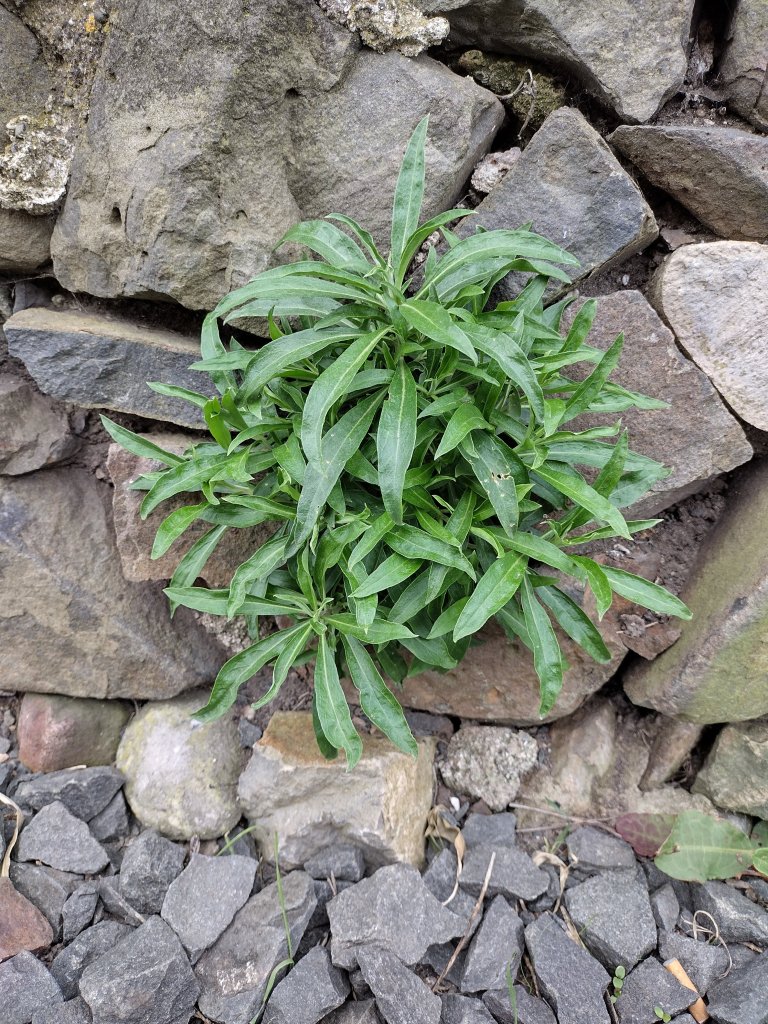
Wallflower (Erysimon cheiri), not in flower
Sea mayweed (Tripleurospermum maritimu) and
Sea spleenwort (Asplenium marinum) alongside some Common orange lichen (Xanthoria parietina).

It was lovely to get away for a couple of days while witnessing wildlife that I had never seen before. Relaxing by the sea, especially on Lindisfarne was so rejuvenating. Obviously two full days with travelling time either side wasn’t long enough, but there’s always next years adventure.

Posted in nature

One Day of Christmas

Having time off has allowed me to catch up on some reading, listening to the birds as I do so. In the mornings I usually notice Blue tits (Cyanistes caeruleus), Great tits, (Parus major), Robin (Erithacus rubecula), Blackbird (Turdus merula) and Magpie (Pica pica) until eventually a Pigeon (Columba palumbus) wakes up and joins in with the chorus. Although it has been nice to relax, it isn’t long before cabin fever kicks in and I need to be outdoors.

As I went for a walk last week, my mood was elevated. I noticed a red-legged partridge (Alectoris rufa) pecking at food along a path.

For a ground dwelling bird, that prefers to run than fly (in short bursts) when danger is near, it was no surprise that it wasn’t in a pear tree. However seeing this bird did feel appropriately festive.

I also saw some Winter jasmine (Jasminum sieboldianum) blooming; bringing a welcome burst of yellow at this time of year.

Upon my return home I caught the lovely sweet scent Sarcococca confusa too.

The small flowers are insignificant amongst the evergreen foliage but they have an intoxicating aroma that I love. I hope the birds find the black berries to eat.

My other winter flowering plants blooming at the moment are;

Sarcococca hookeriana

– and Witch hazel ‘Diane’

(Hamamelis × intermedia ‘Diane’)

Both of these plants are fragrant too but their scent is more subtle than that of the Sarcococca confusa.

I enjoy the transition between years. I don’t make resolutions but I love the positive feeling of renewal and freshness that occurs at New Year.

I also like to reflect on the previous twelve months. The highlight (rather predictably) was catching sight of some Painted lady butterflies (Vanessa cardui) after they migrated in large numbers to this shore in the summer.

I have learnt so much about the wildlife that I’ve seen as I have written my blog; it has been a very enjoyable experience. I am grateful for those of you who follow my discoveries, thank you for taking an interest in my ramblings

Best wishes for 2020!

🐝

Posted in nature

🎵🎶I see a Little Silhouetto of some Squirrels

There were a few frosty mornings last week. Only Yarrow (Achilles millefolium) was still flowering around the bus stop.

Now the trees across the road are bare I enjoyed watching three grey squirrels run up and down trees, jumping from branch to branch. They ate from bird feeders alongside Magpies (Pica pica). Occasionally the squirrels flicked their tails when they sensed danger; sending a warning to the other squirrels and letting any predators know they’ve been seen.

A Grey squirrel silhouetted amongst trees.

On Monday I finally managed to obtain a photo of a Red kite (Milvus milvus).

It came down low enough for it to be identifiable in the photo above. I have been trying to get a reasonable photo of a Kite for ages so was very happy to capture one of these beautiful birds at last.

Even though winter is on its way there are signs that spring will arrive eventually too. I noticed buds on another of my favourite trees, the Star magnolia (Magnolia stellata) on Wednesday.

It will be ready to flower in March before the leaves appear. The Starlike shape of the white or pink flowers gives this tree it’s common name. Native to Japan this small tree fits nicely in a small garden.

Posted in nature

Music to my Ears

While my colleagues listen to their music via headphones I prefer to listen to nature as I work; especially birdsong which I find uplifting. Recently I have started to really tune in and distinguish different songs and calls as I attempt to identify particular birds. By teaching myself I now recognise Great tit (Parus major) song, Coal Tit (Parus ater) song and Tawny Owl (Strix aluco) call. However I still find it difficult to pick out certain sounds which is why last Sunday I went to an ‘Introduction to bird calls and songs’ nature talk and walk at a local park. We were introduced to 12 birds that we would most likely hear during our afternoon stroll. Most were already familiar to me however I did learn the songs of Chiffchaff (Phylloscopus collybita) and Greenfinch (Carduelis chloris).

The birds we ended up hearing (above the wind and sirens) were;
-Woodpigeon (Columba Livia)
-Carion crow (Corvus corone)
-Magpie (Pica pica)
-Wren (Troglodytidae)
-Chiffchaff
-Blackbird (Turdus merula)
-Great Spotted Woodpecker (Dendrocopus major)
-Blackcap warbler (Sylvia atricapilla)
– and Song thrush (Turdus philomelos).

We also saw a (quiet) Jay (Garrulus glandarius) along with a Speckled wood butterfly (Pararge aegeria), Red admiral butterfly (Vanessa atalanta) and some White-tailed bumblebees (Bombus lucorum).

Last week I combined what I learned at this event with my previous knowledge; the birds I was confident I identified correctly were;
-Woodpigeons
-Magpies
-Blackbirds
-Robin (Erithacus rubecula)
-Ring necked parakeets (Psittacula krameri)
-Blue Tits (Parus caeruleus).
-Chiffchaffs
-Mallard (Anas platyrhynchos)
-Red kite (Milvus milvus)
-and House sparrows (Passer domesticus)

On several mornings I also watched the family of Blue tits on the Rowan tree as I ate breakfast. The parents had nested in the eaves around Easter (see Different sort of Easter Chicks) so it was great to discover they had a successfully reared a brood. I counted 6 fledged youngsters return to the tree and feed on insects together.

Blue Tit acrobatics- One of the youngsters feeding itself.

These weren’t the only sightings last week as I also saw;
-another Red Admiral butterfly

-a Cinnabar moth (Tyria jacobaeae)

-some Ivy-leaved toadflax (Cymbalaria muralis)

-Common spotted orchid (Dactylorhiza fuchsii)

-Pineappleweed (Matricaria discoidea)

-As well as a common frog (Rana temporaria)

Posted in nature

Natural therapy

Nature enables me to be mindful, focus my attention on the present moment and help combat my anxiety. I am lucky that I work outdoors (no, I don’t mind the rain and cold weather) it enables me to dose up on serotonin and vitamin D as well as get plenty of exercise. Also, I can observe nature as I work which is great therapy.
Last week was busy but I still managed to take time out of my schedule to focus on nature.
The week started joyfully with a Red-tailed bumblebee flying around me while I was working. It was a male drone, identified by its yellow markings, along with the black and red colouring. I love hearing bees buzzing, especially when it is amplified by a trumpet shaped flower or there is a chorus of them, it is so relaxing.
Then on Tuesday, while retrieving a ladder from the shed, I noticed an adult Robin trying to fly in through the shed door. Realising it probably had a nest in there I left the door ajar and walked away. After a few moments I was glad to see it fly into the shed and reappear with a fledged youngster. It was beautiful to witness this.
On my way to work, the next day, I came across a male Pheasant dining out with some sparrows and two squirrels. The pheasant and sparrows were eating some bread and birdseed (left on the lawn by one of my neighbours). The squirrels were attacking the bird feeders. I have heard the pheasant for a few weeks now but this was the first time I had seen him. The sparrows and squirrels were unfazed by him, obviously realising he was no threat. I love the colours of a male pheasant’s plumage. They are so rich and great inspiration for craftwork. I can just imagine knitting a jumper in those colours, now there’s a thought…
During Thursdays lunchtime I watched a Magpie washing its feathers in a puddle. It was splashing around for about 5 minutes, flew into the nearby conifer only to return to the same puddle for another long cleaning and preening session. Watching it made me smile.
The working week ended with a lovely lullaby. I fell asleep listening to the beautiful song of a male Blackbird. He started singing around 10:20pm. He hasn’t sung at that hour since; perhaps he was only visiting the Rowan tree outside. It is also possible that something disturbed his slumber and the lit streetlights confused his body clock. Whatever the reason for his singing at that time of night it was a lovely way to fall asleep.