Posted in Allotment, nature

Build it and They Will Come

August disappeared quickly and September is zooming by, even the Autumn equinox has been and gone. Apart from the heatwave a few weeks ago (with the highest temperatures of the year being reached) it is beginning to feel autumnal. Fungi has appeared, leaves have started turning, plus nights are drawing in and cooler misty mornings have returned highlighting once hidden spiders and their cobwebs.

Foraging blackberries had begun early this year but the extreme heat meant that the remaining flowers and berries dried up; the same is true of elderberries, although sloes, haws, rosehips and rowan berries are abundant. Unlike last year, apple and pear trees, that I see regularly, have struggled with the weather this year as well. Thankfully harvesting on the allotment is still going strong; potatoes, kale, beetroot, radishes, chillies, courgettes and rhubarb have been keeping us fed. The popping corn will soon be ready too. I have also been harvesting calendula, lavender and other herbs recently.

There has been a few changes on my plot. I had finally collected enough items to be able to construct ‘the bug snug’. 

It is an addition to the wildlife section containing wildflowers and long grass (which also links to a pond on the adjoining plot). I know we have a couple of frogs visiting us so hopefully it encourages more to inhabit our allotment (to help keep slug and snail population down). I still hear the grasshopper when we are nearby too. There has also been evidence of a fox visitor; random toys get left near the water I leave out, along with poo on the grassy paths between plots.

Last week I also noticed that the Bee house, at the opposite end of the plot, was finally being used.

I found it hard to contain my excitement as it has been there for a few years and I was beginning to think it would never be used. There is evidence that it has been used by a Leaf-cutter bee and Mason bees too. Although it is difficult to know which ones specifically, the most commonly found in gardens are the Patchwork leaf-cutter bees (Megachile centuncularis) and Red mason bees (Osmia bicornis). As the name suggests Leaf-cutter bees used leaf particles to plug one piece of bamboo while those used by the Mason bees were plugged with soil. Each cell contains larvae as well as some pollen and nectar for the developing young. Male bees fly out before the females as they are near the entrance. The developing bees will remain there over winter and emerge as adults next spring, at the around April.

In other news… While clearing a gravel footpath of wildflowers at work, I accidentally disturbed a Devil’s coach-horse beetle (Staphylinus olens). I stopped weeding that section to enable it to hide for the rest of the day.

Devil’s coach-horse beetle

These beetles can raise their abdomens (resembling a scorpion), release an odour and even bite when they need to defend themselves (thankfully it didn’t feel threatened by my presence). They grow up to 2cms 8mm in length and are commonly found in gardens from April till October (when accidentally disturbed as they are active at night). The young overwinter in the soil as pupae until the following spring when they emerge as adults. The adults can fly but usually quickly run away from danger or to catch prey eating larvae, insects, spiders and slugs.

The Big butterfly count results came out this month. The long term trend of many species of butterfly and daytime flying moths recorded continue to fall, although the numbers were the highest since 2022 (with an average of 12 butterflies being spotted compared to 9 back then). The most commonly recorded were Red admiral (Vanessa atalanta), Gatekeeper (Pyronia tithonus), Small and Large whites (Pieris rapae and Pieris brassicae) as well as Holly blue (Celastrina argiolus). While those which are in significant decline are Ringlet (Aphantopus hyperantus), Common blue (Polyommatus icarus) and Speckled wood (Pararge aegeria). Over the last few days I have seen several Red admirals and even one Speckled wood making the most of the Autumn sun.

Upon visiting the Chiltern Open Air museum on the last bank holiday weekend, we walked through the meadow and woodland that is there. In the woodland, a couple of Silver-washed fritillary (Argynnis paphia) butterflies fluttered in amongst the brambles (the flowers of which give nectar for these fritillaries along with thistle blooms.

Silver-washed Fritillary

There were lots of Dog violets (Viola riviniana) on the woodland floor too, which is the food source for their caterpillars. The wingspan of this butterfly is between 7.2cms and 7cms 6mm. They are found in most areas of the UK (apart from Scotland) and often in oak woodland.

The meadow was full of wildflowers, but it was particularly lovely to see
Harebell (Campanula rotundifolia) and Wild basil (Clinopodium vulgare) amongst them.

Harebell

The delicate looking Harebells bloom from late summer into autumn. They can be used as an indicator of dry nutrient poor chalky limestone soil which they require to thrive. Along with dry undisturbed grassland and heathland Harebells will flower in walls, cliffs and even on sand dunes.

Wild basil

Wild basil is a mound forming perennial which also likes the same soil conditions as the Harebell. This wildflower can be seen blooming in July, August and September.

It was lovely to see Tansy (Tanacetum vulgare) growing in the wild too; found in a few areas including near the iron age roundhouse located on the museum grounds.

Tansy

It starts flowering in July through to October. While used as an insect repellent to keep ants and flies away, some insects, especially the Tansy beetle (Chrysolina graminis) are resistant to the toxins produced by the plant. Tansy beetles are endangered in the UK; only found in two places in York along the River Ouse and in Cambridgeshire at the Woodwalton Fen nature reserve. We are at risk of losing this once common beetle due to habitat loss (wetlands), where their entire lifecycle occurs, and loss of suitable food source (mainly Tansy); however in the Fens its been seen eating Water mint (Mentha aquatica) and Gypsywort (Lycopus europaeus) too. It’s conservation status is known to be Nationally Scarce and is a
UK BAP priority species that is
Protected in the UK under the Wildlife and Countryside Act, 1981.  More can be found on this beautiful beetle on the Buglife website (see web pages below), including how to help with its conservation.

The Tansy beetle

Tansy beetle conservation

Posted in Allotment, nature

The Long Wait

I have been watching a wild flower grow, in the small garden that I look after in front of my flat. Initially unable to identify it (as I didn’t recognise the foliage) I patiently waited throughout autumn and winter to see what emerged. Then in late spring it developed stalks and flowerheads enabling me to see it was a Field scabious- (Knautia arvensis).

This perennial is blooming now. Bees are loving the flowers.

Field scabious is usually found in places such as grassland, meadows, grassy verges and hedgerows. This self set is obviously enjoying similar conditions in my little plot; thriving in an area against a brick wall with dry, partially shady conditions. It is wonderful to see it attract so many beneficial insects so am happy for it to remain where it is.

The allotment is coming on leaps and bounds. The strawberries (which rarely make it home) were a sweet reward as I watered daily through the recent heatwave and continue to ripen. The Blackflies on the Broad beans were eventually joined by seven spot (Coccinella septempunctata) and Harlequin (Harmonia axyridis) ladybirds, together with lots of their larvae; proof that if you leave pests, predators will appear to deal with them; nature really is wonderful.

The recent higher temperatures have encouraged butterflies to fly around. Lately I have seen Small tortoishells (Aglais urticae), Peacocks (Aglais io), Marbled whites (Melanargia galathea) and Speckled woods (Pararge aegeria).

Also on one sunny day last week, while eating lunch outside, I heard a bird song that I didn’t recognise. I recorded it on the Chirp-o-matic app (the name makes me think of Wallace and Gromit) to discover that it was a Yellowhammer (Emberiza citrinella). The rhythm and length of notes makes it sound like they’re saying ‘a little bit of bread and no cheese’. In fact this phrase is used by birders to identify it by the song alone and can be heard on the RSPB website.

Unfortunately I couldn’t see the bird which was a shame as I would have loved to see its yellow plumage. Part of the bunting family, both males and females have yellow colouring mixed with some brown (the males can be distinguished as they are more vibrant). These birds are currently on the red list for UK conservation status and therefore
Protected by The Wildlife and Countryside Act 1981. Found on farmland, they
eat seeds, insects, worms, caterpillars, spiders and snails and weigh in at about 25-36g weight (a similar size to a sparrow).

To encourage yellowhammer numbers, the RSPB has produced information for farmers so they can take action to help these birds; However the actions can be applied by anyone living near farmland, and can be found here.

Posted in Allotment, nature

Finally, a Flash of Blue

For a few weeks, I have been wondering if I would notice any Holly blue (Celastrina argiolus) butterflies this year. However, the week beginning 17th May I was finally rewarded with the sighting of a male (deduced from a lack of dark edges on the wings) making the most of a brief spell of dry sunny weather. As so often with butterflies, it didn’t remain still long enough for me to photograph it.

From one year to the next, Holly blue numbers can vary significantly. This rise and fall in numbers is mostly due to the parasitic Ichneumon wasp, which feeds solely on the larvae of this butterfly. When this wasp has a successful year then Holly blue numbers fall. Consequently the reverse is also true because without adequate Holly blue larvae numbers of the wasp decrease, thus enabling Holly blue butterfly numbers to increase once again. Perhaps this explains why I haven’t seen many Holly blue Butterflies as usual this year; however other factors could be the weather (so far this May has been colder and damper than usual), or maybe I simply haven’t noticed them flying around.

This male butterfly will have been part of the Spring generation (adults which fly from March to May); however there is also a summer generation that I may have more opportunity to witness, later in the year.

As a caterpillar, the spring generation will have been feeding upon Holly (Ilex aquifolium); preferably the buds, berries and terminal leaves of female plants.

The caterpillars of the second generation of butterflies seen flying around between July and September mostly feed in Ivy (Hedera helix); although they will also feed on other plants such as bramble (Rubus fruticosus) Gorse (Ulex spp.), Dogwoods (Cornus spp.) and also Snowberries (Symphoricarpos spp).

Things are moving along at pace at the allotment as well. There are lots of seedlings on the go, fruit is developing and the potatoes are showing growth. The Rhubarb has been harvested for a while now too.

New tenants have taken over plots at the bottom and to the left of our plot. Our new neighbours having made such a headway already means that we no longer have long grass on these two sides. While it is lovely to see the plots being productive at long last, it is a little sad to think we won’t hear grasshoppers during the summer like we did last year.

The removal of the lush grass may explain why we found two frogs (Rana temporaria) on our plot last weekend. They seemed to be seeking refuge on the tiny patch of grass I purposely left for wildflowers. Thankfully for them the predominant thing growing there is still grass highlighted with a few dandelions. As I want to reduce the slug and snail population on our plot, I am happy to encourage these frogs by giving them a home amongst the long grass. Instead, I may move the wild flower area nearer to the shed.

Posted in nature

Amazing Auburn Beauty Spotted

Annual honesty (Lunaria annua), Shepherd’s purse (Capsella bursa-pastoris) and Hedge garlic (Alliara petiolata) were all blooming last week, which is great for the increasing numbers of pollinators I saw flying around.

Some flowers began to open up on a Crab apple (Malus spectabilis) I saw in in one garden too.

As alluded to above, more insects were prominent throughout last week compared to earlier in the month. I saw my first male Orange-tip butterfly (Anthocharis cardamines) and undisturbed Seven-spot ladybirds (Coccinella septempunctata) of the year.
Yet more species of bee were buzzing about too; I observed female Early bumblebees (Bombus pratorum) one Hairy-footed flower (Anthophora plumipes) bee queen, along with several female Red-tailed (Bombus lapidarius) bumblebees.
A great Bumblebee ID guide can be viewed at Blooms for Bees; this website also includes ways to encourage bees into your garden.

Then on Thursday, as I was clearing wildflower seedlings from a path, I noticed a beautiful redhead resting next to me.

This photo doesn’t do the vibrant colouration of this bee justice.

I recognized it was a bee but was initially unsure of the species. Upon further investigation, via Google lens, I discovered it was a female Tawny mining bee (Andrena fulva).

Given the place I saw the bee, I was unable to locate it’s nest, in fact it may have flown in from another garden anyway. Their burrow is usually located in lawns (sometimes flower beds); identifiable from a mound of earth with a hole at the top for the entrance. Often described as having a volcano like appearance it can be differentiated from ants nests which are flatter and have no distinguishable hole at the summit. After several weeks these mounds are no where to be found, so they can be left undisturbed without any worry of damage to lawns.

These solitary bees (which do not sting) can be seen between April and June in gardens and parkland as well as along the edges of fields and orchards.

The appearance of these beautiful bees coincides with the flowing of Cherry (Prunus), Pear (Pyrus), Hawthorn (Crataegus), Blackthorn (Prunus spinosa), Maple (Acer), Willow (Sallows) and Apple (Malus) trees, along with other plants such as Buttercups (Ranunculus) and Dandelions (Taraxacum). Nectar and Pollen from these blooms is collected for the bee larvae that develop in the nest beneath the ground. Once the young become pupa, they continue to hibernate through winter to eventually emerge the following spring.

Males are smaller than the female Tawny bees and are a dull brown colour. They do not take any part in creating nests or rearing the young, the females will undertake these jobs alone.

Posted in nature

The Birds and the Trees

On the 31st January, I undertook the RSPBs Big Garden bird watch. Most birds, I’d normally see, were clearly hiding but I did notice some within the hour. Those birds I saw were; 1 Carrion crow (Corvus corone), 2 Robins (Erithacus rubecula), 1 Coal tit (Periparus ater), 1 Blackbird (Turdus merula) and 2 Mistle thrush (Turdus viscivorus). I enjoy taking part in this citizen science project each year; it’s interesting to see how the results differ each time.

Due to the frozen ground last week, I was still able to go for my regular exercise in the local woodland park. Various tree species were waking up from their winter sleep. Beech (Fagus) and Oak (Quercus) had started budding while others were developing catkins.

Last years leaves and new buds on a Beech tree.
Old Oak leaves alongside new buds.

As well as the Hazel (Corylus avellana) other trees had catkins hanging from them too. Hazel catkins are the earliest to flower in the year, from January to March (see my previous post A Snowy Adventure).

Then the Alder (Alnus glutinosa) is the next tree to bloom with both male and female catkins. The male catkins are longer than the female ones which flower from February to March. Also hanging from the Alder trees were some small dark brown shapes. These woody cone-like fruit develop from the previous seasons fertilised female catkins; these can remain on the tree (even when the seeds have been shed) well into the following year alongside the newly formed catkins. I also noticed leaf buds growing on the trees last week too. When the buds burst, I shall update the Woodland trust Nature’s calendar with my findings.

Unfortunately I was unable to capture decent photos on location so I collected part of a fallen branch to take home.

One small female catkin above a group of larger male catkins. On the tree (before fertilisation when they develop into the rounder, woody fruit) the female catkins point upwards while the male ones hang down.
A magnified view of two unfertilised female catkins.
A leaf bud with one of last years fertilised female catkins.
A magnified view of the Alder tree seeds that had remained in last seasons female catkin.

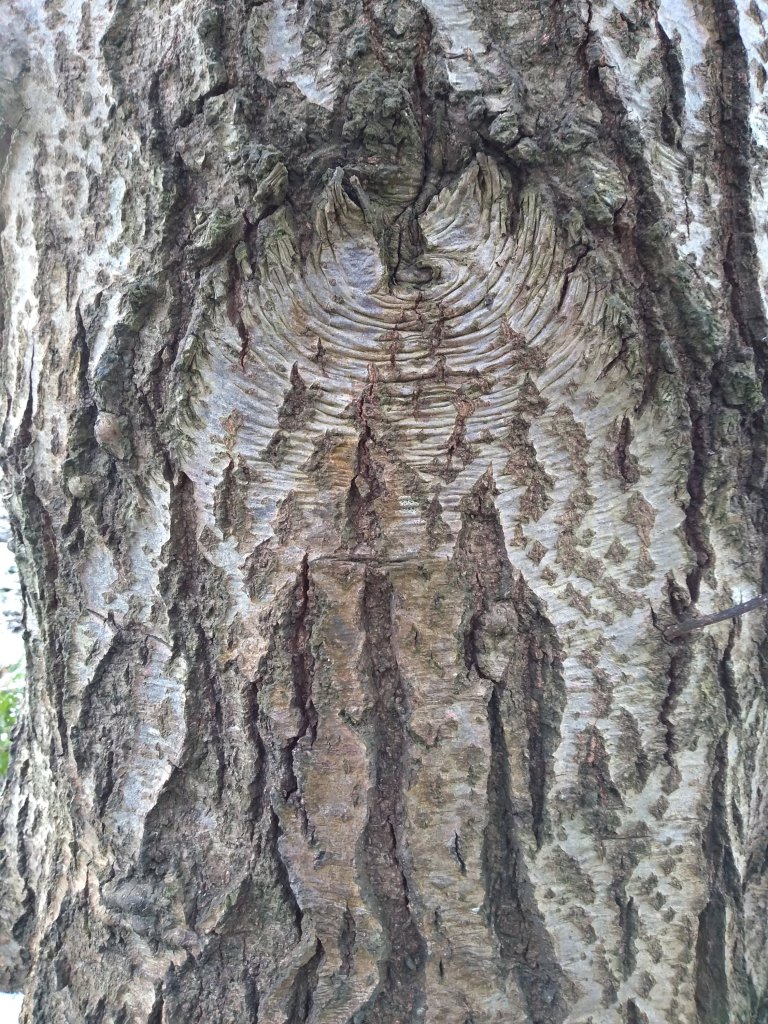
I find Alder trees fascinating and the rough, fissured bark beautiful.

Alder are native to Britain and found on wet land, next to water or in marshes and woodlands. They naturally thrive in moist conditions although can also grow in drier areas such as the edges of mixed woodland. Alder wood is durable when wet and actually becomes stronger rather than rot when submerged in water; a characteristic that makes them useful in flood mitigation, boat building, sluice gates, and even the construction of Venice which is mostly built on Alder piles. Alder wood is also used in the creation of charcoal, gunpowder and making clogs.

The pale wood turns a deep orange colour at the point at which it’s cut (while the rest of the wood remains pale); leading to a superstition, in Ireland, that it was bad luck to walk past an Alder tree on your travels. However, traditionally alder branches were also taken into houses to prevent Woodworm. Alder wood is particularly liked by various species of beetle larvae (collectively referred to as Woodworm). It is hoped that the beetles will lay eggs in the Alder rather than the furniture or fixtures; the branches once infested can then be removed.

There is also a traditional use for Alder flowers as a green dye; believed to be used as camouflage by outlaws like Robin hood and fairies.

For fun, I looked up Alder wands used in the Harry potter series. Only one is mentioned, that owned by Quirinus Quirrell. The wands qualities are described on the Wizarding world website.

The roots of Alder are nitrogen fixers. Nitrogen from the air is fixed into the soil, replenishing the levels and aiding soil fertility, through the bacterium Frankia alni.

As well as improving soil, Alder are great for wildlife too. The seeds are eaten by Redpoll (Acanthis flammea), Siskin (Spinus spinus) and Goldfinch (Carduelis carduelis). The leaves are food for the caterpillars of the Alder kitten (Furcula bicuspis), Pebble hook-tip (Drepana falcataria), Autumn green carpet (Chloroclysta miata) and Blue-bordered carpet (Plemyria rubiginata) moths. Bees visit the catkins for an early source of nectar plus Alders provide habitats for the Checkered skipper (Carterocephalus palaemon) butterfly, Small pearl-bordered fritillary (Boloria selene) butterfly, some species of Crane fly, Otters (which create nests amongst the roots) along with mosses, lichens and fungi that like damp conditions.

However, these trees are also threatened through infection by the Phytophthora fungus (together with some other broadleaf tree species). In Alder this disease is referred to as Alder dieback and eventually causes the death of any infected tree. For more information see the Forest research website. There aren’t many Alders in my local woodland park compared to other tree species so it would be sad to see them disappear. Given my newly acquired knowledge I will keep a special lookout for any ill health in these trees; thankfully no infection is being exhibited at the moment.

Posted in nature

Common Insects but an Uncommon Viewing Experience

It was great to still witness pollinators flying around last week. Even though, due to the colder weather numbers have greatly reduced, some insects are still foraging. I noticed the odd hardy Buff-tailed bumblebee (Bombus terrestris) as well as a few Honey bees (Apis mellifera) visiting autumn flowering perennials and shrubs. Currently the most wonderful spectacle is Common Ivy (Hedera helix) in full bloom. Loved by pollinators including butterflies, bees and hoverflies, ivy is a useful plant to have in flower at this time of year. It supports up to fifty species altogether, such as providing food for Holly blue Butterflies (Celastrina argiolus), along with the Small dusty wave (Idaea seriata), Angle shades (Phlogophora meticulosa)
and Swallow-tailed (Ourapteryx sambucaria) moths. Mature Ivy plants flower in September and October on clustered umbels. Eventually, pollinated flowers develop into fruit that provides food for Thrushes (Turdidae), Blackbirds (Turdus merula), Blackcaps (Sylvia atricapilla) and Wood pigeons (Columba palumbus). Ivy also provides shelter for hibernating insects over winter.

However the most prevalent insects I witnessed covering the ivy flowers last week were the Common wasp (Vespula vulgaris). They weren’t nesting amongst it but feeding on the abundant nectar. My confidence in their complete focus on the ivy flowers, and not being bothered by my presence, enabled me to unusually observe them up close. Each time I came across ivy covered with wasps, I would take a few moments to watch and listen. Unlike bees, their buzzing was very faint; you had to listen carefully to hear it. I had never been close enough to appreciate the wonderful pattern on their abdomen before or watch their activity as they hurriedly switched from one flower to another.

I would have been observing male and worker wasps obtain nectar from the ivy (which also visit other umbellifier flowers). Queens are active in spring, collecting nectar from Cotoneaster and other spring flowering shrubs.

These much hated creatures are useful pollinators (as the photo below proves) when not pestering us as we eat outdoors. We can’t really blame them trying to access an easy source of food or protecting nests when we stumble upon them.

Wasps also help keep insect numbers down which once captured, are chewed up and fed to the larvae.

Although I haven’t seen any yet, I am ever hopeful that I will see Ivy bees (Colletes hederae) as I look at ivy. Recorded for the first time in southern Britain as far back as 2001, these solitary bees feed on ivy nectar and are therefore only seen when ivy flowers. Since they were first noted in Britain the species has been spreading northwards, nesting in sandy soil. For further information see (Wildlife Trust).

More fungi started to appear last week too; I saw
– Common bonnets (Mycena galericulata)

– Shaggy ink caps (Xylaria hypoxylon) and

– Candlesnuff (also referred to as candlestick or stag’s horn) fungus (Xylaria hypoxylon).

You have to look closely to identify this minute fungi, found on decaying wood, it has a blackened base.

Lastly I was utterly surprised to witness a Fox (Vulpes vulpes) run across my allotment as I worked early on Saturday afternoon. It looked healthy so presumably had been disturbed with all the activity from allotmenteers tidying their plots.

Posted in Allotment, nature

Butterfly Numbers Flying High.

With Buddleia, Lavender and Verbena bonariensis in full bloom at the moment butterfly sightings have increased significantly.

Along with plenty of Peacocks (Aglais io), Red Admirals (Vanessa atalanta) and Large whites (Pieris brassicae), I noticed a few other butterflies last week.

The first was a Gatekeeper (Pyronia tithonus) visiting Shasta daisies (Leucanthemum × superbum),

but I also saw a Comma butterfly (Polygonia c-album) pollinating some Verbena bonariensis too.

Along with these butterflies, the European gypsy moth (Lymantria dispar) reappeared, still under the Rhubarb patch on the allotment (see my ‘All you Need is Love and Nature.’ post from the 29th June 2020). However it was no longer a caterpillar but in the next stage of its life cycle, a pupa hanging from a Rhubarb leaf.

It can be in the Pupal stage for a fortnight so I will keep checking for its emergence as the adult moth, so I can hopefully see it take place. As I don’t exactly know when the Pupal stage began I’m not sure how soon it will occur. The male and female moths look very different so can be easily identified, plus the females don’t fly (see Butterfly Conservation); therefore if no moth is found then it was probably a male that has flown away.

The last insect that was noticeable last week was a Common red soldier beetle (Rhagonycha fulva).

It is always great to see these beetles as the are beneficial insects which predate aphids while their larvae eat
invertebrate pests, slugs and snails.

Posted in nature

What a Hoot.🦉🎵🦉🎶

On Saturday night I woke up to a beautiful duet. A pair of Tawny owls (Strix aluco) were calling to one another, reinforcing their territory. The male call sounds like ‘hooo, hu, huhuhuhooo’ while the female gives a ‘keewik’ sound (see BTO).

Tawny owls pair for life and remain in their territory (initially established in winter) throughout the year. Deciduous broadleaf woodland is their traditional habitat but sometimes they live in large gardens and parkland. They nest within tree cavities or nest boxes. Occasionally eggs are laid in February but more often between March and April. While the female is slightly larger than the male, these owls are the same size as a wood pigeon. They feed on small mammals, birds, rodents, fish, frogs, insects and worms. Their UK Conservation Status is Amber as their numbers are declining. 
Another bird which caught my eye last week was a male House sparrow (Passer Domesticus). I was leaving the allotment when I observed him collecting nest material before flying off. As with the Tawny owl, House sparrows pair for life and their numbers have also been declining for a while; House sparrows are Red in the UK Conservation Status list. I grew up seeing lots of them but since moving down south, I haven’t seen one for years so this was a wonderful sight. I love these little birds, especially hearing their chattering and chirping in their colonies. Hopefully I will see him and more Sparrows soon.

As the week went on I noticed more flowers blooming in the hedgerows. Wild strawberry, also called Alpine strawberry (Fragaria vesca), was the first one I saw.

The fruit of this strawberry can be eaten.

Others I saw were; Bugle (Ajuga reptans),

These flowers are visited by White-tailed bumblebees (Bombus lucorum), Common carder bees (Bombus pascuorum), Silver Y moths (Autographa gamma) along with Green-veined white butterflies (Pieris napi).

– Herb bennet/Wood avens (Geum urbanum) and

Grizzled skipper butterfly (Pyrgus malvae) caterpillars feed on this plant.

– Bush vetch (Vicia sepium).

Bees and other pollinators enjoy these flowers.

I got to see a female Orange- tip (Anthocharis cardamines) butterfly, having seen a male one the other week. Males have the orange tips while the tips on the female’s forewings are black (both have the black spots). The female can be identified apart from other white butterflies by the mottled green and white underwings (also exhibited by the males). Caterpillars of this butterfly feed on Garlic mustard (Alliaria petiolata) and Cuckoo flower (Cardamine pratensis).

Posted in nature

“Here’s Looking at you Kid.”

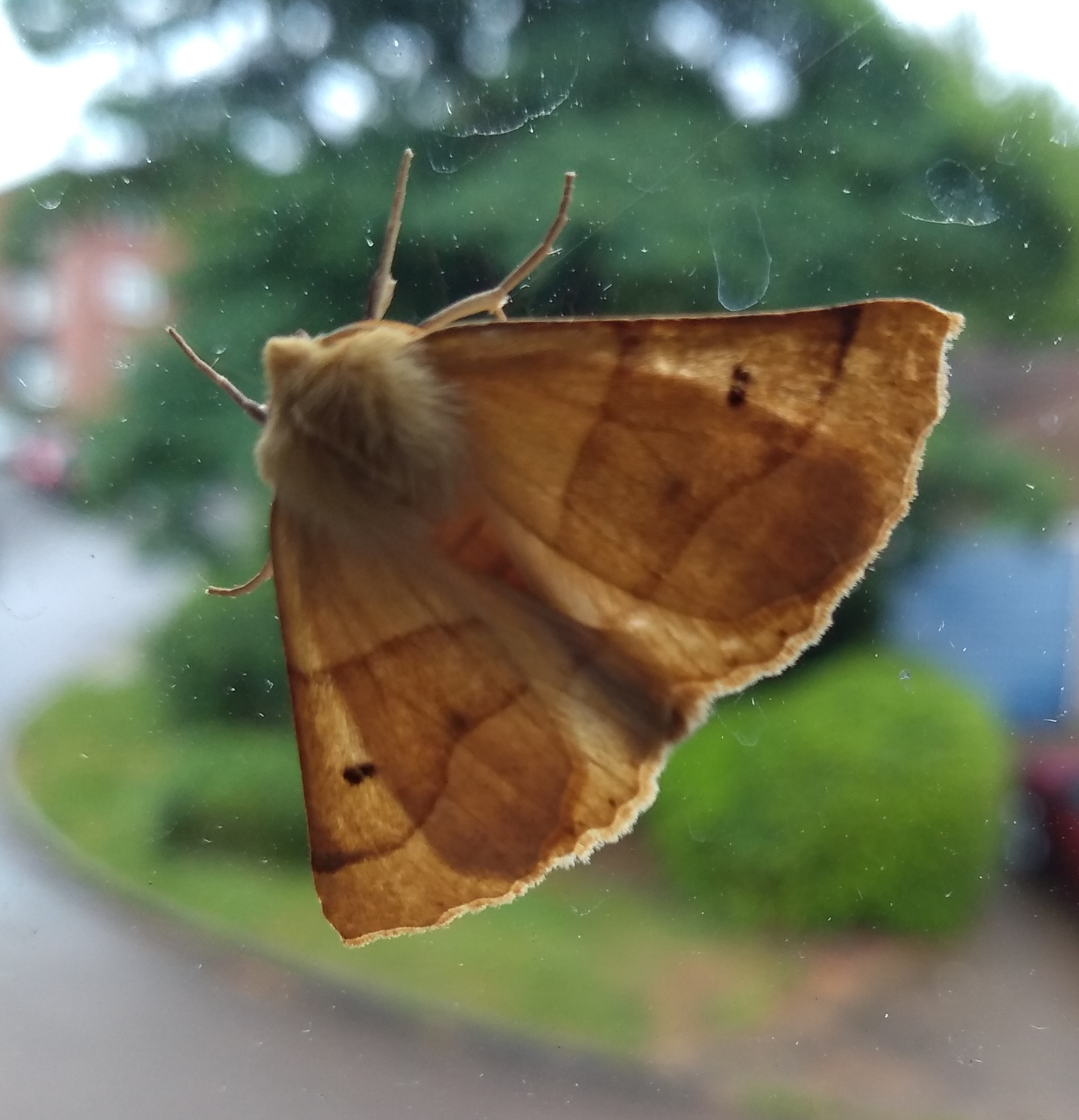
Bank holiday weekend was roasting, especially Sunday therefore I decided to take it easy so I wouldn’t overheat. Even though I didn’t go out, nature came to me. While looking out of the window I noticed a Red Underwing (Catocala nupta) moth trying to remain in shade on an outside wall. This large moth (6.5-7.5cm wingspan) has predominantly red underwings with black and white markings, hence it’s common name. The food of this moths larvae are
Willow (Salix) and Poplar (Populus) trees.

I also managed to photograph one of this years Blue tit (Cyanistes caeruleus) brood in the Rowan (Sorbus) tree outside. They are definitely looking more like the adults now.

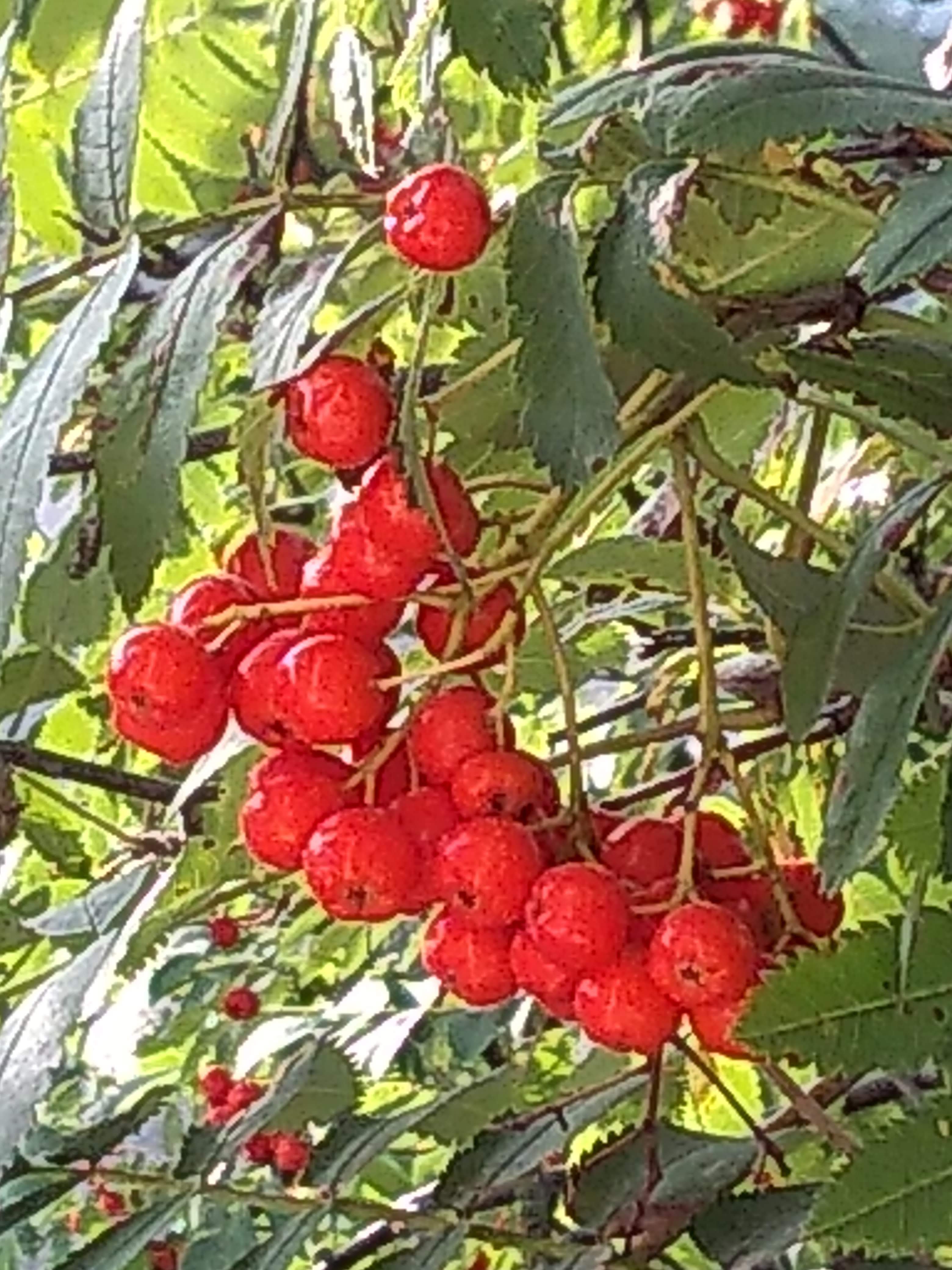
It’s also lovely to see the Rowan is full of ripe berries ready for the Thrushes (Turdus philomelos) and also the Redwings (Turdus iliacus) that I usually see in winter.

Monday was slightly cooler although it was still hotter than I prefer it to be. However armed with suncream, hat and water I visited Ham House and Garden in London. While walking round the grounds, bees, crickets and the occasional Ring-necked parakeet (Psittacula krameri) could be heard.
There was an extensive kitchen garden with cut flower and edible flower areas which I particularly enjoyed viewing.
I saw lots of Honey bees (Apis mellifera) on Globe artichokes (Cynara cardunculus) within the kitchen garden.

There was another lovely sighting as I ate lunch too. Amongst the Wisteria (having a second flush of flowers) as well as some scaffolding was a Wood pigeon (Columba palumbus) sitting on it’s nest. It didn’t move other than to blink as it was no doubt observing us all eating trying to remain undetected.

Upon my return there was a Speckled bush cricket (Leptophyes punctatissima) in the hall to welcome me home. As there was no ovipositor on the end of the abdomen (the appendage from which the female lays eggs) I identified it as male.

Long weekends are lovely but they still pass quickly and Tuesday rolled around again, so I was back to work.
I didn’t notice as many butterflies last week, although bees are still prevalent. During the warmest part of the day, when I was once again wilting, I noticed how active the Honey bees were on the Sedums even though they are only just starting to bloom.

I also observed a Small Dusty Wave (Idaea seriata) moth later that evening. It’s caterpillars feed on herbaceous plants especially Ivy (Hedera helix).

The nice weather of sunshine and low 20s temperature continued to the latter part of the week.

Once again it was Honey bees I mostly noticed on Sedums as well as some visiting

-Rudbeckia laciniata ‘Herbstsonne’.

– and Erigeron karvinskianus.

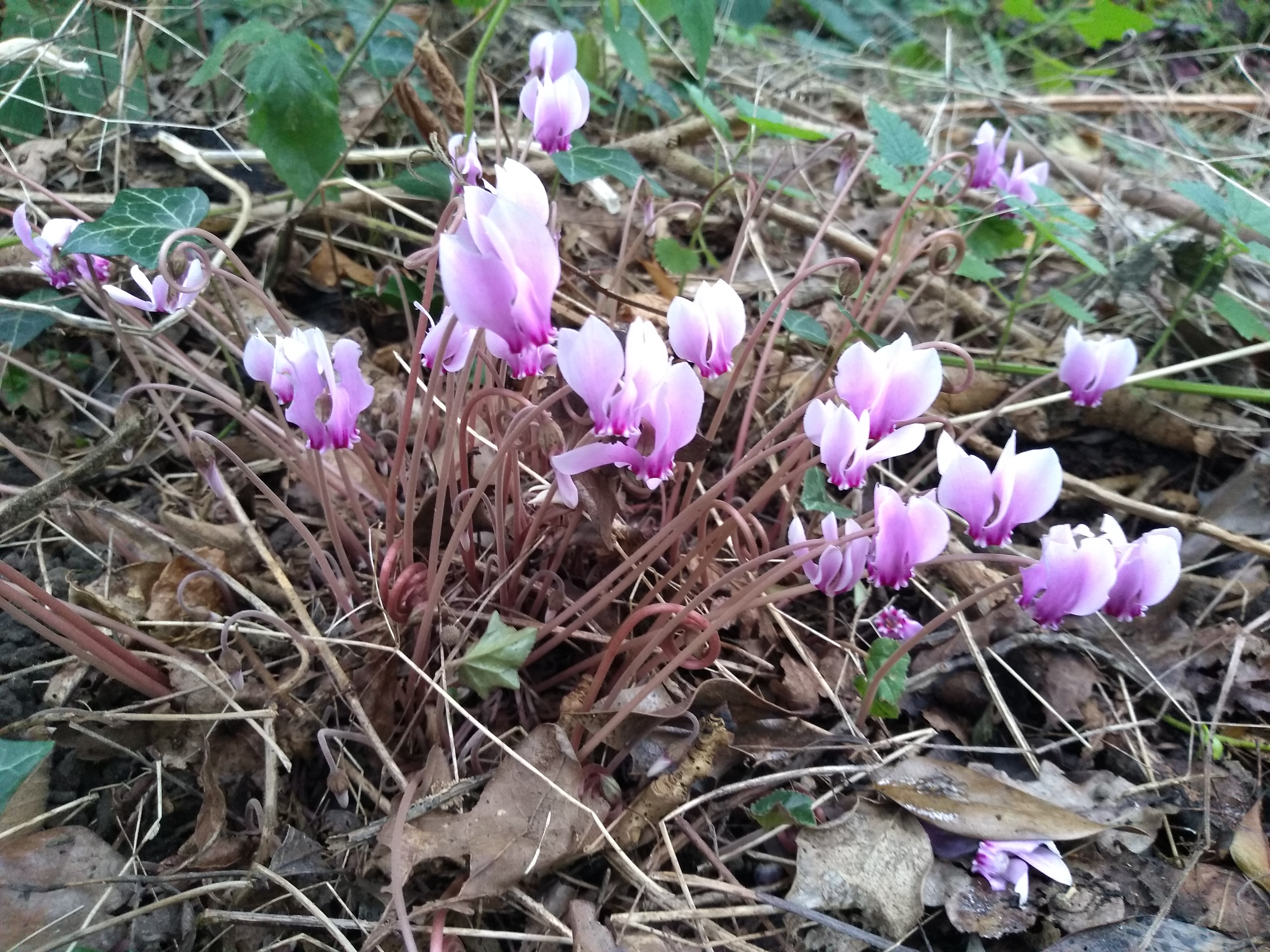
However there was one plant I noticed that surprised me. In a wooded area a small patch of Cyclamen hederifolium was poking it’s flowers above the leaf litter and Ivy; Yet another sign of late Summer and the beginning of Autumn.

Then just when I thought I wouldn’t get to catch a proper view of a butterfly, I managed to see a Small tortoiseshell (Aglais urticae) on a white Buddleja bush.

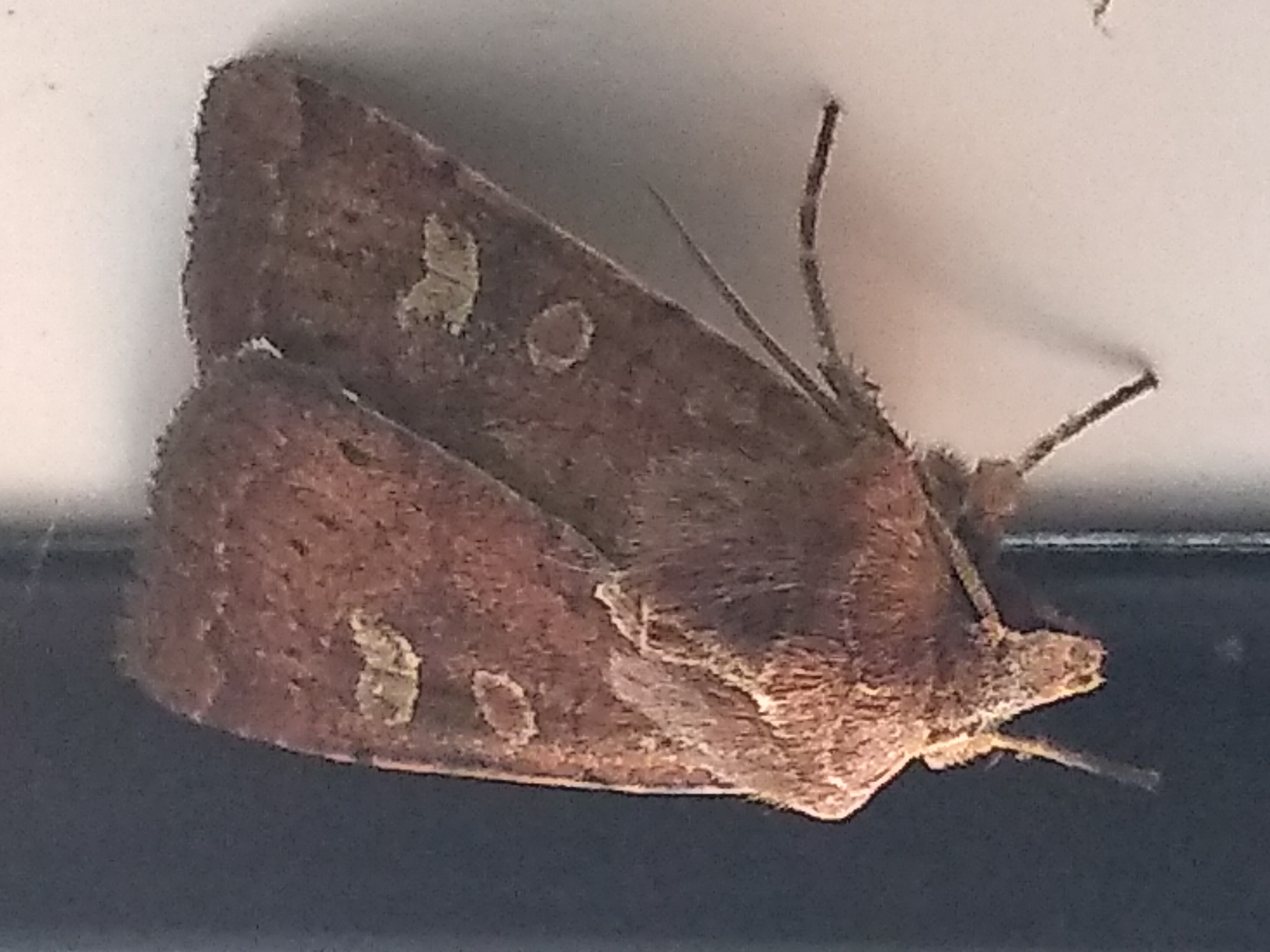
Lastly, I saw another moth in the hall, this time however it was a Square-spot Rustic (Xestia xanthographa) moth.

Posted in nature

The Heat Is On. 🔆🌡️⛈️☔

The weather last week was a mixed bag. Sunshine with the temperature rising into the thirties, fantastic storms and then dull days of rain. Thankfully it is a little cooler now; while I enjoy the sun, I wilt in muggy heat.

Given the weather there were still lots of butterflies around, mostly Peacock (Aglais io), Red admiral (Vanessa atalanta) and Small white (Pieris rapae). Unfortunately I haven’t managed to capture photos of any of these as they didn’t remain in situ for long. I see many white butterflies flit past me. It can be difficult to say if they are Large white (Pieris brassicae), Small white or female Orange tip (Anthocharis cardamines) butterflies because they disappear before I can identify them.

Happily I was able to photograph one butterfly on a Buddleia on Wednesday. The combination of the pattern in the underside, orange colouring I saw on the upper wings, together with the wing outline means the butterfly in the photo below is a Comma (Polygonia c-album).

Their Caterpillars usually feed on the Common nettles (Urtica dioica) but also Elms (Ulmus), Hops (Humulus lupulus) as well as Willows (Salix). Peacocks often visit Buddleia too. The Common Nettle is also the favoured food of Peacock Caterpillars; although they have been recorded feeding on hops and small nettle (Urtica urens) as well. As the common nettle is the favourite food of both Comma and Peacock caterpillars, what better reason is there for allowing some nettles to grow in a garden?

There were other observations last week too;
– a Harlequin ladybird (Harmonia axyridis) on some Lesser Burdock (Arctium minus),

– a Scalloped oak (Crocallis elinguaria) moth,

The caterpillars of these moths feed on honeysuckle (Lonicera), heather (Calluna vulgaris) and broadleaf trees like Oak (Quercus) and Birch (Betula).

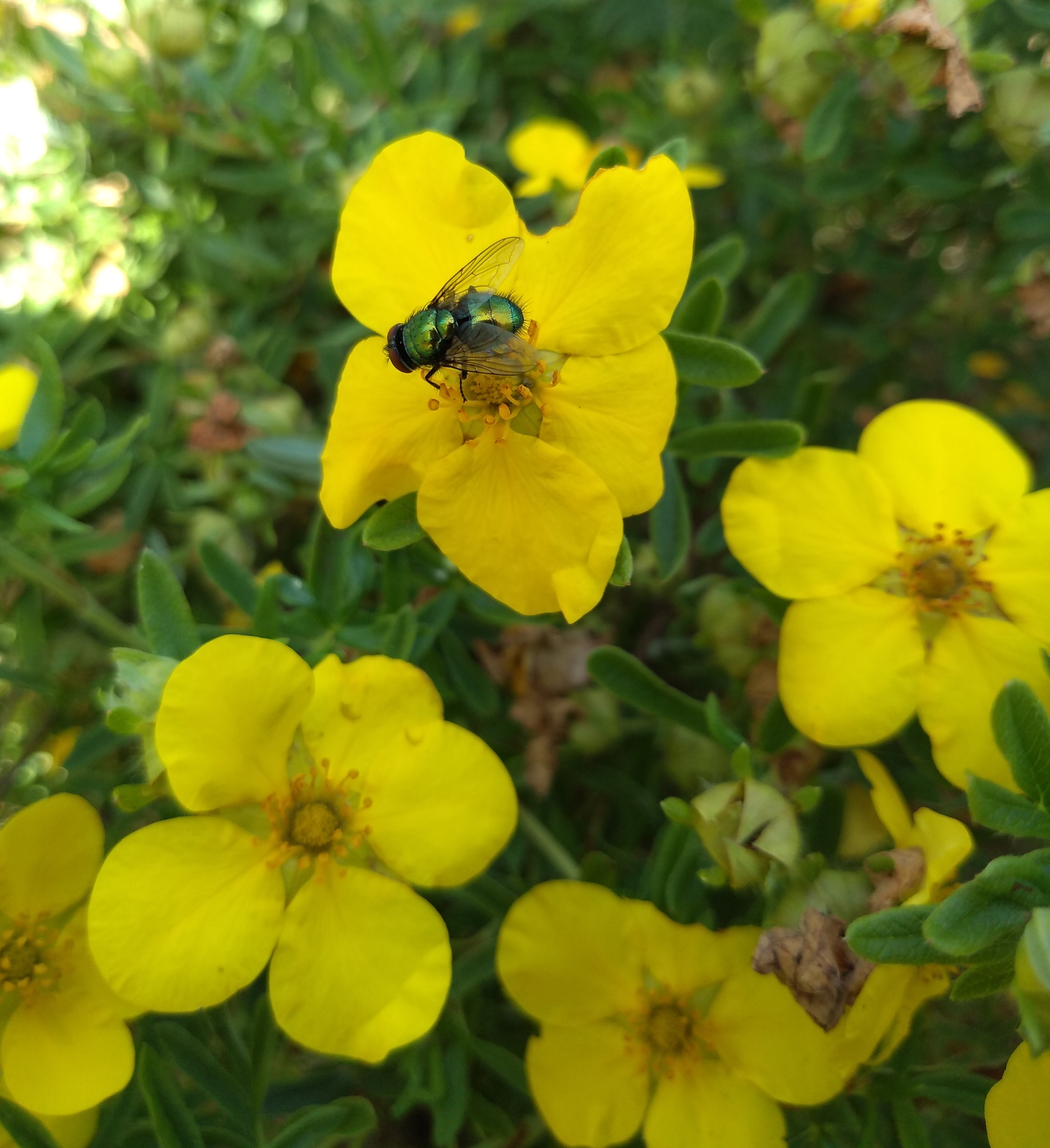
– plus a Long hoverfly (Sphaerophoria scripta), whose larvae feed on aphids, and a Common green bottle fly (Lucilia sericata) on a Potentilla plant.

Capturing the Common green bottle fly was accidental but it worked out really well. In the sun its glistening metallic colouring is highlighted against the yellow Potentilla flowers. Their maggots feed on dead tissue so their appearance is used to accurately determine time of death. Adult Common green bottle flies on the other hand are useful pollinators, as the last photo proves. Fascinating how different stages of this fly species exists alongside both death and life.