Posted in nature

Fungi and Cacti

The shift in seasons is definitely noticeable now. This November is warmer than usual, so we still haven’t had a frost here in southern England; however autumn colours, shorter days, wet weather and fungi have arrived over the past month.

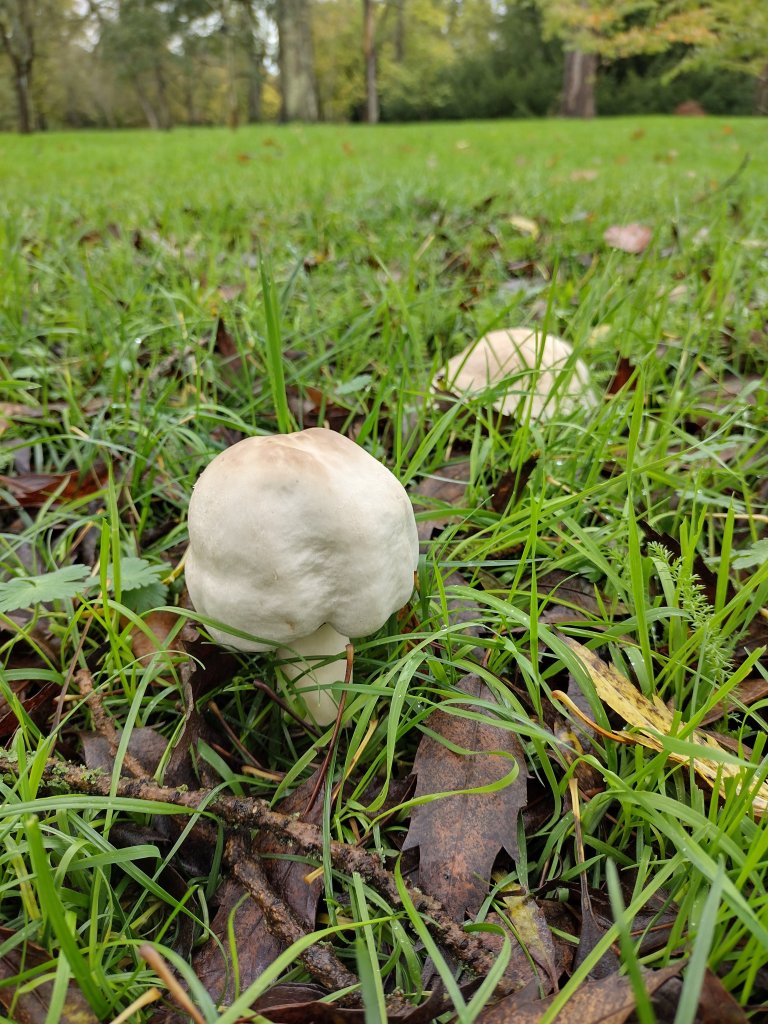
On a recent trip to Kew gardens several fungi including some Horse mushrooms (Agaricus arvensis),
and Parasol mushrooms (Macrolepiota procera)
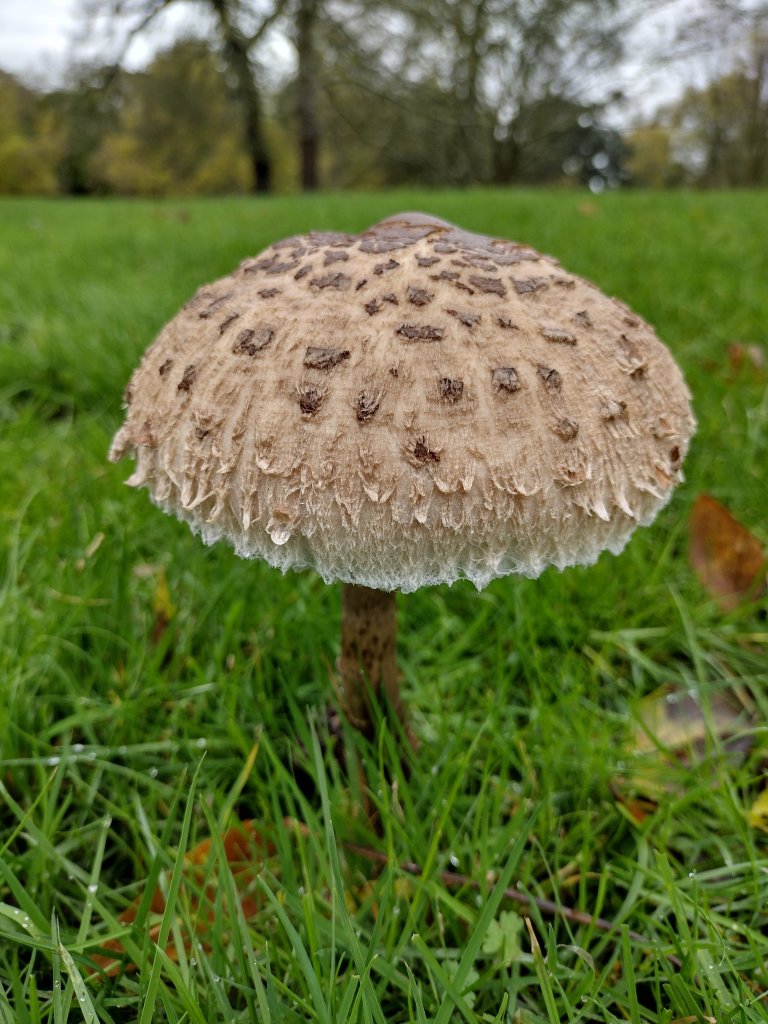
were dotted around the lawns as well as a group of Glistening inkcap (Coprinellus micaceus) on a decaying tree stump.

I think the weather had put many people off visiting which meant the gardens were fairly quiet. Although the odd heavy rain shower arrived while we were there, most of the day was dry and eventually the sun shone before we left, highlighting the vibrant leaves against a grey sky.

This year, I finally got to see a couple of Fly agaric (Amanita muscaria) fungi for the first time if my life (outside of books).

Fly agaric

I’d hoped to see these iconic fairytale fungi for a long time. Known for being hallucinogenic these incredibly toxic fungi are usually found in Birch (Betula), Pine (Pinus) and Spruce (Picea) woodlands; however I found them in a garden near a single Birch tree. Fly agaric supply nutrients to nearby trees along the underground mycorrhizal network therefore they have a close association with trees. A traditional use for this poisonous fungus is as an insecticide for house flies due to the Ibotenic acid contained within them (hence the common name for this fungi). Added so a saucer of milk, once a fly drinks the substance it becomes drousy and drowns.

These mushrooms weren’t the only exciting thing I got to observe in recent weeks. My Fishbone cactus (Epiphyllum anguliger) which has lived in my bathroom for many years flowerered for the first time. An epiphytic cacti, originally from Mexican rainforests, this plant develops aerial roots in order to attach itself to host trees. It likes humid indirect light and requires more watering than desert cacti. Clearly the conditions in my bathroom are ideal. The unusual looking flowers (which are produced once the plant is mature) were highy scented, similar to TCP but more floral. They take weeks to develop and once opened only last for a few days before dying off.

The first bud and aerial roots.
Posted in Bookworm review

Solace in Nature

During a particularly difficult week, once again, nature has given me solace. I went on local walks for exercise as well as watch birds from my sofa, while they visited the Rowan tree (Sorbus) next to my flat. Several bird species visited even though it’s mostly stripped of berries now. I noticed bud development on the branches already too.

I have recently spent time catching up on some reading.
The first book I read was ‘Witch’s Garden’ by Sandra Lawrence.

This book contains botanical illustrations along with other pictures, including those of specimens from KEW. Folklore as well as natural medicinal properties of fifty well known plants are explored.

One of the plants written about is the Rowan tree. In the past it has been associated with fairies, the Norse God Thor, Goddesses Hebe and Brid as well as St Brigid.

Also known as the Witches tree, traditionally Rowans were believed to offer protection against evil. Other common names for them are Lady of the Mountain, Quicken tree, Wildwood, Whispering tree and probably the most well known Mountain ash. The latter name is due to its ability to thrive in high regions and a similarly in the leaves, however it isn’t actually an Ash (Fraxinus). In fact Rowans are part of the Rosaceae family alongside Apple trees (Malus) Roses (Rosa) and Hawthorn (Crataegus). Just as the haws of the Hawthorn and Rose hips contain vitamin C, Rowan berries are high in this vitamin too. Although all require cooking before they can be eaten they were traditionally used to treat scurvy, sore throats and other ailments, especially during the World War Two. 

The second book I read was ‘Back to Nature’ by Chris Packham and Megan McCubbin.

Containing personal stories and factual explanations, this book looks at the importance of nature for humans along with what actions can be undertaken to protect it.

I grew up avidly watching the Really Wild Show and love Springwatch and Autumnwatch. Part of my enjoyment of this book was ‘hearing’ Chris’ voice as I read the parts he’d written. His descriptions contain both urgency and hopefulness. He speaks about various topics from the importance of nature as therapy to wildlife issues that exist at this time.

He also mentions how during lockdown verges sprung into life as wildflowers were allowed to bloom, something that was great for pollinators. Chris talks about the worrying loss by 97% of wildflower meadows since the 1930s, attributing to a decrease in insect numbers. Therefore reversing this by councils allowing verges to grow is great. Yet, having a small wildflower patch in gardens is another achievable action that we can all undertake that will have a big impact on helping wildlife thrive.

Both books are great reads, they are informative and enjoyable; I highly recommend them both.

Posted in nature

The Very Hungry Caterpillar

The weather at the beginning of last week started nicely. Early on a sunny Monday morning I spotted seven Large white (Pieris brassicae) butterfly caterpillars on a Nasturtium (Tropaeolum) plant.
Used as a companion plant near brassicas this plant has been sacrificed to prevent the butterfly eggs being laid on the cabbages.

Unknown to me at the time, I also photographed some caterpillar faeces as well as an undeveloped egg on the leaf. I don’t remember the loved childhood picture book, The Very Hungry Caterpillar mention poo (although I’m sure children would have loved that addition to the story).

As with elsewhere in the country, the weather continued to be unsettled throughout the week. Tuesday was mostly overcast but the bees were still out foraging. As the lavender (Lavandula) was over lots of Honeybees (Apis mellifera) started visiting the Echinops bannaticus.

Later the same day I managed to see another Male Gatekeeper (Pyronia tithonus) butterfly too, this time visiting a Geranium.

Plus on Thursday I noticed a Holly blue (Celastrina argiolus) butterfly on some Verbena bonariensis. I haven’t seen Holly blue butterflies since spring, so that was nice.

Unfortunately on Wednesday I managed to disturb a Silver Y (Autographa gamma) moth.

Although this isn’t a great photo, it is clear enough to be able to identify the moth. I managed to identify it because of the shape and light colouring along with the unbroken y shaped silver marking on each forewing. This moth is a migrant, visiting from the continent. It can be seen here with the wings vibrating to warm up it’s flight muscles before flying off.

The week ended with a visit to the Royal Botanical Gardens, Kew on Saturday. There were some insects braving the stronger winds and the afternoon rain.

Amongst the Wildflower meadow surrounding The Hive experience the flowers still blooming were; Red Campion (Silene dioica), Red clover (Trifolium pratense), Ragwort (Senecio jacobaea), Yellow toadflax (Linaria vulgaris), Creeping buttercup (Ranunculus repens), Yarrow (Achillea millefolium), Flatweed (Hypochaeris radicata) and Wild marjoram (Origanum vulgare).

Yarrow and Yellow toadflax along the path.

A Volucella inanis Hoverfly visiting the Wild marjoram.

In the Agius Evolution Garden there were lots of bees visiting the Salvias as well as a Buff-tailed bumblebee (Bombus terrestris) on a hollyhock (Alcea)

and a Honey bee (Apis mellifera) visiting a Wallflower (Erysimum).