Posted in Allotment, nature

Autumns Arrival

Now September has arrived, there is definitely an Autumnal feeling in the air. Similar to March, this month often has a transitional effect on me; especially once the Autumn equinox arrives on the 22nd. The nights are noticeably getting colder and drawing in. Over the past few weeks, some mornings have been misty and there has been a mixture of weather throughout the weeks; humid and stormy one moment and colder and sunny another. Spiders and their webs have become more visible, helped in part by morning dew, plus leaves are beginning to turn on some trees while autumn Cyclamen and crocuses (Colchicum autumnale) are starting to flower. I love September after the intense heat of August I long for a bit of relief.

On the allotment, autumn raspberries (Rubus idaeus) and apples are ready to pick along with pears, damsons (Prunus domestica subsp insititia),

Damsons ready to pick.

elderberries (Sambucus) and blackberries (Rubus). Conkers are falling now too, although the walnut and hazelnut harvests have passed.

Sweet chestnuts are almost ready to fall.

On the last bank holiday of the year (almost a month ago), I visited Minster-on-sea with my partner and his parents. It was an ideal day for walking along the beach searching for treasure, perhaps fossils, sharks teeth, sea glass, pieces of broken pottery and the occasional sea lego.  Washed up along the beach were lots of Slipper limpets (Crepidula fornicata). 

These limpets arrived on these shores from America via ships in the 1800s and thrived in the UK; especially southern England and Wales, where they have become a pest to muscle and oyster beds (competing for food and space). They are edible themselves.

It is usual to see individual empty shells, in fact they are found in huge numbers on beaches in the Solent. The common name of this sea snail refers to the appearance of an individual shell when it is viewed upside down; similarly the latin means small boot. When alive, these gastropod molluscs are rarely found alone (as shown in the photo above). Up to 12 Slipper limpets can be stacked together with the female, the largest and oldest, at the bottom; all the others are male or, in the case of the second from bottom, in the process of transforming into a female. When the one at the bottom dies and falls off, the next one up then becomes female. Further information on these fascinating creatures can be found in an article written by Nick Baker here.

The Slipper limpet isn’t the only snail that I noticed recently. I often get to see land snails but I noticed this beautiful orange coloured Brown lipped snail (Cepaea nemoralis) hanging around after a rainy morning. Snail shells can be very beautiful and I am intrigued by their structure.

Whatever your view on snails it’s hard to look at their shells without admiring the beauty.

I have become more aware of insects lately, mostly when cutting back perennials at work. Although I try to be careful as much as possible, occasionally I disturb a few. I always make a point of replacing or moving them to a safe place. Mostly it is ladybirds but I have also noticed a few other species, such as Common earwigs (Forficula auricularia) and the Rusty tussock (Orgyia antiqua) and Knot grass (Acronicta rumicis) moth caterpillars

Common earwigs feed on organic matter and like to hide away in dark areas of the garden (not in human ears).

Earwigs are useful garden recyclers.

Once eggs are laid, the females diligently clean them and constantly guards the nest only stopping when the young can fend for themselves. While the adults can nip humans and predators, it is only as a warning.


Caterpillars of the medium sized Rusty tussock moth can be seen between May and September.


The males and females of this moth, also called the Vapourer, look different from on another. The males are orangey-brown while the female has a more grey colouration and also lacks any significant wings; therefore it is only the males of this species that are active (mostly flying during the day). The young feed on broadleaf trees and shrubs in gardens and parks, as well as along hedgerows, heaths, moorland and woodland. The adult female and male moths can be seen here .

Knot grass caterpillars (see photo above) can often be found in late summer (and even as late as October in Southern Britain; although these are usually a second generation). Pupa of this moth survive the winter in leaf litter. The grey coloured adults (with a wingspan of 3-3.5 cms) can be seen from May through to September. The caterpillars can be observed on herbaceous or woody plants such as knotgrass (Polygonum aviculare), bramble (Rubus), hawthorn (Crataegus), common sorrel (Rumex acetosa), heather (Calluna), plantains (Plantago), docks (Rumex) and purple loosestrife (Lythrum salicaria). It makes sense therefore that this one was found nibbling on a raspberry leaf on the allotment. The numbers of this moth are declining and while they are still commonly found in gardens, heathland and grassland, it is thought that the  species is becoming vulnerable. I was happy to share my raspberry plant with this caterpillar; raspberries are my favourite fruit but it certainly wouldn’t do any major damage. A photo of the moth can be seen on the UK Moths website.

Sadly the results of the Butterfly count for this year came out last week. They confirmed people’s  suspicion that it hasn’t been good for butterflies and moths (as well as bees). Many butterfly and moth numbers continue to fall, and significantly so from previous years results, due to a variety of factors including the cold wet weather we’ve experienced this year. Further information can be found on the butterfly conservation website here.

Thankfully last Friday, I witnessed a wonderful sight during a warm sunny afternoon. A huge area of ivy in full bloom was covered in so many bees that it stopped me in my tracks. I stood nearby and listened to the wonderful buzzing sound, it was so relaxing. There were so many Ivy bees (Colletes hederae) alongside buff tailed bumblebees (Bombus terrestris) and honey bees (Apis mellifera) visiting the ivy flowers. It was the first time I was able to definitely identify ivy bees which was amazing (see below). 

First recorded in the UK in 2001, Ivy bees are becoming more common. They look very similar to honey bees but can be distinguished by the stripes on their abdomens; the bright yellow stripes are distinctly separate from the black ones than they are with honey bees. Unlike honey bees these are solitary, however there can be lots of nests close to one another and these bees will forage together when opportunity allows. As their name suggests, they feed predominantly on the nectar of ivy flowers and therefore their appearance coincides with this plant flowering (between September and November). I have been searching for a definite sighting of these bees for years and finally I have been rewarded for my patience.

I’ve found more galls, over the last few weeks, this time on the ground surrounding a few Pedunculate Oaks (Quercus robur).

These galls remind me a little of the Facehugger in the Alien film franchise.

They are produced by these trees as a result of the Knopper gall wasp (Andricus quercuscalicis) laying young in the acorns. As with the Oak apple gall wasps (Biorhiza pallida) mentioned in a previous post ‘Relaxing Evening Birdsong’ , they are not detrimental to these majestic trees and don’t appear on many of the fallen acorns.  Interestingly each generation of the wasp will change between sexual and asexual each alternate year.

I also saw my first Goldcrest (Regulus regulus) in a cypress tree near the beginning of the month. Although I could see the silhouette of this tiny bird moving around the top of the tree. I was only able to identify it using the Chirp-o-matic app on my phone, due to its loud singing. The Goldcrests song can be heard on the Woodland trust website here , where you can also see a photo of this diminutive bird. I wish I could have viewed it at closer range, then I would have been able to see the wonderful plumage on the crown (yellow for females and orange for males). The Goldcrest is the smallest bird in Britain, even smaller than the Wren (Troglodytes troglodytes). Hold a 20 pence piece in your hand, and you will have an idea of the birds weight (just 5 grams). They inhabit mixed woodland and conifers along with parks and gardens. The numbers of our resident birds increase with the migration of others from Scandinavian countries during the winter. They feed on insects and other invertebrates. It is always lovely when I am still able to witness new things in nature like this. It gives me a buzz, allowing me to learn through research.

Posted in Allotment, nature

Finally, a Flash of Blue

For a few weeks, I have been wondering if I would notice any Holly blue (Celastrina argiolus) butterflies this year. However, the week beginning 17th May I was finally rewarded with the sighting of a male (deduced from a lack of dark edges on the wings) making the most of a brief spell of dry sunny weather. As so often with butterflies, it didn’t remain still long enough for me to photograph it.

From one year to the next, Holly blue numbers can vary significantly. This rise and fall in numbers is mostly due to the parasitic Ichneumon wasp, which feeds solely on the larvae of this butterfly. When this wasp has a successful year then Holly blue numbers fall. Consequently the reverse is also true because without adequate Holly blue larvae numbers of the wasp decrease, thus enabling Holly blue butterfly numbers to increase once again. Perhaps this explains why I haven’t seen many Holly blue Butterflies as usual this year; however other factors could be the weather (so far this May has been colder and damper than usual), or maybe I simply haven’t noticed them flying around.

This male butterfly will have been part of the Spring generation (adults which fly from March to May); however there is also a summer generation that I may have more opportunity to witness, later in the year.

As a caterpillar, the spring generation will have been feeding upon Holly (Ilex aquifolium); preferably the buds, berries and terminal leaves of female plants.

The caterpillars of the second generation of butterflies seen flying around between July and September mostly feed in Ivy (Hedera helix); although they will also feed on other plants such as bramble (Rubus fruticosus) Gorse (Ulex spp.), Dogwoods (Cornus spp.) and also Snowberries (Symphoricarpos spp).

Things are moving along at pace at the allotment as well. There are lots of seedlings on the go, fruit is developing and the potatoes are showing growth. The Rhubarb has been harvested for a while now too.

New tenants have taken over plots at the bottom and to the left of our plot. Our new neighbours having made such a headway already means that we no longer have long grass on these two sides. While it is lovely to see the plots being productive at long last, it is a little sad to think we won’t hear grasshoppers during the summer like we did last year.

The removal of the lush grass may explain why we found two frogs (Rana temporaria) on our plot last weekend. They seemed to be seeking refuge on the tiny patch of grass I purposely left for wildflowers. Thankfully for them the predominant thing growing there is still grass highlighted with a few dandelions. As I want to reduce the slug and snail population on our plot, I am happy to encourage these frogs by giving them a home amongst the long grass. Instead, I may move the wild flower area nearer to the shed.

Posted in Allotment, nature

Spectacular Sighting

Last week began with me spotting a Grey heron (Ardea cinerea), presumably trying to catch fish while standing in the local river, as I walked passed to the first job of the day.

Yet the rest of the week remained fairly quiet until Friday morning arrived.

This is when I saw a Swallow tail (Ourapteryx sambucaria) moth.

As the moth ages it’s cream coloured wings lighten.

This one had been disturbed because they are night flying moths. The caterpillars overwinter in tree bark, and feed on Broadleaf trees such as Hawthorn (Crataegus monogyna) and Horse Chestnut (Aesculus hippocastanum) along with Ivy (Hedera helix).

Afterwards, at my allotment on Saturday I noticed a Parasitic wasp (Hymenoptera) on my Echinacea purpura PowWow wild berry, although I’m not sure which one.

There are 40 families of parasitic wasp in the UK and Ireland, from which 6,500 species have been recorded. I am pretty convinced that the one I saw wasn’t the Braconid Dinocampus coccinellae which causes the host, a dead Seven-spot ladybird (Coccinella septempunctata), to remain in situ over the wasp’s pupa cocoon as protection until it hatches. Nor does it appear to be Cotesia glomerata. This parasitic wasp lays it’s young in Large white (Pieris brassicae) caterpillars which dies as the young develops. Once they emerge they cocoon themselves beneath the caterpillar until they finally transform into adult wasps. I have Seven-spot ladybirds as well as Large white caterpillars at my plot but neither appear to be affected. Interestingly parasitic wasps can become hosts themselves. The parasitic wasps of parasitic wasps are called hyperparasoids.

However this wasn’t the highlight of my week. Also at the allotment on Saturday I finally got to see a Leaf-cutter bee. I was so excited to see this spectacular sighting but had to stay quiet and still while I attempted to capture a photo of it.

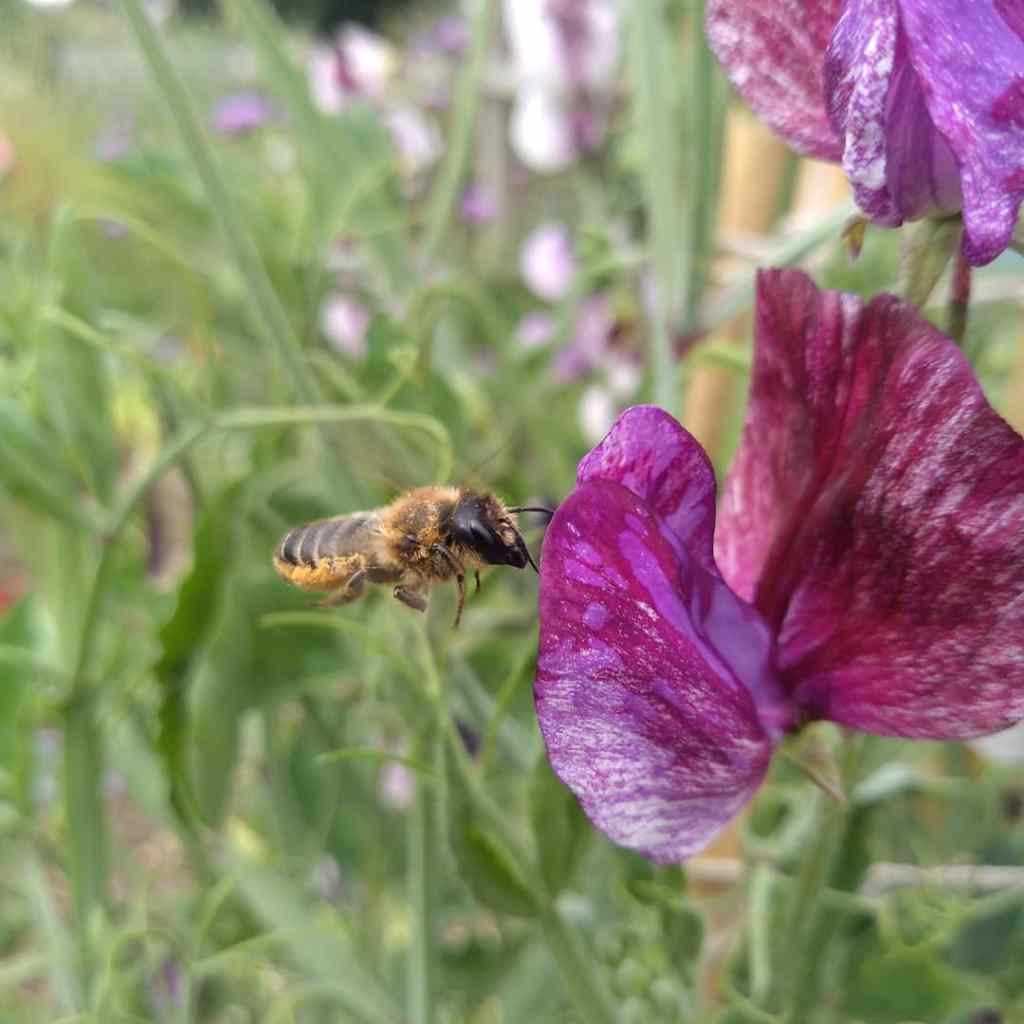
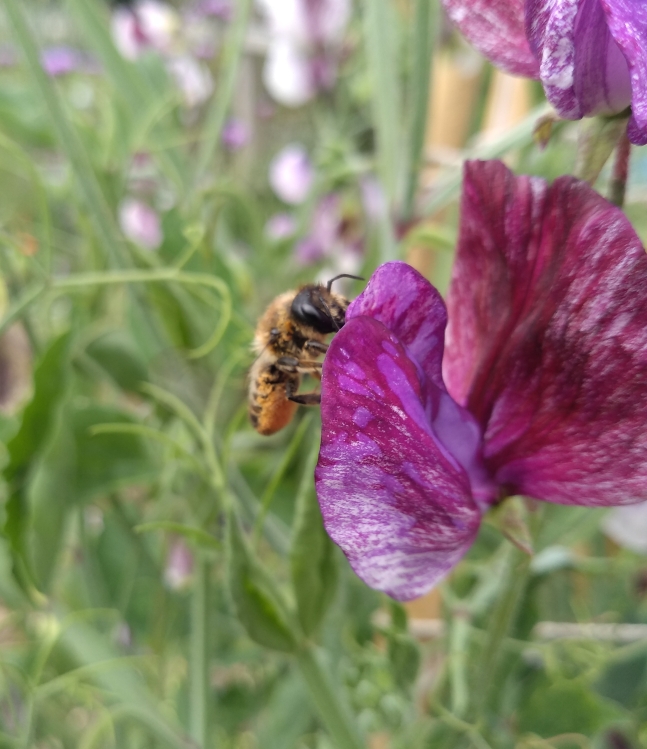
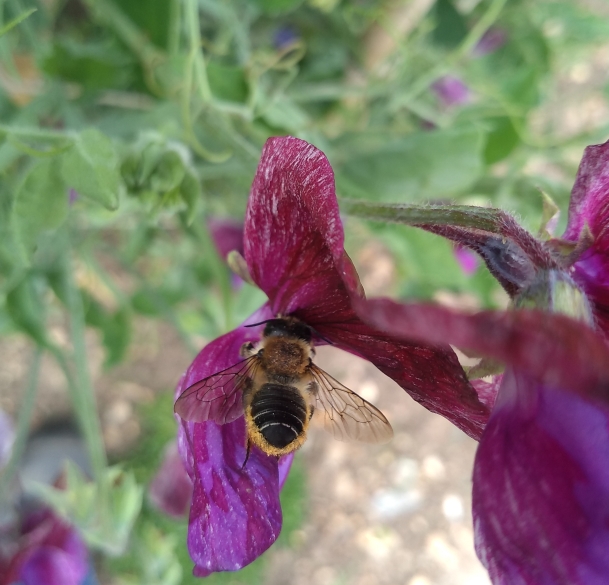
There are different Leaf-cutter bees in the UK but the one I saw was a Patchwork Leaf-cutter (Megachile centuncularis) bee. It was visiting my sweetpeas, collecting pollen and nectar for her young. The orange pollen brush underneath the abdomen clearly identifying it as a female of this species. The only thing left on my must see list, when it comes to Leaf-cutter bees, is to see one carrying a piece of leaf and also a nest. I do have a bee hotel on the allotment so here’s hoping.

Posted in nature

What a Hoot.🦉🎵🦉🎶

On Saturday night I woke up to a beautiful duet. A pair of Tawny owls (Strix aluco) were calling to one another, reinforcing their territory. The male call sounds like ‘hooo, hu, huhuhuhooo’ while the female gives a ‘keewik’ sound (see BTO).

Tawny owls pair for life and remain in their territory (initially established in winter) throughout the year. Deciduous broadleaf woodland is their traditional habitat but sometimes they live in large gardens and parkland. They nest within tree cavities or nest boxes. Occasionally eggs are laid in February but more often between March and April. While the female is slightly larger than the male, these owls are the same size as a wood pigeon. They feed on small mammals, birds, rodents, fish, frogs, insects and worms. Their UK Conservation Status is Amber as their numbers are declining. 

Another bird which caught my eye last week was a male House sparrow (Passer Domesticus). I was leaving the allotment when I observed him collecting nest material before flying off. As with the Tawny owl, House sparrows pair for life and their numbers have also been declining for a while; House sparrows are Red in the UK Conservation Status list. I grew up seeing lots of them but since moving down south, I haven’t seen one for years so this was a wonderful sight. I love these little birds, especially hearing their chattering and chirping in their colonies. Hopefully I will see him and more Sparrows soon.

As the week went on I noticed more flowers blooming in the hedgerows. Wild strawberry, also called Alpine strawberry (Fragaria vesca), was the first one I saw.

The fruit of this strawberry can be eaten.

Others I saw were; Bugle (Ajuga reptans),

These flowers are visited by White-tailed bumblebees (Bombus lucorum), Common carder bees (Bombus pascuorum), Silver Y moths (Autographa gamma) along with Green-veined white butterflies (Pieris napi).

– Herb bennet/Wood avens (Geum urbanum) and

Grizzled skipper butterfly (Pyrgus malvae) caterpillars feed on this plant.

– Bush vetch (Vicia sepium).

Bees and other pollinators enjoy these flowers.

I got to see a female Orange- tip (Anthocharis cardamines) butterfly, having seen a male one the other week. Males have the orange tips while the tips on the female’s forewings are black (both have the black spots). The female can be identified apart from other white butterflies by the mottled green and white underwings (also exhibited by the males). Caterpillars of this butterfly feed on Garlic mustard (Alliaria petiolata) and Cuckoo flower (Cardamine pratensis).

Posted in nature

Growing Food for Birds

I saw contrasting images last week which made me think of feeding birds with plants from the garden.
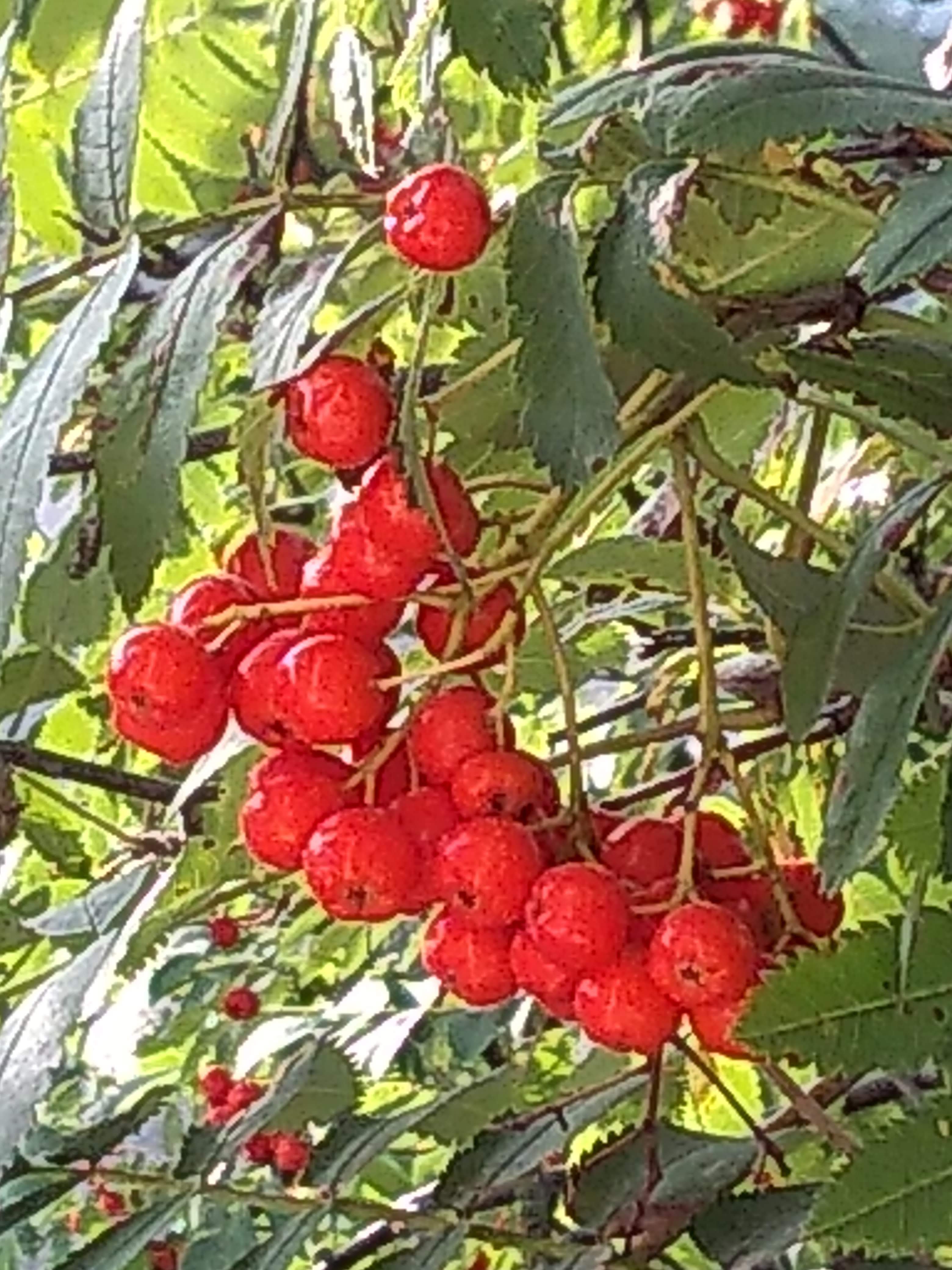
I first observed the Rowan (Sorbus) tree outside, now stripped bare of it’s berries, before noticing some Cotoneaster

and Ivy (Hedera) full of berries. Clearly the pollinators had been busy during the Summer and Autumn months.

Along with supplementary food, on the ground and bird feeders, birds can also rely on trees and other plants in the garden for food in winter. Along with the examples already mentioned there are other berries, fruit, seeds and nuts which are enjoyed by birds.

Some other plants providing fruit and berries are;
Hawthorn (Crataegus)
Honeysuckle (Lonicera)
Guelder rose (Viburnum opulus)
Dog rose (Rosa canina)
Berberis
Bird cherry (Prunus padus)
Crab apple (Malus sylvestris)
Blackthorn (Prunus spinosa)
Pyracantha
Sarcococca hookeriana
Mahonia

Plants providing seeds and nuts include;
Oak (Quercus)
Beech (Fagus)
Hazel (Corylus)
Spindle (Euonymus europaeus)
Teasel (Dipsacus)
Sunflower (Helianthus)
Miscanthus
Bergamot (Monarda)
Verbena bonariensis
Lavender (Lavandula)
Yarrow (Achillea millefolium)
Asters

Leaving seedheads on perennials not only provides food for birds, they also give shelter to beneficial insects. In fact a little bit of leaf litter also has this affect which in turn helps feed birds who eat the insects.

Common birds to see in winter include;
Redwings (Turdus iliacus)
Waxwings (Bombycilla)
Starlings (Sturnidae
Blackbirds (Turdus merula
Robins (Erithacus rubecula
Chaffinches (Fringilla coelebs)
Bramblings (Fringilla)
Goldfinches (Carduelis carduelis)
Bullfinches (Pyrrhula pyrrhula)
Dunnocks (Prunella modularis)
Goldcrests (Regulus regulus)
Blue tits (Cyanistes caeruleus)
Long-tailed tits (Aegithalos caudatus)
Coal tits (Periparus ater)
Great tits (Parus major)
Fieldfares (Turdus pilaris)

The RSPB Big Garden Birdwatch, which takes place on the 25-27th Jan 2020, has been going for over 40 years. Surveying birds visiting your Garden or local park for one hour is calming and enjoyable. This citizen science continues to give the charity useful information on the numbers of birds in the UK.

Further information on feeding birds can be found in the book, ‘RSPB Pocket Bird Feeder Guide’ by Robert Burton (published by Dorking Kindersley) or on the Gardeners World website.

Posted in nature

More Fabulous Fungi

The autumn colours were glorious last week; particularly the Acers like the Acer dissectum below.

Another tree that I loved seeing was a Tulip tree (Liriodendron tulipfera).

This tree is so called because the flowers look similar to tulips. I have never noticed it flower but I will try to remember to keep an eye out for them next summer.

The recent wet weather has had opposite affects on wildlife. I haven’t seen many pollinators lately but have continued to see lots of fungi. Infact the timing of this wet weather has meant it’s been a bumper year for fungi.

The few pollinators that I have noticed include Common wasps (Vespula vulgaris) on some Ivy (Hedera helix) flowers

and one White tailed bumblebee (Bombus lucorum) on Monday.

I also saw a couple of moths at the end of the week too. The first one was a Winter moth (Operophtera brumata)

and the second one was a Scarce bordered straw (Helicoverpa armigera). The latter moth is a migrant visiting the UK.

I was a little surprised to see some Feverfew (Tanacetum parthenium) still flowering in one garden. I enjoy seeing this daisy like wild flower and like it’s common name Bachelor buttons.

The mushrooms I noticed last week were varied in size and colour.

*Once again, please do not use this post as a guide to edible mushrooms.*

I have managed to identify some but have placed question marks next to those I am unsure of.

The mushrooms I saw last week were;

– the Common puffball (Lycoperdon perlatum).

[The second photo was from a few days later. I noticed that they had matured, ready to release their spores].

-Orange Bonnet (Mycena acicula)

-Purple brittlegill (Russula atropurpurea)

-Turkey tail (Trametes versicolor)

-Lilac bonnet (Mycena pura)?

-Rosy bonnet (Mycena rosea)

-Milking bonnet (Mycena galopus)?

-Horse mushroom (Agaricus arvensis)?

-and Cortinarius umbrinolens?

The week ended with a brief visit from a Jay (Garrulus glandarius) to the Rowan tree outside my home. I can’t wait to see if I get Redwings (Turdus iliacus) visit soon as well. I usually have a few snacking on the berries each year; hopefully they come before all the berries disappear. The UK conservation status of this thrush is red so it’s always special to see them. Redwings look similar to thrushes but have a splash of red under their wings.

Posted in nature

What a Difference a Month Makes

A month ago I had a weeks holiday. Signs of autumn were beginning to mingle with late summer. Now October is here autumn has definitely arrived.

As I had another week off I decided to revisit my local park, observing changes from a month ago.

In September Roesel’s bush crickets (Metrioptera roeselii) were chirping everywhere, butterflies were flitting about and some flowers still bloomed amongst the meadow (see Relaxing into Autumn).

Upon my return last Tuesday the only sounds I heard were birds singing and the meadow area had been cut and baled. Cobwebs were visible in the long dew dampened grass around the edges of the woodland too.

Hawkweed, Ragwort (Jacobaea vulgaris), Red clover (Trifolium pratense) and Yarrow (Achillea millefolium) were only just flowering still while the Ivy (Hedera) was in full bloom.

Ivy is fantastic for pollinators at this of year. I saw a few hoverflies flying to and from several flowers but the Honey bees (Apis mellifera), that were still active from the nearby hives would probably visit them too.

It was lovely to see dried seedheads of Wild carrot (Daucus carota)

and Cow parsley (Anthriscus sylvestris)

as I wondered around the park. They look beautiful but they are useful for insects to shelter in as well. In fact I noticed a ladybird snuggling amongst one of the Cow parsley seedheads. I also discovered field mushrooms (Agaricus campestris) growing amongst the grass.

Trees and shrubs were starting to show autumnal colours along with their ripe fruits. I found elderberries, sloe as well as haws on the Hawthorn (Crataegus monogyna) alongside Rosehips. However there were no longer any blackberries left on the brambles.

I noticed the leaves of one Horse chestnut tree (Aesculus hippocastanum) affected by the Horse chestnut leaf miner (Cameraria ohridella) moth.

Similarly there was evidence of caterpillars (most likely another moth) having been on a Silver maple (Acer saccharinum) tree.

The eggs and excrement are still visible on the nibbled leaves.

I ended my weeks holiday with a visit the Horniman museum in London.

On route to the train station I saw a Brown rat (Rattus norvegicus) running across a path. It attempted to cross the road until either the traffic or pedestrians scared it into fleeing towards a nearby hedge. Once I arrived in London I realised that I never see rats in the underground any more. I used to enjoy seeing them scurrying between the tracks. I have owned pet rats for many years so I find wild rats intriguing. I also like to watch Squirrels as rodents tend to act in similar ways to one another. After lunch I observed two Grey Squirrels (Sciurus carolinensis) scamper about.

The nearest squirrel had an acorn in its mouth and appeared to bury it in different places. I once saw a television programme on squirrels in which one was observed ‘pretending’ to bury a nut in several places while in the presence of other squirrels to avoid their stash being taken. Presumably this was occurring with the squirrels I was watching on Friday.

There is a butterfly house and aquarium at the Horniman museum. The butterflies were looking a little aged with their wings rather worn, however they were still beautiful. As soon as I entered the butterfly house a Malachite butterfly (Siproeta stelenes) landed on me which felt wonderfully welcoming.

The photo below shows a selection of the many butterflies I saw.

Feeding on the fruit are one Blue morpho (Morpho peleides), one Brown clipper (Parthenos Sylvia philippinensis), two Blue clipper (Parthenos Sylvia) and three Owl butterflies (Caligo memnon).

There were lots to see in the aquarium as well but my favourites were the White spotted jellyfish (Phyllorhiza punctata); watching them was so relaxing.

Even at the weekend nature was visible. As I ate breakfast on Saturday morning I heard and watched a group of Coal tits (Periparus ater) on the Rowan tree (Sorbus aucuparia) outside. I have never seen Coal tits on this tree before, I hope to see them again.

Another animal I became aware of last week was a Red fox (Vulpes vulpes). I first noticed it on my way home on Wednesday night and again on Sunday morning. It was making itself known on Saturday night too as it was being very vocal.

Posted in nature

“Here’s Looking at you Kid.”

Bank holiday weekend was roasting, especially Sunday therefore I decided to take it easy so I wouldn’t overheat. Even though I didn’t go out, nature came to me. While looking out of the window I noticed a Red Underwing (Catocala nupta) moth trying to remain in shade on an outside wall. This large moth (6.5-7.5cm wingspan) has predominantly red underwings with black and white markings, hence it’s common name. The food of this moths larvae are
Willow (Salix) and Poplar (Populus) trees.

I also managed to photograph one of this years Blue tit (Cyanistes caeruleus) brood in the Rowan (Sorbus) tree outside. They are definitely looking more like the adults now.

It’s also lovely to see the Rowan is full of ripe berries ready for the Thrushes (Turdus philomelos) and also the Redwings (Turdus iliacus) that I usually see in winter.

Monday was slightly cooler although it was still hotter than I prefer it to be. However armed with suncream, hat and water I visited Ham House and Garden in London. While walking round the grounds, bees, crickets and the occasional Ring-necked parakeet (Psittacula krameri) could be heard.
There was an extensive kitchen garden with cut flower and edible flower areas which I particularly enjoyed viewing.
I saw lots of Honey bees (Apis mellifera) on Globe artichokes (Cynara cardunculus) within the kitchen garden.

There was another lovely sighting as I ate lunch too. Amongst the Wisteria (having a second flush of flowers) as well as some scaffolding was a Wood pigeon (Columba palumbus) sitting on it’s nest. It didn’t move other than to blink as it was no doubt observing us all eating trying to remain undetected.

Upon my return there was a Speckled bush cricket (Leptophyes punctatissima) in the hall to welcome me home. As there was no ovipositor on the end of the abdomen (the appendage from which the female lays eggs) I identified it as male.

Long weekends are lovely but they still pass quickly and Tuesday rolled around again, so I was back to work.
I didn’t notice as many butterflies last week, although bees are still prevalent. During the warmest part of the day, when I was once again wilting, I noticed how active the Honey bees were on the Sedums even though they are only just starting to bloom.

I also observed a Small Dusty Wave (Idaea seriata) moth later that evening. It’s caterpillars feed on herbaceous plants especially Ivy (Hedera helix).

The nice weather of sunshine and low 20s temperature continued to the latter part of the week.

Once again it was Honey bees I mostly noticed on Sedums as well as some visiting

-Rudbeckia laciniata ‘Herbstsonne’.

– and Erigeron karvinskianus.

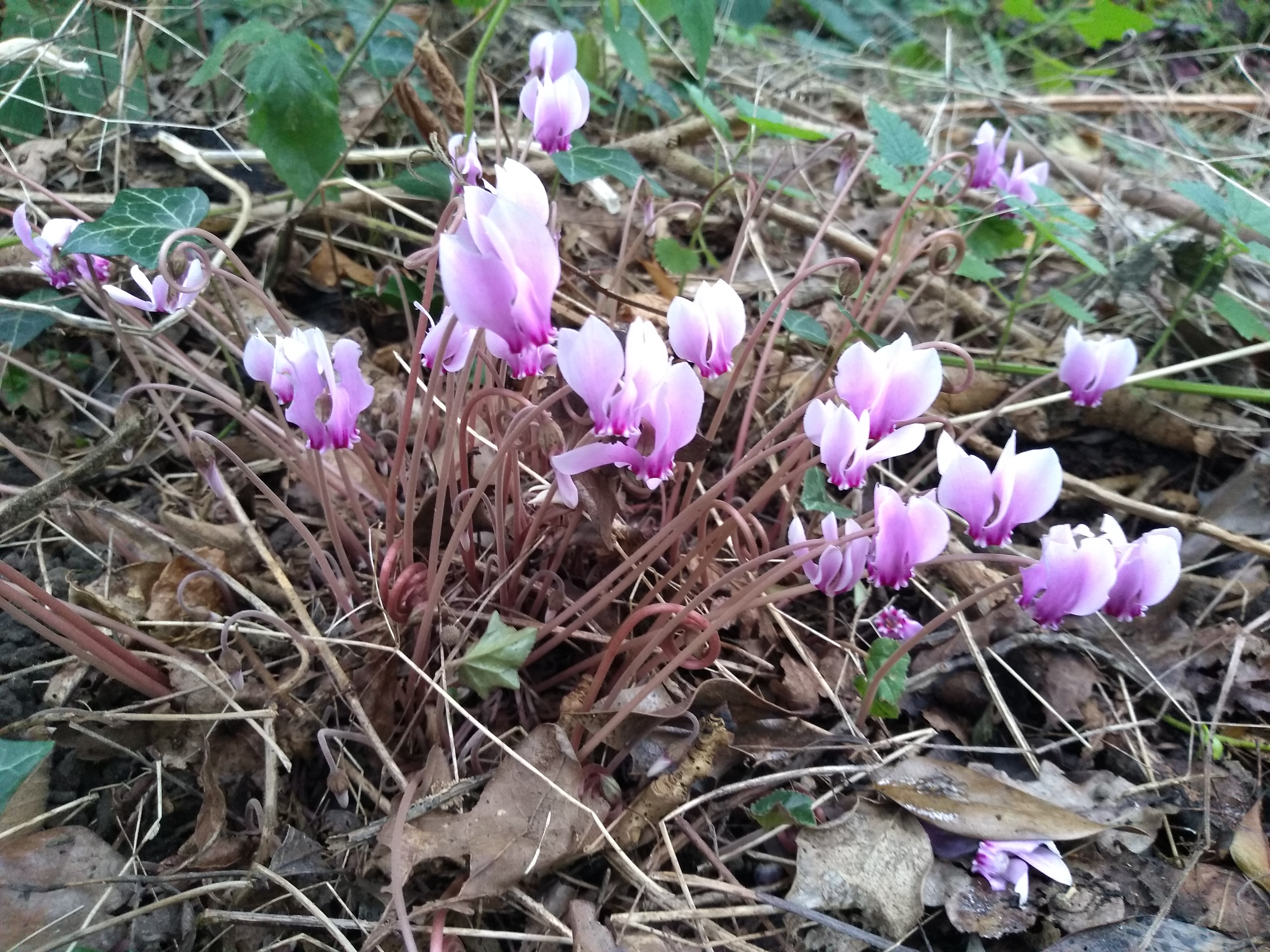
However there was one plant I noticed that surprised me. In a wooded area a small patch of Cyclamen hederifolium was poking it’s flowers above the leaf litter and Ivy; Yet another sign of late Summer and the beginning of Autumn.

Then just when I thought I wouldn’t get to catch a proper view of a butterfly, I managed to see a Small tortoiseshell (Aglais urticae) on a white Buddleja bush.

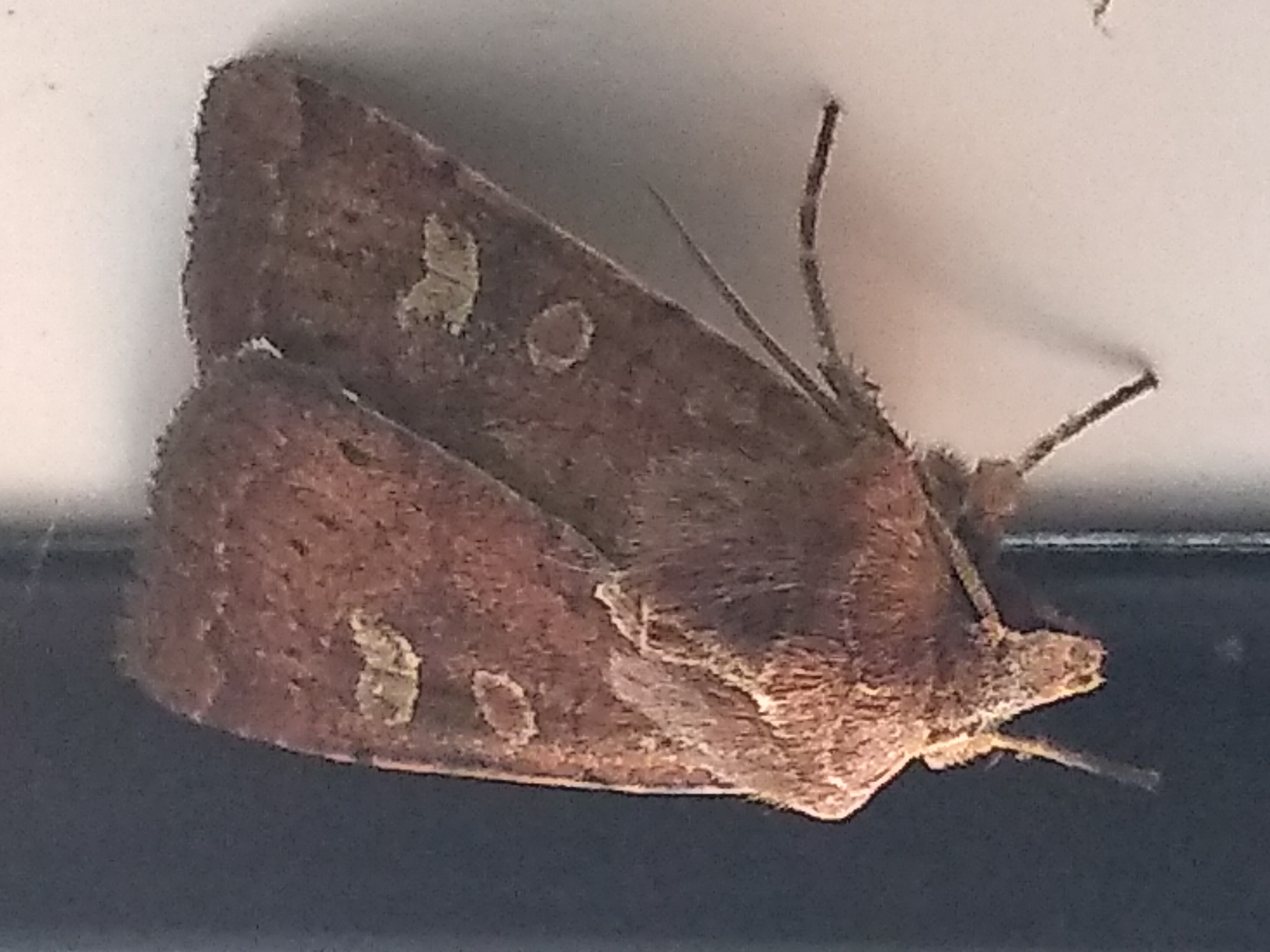
Lastly, I saw another moth in the hall, this time however it was a Square-spot Rustic (Xestia xanthographa) moth.

Posted in nature

Amphibians and Insects

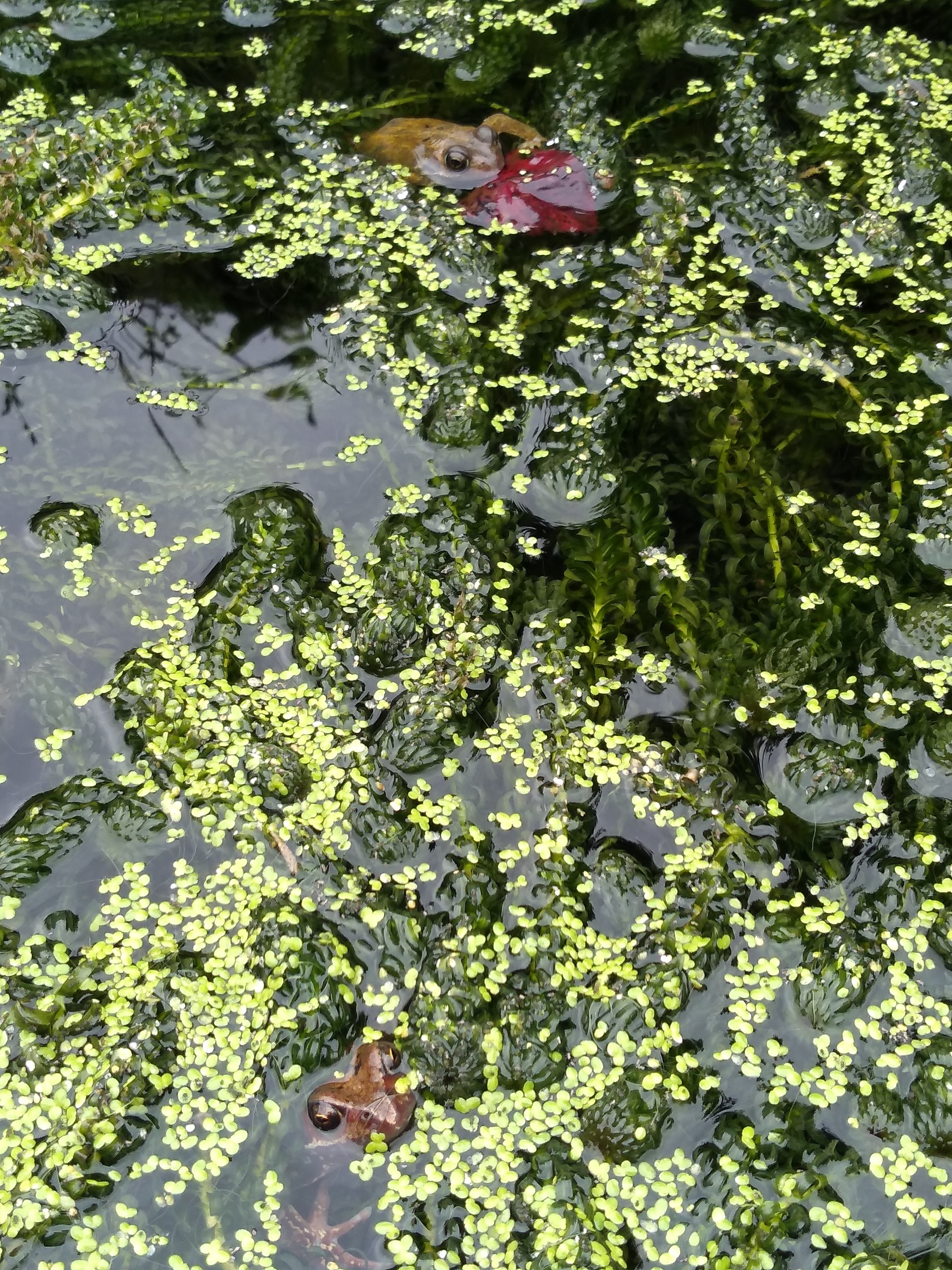
My week started and ended working next to ponds. The first was a small natural pond with a couple of frogs (Rana temporaria) sitting in it.

The other was a large disused outdoor swimming pool. In its neglected state rainwater collects within the concrete walls and nature is taking over. Given the murkiness of the water I was unable to obtain decent photos of my findings; however I saw another frog, (surrounded by lots and lots of tadpoles) along with a dragonfly nymph and a newt. It should be interesting to discover how many tadpoles survive to adulthood.

For the rest of the week insects were centre stage, especially on Wednesday when flying ants took to the sky. Flying ant season really tests my resolve to work through my dislike of ants (which originated in childhood). Thankfully I now find them more fascinating than loathsome, mostly.

The other insects I saw that day were;
– A (Chrysotoxum cautum) hoverfly on some Pyracantha.

– Honey bees (Apis mellifera) and a Red-tailed bumblebee (Bombus lapidarius) visiting a Geranium ‘Rozanne’ plant.

– Lavender (Lavandula) full of bees and butterflies, including more Honey bees as well as Buff-tailed bumblebees (Bombus terrestris), Meadow browns (Maniola jurtina) and a Ringlet (Aphantopus hyperantus) butterfly.

The Meadow brown butterflies also enjoyed visiting the Echinops bannaticus flowers too.

Even as I returned home I noticed a Willow Beauty (Peribatodes rhomboidaria) moth on the hall window.

The adults feed on Creeping thistle (Cirsium arvense) and Ragwort (Senecio jacobaea) both of these plants are common around this area. The caterpillars feed on various trees, shrubs as well as climbers ranging from Yew (Taxus baccata), Birch (Betula), ivy (Hedera helix), honeysuckle (Lonicera) and the wild Clematis, Traveller’s joy (Clematis vitalba).

The previous day I came across more insects that I was previously unaware of.

The first one was the Common red soldier beetle (Rhagonycha fulva).

It is a beneficial insect as adults eat aphids and are pollinators (feeding on nectar and pollen from open flat flowers such daisies and hogweed) while the larvae feed on slugs and snails along with other ground dwelling invertebrates.

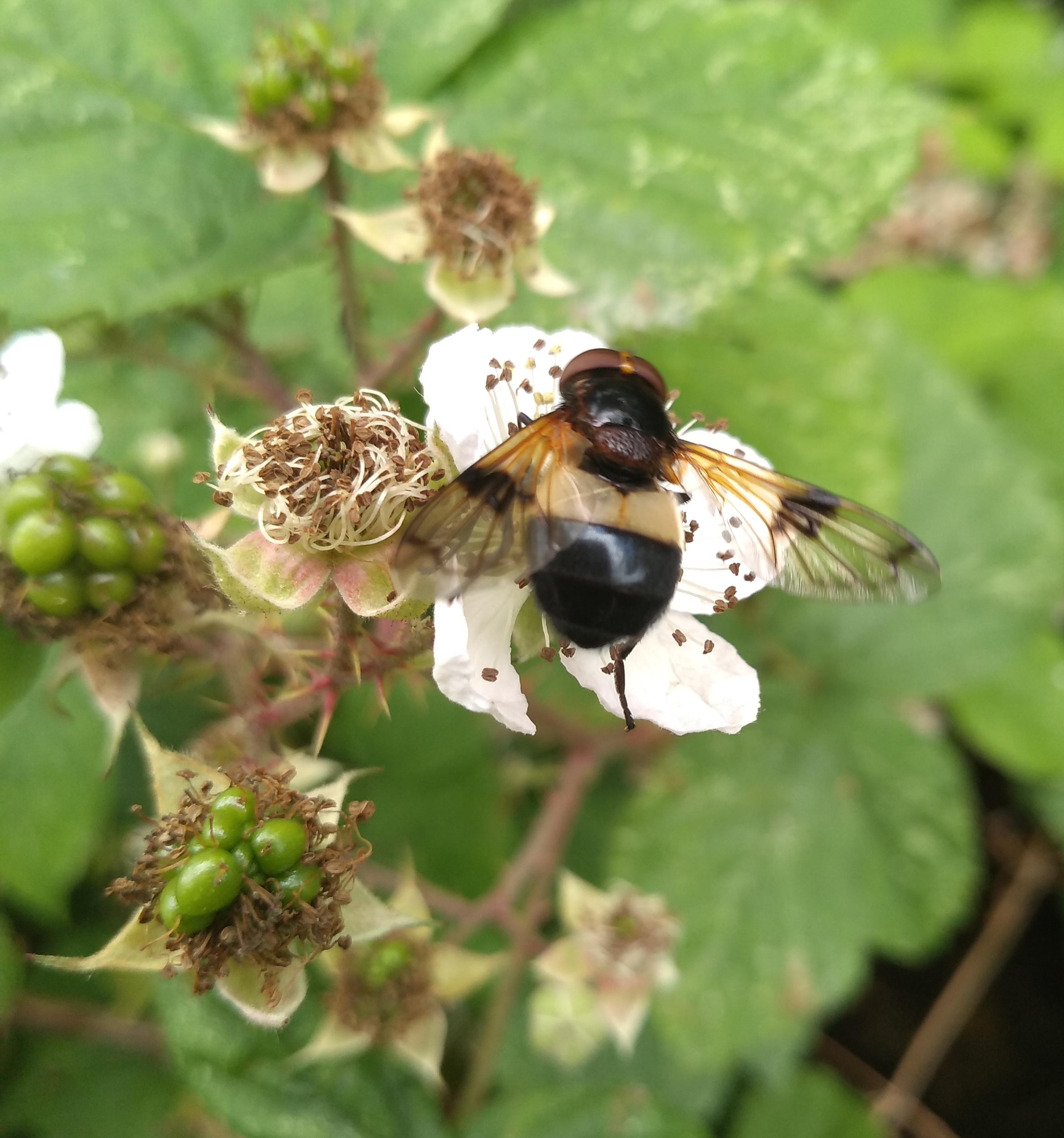
The other insect I saw on Tuesday was a female Volucella pellucens hoverfly feeding on nectar and pollen from Bramble (Rubus fruticosus).

These hoverflies also pollinate umbellifers; However as larvae they inhabit Bumblebee and wasp nests eating any waste produced along with their hosts larvae.

Posted in nature

🌞Sunny weather brings many sightings

Birdsong filled the air throughout the day. The calls I could identify were of Robins, Blackbirds and a Long-tailed tit. I also heard a Great Spotted Woodpecker (Dendrocopus major) drumming against a tree and a couple of Tawny owl (Strix aluco) calls in the morning. Once the sun broke through the cloud lots of insects started flying around too.

In the morning I noticed another Harlequin ladybird, this one was sheltering on a Cornus sanguinea ‘Midwinter Fire’. Unlike Seven spot ladybirds I only find Harlequins one at a time.

During the afternoon a female Red-tailed Bumblebee was enjoying the flowers blooming on a Berberis darwinii shrub. Pollen sacks can be seen as well as her proboscis as she collects pollen and nectar.

Lastly, I saw a Small White butterfly warming up on some ivy.