Posted in nature

Hints of Summer with Winter Showers; Must be April.

Last week had very mixed weather. Easter Sunday was sunny and warm (a hint that summer isn’t far away) replaced by snow showers and frost on Monday and Tuesday; eventually cold days with occasional sunny spells remained.

I took advantage of the glorious weather last Sunday and went for a walk around my local woodland park. More Brimstone (Gonepteryx rhamni) butterflies were flitting about, along with one Comma (Polygonia c-album) and several Peacock (Aglais io) butterflies too.
Blackthorn was still blossoming in earnest, attracting these butterflies as well as bees and hoverflies.

A Peacock butterfly feeding in the sun.

Pollinators weren’t the only wildlife noticeable; lots of Squirrels (Sciurus carolinensis) were running between and up the surrounding trees while birds were singing.

I even noticed a couple of Blackcaps (Sylvi atricapilla). I’m not sure if these birds are resident to the woodland or migrated from Europe or northern Africa. Since the 1960’s records of these Warblers remaining in the UK all year round exhist and since then numbers have increased. Those not living the UK full time visit from April or May and remain until September or October.

It is the first time I have ever seen Blackcaps (presumably a pair given how they were interacting with each other).
As they were so high up in the tree, completely unaware I was watching from below, I was unable to actually see their caps (males have black caps while females have a chestnut colouration to the top of their head) however I was able to identify them from their bird song. An example of this can be heard on the RSPB website.

This wasn’t the only amazing experience I had with a bird last week. On the following Tuesday I was privileged to witness a Wren (Troglodytes troglodytes) flying around me as I worked, singing as it did so. At one point it landed on a shrub within a few feet from me; I remained as still as I possibly could, watching this amazing spectacle. Usually remaining near cover Wrens are usually heard but not seen so this was lovely to see; plus I managed to obtain footage.

Posted in nature

Gardens and Nature Never Sleep

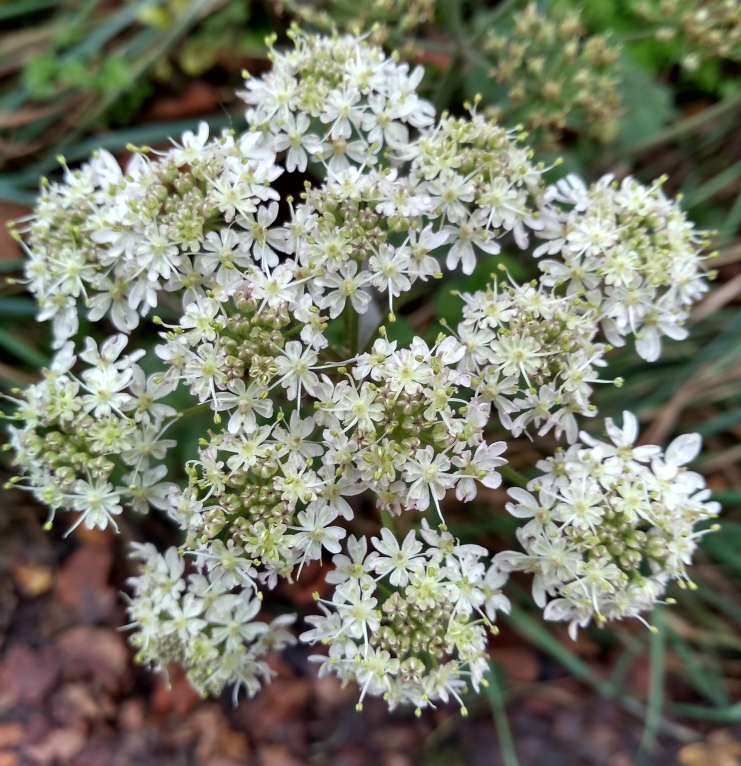
It is always nice to see flowers begin to bloom while others, that have performed throughout the year, wain. On one walk last week I came across a patch of Common Hogweed (Heracleum sphondylium) flowering.

It usually blooms between June and September so it must have been having one last flourish.
Common hogweed is from the same plant family as Ground elder (Aegopodium podagraria) and Cow parsley (Anthriscus sylvestris). All three native umbellifer plants are great for pollinators like hoverflies, Soldier beetles, some butterflies along with short-tongued bees, because these insects need flat flowers in order to gain access to pollen and nectar. Common hogweed is a tall wildflower growing up to six feet in damp conditions along waysides, open woodland, next to riverbanks and amongst rough grassland. It is also called Cow parsnip and had some other interesting names in the past, including Limberscrimps (in Cornwall), Wippul-Squip (Northamptonshire), Cowbumble (gloucestershire).

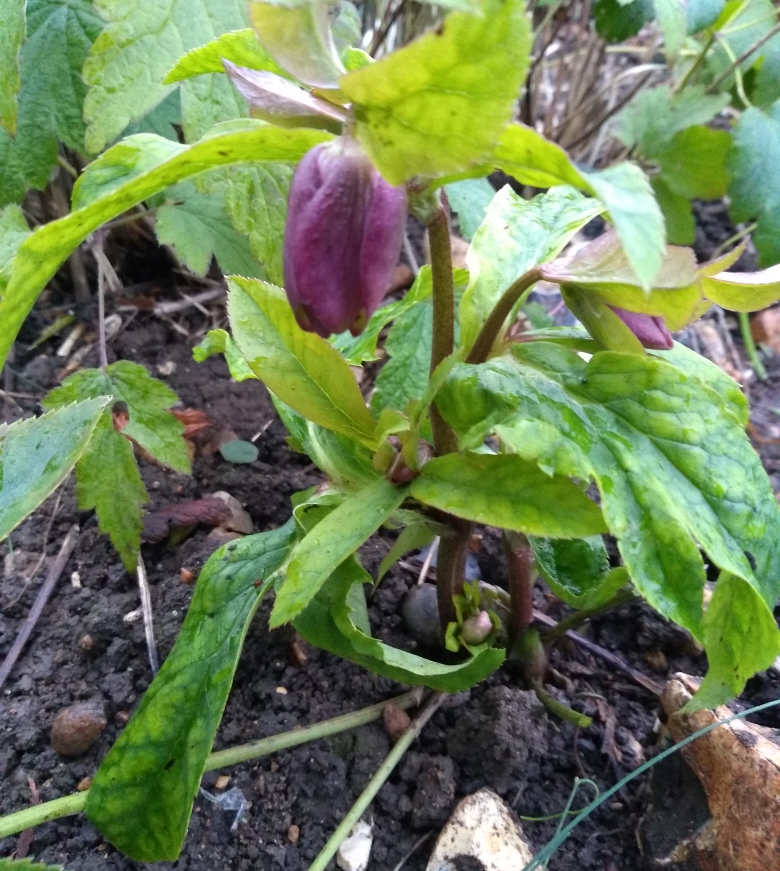
Gardens also continue to show signs of life at this time. The phrase ‘putting gardens to bed’ in winter is often a misnomer and rarely happens. They are never entirely in hibernation as something is usually awake, even if it is only visiting birds. Plus winter or spring flowering plants begin to bloom and grow now. Last week I noticed Hellebores starting to flower

along with Snowdrops (Galanthus)

and Daffodils (Narcissus)

peaking through the soil.

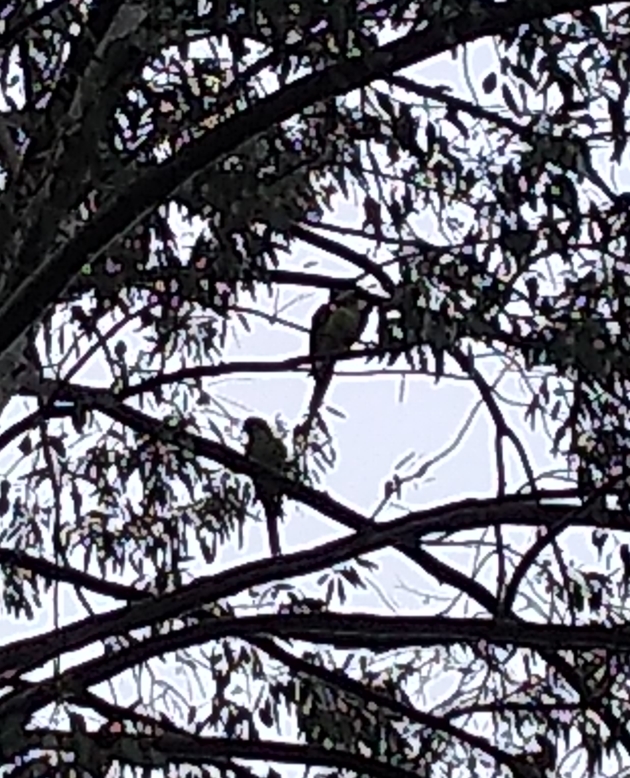
A bird that is easier to see these days are Ring-necked parakeets (Psittacula krameri). They were particularly prominent in one garden I worked at last week where a group kept flying between several trees, before eventually settling within a Eucalyptus tree.

Two parakeets silhouetted in a Eucalyptus tree.

These birds and trees were introduced into this country from warmer areas of the world, yet both species can cope with the colder uk climate.

The evergreen Eucalyptus tree leaves are a bluish green colour when mature. Eucalyptus oil is obtained from the mature leaves, known for its antiseptic properties together with a distinctive aroma.  Immature leaves are more rounded and a bluish shade. The tree flowers from July to October and are especially liked by bees and other pollinators.

Ring-necked parakeets (Psittacula krameri) are parrots that originated from Asia. The history of their introduction to the UK is explained by the RSPB here.

These birds have successfully breeded in this country for years to become a familiar sight in the south-east, particularly urban areas of Hertfordshire, Kent, Surrey and Sussex; their range extending further and further from London. Although they can be observed (and more often heard) throughout the year winter, when the trees are bare, is the best time to see them perched upon branches; unless you are lucky enough to have them visiting bird tables in your garden. They eat a variety of food, having developed an omnivorous diet as they naturalised over here (even though they remain vegetarian in Asia). While they usually eat seeds, fruit, nuts and berries they have been known to feast on scraps left out, including meat scraps. In fact it’s believed they can survive UK winters because they feed from bird tables.

Ring-necked parakeets are very social and can be seen in large flocks containing hundreds of birds. This can make them very noisy and therefore a nuisance in some peoples eyes. Yet whatever your opinion on these birds there is no denying their beautiful colours which seem to become more vivid at this time of year. Even on bleak days beauty exists; sometimes you just have to amend your focus to see it.

Posted in nature

New House Build. 🐝

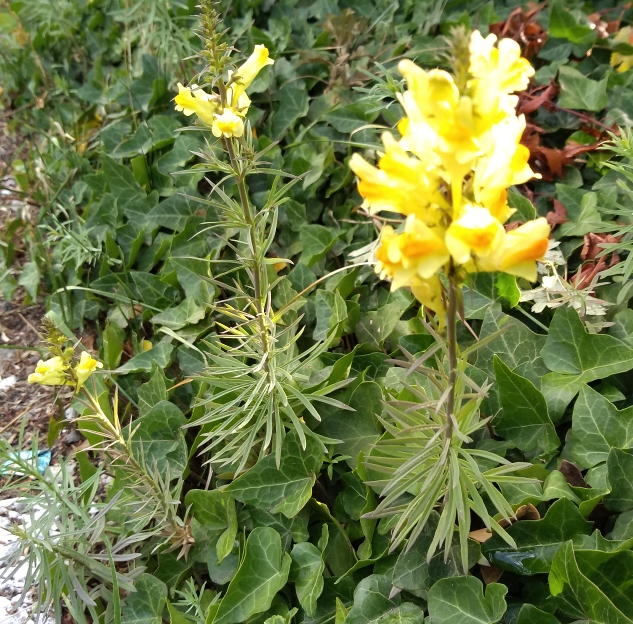
Some fields along my journey to and from work contain a lovely combination of pink Rosebay Willowherb (Chamaenerion angustifolium), purple Buddleia and white Wild carrot (Daucus carota) flowers. Not only do they compliment one another visually but they are all loved by pollinators too. Yellow toadflax (Linaria vulgaris) has started to bloom along the roadside as well.

One special moment occurred on the Monday. As I worked within a border I noticed a Buff-tailed bumblebee (Bombus terrestris) queen flying around a patch of grass. Eventually she began to settle and after a few more large sweeping flights began making a nest in the lawn.

It didn’t take her long to dig into the soil beneath the grass.

She will remain under ground until spring when she will start her own colony.

It was also great to finally get some photos of insects that have have alluded my photographic capture so far this year.

– The first is the Red admiral (Vanessa atalanta),

– Some Hoverflies, including a Hornet mimic (Volucella zonaria) hoverfly,

Hornet mimic Hoverfly pollinating Wisteria flowers that were still blooming.
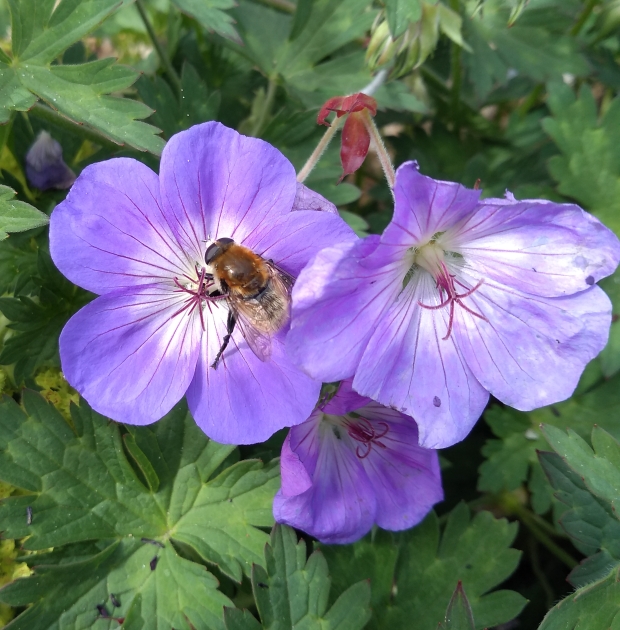
Hoverfly pollinating Geranium flowers.

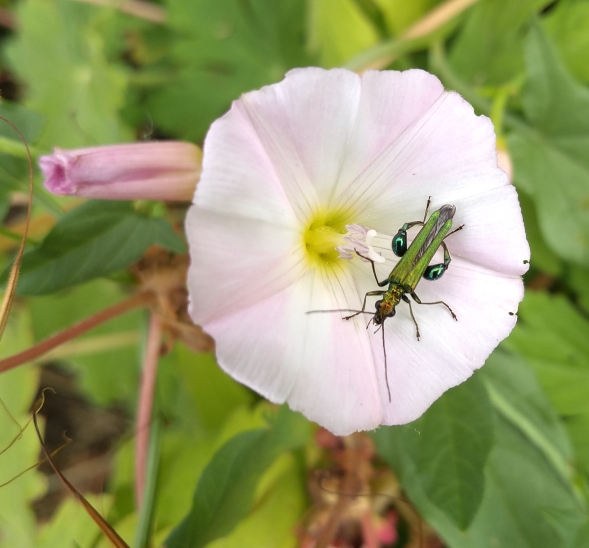
– as well as a Male False oil beetle (Oedemera nobilis), to compliment the female one seen on a walk earlier in the year.

A False oil beetle pollinating a Field bindweed (Convolvulus arvensis) flower.

The males are easily identified due to their large metallic thighs, explaining the reason behind the other common name for this insect the Swollen-thighed beetle.

Posted in nature

🎵The Heat Is On. 🎤 🎹🎷🎶


“Tell me can you feel it, tell me can you feel it, tell me can you feel it, the heat is on…”

The 80’s song from the Beverly Hills Cop soundtrack with Glenn Frey’s voice, synthesizer and saxophone was my earworm as the temperature soared last week. The temperature increased to around 27°C mid week, which meant lots more insects ventured out as it felt like summer.

I was happy to see my first Red admiral (Vanessa atalanta) butterfly of the year, however my main observations were bees including the Red-tailed bumblebee (Bombus lapidarius) and Honey bees (Apis mellifera).

A Red-tailed bumblebee pollinating some geranium.
Honey bees visited Nepeta.

Another bee I started seeing last week was the Tree bumblebee (Bombus hypnorum). I noticed a nest inside a compost bin as I emptied grass clippings from the mower bag.

I have seen Tree bumblebees nest in bird houses before but not under compost. I made sure I avoided tipping grass onto their home and used the next bin along. I couldn’t help watching them for a little while as I stopped for a breather on the very hot Wednesday.

Moths were prominent throughout the week too. Unfortunately Box tree moth (Cydalima perspectalis) caterpillars and the signs of heavy infestation (foliage that had been eaten and covered with webbing) was noticeably present in several gardens. Therefore, I spent lots of time picking them off buxus topiary and informing clients to keep an eye out for them as well. For more information on this pest see the RHS website.

I discovered this years first sighting of a Silver Y (Autographa gamma) moth.

A Silver Y moth resting on a Heuchera leaf.

This immigrant is one of the few brown moths I can identify easily, mostly due to the clear y markings on it’s forewings but also because of their size and shape. This is a day and night flying moth which can be observed visiting flowers to obtain nectar.

However my most exciting moth sighting was the Lime hawk-moth (Mimas tiliae).

This spectacular large moth is night flying. It’s wingspan is 4.6-7.8cms and it can be found in broadleaf woodland, parks and gardens between May and July. I accidentally disturbed it as I pruned some shrubs under a Lime (Tilia sp.) tree. Thankfully it didn’t seem bothered by the disruption and it was carefully placed back near the lime tree. While adult moths of this species don’t feed, the caterpillars do. Once they have emerged from overwintering pupa, the caterpillars will eat Lime, elms (Ulmus sp.), Alder (Alnus glutinosa), Downy Birch (Betula pubescens) and Silver Birch (Betula pendula), Plane (Platanus x hispanica) along with some Cherry cultivars. This was the first Hawk-moth I have ever seen. There are a few that exist in the UK. The nearest I came to seeing one before was observing caterpillars of the Elephant hawk-moth (Deilephila elpenor) eating away at some Fuchsia. For more information on these Hawk-moths see the Butterfly Conservation website (Lime hawk-moth and Elephant hawk-moth)

I also saw hoverflies. I am still learning about these insects and learnt another one last week.

The photo above shows a Narcissus bulb fly (Merodon equestris). The maggots eat away at the centre of bulbs from the Amaryllidaceae family. However even though the maggots are a pest, the adult hoverflies are pollinators.

Posted in nature

What a Difference a Month Makes

A month ago I had a weeks holiday. Signs of autumn were beginning to mingle with late summer. Now October is here autumn has definitely arrived.

As I had another week off I decided to revisit my local park, observing changes from a month ago.

In September Roesel’s bush crickets (Metrioptera roeselii) were chirping everywhere, butterflies were flitting about and some flowers still bloomed amongst the meadow (see Relaxing into Autumn).

Upon my return last Tuesday the only sounds I heard were birds singing and the meadow area had been cut and baled. Cobwebs were visible in the long dew dampened grass around the edges of the woodland too.

Hawkweed, Ragwort (Jacobaea vulgaris), Red clover (Trifolium pratense) and Yarrow (Achillea millefolium) were only just flowering still while the Ivy (Hedera) was in full bloom.

Ivy is fantastic for pollinators at this of year. I saw a few hoverflies flying to and from several flowers but the Honey bees (Apis mellifera), that were still active from the nearby hives would probably visit them too.

It was lovely to see dried seedheads of Wild carrot (Daucus carota)

and Cow parsley (Anthriscus sylvestris)

as I wondered around the park. They look beautiful but they are useful for insects to shelter in as well. In fact I noticed a ladybird snuggling amongst one of the Cow parsley seedheads. I also discovered field mushrooms (Agaricus campestris) growing amongst the grass.

Trees and shrubs were starting to show autumnal colours along with their ripe fruits. I found elderberries, sloe as well as haws on the Hawthorn (Crataegus monogyna) alongside Rosehips. However there were no longer any blackberries left on the brambles.

I noticed the leaves of one Horse chestnut tree (Aesculus hippocastanum) affected by the Horse chestnut leaf miner (Cameraria ohridella) moth.

Similarly there was evidence of caterpillars (most likely another moth) having been on a Silver maple (Acer saccharinum) tree.

The eggs and excrement are still visible on the nibbled leaves.

I ended my weeks holiday with a visit the Horniman museum in London.

On route to the train station I saw a Brown rat (Rattus norvegicus) running across a path. It attempted to cross the road until either the traffic or pedestrians scared it into fleeing towards a nearby hedge. Once I arrived in London I realised that I never see rats in the underground any more. I used to enjoy seeing them scurrying between the tracks. I have owned pet rats for many years so I find wild rats intriguing. I also like to watch Squirrels as rodents tend to act in similar ways to one another. After lunch I observed two Grey Squirrels (Sciurus carolinensis) scamper about.

The nearest squirrel had an acorn in its mouth and appeared to bury it in different places. I once saw a television programme on squirrels in which one was observed ‘pretending’ to bury a nut in several places while in the presence of other squirrels to avoid their stash being taken. Presumably this was occurring with the squirrels I was watching on Friday.

There is a butterfly house and aquarium at the Horniman museum. The butterflies were looking a little aged with their wings rather worn, however they were still beautiful. As soon as I entered the butterfly house a Malachite butterfly (Siproeta stelenes) landed on me which felt wonderfully welcoming.

The photo below shows a selection of the many butterflies I saw.

Feeding on the fruit are one Blue morpho (Morpho peleides), one Brown clipper (Parthenos Sylvia philippinensis), two Blue clipper (Parthenos Sylvia) and three Owl butterflies (Caligo memnon).

There were lots to see in the aquarium as well but my favourites were the White spotted jellyfish (Phyllorhiza punctata); watching them was so relaxing.

Even at the weekend nature was visible. As I ate breakfast on Saturday morning I heard and watched a group of Coal tits (Periparus ater) on the Rowan tree (Sorbus aucuparia) outside. I have never seen Coal tits on this tree before, I hope to see them again.

Another animal I became aware of last week was a Red fox (Vulpes vulpes). I first noticed it on my way home on Wednesday night and again on Sunday morning. It was making itself known on Saturday night too as it was being very vocal.

Posted in nature

Relaxing into Autumn

September is here. While meteorological autumn has already begun (1st) it won’t be long before astronomical autumn arrives (23rd) too.

I love this time of year; for me it’s the time for taking stock and starting new adventures (a feeling probably ingrained from my educational years). I particularly look forward to planning changes in the garden and start making Christmas presents at this point in the year. Plus Autumn is my favourite season, the fresher sunny mornings and the warm leaf colours.

Along with the signs of autumn (including Blackberries, Elderberries and Sloes ripening) I have noticed a change in how the days feel within the past few weeks.
As the school year begins I had a week off to relax after a long hectic summer.

At the start the week I decided to walk round the local woodland park. It was a warm, dry and sunny day on Monday. Once I entered the meadow area I was aware of a loud chorus amongst the uncut grass. Upon closer inspection I discovered the wonderful chirps were being made by lots of Roesel’s bush crickets (Metrioptera roeselii).

The flowers still blooming were; Hawkweed, Red clover (Trifolium pratense), Ragwort (Senecio jacobaea), Yarrow (Achillea millefolium) and Chicory (Cichorium intybus).

Lots of Honey bees (Apis mellifera) and several Small white butterflies (Pieris rapae) were flitting between the flowers especially the Chicory. The blue flowers of the Chicory really stood out in the sunshine.

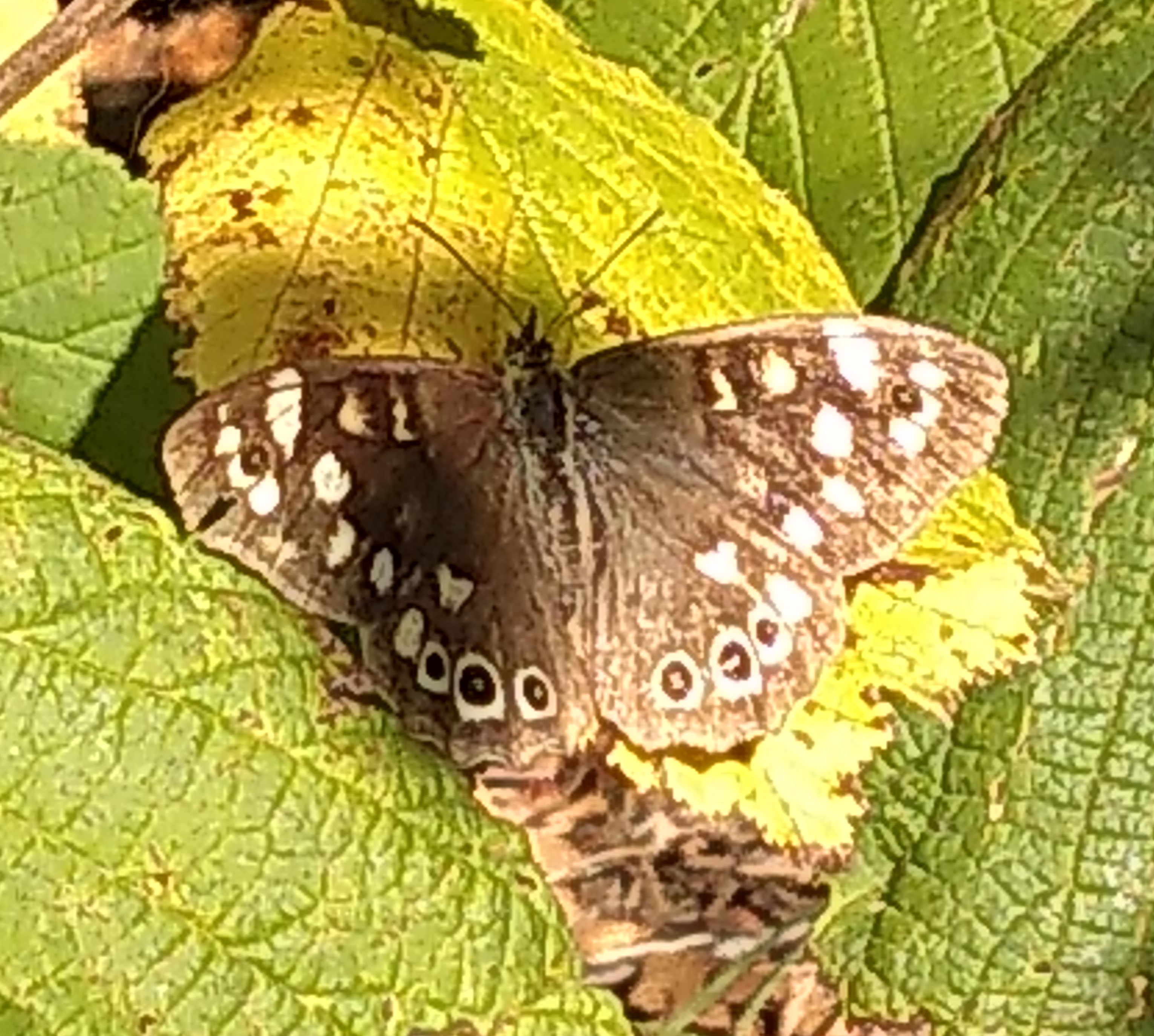
I even got to see a Speckled wood butterfly (Pararge aegeria) resting in the sun on the edge of the wood.
One thing came as a surprise as I wondered through this oasis of calm. It was fantastic to discover a notice about Skylarks (Alauda arvensis) nesting in area.

As they are on the Red list Bird of Conservation Concern it was nice to learn that they have made a home nearby.

Although I didn’t go away on holiday I planned to visit a few places before the weather turned. One place I finally visited was the Chelsea Physic Garden in London. Although it was later in the season there was still lots to see. Initially I looked round the glasshouses within the Tropical Corridor. There were lots of plants from around the world which required extra protection. I am a big fan of cacti so I liked seeing them planted naturally rather than in pots. There were lots of Pelargoniums as well. One whose leaves I particularly enjoyed smelling was Pelargonium ‘Chocolate peppermintwhich reminded me After Eights.
Within the same glasshouse I got so see a Common carder bee (Bombus pascuorum) enjoying the flowers of the Pelargonium quercifolium ‘Royal oak’.

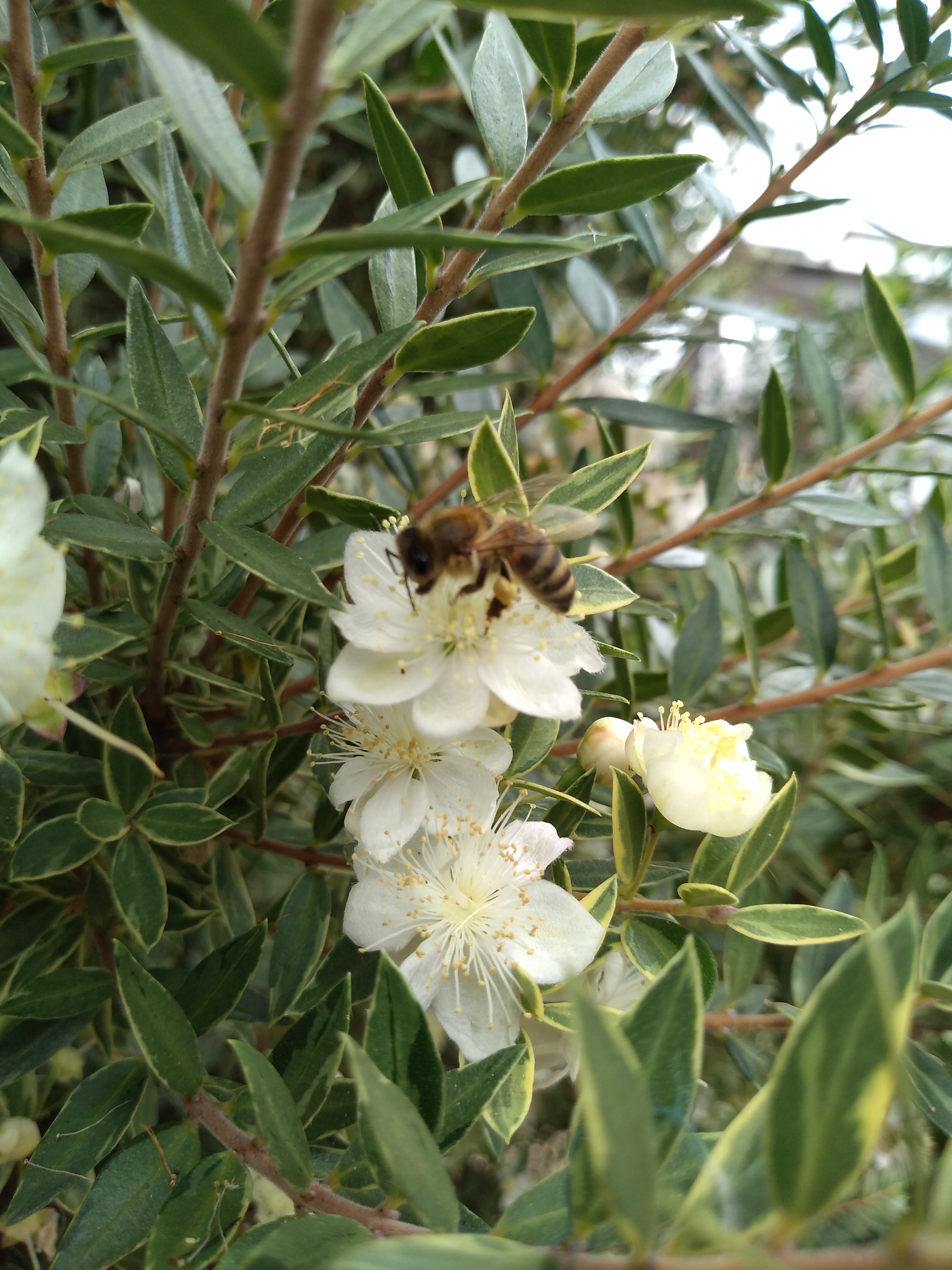
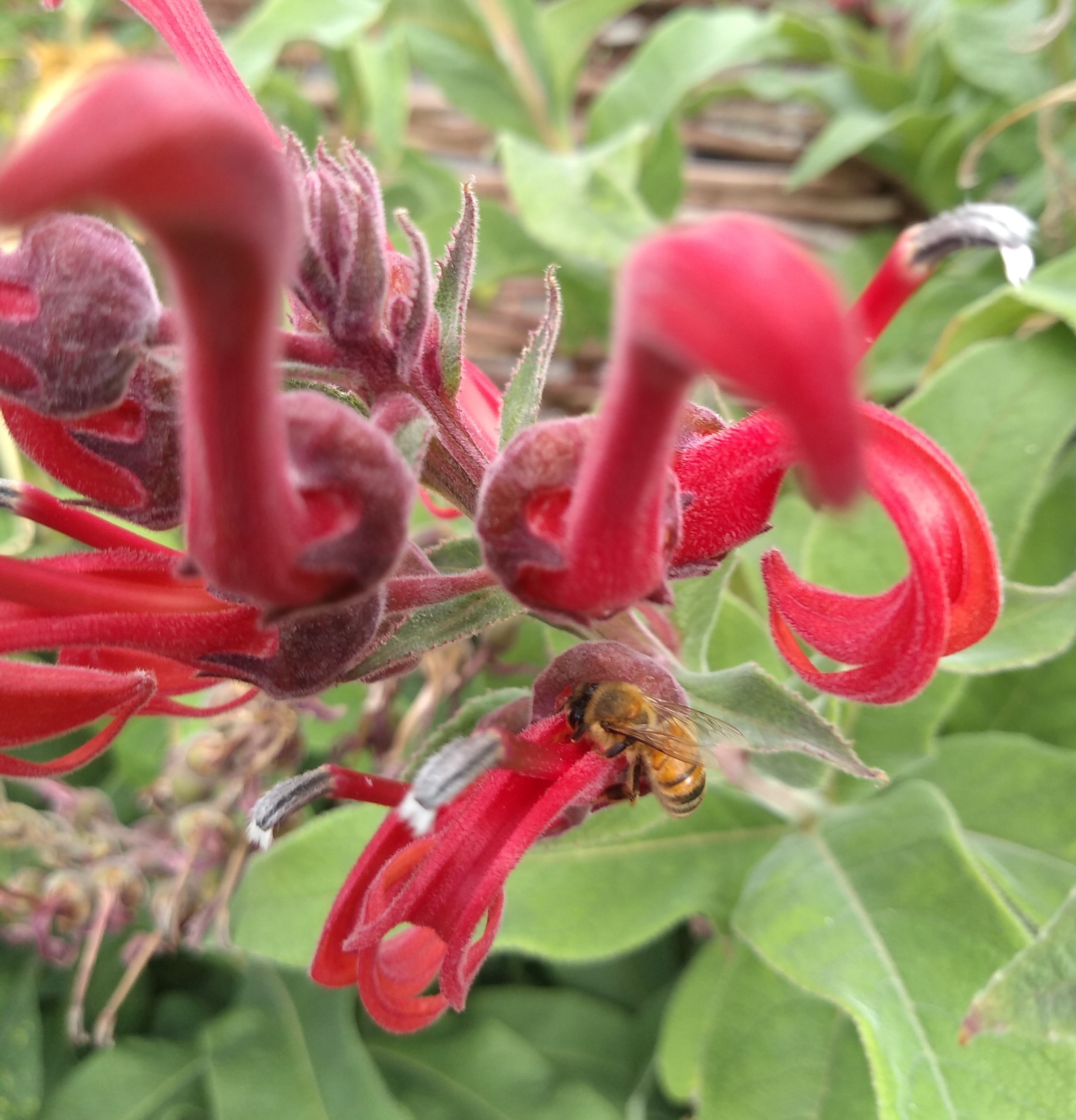
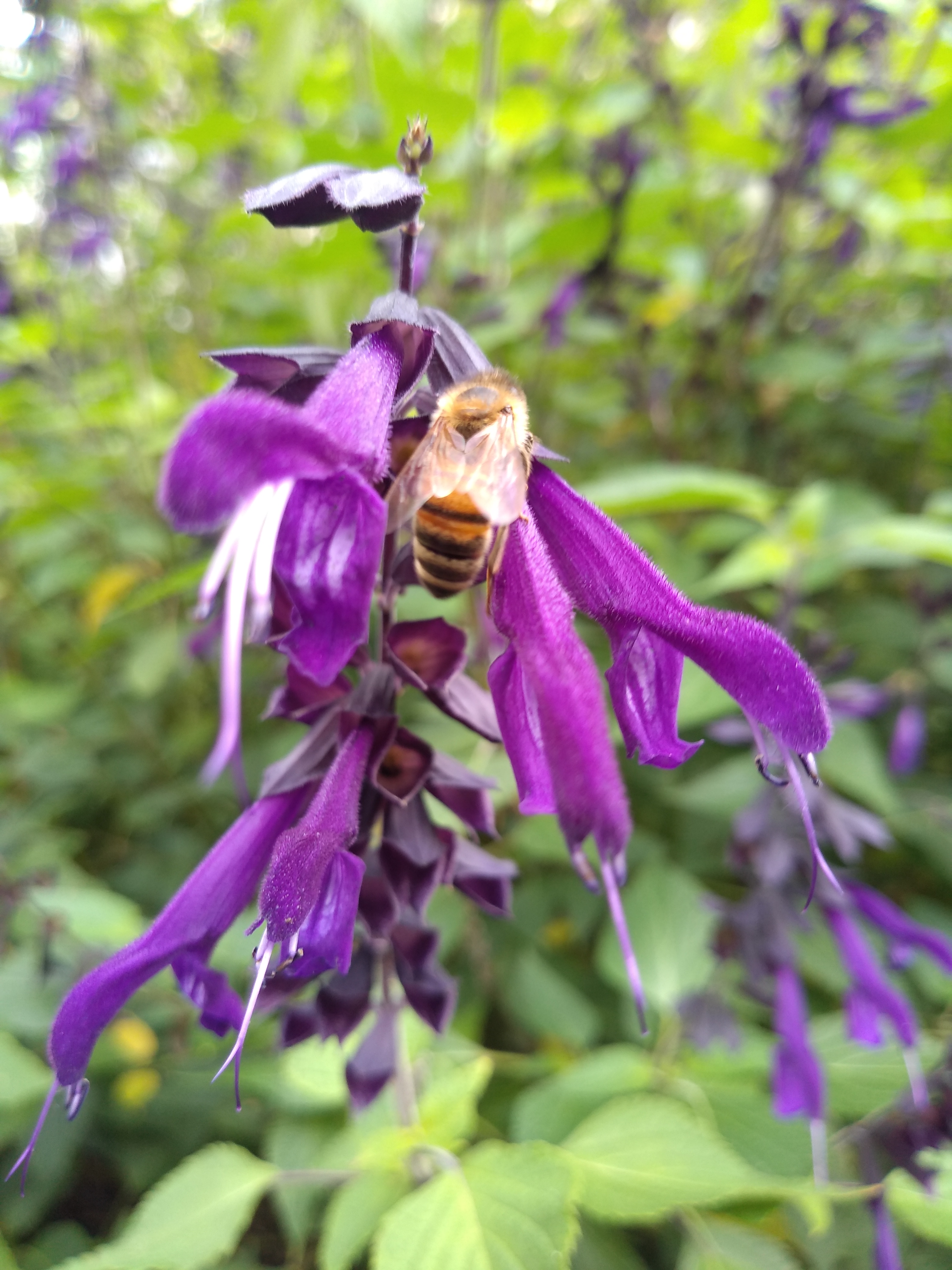
After the glasshouses I walked around the Garden of Medicinal plants. There were Honey bees buzzing around lots of plants in this section. I found them visiting a;
Myrtus communis var. tarentina ‘variegata

Lobelia tupa,

Salvia stachydifolia,

and a Salvia amistad; along with a Buff-tailed bumblebee (Bombus terrestris)
It was also lovely to watch some Dunnocks (Prunella modularis) as I ate lunch. Normally shy birds I usually only hear them sing in early spring, however these clearly weren’t bothered about us.

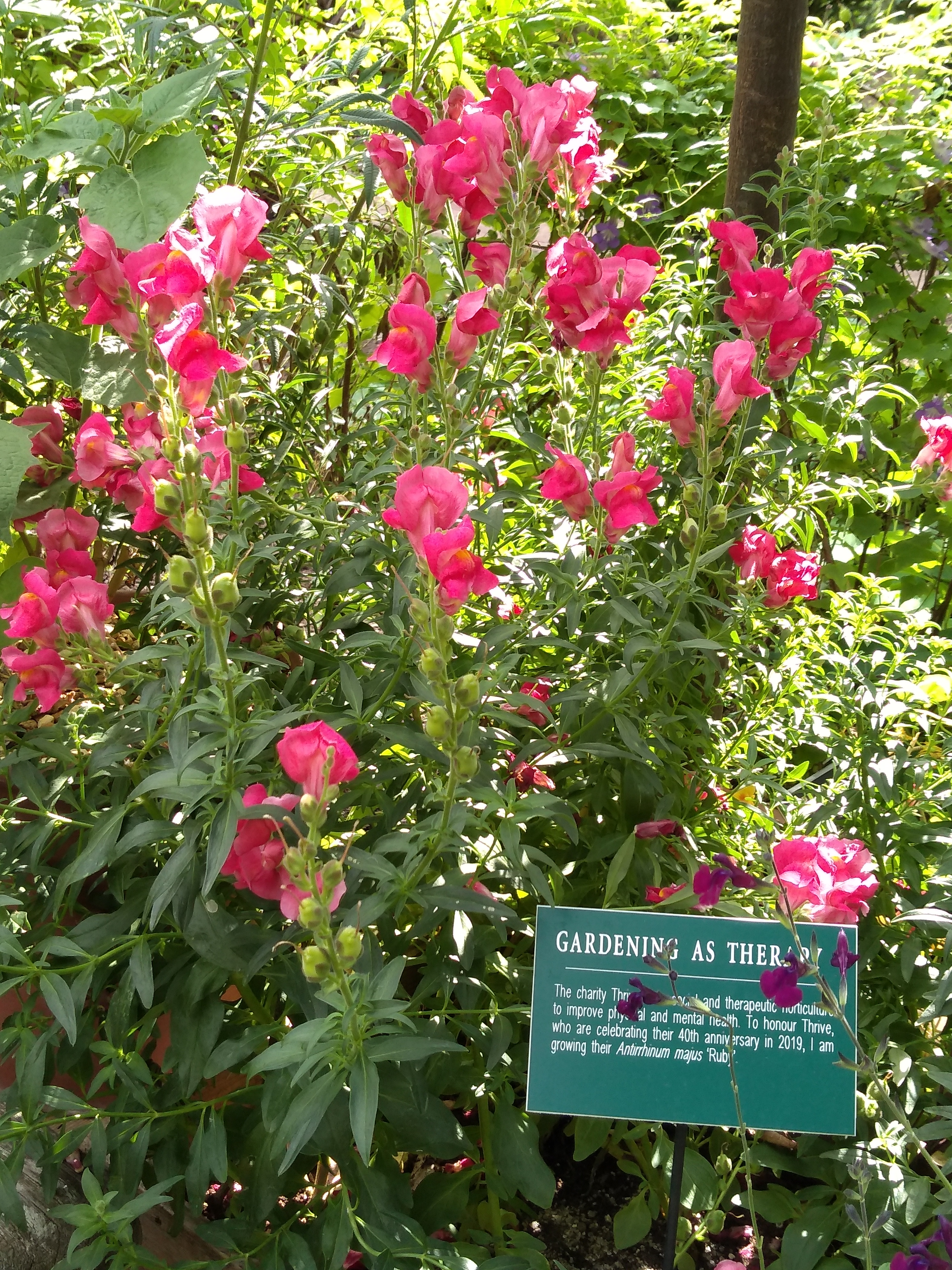
The next stop was to the Mental Wellbeing garden. I particularly enjoyed this small garden dedicated to improving mental health. It concentrated on the senses so there were plants you could feel, smell as well as view. Colour was important; along with soothing green foliage there were calming blues and purples along with joyful yellows and oranges. There was even a reference to garden therapy which is close to my heart along with a dedication to the charity Thrive. (See Thrive).

Wildlife can also have a positive affect on mental health so it was great to see insects in this space too. There was;
– an unidentifiable bumblebee investigating a Morning Glory (Ipomoea purpurea ‘Grandpa Ott’) flower covered in pollen.

– plus a Green aphid on a beautiful sweet pea (Lathyrus odoratus ‘Matucana’).

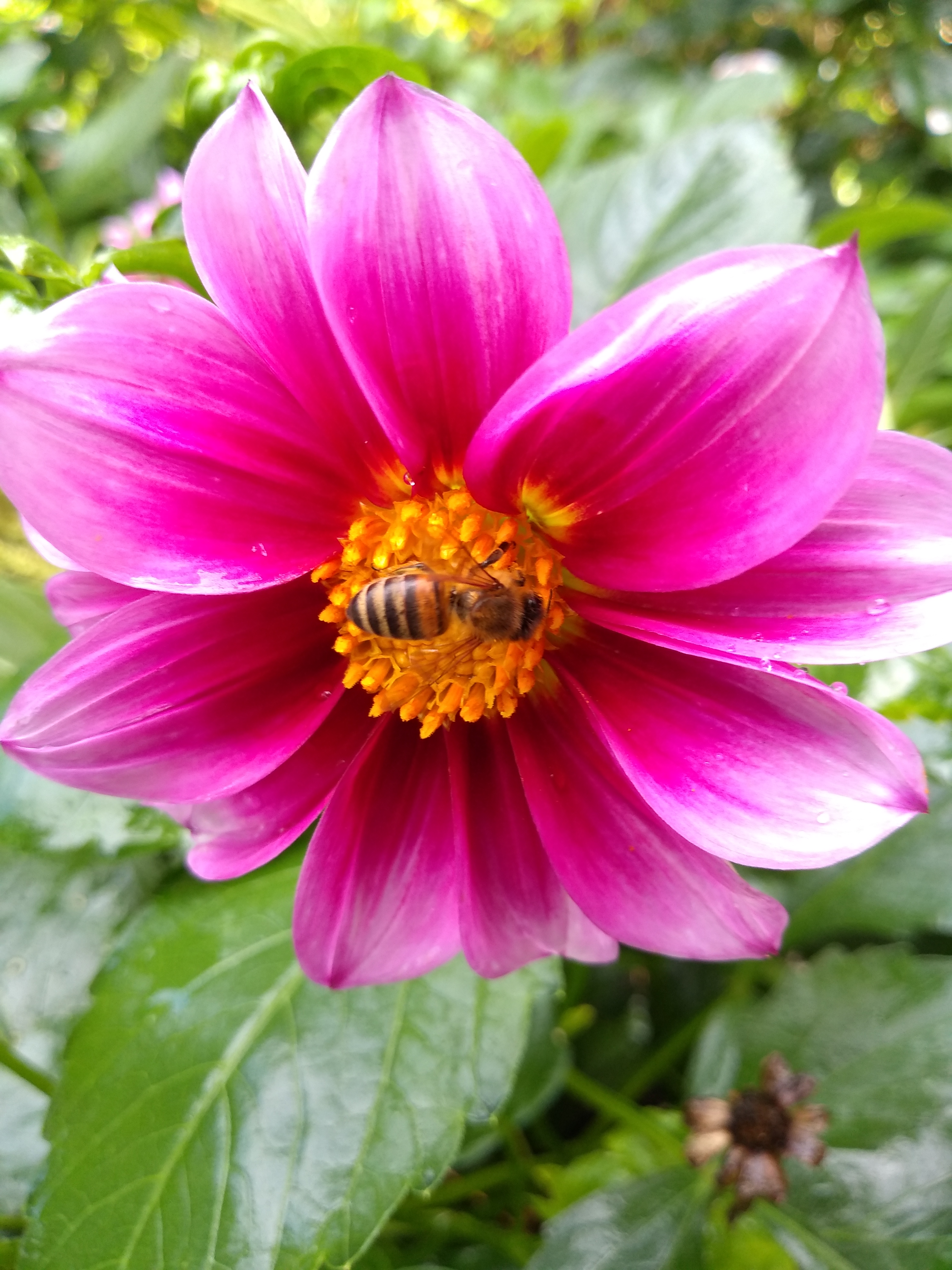
I continued to notice more insects as I kept walking around; starting with the Dicotyledon Order Beds, where I saw a Honey bee on a dahlia,

through to the Garden of Edible Plants. In the tea bed, which was near Fortune’s Tank Pond, a male Common darter dragonfly (Sympetrum striolatum) was resting on a metal teapot shaped frame holding up Nettles (Urtica dioica) inside. The nettles were meant to be there as nettle tea can be a diuretic.

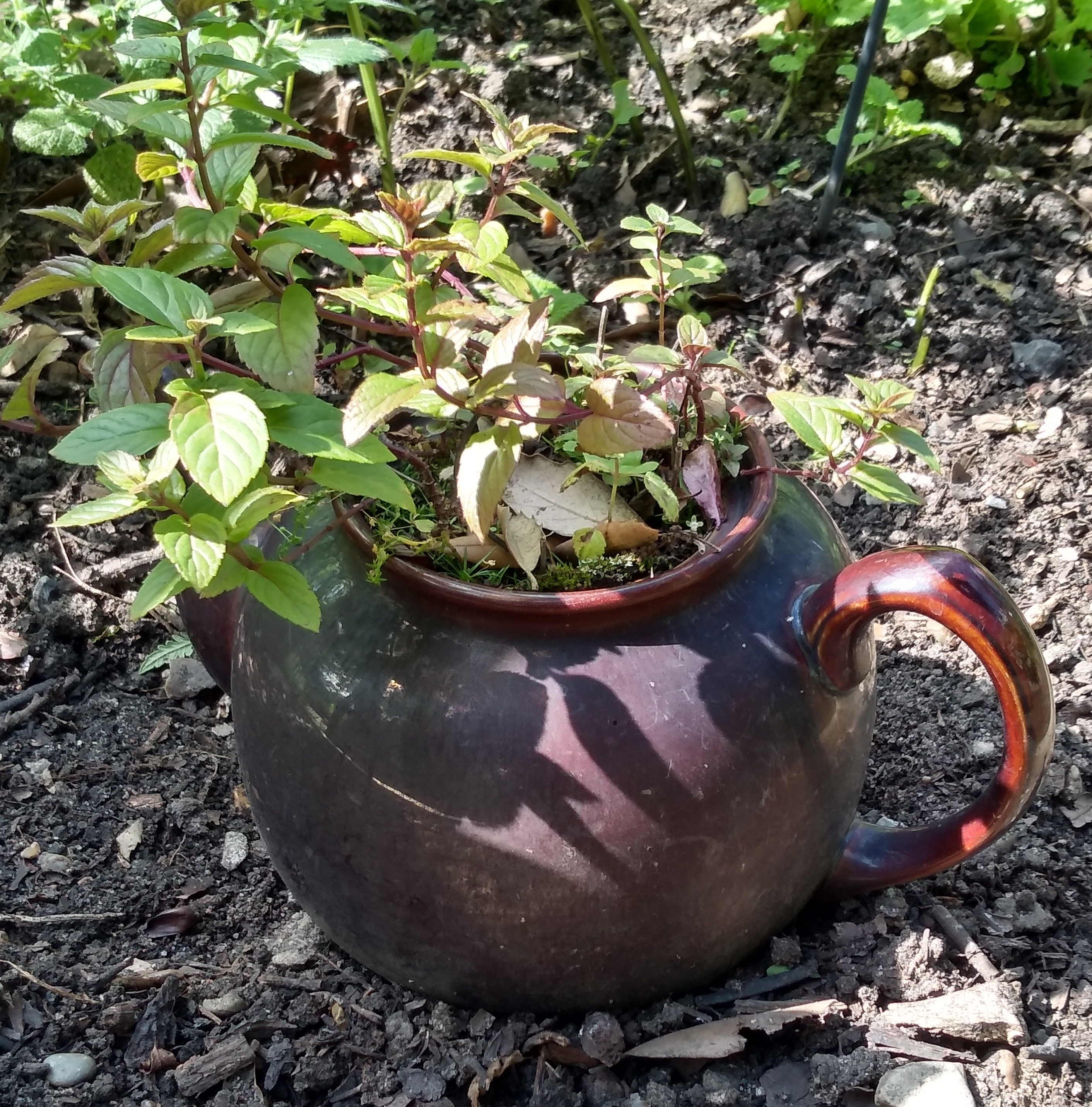
There were some interesting containers used as pots in this bed. Mint (Mentha) was growing in a teapot

and a tea plant (Camellia sinensis) was planted in a tea chest.

These unusual pots gave me some ideas for my own garden.

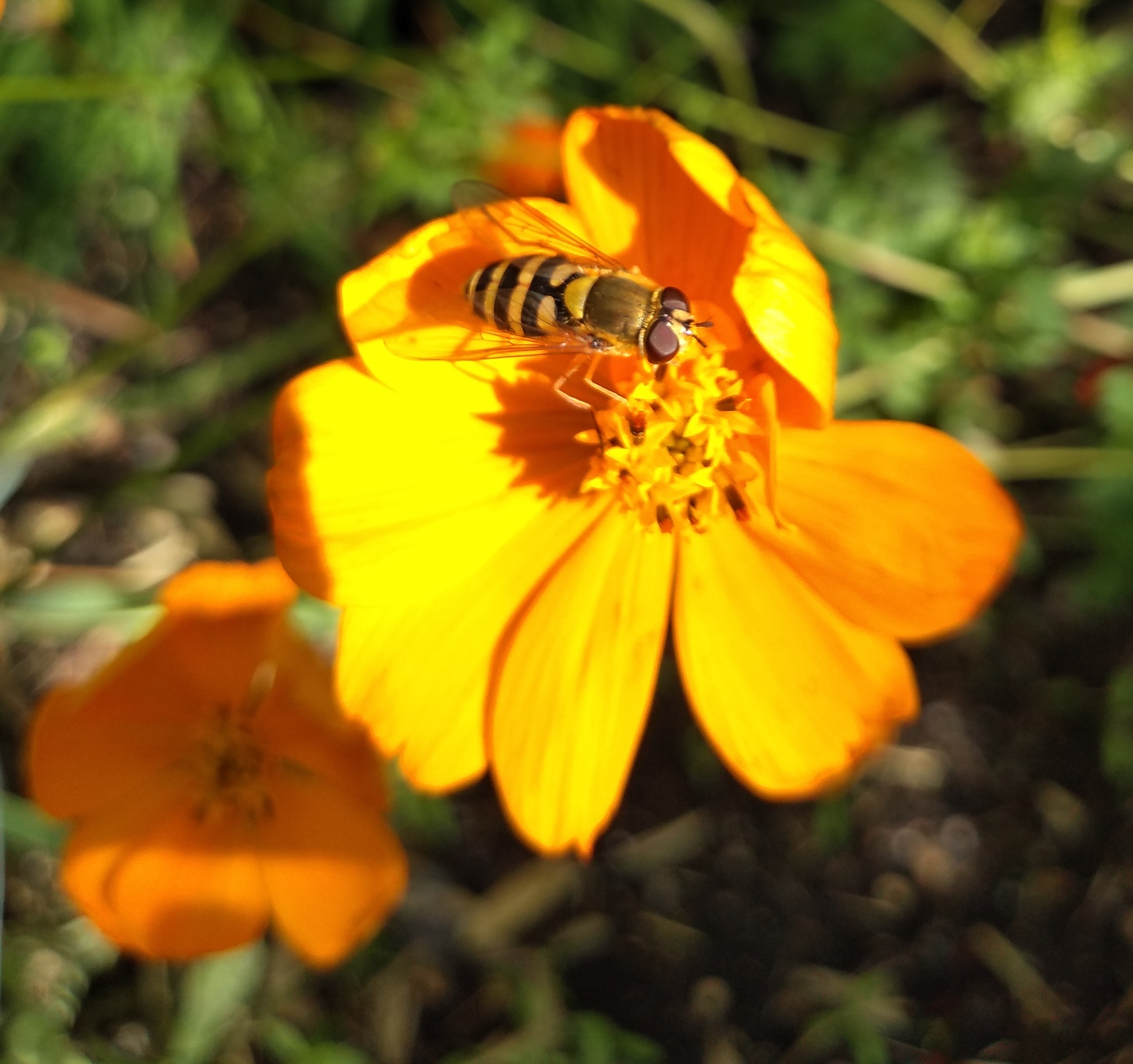
Another area I was very interested in seeing was the dyers bed. I would love to try colouring fabric or yarn with natural dyes so I wanted to see which plants were there. On the yellow cosmos (cosmos sulphureus) was a female Syrphus ribesii hoverfly.

The flowers of this Cosmos are used to create a yellow- orange dye. I think I may try dying with this plant if dye is amazing as the flowers.

I meandered further round the other sections of the garden ending in the community garden. Alongside edibles were wildflowers that can be used as herbal medicine.

I love this sign.

Along with plants such as Chamomile (Chamaemelum nobile) and evening primrose (Oenothera biennis) were Herb robert (Geranium robertianum) whose crushed
leaves can aid wound repair and the aroma believed to repel mosquitos. Another so called weed I found there was Plantain (Plantago major). When used as a soothing poultice the leaves
are useful for calming insect bites and inflammation.

I ended the week beside the sea in Hampshire. I always look for seaglass along beaches and Saturdays hunt was plentiful. The weather was lovely on Saturday; sunny and warm with a gentle breeze. Along with the soothing sound of the waves I could hear Herring gulls (Larus argentatus). This was the perfect end to my week off and the start of Autumn.

Posted in nature

The Very Hungry Caterpillar

The weather at the beginning of last week started nicely. Early on a sunny Monday morning I spotted seven Large white (Pieris brassicae) butterfly caterpillars on a Nasturtium (Tropaeolum) plant.
Used as a companion plant near brassicas this plant has been sacrificed to prevent the butterfly eggs being laid on the cabbages.

Unknown to me at the time, I also photographed some caterpillar faeces as well as an undeveloped egg on the leaf. I don’t remember the loved childhood picture book, The Very Hungry Caterpillar mention poo (although I’m sure children would have loved that addition to the story).

As with elsewhere in the country, the weather continued to be unsettled throughout the week. Tuesday was mostly overcast but the bees were still out foraging. As the lavender (Lavandula) was over lots of Honeybees (Apis mellifera) started visiting the Echinops bannaticus.

Later the same day I managed to see another Male Gatekeeper (Pyronia tithonus) butterfly too, this time visiting a Geranium.

Plus on Thursday I noticed a Holly blue (Celastrina argiolus) butterfly on some Verbena bonariensis. I haven’t seen Holly blue butterflies since spring, so that was nice.

Unfortunately on Wednesday I managed to disturb a Silver Y (Autographa gamma) moth.

Although this isn’t a great photo, it is clear enough to be able to identify the moth. I managed to identify it because of the shape and light colouring along with the unbroken y shaped silver marking on each forewing. This moth is a migrant, visiting from the continent. It can be seen here with the wings vibrating to warm up it’s flight muscles before flying off.

The week ended with a visit to the Royal Botanical Gardens, Kew on Saturday. There were some insects braving the stronger winds and the afternoon rain.

Amongst the Wildflower meadow surrounding The Hive experience the flowers still blooming were; Red Campion (Silene dioica), Red clover (Trifolium pratense), Ragwort (Senecio jacobaea), Yellow toadflax (Linaria vulgaris), Creeping buttercup (Ranunculus repens), Yarrow (Achillea millefolium), Flatweed (Hypochaeris radicata) and Wild marjoram (Origanum vulgare).

Yarrow and Yellow toadflax along the path.

A Volucella inanis Hoverfly visiting the Wild marjoram.

In the Agius Evolution Garden there were lots of bees visiting the Salvias as well as a Buff-tailed bumblebee (Bombus terrestris) on a hollyhock (Alcea)
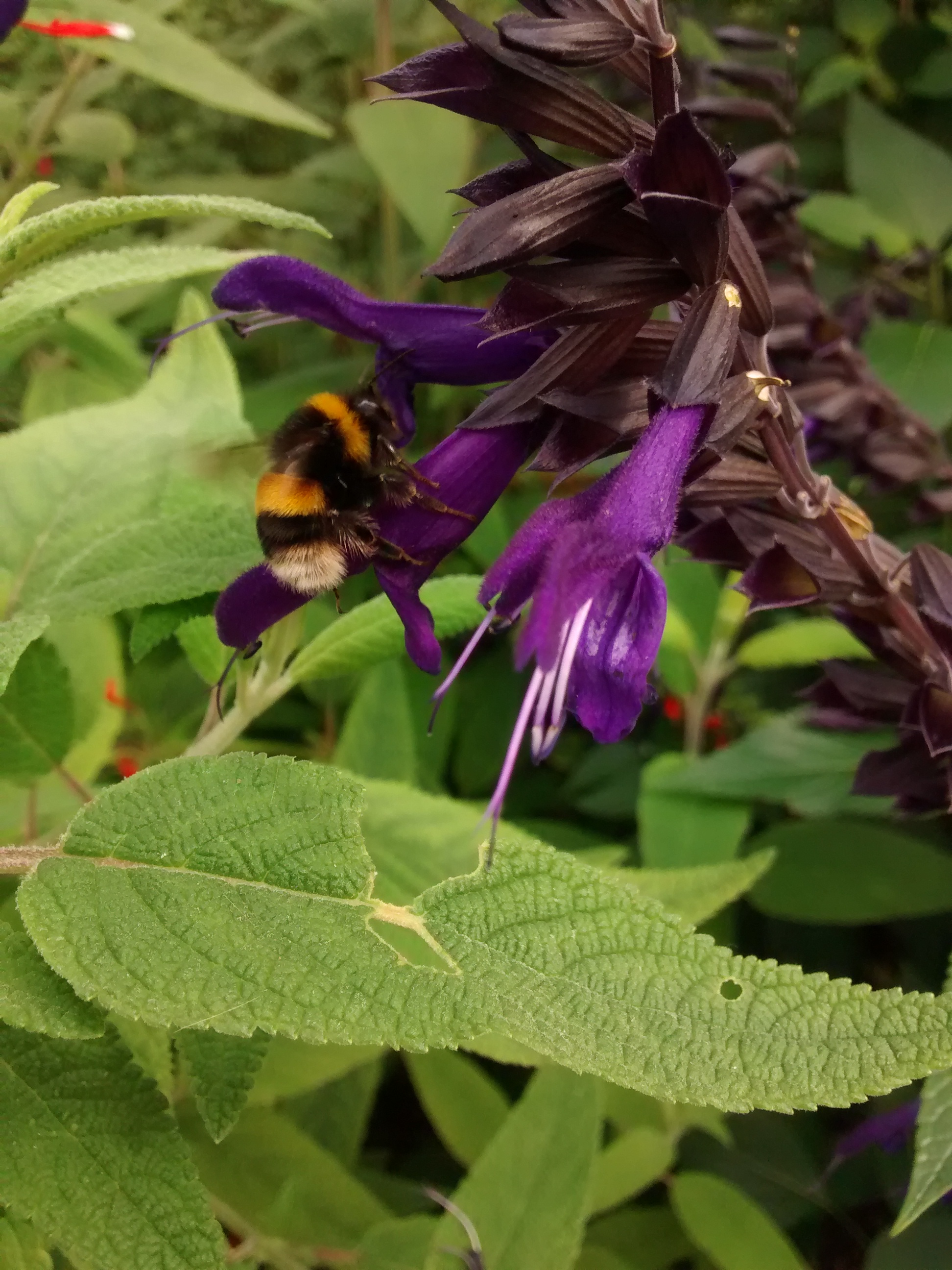
and a Honey bee (Apis mellifera) visiting a Wallflower (Erysimum).

Posted in nature

The Heat Is On. 🔆🌡️⛈️☔

The weather last week was a mixed bag. Sunshine with the temperature rising into the thirties, fantastic storms and then dull days of rain. Thankfully it is a little cooler now; while I enjoy the sun, I wilt in muggy heat.

Given the weather there were still lots of butterflies around, mostly Peacock (Aglais io), Red admiral (Vanessa atalanta) and Small white (Pieris rapae). Unfortunately I haven’t managed to capture photos of any of these as they didn’t remain in situ for long. I see many white butterflies flit past me. It can be difficult to say if they are Large white (Pieris brassicae), Small white or female Orange tip (Anthocharis cardamines) butterflies because they disappear before I can identify them.

Happily I was able to photograph one butterfly on a Buddleia on Wednesday. The combination of the pattern in the underside, orange colouring I saw on the upper wings, together with the wing outline means the butterfly in the photo below is a Comma (Polygonia c-album).

Their Caterpillars usually feed on the Common nettles (Urtica dioica) but also Elms (Ulmus), Hops (Humulus lupulus) as well as Willows (Salix). Peacocks often visit Buddleia too. The Common Nettle is also the favoured food of Peacock Caterpillars; although they have been recorded feeding on hops and small nettle (Urtica urens) as well. As the common nettle is the favourite food of both Comma and Peacock caterpillars, what better reason is there for allowing some nettles to grow in a garden?

There were other observations last week too;
– a Harlequin ladybird (Harmonia axyridis) on some Lesser Burdock (Arctium minus),

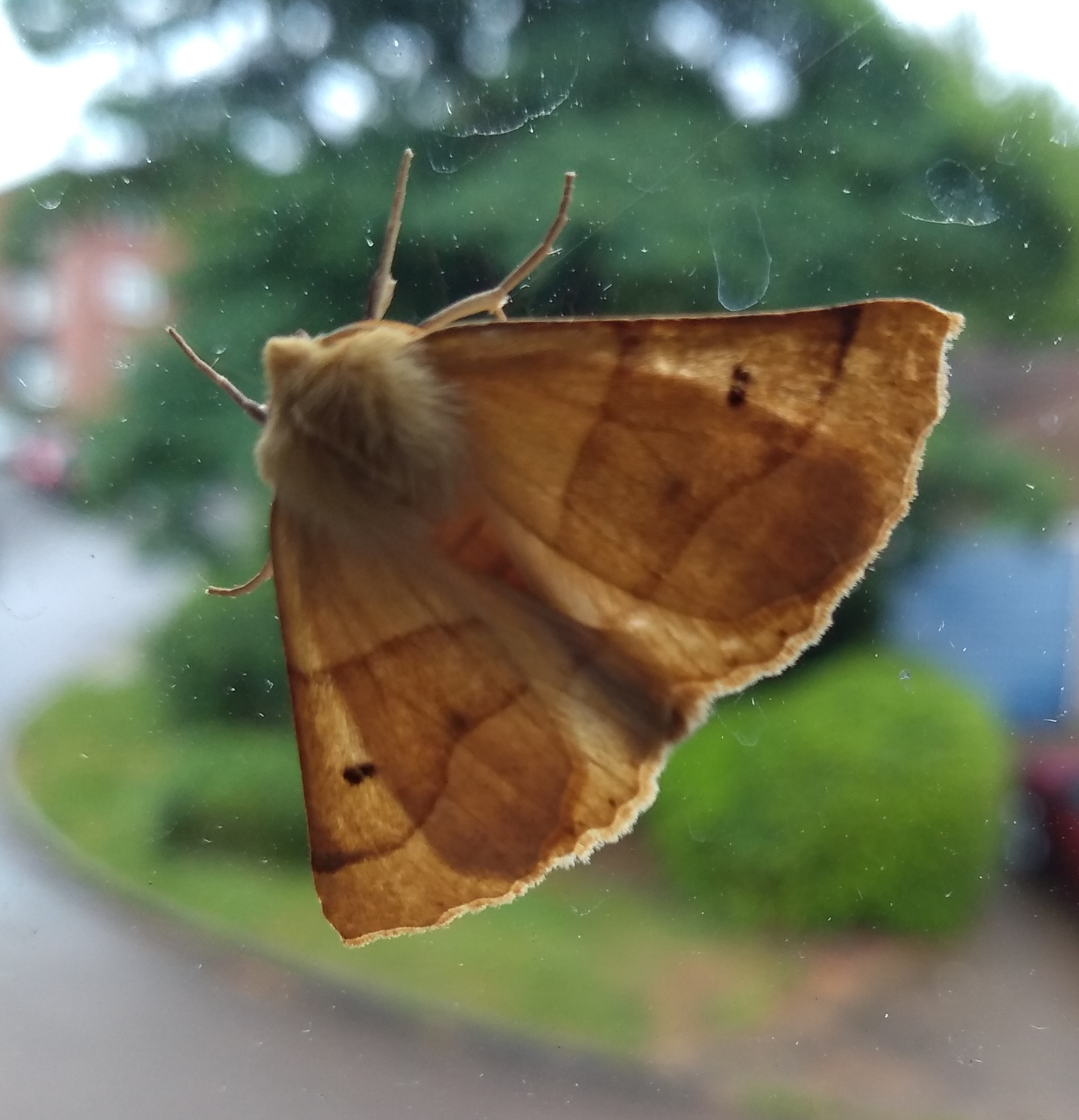
– a Scalloped oak (Crocallis elinguaria) moth,

The caterpillars of these moths feed on honeysuckle (Lonicera), heather (Calluna vulgaris) and broadleaf trees like Oak (Quercus) and Birch (Betula).

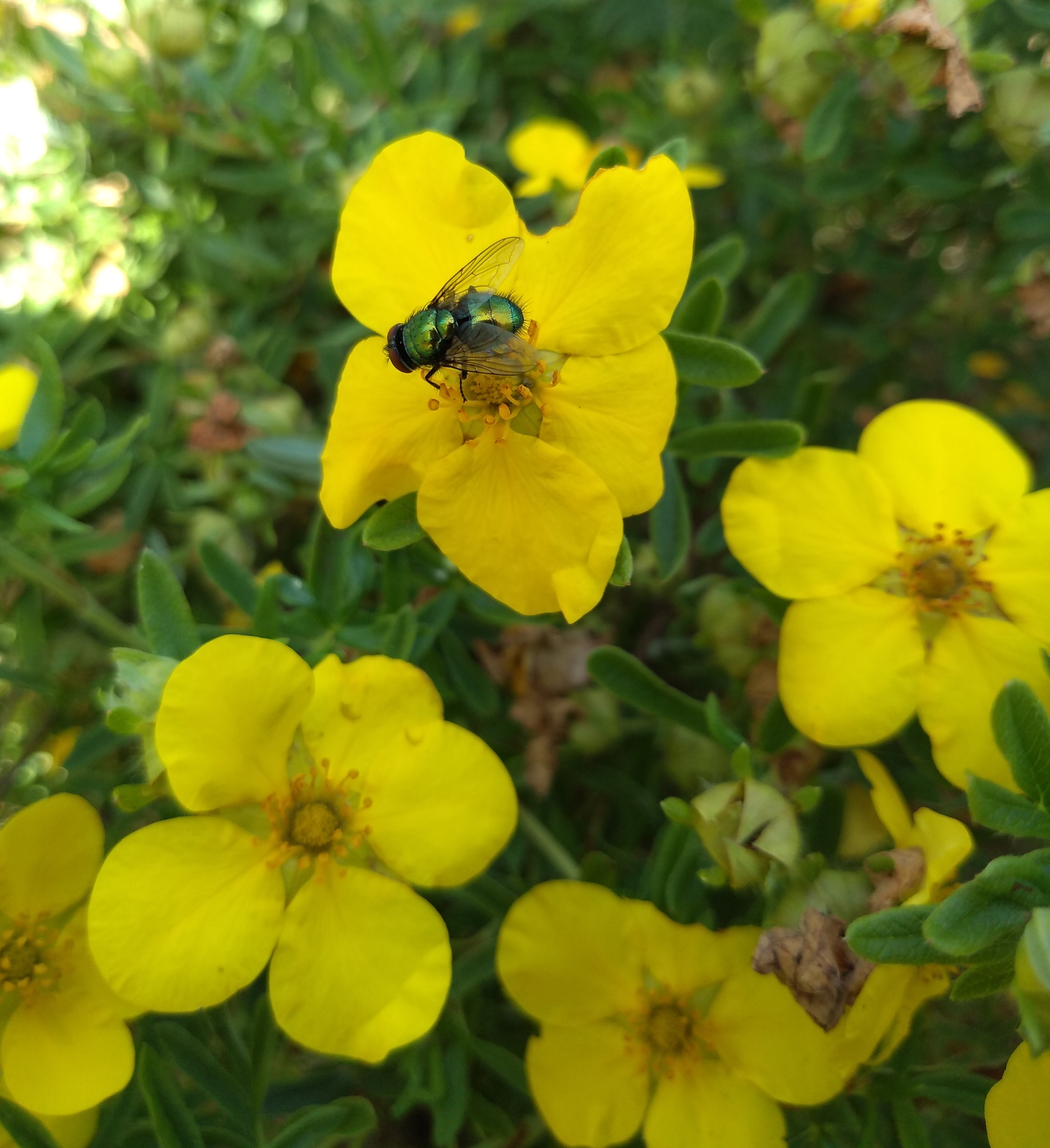
– plus a Long hoverfly (Sphaerophoria scripta), whose larvae feed on aphids, and a Common green bottle fly (Lucilia sericata) on a Potentilla plant.

Capturing the Common green bottle fly was accidental but it worked out really well. In the sun its glistening metallic colouring is highlighted against the yellow Potentilla flowers. Their maggots feed on dead tissue so their appearance is used to accurately determine time of death. Adult Common green bottle flies on the other hand are useful pollinators, as the last photo proves. Fascinating how different stages of this fly species exists alongside both death and life.

Posted in nature

Amphibians and Insects

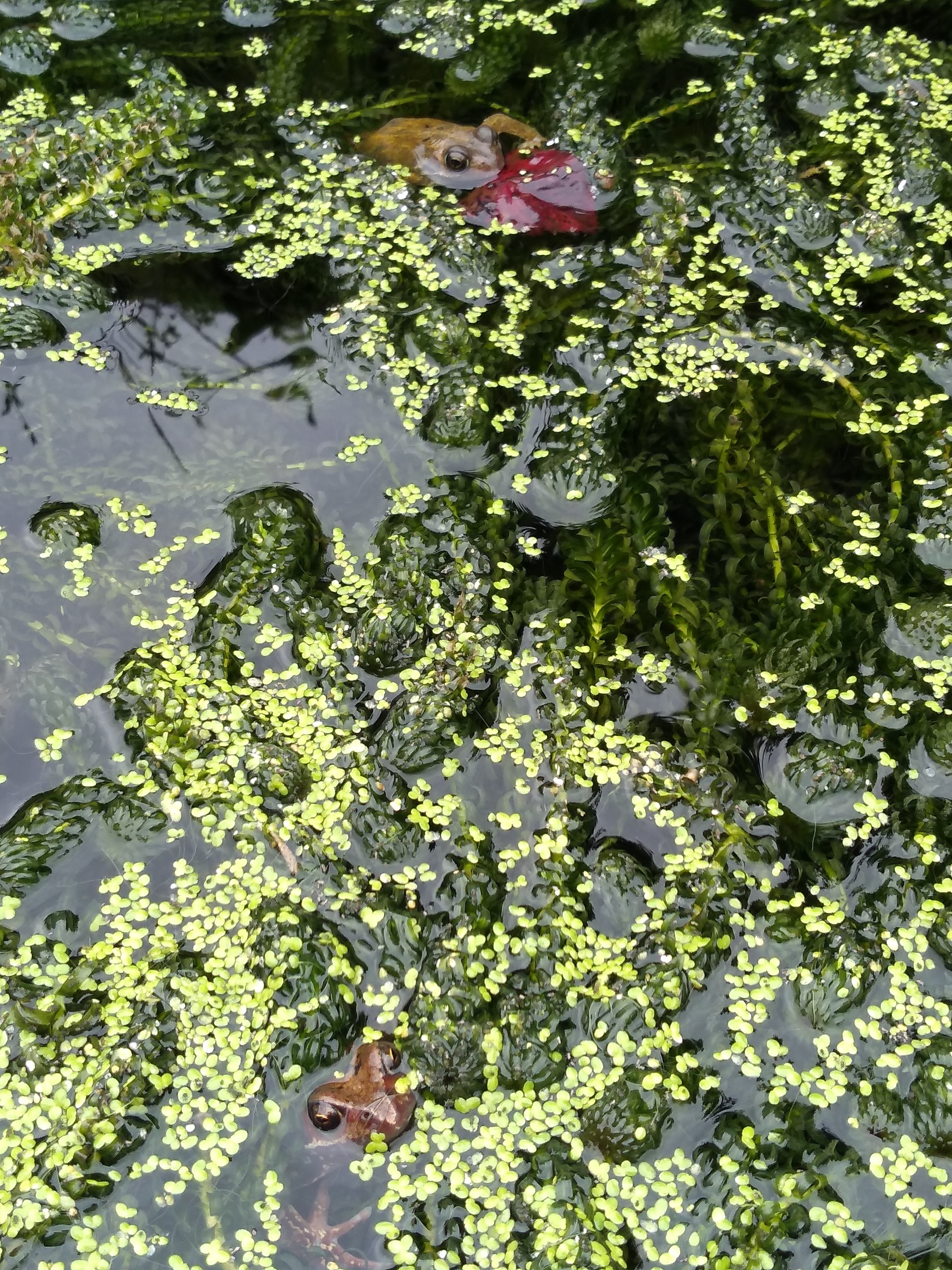
My week started and ended working next to ponds. The first was a small natural pond with a couple of frogs (Rana temporaria) sitting in it.

The other was a large disused outdoor swimming pool. In its neglected state rainwater collects within the concrete walls and nature is taking over. Given the murkiness of the water I was unable to obtain decent photos of my findings; however I saw another frog, (surrounded by lots and lots of tadpoles) along with a dragonfly nymph and a newt. It should be interesting to discover how many tadpoles survive to adulthood.

For the rest of the week insects were centre stage, especially on Wednesday when flying ants took to the sky. Flying ant season really tests my resolve to work through my dislike of ants (which originated in childhood). Thankfully I now find them more fascinating than loathsome, mostly.

The other insects I saw that day were;
– A (Chrysotoxum cautum) hoverfly on some Pyracantha.

– Honey bees (Apis mellifera) and a Red-tailed bumblebee (Bombus lapidarius) visiting a Geranium ‘Rozanne’ plant.

– Lavender (Lavandula) full of bees and butterflies, including more Honey bees as well as Buff-tailed bumblebees (Bombus terrestris), Meadow browns (Maniola jurtina) and a Ringlet (Aphantopus hyperantus) butterfly.

The Meadow brown butterflies also enjoyed visiting the Echinops bannaticus flowers too.

Even as I returned home I noticed a Willow Beauty (Peribatodes rhomboidaria) moth on the hall window.

The adults feed on Creeping thistle (Cirsium arvense) and Ragwort (Senecio jacobaea) both of these plants are common around this area. The caterpillars feed on various trees, shrubs as well as climbers ranging from Yew (Taxus baccata), Birch (Betula), ivy (Hedera helix), honeysuckle (Lonicera) and the wild Clematis, Traveller’s joy (Clematis vitalba).

The previous day I came across more insects that I was previously unaware of.

The first one was the Common red soldier beetle (Rhagonycha fulva).

It is a beneficial insect as adults eat aphids and are pollinators (feeding on nectar and pollen from open flat flowers such daisies and hogweed) while the larvae feed on slugs and snails along with other ground dwelling invertebrates.

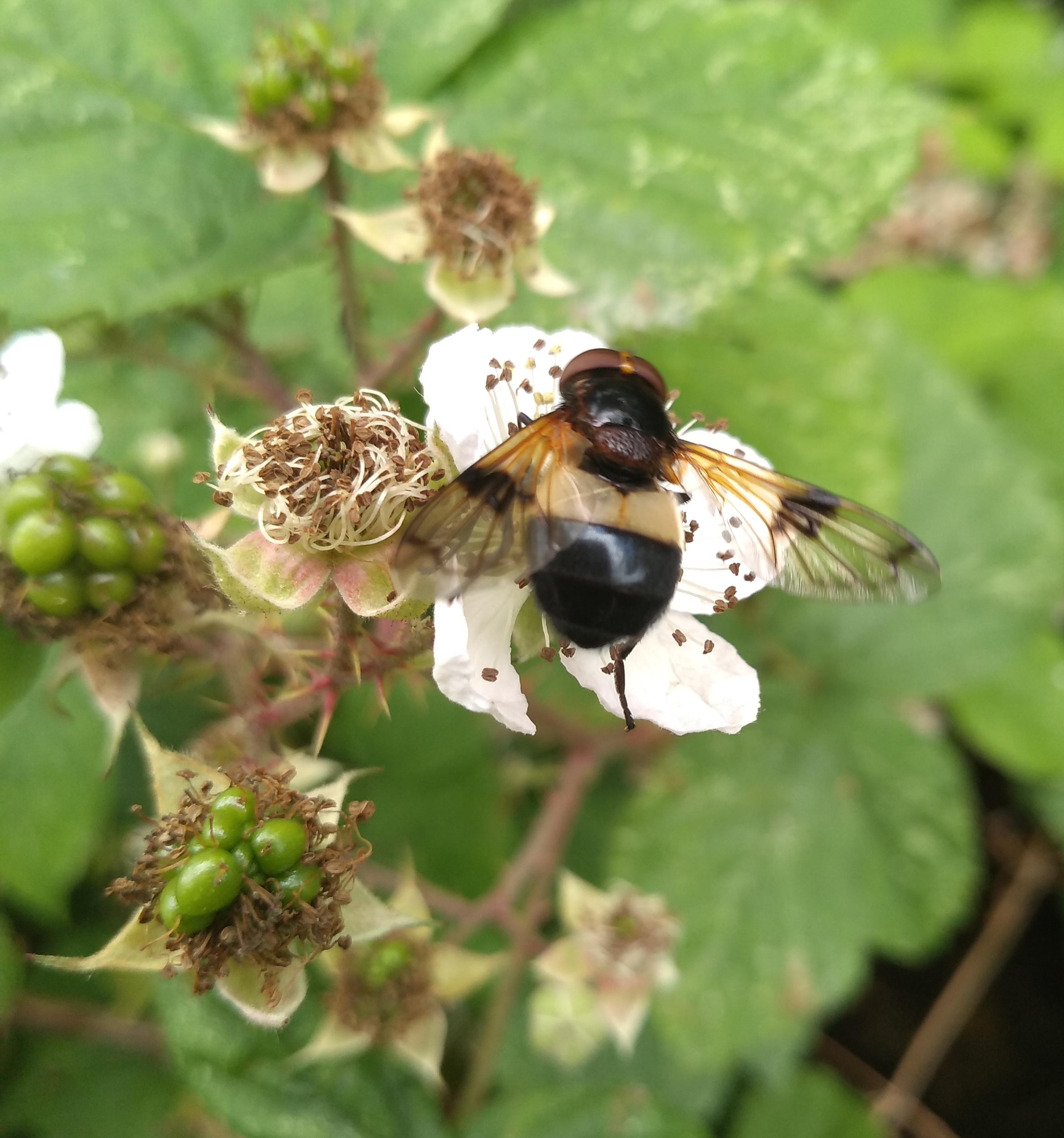
The other insect I saw on Tuesday was a female Volucella pellucens hoverfly feeding on nectar and pollen from Bramble (Rubus fruticosus).

These hoverflies also pollinate umbellifers; However as larvae they inhabit Bumblebee and wasp nests eating any waste produced along with their hosts larvae.

Posted in nature

An Enchanting Week

My interest in plants extends to herbal medicine and floral folklore. Often found in gardens, such plants are easily accessible.

I find poisonous plants fascinating too. I would like to visit the Chelsea Physics garden as well as the Alnwick Poison Garden in Northumberland. Over the past week, a few wild flowers that I have noticed blooming would probably be found in these gardens, these are;

– White bryony (Bryonia dioica) scrambling over Dogwood (Cornus). White Bryony has poisonous berries and the plant has a very strong unpleasant purgative affect. A few deaths linked to this plant have been recorded.

– Woody Nightshade (Solanum dulcamara).

Also called Bittersweet the plant would make someone incredibly ill; the berries if eaten would cause vomiting and convulsions. There have been a few deaths linked to this plant. It is from the same family as Deadly nightshade (Atropa belladonna, See Woodland Trust).

I saw other wildflowers blooming too such as the intriguingly named Enchanter’s nightshade (Circaea lutetiana). Confusingly this flower isn’t from the nightshade family at all but is actually a Willowherb. One folkloric belief was that this plant would give protection against Elvish spells.

I also saw Field bindweed (Convolvulus arvensis) along the verges.

I continued to see many birds and insects throughout the week. After many days since the last time, I was happy to see the juvenile Blue tits (Cyanistes caeruleus) back in the Rowan tree (Sorbus). Also on Monday I had a Juvenile Robin (Erithacus rubecula) follow me around. Clearly the instincts for locating food near gardeners starts early.

The first moth I saw last week was an adult female Bee moth (Aphomia sociella). These moths are so called because they lay eggs in bee and wasp nests and also bee hives. Their larvae eat the comb, causing damage and are therefore a pest for beekeepers.

Other moths I saw were two Rosy tabby (Endotricha flammealis) moths

and a Dark arches (Apamea monoglypha) moth.

On Wednesday I was working near a fantastic old Sweet chestnut (Castanea sativa) tree. Countless Honey bees (Apis mellifera) and Marmalade hoverflies (Episyrphus balteatus) were busy flying to and fro pollinating the flowers.

As the summer continues more and more butterflies become visible. I have seen lots more Meadow brown (Maniola jurtina), Small tortoiseshell (Aglais urticae) and Large white butterflies (Pieris brassicae). One of them seen here on some lavender (Lavandula).

Also on Wednesday I observed two butterflies that I have never seen before, a Marbled white (Melanargia galathea) on Verbena bonariensis

and a Small skipper butterfly (Thymelicus sylvestris), also seen on the Verbena bonariensis.

Later on the same day I also saw ten Azure damselflies (Coenagrion puella) around the pond.

On Friday morning, as I was going to work, I had to usher a Common green lacewing (Chrysoperla carnea) outside so it could find some aphids to munch on.

Then lastly on Friday I saw a Harlequin ladybird (Harmonia axyridis) on Brunnera macrophylla ‘Jack Frost’.