Posted in Allotment, nature

What’s up Buttercup?

With May finally here, spring is now in full swing. Lots of things are growing on the allotment from seedlings to fruit, even the Rhubarb is almost ready to pick.

During a woodland walk, on the Easter weekend, I observed the first Speckled wood (Pararge aegeria) butterfly of the year. Plus local ornamental Cherry trees (Prunus) began their spectacular show at the same time; later joined by the flowers of the Hawthorn (Crataegus) , Rowan (Sorbus) and Horse chestnut (Aesculus hippocastanum).

Over the last few weeks, more wildflowers have started to bloom, including Buttercups (Ranunculus), Stitchwort (Stellaria), Ground-ivy (Glechoma hederacea) Honesty (Lunaria annua) and Hedge garlic (Alliaria petiolata) along with Cuckoo flower (Cardamine pratensis).

Ground-ivy
Cuckoo flower

Another butterfly that began to emerge recently is the Orange-tip (Anthocharis cardamines). Hedge garlic and Cuckoo flower are important food sources for Orange-tip caterpillars, so it is lovely to think these butterflies will be laying eggs on the plants I’ve noticed to ensure future generations; the verge not being mown, allowing both plants to develop, enabling this.

The ‘No mow May’ campaign is back this year. Encouraging us to avoid mowing lawns in order to encourage a wide variety of wildflowers to bloom (including rare ones), thus increasing the availability of pollen and nectar for pollinators as they start to emerge (along with helping butterfly populations, as discussed above). After several years of this campaign together with the every flower counts survey, improvements in wildflower growth have been recorded, as people report their sightings taken at this time.
An article from the Plantlife charity discusses their findings in more detail here.

Even leaving the humblest of flowers to flower on lawns, like Dandelions (Taraxacum), Daisies (Bellis perennis) and Buttercups helps.

Posted in nature

Tuesday was a School Day

The lovely sunshine we’ve had on and off recently has encouraged lots of wildflowers to start blooming over the past week. Amongst the Daffodils were Daisies (Bellis perennis), Snake’s head Fritillary (Fritillaria meleagris),

Snake’s-head fritillary has become naturalised in the lawn of this woodland area of the garden.

Dandelions (Taraxacum),

Perfect for pollinators, especially bees but also butterflies.

Cowslip (Primula veris),

Primroses on my allotment adds a little colour at this time.

Green alkanet (Pentaglottis sempervirens) and Forgot-me-nots (Myosotis). Even brave Tulips were beginning to open up.

Last Tuesday I learnt another plant, the Marsh marigold (Caltha palustris).

This particular plant was in a raised water feature made from an old rectangular metal container which replicated it’s natural growing conditions. In the wild, Marsh marigold grows in damp conditions such as ponds, marshes and wet woodland and flowers from March to July. It’s common name ‘Kingcup’ is a reference to the large buttercup like flowers resemblance to large golden cups (therefore cup of the kings); Even the latin Caltha means goblet.

A wonderful addition to ponds in gardens, this perennial provides shelter for amphibians as well as nectar for pollinators (Bees, beetles and flies).

However, one word of warning, the sap can be an irritant as it contains glycoside protoanemonin, especially in the older growth.

Magnolias and Ornamental cherry trees, including my Prunus incisa ‘Kojo-no-mai’ on the allotment, joined the wonderful display of Blackthorn (Prunus spinosa) blossom.

Sunny blue skies are the perfect backdrop to this huge Magnolia and Ornamental cherry (see below).
Along with the Cowslips, this ‘Kojo-no-mai’ cherry provides some pollen and nectar on my allotment.

I also noticed that Horse chestnut (Aesculus hippocastanum) trees were showing evidence of flower development alongside recently unfurled leaves; although they won’t bloom until May.

Will it be a good year for playing Conkers?

With all these flowers appearing, it was wonderful to see more bees take advantage of all the pollen and nectar available. On the sunniest days I even caught glimpses of the first Brimstone (Gonepteryx rhamni) and Peacock (Aglais io) butterflies of the year; venturing out of hibernation when it is warm enough too.

Posted in nature

Unusual Trees for Suburban Gardens

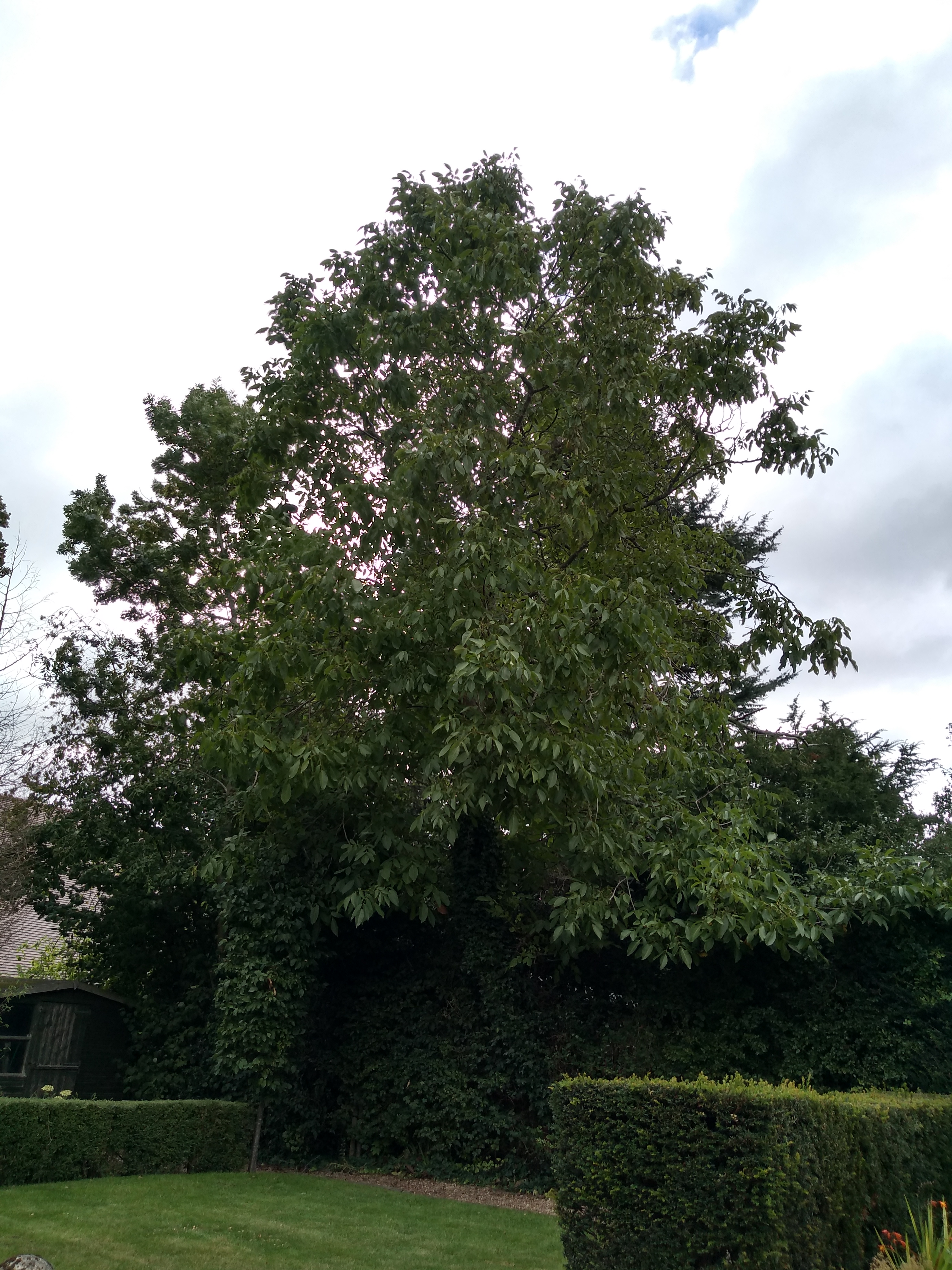
I’m lucky to work in a wide variety of gardens and occasionally come across trees which aren’t normally found in smaller suburban settings. Last week three such trees, a Walnut (Juglans regia), Quince (Cydonia oblonga) and Sweet Chestnut (Castanea sativa) were showing evidence that Autumn had arrived. Interestingly all three have links to, or were introduced to Britain by, the Romans (just like Ground Elder, Aegopodium podagraria, which they ate).

The Latin name for Walnut translates to ‘Royal nut of Jupiter’ and is referred to as ‘food of the gods, medicine for the people’. However, you’ll be lucky to get your hands on any before Squirrels (or Mice) do.

Presumably that’s the reason why these trees have naturalised in UK gardens and parks so well; as hidden walnuts are left to germinate and grow into mature trees.

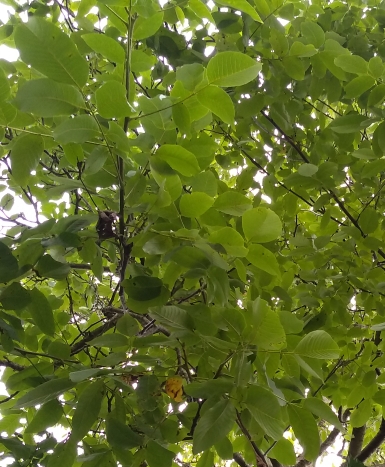
The leaves of Walnut trees are a good source of food for some micro moths too.

The Sweet chestnut is another tree introduced into this country by the Romans. These days roasted Chestnuts are associated with winter and Christmas. They contain Vitamins C and Bs along with the minerals magnesium, potassium and iron.

I remember collecting Chestnuts at a local wood when I was young; I particularly enjoyed eating them raw. These days, on the odd occasion when I do discover a Chestnut tree, the nuts are usually too small to eat. Horse Chestnut (Aesculus hippocastanum) trees on the other hand are more commonly found around Britain. I noticed that Conker season had also begun last week, as I traveled to and from work. There are several myths linked with Conkers (see The Woodland Trust).

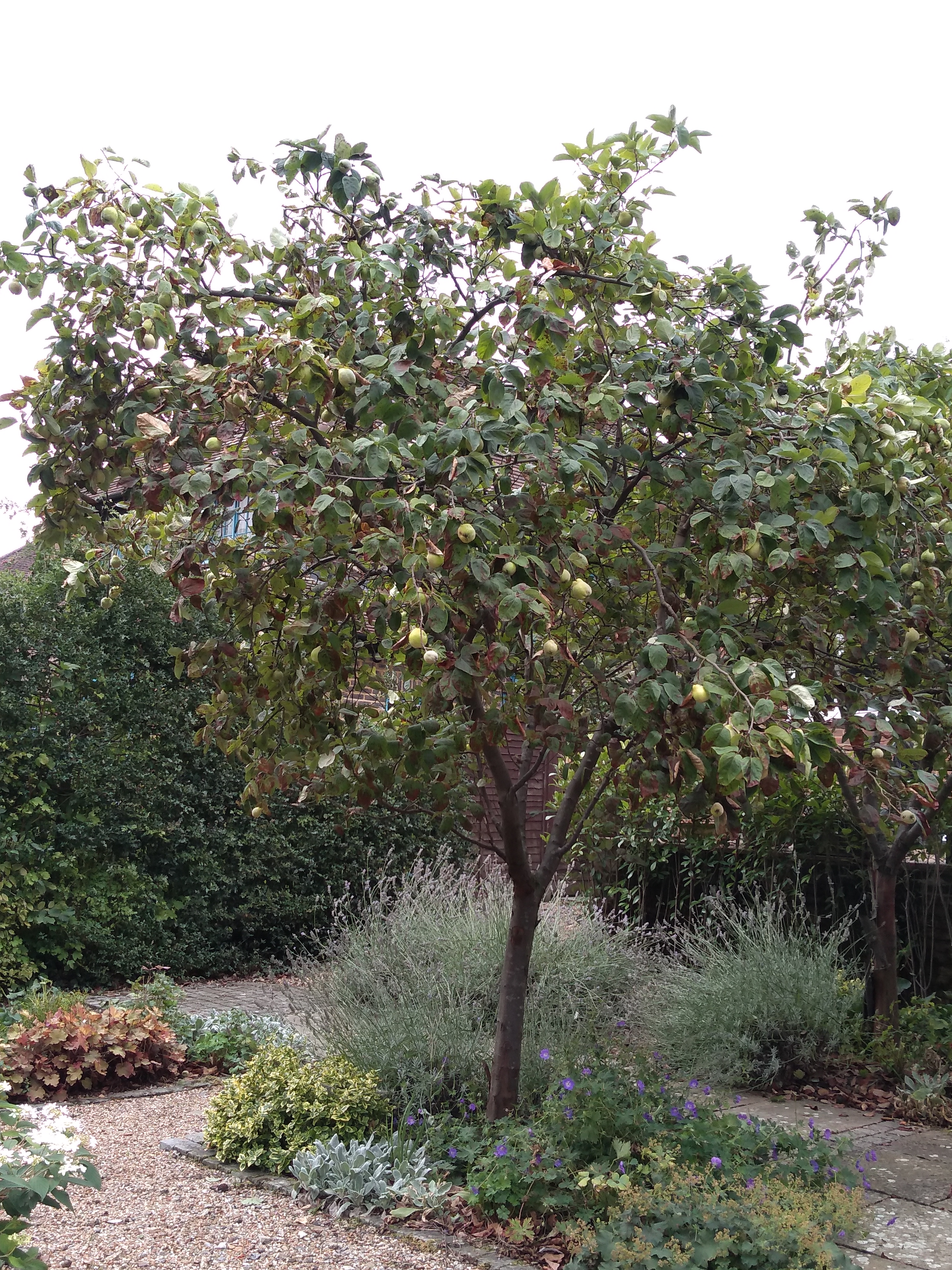
The last of the unusual trees I saw last week was the Quince. This tree is a lot smaller than the ones previously mentioned, making collection of the fruit easier. In fact the garden I worked at has four planted in a formal arrangement.

Quince fruit have tough flesh with skin that turns yellow as it ripens and has a honey aroma. They need to be cooked to soften and become edible.

Recipes for Quince Jam and Jelly can be found on the internet. Originally from Turkey and Asia, recipes using Quince can be found in Roman cooking.

There were other Autumnal signs around last week, along with the ones mentioned above, including the appearance of fungi and leaves falling. Autumn is definitely settling in even though Meteorological Autumn didn’t start until this Tuesday (1st September) with Astronomical Autumn (the Autumn Equinox) to follow on the 22nd September.

Posted in Allotment, nature

Spectacular Sighting

Last week began with me spotting a Grey heron (Ardea cinerea), presumably trying to catch fish while standing in the local river, as I walked passed to the first job of the day.

Yet the rest of the week remained fairly quiet until Friday morning arrived.

This is when I saw a Swallow tail (Ourapteryx sambucaria) moth.

As the moth ages it’s cream coloured wings lighten.

This one had been disturbed because they are night flying moths. The caterpillars overwinter in tree bark, and feed on Broadleaf trees such as Hawthorn (Crataegus monogyna) and Horse Chestnut (Aesculus hippocastanum) along with Ivy (Hedera helix).

Afterwards, at my allotment on Saturday I noticed a Parasitic wasp (Hymenoptera) on my Echinacea purpura PowWow wild berry, although I’m not sure which one.

There are 40 families of parasitic wasp in the UK and Ireland, from which 6,500 species have been recorded. I am pretty convinced that the one I saw wasn’t the Braconid Dinocampus coccinellae which causes the host, a dead Seven-spot ladybird (Coccinella septempunctata), to remain in situ over the wasp’s pupa cocoon as protection until it hatches. Nor does it appear to be Cotesia glomerata. This parasitic wasp lays it’s young in Large white (Pieris brassicae) caterpillars which dies as the young develops. Once they emerge they cocoon themselves beneath the caterpillar until they finally transform into adult wasps. I have Seven-spot ladybirds as well as Large white caterpillars at my plot but neither appear to be affected. Interestingly parasitic wasps can become hosts themselves. The parasitic wasps of parasitic wasps are called hyperparasoids.

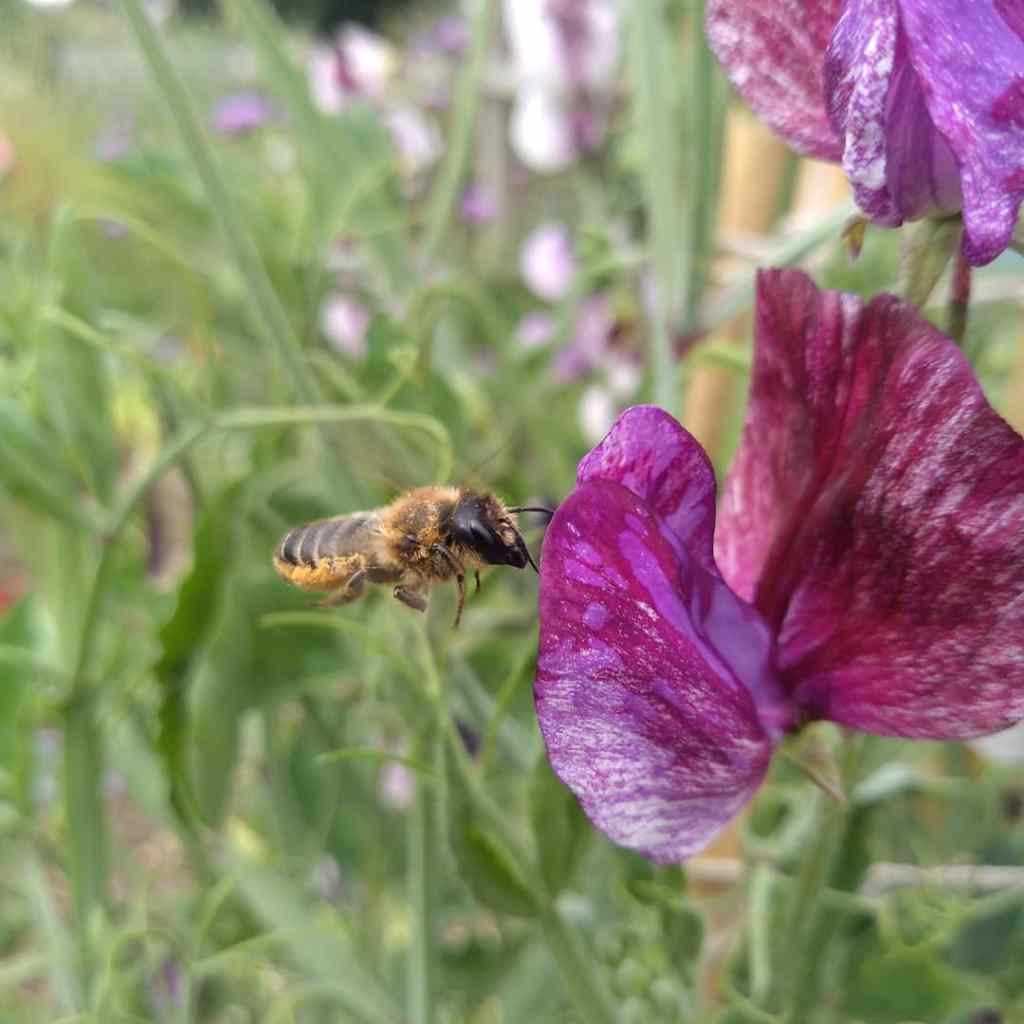
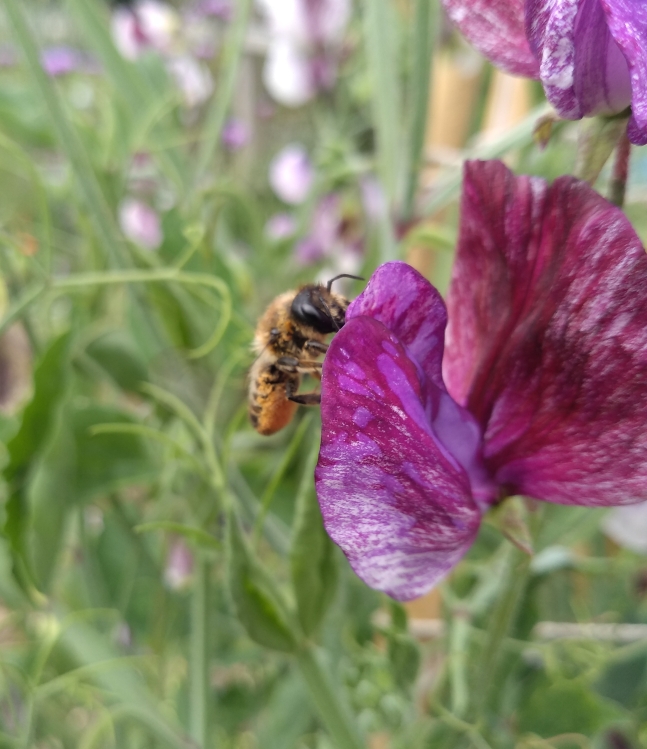
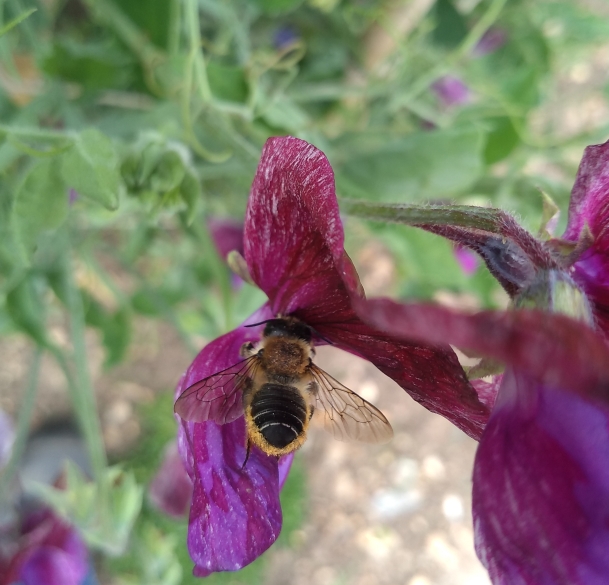
However this wasn’t the highlight of my week. Also at the allotment on Saturday I finally got to see a Leaf-cutter bee. I was so excited to see this spectacular sighting but had to stay quiet and still while I attempted to capture a photo of it.

There are different Leaf-cutter bees in the UK but the one I saw was a Patchwork Leaf-cutter (Megachile centuncularis) bee. It was visiting my sweetpeas, collecting pollen and nectar for her young. The orange pollen brush underneath the abdomen clearly identifying it as a female of this species. The only thing left on my must see list, when it comes to Leaf-cutter bees, is to see one carrying a piece of leaf and also a nest. I do have a bee hotel on the allotment so here’s hoping.

Posted in nature

All Four Seasons in One Week

The weather during the second week of lockdown was mixed. It began with snow flurries and sleet but ended with the warmest day of the year so far.

I continued my daily exercise walks around my area and saw more wild flowers, trees, bees and birds enjoy Spring.

Plants that began to bloom last week were;

– Shepherd’s Purse (Capsella bursa-pastoris),

– Snake’s head fritillary (Fritillaria meleagris),

– Herb Robert (Geranium robertianum),

– Annual honesty (Lunaria annua),

– Common Groundsel (Senecio vulgaris)

– and Laurel (Prunus laurocerasus).

I also noticed my first Dandelion (Taraxacum officinale) clock of the year 

Water droplets can be seen as frost began to melt on this Dandelion clock. A flower head will produce an average of 180 seeds.

along with Horse chestnut (Aesculus hippocastanum) trees budding at this time too.

One particularly special moment occurred last Wednesday when I visited my local woodland park. I went for my exercise as early as possible so that I would avoid too many people. As I entered the park I heard a sound of my childhood, that of Skylarks (Alauda arvensis). I grew up surrounded by farmland, similar to where I live now, and Skylarks singing was familiar to me (see RSPB). 

I knew there were nesting Skylarks in this area because of a notice I saw last year (see my blog post Relaxing into Autumn). There were three Skylarks, two were clearly a pair. Occasionally the third bird would get too close to the other two; causing a noisy aerial display before they all returned to the open ground apart once again. I watched this happen four times as I carefully moved around them; maintaining a distance so that I wouldn’t disturb them unnecessarily. Seeing and hearing these lovely birds was a beautiful experience to witness.

On Friday, while at home, I heard a group of Magpies (Pica pica). They were making such a raucous noise that I looked outside to see what was occurring. I was fascinated to see one Magpie (which was trying to escape) pinned down and being pecked at by another one. As this occurred, four more Magpies kept flying in, occasionally taking part in the attack. Eventually the bird which was under attack escaped and forced by the group to fly away. I have witnessed birds defend territories before but not like that.

Another sound I became aware of later in the week, were Greenfinch (Carduelis chloris), (See RSPB). Although I heard their call, I was unable to see them. However I have observed a Great tit (Parus major) and Coal tit (Periparus ater) and several Blue tits (Cyanistes caeruleus) visit the Rowan (Sorbus) tree outside my flat.