Posted in nature

Autumn is Finally Settling in.

Since the Equinox on the 23rd September, there have been a few misty mornings and the leaves are beginning to loose their green colouring. Autumn cyclamen (Cyclamen hederifolium) and Crocuses (Colchicum autumnale) have been blooming for a few weeks now and even mushrooms are beginning to emerge. A few I have found recently include;

Ruby Bolete
(Hortiboletus rubellus). Found amongst Lambs-ear (Stachys byzantina) in a garden near a Beech (Fagus sylvatica) hedge.
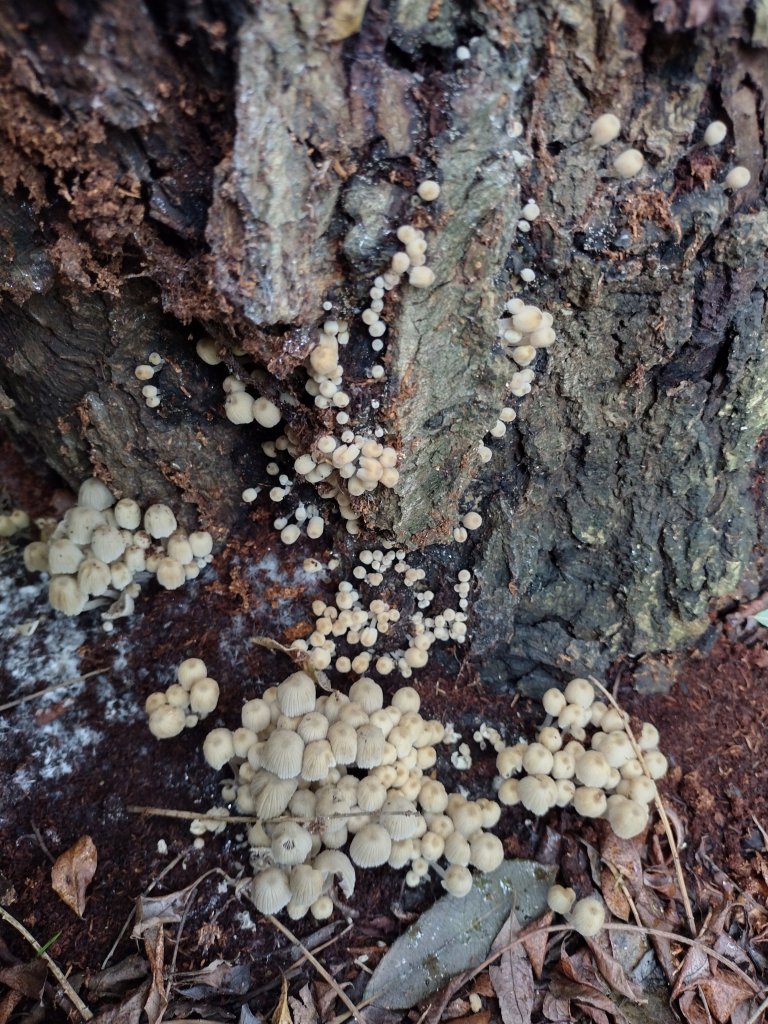
Possibly a group of Fairy inkcap
(Coprinellus disseminatus)? Found at the base of a tree.

Evenings are noticebly drawing in earlier these days. Saturn is still visible with the naked eye at this time, as is Jupiter. The latter can be seen very clearly, in fact only the moon is brighter in the night sky at the moment. I managed to capture an image on the 10th September which can be seen below.
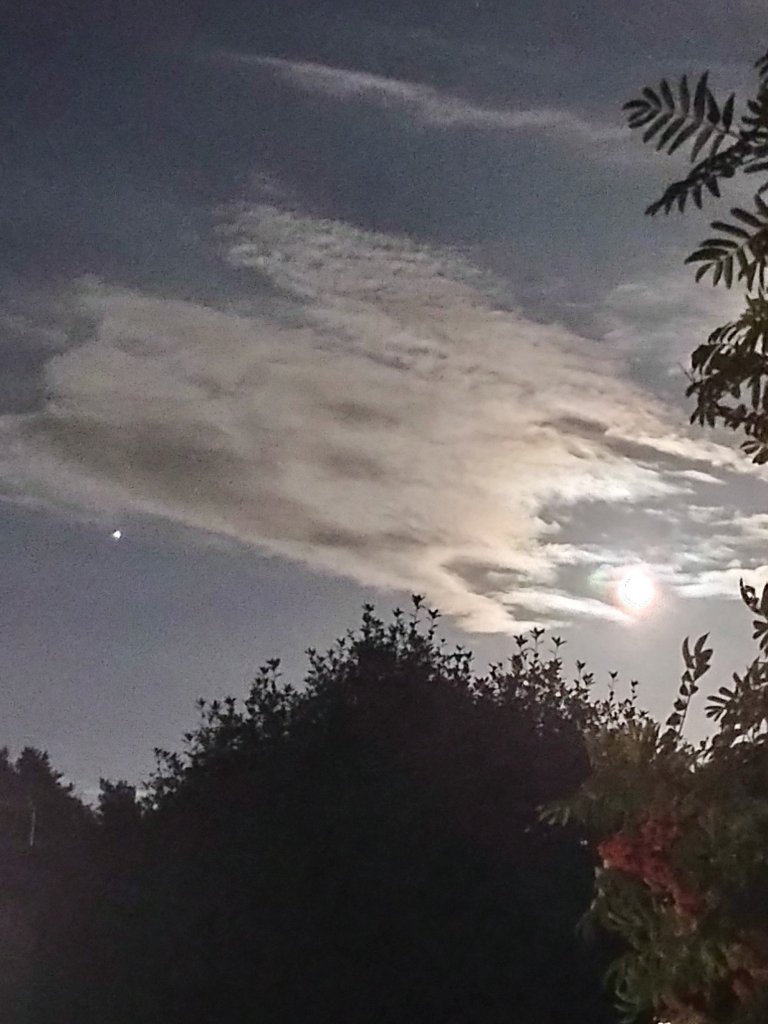
The tiny dot of Jupiter (left) in the early evening alongside the full ‘Hunters’ moon before being obscured by cloud.

Also in September my partner and I went on a break for a few days to the north east of England. We stayed in a lovely vintage caravan near Durham. On the first day we spent the morning exploring the city, after which we walked alongside the River Wear; there was lots of Himalayan balsam (Impatiens glandulifera) in flower (both along the river bank as well as beside the pathway). We walked to Durham University’s Botanic Garden to have lunch. While we were there we witnessed a Stoat
(Mustela erminea) under aerial attack from a Magpie (Pica pica) as we sat in the North American Arboretum (no photo evidence unfortunately). This was our first encounter with a Stoat. Similar to Weasels (Mustela nivalis) Stoats can be easily distinguished from them due to the black tip on their longer tail. The Woodland trust has an article about how to differentiate them on their website.

Then in the afternoon we went to Seaham beach to search for seaglass. A well known area for seaglass searchers, Seaham beaches are noted on maps as being glass beaches due to the huge amount of glass pebbles (of various colours) that can be found there. The glass was discarded into the sea from the Seaham Bottle Works which used to be in the area (between 1853 and 1921. It is known that 20,000,000 hand-blown bottles a year were produced at the height of manufacturing at the factory). It was a quiet sunny day when we visited the area and the sound of the waves crashing against the beach was mesmerising.

We found lots of seaglass including some rare red pieces as well as some that were made up of two colours.

While we stopped for a coffee at the local cafe, we saw a Purple sandpiper (Calidris maritima) with a large group of Gulls (Larinae). Similar in appearance to Gulls, the Sandpiper was larger, speckled and greyer as shown in the following image (taken from the visitor notice board next to the cafe).

This wading bird is a winter visitor in the north east of England. It’s numbers are at a vulnerable level, therefore it is red on the UK conservation status list. They will eat Winkles (Littorina littorea), insects, spiders, crustaceans and also plants.

On the Wednesday, we drove up to Northumberland to visit Lindisfarne. As we drove to the village we got to see the location of Vera’s house (from the ITV detective series Vera). This dwelling is privately owned but it’s possible to park nearby and view it from a distance.

The Snook Tower and stable (left) next to Snook House (right) is Grade ll listed and thought to have been a windmill or watchtower. Both buildings date from the early to mid 1800s.

There was lots of wildlife to see on the journey towards and around the village too. On the way across the causeway, we noticed a Curlew (Numenius arquata) amongst other wading birds. As with the Sandpiper, the Curlew is also red on the UK conservation status list. Approximately 30% of Western Europe’s flocks will overwinter in the UK, unfortunately there was a sign warning of Bird (Avian) flu on the island. Bird flu has been rampant in the UK this year which doesn’t bode well for lots of birds but it is particularly foreboding for many waders and seabird populations. The Curlew’s down curved bill was the give away to its identification. They search for worms, shellfish and shrimps in the nature reserve along the causeway. The RSPB gives a description of Curlew’s here.

It was amazing to witness lots of European grey seals (Halichoerus grypus) as we wondered down by the islands beaches, searching for more seaglass. It is possible to witness them swimming nearby, next to the sandbanks and nature reserve beaches which they inhabit. It is also possible to hear them, unfortunately I was unable to obtain a great video of this; however I found a recording online here, of Grey Seals Singing on the Mewstone in South Devon which gives you an idea of what they sounded like on our visit to Lindisfarne.

The three markings in the sea (top) are actually the best image (on full zoom) of the Seals I could obtain. However you could visibly identify their bobbing heads looking from side to side as well as them diving and resurfacing.

Pups start to be born in September so perhaps we could hear the young with the females, or maybe the adults were singing to one another. Whatever the reason for their beautiful vocalisations, it was absolutely amazing to listen to the haunting sound.

As well as these creatures, we got to see some flora as we investigated the island too. There was;

Sea thrift (Armeria maritima)
Sea campion (Silene uniflora)
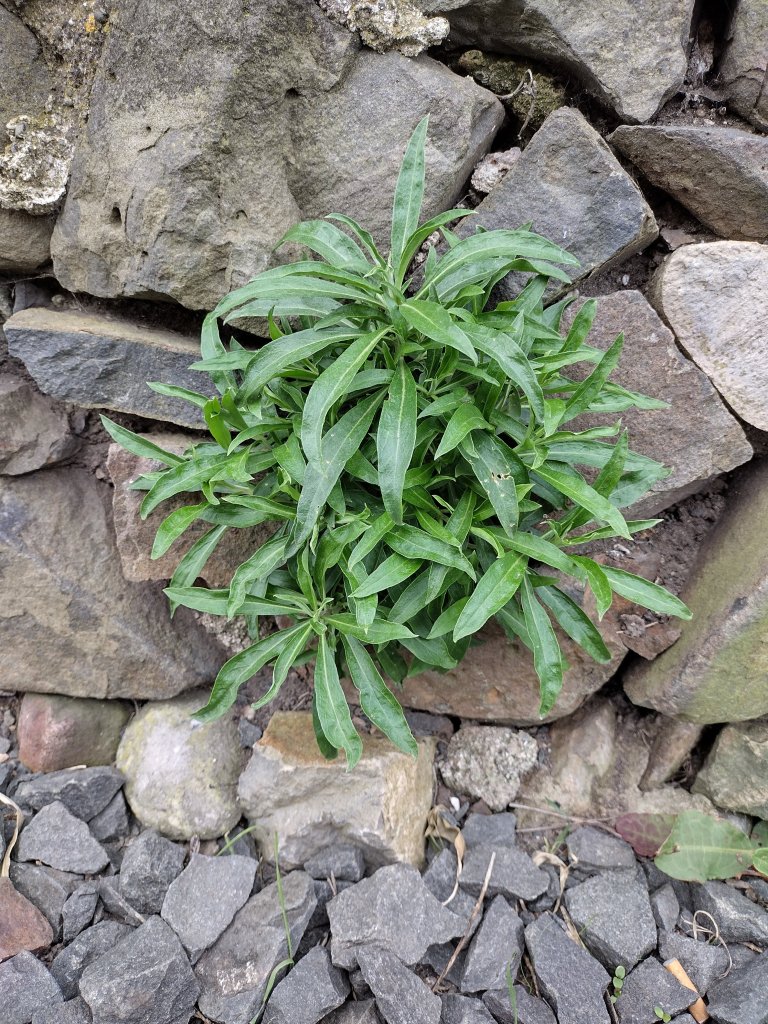
Wallflower (Erysimon cheiri), not in flower
Sea mayweed (Tripleurospermum maritimu) and
Sea spleenwort (Asplenium marinum) alongside some Common orange lichen (Xanthoria parietina).

It was lovely to get away for a couple of days while witnessing wildlife that I had never seen before. Relaxing by the sea, especially on Lindisfarne was so rejuvenating. Obviously two full days with travelling time either side wasn’t long enough, but there’s always next years adventure.

Posted in nature

Relaxing Holiday Adventures

Over the last few weeks Buddleja have been in flower, encouraging butterflies to visit and making them more visible. I have begun to notice Red admirals (Vanessa atalanta) and Peacocks (Aglais io) alongside Large (Pieris brassicae) and Small white (Pieris rapae) butterflies.

Having some time off work enabled me to take more walks. In my local woodland park I started to see a lot more Commas (Polygonia c-album) and Small heath (Coenonympha pamphilus) butterflies too. On a few occasions they flitted around me as I stopped to watch them; an absolutely joyful experience, almost like they were interacting with me in their own way.

Thankfully in the two weeks, I managed to venture further afield. On one occasion, I saw a Ringlet (Aphantopus hyperantus) butterfly while visiting an Arboretum in Herefordshire.

Woodlands are their habitat and they can be seen during July and August. The Caterpillars of this butterfly feed on various grasses, such as Tufted Hair-grass (Deschampsia cespitosa), Common Couch (Elytrigia repens), and other meadow grasses (Poa spp.).

Spending some time away on holiday gave me the chance to explore other environments, including those next to water, thus enabling me to notice different wildflowers.

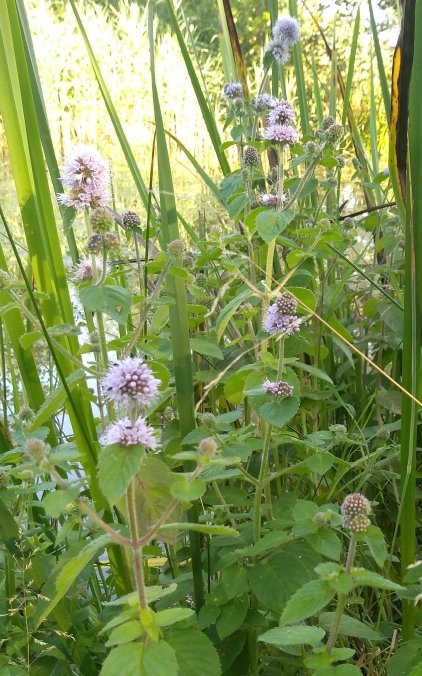
One walk took me past a canal. Water mint (Mentha aquatica) and Purple Loosestrife (Lythrum salicaria) were growing all down the canal edge.

Water mint

Both plants grow in shallow water and boggy conditions so are often found in fens and marshes as well as along the margins of ponds, streams, rivers and of course canals, as I discovered. They require habitats with full sun or dapled shade to bloom and are great for pollinators. Water mint flowers from the beginning of July up to November while Purple loosestrife only blooms between June and August. Purple Loosestrife can be visited by insects with long tongues and particularly enjoyed by butterflies and Red-tailed Bumblebees (Bombus lapidarius). It is also eaten by caterpillars of the Small Elephant Hawk-moths (Deilephila porcellus).

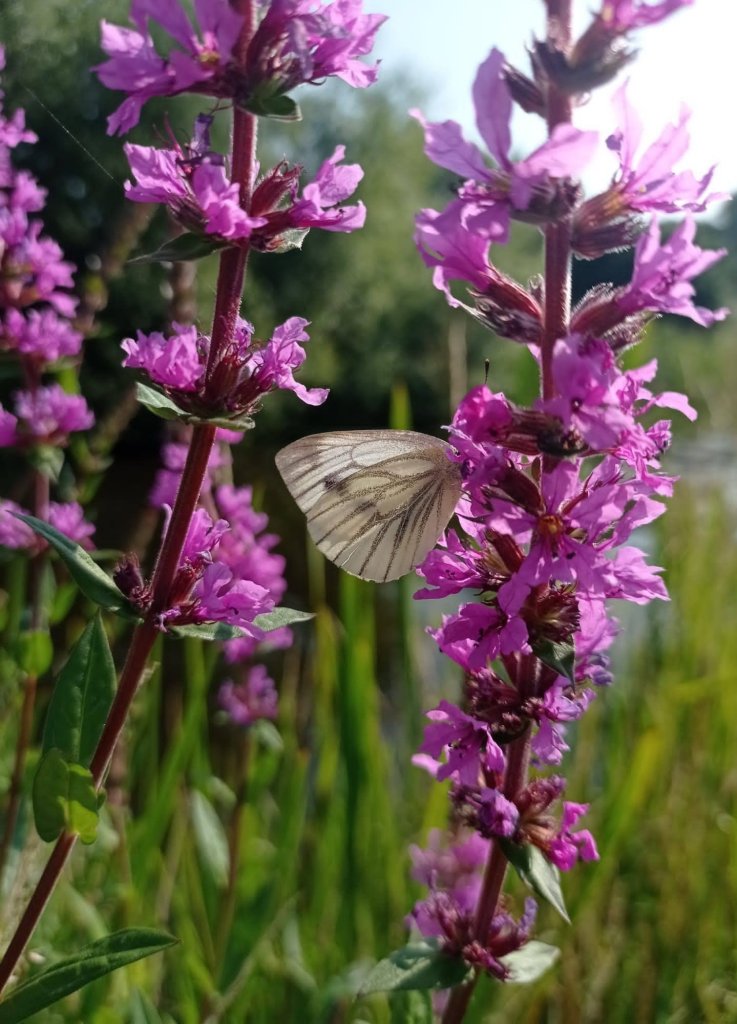
A Large white butterfly visiting some Purple Loosestrife.

As well as butterflies there were several dragonflies and damselflies, including this Blue-tailed damselfly (Ischnura elegans) dancing over the water.

This Blue-tailed damselfly was seen resting on a nettle leaf.

However, most of the bees I saw on that walk were interested in the plant I encountered at the first lock, Himalayan balsam (Impatiens glandulifera).

While the lock was completely swamped by this plant, it was only section I saw it in. It’s the first time I had come across Himalayan balsam, although I know of its reputation.

The pretty flower of the Himalayan balsam is popular with pollinators, especially bees. Here a bee is seen climbing into the flower to obtain nectar and pollen.

First introduced into the UK in 1839, from the Himalayas, this plant soon escaped formal gardens and naturalized in the wild becoming a nuisance in waterways. It grows fast and can become invasive very quickly as, up to 800 seeds from each pod, explode as far as 7 meters from the parent plant and even travel downstream. It isn’t long before a thicket is created where the plant out-competes other species to reduce biodiversity, cause erotion of riverbanks and affect water quality. All this means it is considered a weed in waterways and often removed by work-parties whenever possible. In fact it had been previously cleared from a lot of this canal. Control methods include pulling and cutting before they get a chance to set seed. It can take a few growing seasons before control over this plant is established. Management of this plant is mentioned under schedule 9 of the Wildlife and Countryside Act 1981. Interestingly, in Hertfordshire, control of this plant involves collection of the flowers to produce pink Gin (further information can be found at Herts Wildlife Trust).

The following week I visited a beach in Kent, it was so relaxing to hear the sounds of the seaside. One plant I noticed growing amongst the rocky area near the shingle was Alfalfa (Medicago sativa).

I know this plant as a green manure on allotments and gardens, adding nitrogen to soil for crops the following season. It’s also used as silage for livestock in agriculture plus alfalfa sprouts are used in some cuisines. I have never seen it in the wild or even flowering. There wasn’t a great swathe of it so clearly the plants were due to the odd escapee into the wild; perhaps a few seeds having blown there or been disposed by a bird. It was certainly good for local pollinators.

A Small white butterfly visiting the Alfalfa.
Posted in nature

A Magical Week

I have begun to notice a chill in the mornings as the nights grow colder. I love the promise of Autumn. It doesn’t quite feel autumnal yet (especially as the weather has warmed up again this weekend) but some changes are occurring. Conkers and beech masts have started dropping and fungi are appearing in some lawns. A couple of times I have come across fairy rings; in both instances the Marasmius oreades fungi was the cause (sadly no magical elvish, fairy or pixie dancing).

The week continued with more observations of Painted lady (Vanessa cardui) butterflies. On Monday there were two visiting a Buddleja bush along with a Small tortoiseshell (Aglais urticae) and a Large white (Pieris brassicae).
Then on Friday, in different gardens, more were flitting about. On one occasion, during the morning, I saw a Painted lady on a Ceratostigma willmottianum.

In the second half of the week I noticed more butterflies including a Green-veined white (Pieris napi) on Verbena bonariensis

and a Small tortoiseshell visiting an Erysimum ‘Bowles’s Mauve’.

Throughout last week I saw lots of pollinators busily collecting nectar and pollen.
On Monday I noticed lots of small flies and Buff-tailed bumblebees (Bombus terrestris) pollinating Marigold (Tagetes) flowers. Perhaps they are enticed by their overwhelming aroma which even I found hard to ignore.

Then on Wednesday there was a Common carder (Bombus pascuorum) bee flying between Nandina domesticas and several Agapanthus africanus.

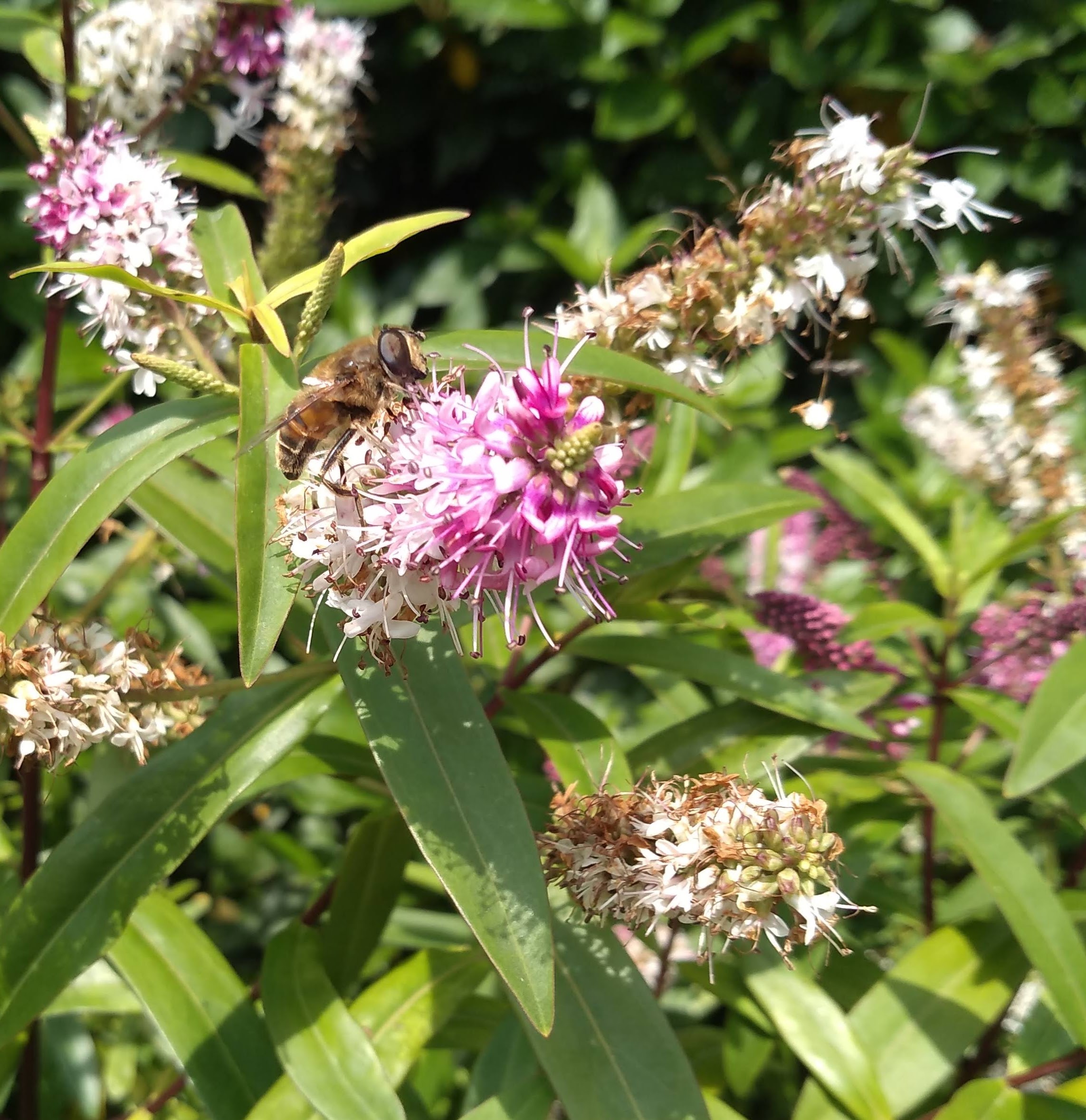
On Friday while working near some Hebe ‘Great Orme’ there were lots of honey bees (Apis mellifera) as well as a Hornet mimic hoverfly (Volucella zonaria).

Another interesting thing I noticed last week was a Red campion (Silene dioica) plant growing on an old moss covered log.

With no soil surrounding its roots clearly it was receiving sufficient moisture and nutrients from this unusual source. It has been flowering healthily all summer but I hadn’t realised it had been relying on the log for its growth until then. I found this plants ability for survival amazing and will closely watch its development.

Lastly I have been aware of how wonderful hardy Fuchsias (Fuchsia magellanica) are currently looking. Although I don’t see pollinators visiting the flowers, there have been a couple of times, in the past, when I have seen Elephant Hawk-moth (Deilephila elpenor) caterpillars feeding on Fushia plants. (See Elephant Hawk-moth).

These caterpillars also eat Himalayan balsam (Impatiens glandulifera) and Willowherbs including Enchanter’s nightshade (Circaea lutetiana) and Rosebay willowherb (Epilobium angustifolium). This beautiful pink and olive green moth flies at night and therefore feeds on Honeysuckle (Lonicera).

Across the way from this hardy Fushia there was a Honeysuckle growing along the wall so it would have been a fantastic place for these moths to inhabit. Unfortunately I didn’t come across any Elephant Hawk-moths this year but hopefully I will in years to come (and I am sure it will feel magical).