Posted in nature

Every Day is a School Day

No doubt due to the recent weather, I have noticed more flowers blooming earlier than their traditional start time of June. One example is the Common nipplewort (Lapsana communis).

The Common nipplewort is part of the sunflower family.

Other plants flowering at the moment are Greater celandine (Chelidonium majus),

This isn’t a relative of the Lesser celandine (Ficaria verna) despite its name. It is part of the poppy rather than buttercup family.

– Three-cornered garlic (Allium triquetrum),

Ants spread the seeds of this wild flower.

– Red campion (Silene dioica),

A dioecious plant, male flowers bloom on separate plants to the female flowers.

– White campion (Silene latifolia),

White campion is pollinated by moths because it is night scented

– Cleavers (Galium aparine),

The flowers of Cleavers are tiny. This photograph has been enlarged so they can be seen more clearly.

– Common honeysuckle (Lonicera periclymenum),

I noticed the sweet scent first. This plant is beneficial for a variety of butterflies, like the White admiral (Limenitis camilla), bumblebees and moths. Birds such as Thrushes (Turdidae), Warblers (Sylvidae) and Bullfinches (Pyrrhula pyrrhula) also eat its berries. Plus Dormice (Muscardinus avellanarius) inhabit and feed on this plant.

– A sow thistle (Sonchus),

– A Hawkweed (Hieracium),

– Mouse-ear Hawkweed (Hieracium pilosella)

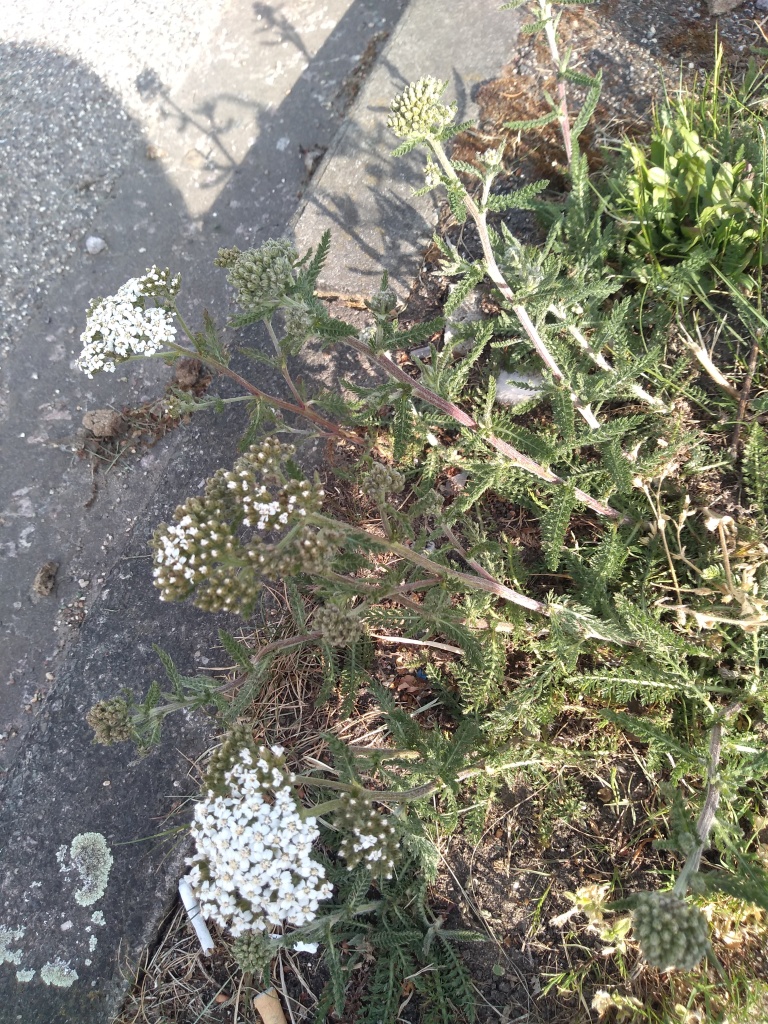
– and Yarrow (Achillea millefolium).

A plant that was new to me was Common knapweed (Centaurea nigra).

Along with all the wild flowers I noticed last week, the warm weather continued to encourage lots of insects out. There were more Holly blue (Celastrina argiolus) and Orange-tip (Anthocharis cardamines) butterflies along with bumblebees.

I also saw a Cinnabar moth (Tyria jacobaeae) at the allotment, amongst the long grass.

This moth flies flies during the day as well as at night time.

The most interesting insect I observed last week was a Pine ladybird (Exochomus qadripustulatus).

I have never seen this species of ladybird before. It dropped onto my sunglasses as I worked. Due to its small size (3mm in length), to begin with I thought it was a bit of dirt. As the name suggests, this beetle inhabits Pine (Pinus) trees. However they can also be found around other trees and shrubs especially Hawthorn (Crataegus monogyna).

Posted in nature

What a Difference a Month Makes

A month ago I had a weeks holiday. Signs of autumn were beginning to mingle with late summer. Now October is here autumn has definitely arrived.

As I had another week off I decided to revisit my local park, observing changes from a month ago.

In September Roesel’s bush crickets (Metrioptera roeselii) were chirping everywhere, butterflies were flitting about and some flowers still bloomed amongst the meadow (see Relaxing into Autumn).

Upon my return last Tuesday the only sounds I heard were birds singing and the meadow area had been cut and baled. Cobwebs were visible in the long dew dampened grass around the edges of the woodland too.

Hawkweed, Ragwort (Jacobaea vulgaris), Red clover (Trifolium pratense) and Yarrow (Achillea millefolium) were only just flowering still while the Ivy (Hedera) was in full bloom.

Ivy is fantastic for pollinators at this of year. I saw a few hoverflies flying to and from several flowers but the Honey bees (Apis mellifera), that were still active from the nearby hives would probably visit them too.

It was lovely to see dried seedheads of Wild carrot (Daucus carota)

and Cow parsley (Anthriscus sylvestris)

as I wondered around the park. They look beautiful but they are useful for insects to shelter in as well. In fact I noticed a ladybird snuggling amongst one of the Cow parsley seedheads. I also discovered field mushrooms (Agaricus campestris) growing amongst the grass.

Trees and shrubs were starting to show autumnal colours along with their ripe fruits. I found elderberries, sloe as well as haws on the Hawthorn (Crataegus monogyna) alongside Rosehips. However there were no longer any blackberries left on the brambles.

I noticed the leaves of one Horse chestnut tree (Aesculus hippocastanum) affected by the Horse chestnut leaf miner (Cameraria ohridella) moth.

Similarly there was evidence of caterpillars (most likely another moth) having been on a Silver maple (Acer saccharinum) tree.

The eggs and excrement are still visible on the nibbled leaves.

I ended my weeks holiday with a visit the Horniman museum in London.

On route to the train station I saw a Brown rat (Rattus norvegicus) running across a path. It attempted to cross the road until either the traffic or pedestrians scared it into fleeing towards a nearby hedge. Once I arrived in London I realised that I never see rats in the underground any more. I used to enjoy seeing them scurrying between the tracks. I have owned pet rats for many years so I find wild rats intriguing. I also like to watch Squirrels as rodents tend to act in similar ways to one another. After lunch I observed two Grey Squirrels (Sciurus carolinensis) scamper about.

The nearest squirrel had an acorn in its mouth and appeared to bury it in different places. I once saw a television programme on squirrels in which one was observed ‘pretending’ to bury a nut in several places while in the presence of other squirrels to avoid their stash being taken. Presumably this was occurring with the squirrels I was watching on Friday.

There is a butterfly house and aquarium at the Horniman museum. The butterflies were looking a little aged with their wings rather worn, however they were still beautiful. As soon as I entered the butterfly house a Malachite butterfly (Siproeta stelenes) landed on me which felt wonderfully welcoming.

The photo below shows a selection of the many butterflies I saw.

Feeding on the fruit are one Blue morpho (Morpho peleides), one Brown clipper (Parthenos Sylvia philippinensis), two Blue clipper (Parthenos Sylvia) and three Owl butterflies (Caligo memnon).

There were lots to see in the aquarium as well but my favourites were the White spotted jellyfish (Phyllorhiza punctata); watching them was so relaxing.

Even at the weekend nature was visible. As I ate breakfast on Saturday morning I heard and watched a group of Coal tits (Periparus ater) on the Rowan tree (Sorbus aucuparia) outside. I have never seen Coal tits on this tree before, I hope to see them again.

Another animal I became aware of last week was a Red fox (Vulpes vulpes). I first noticed it on my way home on Wednesday night and again on Sunday morning. It was making itself known on Saturday night too as it was being very vocal.

Posted in nature

Relaxing into Autumn

September is here. While meteorological autumn has already begun (1st) it won’t be long before astronomical autumn arrives (23rd) too.

I love this time of year; for me it’s the time for taking stock and starting new adventures (a feeling probably ingrained from my educational years). I particularly look forward to planning changes in the garden and start making Christmas presents at this point in the year. Plus Autumn is my favourite season, the fresher sunny mornings and the warm leaf colours.

Along with the signs of autumn (including Blackberries, Elderberries and Sloes ripening) I have noticed a change in how the days feel within the past few weeks.
As the school year begins I had a week off to relax after a long hectic summer.

At the start the week I decided to walk round the local woodland park. It was a warm, dry and sunny day on Monday. Once I entered the meadow area I was aware of a loud chorus amongst the uncut grass. Upon closer inspection I discovered the wonderful chirps were being made by lots of Roesel’s bush crickets (Metrioptera roeselii).

The flowers still blooming were; Hawkweed, Red clover (Trifolium pratense), Ragwort (Senecio jacobaea), Yarrow (Achillea millefolium) and Chicory (Cichorium intybus).

Lots of Honey bees (Apis mellifera) and several Small white butterflies (Pieris rapae) were flitting between the flowers especially the Chicory. The blue flowers of the Chicory really stood out in the sunshine.

I even got to see a Speckled wood butterfly (Pararge aegeria) resting in the sun on the edge of the wood.
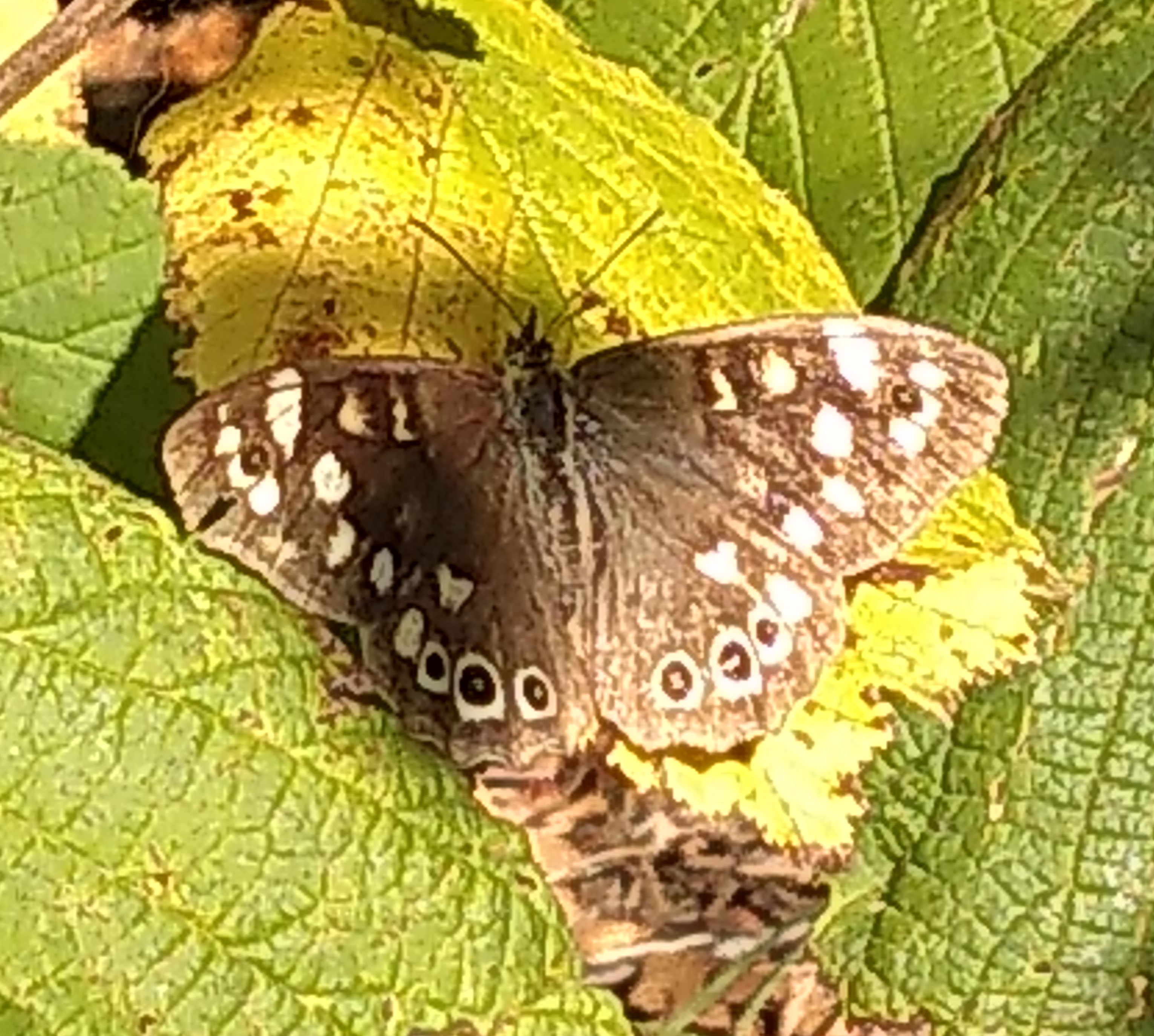
One thing came as a surprise as I wondered through this oasis of calm. It was fantastic to discover a notice about Skylarks (Alauda arvensis) nesting in area.

As they are on the Red list Bird of Conservation Concern it was nice to learn that they have made a home nearby.

Although I didn’t go away on holiday I planned to visit a few places before the weather turned. One place I finally visited was the Chelsea Physic Garden in London. Although it was later in the season there was still lots to see. Initially I looked round the glasshouses within the Tropical Corridor. There were lots of plants from around the world which required extra protection. I am a big fan of cacti so I liked seeing them planted naturally rather than in pots. There were lots of Pelargoniums as well. One whose leaves I particularly enjoyed smelling was Pelargonium ‘Chocolate peppermintwhich reminded me After Eights.
Within the same glasshouse I got so see a Common carder bee (Bombus pascuorum) enjoying the flowers of the Pelargonium quercifolium ‘Royal oak’.

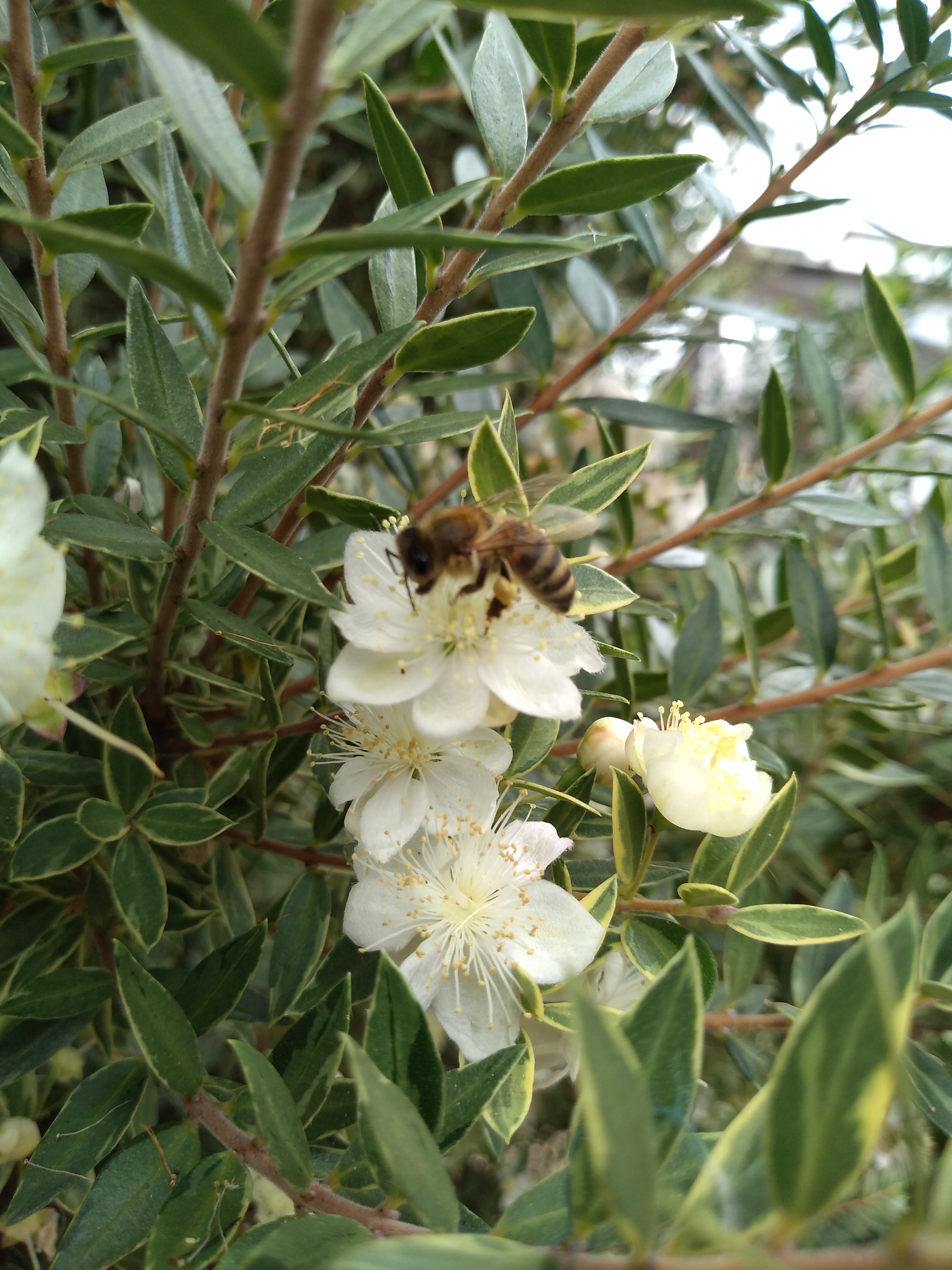
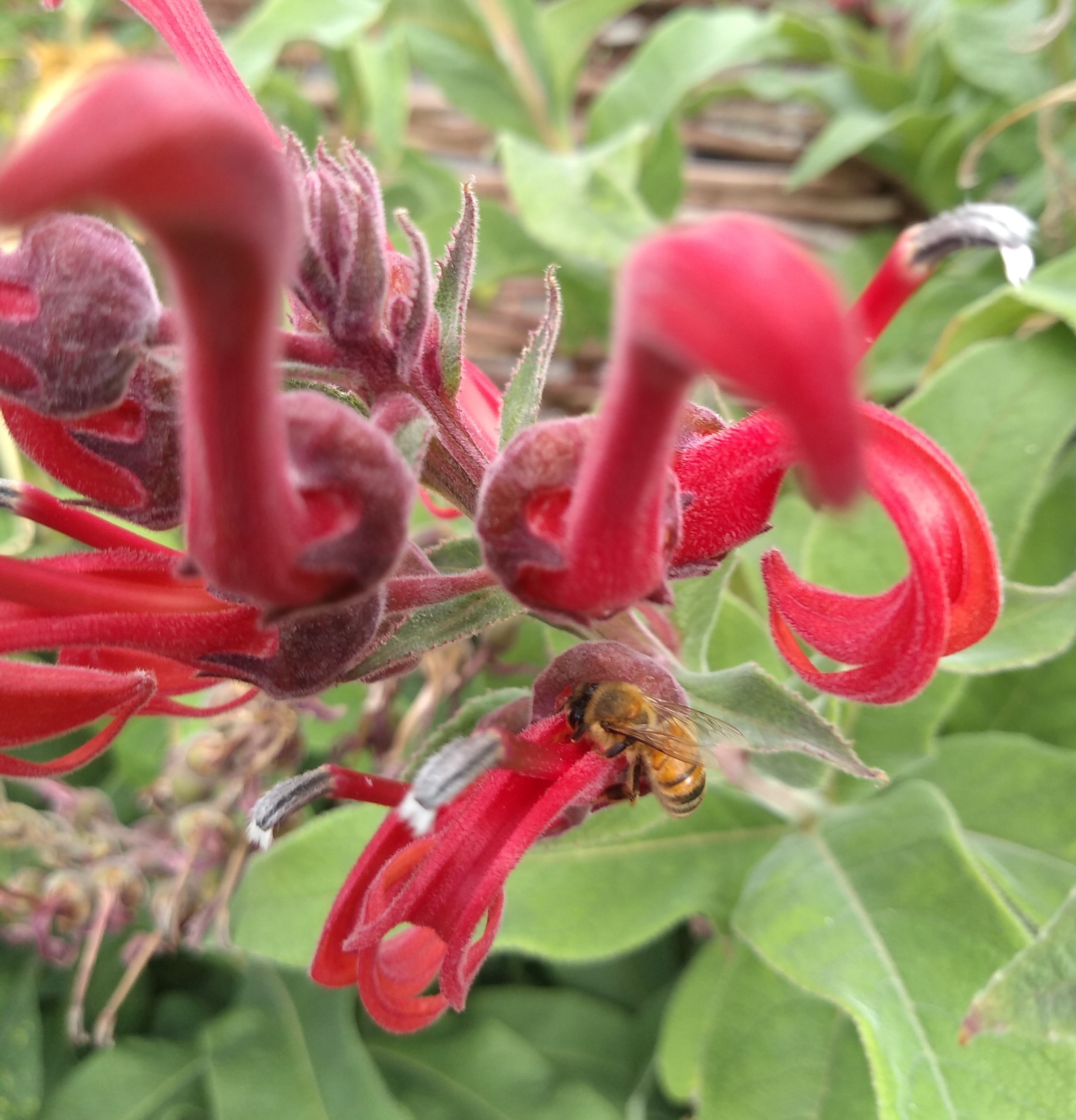
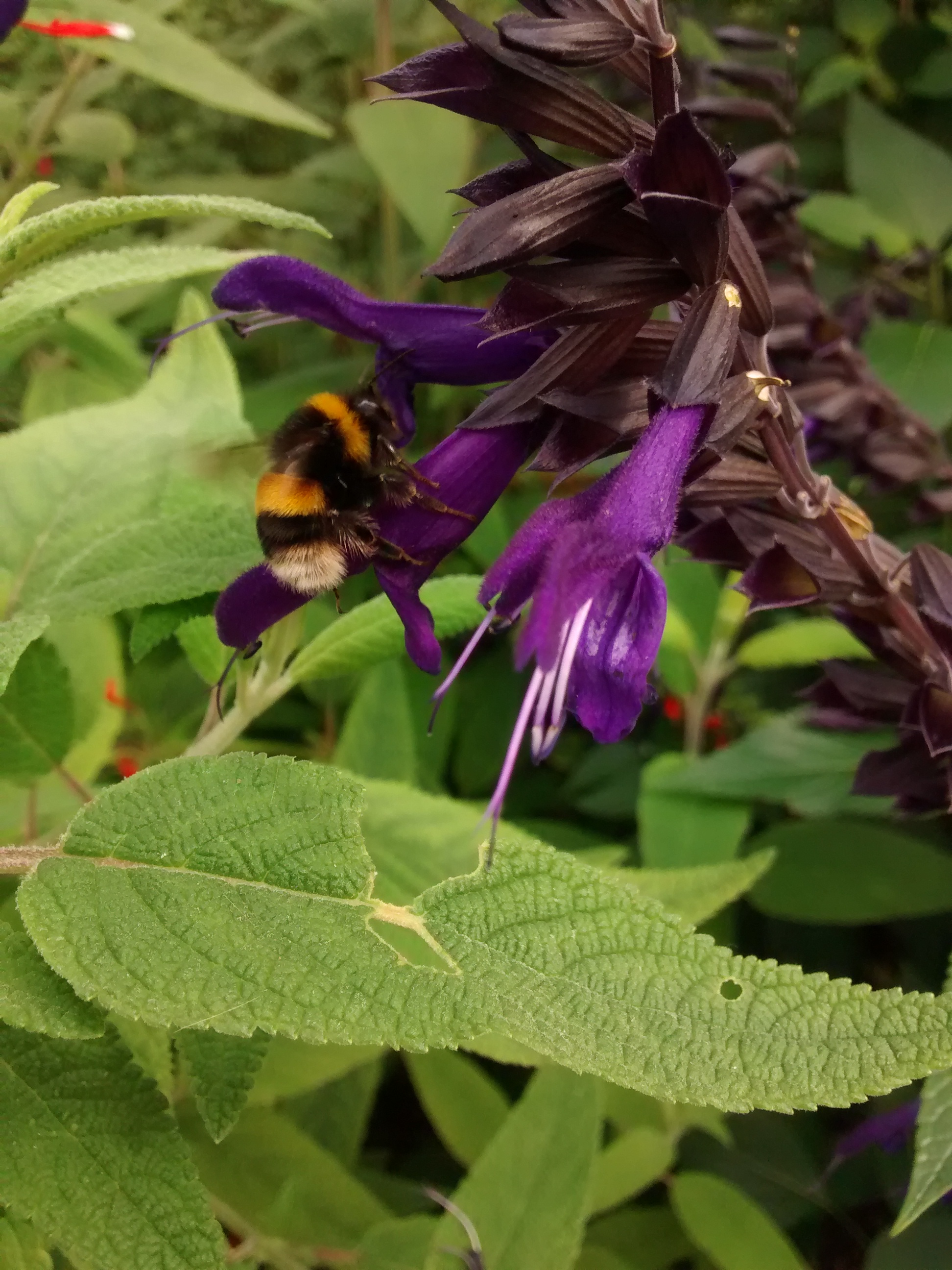
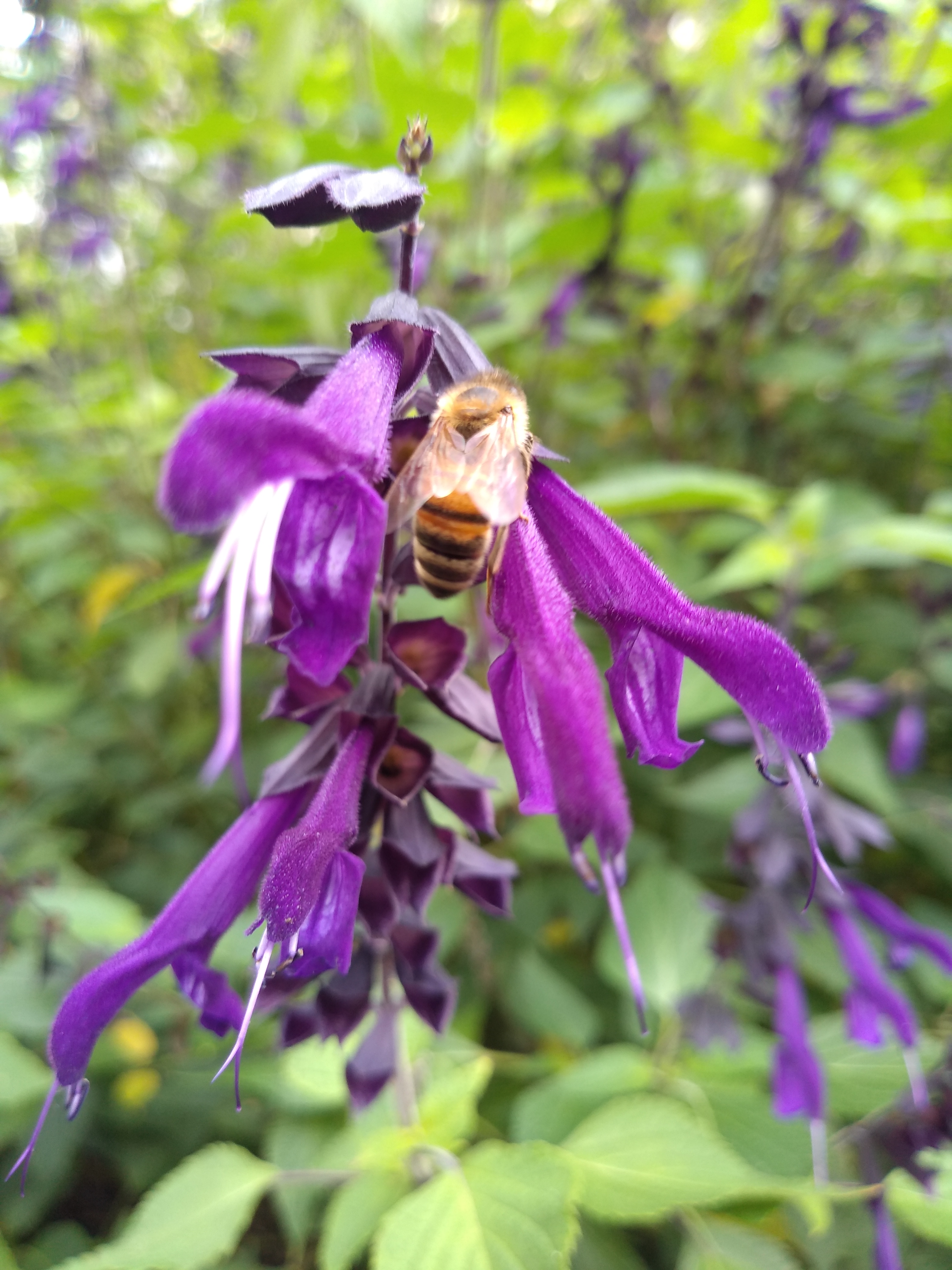
After the glasshouses I walked around the Garden of Medicinal plants. There were Honey bees buzzing around lots of plants in this section. I found them visiting a;
Myrtus communis var. tarentina ‘variegata

Lobelia tupa,

Salvia stachydifolia,

and a Salvia amistad; along with a Buff-tailed bumblebee (Bombus terrestris)
It was also lovely to watch some Dunnocks (Prunella modularis) as I ate lunch. Normally shy birds I usually only hear them sing in early spring, however these clearly weren’t bothered about us.

The next stop was to the Mental Wellbeing garden. I particularly enjoyed this small garden dedicated to improving mental health. It concentrated on the senses so there were plants you could feel, smell as well as view. Colour was important; along with soothing green foliage there were calming blues and purples along with joyful yellows and oranges. There was even a reference to garden therapy which is close to my heart along with a dedication to the charity Thrive. (See Thrive).
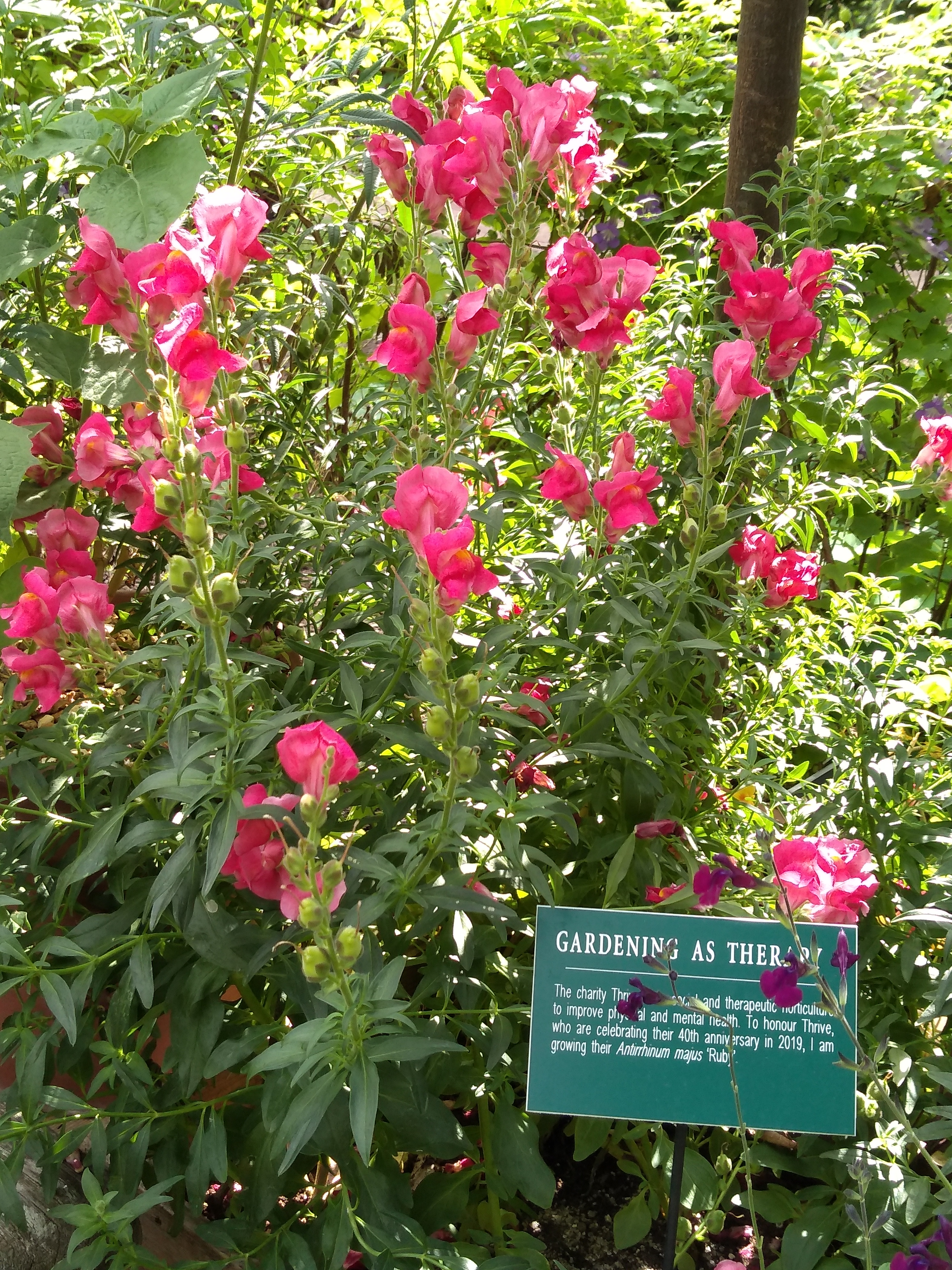
Wildlife can also have a positive affect on mental health so it was great to see insects in this space too. There was;
– an unidentifiable bumblebee investigating a Morning Glory (Ipomoea purpurea ‘Grandpa Ott’) flower covered in pollen.

– plus a Green aphid on a beautiful sweet pea (Lathyrus odoratus ‘Matucana’).

I continued to notice more insects as I kept walking around; starting with the Dicotyledon Order Beds, where I saw a Honey bee on a dahlia,
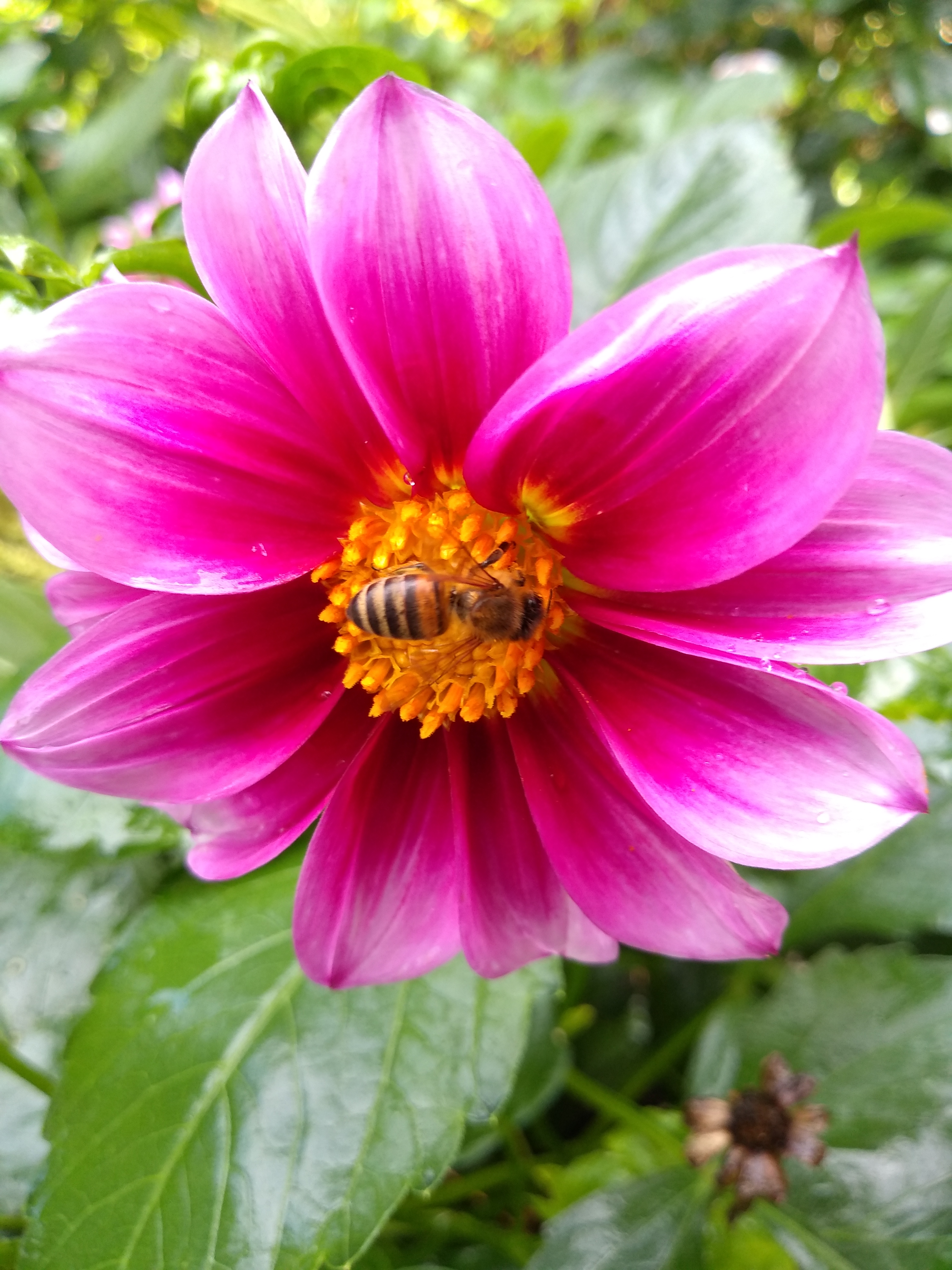
through to the Garden of Edible Plants. In the tea bed, which was near Fortune’s Tank Pond, a male Common darter dragonfly (Sympetrum striolatum) was resting on a metal teapot shaped frame holding up Nettles (Urtica dioica) inside. The nettles were meant to be there as nettle tea can be a diuretic.

There were some interesting containers used as pots in this bed. Mint (Mentha) was growing in a teapot
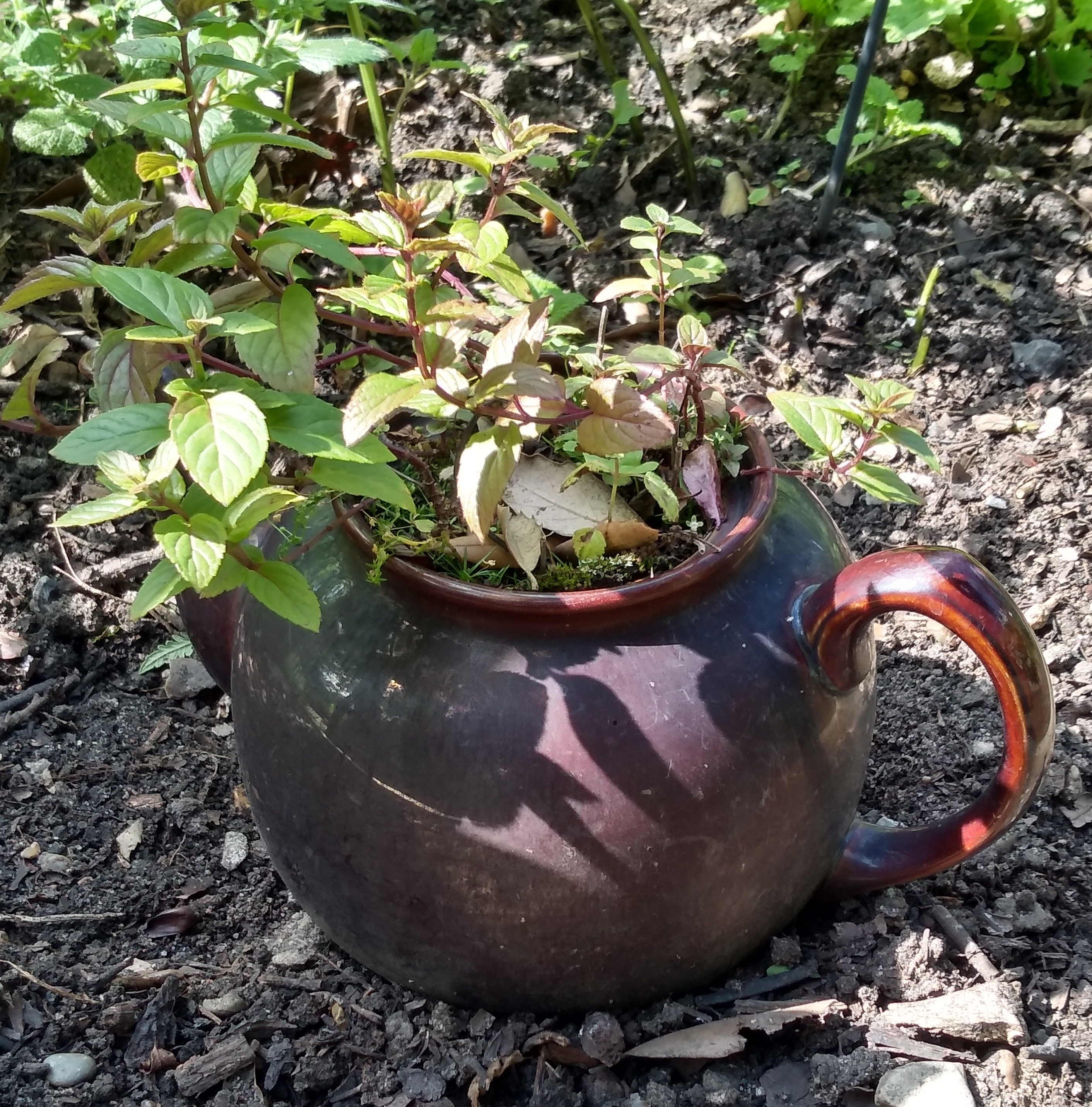
and a tea plant (Camellia sinensis) was planted in a tea chest.

These unusual pots gave me some ideas for my own garden.

Another area I was very interested in seeing was the dyers bed. I would love to try colouring fabric or yarn with natural dyes so I wanted to see which plants were there. On the yellow cosmos (cosmos sulphureus) was a female Syrphus ribesii hoverfly.
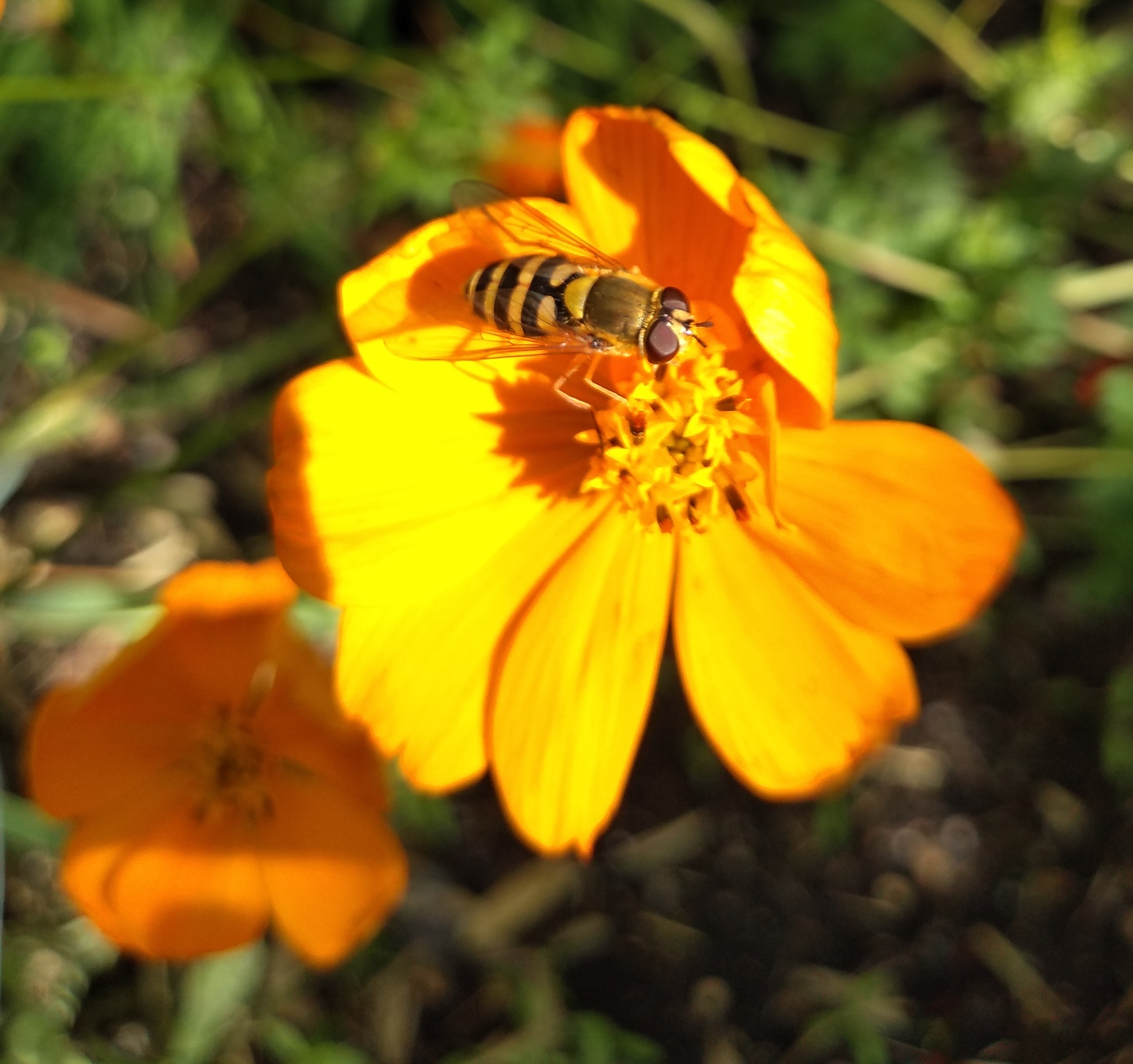
The flowers of this Cosmos are used to create a yellow- orange dye. I think I may try dying with this plant if dye is amazing as the flowers.

I meandered further round the other sections of the garden ending in the community garden. Alongside edibles were wildflowers that can be used as herbal medicine.

I love this sign.

Along with plants such as Chamomile (Chamaemelum nobile) and evening primrose (Oenothera biennis) were Herb robert (Geranium robertianum) whose crushed
leaves can aid wound repair and the aroma believed to repel mosquitos. Another so called weed I found there was Plantain (Plantago major). When used as a soothing poultice the leaves
are useful for calming insect bites and inflammation.

I ended the week beside the sea in Hampshire. I always look for seaglass along beaches and Saturdays hunt was plentiful. The weather was lovely on Saturday; sunny and warm with a gentle breeze. Along with the soothing sound of the waves I could hear Herring gulls (Larus argentatus). This was the perfect end to my week off and the start of Autumn.