Posted in nature

Liminality

February is a liminal month, it holds the hope of spring alongside the grip of winter. Just when glimmers of warmer weathers arrival brings dull wet conditions, clear nights followed by cold frosty mornings bite you back to reality in the glimmering sunshine. Even my activities have a duality to them. February is the time when I organize my seeds, sew Sweetpeas and chillies as well as check my houseplants; however I want to continue hibernationing. I find myself quite hopeful in this month and overwhelmed at the same time.

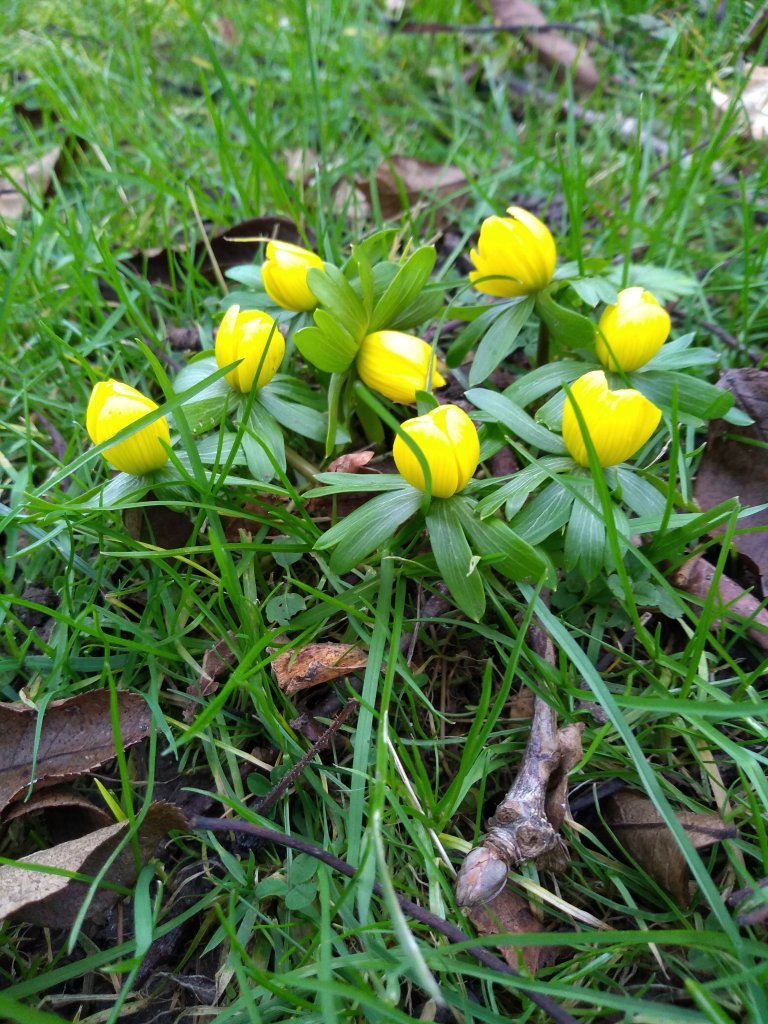
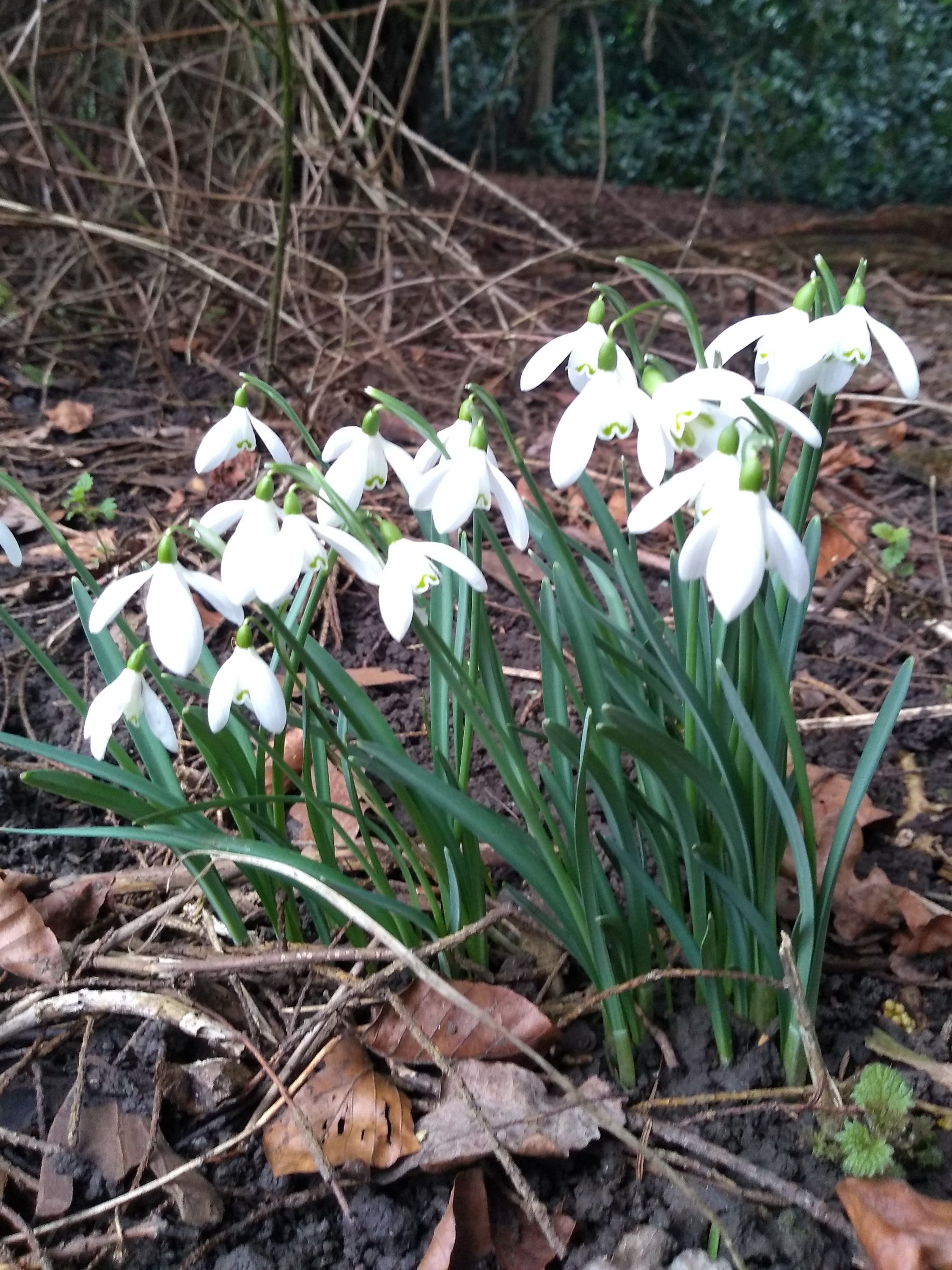
It is always lovely to see the first stirrings of spring, especially the arrival of Snowdrops, (Galanthus) and Winter aconites (Eranthis hyemalis). I often hear foxes  (Vulpes vulpes) calling at night at this time too. It’s no coincidence that the celebration of the lands awakening after winter, Imbolc, is on the 1st February. The biggest indicator that spring is on its way are the birds beginning to pair up; boldly singing to alert prospective mates of their whereabouts whilst also holding onto territory. I was fascinated, one rather cold but not frozen day, to see a Robin (Erithacus rubecula) defend a feeder, chasing off a Tree creeper (Certhia familiaris). I have never seen a Tree creeper venture onto a bird feeder before, nor a Robin actually (but I have previously seen the latter fight other birds for resources).

An image of a Tree creeper can be seen on the RSPB website here;

Other birds that have been particularly vocal in recent weeks have been the Mistle thrush (Turdus viscivorus), Great spotted Woodpecker (Dendrocopos major) and Dunnock (Prunella modularis).

The Mistle thrush is one of the UK’s largest songbirds, even larger than the Blackbird (Turdus
merula) with a body length of 27 cms and wingspan of 45 cms. Although similar in looks to the Song thrush (Turdus philomelos), it’s more grey tonally. While this bird is named due to its love of mistletoe (Phoradendron serotinum), it also eats worms, slugs, insects and berries and is found in parks, gardens, farmland and woodland often singing at the top of tall trees. It is not as commonly seen as the Song thrush as its status is Red under the Birds of Conservation Concern 5: the Red List for Birds. It has been a joy to hear the sound of the Mistle thrush as I worked, an example of which can be heard here.

I have also loved hearing a Great spotted Woodpecker (Dendrocopos major). Interestingly it has sung at the top of the same fir tree as the Mistle thrush, albeit at different moments. I also heard it drumming on the trunk of a dead and Oak (Quercus) tree that had a hole in the side, see below. Perhaps that is where the woodpecker lives.


The Great spotted woodpecker call can be heard on the Woodland trust website. 

Lastly, in a different garden, I was able to witness a Dunnock (Prunella modularis) singing sweetly, an example of this bird’s song, can be found on the RSPB website here .

At the end of January, once again I took part in the annual RSPB Big garden birdwatch; my results this year were-

1 Carrion crow (Corvus corone)
5 Goldfinch (Carduelis carduelis)
2 Wood pigeon (Columba palumbus)
3 Starlings (Sturnus vulgaris)
2 Magpie (Pica pica)
1 Blackbird (Turdus merula)
2 Great tit (Parus major)
1 Red kite (Milvus milvus)

Posted in Allotment, nature

March Arrives like a Lion

I’ve slowly started to emerge from hibernation now that Imbolc, the half way point between the Winter solstice and Spring equinox, (meaning ‘In the belly of the mother’- referring to the first stirrings of the years new growth) has passed; mirroring the snowdrops, winter aconites and hazel flowers (the first signs of the transition into the next season).

The scents of Daphne, Mahonia and Sarcococca fill the air alongside the arrival of other spring flowers; daffodils, cyclamen, crocus and hellebores. Willow (Salix) catkins are also opening while Blackthorn (Prunus spinosa) blossoms fill the roadsides with glorious white clouds.

Although it has still been too early for most allotment activities, the rhubarb has been emerging on the plot for the last month. I still haven’t cut back perennials as I want to allow cover for beneficial insects such as sheltering ladybirds (Coccinellidae) until the weather makes their survival easier. Instead February is mainly a month for planning the forthcoming years growing (thinking about chitting potatoes and planning seed sowing). One job I have begun however is the indoor Sweet pea and Chilli seed sowing. This small step gives me hope that I will soon be able to sow other seeds soon.

Although I am beginning to think ahead, I am still fondly holding on to snuggly sofa moments such as reading and partaking in arts and crafts, especially on wet days.

Through the winter I still immersed myself in nature. In January I pruned my apple tree on the allotment, blessing and giving thanks through Wassailing. Although symbolic, it was a nice way to feel deeply connected to the plot. I am grateful to be a guardian over it and receive the abundance of fruit, veg and flowers in return.

I saw quite a few foxes (Vulpes vulpes) over the winter too, including one on the allotment. It was such a beautiful moment to watch it foraging under trees.

Once again, I took part in the RSPB Big Garden Bird Watch in January. The list of birds I saw this time were;
4 Long-tailed tits (Aegithalos caudatus)
5 Starlings (Sturnus vulgaris)
1 Blackbird (Turdus merula)
3 Wood pigeons (Columba palumbus)
5 Sparrows (Passer domesticus)
2 Blue tits (Cyanistes caeruleus)
1 Greenfinch (Chloris chloris)
1 Great tit (Parus major)
6 Magpies (Pica pica)
1 Gull (Larinae) and
1 Red kite (Milvus milvus)
There is a small group of Ring-necked Parakeet (Psittacula krameri) that visit a nearby tree of late but frustratingly they didn’t show up during the observation hour.

During February, bird song continued to fill the skies, growing in frequency and volume. Also occasionally insects have boldly buzzed and fluttered about on the odd sunny days. Butterflies I noticed were a Brimstone (Gonepteryx rhamni) and Peacock (Aglais io); the latter I saved from an abandoned spider web.
I have also seen bees visiting mahonia, crocuses and hellebores, especially queen bumblebees.

Last week, I was excited to find some Jelly ear fungus (Auricularia auricula-judae) for the first time. They were growing on a Buddleia bush. Although this fungus is usually associated with elder (Sambucus) it can also be found on other hard woods like sycamore (Acer pseudoplatanus), ash (Fraxinus) and beech (Fagus) in damp shady conditions. Perhaps the fungus was thriving on the Buddleia, in the garden I visited, because of the recent weather as well as it being planted near a beech hedge.  Interestingly this fungus can continue to grow on dying wood that has been thawed, once frozen; hence it can survive really cold winters. The common name was given to this fungi because of how it looks and also its jelly-like texture.


Worryingly, it has been a very mild winter overall with lots of flooding occurring in Britain; certainly very different from last winter. So far the wet weather is continuing into March; hopefully the month will exit like a lamb and the roaring weather won’t continue too much in spring, as it will have an affect pollinators. We will have to see what the rest of 2024 has in store.

Posted in Bookworm review, nature

February Arrives

As another month rolls on, an initial glance may suggest that nothing is changing. Bare trees and quiet gardens with cold weather still nipping at fingertips and noses still persist, while sunny days bring glorious colourful skies.

A stripey sunset.

However, upon closer inspection small changes can be seen. The striking yellow of Winter aconites (Eranthis hyemalis) as well as delicate Early crocuses (Crocus tommasinianus) are beginning to bloom alongside the snowdrops (Galanthus).

The tiny red female flowers of Hazels (Corylus) have opened joining the male catkins. Plus, Blackthorn (Prunus spinosa) buds are ready to burst open (in fact on one walk, I saw a single flower already blooming).

I even witnessed a Red admiral (Vanessa atalanta) visit a flowering Mahonia on one sunny day; clearly making use of the milder weather before sheltering once again.

However the main focus of my attention, over the past few weeks, have been birds.

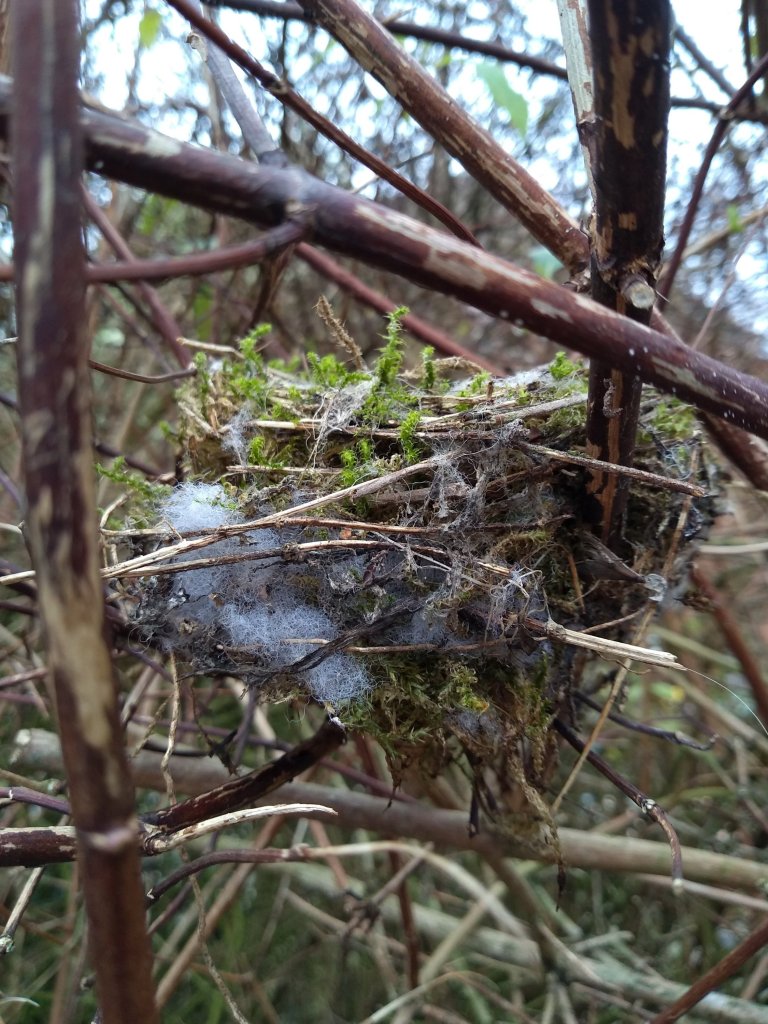
In one garden, I discovered a lovely little nest, from the previous year, in a shrub. Upon investigation I discovered it was either a Goldfinch (Carduelis carduelis) or Greenfinch (Chloris chloris) nest (most likely the former); it can be seen below.

I also saw a Lesser spotted woodpecker (Dendrocopos minor) perched on a tall tree in the distance. I was able to follow the sound of the drumming to watch it move around the trunk before flying off. Given the length of drumming and location of the red on it’s crown I was able to identify it as a male Lesser spotted woodpecker.

Then later in the week, while pruning roses, I watched a Wren (Troglodytes troglodytes) forage around the base of a hedge; I managed to film it briefly before it disappeared fully into the undergrowth.

I am currently reading ‘The Wren: A biography’ by Stephen Moss.

This charity shop find is a fascinating read. Chapters are set out month by month, each concentating on an aspect of a Wrens life. Included alongside facts about the Wren, are their involvement in human history, culture, literature, art and folklore together with beautiful illustrations. The chapter entitled February, for example, focuses on courtship and population. As with other books written by this author, such as ‘The Robin’, this book is definitely worth emmersing yourself in.

Lastly, once again I partook in the Big Garden Birdwatch. My results this year were-
7 Starlings (Sturnus vulgaris),
4 Magpies (Pica pica),
2 Bluetits (Cyanistes caeruleus),
2 Blackbirds (Turdus merula)- a male and female,
2 Wood pigeons (Columba palumbus),
1 Dunnock (Prunella modularis) as well as a Carrion crow (Corvus corone).

Although there weren’t any major surprises in what I saw, it was lovely that the Dunnock made an appearance (usually I only get to hear them). However the Red Kite (Milvus milvus), Ring-necked parakeets (Psittacula krameri), Great tit (Parus major) and Robin (Erithacus rubecula), that I regularly observe, all decided to have a lie in the previous weekend, most only making an appearance once my chosen hour had ended.

Posted in nature

Flowers to Lift the Spirit


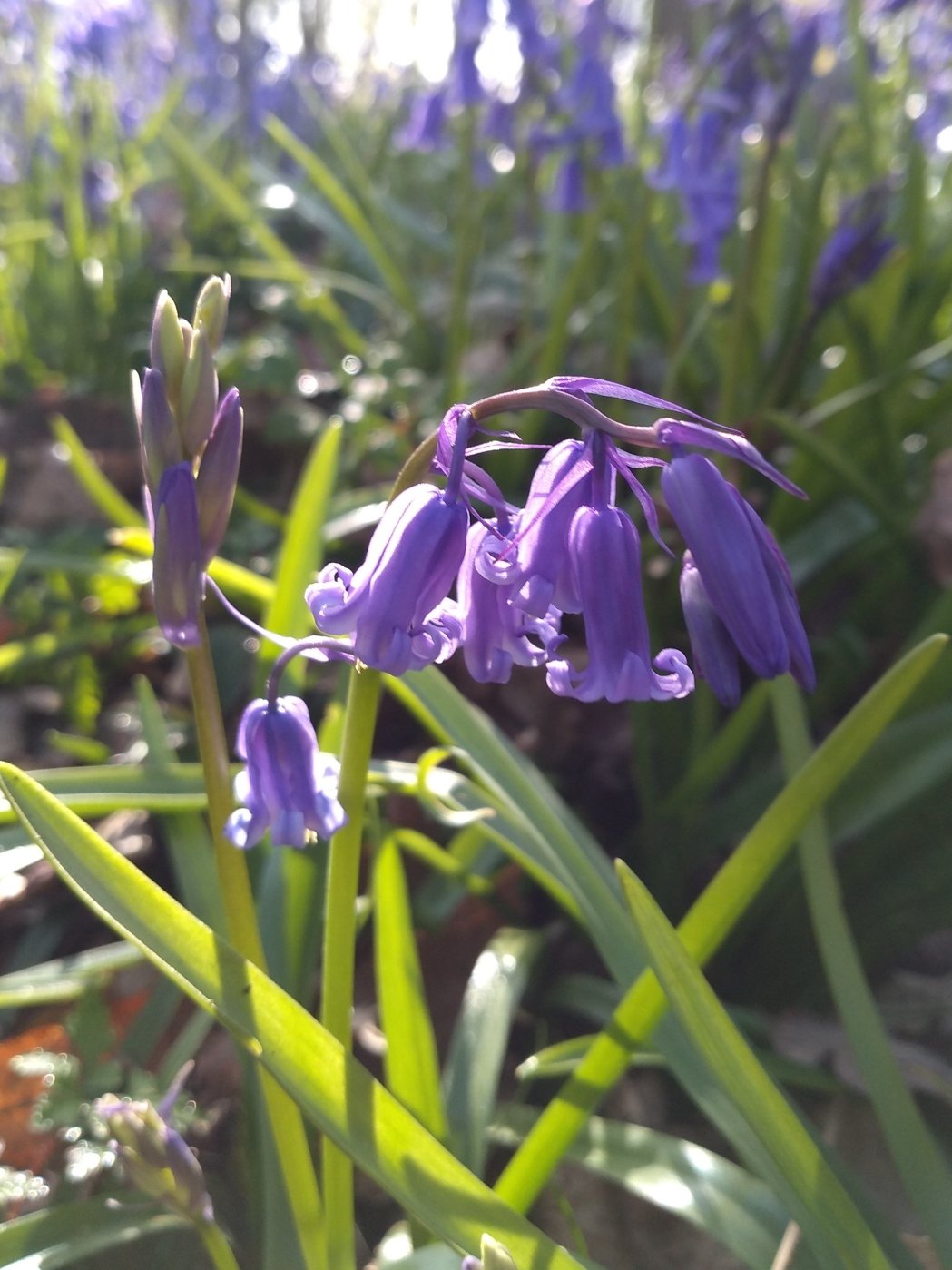
Last week the Bluebells (Hyacinthoides non-scripta) were just beginning to open. I always look forward to seeing these delicate flowers appear; it brings such joy to see their destinctive shade of blue on mass. Although not yet in full bloom, as I knelt down to take photographs I caught their delicate aroma.

Then later the same day, I got my first sighting of a Common carder (Bombus pascuorum) bee of the year, as it took advantage of the apple tree blosom.

I will never tire of hearing birdsong, it’s a wonderful soundtrack to have as I work. Not only is birdsong relaxing to me but it gives me the opportunity to keep learning too. The bird I became most aware of last Tuesday was the Nuthatch (Sitta europaea). Amongst all the birds I could here on that day, this was the clearest (it can be heard here on the RSPB website).

Unfortunately I didn’t get to see it. Having never seen one before I would have loved to see it’s mostly bluish grey and chestnut plumage (with hints white along with a black stripe across the eyes).

Similar in size to a Great tit (Parus major) these birds resemble a small Woodpecker as they climb trees. Nuthatches can be seen clinging to trunks or branches, as they climb up or down headfirst (the only British bird to descend trees in this way). They forage for insects and invertebrates, as well as feast on seeds and nuts (including beechmasts, hazel nuts and acorns) using tree crevices to store food for later. They also bury food and hide it beneath stones.

Nuthatches are found in mixed  broadleaf woodlands, parkland or urban gardens which have sufficient tree cover; occasionally eating from bird feeders. They particularly like areas with mature Oak (Quercus) trees. There was an established Oak nearby where I worked, so perhaps that’s where it was singing from.

They remain close to the nesting site where they fledged and are mostly seen in England and Wales; although their range is expanding into Scotland. Nests are holes in trees such as old Woodpecker nests.


Posted in nature

All Four Seasons in One Week

The weather during the second week of lockdown was mixed. It began with snow flurries and sleet but ended with the warmest day of the year so far.

I continued my daily exercise walks around my area and saw more wild flowers, trees, bees and birds enjoy Spring.

Plants that began to bloom last week were;

– Shepherd’s Purse (Capsella bursa-pastoris),

– Snake’s head fritillary (Fritillaria meleagris),

– Herb Robert (Geranium robertianum),

– Annual honesty (Lunaria annua),

– Common Groundsel (Senecio vulgaris)

– and Laurel (Prunus laurocerasus).

I also noticed my first Dandelion (Taraxacum officinale) clock of the year 

Water droplets can be seen as frost began to melt on this Dandelion clock. A flower head will produce an average of 180 seeds.

along with Horse chestnut (Aesculus hippocastanum) trees budding at this time too.

One particularly special moment occurred last Wednesday when I visited my local woodland park. I went for my exercise as early as possible so that I would avoid too many people. As I entered the park I heard a sound of my childhood, that of Skylarks (Alauda arvensis). I grew up surrounded by farmland, similar to where I live now, and Skylarks singing was familiar to me (see RSPB). 

I knew there were nesting Skylarks in this area because of a notice I saw last year (see my blog post Relaxing into Autumn). There were three Skylarks, two were clearly a pair. Occasionally the third bird would get too close to the other two; causing a noisy aerial display before they all returned to the open ground apart once again. I watched this happen four times as I carefully moved around them; maintaining a distance so that I wouldn’t disturb them unnecessarily. Seeing and hearing these lovely birds was a beautiful experience to witness.

On Friday, while at home, I heard a group of Magpies (Pica pica). They were making such a raucous noise that I looked outside to see what was occurring. I was fascinated to see one Magpie (which was trying to escape) pinned down and being pecked at by another one. As this occurred, four more Magpies kept flying in, occasionally taking part in the attack. Eventually the bird which was under attack escaped and forced by the group to fly away. I have witnessed birds defend territories before but not like that.

Another sound I became aware of later in the week, were Greenfinch (Carduelis chloris), (See RSPB). Although I heard their call, I was unable to see them. However I have observed a Great tit (Parus major) and Coal tit (Periparus ater) and several Blue tits (Cyanistes caeruleus) visit the Rowan (Sorbus) tree outside my flat.

Posted in nature

Music to my Ears

While my colleagues listen to their music via headphones I prefer to listen to nature as I work; especially birdsong which I find uplifting. Recently I have started to really tune in and distinguish different songs and calls as I attempt to identify particular birds. By teaching myself I now recognise Great tit (Parus major) song, Coal Tit (Parus ater) song and Tawny Owl (Strix aluco) call. However I still find it difficult to pick out certain sounds which is why last Sunday I went to an ‘Introduction to bird calls and songs’ nature talk and walk at a local park. We were introduced to 12 birds that we would most likely hear during our afternoon stroll. Most were already familiar to me however I did learn the songs of Chiffchaff (Phylloscopus collybita) and Greenfinch (Carduelis chloris).

The birds we ended up hearing (above the wind and sirens) were;
-Woodpigeon (Columba Livia)
-Carion crow (Corvus corone)
-Magpie (Pica pica)
-Wren (Troglodytidae)
-Chiffchaff
-Blackbird (Turdus merula)
-Great Spotted Woodpecker (Dendrocopus major)
-Blackcap warbler (Sylvia atricapilla)
– and Song thrush (Turdus philomelos).

We also saw a (quiet) Jay (Garrulus glandarius) along with a Speckled wood butterfly (Pararge aegeria), Red admiral butterfly (Vanessa atalanta) and some White-tailed bumblebees (Bombus lucorum).

Last week I combined what I learned at this event with my previous knowledge; the birds I was confident I identified correctly were;
-Woodpigeons
-Magpies
-Blackbirds
-Robin (Erithacus rubecula)
-Ring necked parakeets (Psittacula krameri)
-Blue Tits (Parus caeruleus).
-Chiffchaffs
-Mallard (Anas platyrhynchos)
-Red kite (Milvus milvus)
-and House sparrows (Passer domesticus)

On several mornings I also watched the family of Blue tits on the Rowan tree as I ate breakfast. The parents had nested in the eaves around Easter (see Different sort of Easter Chicks) so it was great to discover they had a successfully reared a brood. I counted 6 fledged youngsters return to the tree and feed on insects together.

Blue Tit acrobatics- One of the youngsters feeding itself.

These weren’t the only sightings last week as I also saw;
-another Red Admiral butterfly

-a Cinnabar moth (Tyria jacobaeae)

-some Ivy-leaved toadflax (Cymbalaria muralis)

-Common spotted orchid (Dactylorhiza fuchsii)

-Pineappleweed (Matricaria discoidea)

-As well as a common frog (Rana temporaria)

Posted in nature

Summer is Nearly Here (plus a belated Mental Health Awareness Week special)

Mental health awareness week was 13-19th May this year. I didn’t get round to writing a piece for it then; better late than never.

I think it is important to talk about mental health and I am open about my own experiences when the subject is mentioned.

I have dealt with Social anxiety and Seasonal Affective Disorder for a long time, although my mental health has improved over the years. Through medication, Cognitive behavioural therapy, healthy eating, exercise, mindfulness, along with getting outdoors and immersing myself in nature I manage these conditions. I started this blog to help give me focus too.

Thankfully I am at a stage where I can manage these conditions without them causing much disruption to my life. However some days are more difficult to deal with than others, Tuesday started out as one of those days. For some reason my anxiety level was high first thing. After forcing myself to open the curtains I noticed a Great Tit (Parus major) fledgling, with an adult, in the Rowan tree (Sorbus). They were feeding on insects before they flew onto a neighboring Rowan tree. This start to the day reminded me to be in the moment and enabled me to work on my thoughts and face the day ahead.

As the day continued, my anxiety wained. Being outdoors with nature helps.
In the afternoon I noticed a mature male Large Red Damselfly (Pyrrhosoma nymphula). I was able to identify it as male due to the red shoulder strips (they are yellow in immature males) and lack of yellow stripes on the segments of the abdomen, which the females exhibit. Plus the black legs identifies it as the Large Red Damselfly rather than the Small Red Damselfly (Ceriagrion tenellum) which has brown legs. The differences between a Damselfly and Dragonfly is the latter is larger, has thicker bodies and the wings are outstretched when they are resting. The Large Red Damselfly regularly visits garden ponds. However this one seemed happy on the window sill chomping on the insects in the cobweb.

On Wednesday I saw some
Cut-leaved Crane’s-bill (Geranium dissectum) in the lawn.

Then on Thursday I noticed this Early bumblebee (Bombus pratorum) on a Salvia (Salvia X sylvestris) plant.

Friday was quite muggy and rain was threatening to fall in the morning. However a Small Blood-vein moth (Scopula imitaria) was flying around as I worked.

I also saw some Creeping Cinquefoil (Potentilla reptans) flowering on the verge on my way home.

Astronomically summer starts on the summer solstice (21st June) however today (1st June) is the first day of summer meteorologically, as the calendar months are grouped into seasons (therefore summer is June, July and August). Whichever date you prefer to go with we are certainly experiencing summery temperatures this weekend and I was helping to water the garden. Unfortunately a few insects weren’t happy with the shower they suddenly experienced. One insect was a photo shy Hoverfly. I did capture a few insects though,
– a Tree bumblebee (Bombus hypnorum) resting.

-a White-tailed Bumblebee (Bombus lucorum) on Purple toadflax (Linaria purpurea).

– and a Yellow-faced Bell moth (Notocelia cynosbatella).

Posted in nature

Blooms, Bees and Bugs

There were lots of observations last week. As the weather continued to warm up further I saw even more bees and Seven-spot Ladybirds (Coccinella septempunctata).

I also noticed more wildflowers as I walked to work on Tuesday. This relaxed start to the day enabled me to observe;
– White Campion (Silene latifolia).

This flower is great for moths as the flower’s scent is obvious at night.

– Wood Avens (Geum urbanum)

– Cleavers (Galium aparine) with its tiny white flowers.

– Black medick (Medicago lupulina)

– and Annual honesty (Lunaria annua)

During my journey, I also heard a Coal Tit (Periparus ater) singing. Similar to the Great Tit’s (Parus major) song but faster and higher pitched, it is not a bird I hear often.

On Wednesday afternoon I observed lots of insects. Two that were camera shy were a Hawthorn Shield Bug (Acanthosoma haemorrhoidale) and Violet Ground Beetle (Carabus violaceus).

Other sightings which I managed to photograph were;

– Early Bumblebees (Bombus pratorum) on Rosemary
(Rosmarinus officinalis) and on Ajuga reptans ‘Atropurpurea’ (a cultivated variety of Bugle).

The Early Bumblebee is the UK’s smallest Bumblebee.

I also saw Rosemary Beetles (Chrysolina americana) on a few Rosemary plants.

This pest is beautiful when it glistens in the sun. Thankfully the amount I found didn’t warrant drastic intervention. The RHS is undertaking a survey to discover their advancement within the UK (see Royal Horticultural Society) so I uploaded my findings.

I also found an insect on some lavender (Lavandula) that I didn’t recognise.

This terrible photo is due to the constant movement of the plant in the breeze (it was the best one I managed to take). I only include it as a demonstration on the brilliance of the Natural History Museum. Occasionally I have difficulty in identifying my findings and at that point I rely on the Natural History Museum’s identification service. I was clutching at straws that they could see through the blurred image and be able to identify the bug. To my surprise they managed to tell me it was a Cinnamon bug (Corizus hyoscyami). If you ever need help identifying insects then I highly recommend this brilliant service (see Natural History Museum).

I saw yet more bees on Friday, including a Honey bee (Apis mellifera) on a Cornflower (Centaurea cyanus) plant

along with a
Buff-tailed bumblebee (Bombus terrestris) on Welsh poppy (Meconopsis cambrica)

Even yesterday, as I visited Shaw’s Corner (a lovely small National Trust house and garden) I noticed more wildlife;
-Common Bird’s-foot Trefoil (Lotus corniculatus)

-Red Clover (Trifolium pratense)

– and some wild Bugle (Ajuga Reptans) amongst the grass which had purposely been left long.

Plus I also noticed a Marmalade Hoverfly (Episyrphus balteatus) and a Tree bumblebee (Bombus hypnorum) on some Dog rose (Rosa canina)

as well as a Red-headed Cardinal Beetle (Pyrochroa serraticornis) balancing precariously on a blade of grass.