Posted in nature

Understated Beauty

It was nice to notice a moth last week after a long absence, especially as Moth Night was held between 8-10th July in 2021. Each year Atropos, the Butterfly Conservation and the Centre for Ecology & Hydrology organise a citizen science moth recording event while celebrating these wonderful beautiful creatures. More information on Moth night can be found at Moth night.

With a wingspan of 18-25 mm, the moth I saw on Tuesday was a Garden carpet moth (Xanthorhoe fluctuata).

This common moth can be found from April to September, in many areas of the UK but particularly in gardens and allotments. Although this moth flies during the night, as with my sighting last week, they can be discovered at rest on buildings during the day.

The caterpillars of the Garden carpet will eat through Garlic Mustard (Alliaria petiolata), Shepherd’s-purse (Capsella bursa-pastoris), wild Horse-radish (Armoracia rusticana), Hairy Bitter-cress (Cardamine hirsuta) along with cultivated cabbages amongst other plants.

A useful moth ID app that I use a lot is ‘What’s Flying tonight’ produced by the Butterfly Conservation, UK moths and the Centre for Ecology & Hydrology.

Posted in nature

What a Hoot.🦉🎵🦉🎶

On Saturday night I woke up to a beautiful duet. A pair of Tawny owls (Strix aluco) were calling to one another, reinforcing their territory. The male call sounds like ‘hooo, hu, huhuhuhooo’ while the female gives a ‘keewik’ sound (see BTO).

Tawny owls pair for life and remain in their territory (initially established in winter) throughout the year. Deciduous broadleaf woodland is their traditional habitat but sometimes they live in large gardens and parkland. They nest within tree cavities or nest boxes. Occasionally eggs are laid in February but more often between March and April. While the female is slightly larger than the male, these owls are the same size as a wood pigeon. They feed on small mammals, birds, rodents, fish, frogs, insects and worms. Their UK Conservation Status is Amber as their numbers are declining. 

Another bird which caught my eye last week was a male House sparrow (Passer Domesticus). I was leaving the allotment when I observed him collecting nest material before flying off. As with the Tawny owl, House sparrows pair for life and their numbers have also been declining for a while; House sparrows are Red in the UK Conservation Status list. I grew up seeing lots of them but since moving down south, I haven’t seen one for years so this was a wonderful sight. I love these little birds, especially hearing their chattering and chirping in their colonies. Hopefully I will see him and more Sparrows soon.

As the week went on I noticed more flowers blooming in the hedgerows. Wild strawberry, also called Alpine strawberry (Fragaria vesca), was the first one I saw.

The fruit of this strawberry can be eaten.

Others I saw were; Bugle (Ajuga reptans),

These flowers are visited by White-tailed bumblebees (Bombus lucorum), Common carder bees (Bombus pascuorum), Silver Y moths (Autographa gamma) along with Green-veined white butterflies (Pieris napi).

– Herb bennet/Wood avens (Geum urbanum) and

Grizzled skipper butterfly (Pyrgus malvae) caterpillars feed on this plant.

– Bush vetch (Vicia sepium).

Bees and other pollinators enjoy these flowers.

I got to see a female Orange- tip (Anthocharis cardamines) butterfly, having seen a male one the other week. Males have the orange tips while the tips on the female’s forewings are black (both have the black spots). The female can be identified apart from other white butterflies by the mottled green and white underwings (also exhibited by the males). Caterpillars of this butterfly feed on Garlic mustard (Alliaria petiolata) and Cuckoo flower (Cardamine pratensis).

Posted in nature

No Rain but Rainbows Everywhere

I continue to get my daily exercise outdoors and enjoy seeing rainbows drawn by children in windows or on driveways. Although we had sun last week there was no rain so these cheerful rainbows of unity were the only ones that have appeared.

The lovely weather encouraged many insects out. Last week I managed to count eight Peacock (Aglais io) butterflies. I also saw one Brimstone (Gonepteryx rhamni) butterfly visiting some Dog violets (Viola riviniana). I have never noticed insects pollinate these pretty flowers before so it was lovely to observe that. These dainty plants are very useful additions to wildlife gardens for another reason too; several fritillery butterflies lay eggs on them. During that same walk I also saw lots of seven-spot (Coccinella septempunctata) ladybirds as well as a few Dark-edged bee-flies (Bombylius major).

A Dark-edged bee-fly pollinating some Forget-me-not (Myosotis sylvatica) flowers.

I have never seen these parasitic flies before whose host is the Tawny mining bee (Andrena fulva). The Tawny mining bee is commonly found in urban areas especially in lawns, although I have yet to see one (to find out more see the Bumblebee Conservation Trust). There is a recording scheme for Bee-flies so I shall pass this information on to the (BRC).

On Friday mornings exercise I saw a Song thrush (Turdus philomelos). The last time I saw one was a couple of years ago but this probably isn’t surprising because they are on the red UK conservation status list (see RSPB). It was great to see this one, although I wonder if I accidentally disturbed it looking for food; I came across it on a path before it flew into some trees.

As I walked further, I noticed more plants beginning to bloom. These were;

-Bulbous buttercups (Ranunculus bulbosus),

Identified by the reflexed sepals (turned downward), leaf shape, furrowed stems and the fact it is flowering before May.

-Danish scurveygrass (Cochlearia danica),

Once only found in coastal areas this plant now thrives here because of the salted roads during winter.

-Garlic mustard (Alliaria petiolata),

-Yellow corydalis (Pseudofumaria lutea) and

This often grows in the gaps in old walls.

-Dove’s-foot Crane’s-bill (Geranium molle).

Even without natural rainbows nature was still full of colour last week.

Posted in nature

Is this a Weed? 🌱

Weeds are plants growing in the wrong place, or at least where we don’t want them to grow. After all weeds don’t exist without humans. We determine when a plant is a weed because we view them negatively rather than see their beauty or positive attributes. Usually wild flowers are called weeds when they grow in our gardens but it is possible for cultivated plants to become a nuisance and therefore a weed too.

I am often asked “Is this a weed?” I answer with the plants name and supply information on their growing habits together with their positive attributes (and any negative ones). For example, Dandelions (Taraxacum officinale) unwanted in immaculate lawns are great for early foraging bees (when there aren’t many other flowers about). Euphorbia characias subsp. wulfenii however is bought from garden centres and then freely self seeds where you don’t want it to. Then there are some Marmite plants like Forget-me-nots (Myosotis arvensis) that split opinion and therefore allowed in some gardens but not others.

Historically, some plants regarded as a nuisance now weren’t always disliked. They once had medical, culinary, cosmetic uses or were used as dyes; uses that now are not commonly known. What have the Romans done for us? Add bringing Ground elder (Aegopodium podagraria) to Britain to the list. Once used by the Romans as a herb and medicine (see Alys Fowler’s Guardian article).

I love wild flowers and am happy to allow space for them in a wildlife garden. One wildflower I leave is Garlic mustard (Alliaria petiolata) because it is eaten by Orange tip and Green-veined white caterpillars. Whilst nectar rich flowers are needed in gardens for butterflies, their caterpillars have specific plant requirements without which you won’t get more adults.

So when did our obsession for weeding begin? There is an fascinating extract from ‘The Climate Change Garden’ by Sally Morgan and Kim Stoddart.

‘much of what we consider traditional advice nowadays is based on the comparatively recent practices of Victorian country houses… Prior to this very controlled Victorian approach, in which outside spaces were kept meticulously tidy, the gardens of everyday working folk (aka peasants) exhibited a more free-spirited, practically-minded ethos. Their gardens had a much more ‘higgledy piggledy’ planting of crops, flowers and weeds, many of which were important for both their culinary and medicinal uses in the home.’ p116

So it’s something else the Victorians invented.

I find the subject of ‘weeds’ fascinating. Four wonderful books on the subject that I’ve read recently are,

1. ‘Weeds’ by Nina Edwards
2. ‘Weeds’ by Richard Mabey (For historical and cultural information.)

3. ‘Wild about Weeds; Garden Design with Rebel Plants’ by Jack Wallington (Which shows how to incorporate ‘weeds’ into garden design.)

4. ‘The Climate Change Garden’ mentioned above. It has a chapter entitled ‘Working with Wildlife’ (about wildlife gardening) as well as other chapters on how to adapt garden practices to future proof against long-term changes in climate, from flooding or drought to the importance of trees in combating climate change.

Reading these books will give you a different perspective on ‘weeds’.

Posted in nature

Different sort of Easter chicks

After a busy seven days it is lovely to finally relax and reflect upon last weeks sightings.

Throughout the week I have seen Orange-tip (Anthocharis cardamines) and Brimstone butterflies (Gonepteryx rhamni) flying around as well as more Harlequin ladybirds (Harmonia axyridis). I have seen even more 7-spot ladybirds (Coccinella septempunctata), well into double figures. Ladybirds make me smile, a reaction than never diminishes. Something else that made me happy last week was seeing lots of tadpoles continuing to develop; it won’t be long before they become frogs feasting on slugs and snails.

On Thursday I walked home again, discovering yet more wildflowers blooming along the verge. The most prolific was Cow Parsley (Anthriscus sylvestris). Also called Queen Anne’s Lace or Wild Chervil it is pictured below amongst Dandelions (Taraxacum officinale) and White Dead-nettle (Lamium album).

Other flowers I saw along the way were;

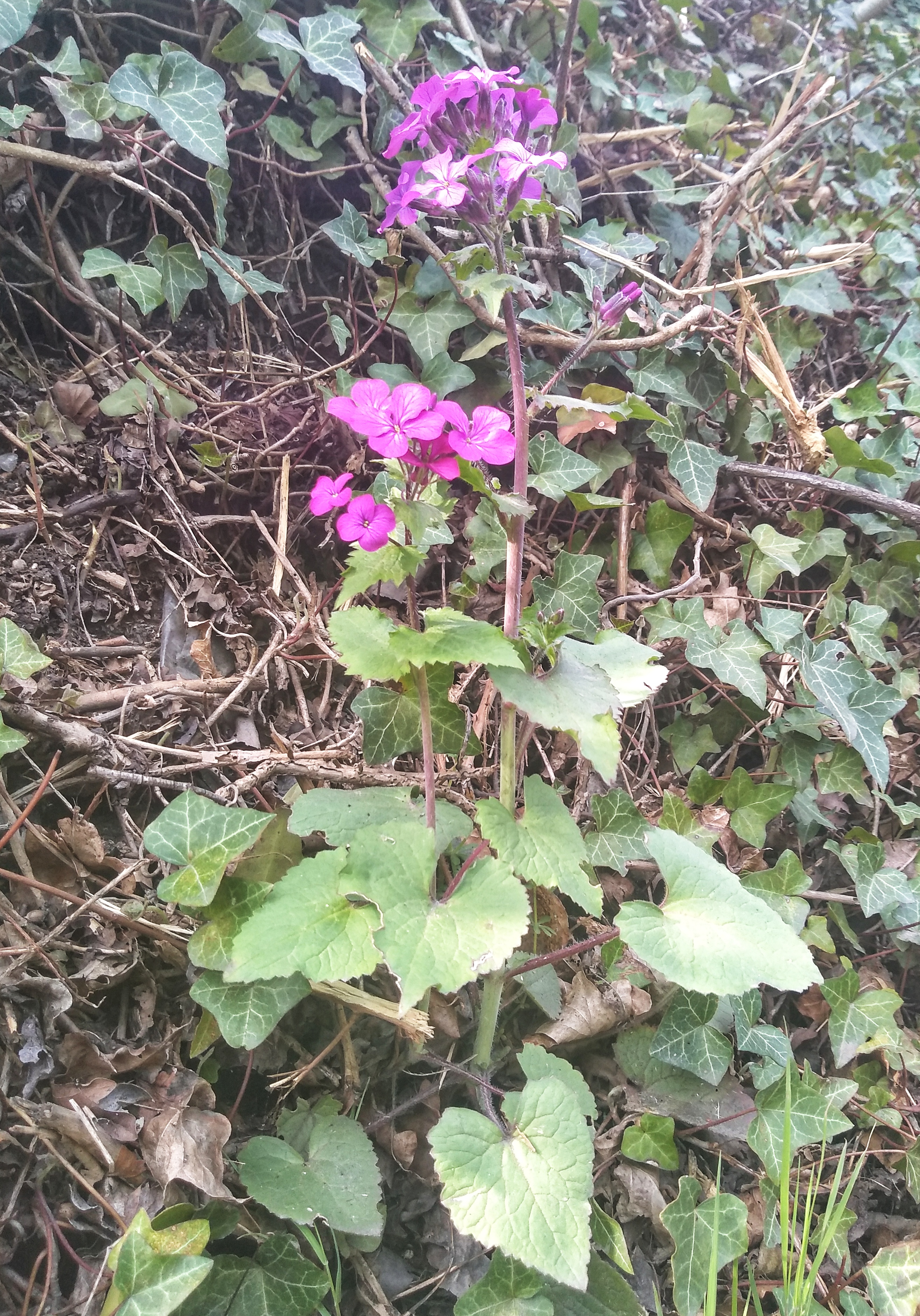
-Honesty/ Moonwort/Money plant (Lunaria annua)

-Herb Robert (Geranium robertianum)

-Dove’s foot cranesbill (Geranium molle)

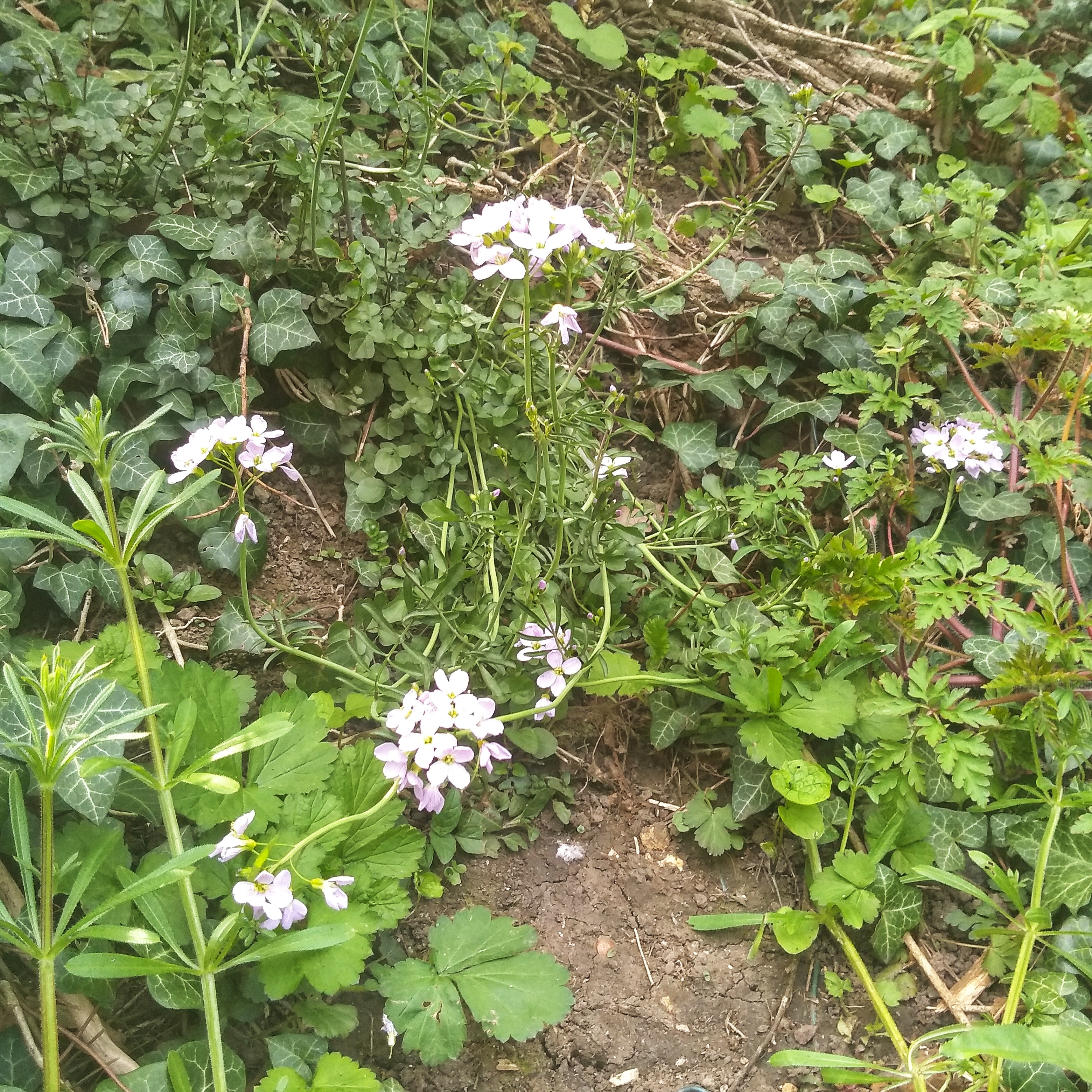
-Cuckooflower/ Lady’-smock (Cardamine pratensis)

-and Hedge garlic/ Garlic mustard (Alliaria petiolata).

I know this plant as Jack-by-the-hedge. I’m not entirely sure why it has this name. I guess it refers to being commonly found near hedgerows and Jack used to be a common name. Apparently the leaves, which have a mild garlic smell and taste, can be eaten in salads and sauces with meat or fish (Garlic mustard- Wildlife Trusts).

This week has been great for learning new bird sounds too. I have discovered a Dunnock (Prunella modularis) and a Green Woodpecker (Picus viridis) nearby without seeing them. Over the last few days I have heard another beautiful sound too. Each year I have Blue tits (Parus caeruleus) nesting under the eaves and it won’t be long before I hear their young. It is a fantastic sign of spring, better than anything the Easter bunny could bring (chocolate eggs are a close second though).

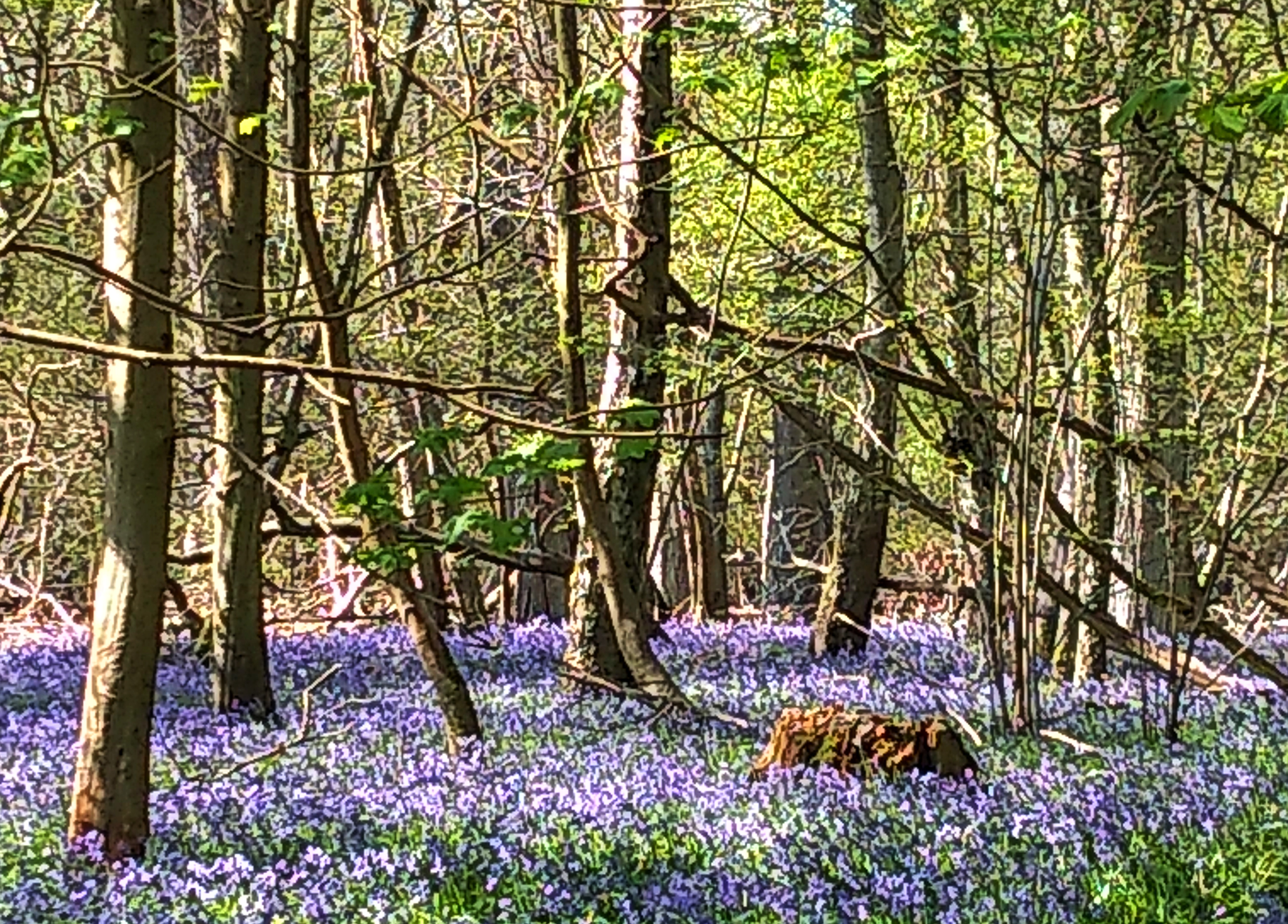
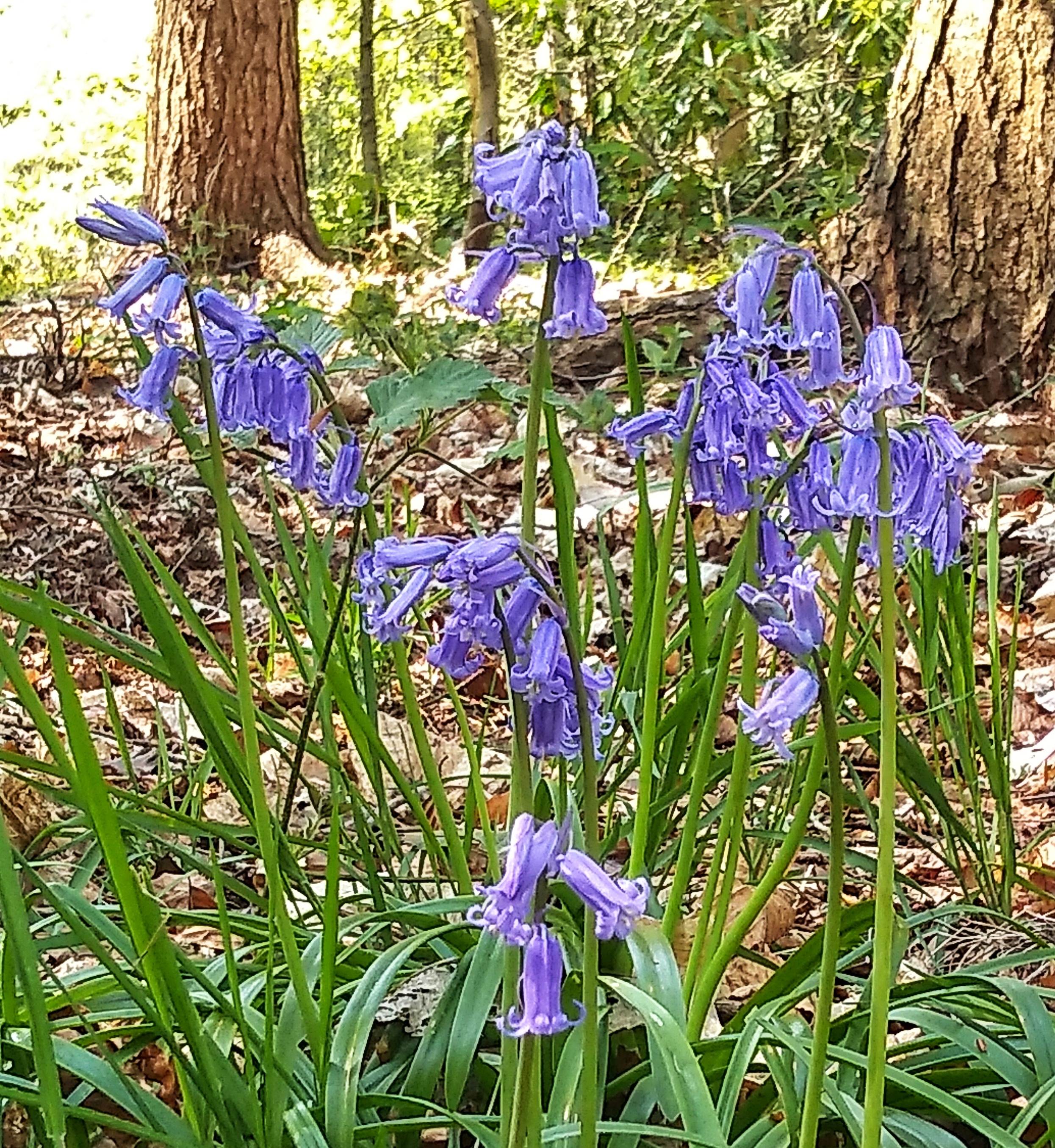
Yesterday I spent time visiting The Vyne (National Trust). The main attraction was the English Bluebells (Hyacinthoides non-scripta) on the woodland walk. The views were enchanting and smell delightful.

Also flowering near the Bluebells were Wood Anemones (Anemone nemorosa).

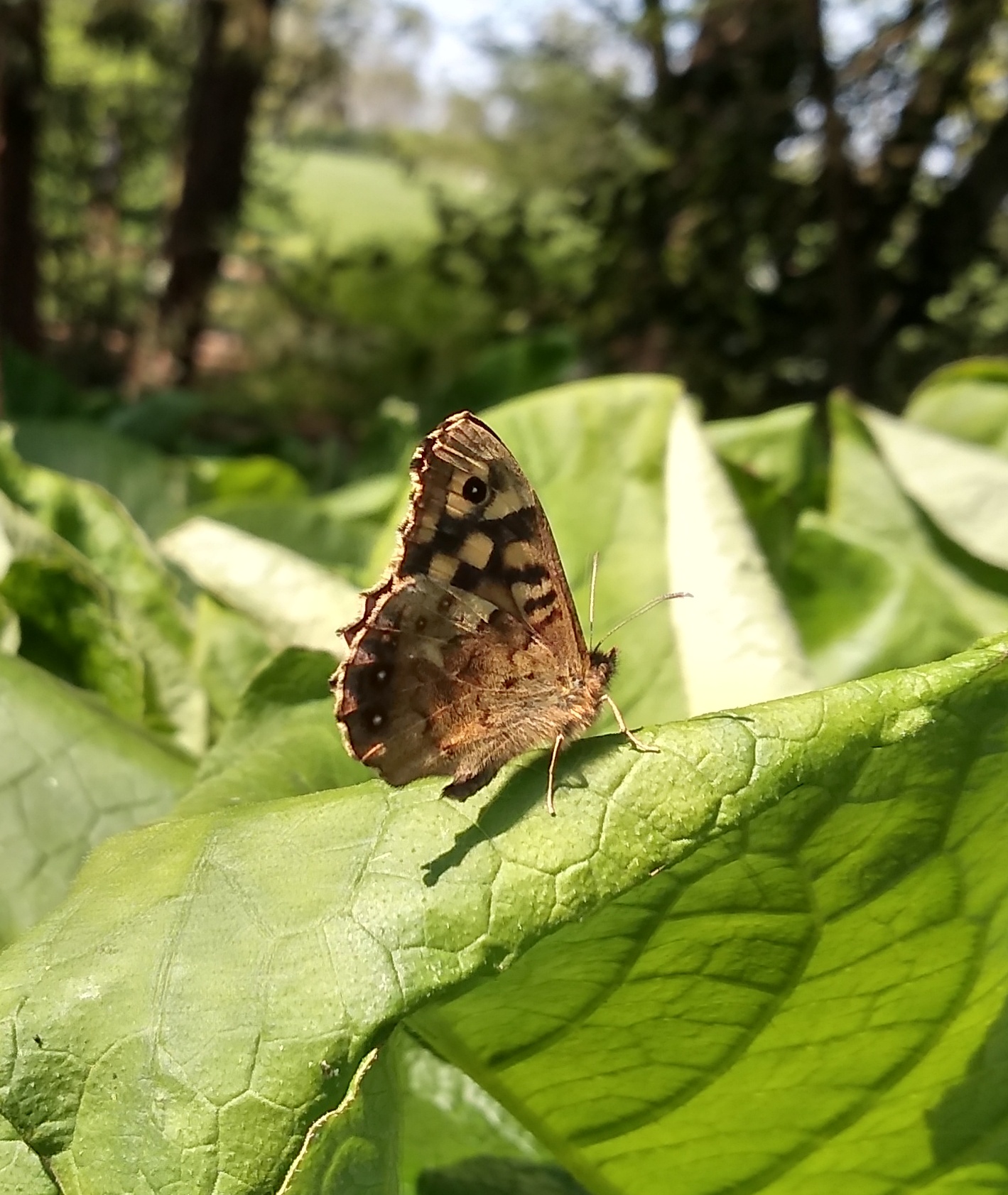
I spotted more Orange-tip butterflies there along with some Speckled wood butterflies (Pararge aegeria) flitting about.

It was a lovely way to spend a sunny Easter Sunday in good company.