Posted in nature

Tolkien’s Words of Wisdom are Still Appropriate.

Last week ended with a wonderful announcement in the news, the Great fox-spider (Alopecosa fabrilis), presumed extinct since 1993, has been refound alive (see the BBC News report). This highlights, both the amazing work undertaken by naturalists, as well as the importance of protecting wildlife and their habitats.

As an amateur naturalist and gardener, I haven’t undertaken such groundbreaking work but I try to do my bit whenever and wherever I can. I think of J.R.R. Tolkien’s quote ‘Even the smallest person can change the course of the future.’ from The Fellowship of the Ring (The Lord of the Rings trilogy) in these moments. We can all play a small part in saving nature’s wonderful diversity so that it has a future.

With this at the forefront of my mind I think back to one small act I hope made a difference last week. I noticed a female Common carder bee (Bombus pascuorum), identified by the white hairs on the sides of its thorax. It isn’t unusual to see these females fly this late in the season, (possibly a new queen getting ready for hibernation before starting a new nest in spring). However the one I saw was very still; I was concerned it was worn out and required help so I gathered some Verbena bonariensis and Salvia flowers to revive it. Thankfully my instinct was probably correct because it fed from the nectar contained within the posy I laid next to it.

Along with some cultivated plants, a few wild flowers were still blooming, Red clover (Trifolium pratense) and Yarrow (Achillea millefolium). Even though the latter flowers through to November, Red clover usually only blooms until October. The Common carder bee feeds from the Red clover flowers along with Honeybees (Apis mellifera) and Red-tailed bumblebees (Bombus lapidarius).

I also learnt some new fungi last week. The Golden waxcap (Hygrocybe chlorophana) which grows on grassland.

This fungi is on red list for threatened fungi in some European countries such as poland and Switzerland but not in the UK

Plus the other fungi I noticed, the Shaggy scalycap (Pholiota squarrosa) at the base of a tree stump.

This is often found next to broadleaf trees stumps, particularly beech (Fagus), and occasionally spruces (Picea) between August and November. 
Posted in nature

Common Insects but an Uncommon Viewing Experience

It was great to still witness pollinators flying around last week. Even though, due to the colder weather numbers have greatly reduced, some insects are still foraging. I noticed the odd hardy Buff-tailed bumblebee (Bombus terrestris) as well as a few Honey bees (Apis mellifera) visiting autumn flowering perennials and shrubs. Currently the most wonderful spectacle is Common Ivy (Hedera helix) in full bloom. Loved by pollinators including butterflies, bees and hoverflies, ivy is a useful plant to have in flower at this time of year. It supports up to fifty species altogether, such as providing food for Holly blue Butterflies (Celastrina argiolus), along with the Small dusty wave (Idaea seriata), Angle shades (Phlogophora meticulosa)
and Swallow-tailed (Ourapteryx sambucaria) moths. Mature Ivy plants flower in September and October on clustered umbels. Eventually, pollinated flowers develop into fruit that provides food for Thrushes (Turdidae), Blackbirds (Turdus merula), Blackcaps (Sylvia atricapilla) and Wood pigeons (Columba palumbus). Ivy also provides shelter for hibernating insects over winter.

However the most prevalent insects I witnessed covering the ivy flowers last week were the Common wasp (Vespula vulgaris). They weren’t nesting amongst it but feeding on the abundant nectar. My confidence in their complete focus on the ivy flowers, and not being bothered by my presence, enabled me to unusually observe them up close. Each time I came across ivy covered with wasps, I would take a few moments to watch and listen. Unlike bees, their buzzing was very faint; you had to listen carefully to hear it. I had never been close enough to appreciate the wonderful pattern on their abdomen before or watch their activity as they hurriedly switched from one flower to another.

I would have been observing male and worker wasps obtain nectar from the ivy (which also visit other umbellifier flowers). Queens are active in spring, collecting nectar from Cotoneaster and other spring flowering shrubs.

These much hated creatures are useful pollinators (as the photo below proves) when not pestering us as we eat outdoors. We can’t really blame them trying to access an easy source of food or protecting nests when we stumble upon them.

Wasps also help keep insect numbers down which once captured, are chewed up and fed to the larvae.

Although I haven’t seen any yet, I am ever hopeful that I will see Ivy bees (Colletes hederae) as I look at ivy. Recorded for the first time in southern Britain as far back as 2001, these solitary bees feed on ivy nectar and are therefore only seen when ivy flowers. Since they were first noted in Britain the species has been spreading northwards, nesting in sandy soil. For further information see (Wildlife Trust).

More fungi started to appear last week too; I saw
– Common bonnets (Mycena galericulata)

– Shaggy ink caps (Xylaria hypoxylon) and

– Candlesnuff (also referred to as candlestick or stag’s horn) fungus (Xylaria hypoxylon).

You have to look closely to identify this minute fungi, found on decaying wood, it has a blackened base.

Lastly I was utterly surprised to witness a Fox (Vulpes vulpes) run across my allotment as I worked early on Saturday afternoon. It looked healthy so presumably had been disturbed with all the activity from allotmenteers tidying their plots.

Posted in nature

Do you Believe in Fairies?

Leaf colours slowly started to change last week and it definitely began to look like Autumn; even so the occasional bee was still visiting flowers.

Unlike last year, which was amazing for fungi, 2020 has been fairly quiet up to now. The few I have noticed have usually been Fairy ring mushrooms (Marasmius oreades) or Clustered domecaps (Lyophyllum decastes).

However on Tuesday, I did see several groups of Fairy Inkcaps, also called Fairy bonnets (Coprinellus disseminatus) in one garden. I was fascinated to see them appear to grow from the gaps of a garden wall; especially as this agaricus fungi feeds on decaying wood.

Confusingly, Coprinus is Latin for ‘Living on Dung’ which these mushrooms don’t do. Plus most Inkcaps dissolve into black ink as they mature, but not these. The fruiting bodies of this fungus were gaining nutrients from a nearby raised bed, made of old sleepers, that was attached to the wall. I love how the mushrooms look set against the brickwork, almost as though nature is breaking through a human creation.

Although I saw lots of Fairy mushrooms last week, I didn’t notice any fairies.

Posted in nature

Unusual Trees for Suburban Gardens

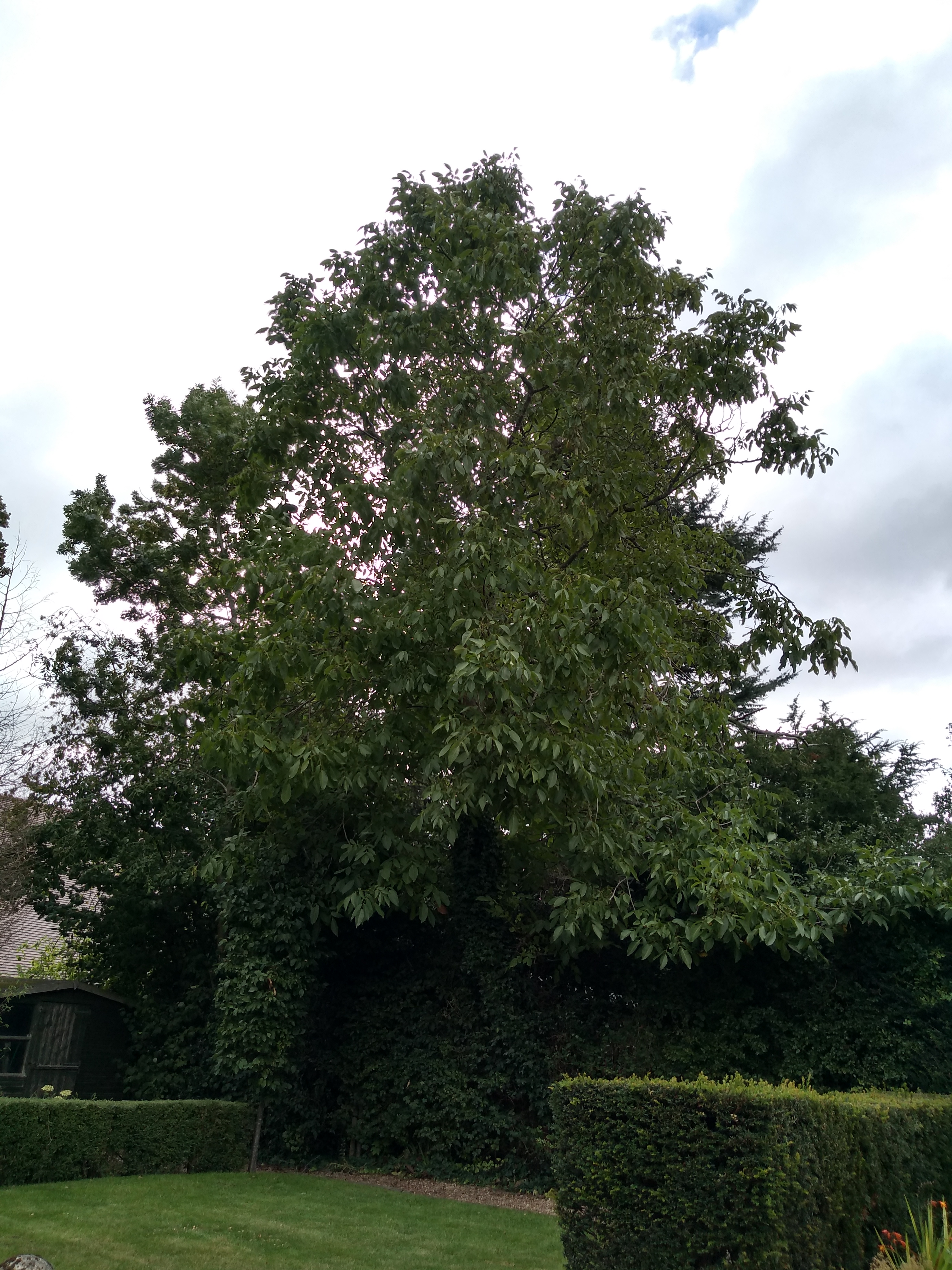
I’m lucky to work in a wide variety of gardens and occasionally come across trees which aren’t normally found in smaller suburban settings. Last week three such trees, a Walnut (Juglans regia), Quince (Cydonia oblonga) and Sweet Chestnut (Castanea sativa) were showing evidence that Autumn had arrived. Interestingly all three have links to, or were introduced to Britain by, the Romans (just like Ground Elder, Aegopodium podagraria, which they ate).

The Latin name for Walnut translates to ‘Royal nut of Jupiter’ and is referred to as ‘food of the gods, medicine for the people’. However, you’ll be lucky to get your hands on any before Squirrels (or Mice) do.

Presumably that’s the reason why these trees have naturalised in UK gardens and parks so well; as hidden walnuts are left to germinate and grow into mature trees.

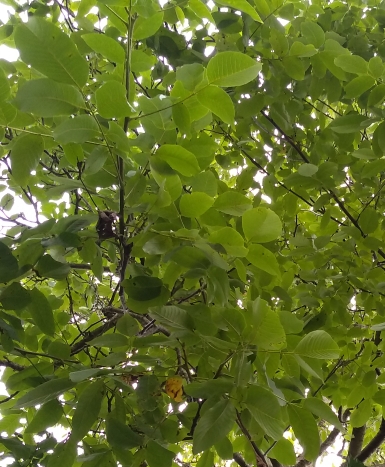
The leaves of Walnut trees are a good source of food for some micro moths too.

The Sweet chestnut is another tree introduced into this country by the Romans. These days roasted Chestnuts are associated with winter and Christmas. They contain Vitamins C and Bs along with the minerals magnesium, potassium and iron.

I remember collecting Chestnuts at a local wood when I was young; I particularly enjoyed eating them raw. These days, on the odd occasion when I do discover a Chestnut tree, the nuts are usually too small to eat. Horse Chestnut (Aesculus hippocastanum) trees on the other hand are more commonly found around Britain. I noticed that Conker season had also begun last week, as I traveled to and from work. There are several myths linked with Conkers (see The Woodland Trust).

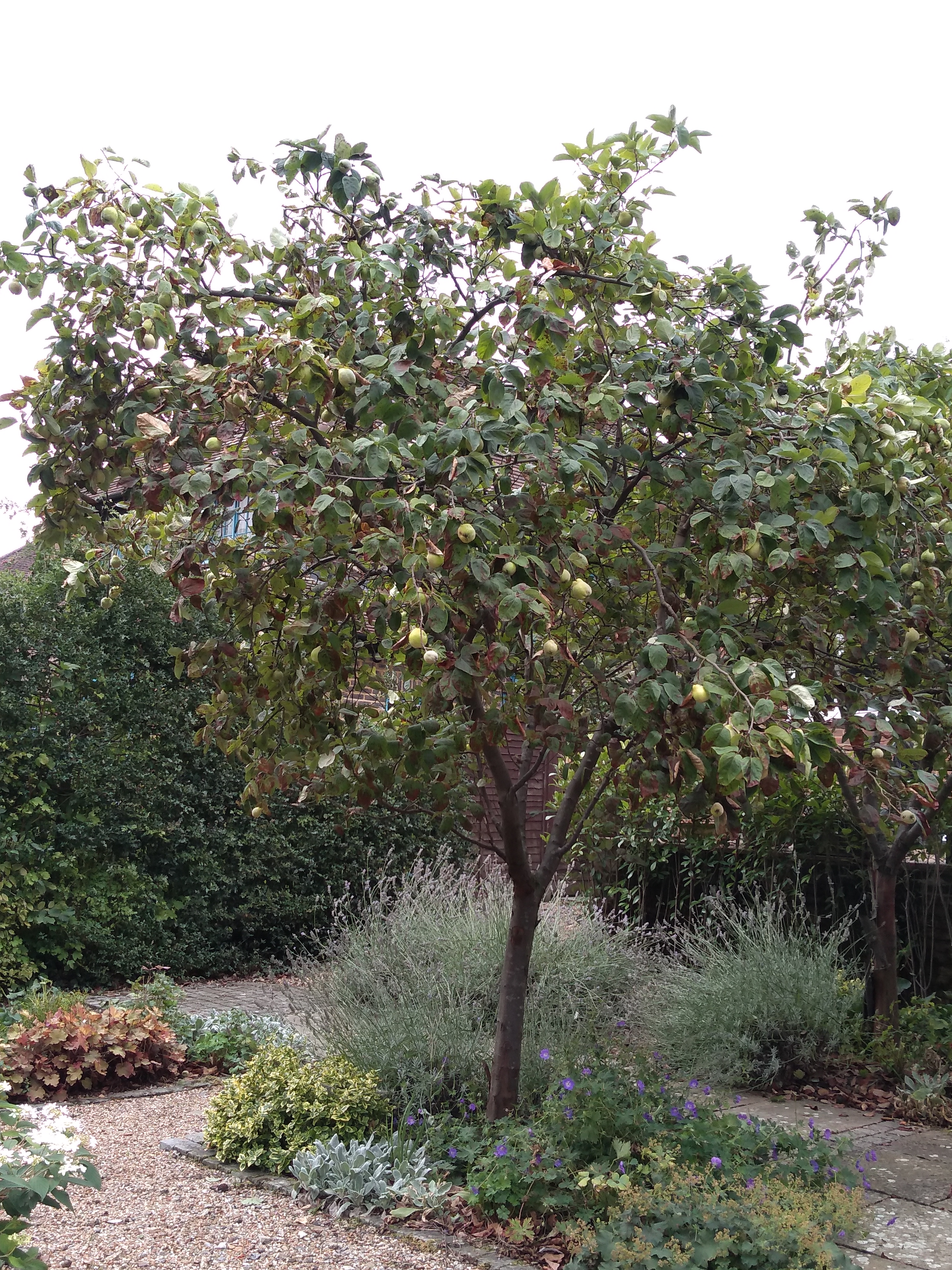
The last of the unusual trees I saw last week was the Quince. This tree is a lot smaller than the ones previously mentioned, making collection of the fruit easier. In fact the garden I worked at has four planted in a formal arrangement.

Quince fruit have tough flesh with skin that turns yellow as it ripens and has a honey aroma. They need to be cooked to soften and become edible.

Recipes for Quince Jam and Jelly can be found on the internet. Originally from Turkey and Asia, recipes using Quince can be found in Roman cooking.

There were other Autumnal signs around last week, along with the ones mentioned above, including the appearance of fungi and leaves falling. Autumn is definitely settling in even though Meteorological Autumn didn’t start until this Tuesday (1st September) with Astronomical Autumn (the Autumn Equinox) to follow on the 22nd September.

Posted in nature

National Tree Week (23/11/19-01/12/19)

Meteorological winter has begun. Rather appropriately Autumn turned wintery yesterday as we had a very cold and frosty start to the morning. Apparently it was the coldest night since February.

National tree week ends today too. Started by the Tree Council in 1975 it’s a time to focus on the importance of tree planting along with celebrate these amazing plants. The week coincides with the best time of year to plant trees. This time round there has been a specific emphasis on promoting the usefulness of trees in combating climate change (by pollution and carbon dioxide absorption).

I have planted many trees in the past, however last week the main job continued to be leaf collection.

A little momento of some beautiful leaves.

While most trees shed leaves consistently over a period of time, in my experience, leaf drop of English/ Pedunculate Oak (Quercus robur) and European Beech (Fagus sylvatica) tends to occur in one go at the end of Autumn. This has certainly been true this year, as we collected huge amounts of leaves from large Oak and Beech trees in many gardens; their beautiful rich autumnal colours like carpets on the ground.

Both these deciduous trees are from the Fagaceae family which explains their similarities. Both grow to great heights, have dense canopies and can exhibit marcescence (where some dead leaves are retained on the trees throughout winter).

Both trees are great for wildlife too. Beech nuts are eaten by Deer, Badgers (Meles meles), Grey squirrels (Sciurus carolinensis), Mice, Chaffinches (Fringilla coelebs) and Brambling (Fringilla montifringilla). Even the foliage is food for caterpillars of several species of moth like the Barred hook-tip (Drepana cultraria) and Olive crescent (Trisateles emortualis). Beech trees create a vital habitat for butterflies along woodland edges as well; including Orange-tip (Anthocharis cardamines) and Gatekeepers (Pyronia tithonus). Plus ectomycorrhizal truffle fungi grow beneath them. Turned into hedges, Beech can also create a habitat for birds.

As with the European Beech, the Pedunculate Oak supports a variety of fungi, animals, birds- particularly Jays (Garrulus glandarius) and insects such as Stag beetles (Lucanus cervus)
and the Purple hairstreak (Neozephyrus quercus) and Purple emperor (Apatura iris) butterflies. In fact of all the native British trees the Pedunculate Oak supports more wildlife than any other tree. Even its leaf litter and dead wood is full of life. I love these wonderful trees, especially ancient oaks. I enjoy thinking of all the hidden life existing alongside me as I work in the gardens. Also they are wonderful trees to hug. 🌳🤗

Posted in nature

Leaves, Leaves and more Leaves

Leaf collection was the main job last week, especially on Wednesday through to Friday. It gets the heart pumping and is physically tiring so I definitely felt like I’d had a workout. There are still more leaves to fall so the process will be repeated for a few more weeks yet. At least it will be great for composts or as leaf mould, as well as my health.

One of my favourite trees is still holding onto its autumn colour.
The Maidenhair tree (Ginkgo biloba) pictured below in its glorious yellow hue.

The common name, Maidenhair tree, comes from the fan shaped leaves resembling the Maidenhair fern foliage. This national tree of China is also referred to as a living fossil. Fossils dating back to the Jurassic period have been found. It is the only remaining tree classified under the Ginkgophyta division (neither broadleaf nor conifer). This unique and beautiful tree is simply amazing.

Other plants giving interest at this time of year include
Clematis cirrhosis car purpurescens ‘Freckles’. The delicate drooping flowers appear between November and February. It is a lovely Clematis to grow over a walkway where the flowers can be appreciated from the side as well as underneath (where the freckle pattern hides).

As it flowers early in the year it is categorised as a pruning group 1 Clematis so doesn’t require regular pruning. However if you need to reduce its size then it can be pruned immediately after flowering finishes but when the risk of frosts have passed.

Viburnum tinus is also blooming now. The fragrant flowers will be around until April and followed by blueish black berries that are great for birds. This large shrub is evergreen too so it brings a welcome flourish of colour during the winter months.

Thankfully I managed to relax at the weekend after an exhausting week. I completed my handmade Christmas presents and cards, so I am ready for the festive season. As I sat crafting on the sofa I had a great view of my neighbouring Rowan (Sorbus) tree. The Starlings (Sturnus vulgaris) are getting through the berries quickly; I am not sure there will be any left for the Redwings (Turdus iliacus) when they finally arrive. I do like the iridescent nature of Starling plumage and their ability to mimic sounds so I quite like seeing them. I was excited to see another bird visit the Rowan; my first ever sighting of a Bullfinch (Pyrrhula pyrrhula). Due to the distance my attempt to photograph it isn’t brilliant but you can just about make out its colourful breast in the photo below.

The pinkish breast colouring means it was female (the males have red breasts). She was snacking on the Rowan berries but they also eat seeds, fruit tree buds and find insects for their young.

Other berries eaten by birds are those on the Pyracantha. This week I noticed that lots of Pyracantha plants were overladen with them. Its common name Firethorn is very appropriate and is given because of the heated, itchy reaction when the thorns pierce the skin. I can testify to this every time I have to cut it back.

I am still seeing fungus appearing in gardens too.

*Once again, please do not use this post as a guide to edible mushrooms.*

My latest find was the Pear-shaped or Stump puffball (Lycoperdon pyriforme).

This fungus grows on decaying wood and I found it in a stump.

Posted in nature

Crisp Autumn Mornings

The clear cold nights and frosty mornings have arrived. I don’t mind crisp starts to the day because eventually the sunshine appears.

As more trees become leafless I find other means of identifying them. I learnt two new trees last week; the first was a Strawberry tree (Arbutus unedo) and the second was an American sweetgum (Liquidambar styraciflua). In both instances the first things I noticed on each was their fruit.
The unripe fruit of the Strawberry tree can be seen below alongside the delicate flowers. The common name, Strawberry tree, comes from the ripe red fruit which look similar to strawberries. The fruit of this evergreen tree will be eaten by birds. It seemed strange to see the fruit, from the pollination of last year’s flowers, appearing at the same time as this years flowers.

The American sweetgum tree also gives interest to gardens at this time of year. The leaves turn a rich mixture of yellow through to orange and red and even purple in autumn.

The spiky looking fruit dangle from the branches at the same time as the leaves turn and fall.

I have started noticing more Robins (Erithacus rubecula) hanging around lately; always eager to gobble up insects and worms that I unwittingly uncover as I work.

Moments after taking this photo another Robin swooped down and a fight over winter territory began.

It is fascinating to observe Robins, who can be relatively social towards humans, eagerly defend their patch of garden against other Robins. It is quite a contrast to the other bird which became more noticeable last week; Ring-necked parakeets (Psittacula krameri) flock together. I saw groups of this social parrot flying overhead throughout the week. They have been breeding in the area for a long time and I often see them but not usually every day.

I still notice the occasional bee and on Wednesday I saw a Buff-tailed (Bombus terrestris) bumblebee (the buff coloured tail enabled me to Identify it as a queen). I observed her walking amongst leaf litter. She could have been a new queen, going into hibernation before starting a nest next spring, or an old queen who will soon die.

More fungi are appearing as autumn continues to take hold.

*Once again, please do not use this post as a guide to edible mushrooms. I have managed to identify some but have placed question marks next to those I am unsure of.*

Those I saw last week are;

-The Bitter oyster (Panellus stipticus) fungus

-Collared earthstar (Geastrum triplex) fungus.

-Grey Spotted Amanita
(Amanita excelsa var. spissa)?

-The prince (Agaricus augustus)?

This is the largest fungus I have seen this autumn; the diameter was almost as long as my size 5 boot. It also had a slightly sweet aroma.

Posted in nature

Sparkling Fireworks on a Damp and Windy Saturday

The autumnal weather remains mostly damp with brief glimpses of sunshine. Even Saturday was wet and blustery, so it was lovely to see fireworks from the comfort of my sofa. Although I worry about fireworks disturbing wildlife and pets, it is lovely to have light festivals to brighten the spirits once the clocks go back. At this time of year I try to find enjoyment in small things each day to counteract the gloom; the beauty of autumn helps this. My main obsession at the moment continues to be fungi. They are as difficult to identify as moths which adds to the fascination. As with the previous two weeks, I have discovered more fungi as I work.

*Once again, please do not use this post as a guide to edible mushrooms. I have managed to identify some but have placed question marks next to those I am unsure of.*

Last weeks finds were;

– The deceiver (Laccaria laccata)?

– Fried chicken mushrooms (Lyophyllum decastes)

– Suede bolete (Xerocomus subtomentosus)

– Common rustgill (Xerocomus subtomentosus)?

– Porcelain fungus (Oudemansiella mucida)

– Wood blewit (Lepista nuda)

– Shaggy scalycap (Pholiota squarrosa)

– Tawney funnel cup (Lepista flaccida)?

Fungi haven’t been the only things I noticed last week. On Monday I saw two Long-tailed tits (Aegithalos caudatus) in my neighbouring Rowan (Sorbus) tree. These social birds were eating insects and spiders alongside the regular Blue tit (Cyanistes caeruleus) and Coal tit (Periparus ater) visitors.

I was surprised to see a Tree bumblebee (Bombus hypnorum) last week. It was resting in the sunshine on Tuesday morning.

I usually see them between March and July so I relied on the Norfolk Wildlife Trust website to explain this sighting. New queens can be seen feeding through to October before hibernating until February; therefore it was a female bee I saw.

Another insect I saw last week was a Feathered thorn (Colotois pennaria) moth.

Due to the presence of the feathered antenna I was able to identify it as male. The caterpillars of this moth feed on various deciduous trees and shrubs with the moths appearing between September and November.

Posted in nature

Fabulous Fungi

One thing is certain at this time of year, I will see fungi and mushrooms in most gardens as I mow and collect leaves.

I made a point of trying to identify each one I saw this year, although this is a difficult task with fungi. I am not a hundred per cent confident that I have correctly named all of the mushrooms photographed; for this reason I would never eat any or advise others on which ones to forage.

Please do not use this post as a guide to edible mushrooms.

Unfortunately I didn’t see Fly agaric (Amanita muscaria) last week; that iconic mushroom with a red cap and white spots from fairy tales (although I have seen it growing nearby in previous years). Those fungi I did see were;

– Silver leaf (Chondrostereum purpureum) fungus

– Mower’s mushroom (Panaeolus foenisecii)

– Brown roll-rim (Paxillus involutus)

– Sulphur tuft (Hypholoma fasciculare)

– Mica cap (Coprinellus micaceus)

– Stinking parasol (Lepiota cristata)

– Ivory funnel (Clitocybe dealbata)

– Banded mottlegill (Panaeolus cinctulus)

– Clustered bonnet (Mycena inclinata)

– Shaggy ink cap (Coprinus comatus)

Neoboletus luridiformis