Posted in Allotment, nature

Autumns Arrival

Now September has arrived, there is definitely an Autumnal feeling in the air. Similar to March, this month often has a transitional effect on me; especially once the Autumn equinox arrives on the 22nd. The nights are noticeably getting colder and drawing in. Over the past few weeks, some mornings have been misty and there has been a mixture of weather throughout the weeks; humid and stormy one moment and colder and sunny another. Spiders and their webs have become more visible, helped in part by morning dew, plus leaves are beginning to turn on some trees while autumn Cyclamen and crocuses (Colchicum autumnale) are starting to flower. I love September after the intense heat of August I long for a bit of relief.

On the allotment, autumn raspberries (Rubus idaeus) and apples are ready to pick along with pears, damsons (Prunus domestica subsp insititia),

Damsons ready to pick.

elderberries (Sambucus) and blackberries (Rubus). Conkers are falling now too, although the walnut and hazelnut harvests have passed.

Sweet chestnuts are almost ready to fall.

On the last bank holiday of the year (almost a month ago), I visited Minster-on-sea with my partner and his parents. It was an ideal day for walking along the beach searching for treasure, perhaps fossils, sharks teeth, sea glass, pieces of broken pottery and the occasional sea lego.  Washed up along the beach were lots of Slipper limpets (Crepidula fornicata). 

These limpets arrived on these shores from America via ships in the 1800s and thrived in the UK; especially southern England and Wales, where they have become a pest to muscle and oyster beds (competing for food and space). They are edible themselves.

It is usual to see individual empty shells, in fact they are found in huge numbers on beaches in the Solent. The common name of this sea snail refers to the appearance of an individual shell when it is viewed upside down; similarly the latin means small boot. When alive, these gastropod molluscs are rarely found alone (as shown in the photo above). Up to 12 Slipper limpets can be stacked together with the female, the largest and oldest, at the bottom; all the others are male or, in the case of the second from bottom, in the process of transforming into a female. When the one at the bottom dies and falls off, the next one up then becomes female. Further information on these fascinating creatures can be found in an article written by Nick Baker here.

The Slipper limpet isn’t the only snail that I noticed recently. I often get to see land snails but I noticed this beautiful orange coloured Brown lipped snail (Cepaea nemoralis) hanging around after a rainy morning. Snail shells can be very beautiful and I am intrigued by their structure.

Whatever your view on snails it’s hard to look at their shells without admiring the beauty.

I have become more aware of insects lately, mostly when cutting back perennials at work. Although I try to be careful as much as possible, occasionally I disturb a few. I always make a point of replacing or moving them to a safe place. Mostly it is ladybirds but I have also noticed a few other species, such as Common earwigs (Forficula auricularia) and the Rusty tussock (Orgyia antiqua) and Knot grass (Acronicta rumicis) moth caterpillars

Common earwigs feed on organic matter and like to hide away in dark areas of the garden (not in human ears).

Earwigs are useful garden recyclers.

Once eggs are laid, the females diligently clean them and constantly guards the nest only stopping when the young can fend for themselves. While the adults can nip humans and predators, it is only as a warning.


Caterpillars of the medium sized Rusty tussock moth can be seen between May and September.


The males and females of this moth, also called the Vapourer, look different from on another. The males are orangey-brown while the female has a more grey colouration and also lacks any significant wings; therefore it is only the males of this species that are active (mostly flying during the day). The young feed on broadleaf trees and shrubs in gardens and parks, as well as along hedgerows, heaths, moorland and woodland. The adult female and male moths can be seen here .

Knot grass caterpillars (see photo above) can often be found in late summer (and even as late as October in Southern Britain; although these are usually a second generation). Pupa of this moth survive the winter in leaf litter. The grey coloured adults (with a wingspan of 3-3.5 cms) can be seen from May through to September. The caterpillars can be observed on herbaceous or woody plants such as knotgrass (Polygonum aviculare), bramble (Rubus), hawthorn (Crataegus), common sorrel (Rumex acetosa), heather (Calluna), plantains (Plantago), docks (Rumex) and purple loosestrife (Lythrum salicaria). It makes sense therefore that this one was found nibbling on a raspberry leaf on the allotment. The numbers of this moth are declining and while they are still commonly found in gardens, heathland and grassland, it is thought that the  species is becoming vulnerable. I was happy to share my raspberry plant with this caterpillar; raspberries are my favourite fruit but it certainly wouldn’t do any major damage. A photo of the moth can be seen on the UK Moths website.

Sadly the results of the Butterfly count for this year came out last week. They confirmed people’s  suspicion that it hasn’t been good for butterflies and moths (as well as bees). Many butterfly and moth numbers continue to fall, and significantly so from previous years results, due to a variety of factors including the cold wet weather we’ve experienced this year. Further information can be found on the butterfly conservation website here.

Thankfully last Friday, I witnessed a wonderful sight during a warm sunny afternoon. A huge area of ivy in full bloom was covered in so many bees that it stopped me in my tracks. I stood nearby and listened to the wonderful buzzing sound, it was so relaxing. There were so many Ivy bees (Colletes hederae) alongside buff tailed bumblebees (Bombus terrestris) and honey bees (Apis mellifera) visiting the ivy flowers. It was the first time I was able to definitely identify ivy bees which was amazing (see below). 

First recorded in the UK in 2001, Ivy bees are becoming more common. They look very similar to honey bees but can be distinguished by the stripes on their abdomens; the bright yellow stripes are distinctly separate from the black ones than they are with honey bees. Unlike honey bees these are solitary, however there can be lots of nests close to one another and these bees will forage together when opportunity allows. As their name suggests, they feed predominantly on the nectar of ivy flowers and therefore their appearance coincides with this plant flowering (between September and November). I have been searching for a definite sighting of these bees for years and finally I have been rewarded for my patience.

I’ve found more galls, over the last few weeks, this time on the ground surrounding a few Pedunculate Oaks (Quercus robur).

These galls remind me a little of the Facehugger in the Alien film franchise.

They are produced by these trees as a result of the Knopper gall wasp (Andricus quercuscalicis) laying young in the acorns. As with the Oak apple gall wasps (Biorhiza pallida) mentioned in a previous post ‘Relaxing Evening Birdsong’ , they are not detrimental to these majestic trees and don’t appear on many of the fallen acorns.  Interestingly each generation of the wasp will change between sexual and asexual each alternate year.

I also saw my first Goldcrest (Regulus regulus) in a cypress tree near the beginning of the month. Although I could see the silhouette of this tiny bird moving around the top of the tree. I was only able to identify it using the Chirp-o-matic app on my phone, due to its loud singing. The Goldcrests song can be heard on the Woodland trust website here , where you can also see a photo of this diminutive bird. I wish I could have viewed it at closer range, then I would have been able to see the wonderful plumage on the crown (yellow for females and orange for males). The Goldcrest is the smallest bird in Britain, even smaller than the Wren (Troglodytes troglodytes). Hold a 20 pence piece in your hand, and you will have an idea of the birds weight (just 5 grams). They inhabit mixed woodland and conifers along with parks and gardens. The numbers of our resident birds increase with the migration of others from Scandinavian countries during the winter. They feed on insects and other invertebrates. It is always lovely when I am still able to witness new things in nature like this. It gives me a buzz, allowing me to learn through research.

Posted in Allotment, nature

Latest on the Allotment

After a slow start, due to the weather, things are growing nicely on the organic, no dig, wildlife friendly allotment.

The view of the allotment from the Buddleia shrub.
The view of the allotment from the apple tree.

While most of the soft fruit season has come to an end (apart from the autumn raspberries), the plums and apples continue to develop and are something to look forward to later in the season.

Thankfully the rhubarb has recovered a bit after a disappointing harvest. Rhubarb doesn’t like growing in waterlogged soil and although we have sandy free draining soil, I think it ended up being too wet over the winter. The rhubarb was on the plot when we took it over four years ago and had grown very large. Every five years Rhubarb can be divided when the growth has become weaker or leaves are overcrowded so I will do this around November and hopefully this will invigorate its growth next year.

The slightly depleted Rhubarb patch.

The vegetables remain on a three yearly rotation to maintain soil health and keep viruses at bay. Main crop potatoes, kale (Cottagers and Cavolo Nero), beetroot, radishes and courgettes are doing well as usual. This years addition are carrots. I always like to try something different each year and It’s been a while since I tried growing these; so far they are surviving. They are in a raised bed and were sown later and sparsely to help avoid detection by carrot fly (Psila rosae). They are also in a mixed raised bed which also helps. 

Along with covering vulnerable plants and growing sacrificial plants such as nasturtium (Tropaeolum majus) and marigolds (Tagetes), I intersperse herbs and other flowers in between the vegetables to help prevent too much loss from pests. I usually find beneficial insects soon appear when needed; there are lots of ladybirds on the plot at the moment. I also find the best way to deal with slugs and snails is to collect them and place them elsewhere; plus any plants with soft young growth are protected by copper tape on old pots and thorny material. I do allow some slugs to remain on the allotment however. The Leopard slug (Limax maximus) is one beneficial slug to have in a garden as they don’t eat living plant matter. They are great for the compost and also eat the eggs of other slugs.

Thorny material protecting new growth from slug and snail damage. Also a plastic bottle (with the bottom cut off) to allow water to be directed to the roots.
Copper tape around an old pot (with the bottom cut off) used as a guard around the base of an annual while it establishes itself.

We have a lot of wildlife visiting the allotment. There is often evidence of a fox (Vulpes vulpes) visitor (which we have seen on other plots). Plus we often see grasshoppers and Common blue Damselflies (Enallagma
cyathigerum) and frogs (at the moment we regularly notice one adult and one youngster hopping around). Last saturday, the sun was out and there was an abundance of bees on the Catmint (Nepeta), Red clover (Trifolium pratense), Lavender and Buddleia.

The wild area on the plot contains a bug hotel and is located near to a neighbouring pond. This is where the red clover grows.

This year, I decided to undertake the Big Butterfly Count at the allotment. The butterflies seen were;

2 Small skippers (Thymelicus sylvestris),
1 Comma (Polygonia c-album),
2 Gatekeepers (Pyronia tithonus),
1 Peacock (Aglais io) and 2 Large whites (Pieris brassicae)

Given the abundance of Cabbage whites (Pieris brassicae) nearby I have made sure my kale is covered up.

The perennial kale mixed in with the cut flower patch.
I find it reassuring to have seen so many butterflies and bees at the weekend, especially as overall there seems to be a reduction in numbers this year; partly due to the frequency of wet days.

I have noticed lots of moths this year too. Perhaps the most exotic looking one I have seen so far is the Scarlet tiger moth (Callimorpha dominula).

The creamy coloured spots on the top of the forewings can sometimes have a more vivid yellow tint.
The red underwings can be seen here. I also managed to capture some of the shimmering blues and greens of the forewings when the sun shone on the moth.

This moth is medium sized, at 23- 27mm (across the wings). It flies during the day and night through May and June; often noticed while resting on plants. The caterpillars of this moth feed on Comfrey (Symphytum), Hemp Agrimony (Eupatorium cannabinum),  Common Nettle (Urtica dioica), Bramble (Rubus fruticosus), Honeysuckle (Lonicera), Meadowsweet (Filipendula ulmaria) and Green alkanet (Pentaglottis sempervirens); they can be seen from August until May, overwintering into the following year. The habitats where the Scarlet tiger moth will be found are in areas of wetland, riverbanks, woodlands, gardens as well as coastal areas.

One sound and aerial display of summer which I enjoy is the return of Swifts (Apus apus). I have even been lucky enough to see them catching insects as they swoop over a pond (sometimes just skimming the water) along with another flock soaring high up the sky. I always treasure seeing these amazing birds as they are on the red list for Birds of Conservation Concern 5: (2021). A few things we can do to help them is to put up appropriate nest boxes, as well as adding swift bricks to new builds, giving them somewhere to raise their young. The RSPB also have a citizen science project where you can record their presence. Further information on how you can take part, can be found here.
Having arrived in Britain in April and May, it won’t be long before they return to Africa as they only remain here until August. Most of their time is spent on the wing, only stopping to nest in roofs especially of old buildings such as churches. If this isn’t incredible enough when feeding the young they regurgitate a bolus, (a pellet formed in the back of the birds throat) containing between three hundred to one thousand insects mixed with saliva. More information on swifts, including how to identify them can be found on the RSPB website, where you can also hear a recording of their distinctive call.

Swifts are not the only thing I have noticed around ponds lately. I recently learnt about another pond invertebrate, the Common backswimmer (Notonecta glauca). So called because they swim on their back just beneath the surface of the water. Not only do they feed on insects, but also tadpoles and small fish. They suck out the contents of their prey’s body after injecting it with toxic saliva. Found all year round they moult a few times before reaching their final length of one and half centimetres. It was quite fascinating to observe them swimming around.

Posted in nature

Reawakening

There have been really cold moments this January, with temperatures barely reaching positive numbers here in the UK and some areas experiencing more snow; however nature has started to emerge once again.

On a walk a few weeks ago, I noticed Blackthorn (Prunus spinosa) buds ready to burst open and the tiny red female Hazel (Corylus avellana) flowers open alongside male catkins.

Blackthorn buds
Hazel flower and catkins

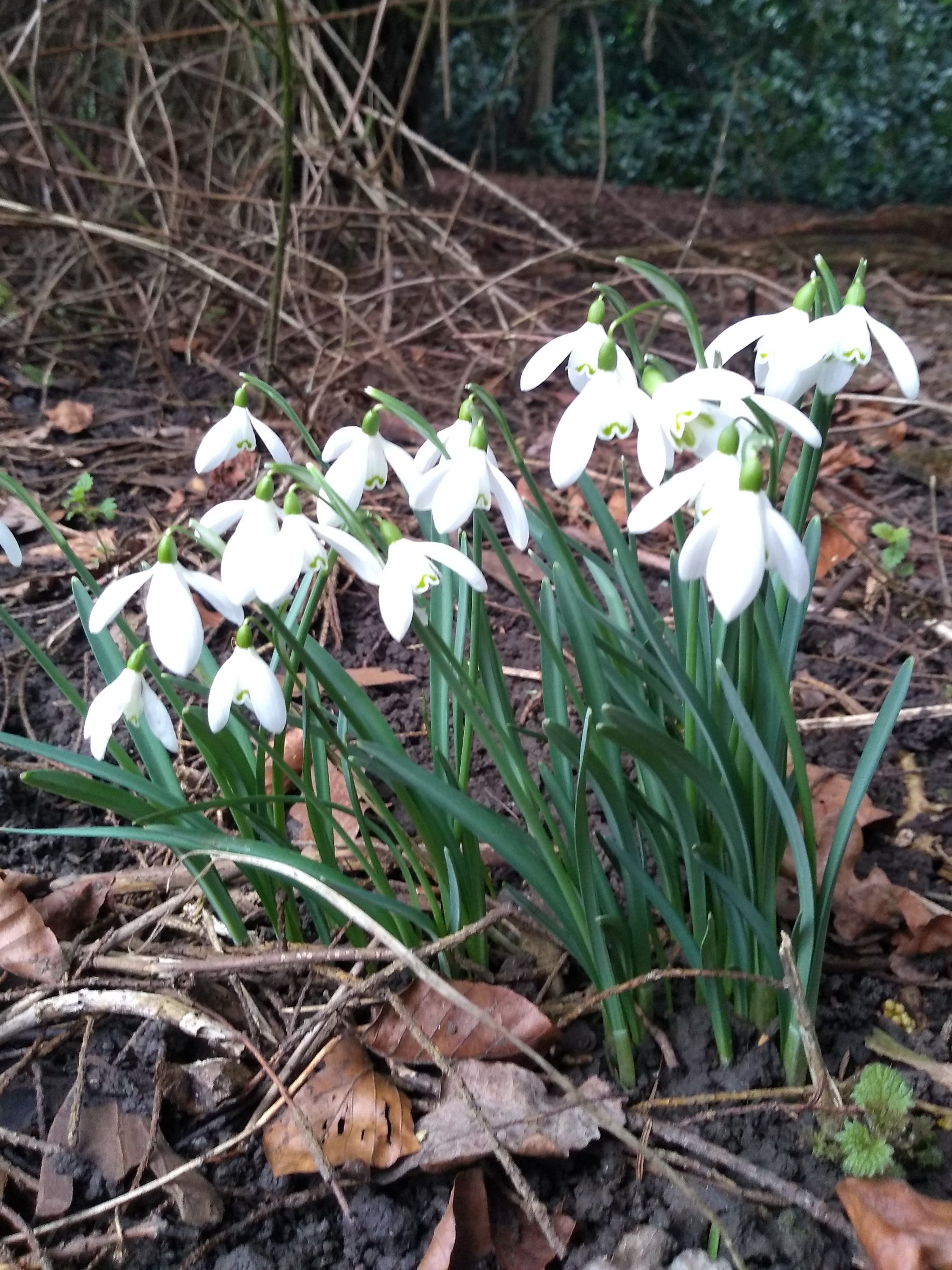
Cyclamen and Snowdrops (Galanthus) are also blooming now and even Daffodils (Narcissus) and Crocus are beginning to push through the now defrosted ground.

Last weekend was the annual RSPB’s Big Garden Birdwatch. My results this year were;
3 Wood pigeon (Columba palumbus)
5 Starlings (Sturnus vulgaris)
2 Blackbirds (Turdus merula)- 1 female and 1 male
2 Great tits (Parus major)
1 Magpie (Pica pica)
1 Robin (Erithacus rubecula)
3 Bluetits (Cyanistes caeruleus)
2 House sparrows (Passer domesticus)- 1 male and 1 female
2 Goldfinch (Carduelis carduelis) along with
2 Carrion crows (Corvus corone)

It’s hard to believe it’s now February. As usual during January I slowed and hunkered down, reflecting nature at this time. Yet the wild flowers are beginning to stir and birds pairing up. It isn’t long before spring arrives and I am already starting to plan what I shall grow on the allotment this year.

Posted in nature

Fungi and Cacti

The shift in seasons is definitely noticeable now. This November is warmer than usual, so we still haven’t had a frost here in southern England; however autumn colours, shorter days, wet weather and fungi have arrived over the past month.

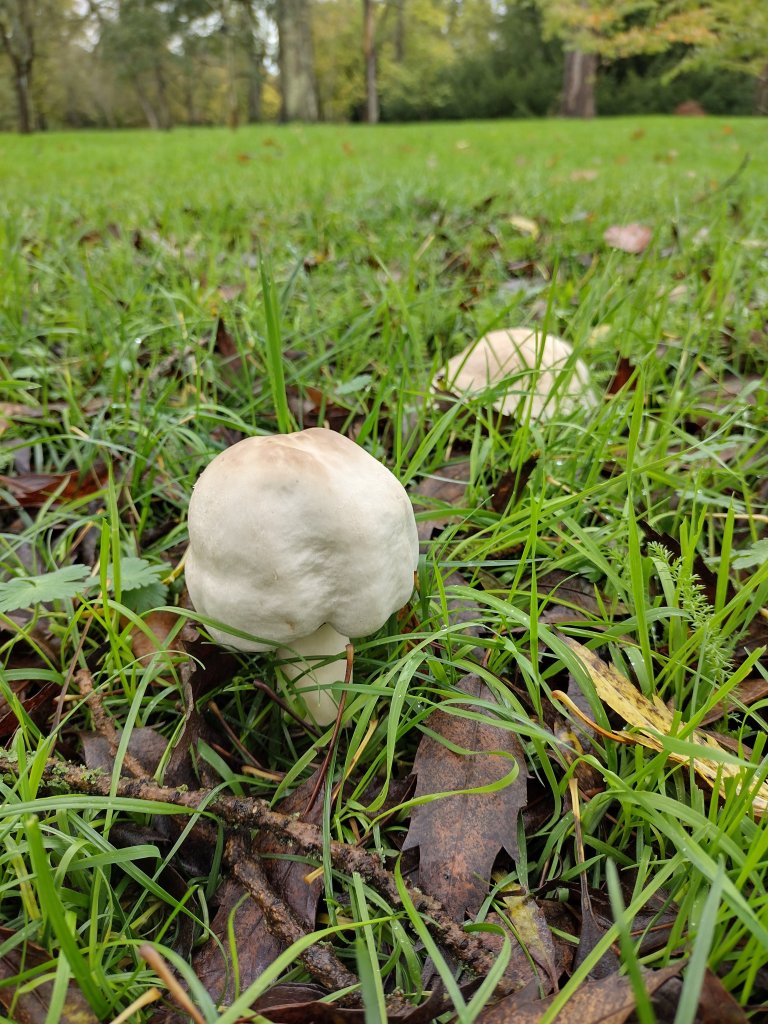
On a recent trip to Kew gardens several fungi including some Horse mushrooms (Agaricus arvensis),

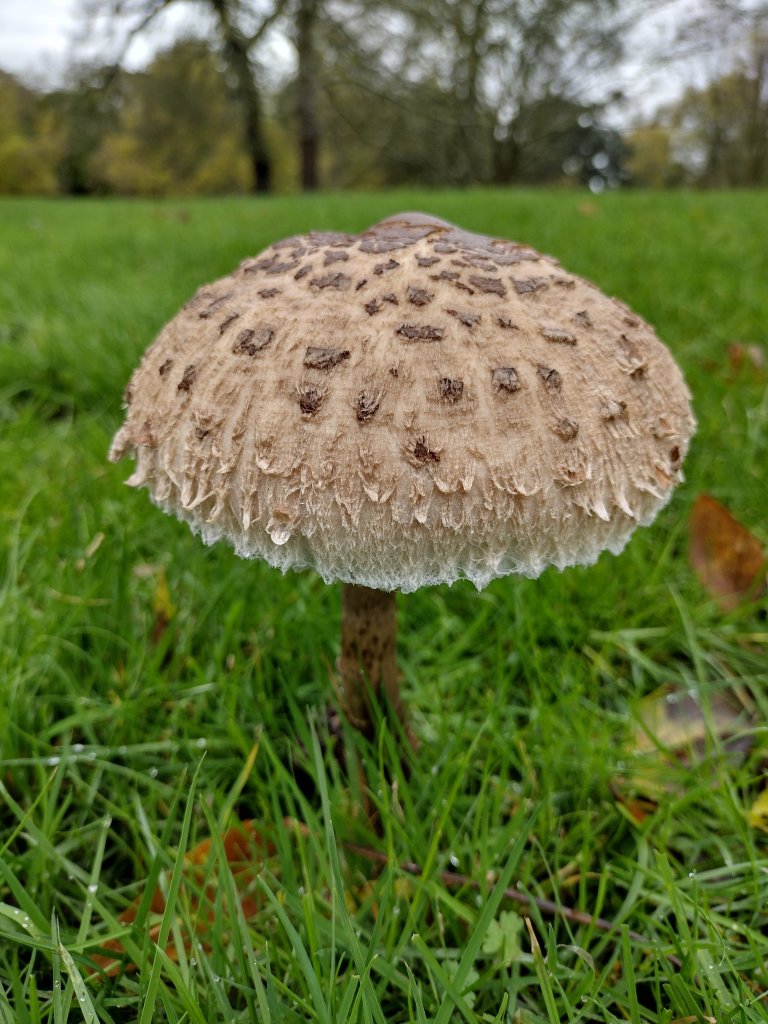
and Parasol mushrooms (Macrolepiota procera)

were dotted around the lawns as well as a group of Glistening inkcap (Coprinellus micaceus) on a decaying tree stump.

I think the weather had put many people off visiting which meant the gardens were fairly quiet. Although the odd heavy rain shower arrived while we were there, most of the day was dry and eventually the sun shone before we left, highlighting the vibrant leaves against a grey sky.

This year, I finally got to see a couple of Fly agaric (Amanita muscaria) fungi for the first time if my life (outside of books).

Fly agaric

I’d hoped to see these iconic fairytale fungi for a long time. Known for being hallucinogenic these incredibly toxic fungi are usually found in Birch (Betula), Pine (Pinus) and Spruce (Picea) woodlands; however I found them in a garden near a single Birch tree. Fly agaric supply nutrients to nearby trees along the underground mycorrhizal network therefore they have a close association with trees. A traditional use for this poisonous fungus is as an insecticide for house flies due to the Ibotenic acid contained within them (hence the common name for this fungi). Added so a saucer of milk, once a fly drinks the substance it becomes drousy and drowns.

These mushrooms weren’t the only exciting thing I got to observe in recent weeks. My Fishbone cactus (Epiphyllum anguliger) which has lived in my bathroom for many years flowerered for the first time. An epiphytic cacti, originally from Mexican rainforests, this plant develops aerial roots in order to attach itself to host trees. It likes humid indirect light and requires more watering than desert cacti. Clearly the conditions in my bathroom are ideal. The unusual looking flowers (which are produced once the plant is mature) were highy scented, similar to TCP but more floral. They take weeks to develop and once opened only last for a few days before dying off.

The first bud and aerial roots.
Posted in nature

False Autumn

It might be the start of meteorological autumn but it’s still too early for leaves to start falling from trees; yet over the past few weeks this has been occurring. Referred to as false autumn, this leaf (and acorn) drop is occurring as a result of the extreme temperatures and drought we’ve experienced this year. It is a sign of stress as trees attempt to conserve water and energy. Current lower morning temperatures have also lead to an autumnal feeling. Thankfully we are now experiencing rainfall so perhaps this will prevent trees from showing further signs of stress even though it doesn’t stop us being in drought. Hopefully autumnal colour won’t be affected too much and we will still witness the spectacular seasonal colours this year.

A couple of weeks ago my partner and I went for a walk to spot Saturn ascending in the sky at dusk; we visited the local woodland park. At nine o’clock, on one of the hottest days of the year, the temperature was quite pleasant. As we walked through the woodland to an open area, where we could view the planet, we got to experience bats flying close by (the following videos is of some footage I managed to obtain).

Without a Bat detector, I have no way of correctly identifying the species out of the 18 that roost in the UK. According to the information I found on the Hertfordshire and Middlesex Bat Group website, the ones we most likely encountered in the area are either the Common Pipistrelle (Pipistrellus pipistrellus) or Soprano Pipistrelle (Pipistrellus pygmaeus). Regardless of the species, just experiencing the creatures flying nearby to capture insects was amazing. I haven’t witnessed bats in fight since I was a child.

It’s still possible to see some butterflies and bees at this time of year so late year flowering plants are essential.

A Common carder bee visiting a group of Aster flowers.

White tailed bumblebees (Bombus lucorum), Buff tailed bumblebees (Bombus terrestris), Red tailed bumblebees (Bombus lapidarius), Common carder bees (Bombus pascuorum) and even some Honey bees (Apis mellifera) still forage in September. The Butterfly Conservation charity produced a photo (see below) of common butterflies and moths to see at this time of year.

During the previous week I was still noticing several Hummingbird hawk moths (Macroglossum stellatarum) too. These moths have been quite prevalent this year.

On one occasion I managed to get a video of a Hummingbird hawk moth visiting a Buddleia.
Posted in nature

Patience is a Virtue

February has a duality to it; on one hand plants have begun to bloom (bringing the excitement of Spring around the corner) while on the other, the weather reminds us that it’s still Winter and we must be patient for a little longer. Last week three storms arrived, including Eunice with high strength winds leading to rare red weather warnings for wind and floods in the Bristol channel area and South East (with the after effects still being experienced in other areas of the UK). Bad weather usually arrives in February, in fact last year we had snow.

However, while nature continues at its own pace, Spring activities still occur earlier as decades pass. I read an article by Miranda Bryant in the Guardian recently regarding indicators of Spring, flowering and bird activities, occuring earlier since 1987. Pre 1987 plants flowered a month later than they did between that year and 2019 (In fact this was particularly evident in 2019 and yet again in 2020). The Woodland Trust’s Natures calender also shows this trend. The article can be accessed in the following link- The Guardian .

It is too early to notice any indication of patterns in this blog yet, although one thing I have witnessed this year, not seen before are daisies appearing in lawns already.

Other cultivated plants that have begun to bloom in gardens, as usual at this time of year are:

Helleborus
Anemone blanda
Pulmonaria
Cyclamen and
Iris reticulata
Posted in Bookworm review, nature

February Arrives

As another month rolls on, an initial glance may suggest that nothing is changing. Bare trees and quiet gardens with cold weather still nipping at fingertips and noses still persist, while sunny days bring glorious colourful skies.

A stripey sunset.

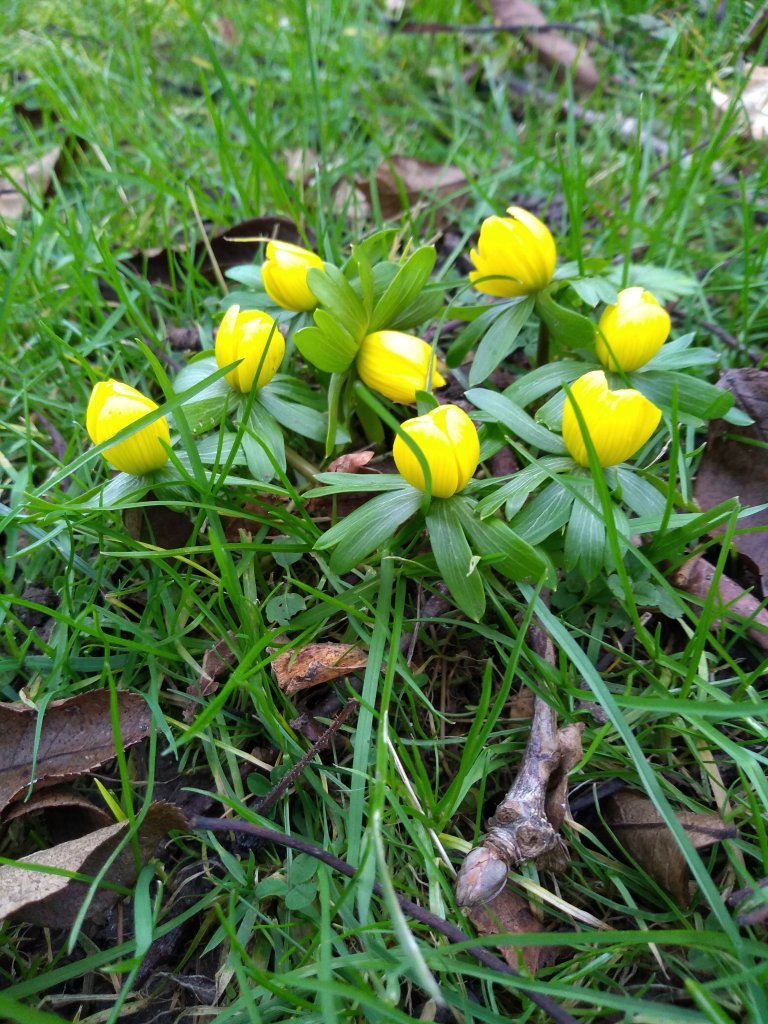
However, upon closer inspection small changes can be seen. The striking yellow of Winter aconites (Eranthis hyemalis) as well as delicate Early crocuses (Crocus tommasinianus) are beginning to bloom alongside the snowdrops (Galanthus).

The tiny red female flowers of Hazels (Corylus) have opened joining the male catkins. Plus, Blackthorn (Prunus spinosa) buds are ready to burst open (in fact on one walk, I saw a single flower already blooming).

I even witnessed a Red admiral (Vanessa atalanta) visit a flowering Mahonia on one sunny day; clearly making use of the milder weather before sheltering once again.

However the main focus of my attention, over the past few weeks, have been birds.

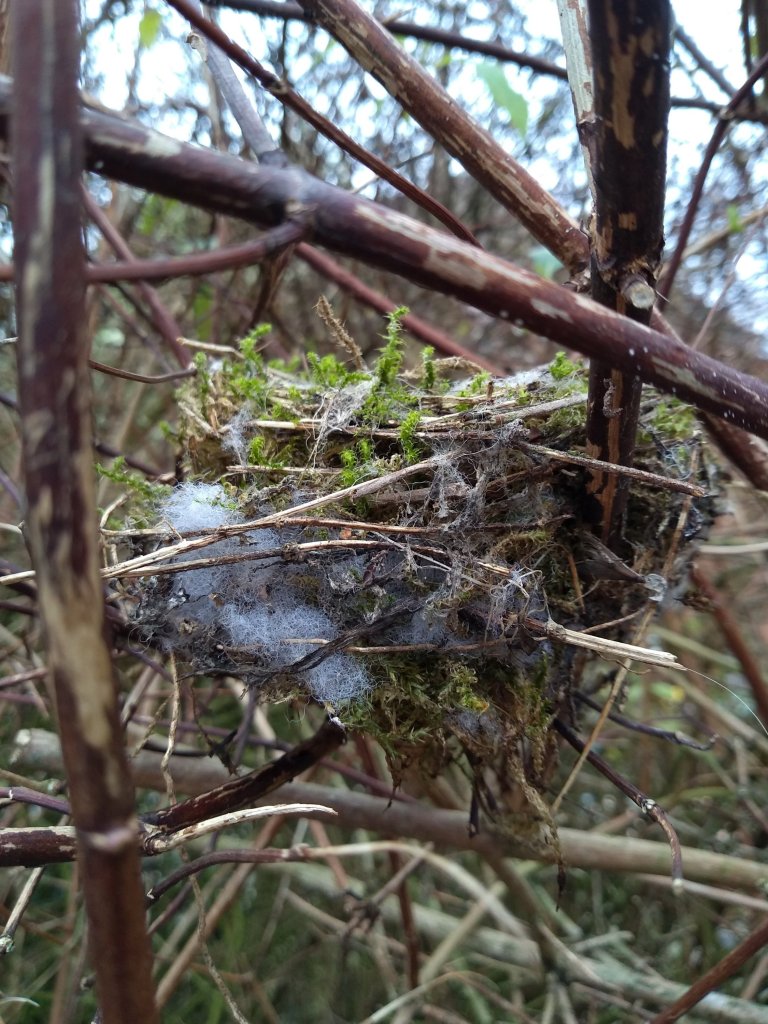
In one garden, I discovered a lovely little nest, from the previous year, in a shrub. Upon investigation I discovered it was either a Goldfinch (Carduelis carduelis) or Greenfinch (Chloris chloris) nest (most likely the former); it can be seen below.

I also saw a Lesser spotted woodpecker (Dendrocopos minor) perched on a tall tree in the distance. I was able to follow the sound of the drumming to watch it move around the trunk before flying off. Given the length of drumming and location of the red on it’s crown I was able to identify it as a male Lesser spotted woodpecker.

Then later in the week, while pruning roses, I watched a Wren (Troglodytes troglodytes) forage around the base of a hedge; I managed to film it briefly before it disappeared fully into the undergrowth.

I am currently reading ‘The Wren: A biography’ by Stephen Moss.

This charity shop find is a fascinating read. Chapters are set out month by month, each concentating on an aspect of a Wrens life. Included alongside facts about the Wren, are their involvement in human history, culture, literature, art and folklore together with beautiful illustrations. The chapter entitled February, for example, focuses on courtship and population. As with other books written by this author, such as ‘The Robin’, this book is definitely worth emmersing yourself in.

Lastly, once again I partook in the Big Garden Birdwatch. My results this year were-
7 Starlings (Sturnus vulgaris),
4 Magpies (Pica pica),
2 Bluetits (Cyanistes caeruleus),
2 Blackbirds (Turdus merula)- a male and female,
2 Wood pigeons (Columba palumbus),
1 Dunnock (Prunella modularis) as well as a Carrion crow (Corvus corone).

Although there weren’t any major surprises in what I saw, it was lovely that the Dunnock made an appearance (usually I only get to hear them). However the Red Kite (Milvus milvus), Ring-necked parakeets (Psittacula krameri), Great tit (Parus major) and Robin (Erithacus rubecula), that I regularly observe, all decided to have a lie in the previous weekend, most only making an appearance once my chosen hour had ended.

Posted in nature

October Treats (Tricks not Included) 🎃

It is Halloween, British Summer Time ended last night and initially today was a stereotypically autumnal day; windy and very wet. However now it’s less blustery and the sun is shining. Throughout the day, I’ve kept hearing Carrion crows (Corvus corone) call too; I love their haunting sound. Autumn has definitely taken hold over the past few weeks and there have been lots of treats to see.

Fungi continued to appear, showing biodiversity in untreated lawns. I managed to spot one of my favourites again this year, the Shaggy mane (Coprinus comatus) in various stages of development.

Also called Shaggy inkcaps or Lawyers mane.
Here the gills have turned black and have begun to ‘drip’ onto the lawn, resembling ink.

I also saw Yellow club fungus (Clavulinopsis helvola).

The photo was taken after the grass had been mown so the very tip of the fungi had been cut off.

As with other fungi, Yellow club fungus has no negative affect on lawns. It likes acidic mossy lawns appearing between September and November.

There was one more fungi that I noticed (see below), possibly a Honey waxcap (Hygrocybe reidii) although I am not entirely sure my identification of this one is correct.

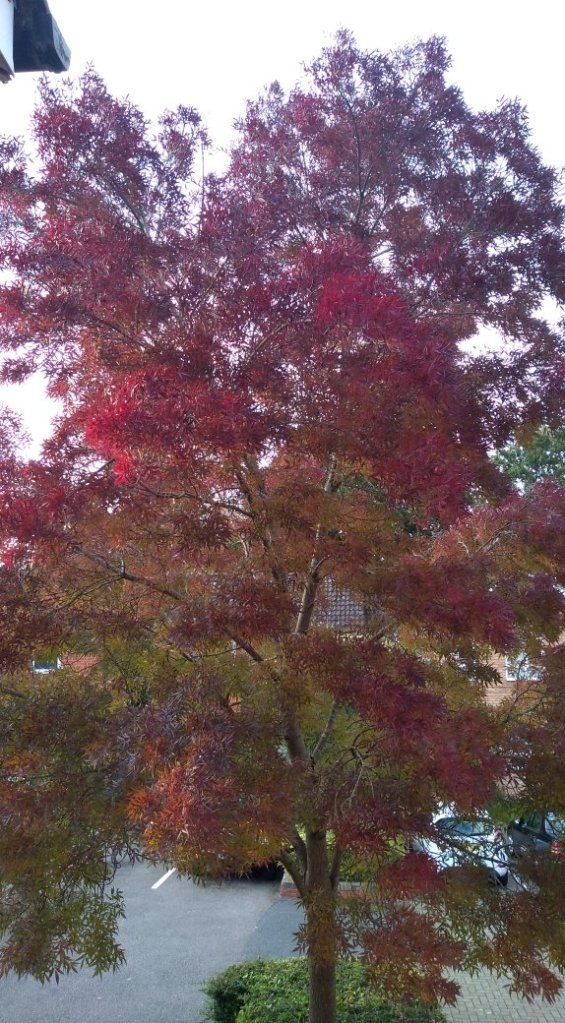
The tree that has already shown it’s autumn colours is the Claret ash or ash ‘Raywood’
(Fraxinus angustifolia ‘Raywood‘). There are a couple in the car park, one of which is now completely bare.

The deep claret coloured leaves glow bright red in the sunlight.
The bark of the Claret ash.

I have noticed the occasional pollinator still flying around during the last fortnight. One observation was some Common wasps (Vespula vulgaris) visiting Common ivy (Hedera helix) flowers. Evidence that Ivy is a wonderful source of pollen and nectar late in the year along with that fact that wasps have a purpose.

Along with pollination, there are many wasps that are useful predators of spiders and insects which are fed to their young. Unfortunately the adult wasps need for sugar means they are often disliked by humans, but can we really blame them for having a sweet tooth just like us or trying to get to something that is easily accessible? A fascinating article about wasps and their usefulness in the world, published by the Natural History Museum, can be viewed here.

Posted in Allotment, nature

A Couple of Welcome Visitors

During the previous week there were the few days of unusually high temperatures for the time of year; a final flourish for late summer?

The heat encouraged lots of bees, especially Honey bees (Apis mellifera) to visit Hylotelephium (once called Sedums) which began to bloom. The sound was amazing and it was so relaxing to work near them; you could almost feel the buzz it was so intense.

How many bees can you spot?

Things have been ticking over nicely on the allotment for the past month. Corn and Squash are developing nicely while the supply of Sweetpeas and Beetroot keep coming. Plus the Potatoes have been dug up and Apples are ready to pick too.

Time spent planning next years harvest is in full swing, while changes to the allotment occur. I began to create a space for a wild flower area next to a patch of long grass, where a resident frog is no doubt loving the huge supply of slugs this year. Plus work has begun on transforming the veg patches into raised beds.

Away from the allotment, on Friday 10th September, I noticed a rather large moth in the hallway. It was an Old lady/ black underwing (Mormo maura) moth. The wingspan of the Mormo maura is between 55 and 65mm.

The common name of Old Lady is due to the colouration and pattern on the forewings, which resemble the shawls of old Victorian ladies. There is only one generation per year and adults fly between July and August; as I noticed this one in September it must be near the end of its lifespan. A nocturnal moth it is attracted to light (and sugar if you place feeding stations for moths). Clearly the open window had encouraged it into the building. The main habitat for this moth are gardens and waste ground, particularly in damp locations. In spring, after overwintering, the caterpillars will feed on various trees and shrubs, such as Blackthorn (Prunus spinosa).

Then last Friday, another moth found its way to the hall. Also a nocturnal moth attracted by light, the Snout moth (Hypena proboscidalis), so called for obvious reasons.

There are two generations per year of the Hypena proboscidalis, adults initially fly between June and August and again later in autumn. The wingspan of the Snout moth is approximately 30 to 38mm. Like the Old lady moth it also frequents gardens and wasteland, along with woodlands; essentially it can be found anywhere nettles (Urtica dioica) are found, which the caterpillars feed on.

Posted in nature

🎵It’s Beginning…

… to look a lot like springtime, everywhere you go. 🎶

There are lots of early flowering plants blooming at the moment; spring is definitely in the air.

Daffodils
Birdseye speedwell (Veronica persica)
Crocus tommasinianus
Anemone blanda
Lesser celandine (Ficaria verna)
Hellebores, Crocus tommasinianus, Iris reticulata and Winter aconites (Eranthis hyemalis)
Tete-a-tete and Muscari
Camellia
Iris unguicularis