Posted in Allotment, nature

The Long Wait

I have been watching a wild flower grow, in the small garden that I look after in front of my flat. Initially unable to identify it (as I didn’t recognise the foliage) I patiently waited throughout autumn and winter to see what emerged. Then in late spring it developed stalks and flowerheads enabling me to see it was a Field scabious- (Knautia arvensis).

This perennial is blooming now. Bees are loving the flowers.

Field scabious is usually found in places such as grassland, meadows, grassy verges and hedgerows. This self set is obviously enjoying similar conditions in my little plot; thriving in an area against a brick wall with dry, partially shady conditions. It is wonderful to see it attract so many beneficial insects so am happy for it to remain where it is.

The allotment is coming on leaps and bounds. The strawberries (which rarely make it home) were a sweet reward as I watered daily through the recent heatwave and continue to ripen. The Blackflies on the Broad beans were eventually joined by seven spot (Coccinella septempunctata) and Harlequin (Harmonia axyridis) ladybirds, together with lots of their larvae; proof that if you leave pests, predators will appear to deal with them; nature really is wonderful.

The recent higher temperatures have encouraged butterflies to fly around. Lately I have seen Small tortoishells (Aglais urticae), Peacocks (Aglais io), Marbled whites (Melanargia galathea) and Speckled woods (Pararge aegeria).

Also on one sunny day last week, while eating lunch outside, I heard a bird song that I didn’t recognise. I recorded it on the Chirp-o-matic app (the name makes me think of Wallace and Gromit) to discover that it was a Yellowhammer (Emberiza citrinella). The rhythm and length of notes makes it sound like they’re saying ‘a little bit of bread and no cheese’. In fact this phrase is used by birders to identify it by the song alone and can be heard on the RSPB website.

Unfortunately I couldn’t see the bird which was a shame as I would have loved to see its yellow plumage. Part of the bunting family, both males and females have yellow colouring mixed with some brown (the males can be distinguished as they are more vibrant). These birds are currently on the red list for UK conservation status and therefore
Protected by The Wildlife and Countryside Act 1981. Found on farmland, they
eat seeds, insects, worms, caterpillars, spiders and snails and weigh in at about 25-36g weight (a similar size to a sparrow).

To encourage yellowhammer numbers, the RSPB has produced information for farmers so they can take action to help these birds; However the actions can be applied by anyone living near farmland, and can be found here.

Posted in nature

All You Need is Love and Nature

Last week love was definitely in the air as I saw numerous Dragonflies and a couple of Buff-tailed bumblebees (Bombus terrestris) mating. New generations were also evident as several young species of insects and an amphibian were noticeable during the week.

Firstly a European gypsy moth (Lymantria dispar) caterpillar was discovered beneath some rhubarb that was being harvested.

Wind disperses these caterpillars when very young. So this one could have travelled several miles.

These caterpillars feed on Creeping Willow (Salix repens) and Bog-myrtle (Myrica gale) along with a few broadleaf trees and bushes. I guess this one could have been feeding on the Rhubarb; however as it was the only caterpillar and the rhubarb patch is very healthy, it was left. This moth was believed to be instinct in the UK during the early 20th century. However in recent years a few have established themselves in Jersey but also in areas of southern England.

I was happy to see the Seven-spot ladybirds on the allotment were happily munching their way through the white fly (Aleyrodidae) on the Calendula flowers. They have definitely grown in size.

Last Wednesday was the first time this year that I saw lots of Harlequin ladybirds (Harmonia axyridis), or more precisely their pupae as I cutback a Clematis in one garden. These ladybirds established themselves in the same garden last year so it wasn’t too surprising to rediscover them there.

Photo of this Harlequin ladybird pupae has been enlarged.

On the same day I also noticed a baby frog (Rana temporaria) hopping from a rejuvenated pond.

This photo is enlarged; It was smaller than my thumbnail so it was lucky I saw a small movement in the lawn.

I helped it escape the mower blades as my colleague cut the grass.

With the topsy turvy weather at the moment some days go by when I don’t see any pollinators; while other times they fill the air between visiting flowers. Along with bees and butterflies, lots of Hoverflies and day flying moths were about too.

I also saw Field Scabious
(Knautia arvensis) blooming along the verge as I walked towards my allotment.

This beautiful plant, loved by pollinators, flowers between July and October, so it isn’t that early.

Last week was uplifting, seeing nature continue to prosper. It fills me with hope for a wonderfully diverse world, something humans to reflect upon during these times.

Posted in nature

Early Transition into Summer.

Last week began with Spring bank holiday monday. I went for a socially distant walk around the village with my partner. Thankfully he was very patient as I constantly stopped to take photos with my phone.
There were lots of sights and sounds to observe and it really felt like a summers day (which aren’t far off). Some I have noticed for a while like Orange-tip Butterflies (Anthocharis cardamines), Red-tailed bumblebees (Bombus lapidarius), Skylarks (Alauda arvensis), Red kites (Milvus milvus) and House sparrows (Passer domesticus).

Yet amongst the Elderflowers (Sambucus nigra) and Brambles (Rubus fruticosus), which are blooming at this time of year,

These flowers are great for making Elderflower cordial.
Looks like there will be lots of Blackberries this year.

were many more plants flowering too. The explosion of colour within our countryside is fantastic for pollinators. One insect I saw on Mondays walk, in a field busily pollinating Buttercups (Ranunculus), was the False oil beetle (Oedemera nobilis). This very small beetle is a vibrant metallic green colour. When it’s wings glistened in the sun, they changed from mid to light green.

Unfortunately this is the best photo I managed to get of this tiny beetle.

Upon my return to work, I noticed other insects flying about. Several small tortoiseshell Butterflies (Aglais urticae) were too quick for me to photograph, however I did capture Common carder bees (Bombus pascuorum) on Common comfrey (Symphytum officinale) and

a Cream Spot Ladybird (Calvia quattuordecimguttata)

Once again, another ladybird determined to get my attention by falling on my sunglasses while I wore them.

The Cream Spot ladybird has fourteen spots and survives winter in tree bark and Beech masts. Although it is usually found amongst hedgerows rather than gardens.

Wildflowers that were in full bloom last week were;

-Purple toadflax (Linaria purpurea),

-Field scabious (Knautia arvensis),

– Common stork’s-bill (Erodium cicutarium),

This plant is a good food source for Brown argus Butterfly (Aricia agestis) caterpillars, along with Meadow and Dove’s-foot Crane’s-bills (mentioned below). This butterfly is often found in southern chalk and limestone grassland but it can also inhabit places with disturbed soil like verges and coastal areas. In fact this plant was found on disturbed soil edging a field.

-Meadow crane’s-bill (Geranium pratense),

-Creeping cinquefoil (Potentilla reptans),

-Common poppy (Papaver rhoeas),

-Dove’s-foot Crane’s-bill (Geranium molle),

-Field bindweed (Convolvulus arvensis),

-Common mallow (Malva sylvestris),

-Creeping woodsorrel (Oxalis corniculata),

-Birds-foot trefoil (Lotus corniculatus) and

-White clover (Trifolium repens).

Found amongst lawns, this is a wonderful food source for the Common blue butterfly (Polyommatus icarus) and some bumblebees

Recent weather conditions have caused dryness within nature that normally exists during summertime. Water is already required and talk of conserving water has already begun to help prevent restrictions later in the year. I shall be interested to see how nature deals with this early warm dry weather, especially with less human disturbance due to lockdown. Will it be another great year for butterflies? I look forward to discovering more as we spring into summer.

Posted in nature

Reflecting on a Blooming Lovely Week

I am watching Wimbledon while eating lovely sweet strawberries. The window is open so I can hear the birds singing outside; thankfully the temperature has dropped and it is feeling fresher now. It is a lovely summers day to reflect upon the things I saw last week. More flowers blooming along the roadside include Hedge bindweed (Calystegia sepium) Creeping thistles (Cirsium arvense), Spear thistle (Cirsium vulgare), Field Scabious (Knautia arvensis), Ragwort (Senecio jacobaea) and Rosebay willowherb (Chamerion angustifolium). Creeping thistle seeds are a great food source for birds that make their home on farmland, while Spear thistle seeds are good for Goldfinch (Carduelis carduelis) and the nectar enjoyed by the Small copper (Lycaena phlaeas) butterfly. Ragwort (considered harmful to horses and livestock) is great for bees and the Cinnabar moth (Tyria jacobaeae) caterpillars. Even the Field Scabious is a useful food source for bees and butterflies.

Now that July has arrived, my butterfly and moth observations have increased. I have seen,

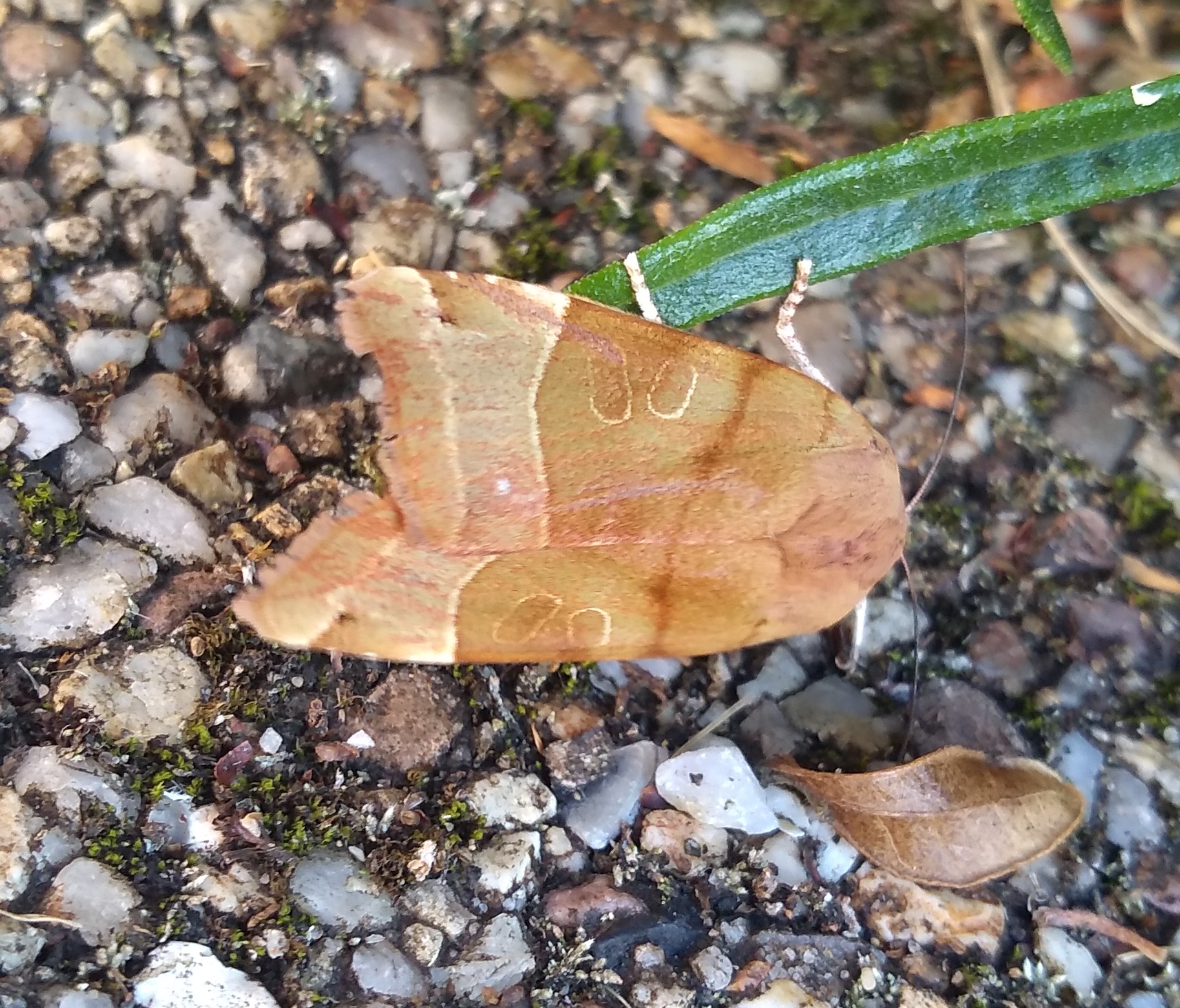
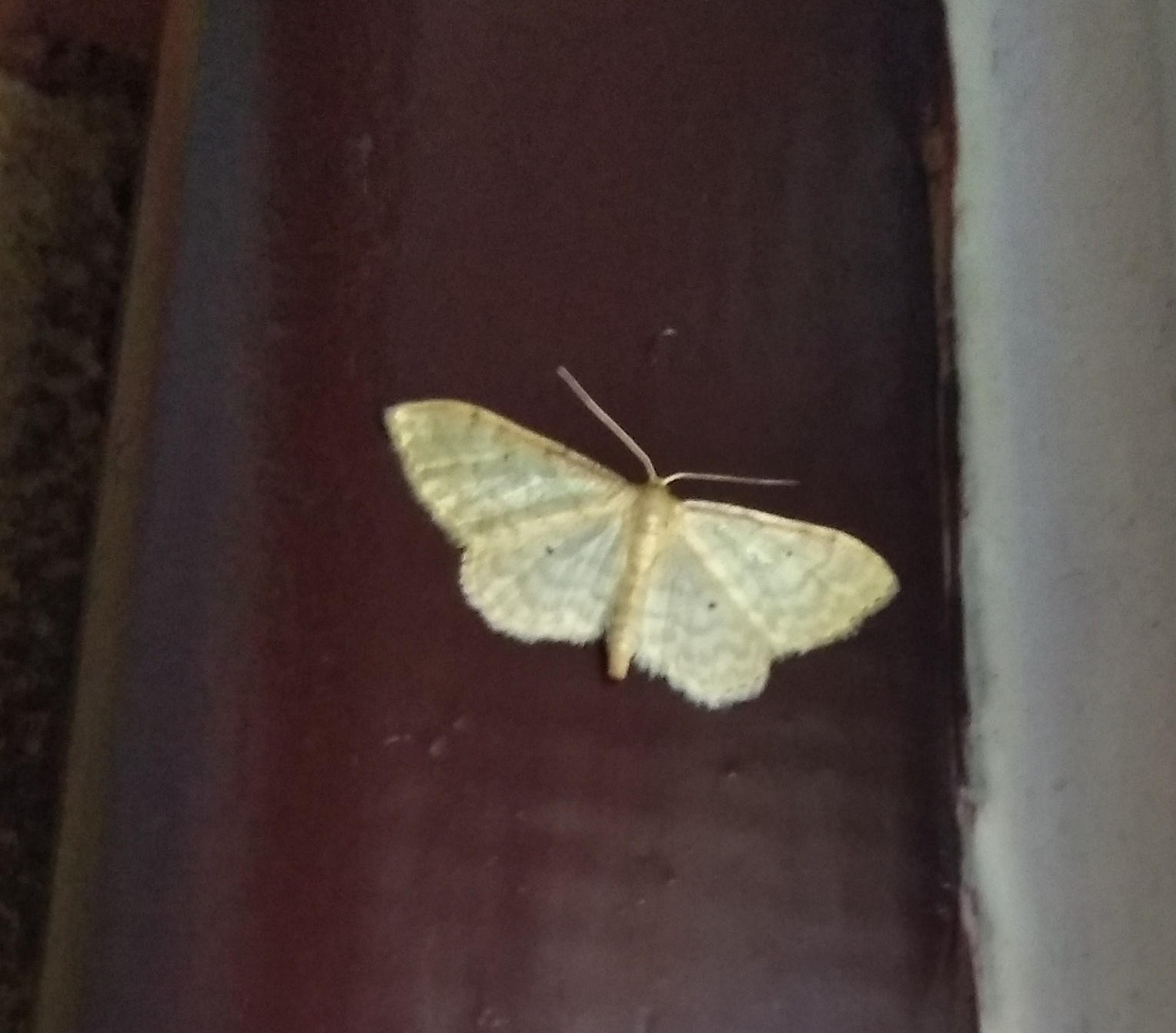
– A couple of Double-striped Pug (Gymnoscelis rufifasciata) moths

– Broad-bordered yellow Underwing (Noctua fimbriata) moth

– Least Carpet (Idaea rusticata) moth

– Plain Wave (Idaea straminata) moth

– Two Large yellow underwing (Noctua pronuba) moths

– Along with several that were photo shy including a White Plume (Pterophorus pentadactyla) moth and a couple of Large white (Pieris brassicae) butterflies, three female and one male Meadow brown (Maniola jurtina) butterflies, a Comma (Polygonia c-album) butterfly near a patch of nettles (which are great food for their caterpillars) as well as two Large tortoisehell (Nymphalis polychloros) butterflies. Other butterflies I saw were,

– A Ringlet (Aphantopus hyperantus) butterfly

– Small tortoisehell (Aglais urticae) butterfly on Verbena bonariensis

– Red admiral (Vanessa atalanta) butterfly on wall by Climbing Hydrangea (Hydrangea anomala subsp. petiolaris)

These weren’t the only insects I noticed throughout the past week as I also saw,

– Two immature male Large red damselflies (Pyrrhosoma nymphula)

– Two Azure damselflies (Coenagrion puella) on Water lily (Nymphaeaceae)

– One Harlequin ladybird (Harmonia axyridis) on a Red valerian (Centranthus ruber) leaf.

– Honey bees (Apis mellifera) on an Eryngium bourgatii

-Lots of Honey bees and hoverflies (Syrphidae) on lavender (Lavandula) which is in full bloom.

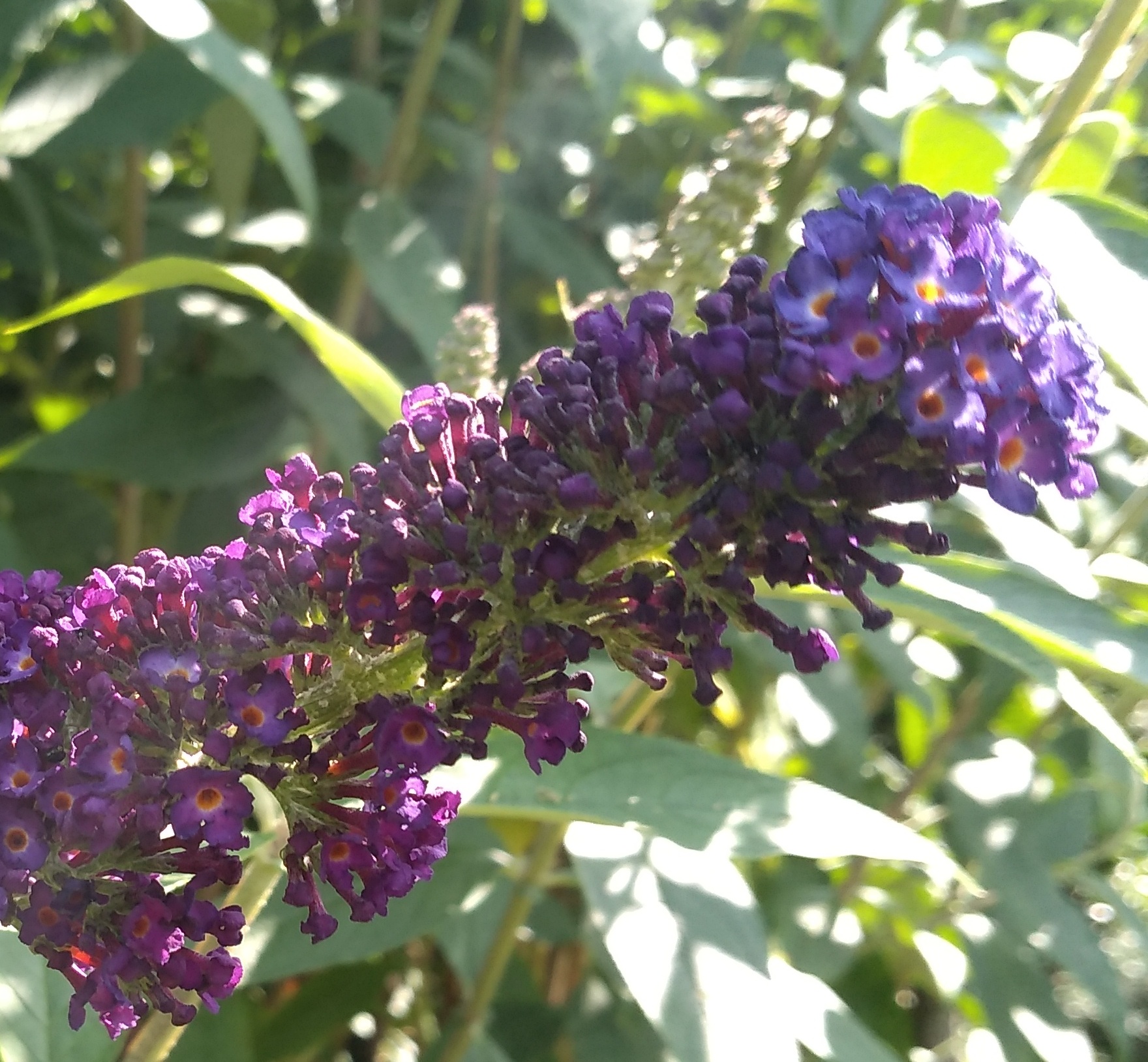
I am keeping my eye on a large mature Butterfly bush Buddleja davidii ‘Black Knight’ that is starting to flower. A few years ago I took some cuttings from this Buddleja and successfully grew one of my own. My Buddleja is only about a foot tall but it will be flowering soon. I look forward to seeing visitors arrive on both shrubs.

Lastly I couldn’t resist adding a few photos of some Cornflower (Centaurea cyanus) someone had planted in their vegetable patch. While I didn’t see any insects visiting it my attention was drawn to the cheery vivid blue flowers, they were so beautiful.