Posted in nature

Springing Forward

Spring is in full swing now. The Spring equinox has passed, clocks have been changed to welcome in British summer time, april showers often appear (and disappear just as quickly) and the Bluebell (Hyacinthoides non-scripta) season has begun. It has been a while since my last post and a lot has happened since then.
Back in early march, I noticed lots of frogspawn appear, they have since developed into tadpoles and some now resemble small versions of the adults. Male Smooth newts (also called Common newts- Lissotriton vulgaris) were undertaking courtship displays, swishing their tails to waft pheromones towards the females. The video below shows this courtship display; I managed to capture it back on the 7th of march.


Newt eggs are laid individually wrapped in the foliage of aquatic plants and therefore not as obvious as frogspawn. I haven’t noticed any Efts (young newts) yet though but hopefully I will soon.

Hawthorn (Crataegus) blossom has replaced those of Blackthorn (Prunus spinosa) now. Plus alongside the flowering Bluebells, many more spring flowers are currently blooming including, Cuckoo flower (Cardamine pratensis), Lesser stitchwort (Stellaria graminea) and Cow parsley (Anthriscus sylvestris).

Butterflies are more noticeable these days. Recently I have seen Holly blue (Celastrina argiolus), Speckled wood (Pararge aegeria) and Small tortoiseshell (Aglais urticae) butterflies, as well as plenty more Brimstone (Gonepteryx rhamni).

More bee species have emerged over the past month; even the Leafcutter (Megachilidae) bees from the bee hotel on the allotment. Together with Red tailed bumblebees (Bombus lapidarius), Buff tailed bumblebees (Bombus terrestris), a Common carder bumblebee (Bombus pascuorum), and an Ashy mining bee (Andrena cineraria) I also noticed a Tawny Mining Bee (Andrena fulva)- The latter (shown below) was seen carefully exiting a hole on the side of the Wrekin.

I visited the Wrekin in Shropshire last weekend. A woodland surrounds the base of the hill which is quite a contrast from the more open areas at the top. Here Wood sorrel (Oxalis acetosella), an ancient forest indicator, could be seen blooming alongside ferns and moss. It was lovely to see patches of bluebells while listening to water trickling down the hillside (from the previous nights downpour).

Wood sorrel


At the summit of the igneous bedrock, Common heather (Calluna vulgaris) and Bilberry (Vaccinium myrtillus) are seen growing. Both plants grow on nutrient poor acidic soil. The Bilberries (also called Whinberry or Wimberry in Shropshire) were flowering but the edible fruit will be ripe in the summer.

Bilberry shrubs in flower.


It was also wonderful to see a couple of Buzzards (Buteo buteo) soaring and hovering around, ignoring us humans that had completed the ascent.

Lastly, since the Spring equinox, I have been watching the Peregrine falcons (Falco peregrinus) at St Albans cathedral on the live webcam here. Once again the pair have three eggs, the same as last year. Currently we are all waiting to see if they all successfully hatch and fledge. It is far more entertaining than any tv drama.

Posted in Allotment, nature

Hibernation time

There was a definite change in the air last week. Autumn colours have really begun to show themselves with leaves falling in greater numbers now too. Storms have been hitting areas of the UK as well, bringing increased rainfall throughout the country. On one wet day a few weeks ago, I caught a Jay (Garrulus glandarius) foraging nearby as I worked.

I remained as silent and still as possible; thankfully it was unperturbed by my presence as it searched for seeds and insects beneath the birch.

Halloween, Bonfire night and Diwali have passed and Christmas lights are already being switched on which seems strange when the weather remains quite mild. While there have been a couple of frosts recently, I can’t help but wonder if we will get a repeat of last year when the cold weather abruptly arrived and affected plants that were continuing to grow (not yet acclimatised to the changing season). Unnervingly, strawberries and raspberries have still been ripening up until a few weeks ago (not something I have encountered in October before). However, small changes are occurring slowly. While grass is still growing, the rate has slowed and overall growth on the allotment and in gardens has reduced too (plus the vegetable beds have been covered for winter).

At this time when accepting hibernation feels easy, it’s possible to observe the small things in nature that can bring joy; Observing sunrises and sunsets, seeing the stars and tree silhouettes, the crisp sunny days and Robins becoming bolder.

While cutting back some perennials I witnessed a Leopard slug (Limax maximus) laying eggs; seeing this was a first for me and made me so happy.

They can produce between 50- 130 eggs under cover which can overwinter if protected. I made sure I covered them up again after accidentally disturbing them. The common name for this slug is due to the wonderful pattern on its skin. These common slugs prefer to eat decaying material and fungi, along with other slugs, rather than living plant matter, so they are beneficial in gardens; adding nutrients into soil. They can live for three years and grow up to 150mm (in fact they are the largest slug in the UK- hence the latin name).

Another find that brought me joy was finding a Belemnite (Belemnitida) amongst some driveway gravel- shown below on my nature tray.

Often found amongst gravel, they are fossils of a marine mollusc resembling squid and cuttlefish in oceans today; Creatures which lived in the Jurassic and Cretaceous period of earth’s history, at the same time as dinosaurs. A diagram of them an be found at British Geological Survey.

Posted in Allotment, nature

What’s up Buttercup?

With May finally here, spring is now in full swing. Lots of things are growing on the allotment from seedlings to fruit, even the Rhubarb is almost ready to pick.

During a woodland walk, on the Easter weekend, I observed the first Speckled wood (Pararge aegeria) butterfly of the year. Plus local ornamental Cherry trees (Prunus) began their spectacular show at the same time; later joined by the flowers of the Hawthorn (Crataegus) , Rowan (Sorbus) and Horse chestnut (Aesculus hippocastanum).

Over the last few weeks, more wildflowers have started to bloom, including Buttercups (Ranunculus), Stitchwort (Stellaria), Ground-ivy (Glechoma hederacea) Honesty (Lunaria annua) and Hedge garlic (Alliaria petiolata) along with Cuckoo flower (Cardamine pratensis).

Ground-ivy
Cuckoo flower

Another butterfly that began to emerge recently is the Orange-tip (Anthocharis cardamines). Hedge garlic and Cuckoo flower are important food sources for Orange-tip caterpillars, so it is lovely to think these butterflies will be laying eggs on the plants I’ve noticed to ensure future generations; the verge not being mown, allowing both plants to develop, enabling this.

The ‘No mow May’ campaign is back this year. Encouraging us to avoid mowing lawns in order to encourage a wide variety of wildflowers to bloom (including rare ones), thus increasing the availability of pollen and nectar for pollinators as they start to emerge (along with helping butterfly populations, as discussed above). After several years of this campaign together with the every flower counts survey, improvements in wildflower growth have been recorded, as people report their sightings taken at this time.
An article from the Plantlife charity discusses their findings in more detail here.

Even leaving the humblest of flowers to flower on lawns, like Dandelions (Taraxacum), Daisies (Bellis perennis) and Buttercups helps.

Posted in nature

Bees in Winter

Honey bees (Apis mellifera) overwinter in hives, huddling round the queen to keep warm, occasionally venturing out on warmer days. Bumblebees (Bombus) on the other hand have an annual lifespan with new queens, having mated during the summer and autumn months, hibernating underground until spring when they can begin a new colony; also sometimes waking up too early on warm days and foraging.

However over the past 10 years, in urban areas of Southern England, a trend has been seen with certain bumblebee species.
Initially Buff-tailed bumblebees (Bombus terrestris), but since then Early bumblebees (Bombus pratorum) and Tree bumblebees (Bombus hypnorum) have begun to nest in winter rather than hibernate. Consequently winter flowering plants such as Mahonia and Winter Heathers (Erica), Winter honeysuckle (Lonicera fragrantissima), Winter aconite (Eranthis hyemalis), Hellebores (Helleborus) and Snowdrops (Galanthus) are garden essentials; enabling these bees to access pollen and nectar during the colder months.

Solitary bees on the other hand will survive throughout winter in burrows or cavities as eggs, with their own supply of nectar and pollen close to hand (as the adults don’t survive winter). These include Mining and Mason bees which emerge early in spring taking advantage of Willow (Salix), Blackthorn (Prunus spinosa) and Hawthorn (Crataegus monogyna) in bloom. Leafcutter and Carder bees emerge later still. The one exception are Furrow bees; like Bumblebees, the female will hibernate during winter and lay eggs in spring.

I have noticed lots of Mahonias blooming over the last few weeks, their bright yellow flowers and perfume is wonderful to experience during dull days. Somehow the colour shines more vividly against grey skies.

Mahonia x media

Another shrub that has been blooming recently is Viburnum farreri, it’s lovely scent wafting through the air too.

Posted in nature

The Birds and the Trees

On the 31st January, I undertook the RSPBs Big Garden bird watch. Most birds, I’d normally see, were clearly hiding but I did notice some within the hour. Those birds I saw were; 1 Carrion crow (Corvus corone), 2 Robins (Erithacus rubecula), 1 Coal tit (Periparus ater), 1 Blackbird (Turdus merula) and 2 Mistle thrush (Turdus viscivorus). I enjoy taking part in this citizen science project each year; it’s interesting to see how the results differ each time.

Due to the frozen ground last week, I was still able to go for my regular exercise in the local woodland park. Various tree species were waking up from their winter sleep. Beech (Fagus) and Oak (Quercus) had started budding while others were developing catkins.

Last years leaves and new buds on a Beech tree.
Old Oak leaves alongside new buds.

As well as the Hazel (Corylus avellana) other trees had catkins hanging from them too. Hazel catkins are the earliest to flower in the year, from January to March (see my previous post A Snowy Adventure).

Then the Alder (Alnus glutinosa) is the next tree to bloom with both male and female catkins. The male catkins are longer than the female ones which flower from February to March. Also hanging from the Alder trees were some small dark brown shapes. These woody cone-like fruit develop from the previous seasons fertilised female catkins; these can remain on the tree (even when the seeds have been shed) well into the following year alongside the newly formed catkins. I also noticed leaf buds growing on the trees last week too. When the buds burst, I shall update the Woodland trust Nature’s calendar with my findings.

Unfortunately I was unable to capture decent photos on location so I collected part of a fallen branch to take home.

One small female catkin above a group of larger male catkins. On the tree (before fertilisation when they develop into the rounder, woody fruit) the female catkins point upwards while the male ones hang down.
A magnified view of two unfertilised female catkins.
A leaf bud with one of last years fertilised female catkins.
A magnified view of the Alder tree seeds that had remained in last seasons female catkin.

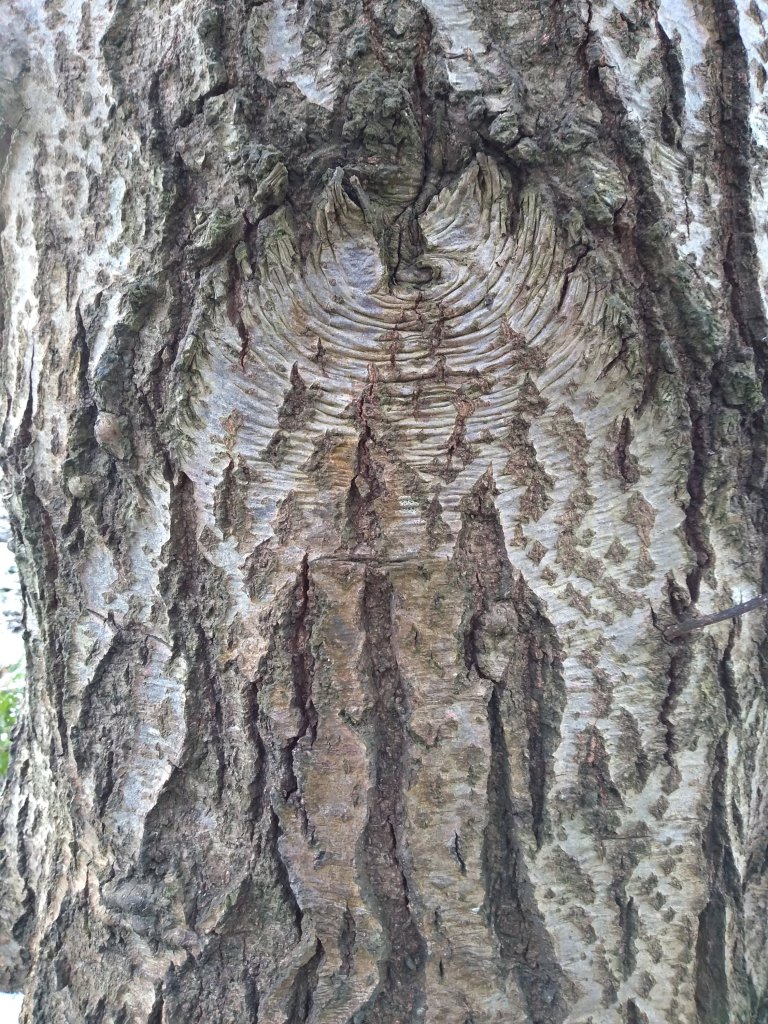
I find Alder trees fascinating and the rough, fissured bark beautiful.

Alder are native to Britain and found on wet land, next to water or in marshes and woodlands. They naturally thrive in moist conditions although can also grow in drier areas such as the edges of mixed woodland. Alder wood is durable when wet and actually becomes stronger rather than rot when submerged in water; a characteristic that makes them useful in flood mitigation, boat building, sluice gates, and even the construction of Venice which is mostly built on Alder piles. Alder wood is also used in the creation of charcoal, gunpowder and making clogs.

The pale wood turns a deep orange colour at the point at which it’s cut (while the rest of the wood remains pale); leading to a superstition, in Ireland, that it was bad luck to walk past an Alder tree on your travels. However, traditionally alder branches were also taken into houses to prevent Woodworm. Alder wood is particularly liked by various species of beetle larvae (collectively referred to as Woodworm). It is hoped that the beetles will lay eggs in the Alder rather than the furniture or fixtures; the branches once infested can then be removed.

There is also a traditional use for Alder flowers as a green dye; believed to be used as camouflage by outlaws like Robin hood and fairies.

For fun, I looked up Alder wands used in the Harry potter series. Only one is mentioned, that owned by Quirinus Quirrell. The wands qualities are described on the Wizarding world website.

The roots of Alder are nitrogen fixers. Nitrogen from the air is fixed into the soil, replenishing the levels and aiding soil fertility, through the bacterium Frankia alni.

As well as improving soil, Alder are great for wildlife too. The seeds are eaten by Redpoll (Acanthis flammea), Siskin (Spinus spinus) and Goldfinch (Carduelis carduelis). The leaves are food for the caterpillars of the Alder kitten (Furcula bicuspis), Pebble hook-tip (Drepana falcataria), Autumn green carpet (Chloroclysta miata) and Blue-bordered carpet (Plemyria rubiginata) moths. Bees visit the catkins for an early source of nectar plus Alders provide habitats for the Checkered skipper (Carterocephalus palaemon) butterfly, Small pearl-bordered fritillary (Boloria selene) butterfly, some species of Crane fly, Otters (which create nests amongst the roots) along with mosses, lichens and fungi that like damp conditions.

However, these trees are also threatened through infection by the Phytophthora fungus (together with some other broadleaf tree species). In Alder this disease is referred to as Alder dieback and eventually causes the death of any infected tree. For more information see the Forest research website. There aren’t many Alders in my local woodland park compared to other tree species so it would be sad to see them disappear. Given my newly acquired knowledge I will keep a special lookout for any ill health in these trees; thankfully no infection is being exhibited at the moment.

Posted in nature

The Very Hungry Caterpillar

The weather at the beginning of last week started nicely. Early on a sunny Monday morning I spotted seven Large white (Pieris brassicae) butterfly caterpillars on a Nasturtium (Tropaeolum) plant.
Used as a companion plant near brassicas this plant has been sacrificed to prevent the butterfly eggs being laid on the cabbages.

Unknown to me at the time, I also photographed some caterpillar faeces as well as an undeveloped egg on the leaf. I don’t remember the loved childhood picture book, The Very Hungry Caterpillar mention poo (although I’m sure children would have loved that addition to the story).

As with elsewhere in the country, the weather continued to be unsettled throughout the week. Tuesday was mostly overcast but the bees were still out foraging. As the lavender (Lavandula) was over lots of Honeybees (Apis mellifera) started visiting the Echinops bannaticus.

Later the same day I managed to see another Male Gatekeeper (Pyronia tithonus) butterfly too, this time visiting a Geranium.

Plus on Thursday I noticed a Holly blue (Celastrina argiolus) butterfly on some Verbena bonariensis. I haven’t seen Holly blue butterflies since spring, so that was nice.

Unfortunately on Wednesday I managed to disturb a Silver Y (Autographa gamma) moth.

Although this isn’t a great photo, it is clear enough to be able to identify the moth. I managed to identify it because of the shape and light colouring along with the unbroken y shaped silver marking on each forewing. This moth is a migrant, visiting from the continent. It can be seen here with the wings vibrating to warm up it’s flight muscles before flying off.

The week ended with a visit to the Royal Botanical Gardens, Kew on Saturday. There were some insects braving the stronger winds and the afternoon rain.

Amongst the Wildflower meadow surrounding The Hive experience the flowers still blooming were; Red Campion (Silene dioica), Red clover (Trifolium pratense), Ragwort (Senecio jacobaea), Yellow toadflax (Linaria vulgaris), Creeping buttercup (Ranunculus repens), Yarrow (Achillea millefolium), Flatweed (Hypochaeris radicata) and Wild marjoram (Origanum vulgare).

Yarrow and Yellow toadflax along the path.

A Volucella inanis Hoverfly visiting the Wild marjoram.

In the Agius Evolution Garden there were lots of bees visiting the Salvias as well as a Buff-tailed bumblebee (Bombus terrestris) on a hollyhock (Alcea)

and a Honey bee (Apis mellifera) visiting a Wallflower (Erysimum).