Posted in Allotment, nature

March Arrives like a Lion

I’ve slowly started to emerge from hibernation now that Imbolc, the half way point between the Winter solstice and Spring equinox, (meaning ‘In the belly of the mother’- referring to the first stirrings of the years new growth) has passed; mirroring the snowdrops, winter aconites and hazel flowers (the first signs of the transition into the next season).

The scents of Daphne, Mahonia and Sarcococca fill the air alongside the arrival of other spring flowers; daffodils, cyclamen, crocus and hellebores. Willow (Salix) catkins are also opening while Blackthorn (Prunus spinosa) blossoms fill the roadsides with glorious white clouds.

Although it has still been too early for most allotment activities, the rhubarb has been emerging on the plot for the last month. I still haven’t cut back perennials as I want to allow cover for beneficial insects such as sheltering ladybirds (Coccinellidae) until the weather makes their survival easier. Instead February is mainly a month for planning the forthcoming years growing (thinking about chitting potatoes and planning seed sowing). One job I have begun however is the indoor Sweet pea and Chilli seed sowing. This small step gives me hope that I will soon be able to sow other seeds soon.

Although I am beginning to think ahead, I am still fondly holding on to snuggly sofa moments such as reading and partaking in arts and crafts, especially on wet days.

Through the winter I still immersed myself in nature. In January I pruned my apple tree on the allotment, blessing and giving thanks through Wassailing. Although symbolic, it was a nice way to feel deeply connected to the plot. I am grateful to be a guardian over it and receive the abundance of fruit, veg and flowers in return.

I saw quite a few foxes (Vulpes vulpes) over the winter too, including one on the allotment. It was such a beautiful moment to watch it foraging under trees.

Once again, I took part in the RSPB Big Garden Bird Watch in January. The list of birds I saw this time were;
4 Long-tailed tits (Aegithalos caudatus)
5 Starlings (Sturnus vulgaris)
1 Blackbird (Turdus merula)
3 Wood pigeons (Columba palumbus)
5 Sparrows (Passer domesticus)
2 Blue tits (Cyanistes caeruleus)
1 Greenfinch (Chloris chloris)
1 Great tit (Parus major)
6 Magpies (Pica pica)
1 Gull (Larinae) and
1 Red kite (Milvus milvus)

There is a small group of Ring-necked Parakeet (Psittacula krameri) that visit a nearby tree of late but frustratingly they didn’t show up during the observation hour.

During February, bird song continued to fill the skies, growing in frequency and volume. Also occasionally insects have boldly buzzed and fluttered about on the odd sunny days. Butterflies I noticed were a Brimstone (Gonepteryx rhamni) and Peacock (Aglais io); the latter I saved from an abandoned spider web.
I have also seen bees visiting mahonia, crocuses and hellebores, especially queen bumblebees.

Last week, I was excited to find some Jelly ear fungus (Auricularia auricula-judae) for the first time. They were growing on a Buddleia bush. Although this fungus is usually associated with elder (Sambucus) it can also be found on other hard woods like sycamore (Acer pseudoplatanus), ash (Fraxinus) and beech (Fagus) in damp shady conditions. Perhaps the fungus was thriving on the Buddleia, in the garden I visited, because of the recent weather as well as it being planted near a beech hedge.  Interestingly this fungus can continue to grow on dying wood that has been thawed, once frozen; hence it can survive really cold winters. The common name was given to this fungi because of how it looks and also its jelly-like texture.


Worryingly, it has been a very mild winter overall with lots of flooding occurring in Britain; certainly very different from last winter. So far the wet weather is continuing into March; hopefully the month will exit like a lamb and the roaring weather won’t continue too much in spring, as it will have an affect pollinators. We will have to see what the rest of 2024 has in store.

Posted in nature

Reawakening

There have been really cold moments this January, with temperatures barely reaching positive numbers here in the UK and some areas experiencing more snow; however nature has started to emerge once again.

On a walk a few weeks ago, I noticed Blackthorn (Prunus spinosa) buds ready to burst open and the tiny red female Hazel (Corylus avellana) flowers open alongside male catkins.

Blackthorn buds
Hazel flower and catkins

Cyclamen and Snowdrops (Galanthus) are also blooming now and even Daffodils (Narcissus) and Crocus are beginning to push through the now defrosted ground.

Last weekend was the annual RSPB’s Big Garden Birdwatch. My results this year were;
3 Wood pigeon (Columba palumbus)
5 Starlings (Sturnus vulgaris)
2 Blackbirds (Turdus merula)- 1 female and 1 male
2 Great tits (Parus major)
1 Magpie (Pica pica)
1 Robin (Erithacus rubecula)
3 Bluetits (Cyanistes caeruleus)
2 House sparrows (Passer domesticus)- 1 male and 1 female
2 Goldfinch (Carduelis carduelis) along with
2 Carrion crows (Corvus corone)

It’s hard to believe it’s now February. As usual during January I slowed and hunkered down, reflecting nature at this time. Yet the wild flowers are beginning to stir and birds pairing up. It isn’t long before spring arrives and I am already starting to plan what I shall grow on the allotment this year.

Posted in nature

Patience is a Virtue

February has a duality to it; on one hand plants have begun to bloom (bringing the excitement of Spring around the corner) while on the other, the weather reminds us that it’s still Winter and we must be patient for a little longer. Last week three storms arrived, including Eunice with high strength winds leading to rare red weather warnings for wind and floods in the Bristol channel area and South East (with the after effects still being experienced in other areas of the UK). Bad weather usually arrives in February, in fact last year we had snow.

However, while nature continues at its own pace, Spring activities still occur earlier as decades pass. I read an article by Miranda Bryant in the Guardian recently regarding indicators of Spring, flowering and bird activities, occuring earlier since 1987. Pre 1987 plants flowered a month later than they did between that year and 2019 (In fact this was particularly evident in 2019 and yet again in 2020). The Woodland Trust’s Natures calender also shows this trend. The article can be accessed in the following link- The Guardian .

It is too early to notice any indication of patterns in this blog yet, although one thing I have witnessed this year, not seen before are daisies appearing in lawns already.

Other cultivated plants that have begun to bloom in gardens, as usual at this time of year are:

Helleborus
Anemone blanda
Pulmonaria
Cyclamen and
Iris reticulata
Posted in nature

Garden Gems

For the last couple of weeks conkers and sweet chestnuts have begun to fall, there isn’t a big harvest, neither are there lots of acorns or beech masts. However 2020 was a mast year (where trees produce bumper crops) so reduced harvests this time isn’t too surprising; Mast years only happen every five to ten years. However the low numbers could also be due to this years cold damp spring impacting bud development and fertilization, especially with wind pollinated trees. This issue is discussed further in an article by the Woodland Trust see Nature’s Calendar.

It has been lovely to notice Boston ivy (Parthenocissus tricuspidata), along with Virginia creeper (Parthenocissus quinquefolia) develop their bright red autumnal colour. They are so vibrant in the low autumn sunshine. I’ve also noticed the small beginnings of autumn leaf colour in many trees too.

Boston ivy growing up a wall of an old building.
Virginia creeper winding its way through some shrubs.

Now that October has arrived, Cyclamen (Cyclamen hederifolium) and Crocuses (Crocus speciosus) have sprung up alongside Fungi in a few lawns. I noticed a waxcap commonly called the Witches hat (Hygrocybe conica) as well as Lilac fibrecaps (Inocybe geophylla var. lilacina); both resembling Gemstones standing out amongst the grass.

Witches hat waxcaps are so called because they look like witches hats when they blacken with age.
A Lilac fibrecap

I also saw another fungi in one lawn, possibly a Blusher (Amanita rubescens), although the identification was difficult so I’m not entirely sure.

A Blusher?

Plantlife run Waxcap watch from the 13th September. The charity want to discover previously unknown waxcap grassland sites, uncover habitat conditions and give better protection for them in the future. More information about this survey can be found here

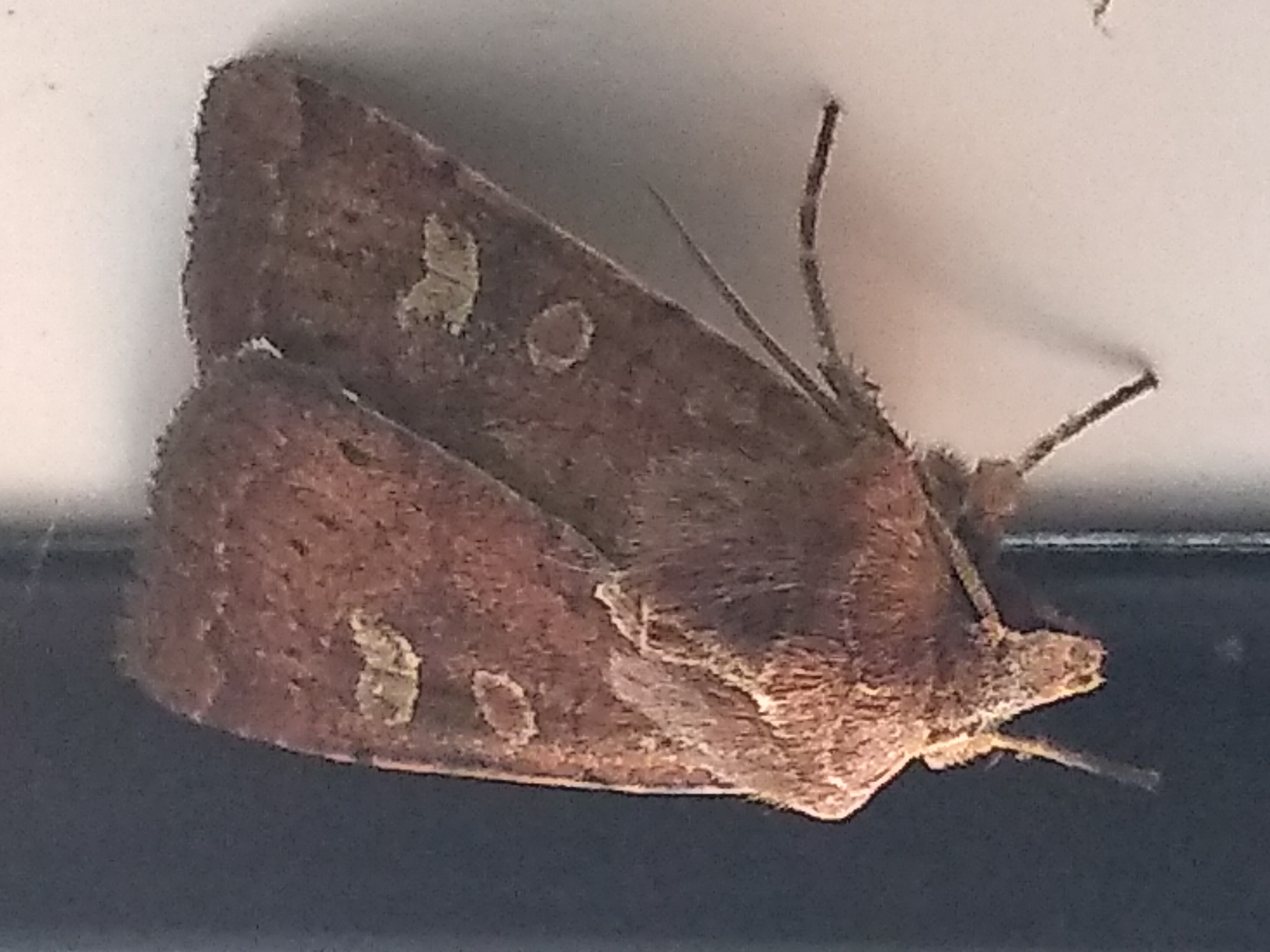
Something else I observed while weeding a gravel path at work was a Lunar underwing moth (Omphaloscelis lunosa).

This night flying noth had been hiding under some dandelion leaves.

Lunar underwing moths fly between August and October and their pupae overwinter in long grass which they will feed on when they become caterpillars. I managed to re-home this one under a nearby shrub.

Posted in nature

A Snowy Adventure

The previous Sunday brought a little light relief as snow covered most of the UK. My childhood excitement of seeing the snow returned, so the days exercise was a walk through the local woodland park.

As I wondered past trees I began to notice odd glimpses of colour amongst the white and greys. Upon closer inspection I could see catkins already dangling along with female flowers ready to bloom on the Hazel (Corylus avellana) trees.

The male catkins are more showy than the tiny female flowers (which appear at the end of buds and harder to spot).
A very enlarged photo showing the red styles of the female flowers.

I also saw female flowers and cones on several Scots pine (Pinus sylvestris).

A closer view of the female flowers at the end of new shoots.

Surprisingly, given it was still snowing at the time, lots of birds were about too. I saw Redwing (Turdus iliacus), Blue tits (Cyanistes caeruleus), a small group of noisy Long tailed tits (Aegithalos caudatus) as well as a male Chaffinch (Fringilla coelebs) amongst the trees.

Redwings are migratory birds, from Iceland, Scandinavia and even Russia. Named after the red area under the wings, they can be seen in the UK between October and spring.

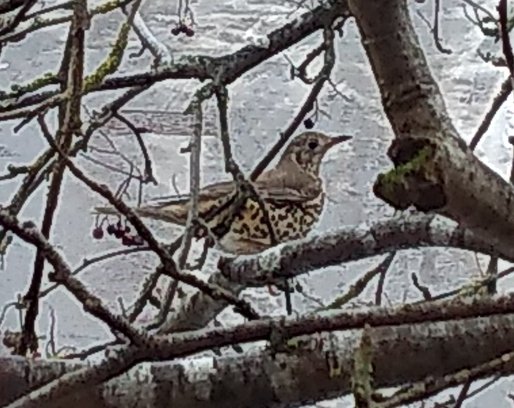
Throughout the week, as the snow slowly disappeared, I saw different birds visiting my Rowan (Sorbus) tree. I had never seen a Mistle thrush (Turdus viscivorus)

or male Chaffinch (Fringilla coelebs) visit the tree before.

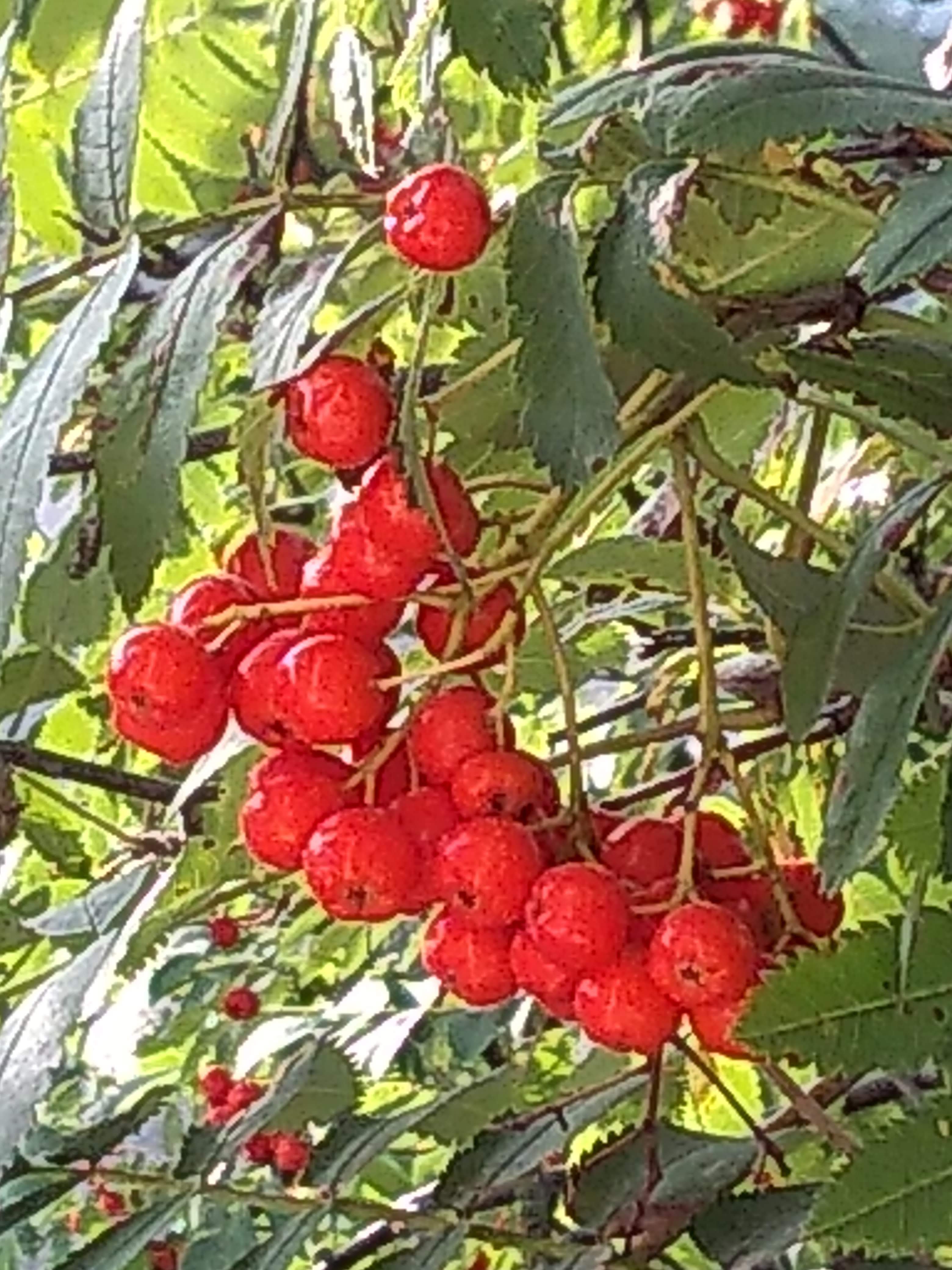
Perhaps the reduced availability of food, during the snowy weather, made them search further afield than usual. Thankfully they found the remaining, mostly dried, berries on the Rowan tree outside my window.

Mistle thrush, so named because of their love of eating mistletoe (and guarding trees where it grows) also visit Rowan and Holly (Ilex) trees for their berries as well as eat worms, slugs and insects. They are larger and duller in colour than Song thrush (Turdus philomelos). Their spots are darker and rounder plus they have white tips to their tails. In fact they are larger than Blackbirds (unlike Song thrushes).

Wonderfully, there were even more flowers blooming in the garden too. I saw

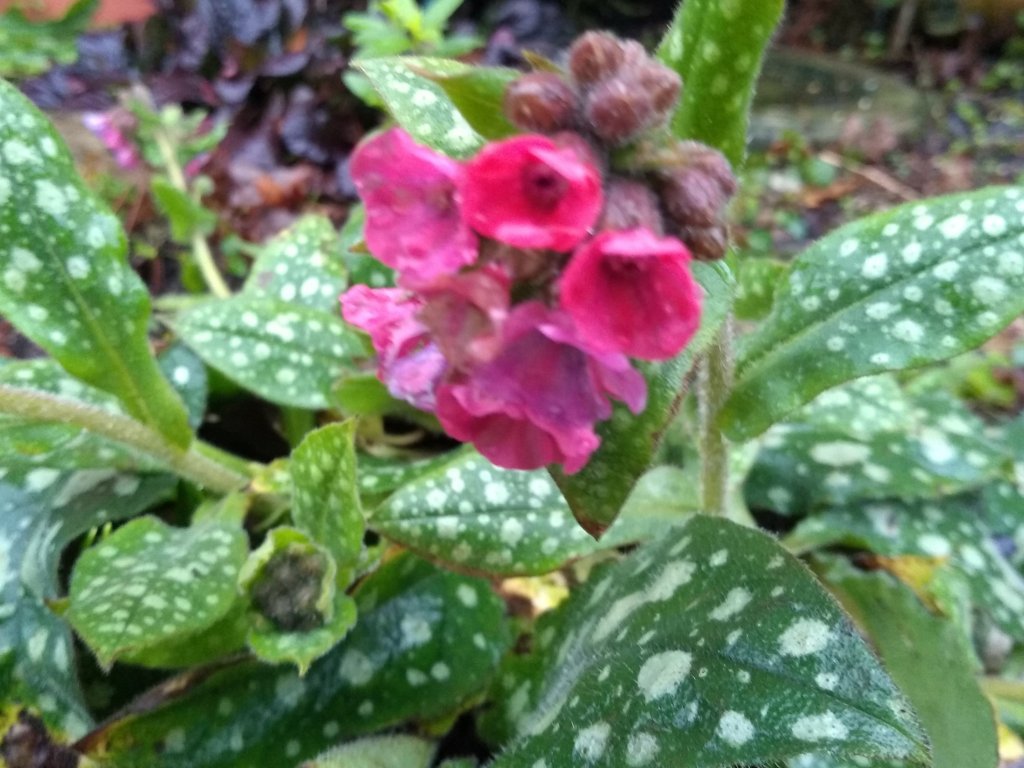
Lungwort (Pulmonaria officinalis),

Crocus and

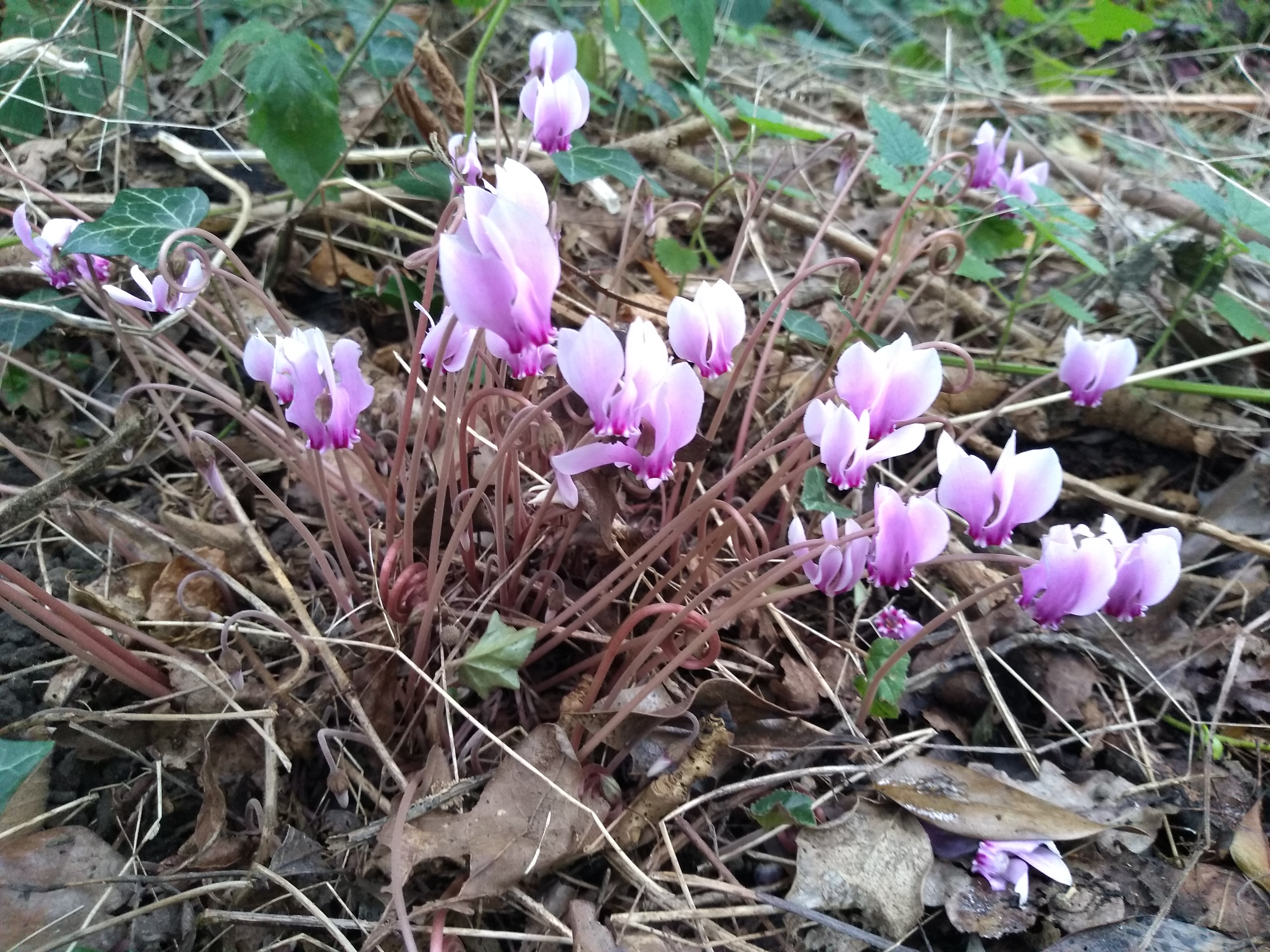
lots of Cyclamen.

Posted in nature

“Here’s Looking at you Kid.”

Bank holiday weekend was roasting, especially Sunday therefore I decided to take it easy so I wouldn’t overheat. Even though I didn’t go out, nature came to me. While looking out of the window I noticed a Red Underwing (Catocala nupta) moth trying to remain in shade on an outside wall. This large moth (6.5-7.5cm wingspan) has predominantly red underwings with black and white markings, hence it’s common name. The food of this moths larvae are
Willow (Salix) and Poplar (Populus) trees.

I also managed to photograph one of this years Blue tit (Cyanistes caeruleus) brood in the Rowan (Sorbus) tree outside. They are definitely looking more like the adults now.

It’s also lovely to see the Rowan is full of ripe berries ready for the Thrushes (Turdus philomelos) and also the Redwings (Turdus iliacus) that I usually see in winter.

Monday was slightly cooler although it was still hotter than I prefer it to be. However armed with suncream, hat and water I visited Ham House and Garden in London. While walking round the grounds, bees, crickets and the occasional Ring-necked parakeet (Psittacula krameri) could be heard.
There was an extensive kitchen garden with cut flower and edible flower areas which I particularly enjoyed viewing.
I saw lots of Honey bees (Apis mellifera) on Globe artichokes (Cynara cardunculus) within the kitchen garden.

There was another lovely sighting as I ate lunch too. Amongst the Wisteria (having a second flush of flowers) as well as some scaffolding was a Wood pigeon (Columba palumbus) sitting on it’s nest. It didn’t move other than to blink as it was no doubt observing us all eating trying to remain undetected.

Upon my return there was a Speckled bush cricket (Leptophyes punctatissima) in the hall to welcome me home. As there was no ovipositor on the end of the abdomen (the appendage from which the female lays eggs) I identified it as male.

Long weekends are lovely but they still pass quickly and Tuesday rolled around again, so I was back to work.
I didn’t notice as many butterflies last week, although bees are still prevalent. During the warmest part of the day, when I was once again wilting, I noticed how active the Honey bees were on the Sedums even though they are only just starting to bloom.

I also observed a Small Dusty Wave (Idaea seriata) moth later that evening. It’s caterpillars feed on herbaceous plants especially Ivy (Hedera helix).

The nice weather of sunshine and low 20s temperature continued to the latter part of the week.

Once again it was Honey bees I mostly noticed on Sedums as well as some visiting

-Rudbeckia laciniata ‘Herbstsonne’.

– and Erigeron karvinskianus.

However there was one plant I noticed that surprised me. In a wooded area a small patch of Cyclamen hederifolium was poking it’s flowers above the leaf litter and Ivy; Yet another sign of late Summer and the beginning of Autumn.

Then just when I thought I wouldn’t get to catch a proper view of a butterfly, I managed to see a Small tortoiseshell (Aglais urticae) on a white Buddleja bush.

Lastly, I saw another moth in the hall, this time however it was a Square-spot Rustic (Xestia xanthographa) moth.