
February is a liminal month, it holds the hope of spring alongside the grip of winter. Just when glimmers of warmer weathers arrival brings dull wet conditions, clear nights followed by cold frosty mornings bite you back to reality in the glimmering sunshine. Even my activities have a duality to them. February is the time when I organize my seeds, sew Sweetpeas and chillies as well as check my houseplants; however I want to continue hibernationing. I find myself quite hopeful in this month and overwhelmed at the same time.
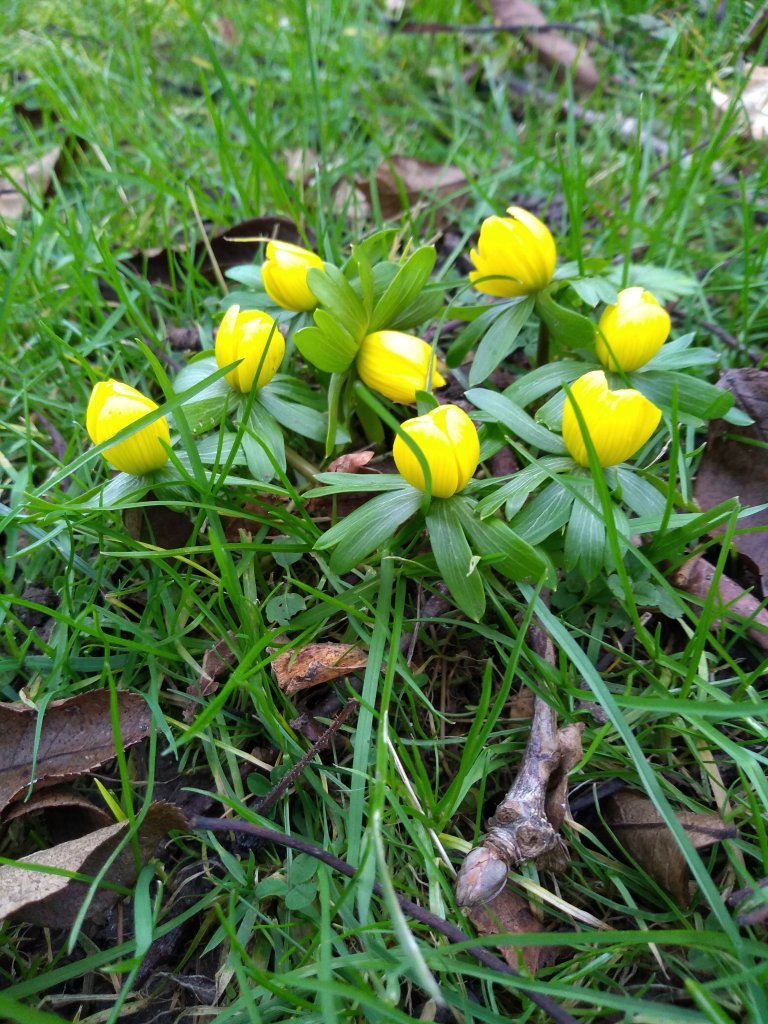
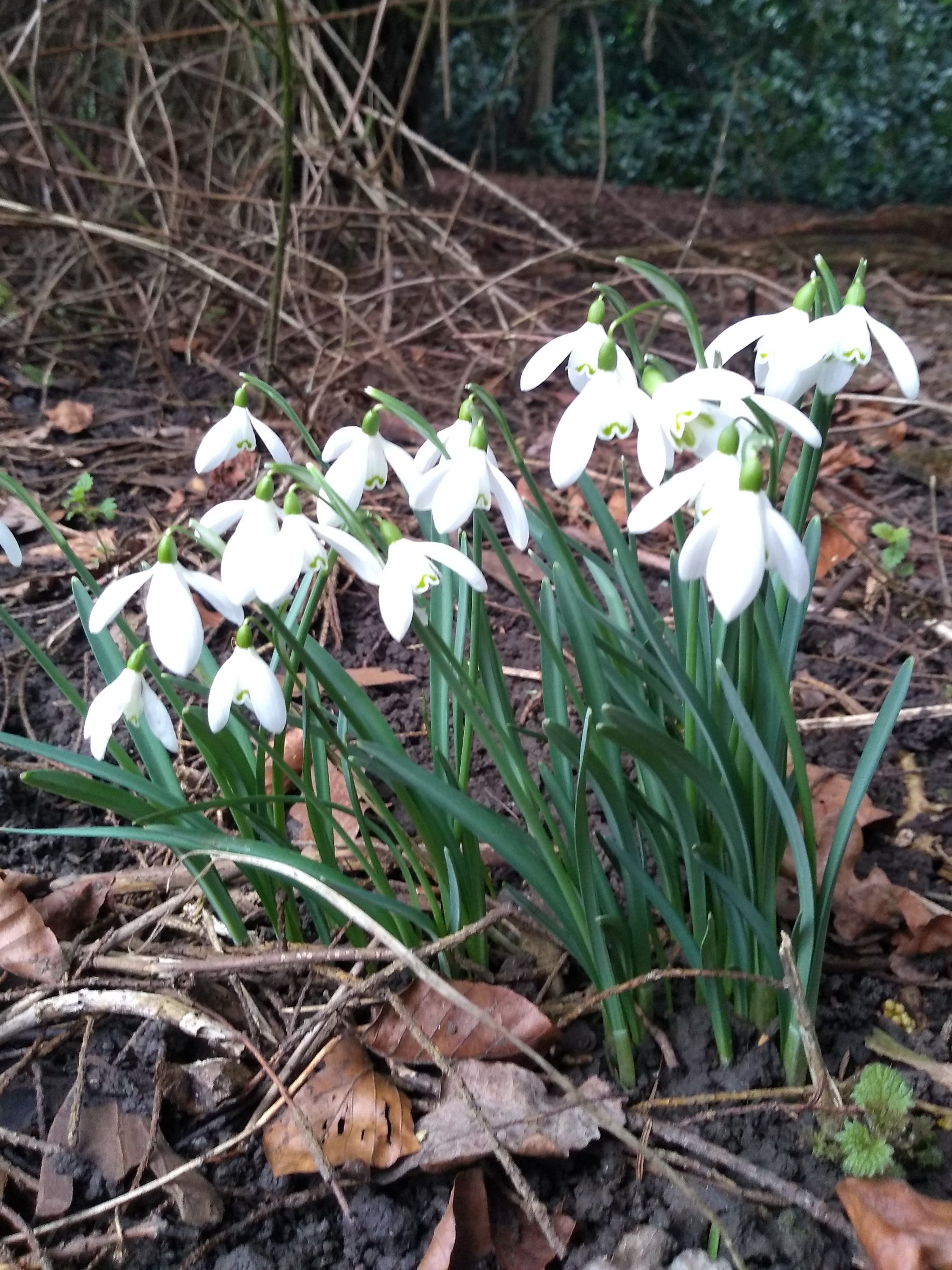
It is always lovely to see the first stirrings of spring, especially the arrival of Snowdrops, (Galanthus) and Winter aconites (Eranthis hyemalis). I often hear foxes (Vulpes vulpes) calling at night at this time too. It’s no coincidence that the celebration of the lands awakening after winter, Imbolc, is on the 1st February. The biggest indicator that spring is on its way are the birds beginning to pair up; boldly singing to alert prospective mates of their whereabouts whilst also holding onto territory. I was fascinated, one rather cold but not frozen day, to see a Robin (Erithacus rubecula) defend a feeder, chasing off a Tree creeper (Certhia familiaris). I have never seen a Tree creeper venture onto a bird feeder before, nor a Robin actually (but I have previously seen the latter fight other birds for resources).
An image of a Tree creeper can be seen on the RSPB website here;
Other birds that have been particularly vocal in recent weeks have been the Mistle thrush (Turdus viscivorus), Great spotted Woodpecker (Dendrocopos major) and Dunnock (Prunella modularis).
The Mistle thrush is one of the UK’s largest songbirds, even larger than the Blackbird (Turdus
merula) with a body length of 27 cms and wingspan of 45 cms. Although similar in looks to the Song thrush (Turdus philomelos), it’s more grey tonally. While this bird is named due to its love of mistletoe (Phoradendron serotinum), it also eats worms, slugs, insects and berries and is found in parks, gardens, farmland and woodland often singing at the top of tall trees. It is not as commonly seen as the Song thrush as its status is Red under the Birds of Conservation Concern 5: the Red List for Birds. It has been a joy to hear the sound of the Mistle thrush as I worked, an example of which can be heard here.
I have also loved hearing a Great spotted Woodpecker (Dendrocopos major). Interestingly it has sung at the top of the same fir tree as the Mistle thrush, albeit at different moments. I also heard it drumming on the trunk of a dead and Oak (Quercus) tree that had a hole in the side, see below. Perhaps that is where the woodpecker lives.

The Great spotted woodpecker call can be heard on the Woodland trust website.
Lastly, in a different garden, I was able to witness a Dunnock (Prunella modularis) singing sweetly, an example of this bird’s song, can be found on the RSPB website here .
At the end of January, once again I took part in the annual RSPB Big garden birdwatch; my results this year were-
1 Carrion crow (Corvus corone)
5 Goldfinch (Carduelis carduelis)
2 Wood pigeon (Columba palumbus)
3 Starlings (Sturnus vulgaris)
2 Magpie (Pica pica)
1 Blackbird (Turdus merula)
2 Great tit (Parus major)
1 Red kite (Milvus milvus)








 Bee in the Moment