Posted in nature

A Little Love on Valentine’s Day

Over the last few weeks I have noticed several bees motionless on the ground. Thankfully they were just resting so each time I carefully moved them to a nectar source. It is so lovely to see them hungrily lap it up, getting covered in pollen as they go. Just shows how important it is to grow late winter flowering plants for bees to visit. Yesterday I found another Buff-tailed Bumblebee in the same predicament. Showing love to that bee made my Valentine’s day. ♥️ 🐝🌸

Posted in nature

Relaxing into Autumn

September is here. While meteorological autumn has already begun (1st) it won’t be long before astronomical autumn arrives (23rd) too.

I love this time of year; for me it’s the time for taking stock and starting new adventures (a feeling probably ingrained from my educational years). I particularly look forward to planning changes in the garden and start making Christmas presents at this point in the year. Plus Autumn is my favourite season, the fresher sunny mornings and the warm leaf colours.

Along with the signs of autumn (including Blackberries, Elderberries and Sloes ripening) I have noticed a change in how the days feel within the past few weeks.
As the school year begins I had a week off to relax after a long hectic summer.

At the start the week I decided to walk round the local woodland park. It was a warm, dry and sunny day on Monday. Once I entered the meadow area I was aware of a loud chorus amongst the uncut grass. Upon closer inspection I discovered the wonderful chirps were being made by lots of Roesel’s bush crickets (Metrioptera roeselii).

The flowers still blooming were; Hawkweed, Red clover (Trifolium pratense), Ragwort (Senecio jacobaea), Yarrow (Achillea millefolium) and Chicory (Cichorium intybus).

Lots of Honey bees (Apis mellifera) and several Small white butterflies (Pieris rapae) were flitting between the flowers especially the Chicory. The blue flowers of the Chicory really stood out in the sunshine.

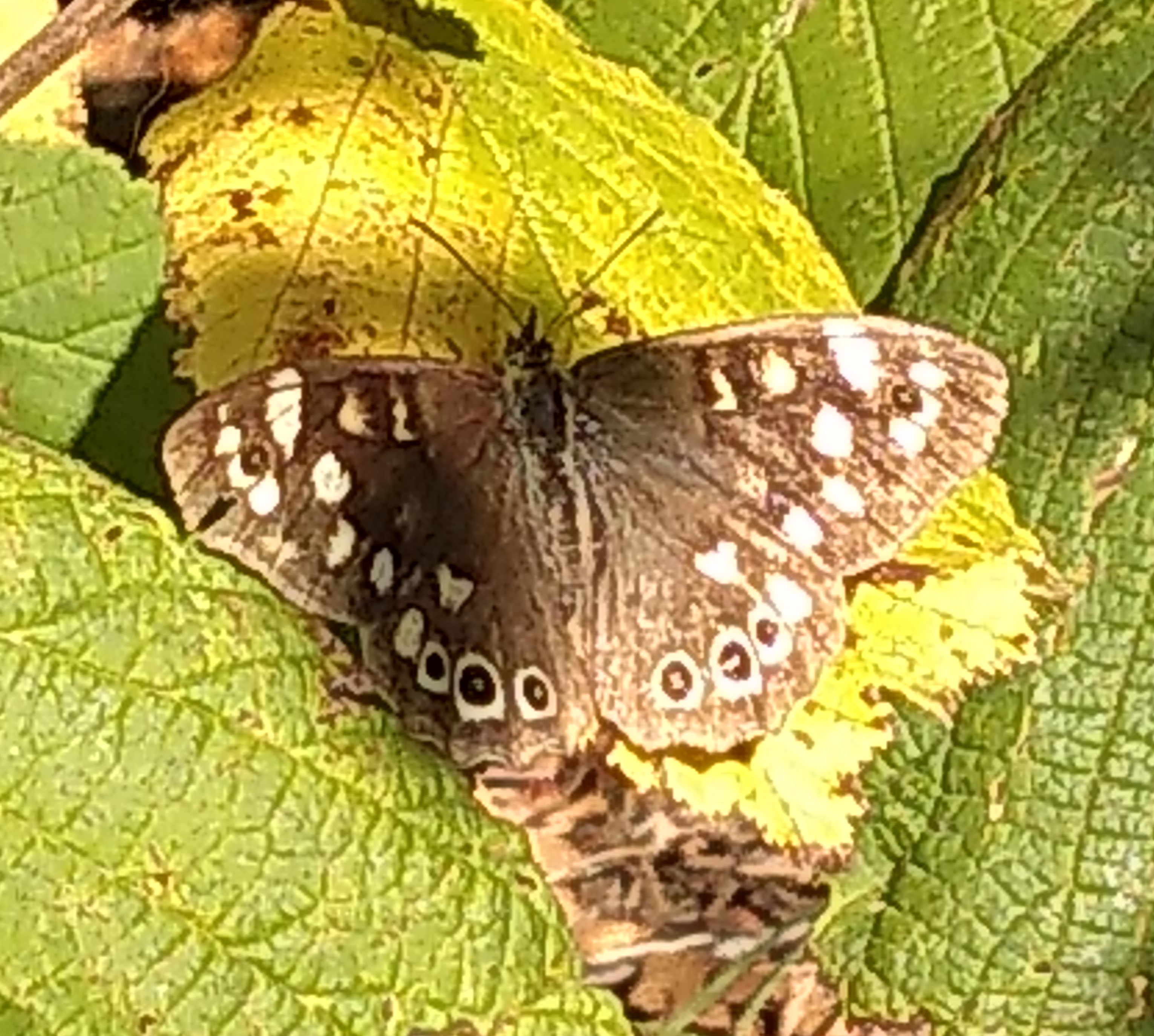
I even got to see a Speckled wood butterfly (Pararge aegeria) resting in the sun on the edge of the wood.
One thing came as a surprise as I wondered through this oasis of calm. It was fantastic to discover a notice about Skylarks (Alauda arvensis) nesting in area.

As they are on the Red list Bird of Conservation Concern it was nice to learn that they have made a home nearby.

Although I didn’t go away on holiday I planned to visit a few places before the weather turned. One place I finally visited was the Chelsea Physic Garden in London. Although it was later in the season there was still lots to see. Initially I looked round the glasshouses within the Tropical Corridor. There were lots of plants from around the world which required extra protection. I am a big fan of cacti so I liked seeing them planted naturally rather than in pots. There were lots of Pelargoniums as well. One whose leaves I particularly enjoyed smelling was Pelargonium ‘Chocolate peppermintwhich reminded me After Eights.
Within the same glasshouse I got so see a Common carder bee (Bombus pascuorum) enjoying the flowers of the Pelargonium quercifolium ‘Royal oak’.

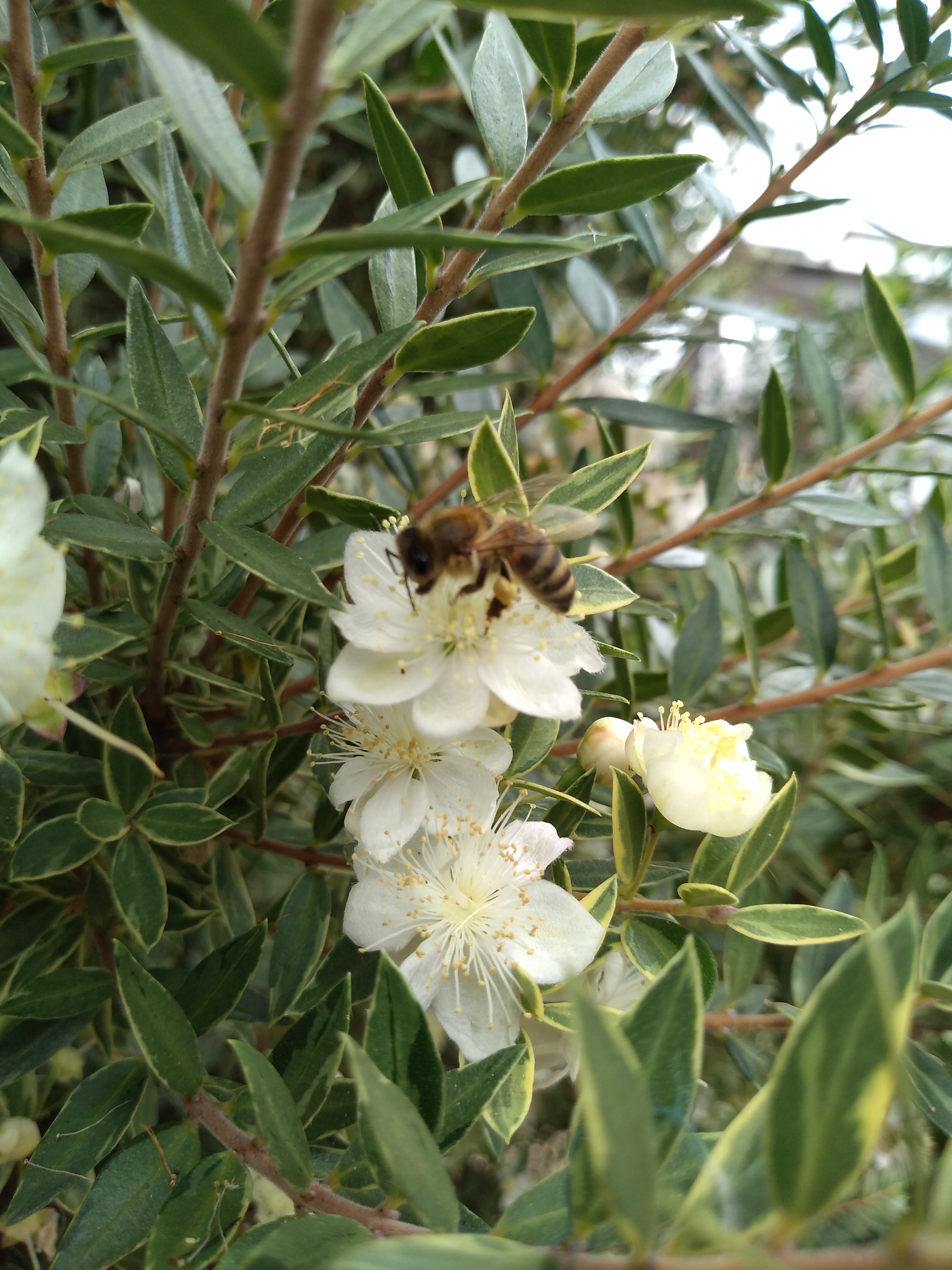
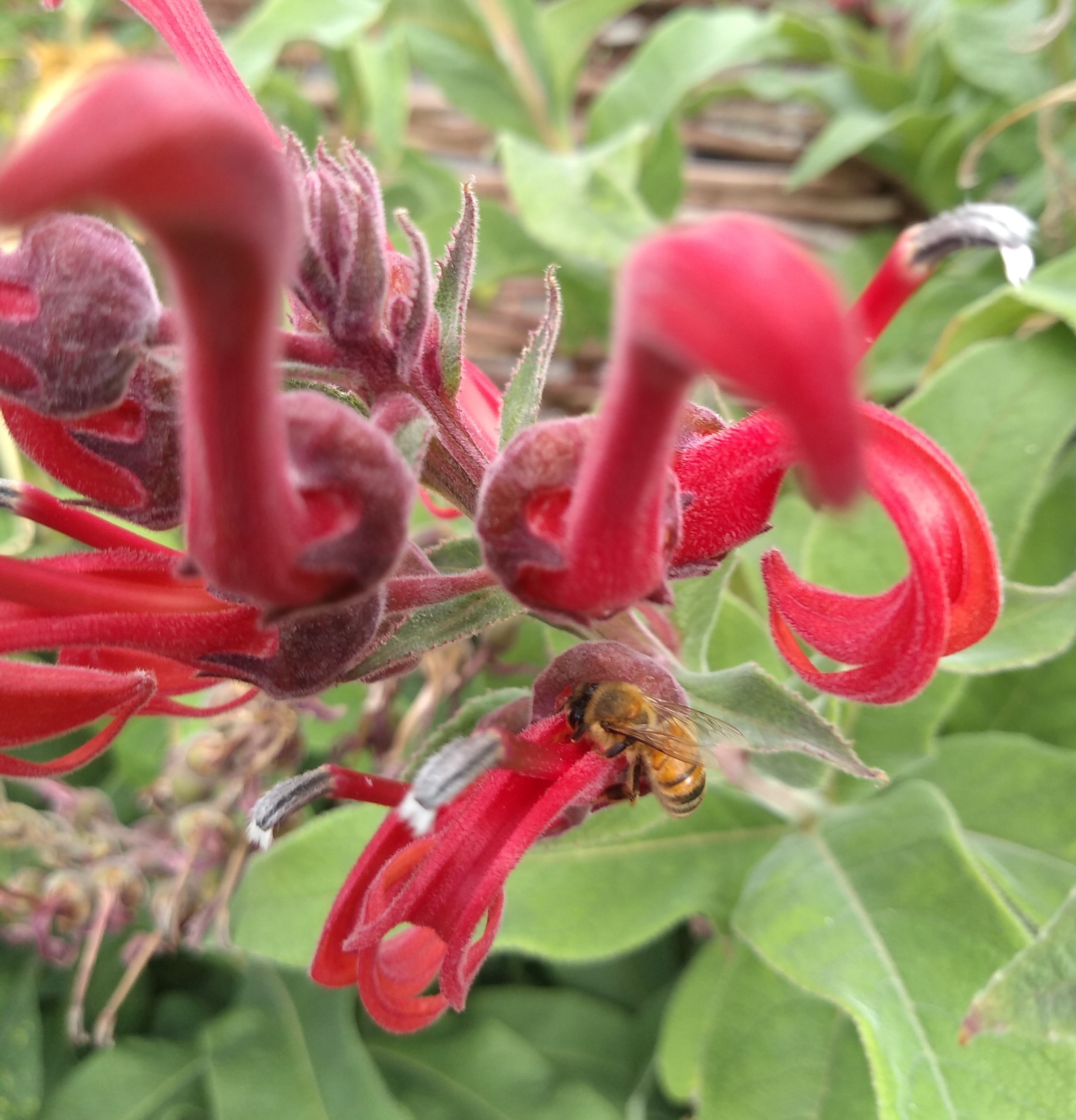
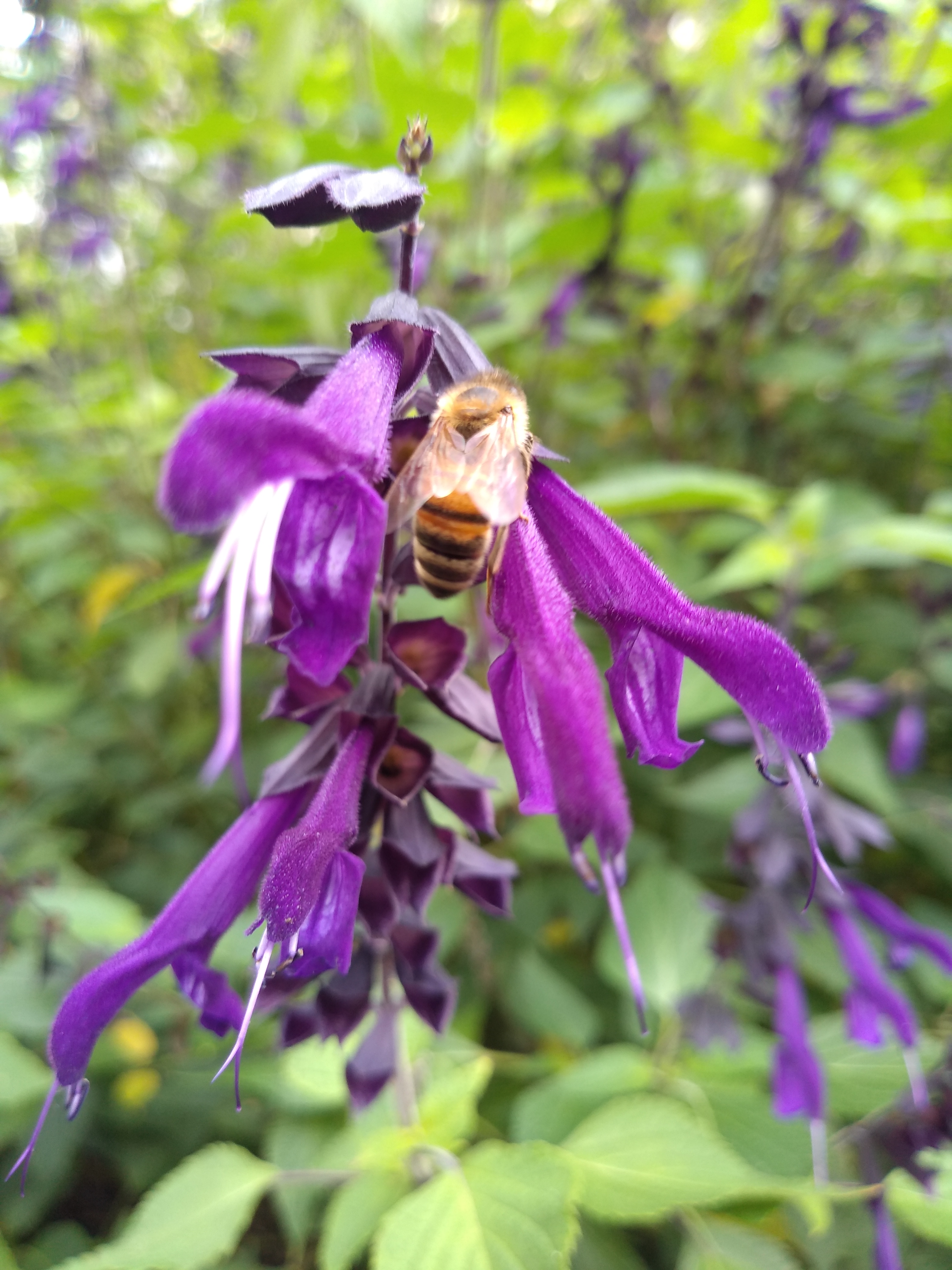
After the glasshouses I walked around the Garden of Medicinal plants. There were Honey bees buzzing around lots of plants in this section. I found them visiting a;
Myrtus communis var. tarentina ‘variegata

Lobelia tupa,

Salvia stachydifolia,

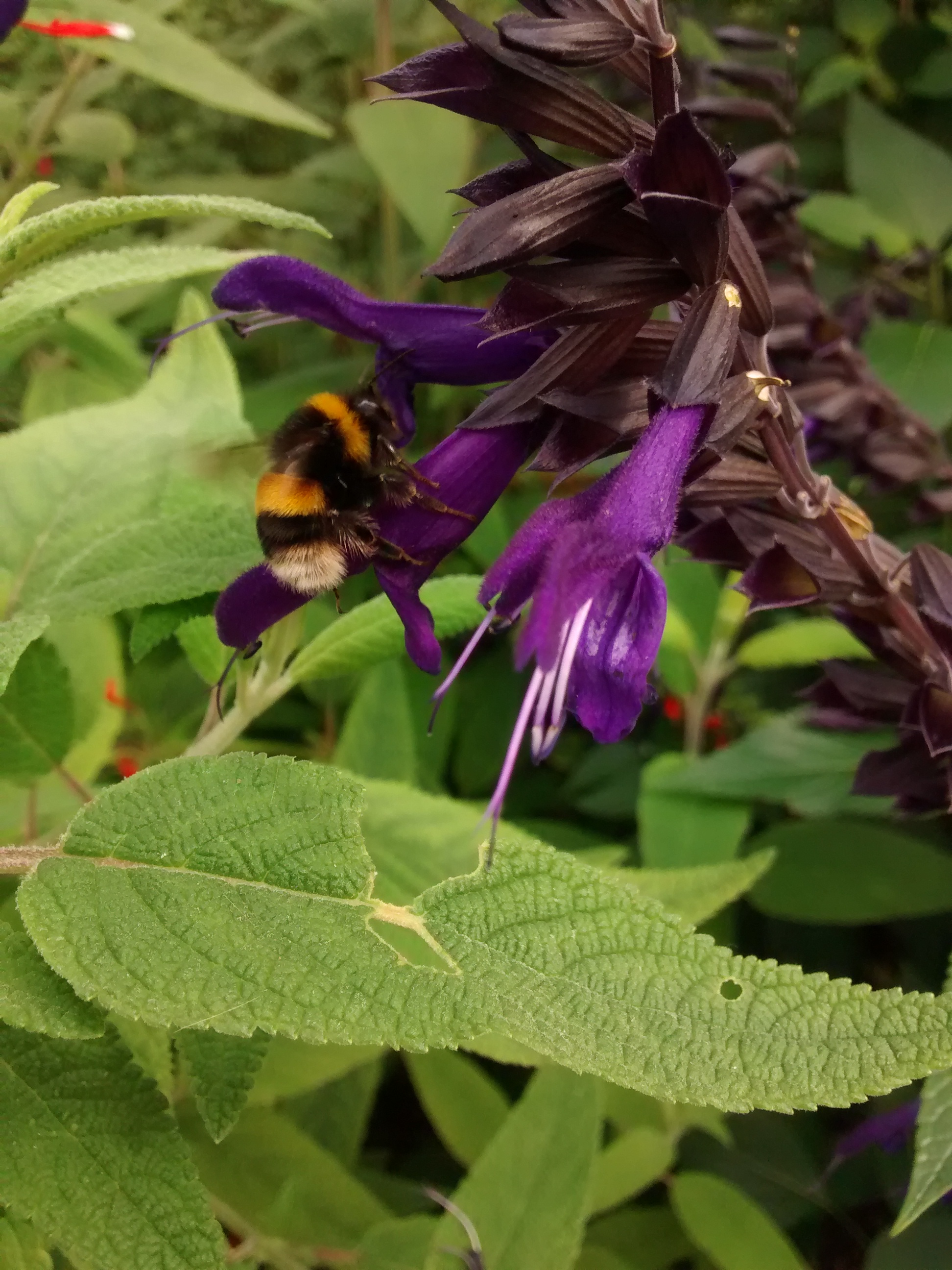
and a Salvia amistad; along with a Buff-tailed bumblebee (Bombus terrestris)
It was also lovely to watch some Dunnocks (Prunella modularis) as I ate lunch. Normally shy birds I usually only hear them sing in early spring, however these clearly weren’t bothered about us.

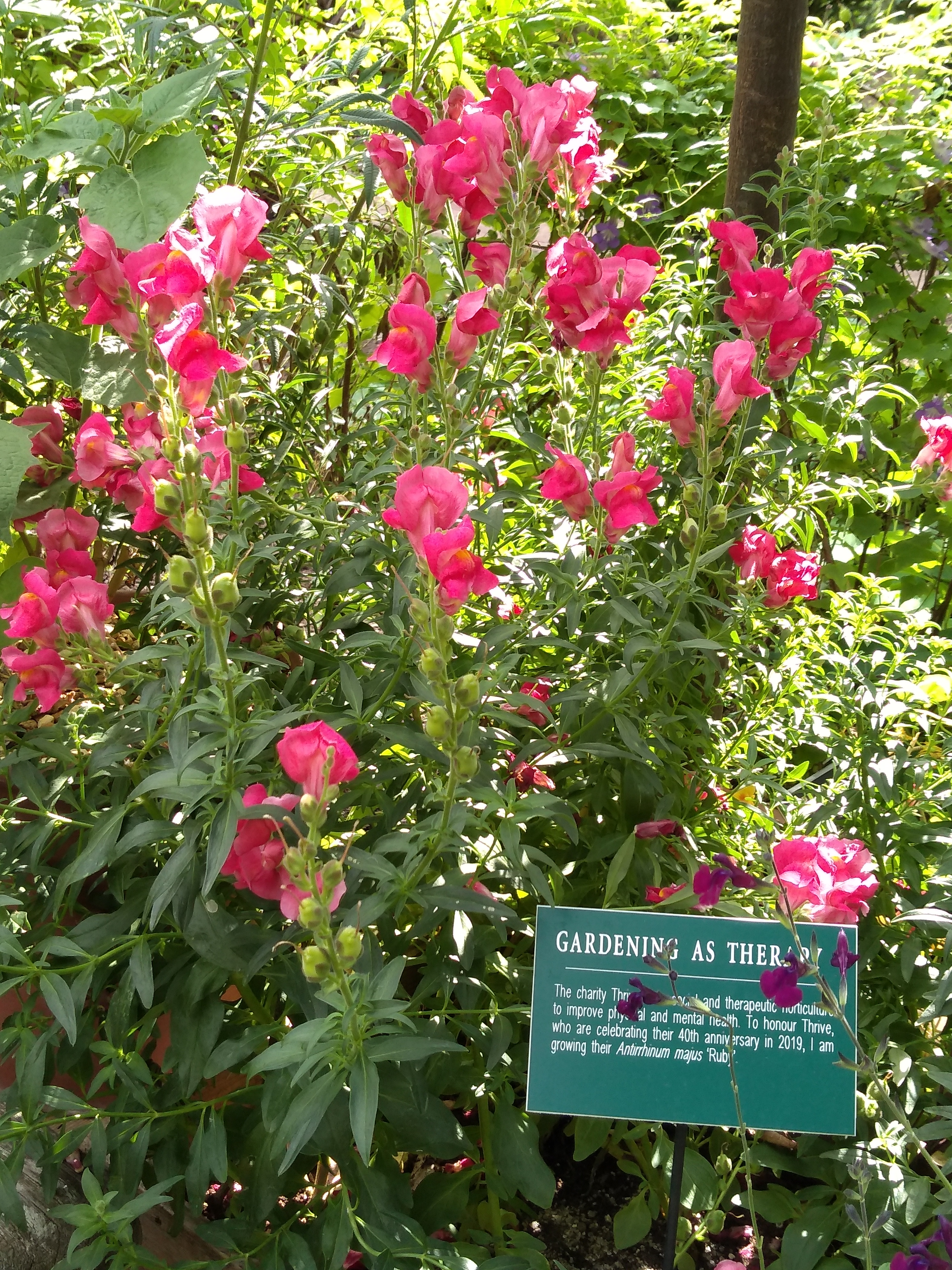
The next stop was to the Mental Wellbeing garden. I particularly enjoyed this small garden dedicated to improving mental health. It concentrated on the senses so there were plants you could feel, smell as well as view. Colour was important; along with soothing green foliage there were calming blues and purples along with joyful yellows and oranges. There was even a reference to garden therapy which is close to my heart along with a dedication to the charity Thrive. (See Thrive).

Wildlife can also have a positive affect on mental health so it was great to see insects in this space too. There was;
– an unidentifiable bumblebee investigating a Morning Glory (Ipomoea purpurea ‘Grandpa Ott’) flower covered in pollen.

– plus a Green aphid on a beautiful sweet pea (Lathyrus odoratus ‘Matucana’).

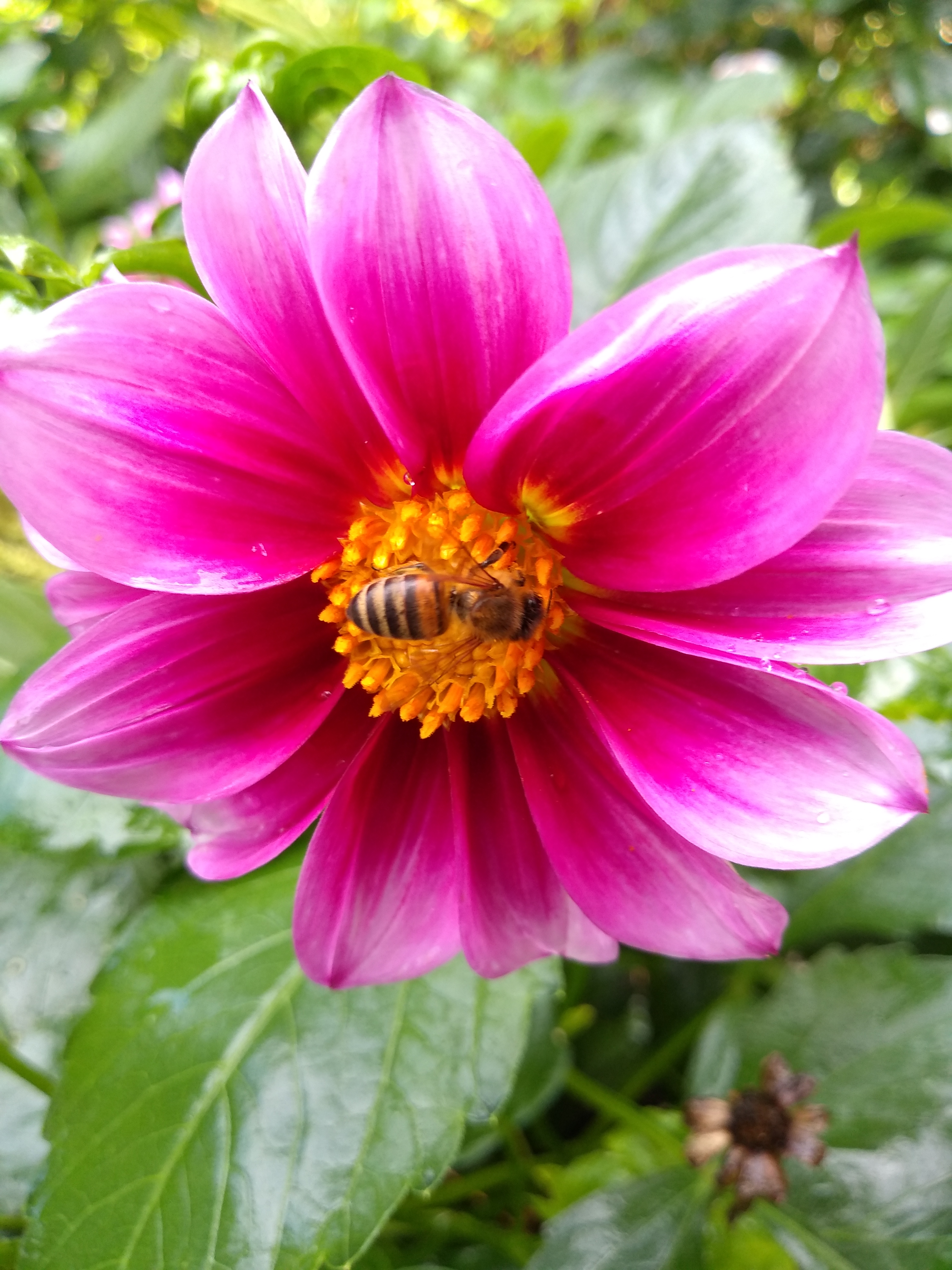
I continued to notice more insects as I kept walking around; starting with the Dicotyledon Order Beds, where I saw a Honey bee on a dahlia,

through to the Garden of Edible Plants. In the tea bed, which was near Fortune’s Tank Pond, a male Common darter dragonfly (Sympetrum striolatum) was resting on a metal teapot shaped frame holding up Nettles (Urtica dioica) inside. The nettles were meant to be there as nettle tea can be a diuretic.

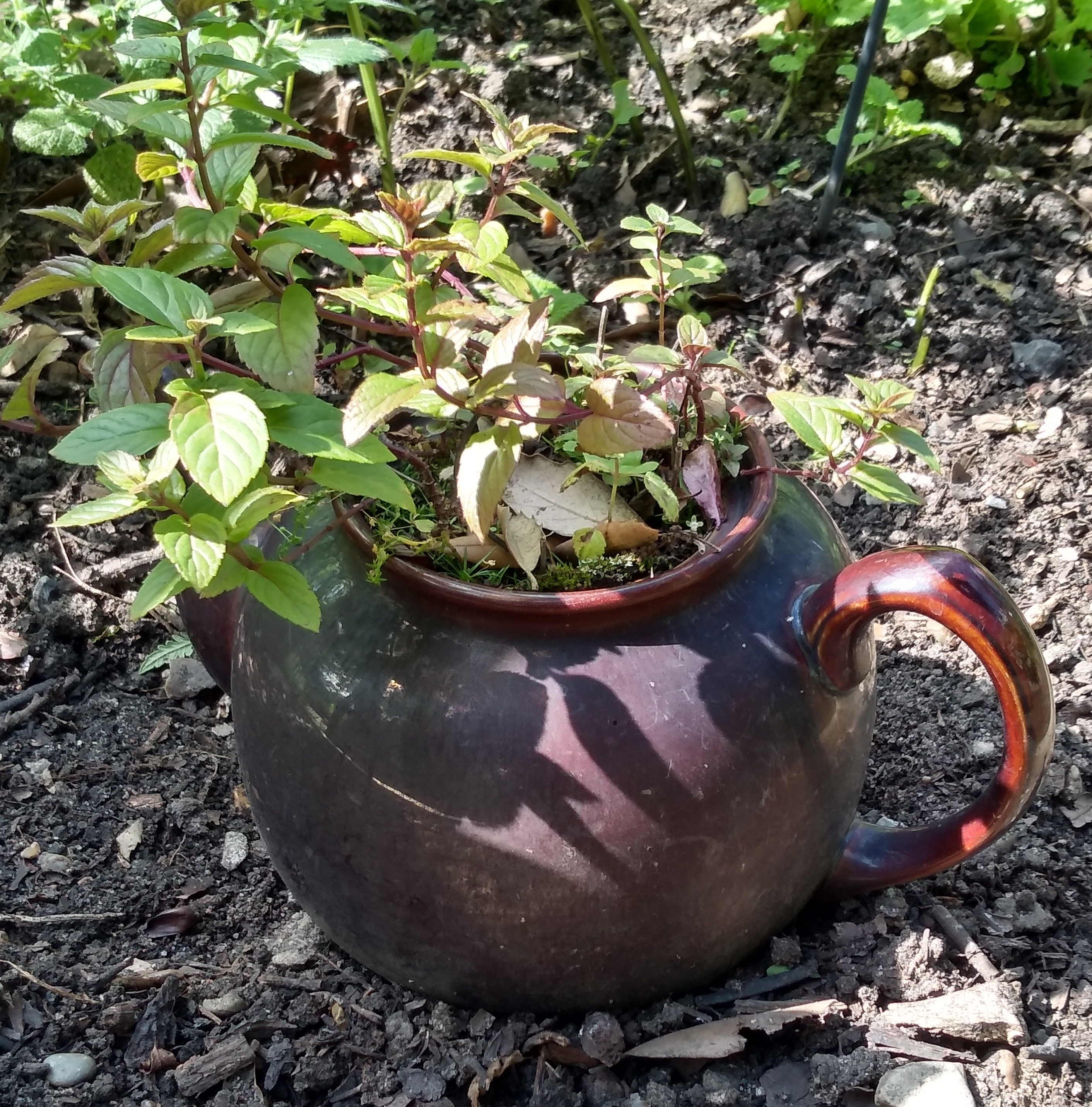
There were some interesting containers used as pots in this bed. Mint (Mentha) was growing in a teapot

and a tea plant (Camellia sinensis) was planted in a tea chest.

These unusual pots gave me some ideas for my own garden.

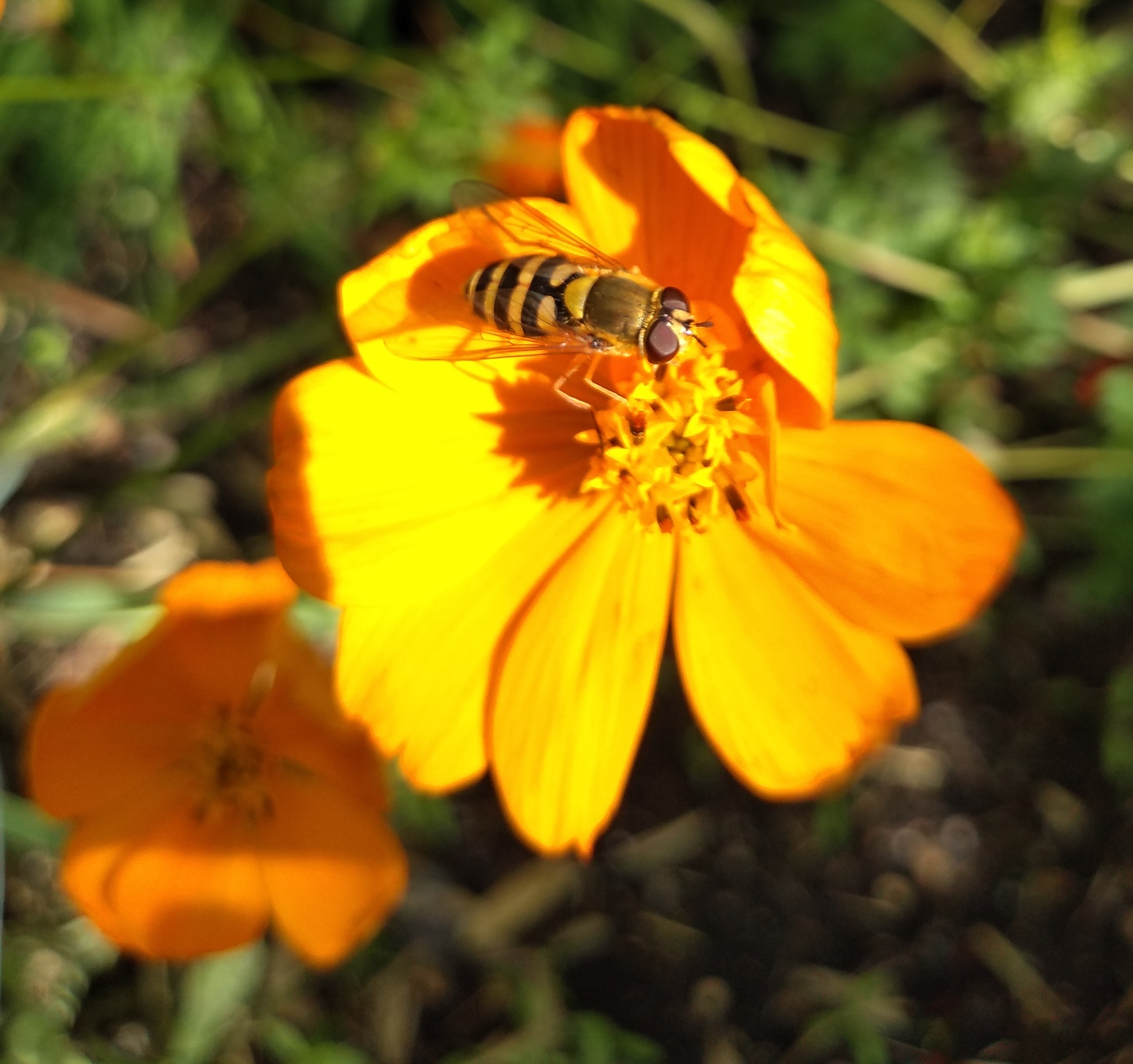
Another area I was very interested in seeing was the dyers bed. I would love to try colouring fabric or yarn with natural dyes so I wanted to see which plants were there. On the yellow cosmos (cosmos sulphureus) was a female Syrphus ribesii hoverfly.

The flowers of this Cosmos are used to create a yellow- orange dye. I think I may try dying with this plant if dye is amazing as the flowers.

I meandered further round the other sections of the garden ending in the community garden. Alongside edibles were wildflowers that can be used as herbal medicine.

I love this sign.

Along with plants such as Chamomile (Chamaemelum nobile) and evening primrose (Oenothera biennis) were Herb robert (Geranium robertianum) whose crushed
leaves can aid wound repair and the aroma believed to repel mosquitos. Another so called weed I found there was Plantain (Plantago major). When used as a soothing poultice the leaves
are useful for calming insect bites and inflammation.

I ended the week beside the sea in Hampshire. I always look for seaglass along beaches and Saturdays hunt was plentiful. The weather was lovely on Saturday; sunny and warm with a gentle breeze. Along with the soothing sound of the waves I could hear Herring gulls (Larus argentatus). This was the perfect end to my week off and the start of Autumn.

Posted in nature

Who you Gonna Call? 🎶👻🎵

It was a slow start to last week, not brightening up until later on.
Yet as I waited for the bus to work on Monday I saw some Common yarrow (Achillea millefolium).

It would have been flowering since June but the council have allowed the verges to grow long enough for it to fully bloom around the bus stop. Once in folklore it was believed to bring good luck and wellbeing if you carried it with you.

Tuesday was a washout so it was nice when I started to see bees and butterflies flying around from Wednesday onwards.

I noticed a different butterfly to those I usually identify.
There were two Gatekeepers (Pyronia tithonus) also called Hedge brown butterflies basking on some Bergamot (Monarda).

Bergamot is also called Bee balm because it is loved by bees.

The Gatekeeper in the previous photo is a male due to the pattern on the upper wings. Wing patterns vary within the genders, dependent on high temperature conditions while the butterfly is in the chrysalis stage of development.
The caterpillars feed on long grasses such as Couch-grass (Elymus repens) or fescues (Festuca) while the adults like the nectar of Wild marjoram (Origanum vulgare), Common ragwort (Jacobaea vulgaris) or Bramble (Rubus fruticosus).

The name Gatekeeper made me remember Sigourney Weaver’s character Dana (who is possessed by Zuul the gatekeeper for Gozer) in Ghostbusters; therefore I have had the theme tune in my head ever since. Thankfully I like this earworm as it reminds me of an enjoyable childhood film. 🎶

In the same border I also noticed Buff-tailed bumblebees (Bombus terrestris) and Garden bumblebees (Bombus hortorum) on a Catmint (Nepeta × faassenii) plant.

On Thursday I was working near a pond and came across a dragonfly which I have been unable to completely identify.

The leg stripes rule it out as a Ruddy darter (Sympetrum sanguineum); however given the position I took the photo from, I can not see the frons (area on the face above the mouth parts) well enough to be certain if it is a female Vagrant (Sympetrum vulgatum) or a female or immature male Common darter (Sympetrum striolatum).

Friday was the opposite of Tuesday, both for the weather and successfull nature observing. In fact during the afternoon in the space of twenty minutes I saw a Large white (Pieris brassicae), Small tortoiseshell (Aglais urticae), Red admiral (Vanessa atalanta), Comma (Polygonia c-album), Meadow brown (Maniola jurtina)
along with three Peacock (Aglais io) butterflies.

I managed to obtain a photo of the Comma on a purple Buddleia as well as (finally) manage to capture the elusive Peacock on a white Buddleia.

I had to photograph something else from that garden too. A Chinese trumpet vine (Campsis grandiflora) plant was arching over the wall from the neighbours.

The gorgeous colour of the flowers took my breath away, especially set against the white house and sunny blue sky. I couldn’t resist sharing its beauty.

Lastly I have ended a tiring week relaxing at a cafe drinking a mocha. Once again my spirits were lifted as I watched a Wagtail (Motacilla alba) hoping to benefit from dropped crumbs; it was a lovely thing to see.

Posted in nature

Amphibians and Insects

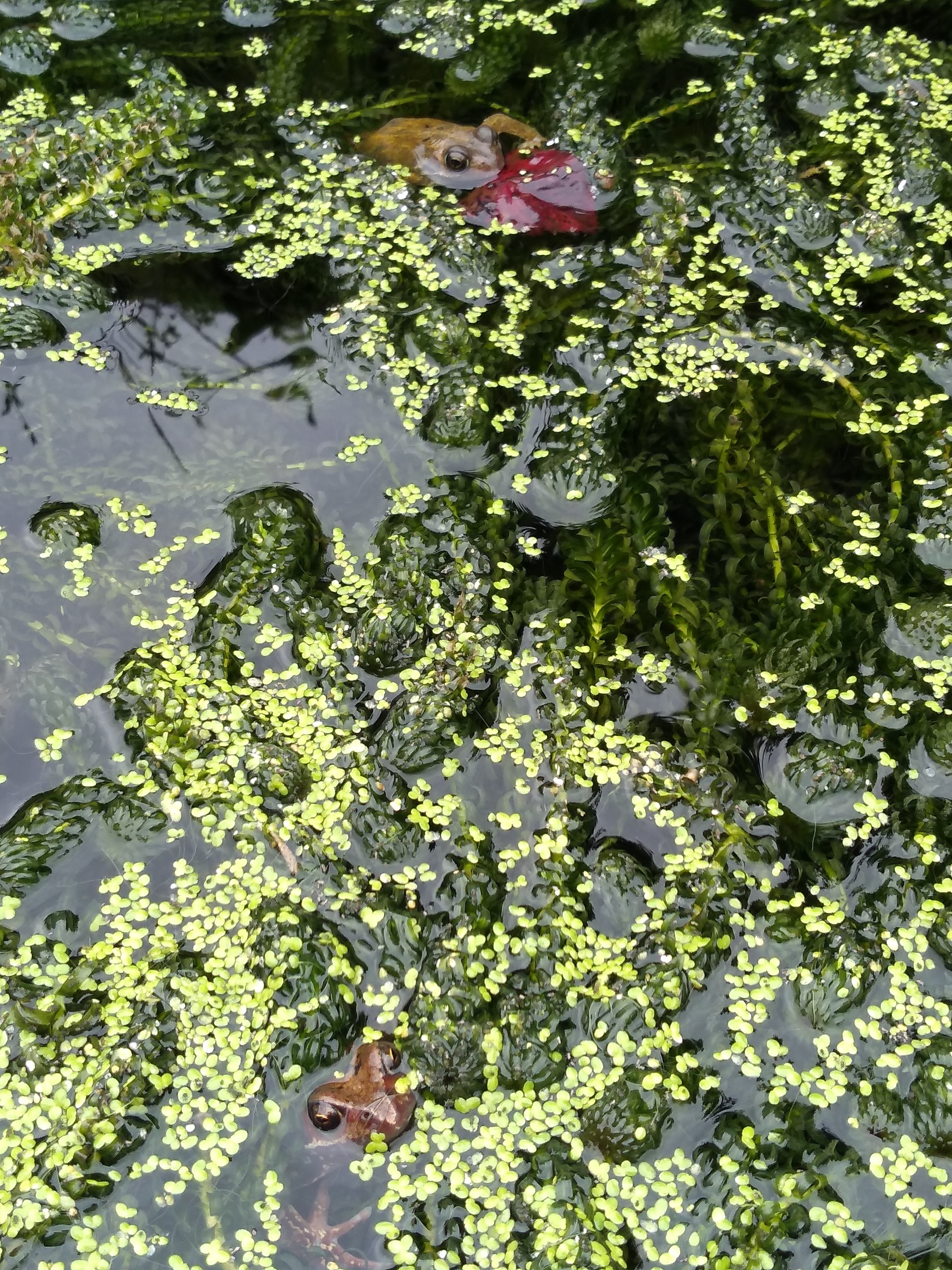
My week started and ended working next to ponds. The first was a small natural pond with a couple of frogs (Rana temporaria) sitting in it.

The other was a large disused outdoor swimming pool. In its neglected state rainwater collects within the concrete walls and nature is taking over. Given the murkiness of the water I was unable to obtain decent photos of my findings; however I saw another frog, (surrounded by lots and lots of tadpoles) along with a dragonfly nymph and a newt. It should be interesting to discover how many tadpoles survive to adulthood.

For the rest of the week insects were centre stage, especially on Wednesday when flying ants took to the sky. Flying ant season really tests my resolve to work through my dislike of ants (which originated in childhood). Thankfully I now find them more fascinating than loathsome, mostly.

The other insects I saw that day were;
– A (Chrysotoxum cautum) hoverfly on some Pyracantha.

– Honey bees (Apis mellifera) and a Red-tailed bumblebee (Bombus lapidarius) visiting a Geranium ‘Rozanne’ plant.

– Lavender (Lavandula) full of bees and butterflies, including more Honey bees as well as Buff-tailed bumblebees (Bombus terrestris), Meadow browns (Maniola jurtina) and a Ringlet (Aphantopus hyperantus) butterfly.

The Meadow brown butterflies also enjoyed visiting the Echinops bannaticus flowers too.

Even as I returned home I noticed a Willow Beauty (Peribatodes rhomboidaria) moth on the hall window.

The adults feed on Creeping thistle (Cirsium arvense) and Ragwort (Senecio jacobaea) both of these plants are common around this area. The caterpillars feed on various trees, shrubs as well as climbers ranging from Yew (Taxus baccata), Birch (Betula), ivy (Hedera helix), honeysuckle (Lonicera) and the wild Clematis, Traveller’s joy (Clematis vitalba).

The previous day I came across more insects that I was previously unaware of.

The first one was the Common red soldier beetle (Rhagonycha fulva).

It is a beneficial insect as adults eat aphids and are pollinators (feeding on nectar and pollen from open flat flowers such daisies and hogweed) while the larvae feed on slugs and snails along with other ground dwelling invertebrates.

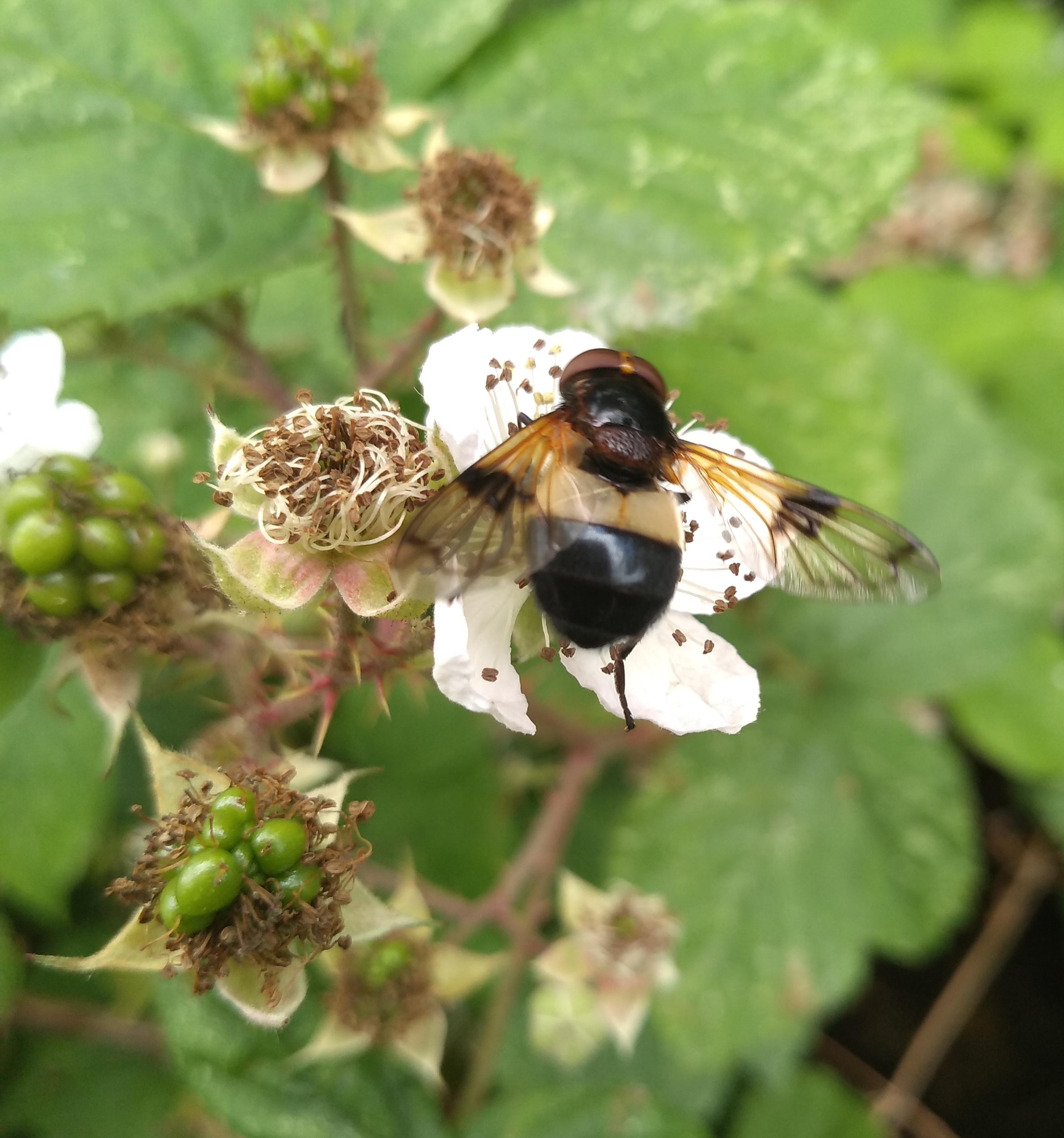
The other insect I saw on Tuesday was a female Volucella pellucens hoverfly feeding on nectar and pollen from Bramble (Rubus fruticosus).

These hoverflies also pollinate umbellifers; However as larvae they inhabit Bumblebee and wasp nests eating any waste produced along with their hosts larvae.

Posted in nature

Blooms, Bees and Bugs

There were lots of observations last week. As the weather continued to warm up further I saw even more bees and Seven-spot Ladybirds (Coccinella septempunctata).

I also noticed more wildflowers as I walked to work on Tuesday. This relaxed start to the day enabled me to observe;
– White Campion (Silene latifolia).

This flower is great for moths as the flower’s scent is obvious at night.

– Wood Avens (Geum urbanum)

– Cleavers (Galium aparine) with its tiny white flowers.

– Black medick (Medicago lupulina)

– and Annual honesty (Lunaria annua)

During my journey, I also heard a Coal Tit (Periparus ater) singing. Similar to the Great Tit’s (Parus major) song but faster and higher pitched, it is not a bird I hear often.

On Wednesday afternoon I observed lots of insects. Two that were camera shy were a Hawthorn Shield Bug (Acanthosoma haemorrhoidale) and Violet Ground Beetle (Carabus violaceus).

Other sightings which I managed to photograph were;

– Early Bumblebees (Bombus pratorum) on Rosemary
(Rosmarinus officinalis) and on Ajuga reptans ‘Atropurpurea’ (a cultivated variety of Bugle).

The Early Bumblebee is the UK’s smallest Bumblebee.

I also saw Rosemary Beetles (Chrysolina americana) on a few Rosemary plants.

This pest is beautiful when it glistens in the sun. Thankfully the amount I found didn’t warrant drastic intervention. The RHS is undertaking a survey to discover their advancement within the UK (see Royal Horticultural Society) so I uploaded my findings.

I also found an insect on some lavender (Lavandula) that I didn’t recognise.

This terrible photo is due to the constant movement of the plant in the breeze (it was the best one I managed to take). I only include it as a demonstration on the brilliance of the Natural History Museum. Occasionally I have difficulty in identifying my findings and at that point I rely on the Natural History Museum’s identification service. I was clutching at straws that they could see through the blurred image and be able to identify the bug. To my surprise they managed to tell me it was a Cinnamon bug (Corizus hyoscyami). If you ever need help identifying insects then I highly recommend this brilliant service (see Natural History Museum).

I saw yet more bees on Friday, including a Honey bee (Apis mellifera) on a Cornflower (Centaurea cyanus) plant

along with a
Buff-tailed bumblebee (Bombus terrestris) on Welsh poppy (Meconopsis cambrica)
Even yesterday, as I visited Shaw’s Corner (a lovely small National Trust house and garden) I noticed more wildlife;
-Common Bird’s-foot Trefoil (Lotus corniculatus)

-Red Clover (Trifolium pratense)

– and some wild Bugle (Ajuga Reptans) amongst the grass which had purposely been left long.

Plus I also noticed a Marmalade Hoverfly (Episyrphus balteatus) and a Tree bumblebee (Bombus hypnorum) on some Dog rose (Rosa canina)

as well as a Red-headed Cardinal Beetle (Pyrochroa serraticornis) balancing precariously on a blade of grass.

Posted in nature

Bee friendly plant

Along with male Orange-tip (Anthocharis cardamines) and Holly Blue (Celastrina argiolus) butterflies, I have now seen a Peacock butterfly (Aglais io) flitting around as I garden. Yet while butterflies have been camera shy I have managed to capture bees so far his week.

Comfrey has started to flower. It is a great plant for organic gardening; used as a compost activator or to make a liquid fertilizer containing nitrogen, phosphorus and potassium. Comfrey is also loved by bees, as proved by the following photos.

Photo 1; Red-tailed bumblebee (Bombus lapidarius) on Creeping Comfrey (Symphytum grandiflorum)

Photos 2 and 3; a Buff-tailed bumblebee
(Bombus terrestris) enjoying Common Comfrey (Symphytum orientale).