It definitely feels like late summer now. Nights are noticeably drawing in, the sun is lower and my spidey senses have noticed a change in the air too.
The highlights of last week were seeing a Painted Lady (Vanessa cardui) on a Buddleja and noticing the harvests developing.
Autumn, my favourite season, is nearly here. The apples at the allotment are coming along nicely, almost ready to eat, along with the ripening blackberries. Plus hazelnuts and walnuts can be picked soon too.
Rowan berries have ripened now, their beautiful red colour showing through the green foliage. Last Thursday I noticed a female blackbird pick some before flying off with them.
It’s also been lovely to see my resident family of Blue tits on the Rowan tree (Sorbus), as I enjoy breakfast before my days work.
These small moments bring me so much joy and are a fantastic way to begin the day. I am grateful for natures restorative ability. Finding solace in it helps ground me while enabling me to remain in the moment and appreciate the small things. This time of year, when nature starts to slow down, also reminds me to take things more easily too. I do love this time of year. For me, the transition into Autumn, is a time of contemplation and preparation for the future.
Over the last few weeks Buddleja have been in flower, encouraging butterflies to visit and making them more visible. I have begun to notice Red admirals (Vanessa atalanta) and Peacocks (Aglais io) alongside Large (Pieris brassicae) and Small white (Pieris rapae) butterflies.
Having some time off work enabled me to take more walks. In my local woodland park I started to see a lot more Commas (Polygoniac-album) and Small heath (Coenonympha pamphilus) butterflies too. On a few occasions they flitted around me as I stopped to watch them; an absolutely joyful experience, almost like they were interacting with me in their own way.
Thankfully in the two weeks, I managed to venture further afield. On one occasion, I saw a Ringlet (Aphantopus hyperantus) butterfly while visiting an Arboretum in Herefordshire.
Woodlands are their habitat and they can be seen during July and August. The Caterpillars of this butterfly feed on various grasses, such as Tufted Hair-grass (Deschampsia cespitosa), Common Couch (Elytrigiarepens), and other meadow grasses (Poa spp.).
Spending some time away on holiday gave me the chance to explore other environments, including those next to water, thus enabling me to notice different wildflowers.
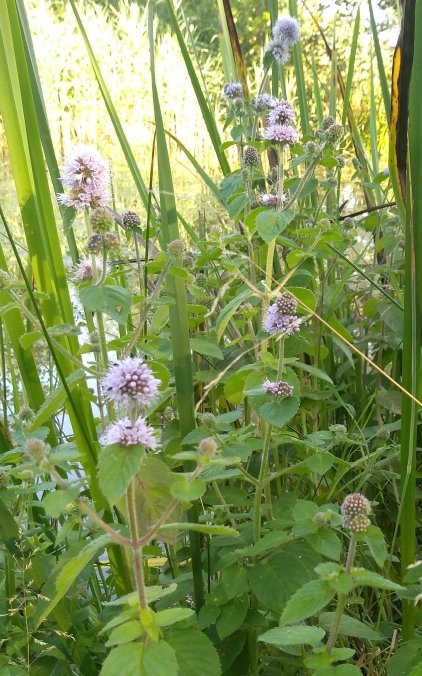
One walk took me past a canal. Water mint (Mentha aquatica) and Purple Loosestrife (Lythrum salicaria) were growing all down the canal edge.
Water mint
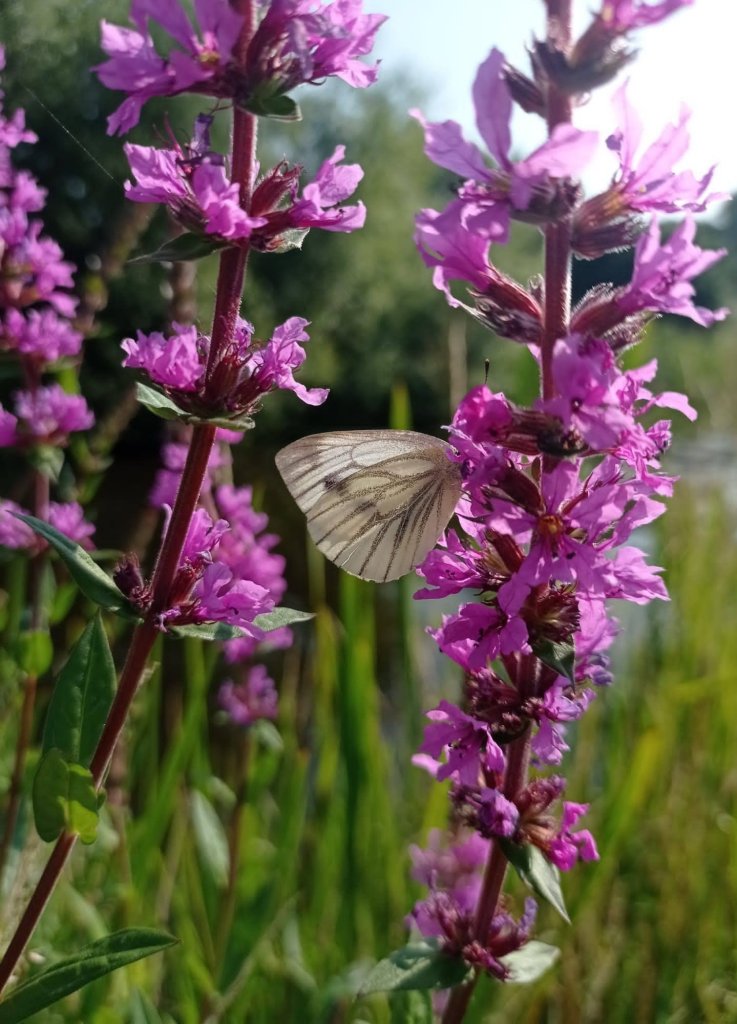
Both plants grow in shallow water and boggy conditions so are often found in fens and marshes as well as along the margins of ponds, streams, rivers and of course canals, as I discovered. They require habitats with full sun or dapled shade to bloom and are great for pollinators. Water mint flowers from the beginning of July up to November while Purple loosestrife only blooms between June and August. Purple Loosestrife can be visited by insects with long tongues and particularly enjoyed by butterflies and Red-tailed Bumblebees (Bombus lapidarius). It is also eaten by caterpillars of the Small Elephant Hawk-moths (Deilephila porcellus).
A Large white butterfly visiting some Purple Loosestrife.
As well as butterflies there were several dragonflies and damselflies, including this Blue-tailed damselfly (Ischnura elegans) dancing over the water.
This Blue-tailed damselfly was seen resting on a nettle leaf.
However, most of the bees I saw on that walk were interested in the plant I encountered at the first lock, Himalayan balsam (Impatiens glandulifera).
While the lock was completely swamped by this plant, it was only section I saw it in. It’s the first time I had come across Himalayan balsam, although I know of its reputation.
The pretty flower of the Himalayan balsam is popular with pollinators, especially bees. Here a bee is seen climbing into the flower to obtain nectar and pollen.
First introduced into the UK in 1839, from the Himalayas, this plant soon escaped formal gardens and naturalized in the wild becoming a nuisance in waterways. It grows fast and can become invasive very quickly as, up to 800 seeds from each pod, explode as far as 7 meters from the parent plant and even travel downstream. It isn’t long before a thicket is created where the plant out-competes other species to reduce biodiversity, cause erotion of riverbanks and affect water quality. All this means it is considered a weed in waterways and often removed by work-parties whenever possible. In fact it had been previously cleared from a lot of this canal. Control methods include pulling and cutting before they get a chance to set seed. It can take a few growing seasons before control over this plant is established. Management of this plant is mentioned under schedule 9 of the Wildlife and Countryside Act 1981. Interestingly, in Hertfordshire, control of this plant involves collection of the flowers to produce pink Gin (further information can be found at Herts Wildlife Trust).
The following week I visited a beach in Kent, it was so relaxing to hear the sounds of the seaside. One plant I noticed growing amongst the rocky area near the shingle was Alfalfa (Medicago sativa).
I know this plant as a green manure on allotments and gardens, adding nitrogen to soil for crops the following season. It’s also used as silage for livestock in agriculture plus alfalfa sprouts are used in some cuisines. I have never seen it in the wild or even flowering. There wasn’t a great swathe of it so clearly the plants were due to the odd escapee into the wild; perhaps a few seeds having blown there or been disposed by a bird. It was certainly good for local pollinators.
Much needed rain arrived last Wednesday evening, lasting through the night; followed by another short downpour later in the week. Unfortunately, these weren’t enough to replenish the parched ground which currently resembles crazy paving. It’s hard to believe we experienced a cold damp winter when cracks in the earth are so deep.
Somehow, even with of the lack of rain, wildflowers still bloom regardless. Buttercups (Ranunculus), Cow parsley (Anthriscus sylvestris) and Stitchwort (Stellaria) have joined the early spring bloomers; replacing the faded Lesser Celandine (Ficaria verna). Unlike the pinks of the ornamental Cherry trees (currently blooming), the predominant colours lower to the ground are blue, yellow and white.
Forget-me-nots (Myosotis) and Cowslips (Primula veris) around the edge of a woodland park.
Green alkanet (Pentaglottis sempervirens) mixed with yellow archangel (Lamium galeobdolon) in a garden border.
Another plant I noticed was Ground ivy (Glechoma hederacea).
Usually found on damp ground, amongst woodlands, hedgerows, wasteland and in lawns, It’s violet flowers appear between March and June. Surprisingly, it was flowering last week, even with the current dry conditions.
The common name, Ground ivy, is rather misleading as it belongs to the same family as dead-nettles (Lamiaceae) and isn’t ivy. This evergreen perennial most likely obtained the name due to its spreading nature, which occurs overground, rooting from stolons. In fact this plant has numerous common names including, Alehoof, Gill-over-the-ground, Creeping Charlie, Run-away Robin and even (during medieval times) Our Lady’s Vine. A more comprehensive list can be viewed on the RHS website, along with how to grow it if you want to introduce it into your garden.
This herb releases a scent when disturbed. As I crushed some leaves, the smell reminded me of a slightly medicinal thyme aroma, actually quite pleasant.
In times past Ground ivy was used to flavour beer, thanks to its bitter taste (before it was replaced with hops) and as a rennet substitute in cheese making.
I am always intreagued at a plants ability to thrive in unusual places or difficult situations; I love spotting plants growing in such circumstances. Last week I was amazed to see a foxglove (Digitalis) growing without soil on an old wall.
Normally I would only see plants such as Buddleja, Ferns or Yellow corydalis (Pseudofumaria lutea) thriving in this way; their shallow root systems able to anchor themselves amongst the bricks.
Last week wasn’t solely dominated by plant observations. After the previous weeks sighting of the Tawny Mining bee (Andrena fulva), see Auburn Beauty Spotted, it was nice to follow up with sightings of some Mining bee nests. Unfortunately I don’t know whether these nests had or were housing Tawny or Ashy Andrena cineraria) mining bees.
This nest was found on a lawn by my partner.
This nest was spotted on a once grassy area in my local woodland park; the “volcano” like mound partially washed away after a short downpour.
The second nest was spotted on Saturday, while going for a lovely walk with friends. On that sunny day we also witnessed three Speckled wood (Pararge aegeria) butterflies flitting about; clearly enjoying the sunshine and great company as much as I was.
Last week I began hearing the male Tawny owls (Strix aluco) territorial call as I fell asleep and again when I awoke. Usually this starts from late autumn and continues throughout winter (see BTO). Whatever the reason for him asserting his territory early, it was lovely to hear that sound return from last winter. Yet this wasn’t the only spectacle I noticed last week.
Last Wednesday, as I cut back spent Lavender, I became aware of something flying past me. I continued to watch until the insect stopped to gain nectar from some Red Valerian (Centranthus ruber); It was a Humming-bird Hawk-moth (Macroglossum stellatarum). As this was my first sighting of this superb moth, I found it impossible to maintain my composure as I hurriedly fumbled for my phone. Unfortunately it was too quick for me to photograph as it flitted between flowers, not resting as it fed. It did return momentarily but I was still unable to gain photographic evidence before it flew away once again. A visual guide can be seen on the Butterfly Conservation website. For further information on Red Valerian see the RHS website.
Apparently it is possible to hear it buzz as it flies, due to the quick movement of it’s wings; sadly all I could hear were builders working nearby.
Occasionally this daytime flying moth can be observed at other times of the year but traditionally it is seen between June and September. It usually migrates to the UK from the continent but in milder winters can overwinter in this country; in sheltered areas such as crevices, holes within trees and outbuildings.
It obtains nectar from a variety of plants in gardens, woodland edges as well as heathland on very warm sunny days. Along with the Red Valerian I noticed this one visit these moths can be seen amongst Honeysuckle (Lonicera), Jasmine (Jasminum), Buddleja, lilac (Syringa), Escallonia, Petunia and Phlox. While the caterpillars only feed on Wild Madder (Rubia peregrina) and Red Valerian along with Lady’s (Galium verum) and Hedge Bedstraw (Galium album).
I have begun to notice a chill in the mornings as the nights grow colder. I love the promise of Autumn. It doesn’t quite feel autumnal yet (especially as the weather has warmed up again this weekend) but some changes are occurring. Conkers and beech masts have started dropping and fungi are appearing in some lawns. A couple of times I have come across fairy rings; in both instances the Marasmius oreades fungi was the cause (sadly no magical elvish, fairy or pixie dancing).
The week continued with more observations of Painted lady (Vanessa cardui) butterflies. On Monday there were two visiting a Buddleja bush along with a Small tortoiseshell (Aglais urticae) and a Large white (Pieris brassicae).
Then on Friday, in different gardens, more were flitting about. On one occasion, during the morning, I saw a Painted lady on a Ceratostigma willmottianum.
In the second half of the week I noticed more butterflies including a Green-veined white (Pieris napi) on Verbena bonariensis
and a Small tortoiseshell visiting an Erysimum ‘Bowles’s Mauve’.
Throughout last week I saw lots of pollinators busily collecting nectar and pollen.
On Monday I noticed lots of small flies and Buff-tailed bumblebees (Bombus terrestris) pollinating Marigold (Tagetes) flowers. Perhaps they are enticed by their overwhelming aroma which even I found hard to ignore.
Then on Wednesday there was a Common carder (Bombus pascuorum) bee flying between Nandina domesticas and several Agapanthus africanus.
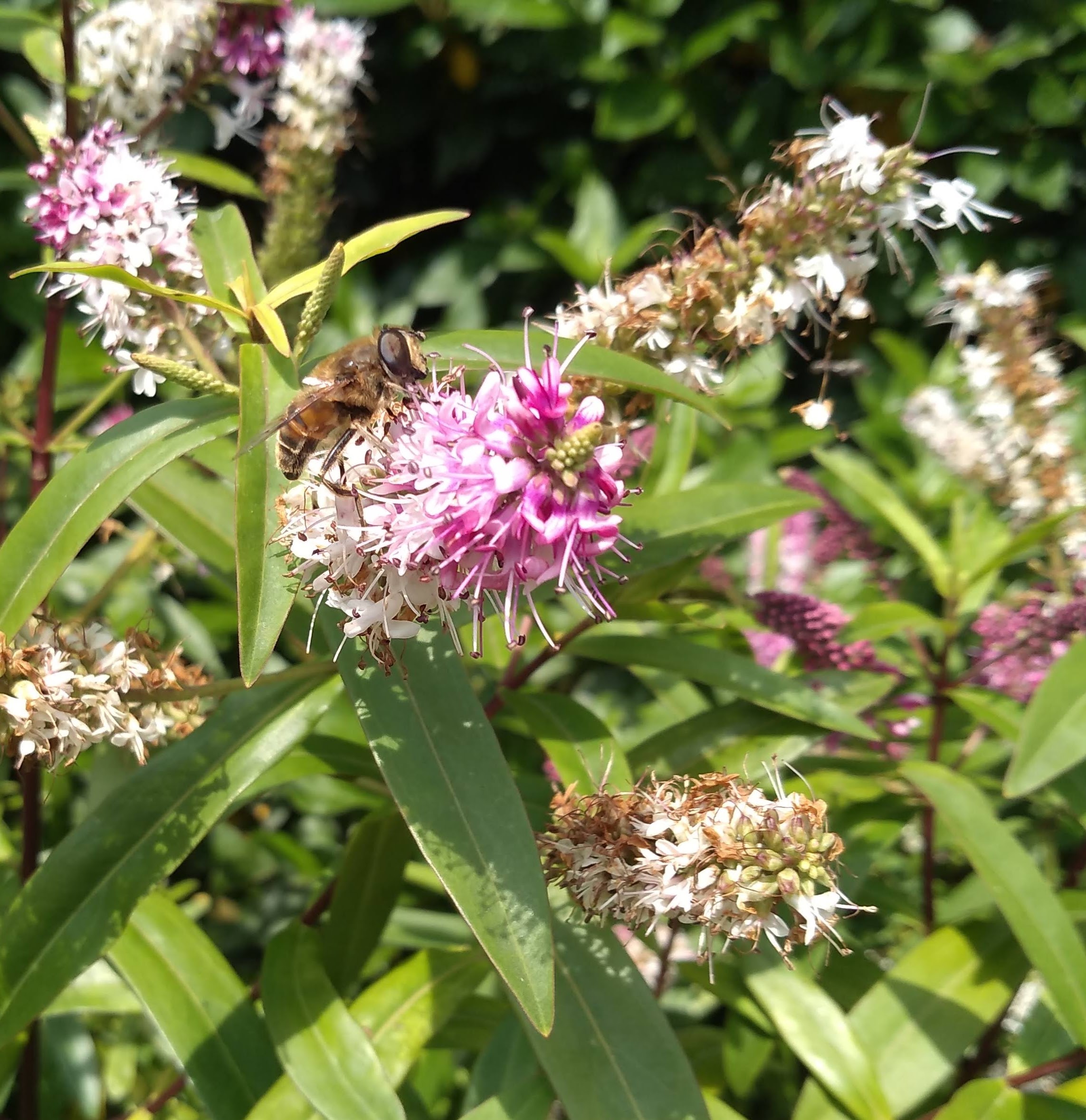
On Friday while working near some Hebe ‘Great Orme’ there were lots of honey bees (Apis mellifera) as well as a Hornet mimic hoverfly (Volucella zonaria).
Another interesting thing I noticed last week was a Red campion (Silene dioica) plant growing on an old moss covered log.
With no soil surrounding its roots clearly it was receiving sufficient moisture and nutrients from this unusual source. It has been flowering healthily all summer but I hadn’t realised it had been relying on the log for its growth until then. I found this plants ability for survival amazing and will closely watch its development.
Lastly I have been aware of how wonderful hardy Fuchsias (Fuchsia magellanica) are currently looking. Although I don’t see pollinators visiting the flowers, there have been a couple of times, in the past, when I have seen Elephant Hawk-moth (Deilephila elpenor) caterpillars feeding on Fushia plants. (See Elephant Hawk-moth).
These caterpillars also eat Himalayan balsam (Impatiens glandulifera) and Willowherbs including Enchanter’s nightshade (Circaea lutetiana) and Rosebay willowherb (Epilobium angustifolium). This beautiful pink and olive green moth flies at night and therefore feeds on Honeysuckle (Lonicera).
Across the way from this hardy Fushia there was a Honeysuckle growing along the wall so it would have been a fantastic place for these moths to inhabit. Unfortunately I didn’t come across any Elephant Hawk-moths this year but hopefully I will in years to come (and I am sure it will feel magical).
I am watching Wimbledon while eating lovely sweet strawberries. The window is open so I can hear the birds singing outside; thankfully the temperature has dropped and it is feeling fresher now. It is a lovely summers day to reflect upon the things I saw last week. More flowers blooming along the roadside include Hedge bindweed (Calystegiasepium) Creeping thistles (Cirsiumarvense), Spear thistle (Cirsium vulgare), Field Scabious (Knautia arvensis), Ragwort (Seneciojacobaea) and Rosebay willowherb (Chamerionangustifolium). Creeping thistle seeds are a great food source for birds that make their home on farmland, while Spear thistle seeds are good for Goldfinch (Cardueliscarduelis) and the nectar enjoyed by the Small copper (Lycaenaphlaeas) butterfly. Ragwort (considered harmful to horses and livestock) is great for bees and the Cinnabar moth (Tyriajacobaeae) caterpillars. Even the Field Scabious is a useful food source for bees and butterflies.
Now that July has arrived, my butterfly and moth observations have increased. I have seen,
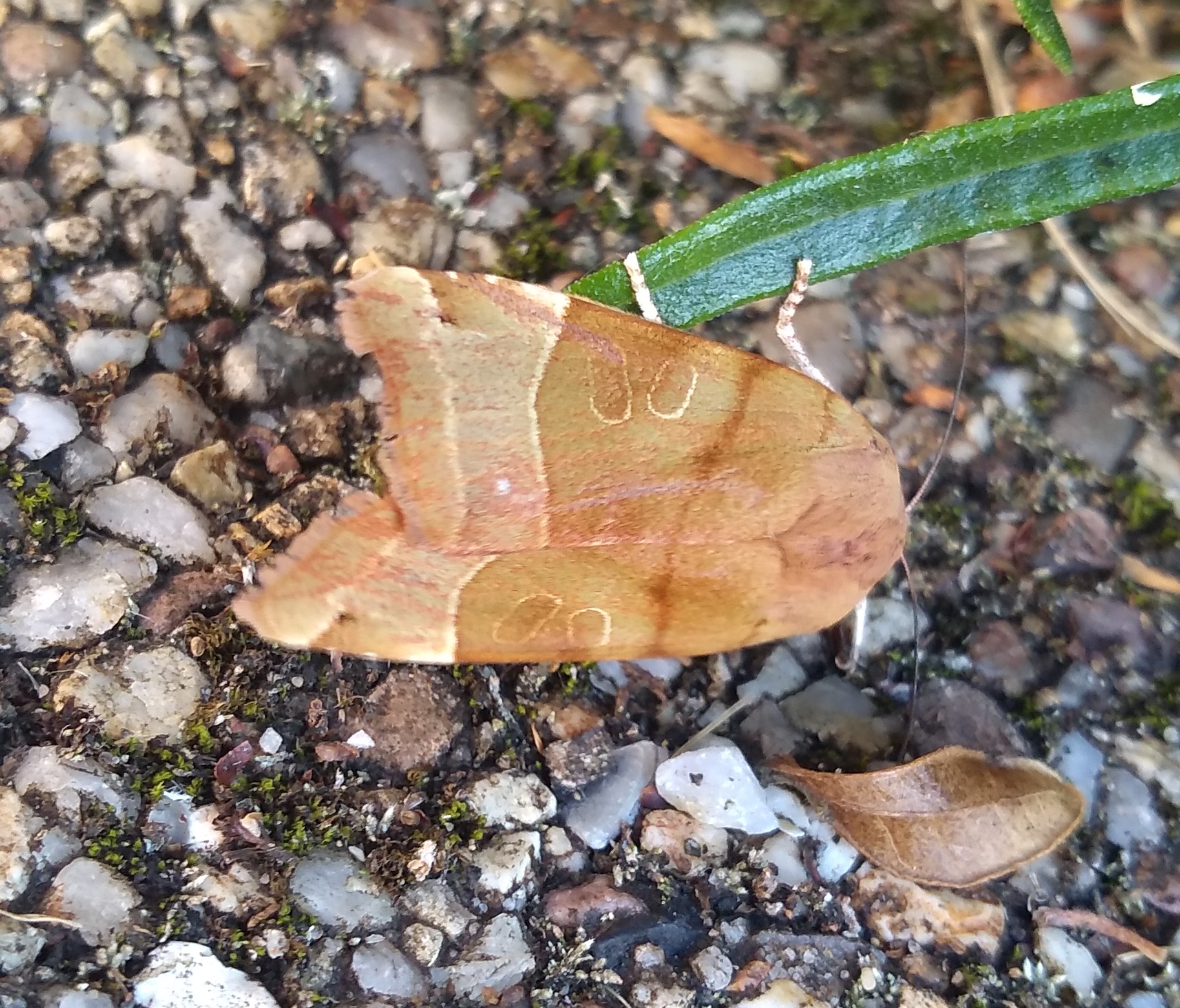
– A couple of Double-striped Pug (Gymnoscelisrufifasciata) moths
– Two Large yellow underwing (Noctuapronuba) moths
– Along with several that were photo shy including a White Plume (Pterophoruspentadactyla) moth and a couple of Large white (Pierisbrassicae) butterflies, three female and one male Meadow brown (Maniolajurtina) butterflies, a Comma (Polygoniac-album) butterfly near a patch of nettles (which are great food for their caterpillars) as well as two Large tortoisehell (Nymphalispolychloros) butterflies. Other butterflies I saw were,
– A Ringlet (Aphantopushyperantus) butterfly
– Small tortoisehell (Aglaisurticae) butterfly on Verbenabonariensis
– Red admiral (Vanessaatalanta) butterfly on wall by Climbing Hydrangea (Hydrangeaanomalasubsp. petiolaris)
These weren’t the only insects I noticed throughout the past week as I also saw,
– Two immature male Large red damselflies (Pyrrhosomanymphula)
– Two Azure damselflies (Coenagrionpuella) on Water lily (Nymphaeaceae)
– One Harlequin ladybird (Harmoniaaxyridis) on a Red valerian (Centranthusruber) leaf.
– Honey bees (Apismellifera) on an Eryngium bourgatii
-Lots of Honey bees and hoverflies (Syrphidae) on lavender (Lavandula) which is in full bloom.
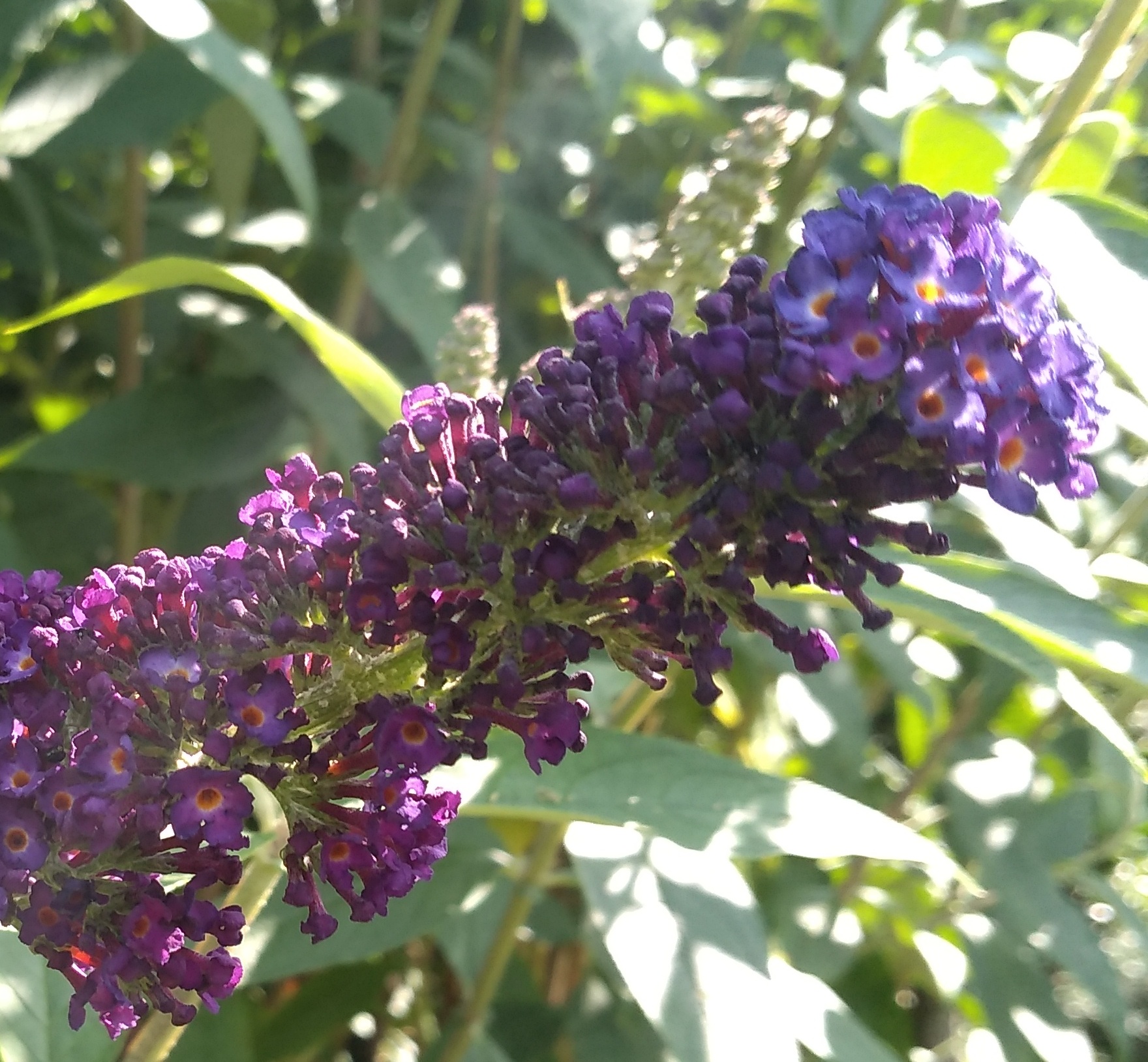
I am keeping my eye on a large mature Butterfly bush Buddlejadavidii ‘Black Knight’ that is starting to flower. A few years ago I took some cuttings from this Buddleja and successfully grew one of my own. My Buddleja is only about a foot tall but it will be flowering soon. I look forward to seeing visitors arrive on both shrubs.
Lastly I couldn’t resist adding a few photos of some Cornflower (Centaurea cyanus) someone had planted in their vegetable patch. While I didn’t see any insects visiting it my attention was drawn to the cheery vivid blue flowers, they were so beautiful.











 Bee in the Moment