The first of August is the start of the harvest and autumn is beginning to set in slowly now; a time I enjoy.
The weather has recently changed in the south, we have had rain over the past few weeks, meaning the parched lawns are beginning to green up once again and require cutting. I have never known a year where we haven’t cut the majority of lawns for such an extended period over the summer; usually it isn’t until the end of July into August when this occurs.
The wetter conditions are making it difficult to pick a time to undertake the Big Butterfly Count this year, although I am still seeing various butterflies and day flying moths around at the moment; Including the Jersey tiger moth (Euplagia quadripunctaria).
This beautiful medium sized moth (between 5.2 to 6.5 cm in length) is often seen in the south with the range growing upwards towards London and now Hertfordshire; found in Gardens, hedgerows and coastal areas. The caterpillars can be found between September through to the following May, surviving winter as larvae. The adults often visit Buddleia while the food source for caterpillars are Common Nettle (Urtica dioica), White Dead-nettle (Lamium album), Borage (Borago officinalis), plantains (Plantago Spp.), Ground-ivy (Glechoma hederacea) and Bramble (Rubus fruiticosus) amongst other herbaceous plants.
I have also seen a small copper (Lycaena phlaeas) butterfly recently.
This small (3.2- 3.5 cm) orange coloured butterfly can be found on waste ground as well as heath, moor, grass and woodland environments where the soil is chalky and the ground poor in nutrients. The caterpillars eat Sorrels and Broad-leaved Dock (Rumex obtusifolius).
This has been a wonderful year for ladybirds due to the very hot weather at the beginning of spring causing a huge increase in aphids. Out of the 46 different types in the UK, I mostly see Six-spot and Harlequin ladybirds. A couple of weeks ago I noticed another as it flew into the van; the 14 Spot ladybird (Propylea quattuordecimpunctata).
Much smaller than the six-spotted ladybird, this yellow and black beetle can be seen throughout the UK from May to September.
I finally saw a flower crab spider (Misumena vatia) while pruning a shrub too. As seen in the photo below, they are often white but the females of the species can change their colour to a yellow tint in order to blend into its surroundings better.
Usually noticed between May and August they are commonly seen in southern England. The different sexes differ in size, the males are half the size of the females which are between 9 to 11mm in length. These spiders will wait and ambush prey rather than spin webs and can eat various insects including moths and bees,
After a slow start, due to the weather, things are growing nicely on the organic, no dig, wildlife friendly allotment.
The view of the allotment from the Buddleia shrub.The view of the allotment from the apple tree.
While most of the soft fruit season has come to an end (apart from the autumn raspberries), the plums and apples continue to develop and are something to look forward to later in the season.
Thankfully the rhubarb has recovered a bit after a disappointing harvest. Rhubarb doesn’t like growing in waterlogged soil and although we have sandy free draining soil, I think it ended up being too wet over the winter. The rhubarb was on the plot when we took it over four years ago and had grown very large. Every five years Rhubarb can be divided when the growth has become weaker or leaves are overcrowded so I will do this around November and hopefully this will invigorate its growth next year.
The slightly depleted Rhubarb patch.
The vegetables remain on a three yearly rotation to maintain soil health and keep viruses at bay. Main crop potatoes, kale (Cottagers and Cavolo Nero), beetroot, radishes and courgettes are doing well as usual. This years addition are carrots. I always like to try something different each year and It’s been a while since I tried growing these; so far they are surviving. They are in a raised bed and were sown later and sparsely to help avoid detection by carrot fly (Psila rosae). They are also in a mixed raised bed which also helps.
Along with covering vulnerable plants and growing sacrificial plants such as nasturtium (Tropaeolum majus) and marigolds (Tagetes), I intersperse herbs and other flowers in between the vegetables to help prevent too much loss from pests. I usually find beneficial insects soon appear when needed; there are lots of ladybirds on the plot at the moment. I also find the best way to deal with slugs and snails is to collect them and place them elsewhere; plus any plants with soft young growth are protected by copper tape on old pots and thorny material. I do allow some slugs to remain on the allotment however. The Leopard slug (Limax maximus) is one beneficial slug to have in a garden as they don’t eat living plant matter. They are great for the compost and also eat the eggs of other slugs.
Thorny material protecting new growth from slug and snail damage. Also a plastic bottle (with the bottom cut off) to allow water to be directed to the roots.Copper tape around an old pot (with the bottom cut off) used as a guard around the base of an annual while it establishes itself.
We have a lot of wildlife visiting the allotment. There is often evidence of a fox (Vulpes vulpes) visitor (which we have seen on other plots). Plus we often see grasshoppers and Common blue Damselflies (Enallagma cyathigerum) and frogs (at the moment we regularly notice one adult and one youngster hopping around). Last saturday, the sun was out and there was an abundance of bees on the Catmint (Nepeta), Red clover (Trifolium pratense), Lavender and Buddleia.
The wild area on the plot contains a bug hotel and is located near to a neighbouring pond. This is where the red clover grows.
This year, I decided to undertake the Big Butterfly Count at the allotment. The butterflies seen were;
2 Small skippers (Thymelicus sylvestris), 1 Comma (Polygonia c-album), 2 Gatekeepers (Pyronia tithonus), 1 Peacock (Aglais io) and 2 Large whites (Pieris brassicae)
Given the abundance of Cabbage whites (Pieris brassicae) nearby I have made sure my kale is covered up.
The perennial kale mixed in with the cut flower patch.
I find it reassuring to have seen so many butterflies and bees at the weekend, especially as overall there seems to be a reduction in numbers this year; partly due to the frequency of wet days.
I have noticed lots of moths this year too. Perhaps the most exotic looking one I have seen so far is the Scarlet tiger moth (Callimorpha dominula).
The creamy coloured spots on the top of the forewings can sometimes have a more vivid yellow tint.The red underwings can be seen here. I also managed to capture some of the shimmering blues and greens of the forewings when the sun shone on the moth.
This moth is medium sized, at 23- 27mm (across the wings). It flies during the day and night through May and June; often noticed while resting on plants. The caterpillars of this moth feed on Comfrey (Symphytum), Hemp Agrimony (Eupatoriumcannabinum), Common Nettle (Urtica dioica), Bramble (Rubus fruticosus), Honeysuckle (Lonicera), Meadowsweet (Filipendula ulmaria) and Green alkanet (Pentaglottis sempervirens); they can be seen from August until May, overwintering into the following year. The habitats where the Scarlet tiger moth will be found are in areas of wetland, riverbanks, woodlands, gardens as well as coastal areas.
One sound and aerial display of summer which I enjoy is the return of Swifts (Apus apus). I have even been lucky enough to see them catching insects as they swoop over a pond (sometimes just skimming the water) along with another flock soaring high up the sky. I always treasure seeing these amazing birds as they are on the red list for Birds of Conservation Concern 5: (2021). A few things we can do to help them is to put up appropriate nest boxes, as well as adding swift bricks to new builds, giving them somewhere to raise their young. The RSPB also have a citizen science project where you can record their presence. Further information on how you can take part, can be found here. Having arrived in Britain in April and May, it won’t be long before they return to Africa as they only remain here until August. Most of their time is spent on the wing, only stopping to nest in roofs especially of old buildings such as churches. If this isn’t incredible enough when feeding the young they regurgitate a bolus, (a pellet formed in the back of the birds throat) containing between three hundred to one thousand insects mixed with saliva. More information on swifts, including how to identify them can be found on the RSPB website, where you can also hear a recording of their distinctive call.
Swifts are not the only thing I have noticed around ponds lately. I recently learnt about another pond invertebrate, the Common backswimmer (Notonecta glauca). So called because they swim on their back just beneath the surface of the water. Not only do they feed on insects, but also tadpoles and small fish. They suck out the contents of their prey’s body after injecting it with toxic saliva. Found all year round they moult a few times before reaching their final length of one and half centimetres. It was quite fascinating to observe them swimming around.
I’ve slowly started to emerge from hibernation now that Imbolc, the half way point between the Winter solstice and Spring equinox, (meaning ‘In the belly of the mother’- referring to the first stirrings of the years new growth) has passed; mirroring the snowdrops, winter aconites and hazel flowers (the first signs of the transition into the next season).
The scents of Daphne, Mahonia and Sarcococca fill the air alongside the arrival of other spring flowers; daffodils, cyclamen, crocus and hellebores. Willow (Salix) catkins are also opening while Blackthorn (Prunus spinosa) blossoms fill the roadsides with glorious white clouds.
Although it has still been too early for most allotment activities, the rhubarb has been emerging on the plot for the last month. I still haven’t cut back perennials as I want to allow cover for beneficial insects such as sheltering ladybirds (Coccinellidae) until the weather makes their survival easier. Instead February is mainly a month for planning the forthcoming years growing (thinking about chitting potatoes and planning seed sowing). One job I have begun however is the indoor Sweet pea and Chilli seed sowing. This small step gives me hope that I will soon be able to sow other seeds soon.
Although I am beginning to think ahead, I am still fondly holding on to snuggly sofa moments such as reading and partaking in arts and crafts, especially on wet days.
Through the winter I still immersed myself in nature. In January I pruned my apple tree on the allotment, blessing and giving thanks through Wassailing. Although symbolic, it was a nice way to feel deeply connected to the plot. I am grateful to be a guardian over it and receive the abundance of fruit, veg and flowers in return.
I saw quite a few foxes (Vulpes vulpes) over the winter too, including one on the allotment. It was such a beautiful moment to watch it foraging under trees.
Once again, I took part in the RSPB Big Garden Bird Watch in January. The list of birds I saw this time were; 4 Long-tailed tits (Aegithalos caudatus) 5 Starlings (Sturnus vulgaris) 1 Blackbird (Turdus merula) 3 Wood pigeons (Columba palumbus) 5 Sparrows (Passer domesticus) 2 Blue tits (Cyanistes caeruleus) 1 Greenfinch (Chloris chloris) 1 Great tit (Parus major) 6 Magpies (Pica pica) 1 Gull (Larinae) and 1 Red kite (Milvus milvus)
There is a small group of Ring-necked Parakeet (Psittacula krameri) that visit a nearby tree of late but frustratingly they didn’t show up during the observation hour.
During February, bird song continued to fill the skies, growing in frequency and volume. Also occasionally insects have boldly buzzed and fluttered about on the odd sunny days. Butterflies I noticed were a Brimstone (Gonepteryx rhamni) and Peacock (Aglais io); the latter I saved from an abandoned spider web. I have also seen bees visiting mahonia, crocuses and hellebores, especially queen bumblebees.
Last week, I was excited to find some Jelly ear fungus (Auricularia auricula-judae) for the first time. They were growing on a Buddleia bush. Although this fungus is usually associated with elder (Sambucus) it can also be found on other hard woods like sycamore (Acer pseudoplatanus), ash (Fraxinus) and beech (Fagus) in damp shady conditions. Perhaps the fungus was thriving on the Buddleia, in the garden I visited, because of the recent weather as well as it being planted near a beech hedge. Interestingly this fungus can continue to grow on dying wood that has been thawed, once frozen; hence it can survive really cold winters. The common name was given to this fungi because of how it looks and also its jelly-like texture.
Worryingly, it has been a very mild winter overall with lots of flooding occurring in Britain; certainly very different from last winter. So far the wet weather is continuing into March; hopefully the month will exit like a lamb and the roaring weather won’t continue too much in spring, as it will have an affect pollinators. We will have to see what the rest of 2024 has in store.
Within the past month the temperature has reached the highest on record in the UK at 40.2 Celsius. Here in the south, rain still evades us leading to hosepipe bans in some counties. Plus as I write this blog another heatwave begins. While the parched grass will recover once rain eventually falls, and some insects may benefit from these conditions, this drought is not good for nature in general (including humans due to amber and red heat warnings for health issues and fires). We need to use resources more thoughtfully and manage the land better so that nature (to me humans are part of nature not separate from it) isn’t placed under unnecessary pressure due to extreme weather conditions anymore.
Most wildlife isn’t adapted to this current weather and certainly has no chance against wild fires, especially Badgers (Meles meles) and Hedgehogs (Erinaceus europaeus– whose numbers have been in decline for many years for other reasons too). Even birds with second broods will be finding these times difficult; that is why it’s so important to place water sources at both ground level and higher up for birds and Hedgehogs at this time. Plus insects like Butterflies and Bees suffer when flowers start to whither early due to water shortage. Nature can recover from the odd hot dry year but unfortunately this is a trend, year on year, due to climate change so we need to be concerned and act now. Stephen Moss has written a wonderful article regarding this issue recently, it can be read here.
Given the information from the article mentioned above, it will be interesting to see how this prolonged drought will affect the results of the Big Butterfly Count this year (which took place from the 15th July to the 7th August) and consequently next years results too.
I have undertaken a few counts this year. The first time I looked out for Butterflies was on a warm afternoon, in a garden containing a Buddleia along with some Lavender (Lavandula) and Mint (Mentha) that was flowering. During that time, I identified; 5 Red admirals (Vanessa atalanta) 5 Commas (Polygonia c-album) 2 Peacock (Aglais io) 5 Gate keepers (Pyronia tithonus) 1 Meadow brown (Maniola jurtina) 2 Small tortoishell (Aglais urticae) together with 1 Hummingbird Hawkmoth (Macroglossum stellatarum). The Hummingbird Hawkmoth is fascinating. I have observed two individuals visiting Buddleia this year in different gardens that I work at. It is so amazing to watch it collect nectar as it hovers next to flowers.
On separate occasions (at the previously mentioned garden) I also noticed a Large skipper (Ochlodes sylvanus) and a Ringlet (Aphantopus hyperantus) too. That garden also has an allotment attached to it where I got to observe the full lifecycle of a ladybird on one bean plant (thanks to the Blackfly being present). On this occasion it was the Harlequin (Harmonia axyridis) ladybird.
Larvae (on the right, looking for Blackfly to munch on) and on the left a pupae (from which the adult emerges).An adult Harlequin ladybird.
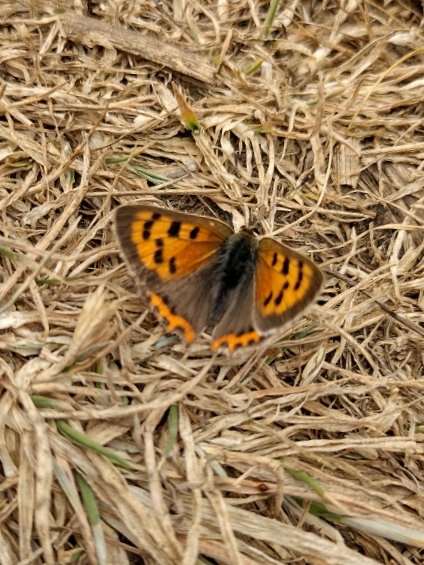
My second Butterfly Count was during a morning as I picked Blackberries (Rubus) at the local woodland park, where I saw 5 Gatekeepers, 1 Speckled wood (Pararge aegeria) and 1 Small copper (Lycaena phlaeas).
Speckled woodSmall copper
The Small copper is one I had never seen before. It is a small butterfly with a wingspan of 32-35mm. The caterpillars feed on Common Sorrel (Rumex acetosa), Sheep’s Sorrel (R. acetosella) and sometimes the Broad-leaved Dock (R. obtusifolius). They can be found in heath, moor and grassland together with woodland clearings or on waste ground.
At my allotment I have seen lots of Cabbage whites, along with the odd Peacock and Small tortoishell as well as a small blue Butterfly (that never settled so I was unable to identify it properly but was most likely a Holly blue- Celastrina argiolus). Thankfully I have also noticed plenty of bees during my butterfly observations, including honey, bumblebees and solitary bees.
Lughnasadh (also known as Lammas) a time when harvests begin to be ready for picking, occurred at the beginning of August. During this time I love to wander through natural environments, spending time observing the changes of the seasons. On my walk the previous weekend I observed Sloes (from Blackthorn- Prunus spinosa) and Elderberries (from Elder- Sambucus) already ripening alongside the Blackberries.
I must confess that I often struggle to enjoy the hottest days of summer. To me extremely hot temperatures are often overwhelming and I would love nothing better than to hibernate underground during the hottest times. I find the days exhausting and uncomfortable (due to the constant itchiness and sore skin). At these moments I rely on my mental strength to keep in mind that ‘this too shall pass’. I also try to remind myself that I love the changing seasons, including summer, and all they bring with them. Gratitude helps as each day I look for the little things that bring me joy such as the shining sun, the amazingly beautiful wildlife around me and the cooler night time temperatures. So until the heat reduces significantly I will keep taking things slowly, keep hydrated, take plenty of rest and be kind to myself. I am under no pressure to get things done at this time which is why this post took so long to complete.
With Buddleia, Lavender and Verbena bonariensis in full bloom at the moment butterfly sightings have increased significantly.
Along with plenty of Peacocks (Aglais io), Red Admirals (Vanessa atalanta) and Large whites (Pieris brassicae), I noticed a few other butterflies last week.
The first was a Gatekeeper (Pyronia tithonus) visiting Shasta daisies (Leucanthemum × superbum),
but I also saw a Comma butterfly (Polygonia c-album) pollinating some Verbena bonariensis too.
Along with these butterflies, the European gypsy moth (Lymantria dispar) reappeared, still under the Rhubarb patch on the allotment (see my ‘All you Need is Love and Nature.’ post from the 29th June 2020). However it was no longer a caterpillar but in the next stage of its life cycle, a pupa hanging from a Rhubarb leaf.
It can be in the Pupal stage for a fortnight so I will keep checking for its emergence as the adult moth, so I can hopefully see it take place. As I don’t exactly know when the Pupal stage began I’m not sure how soon it will occur. The male and female moths look very different so can be easily identified, plus the females don’t fly (see Butterfly Conservation); therefore if no moth is found then it was probably a male that has flown away.
The last insect that was noticeable last week was a Common red soldier beetle (Rhagonycha fulva).
It is always great to see these beetles as the are beneficial insects which predate aphids while their larvae eat invertebrate pests, slugs and snails.
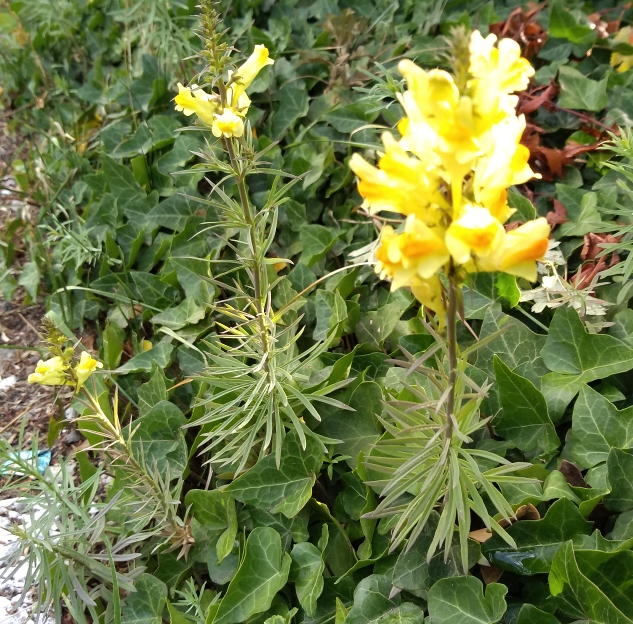
Some fields along my journey to and from work contain a lovely combination of pink Rosebay Willowherb (Chamaenerion angustifolium), purple Buddleia and white Wild carrot (Daucus carota) flowers. Not only do they compliment one another visually but they are all loved by pollinators too. Yellow toadflax (Linaria vulgaris) has started to bloom along the roadside as well.
One special moment occurred on the Monday. As I worked within a border I noticed a Buff-tailed bumblebee (Bombus terrestris) queen flying around a patch of grass. Eventually she began to settle and after a few more large sweeping flights began making a nest in the lawn.
It didn’t take her long to dig into the soil beneath the grass.
She will remain under ground until spring when she will start her own colony.
It was also great to finally get some photos of insects that have have alluded my photographic capture so far this year.
– The first is the Red admiral (Vanessa atalanta),
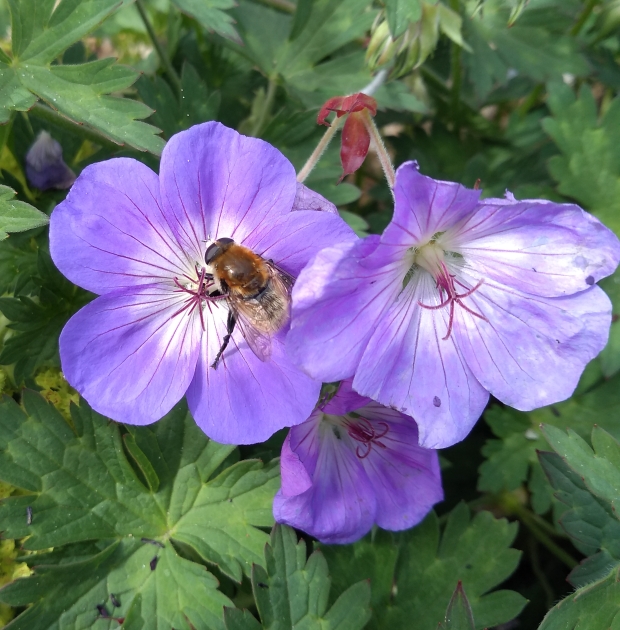
– Some Hoverflies, including a Hornet mimic (Volucellazonaria) hoverfly,
Hornet mimic Hoverfly pollinating Wisteria flowers that were still blooming.Hoverfly pollinating Geranium flowers.
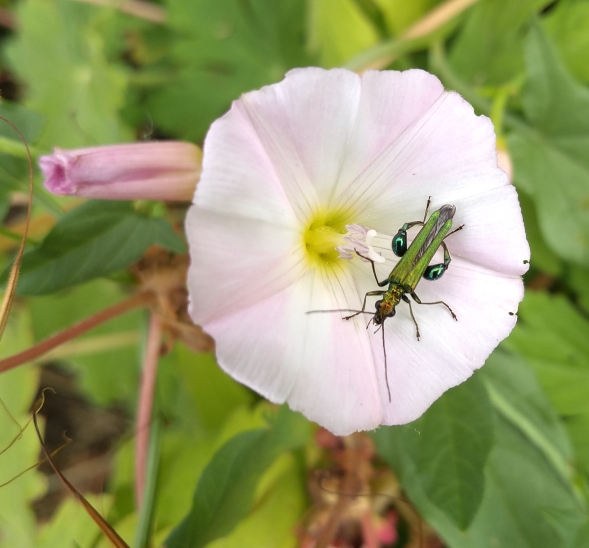
– as well as a Male False oil beetle (Oedemera nobilis), to compliment the female one seen on a walk earlier in the year.
A False oil beetle pollinating a Field bindweed (Convolvulus arvensis) flower.
The males are easily identified due to their large metallic thighs, explaining the reason behind the other common name for this insect the Swollen-thighed beetle.
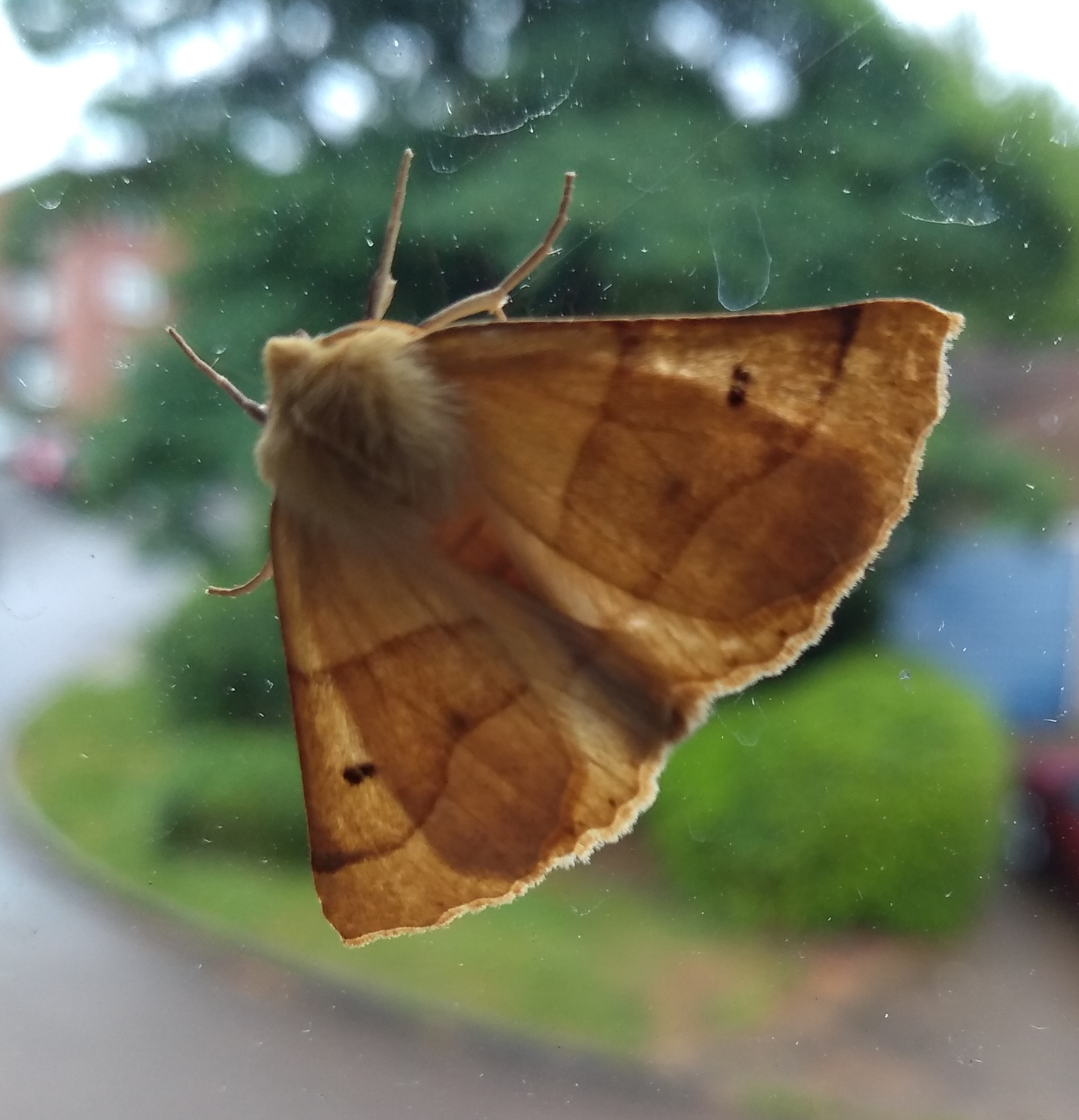
Bank holiday weekend was roasting, especially Sunday therefore I decided to take it easy so I wouldn’t overheat. Even though I didn’t go out, nature came to me. While looking out of the window I noticed a Red Underwing (Catocalanupta) moth trying to remain in shade on an outside wall. This large moth (6.5-7.5cm wingspan) has predominantly red underwings with black and white markings, hence it’s common name. The food of this moths larvae are
Willow (Salix) and Poplar (Populus) trees.
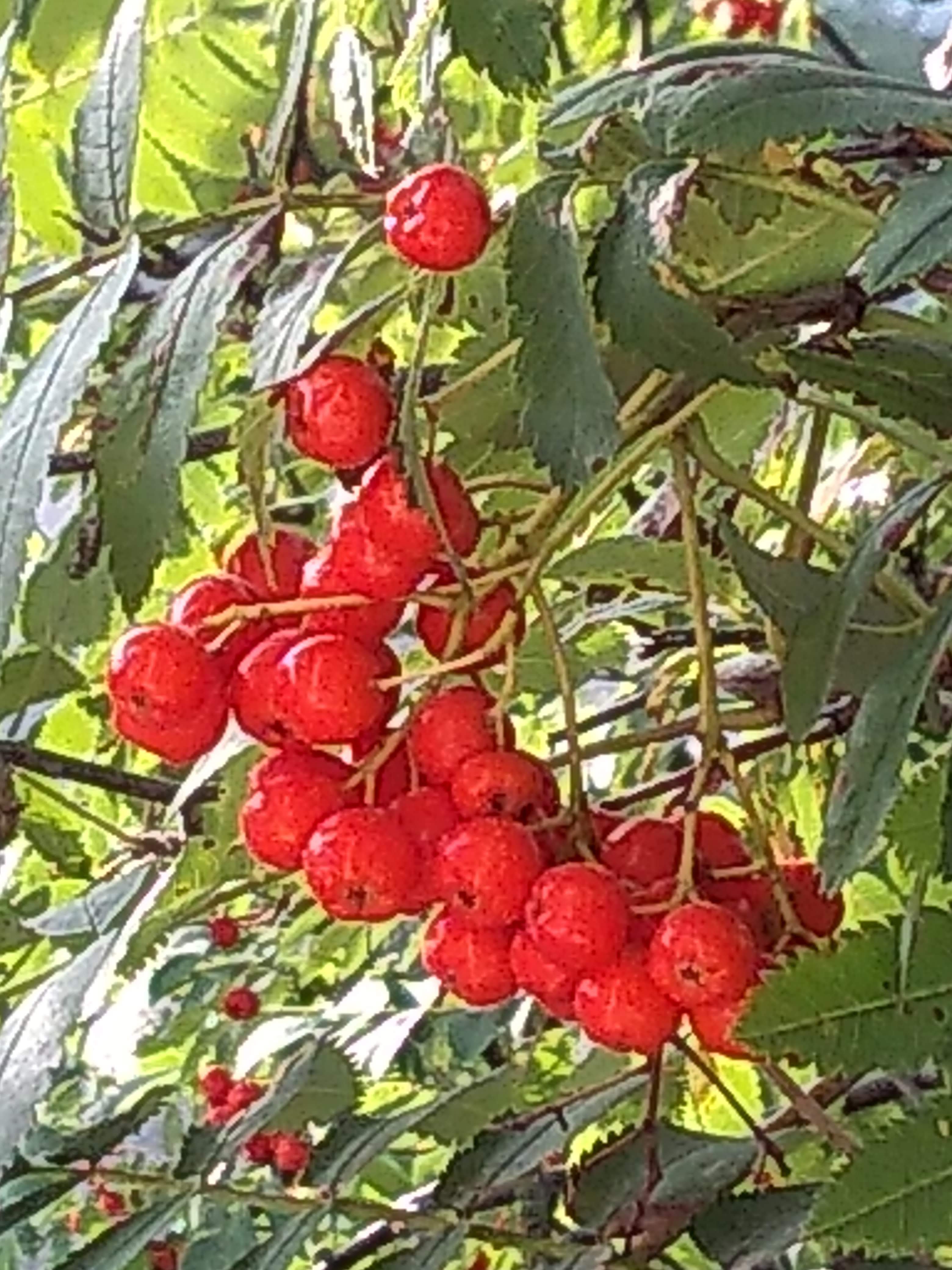
I also managed to photograph one of this years Blue tit (Cyanistes caeruleus) brood in the Rowan (Sorbus) tree outside. They are definitely looking more like the adults now.
It’s also lovely to see the Rowan is full of ripe berries ready for the Thrushes (Turdus philomelos) and also the Redwings (Turdus iliacus) that I usually see in winter.
Monday was slightly cooler although it was still hotter than I prefer it to be. However armed with suncream, hat and water I visited Ham House and Garden in London. While walking round the grounds, bees, crickets and the occasional Ring-necked parakeet (Psittaculakrameri) could be heard.
There was an extensive kitchen garden with cut flower and edible flower areas which I particularly enjoyed viewing.
I saw lots of Honey bees (Apis mellifera) on Globe artichokes (Cynara cardunculus) within the kitchen garden.
There was another lovely sighting as I ate lunch too. Amongst the Wisteria (having a second flush of flowers) as well as some scaffolding was a Wood pigeon (Columba palumbus) sitting on it’s nest. It didn’t move other than to blink as it was no doubt observing us all eating trying to remain undetected.
Upon my return there was a Speckled bush cricket (Leptophyes punctatissima) in the hall to welcome me home. As there was no ovipositor on the end of the abdomen (the appendage from which the female lays eggs) I identified it as male.
Long weekends are lovely but they still pass quickly and Tuesday rolled around again, so I was back to work.
I didn’t notice as many butterflies last week, although bees are still prevalent. During the warmest part of the day, when I was once again wilting, I noticed how active the Honey bees were on the Sedums even though they are only just starting to bloom.
I also observed a Small Dusty Wave (Idaea seriata) moth later that evening. It’s caterpillars feed on herbaceous plants especially Ivy (Hederahelix).
The nice weather of sunshine and low 20s temperature continued to the latter part of the week.
Once again it was Honey bees I mostly noticed on Sedums as well as some visiting
-Rudbeckia laciniata ‘Herbstsonne’.
– and Erigeron karvinskianus.
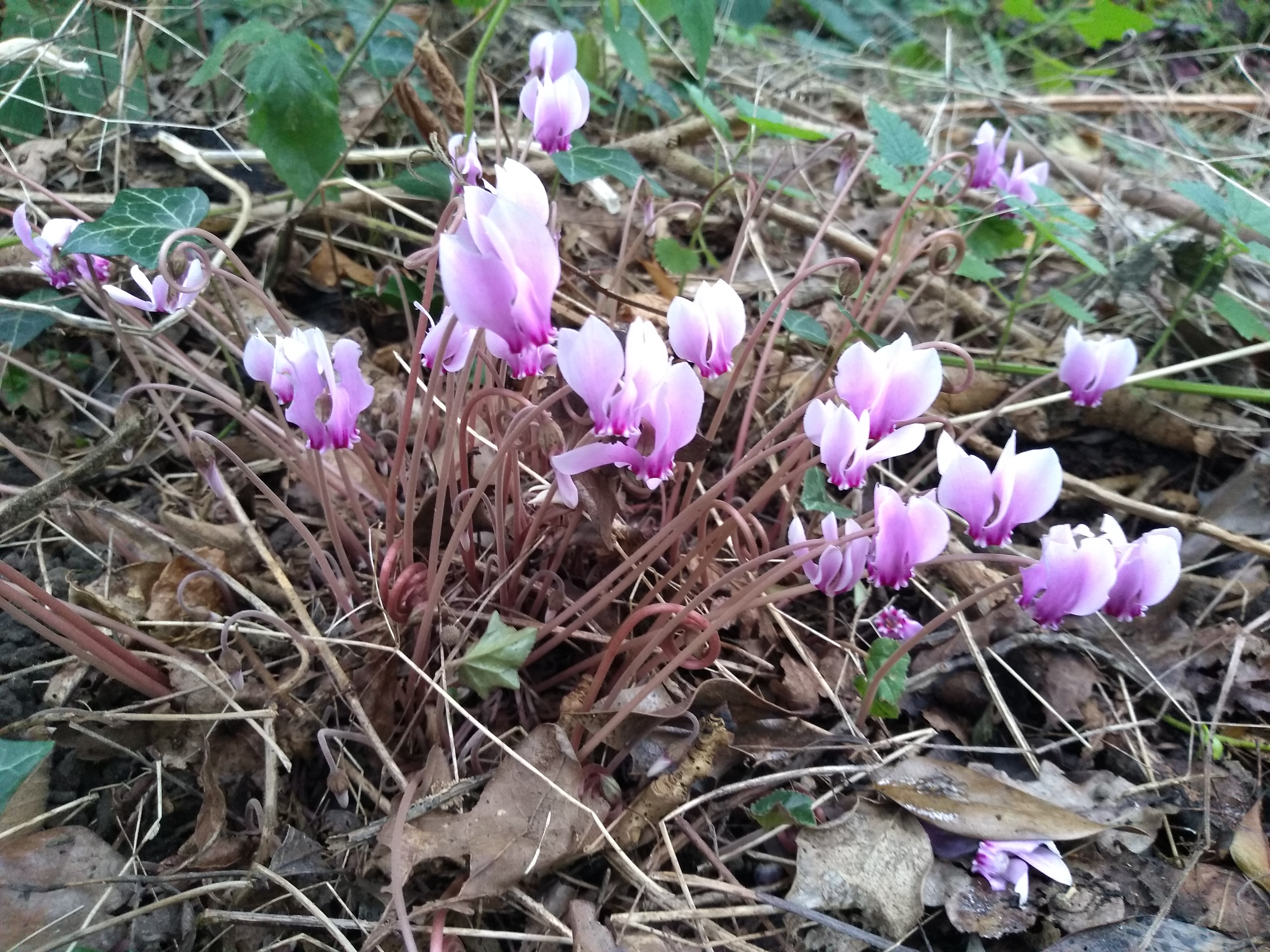
However there was one plant I noticed that surprised me. In a wooded area a small patch of Cyclamen hederifolium was poking it’s flowers above the leaf litter and Ivy; Yet another sign of late Summer and the beginning of Autumn.
Then just when I thought I wouldn’t get to catch a proper view of a butterfly, I managed to see a Small tortoiseshell (Aglais urticae) on a white Buddleja bush.
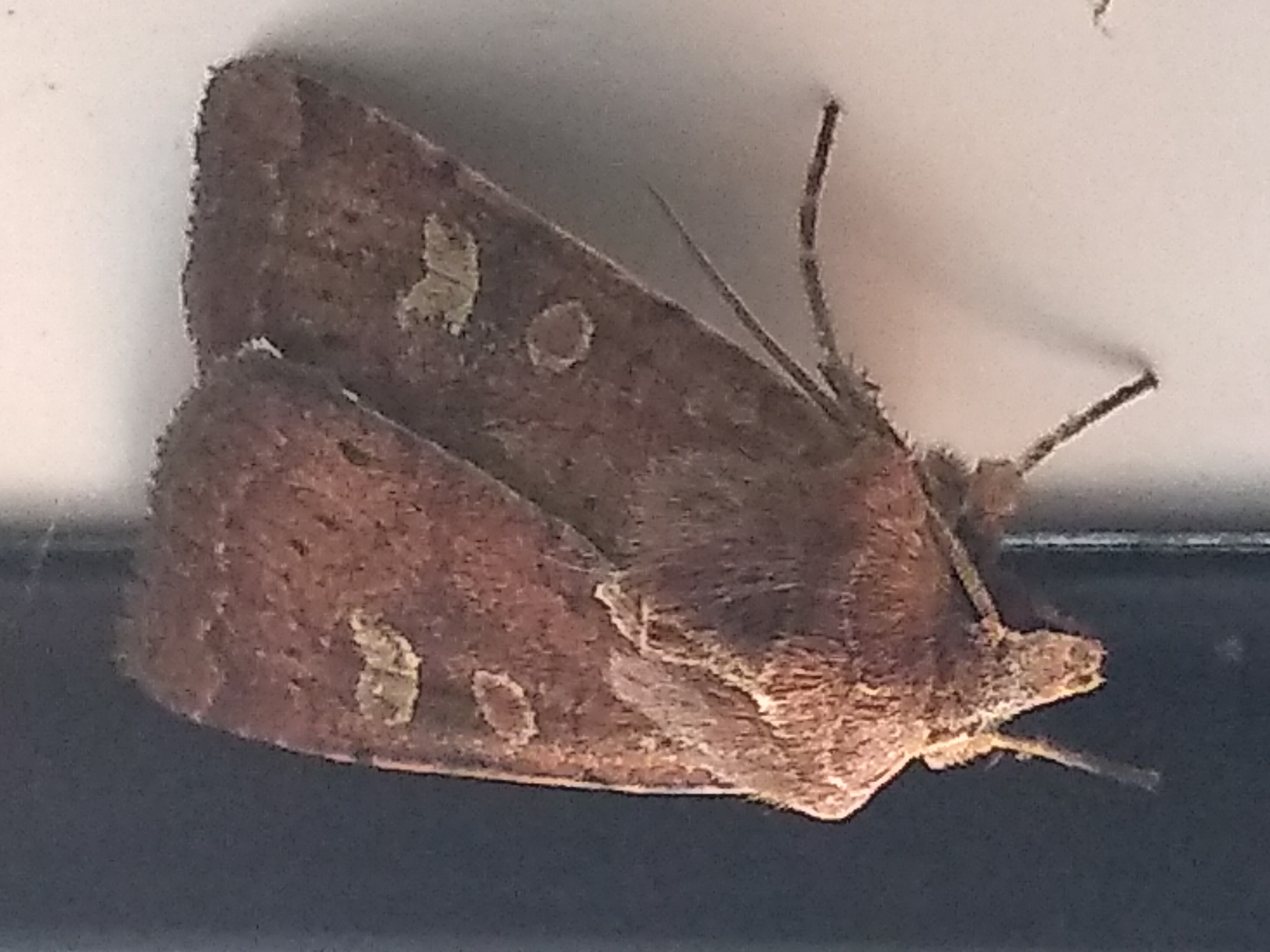
Lastly, I saw another moth in the hall, this time however it was a Square-spot Rustic (Xestiaxanthographa) moth.
I finally got to see a some Painted lady (Vanessacardui) butterflies, in fact there were three visiting a Buddleia I was working near. I thought I caught a glimpse of one last week (but couldn’t be sure) however this was a definite sighting.
I got to see them again on Tuesday together with a Large white (Pierisbrassicae), Small tortoiseshell (Aglais urticae) and a Red admiral (Vanessaatalanta) on the same Buddleia.
Plus earlier on Tuesday I got to see two Small white (Pierisrapae) butterflies, a Holly blue (Celastrina argiolus) along with a Meadow brown (Maniola jurtina) butterfly.
Also on Tuesday I got to feast on my first blackberries (Rubus) of the season and see an Oak bush (Meconemathalassinum) cricket in the hallway upon my return from work.
Wednesday was a washout and Thursday quiet too therefore it was nice to have some wildlife sightings on Friday morning before the rain returned.
While I ate breakfast, I observed the young Bluetits (Cyanistes caeruleus) visit the Rowan (Sorbus) tree. I noticed that their plumage was more like the adults, no longer predominantly green.
Then just before lunch, I noticed a Red-tailed (Bombus lapidarius) bumblebee and a Heath bumblebee (Bombusjonellus) visiting some Thyme (Thymus).
It was a slow start to last week, not brightening up until later on.
Yet as I waited for the bus to work on Monday I saw some Common yarrow (Achilleamillefolium).
It would have been flowering since June but the council have allowed the verges to grow long enough for it to fully bloom around the bus stop. Once in folklore it was believed to bring good luck and wellbeing if you carried it with you.
Tuesday was a washout so it was nice when I started to see bees and butterflies flying around from Wednesday onwards.
I noticed a different butterfly to those I usually identify.
There were two Gatekeepers (Pyronia tithonus) also called Hedge brown butterflies basking on some Bergamot (Monarda).
Bergamot is also called Bee balm because it is loved by bees.
The Gatekeeper in the previous photo is a male due to the pattern on the upper wings. Wing patterns vary within the genders, dependent on high temperature conditions while the butterfly is in the chrysalis stage of development.
The caterpillars feed on long grasses such as Couch-grass (Elymusrepens) or fescues (Festuca) while the adults like the nectar of Wild marjoram (Origanumvulgare), Common ragwort (Jacobaeavulgaris) or Bramble (Rubusfruticosus).
The name Gatekeeper made me remember Sigourney Weaver’s character Dana (who is possessed by Zuul the gatekeeper for Gozer) in Ghostbusters; therefore I have had the theme tune in my head ever since. Thankfully I like this earworm as it reminds me of an enjoyable childhood film. 🎶
In the same border I also noticed Buff-tailed bumblebees (Bombus terrestris) and Garden bumblebees (Bombus hortorum) on a Catmint (Nepeta × faassenii) plant.
On Thursday I was working near a pond and came across a dragonfly which I have been unable to completely identify.
The leg stripes rule it out as a Ruddy darter (Sympetrumsanguineum); however given the position I took the photo from, I can not see the frons (area on the face above the mouth parts) well enough to be certain if it is a female Vagrant (Sympetrumvulgatum) or a female or immature male Common darter (Sympetrumstriolatum).
Friday was the opposite of Tuesday, both for the weather and successfull nature observing. In fact during the afternoon in the space of twenty minutes I saw a Large white (Pierisbrassicae), Small tortoiseshell (Aglais urticae), Red admiral (Vanessaatalanta), Comma (Polygoniac-album), Meadow brown (Maniola jurtina)
along with three Peacock (Aglais io) butterflies.
I managed to obtain a photo of the Comma on a purple Buddleia as well as (finally) manage to capture the elusive Peacock on a white Buddleia.
I had to photograph something else from that garden too. A Chinese trumpet vine (Campsisgrandiflora) plant was arching over the wall from the neighbours.
The gorgeous colour of the flowers took my breath away, especially set against the white house and sunny blue sky. I couldn’t resist sharing its beauty.
Lastly I have ended a tiring week relaxing at a cafe drinking a mocha. Once again my spirits were lifted as I watched a Wagtail (Motacillaalba) hoping to benefit from dropped crumbs; it was a lovely thing to see.
The weather last week was a mixed bag. Sunshine with the temperature rising into the thirties, fantastic storms and then dull days of rain. Thankfully it is a little cooler now; while I enjoy the sun, I wilt in muggy heat.
Given the weather there were still lots of butterflies around, mostly Peacock (Aglaisio), Red admiral (Vanessaatalanta) and Small white (Pierisrapae). Unfortunately I haven’t managed to capture photos of any of these as they didn’t remain in situ for long. I see many white butterflies flit past me. It can be difficult to say if they are Large white (Pierisbrassicae), Small white or female Orange tip (Anthochariscardamines) butterflies because they disappear before I can identify them.
Happily I was able to photograph one butterfly on a Buddleia on Wednesday. The combination of the pattern in the underside, orange colouring I saw on the upper wings, together with the wing outline means the butterfly in the photo below is a Comma (Polygoniac-album).
Their Caterpillars usually feed on the Common nettles (Urticadioica) but also Elms (Ulmus), Hops (Humuluslupulus) as well as Willows (Salix). Peacocks often visit Buddleia too. The Common Nettle is also the favoured food of Peacock Caterpillars; although they have been recorded feeding on hops and small nettle (Urticaurens) as well. As the common nettle is the favourite food of both Comma and Peacock caterpillars, what better reason is there for allowing some nettles to grow in a garden?
There were other observations last week too;
– a Harlequin ladybird (Harmoniaaxyridis) on some Lesser Burdock (Arctiumminus),
– a Scalloped oak (Crocalliselinguaria) moth,
The caterpillars of these moths feed on honeysuckle (Lonicera), heather (Calluna vulgaris) and broadleaf trees like Oak (Quercus) and Birch (Betula).
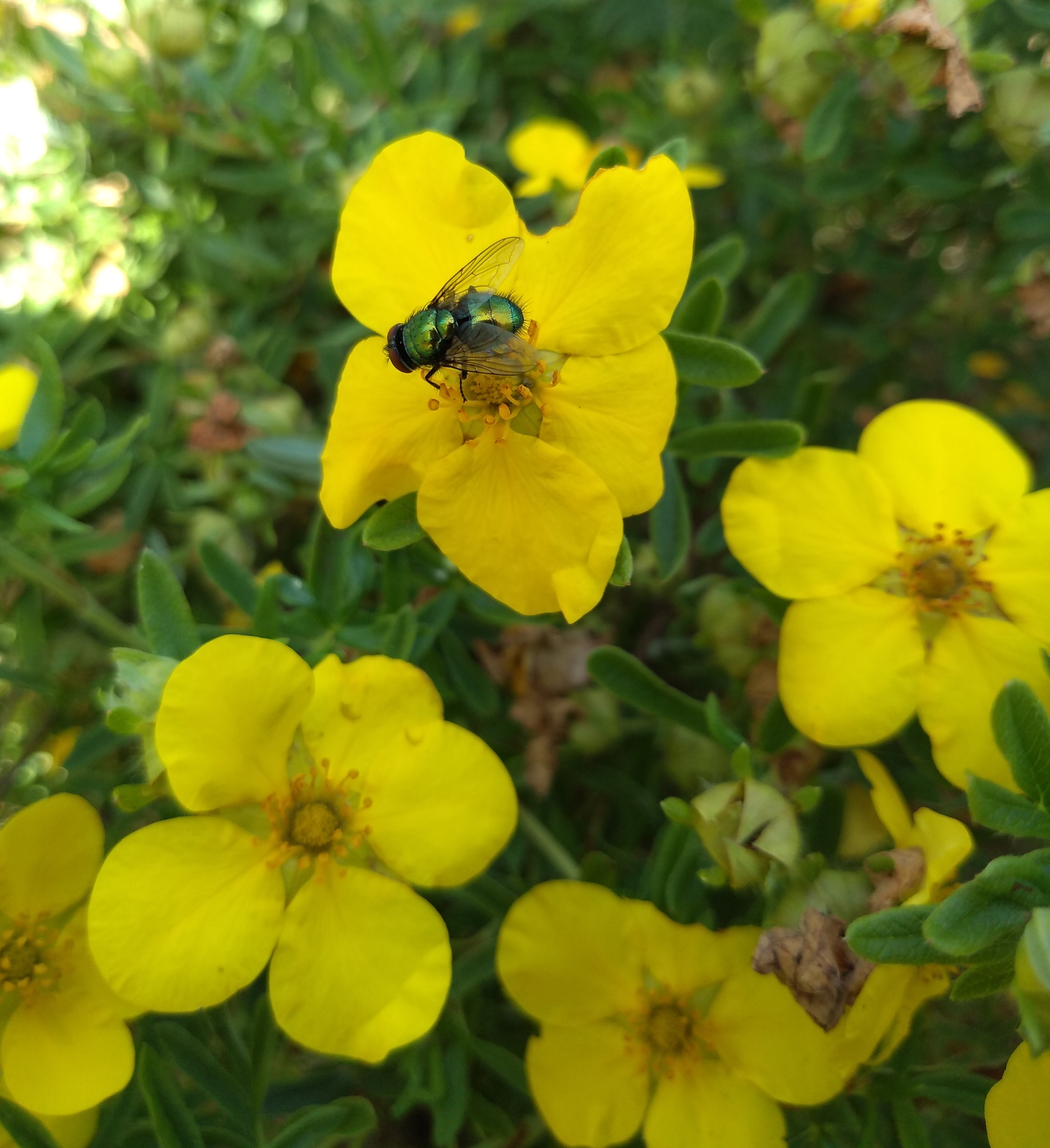
– plus a Long hoverfly (Sphaerophoriascripta), whose larvae feed on aphids, and a Common green bottle fly (Luciliasericata) on a Potentilla plant.
Capturing the Common green bottle fly was accidental but it worked out really well. In the sun its glistening metallic colouring is highlighted against the yellow Potentilla flowers. Their maggots feed on dead tissue so their appearance is used to accurately determine time of death. Adult Common green bottle flies on the other hand are useful pollinators, as the last photo proves. Fascinating how different stages of this fly species exists alongside both death and life.














 Bee in the Moment