Posted in nature

Gardens and Nature Never Sleep

It is always nice to see flowers begin to bloom while others, that have performed throughout the year, wain. On one walk last week I came across a patch of Common Hogweed (Heracleum sphondylium) flowering.
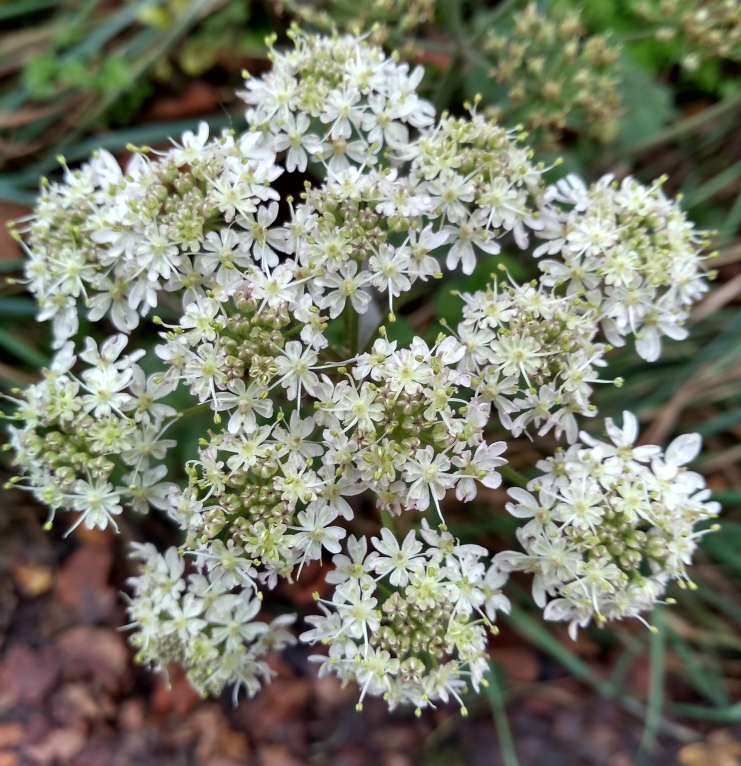
It usually blooms between June and September so it must have been having one last flourish.
Common hogweed is from the same plant family as Ground elder (Aegopodium podagraria) and Cow parsley (Anthriscus sylvestris). All three native umbellifer plants are great for pollinators like hoverflies, Soldier beetles, some butterflies along with short-tongued bees, because these insects need flat flowers in order to gain access to pollen and nectar. Common hogweed is a tall wildflower growing up to six feet in damp conditions along waysides, open woodland, next to riverbanks and amongst rough grassland. It is also called Cow parsnip and had some other interesting names in the past, including Limberscrimps (in Cornwall), Wippul-Squip (Northamptonshire), Cowbumble (gloucestershire).

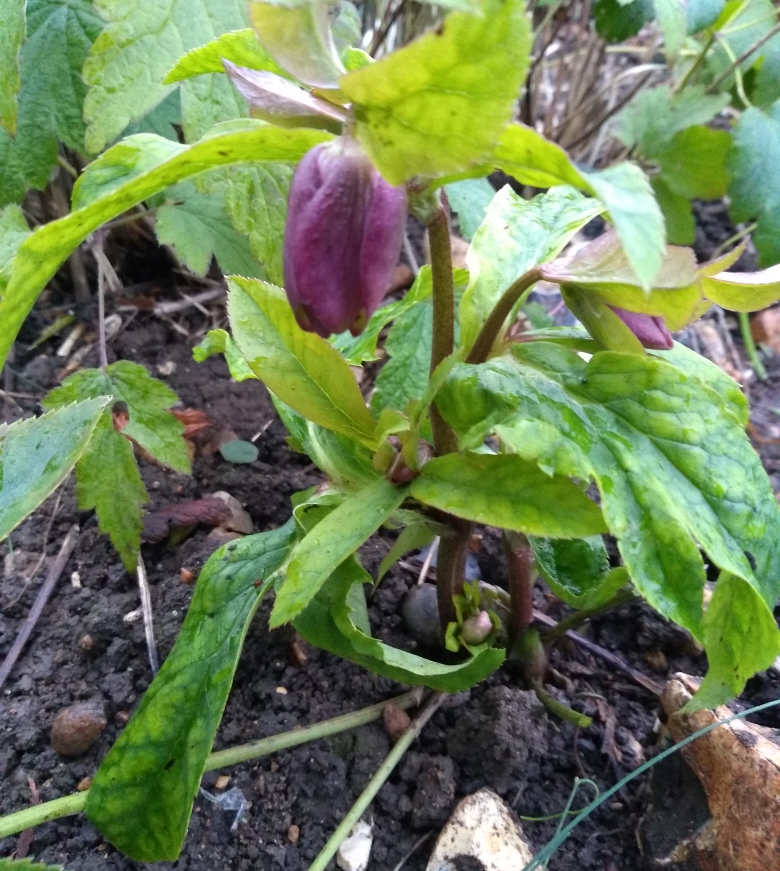
Gardens also continue to show signs of life at this time. The phrase ‘putting gardens to bed’ in winter is often a misnomer and rarely happens. They are never entirely in hibernation as something is usually awake, even if it is only visiting birds. Plus winter or spring flowering plants begin to bloom and grow now. Last week I noticed Hellebores starting to flower
along with Snowdrops (Galanthus)

and Daffodils (Narcissus)

peaking through the soil.

A bird that is easier to see these days are Ring-necked parakeets (Psittacula krameri). They were particularly prominent in one garden I worked at last week where a group kept flying between several trees, before eventually settling within a Eucalyptus tree.
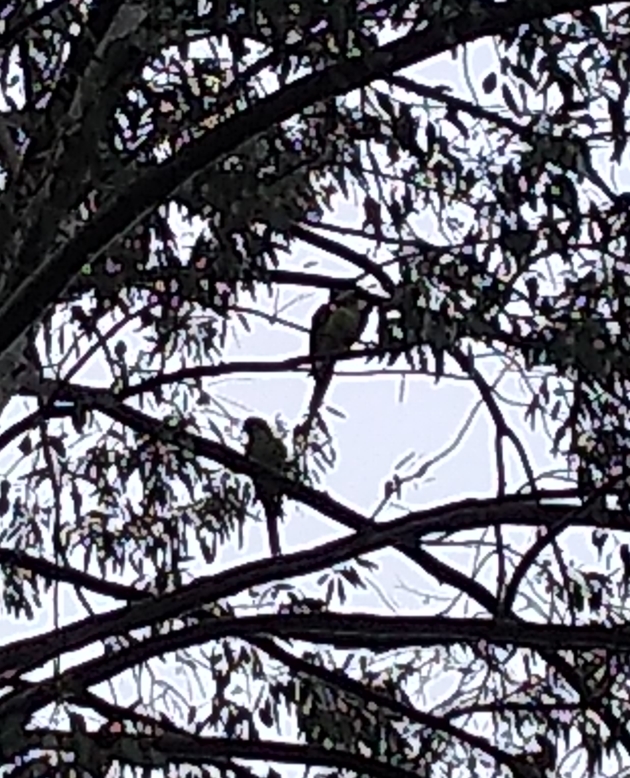
Two parakeets silhouetted in a Eucalyptus tree.

These birds and trees were introduced into this country from warmer areas of the world, yet both species can cope with the colder uk climate.

The evergreen Eucalyptus tree leaves are a bluish green colour when mature. Eucalyptus oil is obtained from the mature leaves, known for its antiseptic properties together with a distinctive aroma.  Immature leaves are more rounded and a bluish shade. The tree flowers from July to October and are especially liked by bees and other pollinators.

Ring-necked parakeets (Psittacula krameri) are parrots that originated from Asia. The history of their introduction to the UK is explained by the RSPB here.

These birds have successfully breeded in this country for years to become a familiar sight in the south-east, particularly urban areas of Hertfordshire, Kent, Surrey and Sussex; their range extending further and further from London. Although they can be observed (and more often heard) throughout the year winter, when the trees are bare, is the best time to see them perched upon branches; unless you are lucky enough to have them visiting bird tables in your garden. They eat a variety of food, having developed an omnivorous diet as they naturalised over here (even though they remain vegetarian in Asia). While they usually eat seeds, fruit, nuts and berries they have been known to feast on scraps left out, including meat scraps. In fact it’s believed they can survive UK winters because they feed from bird tables.

Ring-necked parakeets are very social and can be seen in large flocks containing hundreds of birds. This can make them very noisy and therefore a nuisance in some peoples eyes. Yet whatever your opinion on these birds there is no denying their beautiful colours which seem to become more vivid at this time of year. Even on bleak days beauty exists; sometimes you just have to amend your focus to see it.

Posted in nature

Small Body, Big Voice

Once again, watching birds on my local Rowan tree has become my therapy as I remain inside more.

Last week, along with the usual suspects of Blue tits (Cyanistes caeruleus), Starlings (Sturnus vulgaris), a Robin (Erithacus rubecula) and Blackbird (Turdus merula) was a Song thrush (Turdus philomelos) feasting on some berries as well as a female Chaffinch (Fringilla coelebs) making a pit stop.

Another bird I noticed last week, while working in one garden, was a Wren (Troglodytes troglodytes). I followed a loud bird call towards a hedgerow where I managed to discover this distinctive small bird. It was wonderful being able to connect the call to a Wren; partly because I didn’t recognise the call but mainly because I got to see a Wren (highly unusual in itself, as they often hide themselves away). I wasn’t sure why it was emitting an alarm call, possibly a cat was on the other side of the hedge, hopefully I wasn’t the reason. Almost as soon I saw the Wren it disappeared further into the hedge; my fleeting glimpse ended. The Wren alarm call can be heard on the following link British birdsong.

Posted in nature

As Snug as Three Bugs in a Tree Peony Seedhead

The photo above proves the importance of being careful when tidying gardens so hiding insects don’t become injured.

It’s best to leave cutting down perennials until spring if you can; not only do insects, like these Seven-spot ladybirds (Coccinella septempunctata), shelter amongst them but they provide food for birds too.

Posted in nature

“It’s a Bird!” “It’s a Plane!” “It’s a Superperb Moth!”

Last week I began hearing the male Tawny owls (Strix aluco) territorial call as I fell asleep and again when I awoke. Usually this starts from late autumn and continues throughout winter (see BTO). Whatever the reason for him asserting his territory early, it was lovely to hear that sound return from last winter. Yet this wasn’t the only spectacle I noticed last week.

Last Wednesday, as I cut back spent Lavender, I became aware of something flying past me. I continued to watch until the insect stopped to gain nectar from some Red Valerian (Centranthus ruber); It was a Humming-bird Hawk-moth (Macroglossum stellatarum). As this was my first sighting of this superb moth, I found it impossible to maintain my composure as I hurriedly fumbled for my phone. Unfortunately it was too quick for me to photograph as it flitted between flowers, not resting as it fed. It did return momentarily but I was still unable to gain photographic evidence before it flew away once again. A visual guide can be seen on the Butterfly Conservation website. For further information on Red Valerian see the RHS website.

Apparently it is possible to hear it buzz as it flies, due to the quick movement of it’s wings; sadly all I could hear were builders working nearby.

Occasionally this daytime flying moth can be observed at other times of the year but traditionally it is seen between June and September. It usually migrates to the UK from the continent but in milder winters can overwinter in this country; in sheltered areas such as crevices, holes within trees and outbuildings.

It obtains nectar from a variety of plants in gardens, woodland edges as well as heathland on very warm sunny days. Along with the Red Valerian I noticed this one visit these moths can be seen amongst Honeysuckle (Lonicera), Jasmine (Jasminum), Buddleja, lilac (Syringa), Escallonia, Petunia and Phlox. While the caterpillars only feed on Wild Madder (Rubia peregrina) and Red Valerian along with Lady’s (Galium verum) and Hedge Bedstraw (Galium album).

Posted in nature

The Birds and the Bees

Two creatures were evident last week even though I didn’t actually see them.

Firstly Wrens (Troglodytes troglodytes) sung loudly in different areas, including near my home. It was a joy to hear them throughout the mornings.

These brown, diminutive birds with upturned tails, weigh about 7-10 grams; only Goldcrests (Regulus regulus)
are smaller. Wrens are rarely seen as their nests (made from moss and twigs) are positioned beneath shrubs or in rock crevices. Plus they mostly feed on insects and spiders and therefore remain hidden for a large amount of time. However they make their presence known due to their powerful song which can be heard at some distance. Their distinctive song contains a trill at the end, often discribed as sounding like a machine gun (see RSPB).

Secondly, on Thursday, I discovered that female Leaf-cutter bee(s) had visited one of the gardens I help look after. The evidence was semi-circular shapes cut around the edges of Broad-leaved enchanter’s nightshade (Circaea lutetiana) leaves.

The Broad-leaved enchanter’s nightshade is part of the Willowherb family.

The bits of leaf will have been carried to a nest, chewed and mixed with saliva to form walls to create the cells if the bees nest. Commonly Bee hotels are used by these solitary bees with lots of cells within each piece of bamboo or hole. Each cell contains an egg and pollen so that the larvae has a food source when it hatches. Although they become adults in autumn, the newly formed bees hibernate during winter, emerging in spring when the new generation repeats the process.

The most common Leaf-cutter bee found in gardens is the Patchwork leaf-cutter bee (Megachile centuncularis); for more information see The Bumblebee Conservation Trust.

Common plant leaves used for this purpose by Leaf-cutter bees are those from Roses, Wisteria, honeysuckle, several tree species and Willowherbs. As at least one bee was clearly using these plants for it’s nest, patches of these wild flowers were left at the back of the borders and the client was informed. Thankfully they are a fellow bee lover and happy to allow them to remain. I feel it’s important to point out, that no lasting damage is done to the plants. Therefore if you find such holes cut in your roses, please don’t panic.

I have yet to see a Leaf cutter bee, especially one ‘surfing’ with a leaf. I would love to see one of these bees so I got incredibly excited to see this evidence. Unfortunately my search was in vain but I am one step closer.

Posted in nature

Further Easing into Summer

I am constantly amazed by the natural world. Last week I saw something that, as a gardener, I’m surprised I’ve never noticed before. A few White-tailed bumblebees (Bombus lucorum) flew to and from a nest in a wall, via the damp proofing brickwork, of an old house. What I wasn’t expecting to see were the blue pollen baskets.

I had never thought of pollen as anything other than varying shades of yellow. After researching this I found that different coloured pollen often shows up in nests and hives. Charts have been produced enabling beekeepers to identify which flowers their bees have visited by the colour and shade of the pollen found. The most likely candidates in this instance, given the time of year and dark blue shade, is Purple tansy (Phacelia tanacetifolia), see the North Shropshire Bee Keepers Association website.

Phacelia is loved by bees. These photos are from a neighbouring allotment plot.

As well as Phacelia other flowers currently blooming include;

– Hedge woundwort (Stachys sylvatica),

– Pineappleweed (Matricaria discoidea),

A close up view of Pineappleweed. When crushed, the flowers have a refreshing pineapple scent.

– Stinking iris also called Roast-beef plant (Iris foetidissima),

This plant has two colour variations. It thrives in shady areas.

– Scarlet pimpernel (Anagallis arvensis) and

– Pyramidal orchid (Anacamptis pyramidalis)

This orchid is attractive to butterflies and moths.

Birds are particularly noticeable at this time of year as they feed youngsters and defend territories. Last week I was able to listen to Song thrush (Turdus philomelos), Chiff chaff (Phylloscopus collybita), Robin (Erithacus rubecula) Great spotted woodpecker (Dendrocopos major) and Swifts (Apus apus).  I saw the Swifts’ arial display as they soared and dived in the distance while I ate lunch last Wednesday. They were too high and quick for me to identify visually but their vocalisations gave them away. The Swifts’ call can be heard on the RSPB website.

Ladybirds continued to show up last week, but mostly the Seven-spot ladybird (Coccinella septempunctata).

Eventually, the weather turned and rain finally arrived by Friday. It has been much needed and continued throughout the weekend. It was fantastic to watch thunder and lightening from the comfort of my sofa on Saturday afternoon.

Posted in nature

Every Day is a School Day

No doubt due to the recent weather, I have noticed more flowers blooming earlier than their traditional start time of June. One example is the Common nipplewort (Lapsana communis).

The Common nipplewort is part of the sunflower family.

Other plants flowering at the moment are Greater celandine (Chelidonium majus),

This isn’t a relative of the Lesser celandine (Ficaria verna) despite its name. It is part of the poppy rather than buttercup family.

– Three-cornered garlic (Allium triquetrum),

Ants spread the seeds of this wild flower.

– Red campion (Silene dioica),

A dioecious plant, male flowers bloom on separate plants to the female flowers.

– White campion (Silene latifolia),

White campion is pollinated by moths because it is night scented

– Cleavers (Galium aparine),

The flowers of Cleavers are tiny. This photograph has been enlarged so they can be seen more clearly.

– Common honeysuckle (Lonicera periclymenum),

I noticed the sweet scent first. This plant is beneficial for a variety of butterflies, like the White admiral (Limenitis camilla), bumblebees and moths. Birds such as Thrushes (Turdidae), Warblers (Sylvidae) and Bullfinches (Pyrrhula pyrrhula) also eat its berries. Plus Dormice (Muscardinus avellanarius) inhabit and feed on this plant.

– A sow thistle (Sonchus),

– A Hawkweed (Hieracium),

– Mouse-ear Hawkweed (Hieracium pilosella)

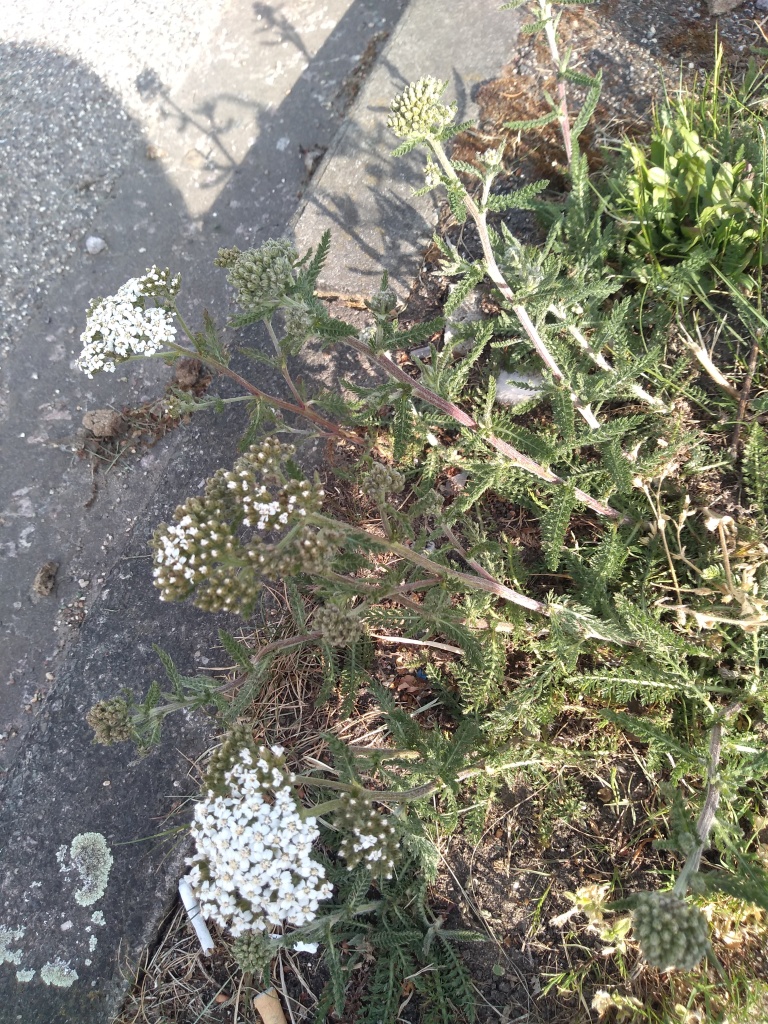
– and Yarrow (Achillea millefolium).

A plant that was new to me was Common knapweed (Centaurea nigra).

Along with all the wild flowers I noticed last week, the warm weather continued to encourage lots of insects out. There were more Holly blue (Celastrina argiolus) and Orange-tip (Anthocharis cardamines) butterflies along with bumblebees.

I also saw a Cinnabar moth (Tyria jacobaeae) at the allotment, amongst the long grass.

This moth flies flies during the day as well as at night time.

The most interesting insect I observed last week was a Pine ladybird (Exochomus qadripustulatus).

I have never seen this species of ladybird before. It dropped onto my sunglasses as I worked. Due to its small size (3mm in length), to begin with I thought it was a bit of dirt. As the name suggests, this beetle inhabits Pine (Pinus) trees. However they can also be found around other trees and shrubs especially Hawthorn (Crataegus monogyna).

Posted in nature

What a Hoot.🦉🎵🦉🎶

On Saturday night I woke up to a beautiful duet. A pair of Tawny owls (Strix aluco) were calling to one another, reinforcing their territory. The male call sounds like ‘hooo, hu, huhuhuhooo’ while the female gives a ‘keewik’ sound (see BTO).

Tawny owls pair for life and remain in their territory (initially established in winter) throughout the year. Deciduous broadleaf woodland is their traditional habitat but sometimes they live in large gardens and parkland. They nest within tree cavities or nest boxes. Occasionally eggs are laid in February but more often between March and April. While the female is slightly larger than the male, these owls are the same size as a wood pigeon. They feed on small mammals, birds, rodents, fish, frogs, insects and worms. Their UK Conservation Status is Amber as their numbers are declining. 

Another bird which caught my eye last week was a male House sparrow (Passer Domesticus). I was leaving the allotment when I observed him collecting nest material before flying off. As with the Tawny owl, House sparrows pair for life and their numbers have also been declining for a while; House sparrows are Red in the UK Conservation Status list. I grew up seeing lots of them but since moving down south, I haven’t seen one for years so this was a wonderful sight. I love these little birds, especially hearing their chattering and chirping in their colonies. Hopefully I will see him and more Sparrows soon.

As the week went on I noticed more flowers blooming in the hedgerows. Wild strawberry, also called Alpine strawberry (Fragaria vesca), was the first one I saw.

The fruit of this strawberry can be eaten.

Others I saw were; Bugle (Ajuga reptans),

These flowers are visited by White-tailed bumblebees (Bombus lucorum), Common carder bees (Bombus pascuorum), Silver Y moths (Autographa gamma) along with Green-veined white butterflies (Pieris napi).

– Herb bennet/Wood avens (Geum urbanum) and

Grizzled skipper butterfly (Pyrgus malvae) caterpillars feed on this plant.

– Bush vetch (Vicia sepium).

Bees and other pollinators enjoy these flowers.

I got to see a female Orange- tip (Anthocharis cardamines) butterfly, having seen a male one the other week. Males have the orange tips while the tips on the female’s forewings are black (both have the black spots). The female can be identified apart from other white butterflies by the mottled green and white underwings (also exhibited by the males). Caterpillars of this butterfly feed on Garlic mustard (Alliaria petiolata) and Cuckoo flower (Cardamine pratensis).

Posted in nature

Even Nature Turned Blue for the NHS.

While flowers dominated my thoughts last week, there were moments when I enjoyed observing bees and butterflies too. I saw my first male Orange-tip butterfly (Anthocharis cardamines) and female Red-tailed bumblebee (Bombus lapidarius) of the season; both visiting Dandelions (Taraxacum officinale). Other butterflies I noticed were more Speckled woods (Pararge aegeria) and Peacocks (Aglais io). All were too busy making the most of the sun to remain still long enough for me to photograph them.

After threatening to rain last Sunday, with distant thunder in the afternoon and evening, wet weather eventually arrived the following weekend. On Friday it rained late in the day through to Saturday afternoon. The ground loved that sustained soaking and together with all the sunshine we’ve had recently the grass is beginning to flourish. Thankfully lots of wild flowers bloom despite the lack of water, including;

– Ivy-leaved toadflax which is also called Kenilworth ivy (Cymbalaria muralis),

– Lords and ladies, otherwise known as Cuckoo-pint (Arum maculatum),

– Ribwort plantain (Plantago lanceolata),

The seedheads are great for feeding birds in winter.

– Dog’s mercury (Mercurialis perennis),

The tiny flowers are easy to miss amongst the leaves.

– Ox-eye daisy (Leucanthemum vulgare) and

– Cuckoo flower (Cardamine pratensis).

The name for this comes from the belief that this plant blooms at the same time the first Cuckoo arrives in the UK.

The main spring spectacle of the English countryside however are English Bluebell (Hyacinthoides non-scripta) woods in full bloom. Photos of these have filled social media over the past week. I am lucky enough to live near to several woods where English bluebells flower, however due to the lockdown this year I have to make do with spotting the ones amongst the headgerow, on my way to the allotment. Thankfully even small scale sightings of these flowers makes my heart soar. Swathes of these beauties are an indicator of ancient woodland (they are slow growers with seeds taking five years to become bulbs, which then flower). 

English bluebells continue to be under threat from the Spanish bluebell (Hyacinthoides hispanica) escaping from gardens, brought to these shores by the Victorians, which readily hybridise with English ones to produce the Hybrid bluebell (Hyacinthoides x massartiana). However, this isn’t the only threat to our native Bluebell. Habitat destruction is another reason for their decline. Simply walking on them can prevent them from flourishing for years afterwards as photosynthesis is prevented and the plant is weakened. They are a protected species under the ‘Wildlife and Countryside Act (1981)’. This means that people can be prosecuted for removing the plants and bulbs from their habitat and/ or selling them. 

It is possible to tell the English and Spanish Bluebells apart.
English Bluebells are a deep violet shade of blue with creamy-white pollen. The leaves are narrow (1-1.5mm wide) as are the flowers. The tips of each petal (six in total) curl up and inwards. The scented flowers grow on one side of the stem causing it to arch over to the one side (referred to as inflorescence).

Spanish bluebell flowers are pale blue (but can be pink or white), have a wider open bell shape with flared petal tips and bloom all around the stem, which therefore remains upright. The leaves are also wider (by 3cms) than its English counterpart and the flowers have no scent. 

Unsurprisingly the hybrids possess characteristics of both parents, however their appearance tends to be more like the English Bluebell meaning distinguishing the two can sometimes be difficult. 

Last week I saw both English and Spanish Bluebells on my daily exercise.

English Bluebells are great for long-tongued bumblebees. However previously I have seen evidence of short-tongued bumblebees visiting Bluebells. Unable to reach the nectar in the traditional method, I noticed a hole in the base of the flower where a bee had obtained the nectar without pollinating it. This is referred to as ‘nectar robbing’.
Spanish bluebells found in a garden.

Bluebells are interwoven into our culture. In the past the sap was used to glue feathers to arrows and in book binding. Plus the Elizabethans used the bulbs to starch collar and sleeve ruffs.

In folklore they are associated with fairies while in the language of flowers (popular in the Victorian era) they represent humility, constancy, gratitude and everlasting love. What better flower to have bloom during this difficult time when we are showing our appreciation for the NHS and other frontline workers. It seems even nature has turned blue in solidarity.

Posted in nature

No Rain but Rainbows Everywhere

I continue to get my daily exercise outdoors and enjoy seeing rainbows drawn by children in windows or on driveways. Although we had sun last week there was no rain so these cheerful rainbows of unity were the only ones that have appeared.

The lovely weather encouraged many insects out. Last week I managed to count eight Peacock (Aglais io) butterflies. I also saw one Brimstone (Gonepteryx rhamni) butterfly visiting some Dog violets (Viola riviniana). I have never noticed insects pollinate these pretty flowers before so it was lovely to observe that. These dainty plants are very useful additions to wildlife gardens for another reason too; several fritillery butterflies lay eggs on them. During that same walk I also saw lots of seven-spot (Coccinella septempunctata) ladybirds as well as a few Dark-edged bee-flies (Bombylius major).

A Dark-edged bee-fly pollinating some Forget-me-not (Myosotis sylvatica) flowers.

I have never seen these parasitic flies before whose host is the Tawny mining bee (Andrena fulva). The Tawny mining bee is commonly found in urban areas especially in lawns, although I have yet to see one (to find out more see the Bumblebee Conservation Trust). There is a recording scheme for Bee-flies so I shall pass this information on to the (BRC).

On Friday mornings exercise I saw a Song thrush (Turdus philomelos). The last time I saw one was a couple of years ago but this probably isn’t surprising because they are on the red UK conservation status list (see RSPB). It was great to see this one, although I wonder if I accidentally disturbed it looking for food; I came across it on a path before it flew into some trees.

As I walked further, I noticed more plants beginning to bloom. These were;

-Bulbous buttercups (Ranunculus bulbosus),

Identified by the reflexed sepals (turned downward), leaf shape, furrowed stems and the fact it is flowering before May.

-Danish scurveygrass (Cochlearia danica),

Once only found in coastal areas this plant now thrives here because of the salted roads during winter.

-Garlic mustard (Alliaria petiolata),

-Yellow corydalis (Pseudofumaria lutea) and

This often grows in the gaps in old walls.

-Dove’s-foot Crane’s-bill (Geranium molle).

Even without natural rainbows nature was still full of colour last week.