
The shift in seasons is definitely noticeable now. This November is warmer than usual, so we still haven’t had a frost here in southern England; however autumn colours, shorter days, wet weather and fungi have arrived over the past month.
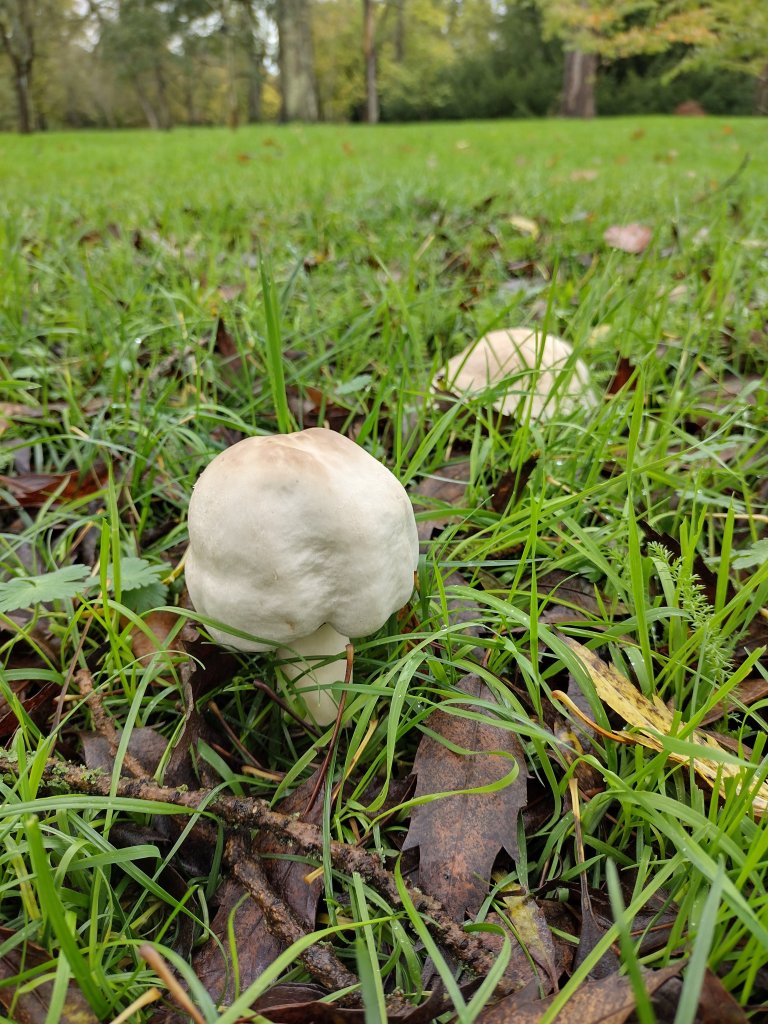
On a recent trip to Kew gardens several fungi including some Horse mushrooms (Agaricus arvensis),
and Parasol mushrooms (Macrolepiota procera)
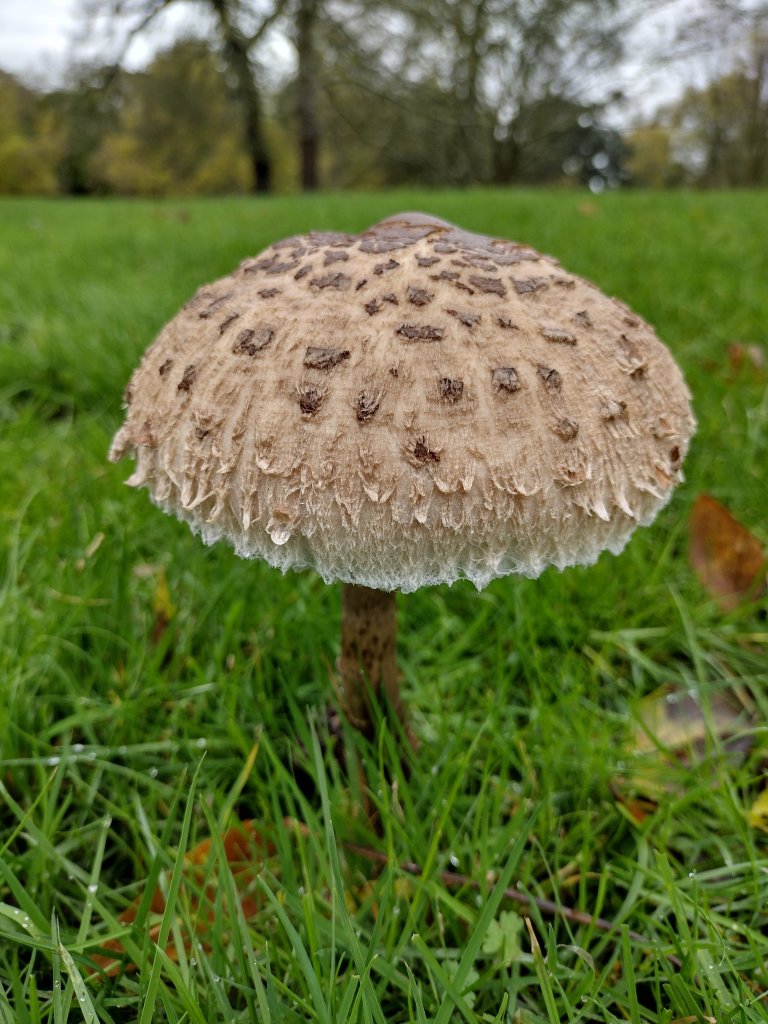

were dotted around the lawns as well as a group of Glistening inkcap (Coprinellus micaceus) on a decaying tree stump.

I think the weather had put many people off visiting which meant the gardens were fairly quiet. Although the odd heavy rain shower arrived while we were there, most of the day was dry and eventually the sun shone before we left, highlighting the vibrant leaves against a grey sky.

This year, I finally got to see a couple of Fly agaric (Amanita muscaria) fungi for the first time if my life (outside of books).

I’d hoped to see these iconic fairytale fungi for a long time. Known for being hallucinogenic these incredibly toxic fungi are usually found in Birch (Betula), Pine (Pinus) and Spruce (Picea) woodlands; however I found them in a garden near a single Birch tree. Fly agaric supply nutrients to nearby trees along the underground mycorrhizal network therefore they have a close association with trees. A traditional use for this poisonous fungus is as an insecticide for house flies due to the Ibotenic acid contained within them (hence the common name for this fungi). Added so a saucer of milk, once a fly drinks the substance it becomes drousy and drowns.
These mushrooms weren’t the only exciting thing I got to observe in recent weeks. My Fishbone cactus (Epiphyllum anguliger) which has lived in my bathroom for many years flowerered for the first time. An epiphytic cacti, originally from Mexican rainforests, this plant develops aerial roots in order to attach itself to host trees. It likes humid indirect light and requires more watering than desert cacti. Clearly the conditions in my bathroom are ideal. The unusual looking flowers (which are produced once the plant is mature) were highy scented, similar to TCP but more floral. They take weeks to develop and once opened only last for a few days before dying off.





 Bee in the Moment