The weather this year continues to be strange. Early October was relatively mild. Buddleias were still flowering and on the 7th, a very sunny day, I saw a Painted lady (Vanessa cardui), a few Red admirals (Vanessa atalanta) and many Comma (Polygonia c-album) butterflies visiting one, together with some Verbena bonariensis. There were lots of bees on these plants as well, along with lots of mining bee activity in lawns too.
Now, a month on, still milder than usual, the clocks have gone back and Samhain/ Halloween has passed. While the autumnal colour has been developing for a short while, leaves have only been falling in great numbers for the passed few weeks. Grass is still being mown although growth is slowing down.
It has been lovely watching the various birds visiting the Rowan tree (Sorbus) outside my flat. Alongside Redwings (Turdus iliacus) there have been a few Blackbirds (Turdus merula), Magpies (Pica pica) and many Starlings (Sturnus vulgaris) eating the berries.
I have also noticed a Winter flowering cherry (Prunus subhirtella Autumnalis) in bloom too.
This small ornamental tree can continue flowering until February if the weather remains mild and gives a wonderful winter interest.
Fungi have been putting on a wonderful show over the past month; some providing a splash of colour to rival the leaves during this transitional period. I noticed Shaggy inkcaps (Coprinus comatus) in late October, followed by many others, including puffballs, Common bonnets (Mycena galericulata) as well as Scarlet waxcap (Hygrocybe coccinea) and Amethyst deceivers (Laccaria amethystina).
This aging Amethyst deceiver has lightened in colour.
The latter, as the common name suggests is a lovely purple colour that fades to lilac as it ages. The caps are typically 1.5 to 5 cm in diameter and height of stem 4-6 cm. This fungi has gills and is commonly found in broadleaf woodlands containing Beech (Fagus) and Oak (Quercus) between June and November. I noticed these under some Copper beech (Fagus sylvatica f. purpurea).
I also found a carpet of Scarlet waxcap on a lawn, unfortunately I didn’t manage to get a good photo of them. However, it was an amazing view, bright red caps with orange gills. Photographs and information on this fungi can be found on the Wild Food UK website here.
Although it’s close to the Summer Solstice, the weather remains very changeable; regularly alternating from sunny to dull and wet. However this is enabling vegetation to thrive. It is lovely to hear birdsong still. One in particular the blackbird (Turdus merula) is a joy to hear, especially in the evening. Sadly Blackbird numbers have reduced in recent years, due to the Usutu virus (increasing because of warmer winters), and the BTO are asking for help with a citizen science survey. If you have a garden and could spend some time recording your local blackbirds then please consider taking part. The link, for more information can be found here.
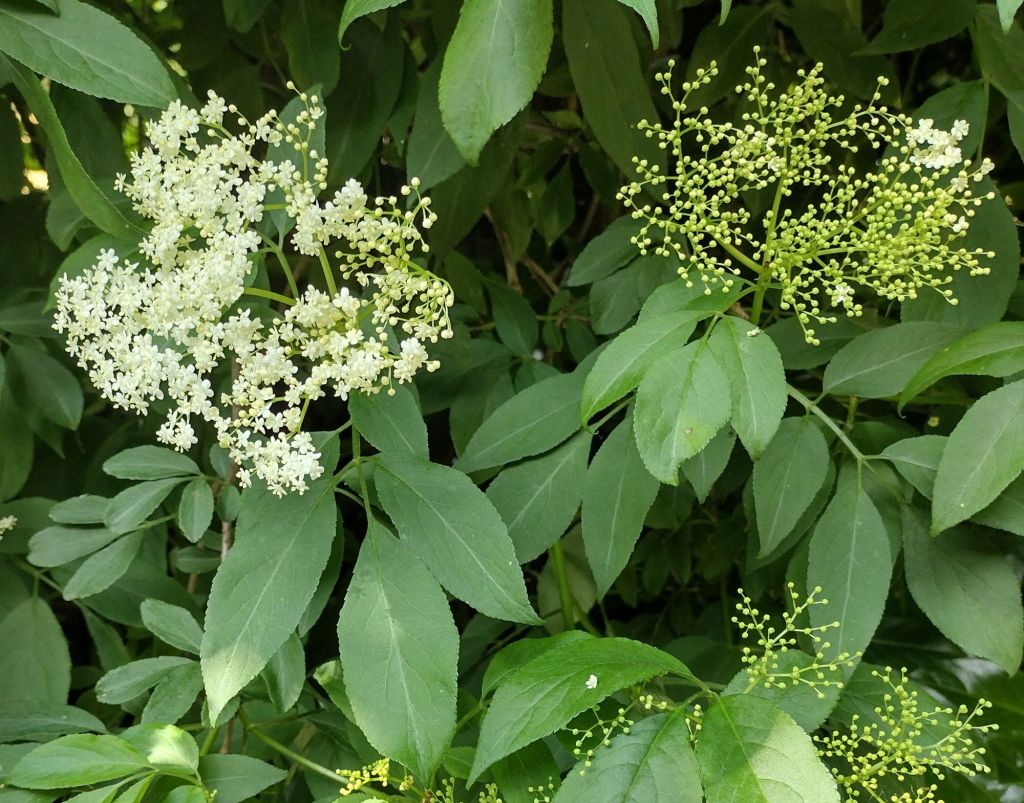
Elder (Sambucus nigra) is flowering now in woodlands, amongst hedgerows and in gardens, taking over from the Hawthorn (Crataegus monogyna).
Elder can thrive for up to 60 years and reach 15 meters in height. It is thought that the common name developed from ‘aeld’ the Anglo-Saxon word for fire as the spongy centre of the branches can be hollowed out, enabling it to be used as a bellow to help ignite fires. As with the Rowan (Sorbus) tree, it was thought that the Elder could ward off evil spirits, along with the devil and witches. It was also believed that breaking or cutting any part of an elder would bring misfortune to the person responsible unless permission was granted from the elder mother (regarded as the witch or guardian within the tree) beforehand. However, the Elder tree is great for foragers. Both the flowers and vitamin c rich berries can be used for making cordials and preserves; although it is important to remember to cook the berries, making them safe, before consuming. Other uses for Elder have included whittling the stem into craft items such as beads, making whistles, using the foliage as a fly repellent in dairies as well as to create dyes. Historically all the dyes for Harris tweed came from the Elder, with each part of the plant resulting in different colours. The berries produced Blues and purples, the leaves created yellow and green while the bark was used to gain the greys and black dyes. Small mammals eat both the flowers and berries whilst birds such as Blackcaps (Sylvia atricapilla), Wood pigeon (Columba palumbus) and Thrushes (Turdus) enjoy the berries which ripen from late summer through to autumn. The flowers are also great for pollinators. Plus the caterpillars of the White-spotted pug (Eupithecia tripunctaria), Swallowtail (Papilionidae), Dot moth (Melanchra persicariae) and Buff ermine moths (Spilarctia luteum) will eat the leaves.
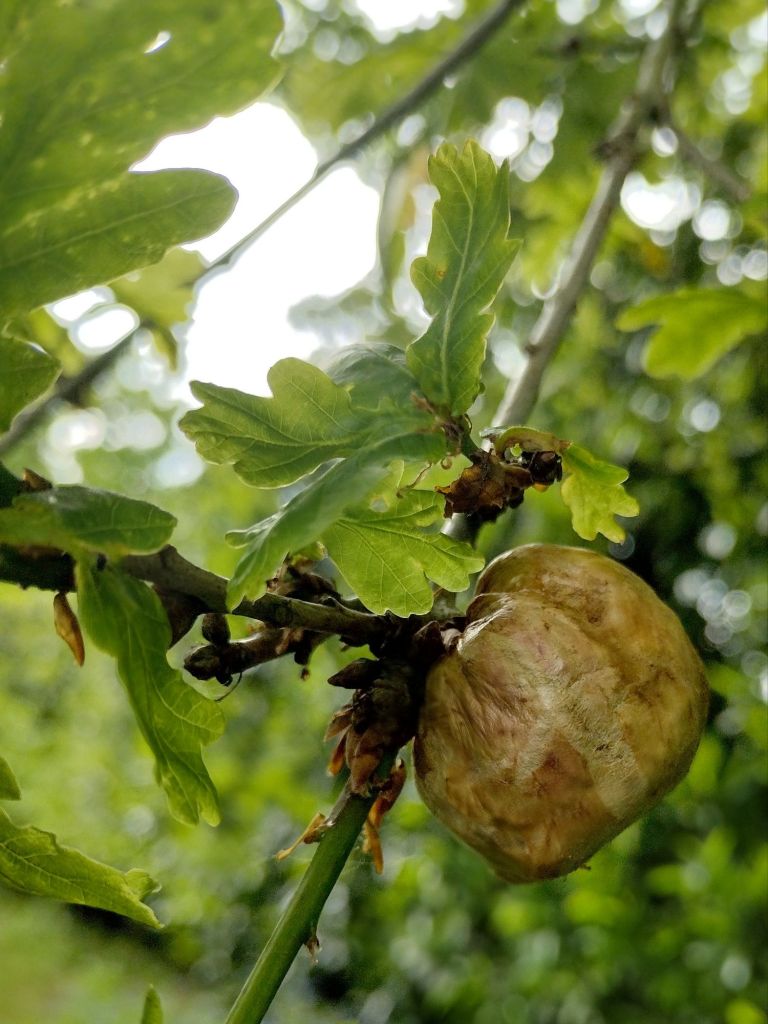
I have noticed a few Oak apples on several oak trees (Quercus) recently.
The growth of galls is a reaction to the Oak apple gall wasp (Biorhiza pallida) laying eggs in the leaf bud. They can reach up to 5cms in diameter and contain wasp larvae in chambers. While the larvae eat the tissue of the host tree, they do little long-term damage so the Oaks remain largely unscathed. The galls can be found in the tree canopy in May and June and the adult wasps will emerge in June and July. It is also possible to have a second generation within the same year with eggs being laid in the ground next to the roots. A picture of the wasp can be found at Naturespot. Once the galls are empty (they will have holes once the wasps have gone) they can be collected and made into oak gall ink. I look forward to giving this a go later in the year. Instructions on how to make this ink can be found here.
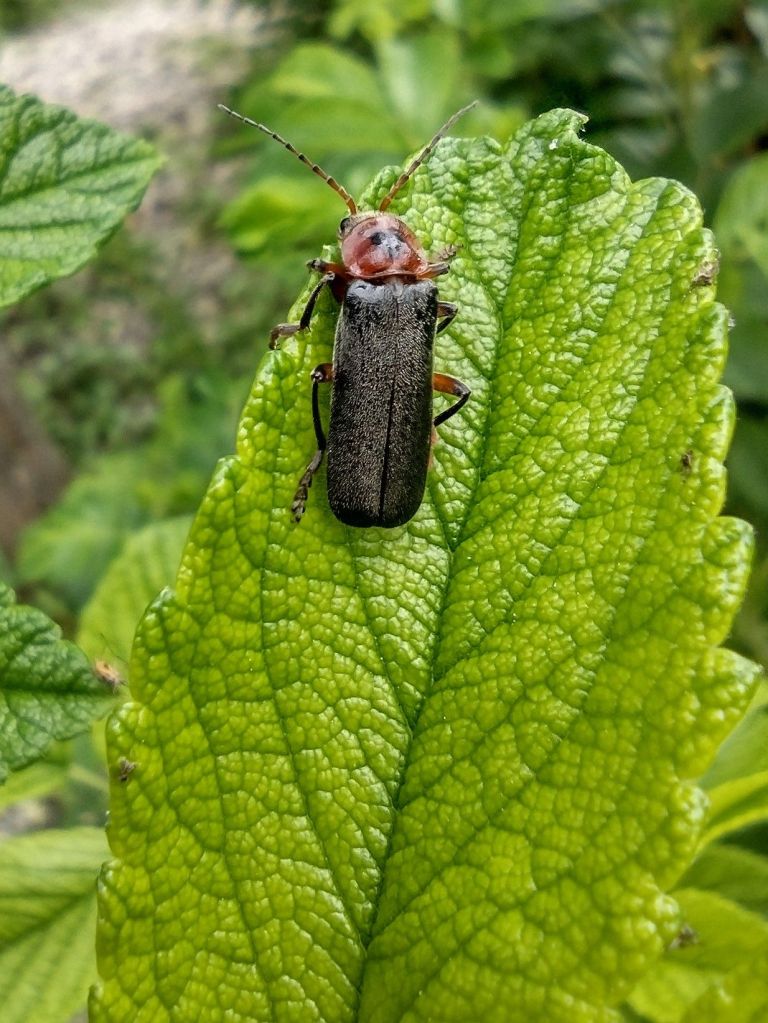
Some insects that I was able to see have been beetles. Unlike those which remain at ground level, some can be found on flowers as they wait for prey; this is where I saw these, a Malachite beetle (Malachius bipustulatus) and a Soldier beetle (Cantharis rustica).
The Malachite beetle is greener (emerald-like except for the red spots) than this photo is able to show, hence the common name given to it.
Malachite beetle adults are about 6mm in length and can be found between April and August. Later in the year they can also be found on tree bark where they lay larvae for the following year.
The soldier beetle is larger (between 9-13mm in length) again they consume other insects.
Black and red in colour, the Cantharis rustica is one of the UKs largest soldier beetles. Snails, worms and other invertebrates are eaten by its larvae, which can be found under rocks and leaf litter throughout winter.
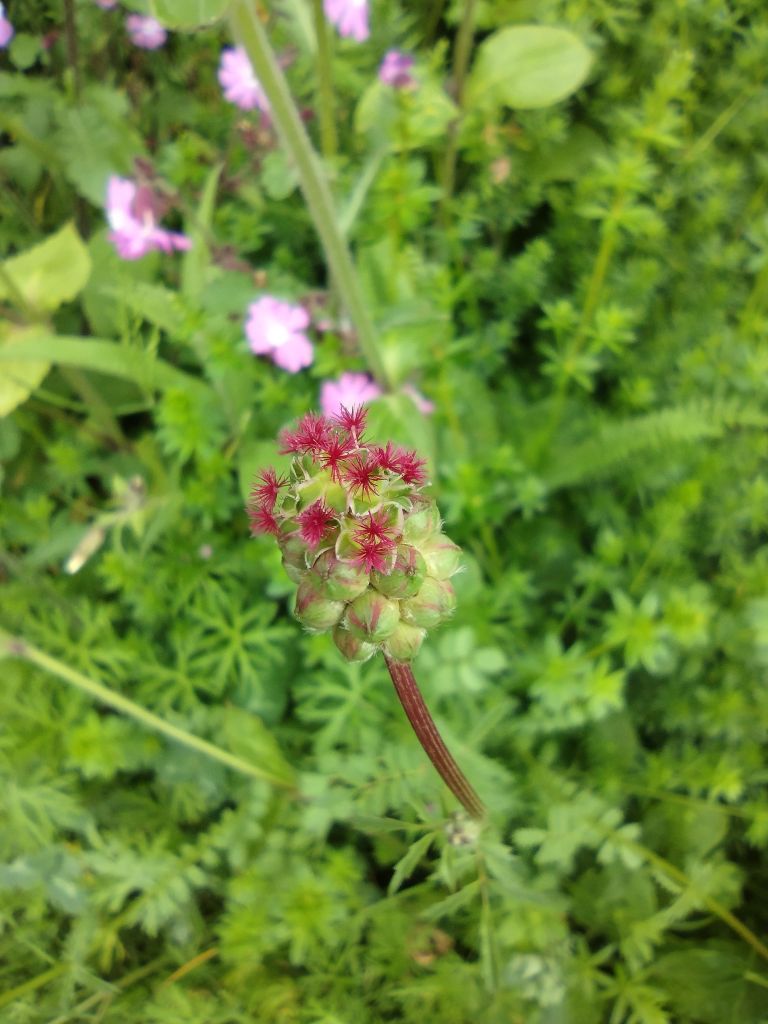
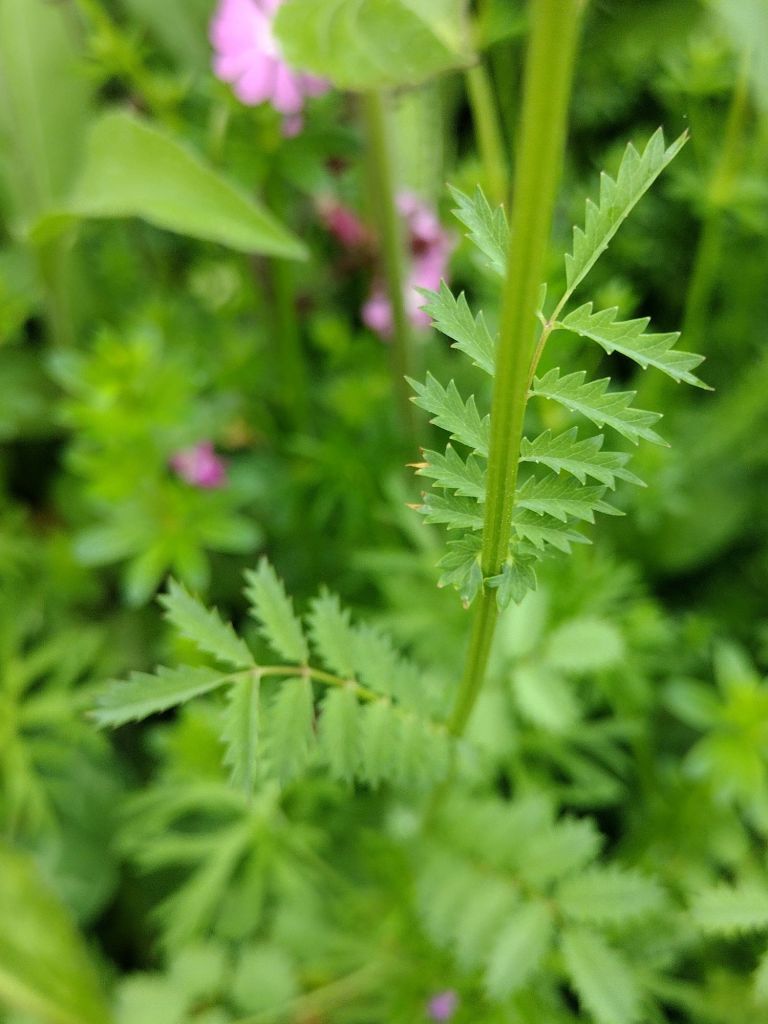
There are lots of flowers blooming now and it is lovely to have the opportunity to learn more about wildflowers. Two new additions to my knowledge are, Salad burnet (Sanguisorba minor)
The delicate red flowers of the Salad burnet.
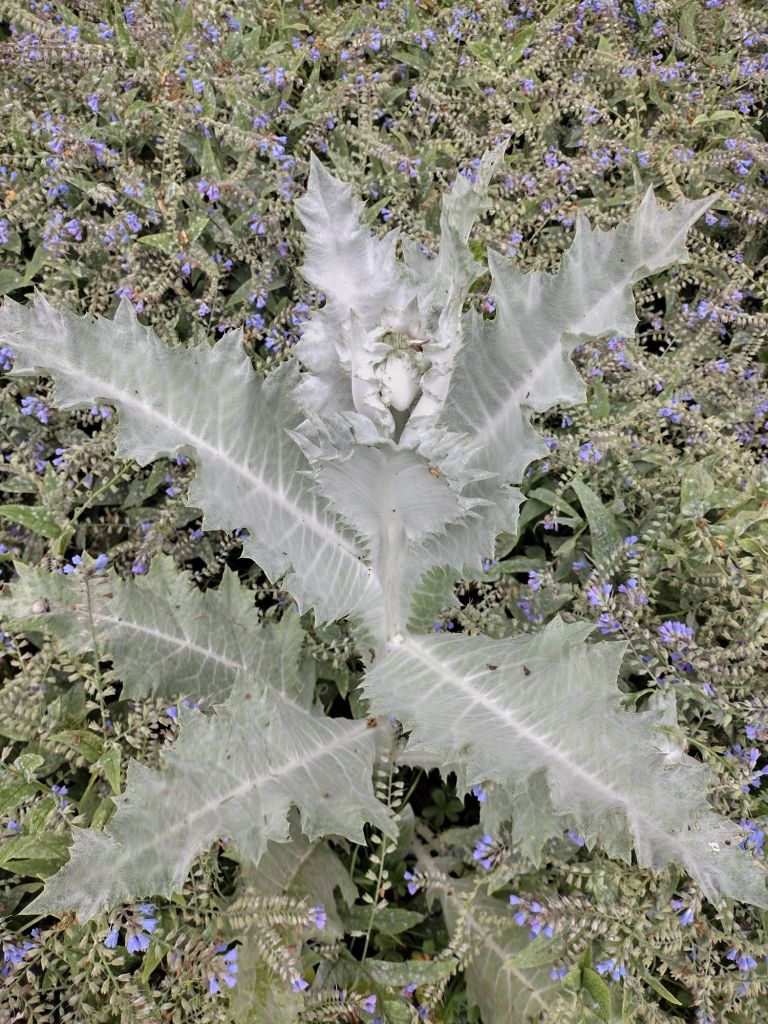
and Cotton thistle (Onopordum acanthium)- see below.
Salad burnet grows on chalky, limestone grassland. Part of the Rosacea family, as the common name suggests, its leaves (which have a cucumber scent when crushed) can be added to salads as well as summer drinks.
A poultice made from the flowerheads can be used to treat wounds as compounds within them can stem bleeding. It can grow up to 50 cms tall and spreads via rhizomes.
The common name of Cotton thistle derives from the hairs on the leaves which resemble cotton. This thistle has many names including the Giant thistle, Silver thistle, Scots thistle as well as Queen Mary’s thistle. Although this plant is often connected to Scotland, the emblem used in Scottish heraldry and the national emblem of Scotland is most likely to be the Spear thistle (Cirsium vulgare). The large silvery foliage of the Cotton thistle makes this wildflower quite striking. A biennial, the growth in the second year can reach up to 3 meters high and the leaves 10-50 cms in width. It particularly enjoys growing in fertile soil in areas that have been disturbed, along with roadsides and fields. Its pinky purple flowers bloom in summer. Some caterpillars like those of the Thistle ermine moth (Myelois circumvoluta) will eat the leaves. Pollinators and Goldfinch (Carduelis carduelis) also visit the flower heads, the latter eating the seeds.
August disappeared quickly and September is zooming by, even the Autumn equinox has been and gone. Apart from the heatwave a few weeks ago (with the highest temperatures of the year being reached) it is beginning to feel autumnal. Fungi has appeared, leaves have started turning, plus nights are drawing in and cooler misty mornings have returned highlighting once hidden spiders and their cobwebs.
Foraging blackberries had begun early this year but the extreme heat meant that the remaining flowers and berries dried up; the same is true of elderberries, although sloes, haws, rosehips and rowan berries are abundant. Unlike last year, apple and pear trees, that I see regularly, have struggled with the weather this year as well. Thankfully harvesting on the allotment is still going strong; potatoes, kale, beetroot, radishes, chillies, courgettes and rhubarb have been keeping us fed. The popping corn will soon be ready too. I have also been harvesting calendula, lavender and other herbs recently.
There has been a few changes on my plot. I had finally collected enough items to be able to construct ‘the bug snug’.
It is an addition to the wildlife section containing wildflowers and long grass (which also links to a pond on the adjoining plot). I know we have a couple of frogs visiting us so hopefully it encourages more to inhabit our allotment (to help keep slug and snail population down). I still hear the grasshopper when we are nearby too. There has also been evidence of a fox visitor; random toys get left near the water I leave out, along with poo on the grassy paths between plots.
Last week I also noticed that the Bee house, at the opposite end of the plot, was finally being used.
I found it hard to contain my excitement as it has been there for a few years and I was beginning to think it would never be used. There is evidence that it has been used by a Leaf-cutter bee and Mason bees too. Although it is difficult to know which ones specifically, the most commonly found in gardens are the Patchwork leaf-cutter bees (Megachile centuncularis) and Red mason bees (Osmia bicornis). As the name suggests Leaf-cutter bees used leaf particles to plug one piece of bamboo while those used by the Mason bees were plugged with soil. Each cell contains larvae as well as some pollen and nectar for the developing young. Male bees fly out before the females as they are near the entrance. The developing bees will remain there over winter and emerge as adults next spring, at the around April.
In other news… While clearing a gravel footpath of wildflowers at work, I accidentally disturbed a Devil’s coach-horse beetle (Staphylinus olens). I stopped weeding that section to enable it to hide for the rest of the day.
Devil’s coach-horse beetle
These beetles can raise their abdomens (resembling a scorpion), release an odour and even bite when they need to defend themselves (thankfully it didn’t feel threatened by my presence). They grow up to 2cms 8mm in length and are commonly found in gardens from April till October (when accidentally disturbed as they are active at night). The young overwinter in the soil as pupae until the following spring when they emerge as adults. The adults can fly but usually quickly run away from danger or to catch prey eating larvae, insects, spiders and slugs.
The Big butterfly count results came out this month. The long term trend of many species of butterfly and daytime flying moths recorded continue to fall, although the numbers were the highest since 2022 (with an average of 12 butterflies being spotted compared to 9 back then). The most commonly recorded were Red admiral (Vanessa atalanta), Gatekeeper (Pyronia tithonus), Small and Large whites (Pieris rapae and Pieris brassicae) as well as Holly blue (Celastrina argiolus). While those which are in significant decline are Ringlet (Aphantopus hyperantus), Common blue (Polyommatus icarus) and Speckled wood (Pararge aegeria). Over the last few days I have seen several Red admirals and even one Speckled wood making the most of the Autumn sun.
Upon visiting the Chiltern Open Air museum on the last bank holiday weekend, we walked through the meadow and woodland that is there. In the woodland, a couple of Silver-washed fritillary (Argynnis paphia) butterflies fluttered in amongst the brambles (the flowers of which give nectar for these fritillaries along with thistle blooms.
Silver-washed Fritillary
There were lots of Dog violets (Viola riviniana) on the woodland floor too, which is the food source for their caterpillars. The wingspan of this butterfly is between 7.2cms and 7cms 6mm. They are found in most areas of the UK (apart from Scotland) and often in oak woodland.
The meadow was full of wildflowers, but it was particularly lovely to see Harebell (Campanula rotundifolia) and Wild basil (Clinopodium vulgare) amongst them.
Harebell
The delicate looking Harebells bloom from late summer into autumn. They can be used as an indicator of dry nutrient poor chalky limestone soil which they require to thrive. Along with dry undisturbed grassland and heathland Harebells will flower in walls, cliffs and even on sand dunes.
Wild basil
Wild basil is a mound forming perennial which also likes the same soil conditions as the Harebell. This wildflower can be seen blooming in July, August and September.
It was lovely to see Tansy (Tanacetum vulgare) growing in the wild too; found in a few areas including near the iron age roundhouse located on the museum grounds.
Tansy
It starts flowering in July through to October. While used as an insect repellent to keep ants and flies away, some insects, especially the Tansy beetle (Chrysolina graminis) are resistant to the toxins produced by the plant. Tansy beetles are endangered in the UK; only found in two places in York along the River Ouse and in Cambridgeshire at the Woodwalton Fen nature reserve. We are at risk of losing this once common beetle due to habitat loss (wetlands), where their entire lifecycle occurs, and loss of suitable food source (mainly Tansy); however in the Fens its been seen eating Water mint (Mentha aquatica) and Gypsywort (Lycopus europaeus) too. It’s conservation status is known to be Nationally Scarce and is a UK BAP priority species that is Protected in the UK under the Wildlife and Countryside Act, 1981. More can be found on this beautiful beetle on the Buglife website (see web pages below), including how to help with its conservation.
Cold weather from the north arrived over the past few weeks. Initially hard frosts covered the earth along with foggy mornings; then snow arrived overnight on the 11th December. Due to the below average temperatures it lasted for a week but once the warmer southern weather and rain arrived (last Sunday) the snow disappeared as quickly as it arrived; It was beautiful while it lasted.
Also I finally caught Covid (after avoiding it until now). Thankfully, apart from leaving me with a cough I am much better, however for a while my world was reduced to watching birds from my flat. The Rowan (Sorbus aucuparia) outside has been stripped of all berries, no doubt the snow last week was a factor as birds had less places to forage and migratory birds arrived. A group of Redwings (Turdus iliacus) visited the tree along with Starlings (Sturnus vulgaris) and also a Song thrush (Turdus philomelos). Further information on Redwings can be found via the RSPB website.
A Song thrush visiting a snowy Rowan tree while berries still hung from it.
It was also nice to see my resident Blue tits (Cyanistes caeruleus) and a Robin (Erithacus rubecula) appear too.
I can’t believe it’s the Winter Solstice already. I am looking forward to taking a few weeks off; I will take the time to relax, reflect and look to the year ahead.
It definitely feels like late summer now. Nights are noticeably drawing in, the sun is lower and my spidey senses have noticed a change in the air too.
The highlights of last week were seeing a Painted Lady (Vanessa cardui) on a Buddleja and noticing the harvests developing.
Autumn, my favourite season, is nearly here. The apples at the allotment are coming along nicely, almost ready to eat, along with the ripening blackberries. Plus hazelnuts and walnuts can be picked soon too.
Rowan berries have ripened now, their beautiful red colour showing through the green foliage. Last Thursday I noticed a female blackbird pick some before flying off with them.
It’s also been lovely to see my resident family of Blue tits on the Rowan tree (Sorbus), as I enjoy breakfast before my days work.
These small moments bring me so much joy and are a fantastic way to begin the day. I am grateful for natures restorative ability. Finding solace in it helps ground me while enabling me to remain in the moment and appreciate the small things. This time of year, when nature starts to slow down, also reminds me to take things more easily too. I do love this time of year. For me, the transition into Autumn, is a time of contemplation and preparation for the future.
I saw contrasting images last week which made me think of feeding birds with plants from the garden.
I first observed the Rowan (Sorbus) tree outside, now stripped bare of it’s berries, before noticing some Cotoneaster
and Ivy (Hedera) full of berries. Clearly the pollinators had been busy during the Summer and Autumn months.
Along with supplementary food, on the ground and bird feeders, birds can also rely on trees and other plants in the garden for food in winter. Along with the examples already mentioned there are other berries, fruit, seeds and nuts which are enjoyed by birds.
Some other plants providing fruit and berries are;
Hawthorn (Crataegus)
Honeysuckle (Lonicera)
Guelder rose (Viburnum opulus)
Dog rose (Rosa canina) Berberis
Bird cherry (Prunus padus)
Crab apple (Malus sylvestris)
Blackthorn (Prunus spinosa) Pyracantha
Sarcococca hookeriana Mahonia
Leaving seedheads on perennials not only provides food for birds, they also give shelter to beneficial insects. In fact a little bit of leaf litter also has this affect which in turn helps feed birds who eat the insects.
Common birds to see in winter include;
Redwings (Turdus iliacus)
Waxwings (Bombycilla)
Starlings (Sturnidae
Blackbirds (Turdus merula
Robins (Erithacus rubecula
Chaffinches (Fringillacoelebs)
Bramblings (Fringilla)
Goldfinches (Carduelis carduelis)
Bullfinches (Pyrrhula pyrrhula)
Dunnocks (Prunella modularis)
Goldcrests (Regulus regulus)
Blue tits (Cyanistescaeruleus)
Long-tailed tits (Aegithaloscaudatus)
Coal tits (Periparus ater)
Great tits (Parus major)
Fieldfares (Turdus pilaris)
The RSPB Big Garden Birdwatch, which takes place on the 25-27th Jan 2020, has been going for over 40 years. Surveying birds visiting your Garden or local park for one hour is calming and enjoyable. This citizen science continues to give the charity useful information on the numbers of birds in the UK.
Further information on feeding birds can be found in the book, ‘RSPB Pocket Bird Feeder Guide’ by Robert Burton (published by Dorking Kindersley) or on the Gardeners World website.
Leaf collection was the main job last week, especially on Wednesday through to Friday. It gets the heart pumping and is physically tiring so I definitely felt like I’d had a workout. There are still more leaves to fall so the process will be repeated for a few more weeks yet. At least it will be great for composts or as leaf mould, as well as my health.
One of my favourite trees is still holding onto its autumn colour.
The Maidenhair tree (Ginkgobiloba) pictured below in its glorious yellow hue.
The common name, Maidenhair tree, comes from the fan shaped leaves resembling the Maidenhair fern foliage. This national tree of China is also referred to as a living fossil. Fossils dating back to the Jurassic period have been found. It is the only remaining tree classified under the Ginkgophyta division (neither broadleaf nor conifer). This unique and beautiful tree is simply amazing.
Other plants giving interest at this time of year include Clematis cirrhosis car purpurescens ‘Freckles’. The delicate drooping flowers appear between November and February. It is a lovely Clematis to grow over a walkway where the flowers can be appreciated from the side as well as underneath (where the freckle pattern hides).
As it flowers early in the year it is categorised as a pruning group 1 Clematis so doesn’t require regular pruning. However if you need to reduce its size then it can be pruned immediately after flowering finishes but when the risk of frosts have passed.
Viburnum tinus is also blooming now. The fragrant flowers will be around until April and followed by blueish black berries that are great for birds. This large shrub is evergreen too so it brings a welcome flourish of colour during the winter months.
Thankfully I managed to relax at the weekend after an exhausting week. I completed my handmade Christmas presents and cards, so I am ready for the festive season. As I sat crafting on the sofa I had a great view of my neighbouring Rowan (Sorbus) tree. The Starlings (Sturnus vulgaris) are getting through the berries quickly; I am not sure there will be any left for the Redwings (Turdus iliacus) when they finally arrive. I do like the iridescent nature of Starling plumage and their ability to mimic sounds so I quite like seeing them. I was excited to see another bird visit the Rowan; my first ever sighting of a Bullfinch (Pyrrhula pyrrhula). Due to the distance my attempt to photograph it isn’t brilliant but you can just about make out its colourful breast in the photo below.
The pinkish breast colouring means it was female (the males have red breasts). She was snacking on the Rowan berries but they also eat seeds, fruit tree buds and find insects for their young.
Other berries eaten by birds are those on the Pyracantha. This week I noticed that lots of Pyracantha plants were overladen with them. Its common name Firethorn is very appropriate and is given because of the heated, itchy reaction when the thorns pierce the skin. I can testify to this every time I have to cut it back.
I am still seeing fungus appearing in gardens too.
*Once again, please do not use this post as a guide to edible mushrooms.*
My latest find was the Pear-shaped or Stump puffball (Lycoperdon pyriforme).
This fungus grows on decaying wood and I found it in a stump.
The autumn colours were glorious last week; particularly the Acers like the Acer dissectum below.
Another tree that I loved seeing was a Tulip tree (Liriodendron tulipfera).
This tree is so called because the flowers look similar to tulips. I have never noticed it flower but I will try to remember to keep an eye out for them next summer.
The recent wet weather has had opposite affects on wildlife. I haven’t seen many pollinators lately but have continued to see lots of fungi. Infact the timing of this wet weather has meant it’s been a bumper year for fungi.
The few pollinators that I have noticed include Common wasps (Vespulavulgaris) on some Ivy (Hedera helix) flowers
and one White tailed bumblebee (Bombus lucorum) on Monday.
I also saw a couple of moths at the end of the week too. The first one was a Winter moth (Operophtera brumata)
and the second one was a Scarce bordered straw (Helicoverpa armigera). The latter moth is a migrant visiting the UK.
I was a little surprised to see some Feverfew (Tanacetumparthenium) still flowering in one garden. I enjoy seeing this daisy like wild flower and like it’s common name Bachelor buttons.
The mushrooms I noticed last week were varied in size and colour.
*Once again, please do not use this post as a guide to edible mushrooms.*
I have managed to identify some but have placed question marks next to those I am unsure of.
The mushrooms I saw last week were;
– the Common puffball (Lycoperdon perlatum).
[The second photo was from a few days later. I noticed that they had matured, ready to release their spores].
-Orange Bonnet (Mycena acicula)
-Purple brittlegill (Russula atropurpurea)
-Turkey tail (Trametes versicolor)
-Lilac bonnet (Mycena pura)?
-Rosy bonnet (Mycena rosea)
-Milking bonnet (Mycenagalopus)?
-Horse mushroom (Agaricusarvensis)?
-and Cortinarius umbrinolens?
The week ended with a brief visit from a Jay (Garrulus glandarius) to the Rowan tree outside my home. I can’t wait to see if I get Redwings (Turdus iliacus) visit soon as well. I usually have a few snacking on the berries each year; hopefully they come before all the berries disappear. The UK conservation status of this thrush is red so it’s always special to see them. Redwings look similar to thrushes but have a splash of red under their wings.





 Bee in the Moment