Posted in nature

Springing Forward

Spring is in full swing now. The Spring equinox has passed, clocks have been changed to welcome in British summer time, april showers often appear (and disappear just as quickly) and the Bluebell (Hyacinthoides non-scripta) season has begun. It has been a while since my last post and a lot has happened since then.
Back in early march, I noticed lots of frogspawn appear, they have since developed into tadpoles and some now resemble small versions of the adults. Male Smooth newts (also called Common newts- Lissotriton vulgaris) were undertaking courtship displays, swishing their tails to waft pheromones towards the females. The video below shows this courtship display; I managed to capture it back on the 7th of march.


Newt eggs are laid individually wrapped in the foliage of aquatic plants and therefore not as obvious as frogspawn. I haven’t noticed any Efts (young newts) yet though but hopefully I will soon.

Hawthorn (Crataegus) blossom has replaced those of Blackthorn (Prunus spinosa) now. Plus alongside the flowering Bluebells, many more spring flowers are currently blooming including, Cuckoo flower (Cardamine pratensis), Lesser stitchwort (Stellaria graminea) and Cow parsley (Anthriscus sylvestris).

Butterflies are more noticeable these days. Recently I have seen Holly blue (Celastrina argiolus), Speckled wood (Pararge aegeria) and Small tortoiseshell (Aglais urticae) butterflies, as well as plenty more Brimstone (Gonepteryx rhamni).

More bee species have emerged over the past month; even the Leafcutter (Megachilidae) bees from the bee hotel on the allotment. Together with Red tailed bumblebees (Bombus lapidarius), Buff tailed bumblebees (Bombus terrestris), a Common carder bumblebee (Bombus pascuorum), and an Ashy mining bee (Andrena cineraria) I also noticed a Tawny Mining Bee (Andrena fulva)- The latter (shown below) was seen carefully exiting a hole on the side of the Wrekin.

I visited the Wrekin in Shropshire last weekend. A woodland surrounds the base of the hill which is quite a contrast from the more open areas at the top. Here Wood sorrel (Oxalis acetosella), an ancient forest indicator, could be seen blooming alongside ferns and moss. It was lovely to see patches of bluebells while listening to water trickling down the hillside (from the previous nights downpour).

Wood sorrel


At the summit of the igneous bedrock, Common heather (Calluna vulgaris) and Bilberry (Vaccinium myrtillus) are seen growing. Both plants grow on nutrient poor acidic soil. The Bilberries (also called Whinberry or Wimberry in Shropshire) were flowering but the edible fruit will be ripe in the summer.

Bilberry shrubs in flower.


It was also wonderful to see a couple of Buzzards (Buteo buteo) soaring and hovering around, ignoring us humans that had completed the ascent.

Lastly, since the Spring equinox, I have been watching the Peregrine falcons (Falco peregrinus) at St Albans cathedral on the live webcam here. Once again the pair have three eggs, the same as last year. Currently we are all waiting to see if they all successfully hatch and fledge. It is far more entertaining than any tv drama.

Posted in nature

A Long Wait

A Tree bumblebee (Bombus hypnorum) resting on a Lime tree (Tilia) leaf.

Often one of the earliest bumblebees to emerge, I thought I wouldn’t notice any Tree bumblebees this year. Colonies of this bee are mostly active from March to July so by now my chances had reduced.

The first record of these bees in this country was in Wiltshire, in 2001. Now they are seen in Scotland (by 2013) and Northern Ireland (in 2017) having become one of the most common eight in the UK (see PDF from the BBCT below); especially making use of bird boxes for their nests.

Early in the year, they forage for nectar and pollen at plants such as Winter heathers (Erica carnea), Pussy willow (Salix caprea), Apple (Malus), Cotoneaster, Ceanothus and Chives. While later on, in early summer, they will favour the flowers of Lime trees, Fuchsias Raspberries and Blackberries

Posted in nature

Delayed April Showers in May

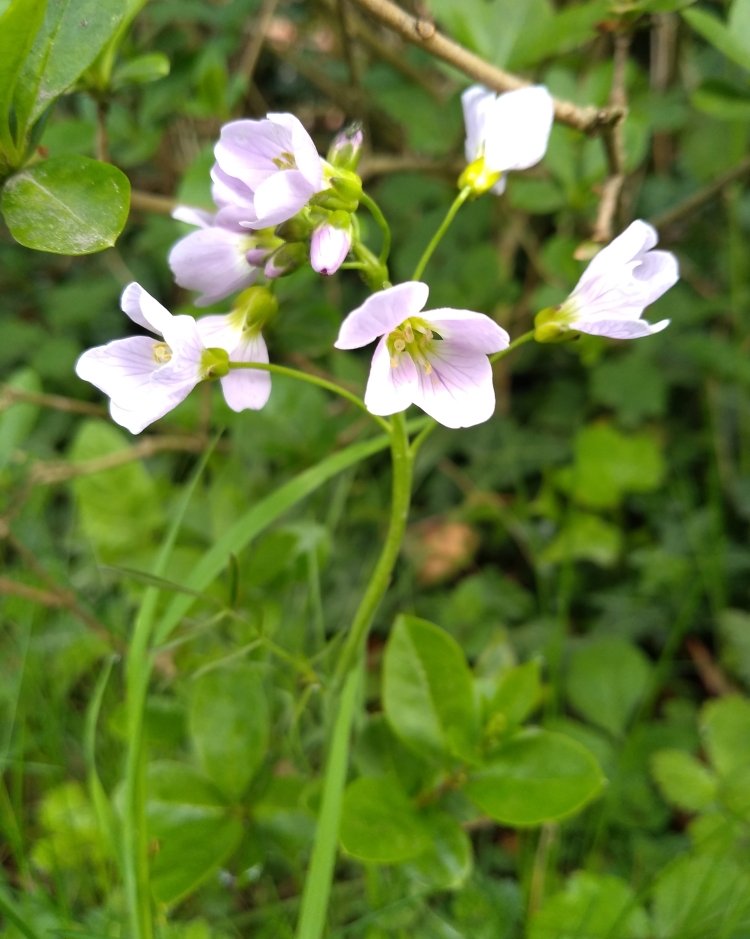
Rain showers continued to fall, reviving the ground at last. Between the downpours I noticed Cuckooflowers (Cardamine pratensis) begin to bloom last week.

So named because it flowers from late April, around the time male Cuckoos (Cuculus canorus) are heard in the UK once the birds return from Africa; signs that spring is well underway.

The last time I heard Cuckoos was in Shropshire many years ago. At the time, I only heard the males call of “cuck-oo’ in the distance. I have never witnessed the females call which can be heard here (Garden birds). I have never seen these birds either; perhaps one day, although their conservation status in the UK remains red (reasons for this is explained by the BTO website).

I love witnessing wildflowers being pollinated; yet more proof that patches of wildflowers are essential for pollinators. Last Sundays walk resulted in such a sighting. As I walked past an area where White dead-nettles (Lamium album) were blooming I became aware of a gentle buzz. A solitary Common Carder Bee (Bombus pascuorum) was visiting the patch of flowers.

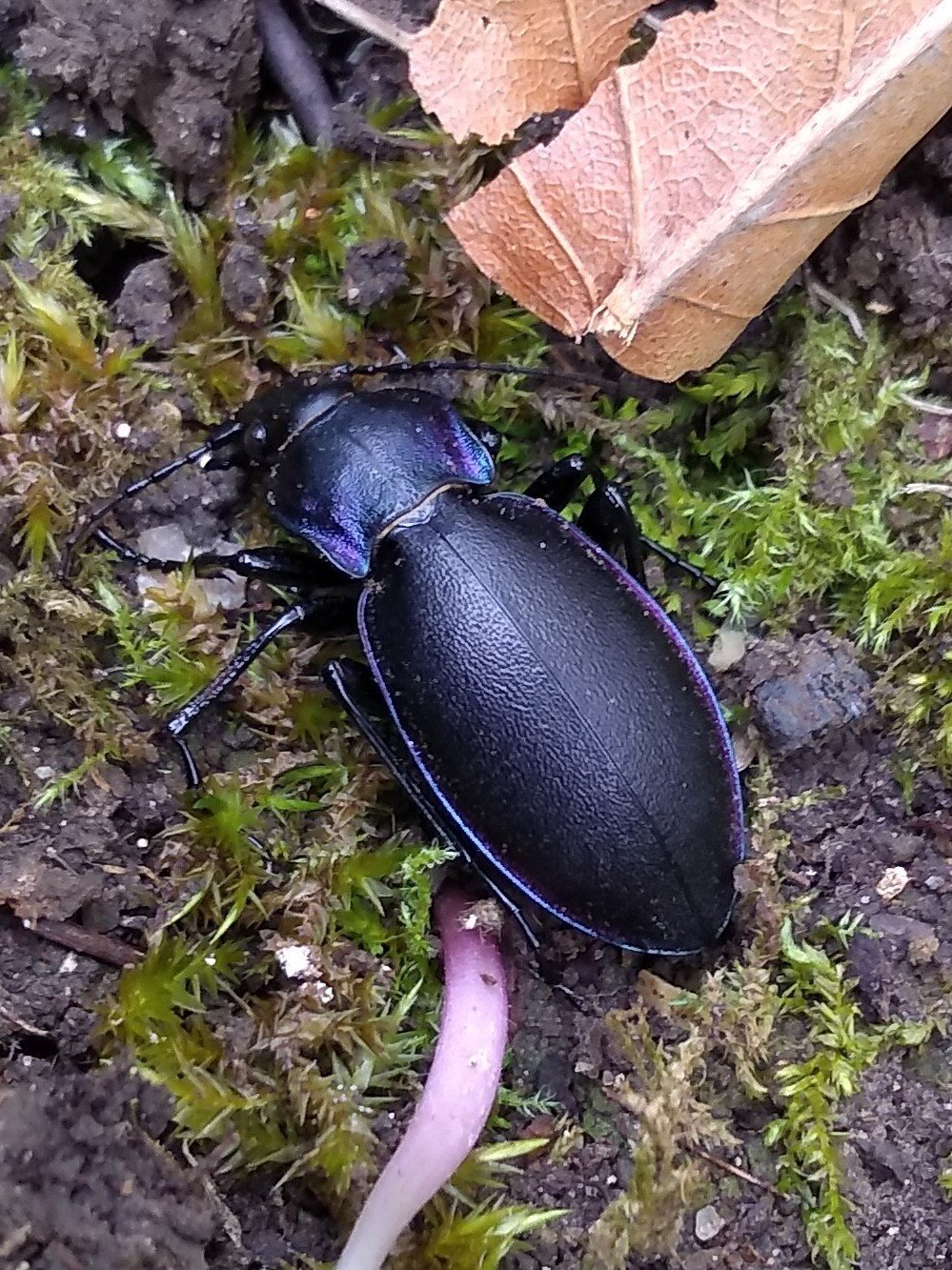
An insect that I became aware of later in the week was a Violet ground beetle. I have never seen one of these beetles before; it was so mesmerising as it glistened in the daylight.

It could have been one of two species of Violet ground beetle, either Carabus violaceus or Carabus problematicus, as they are difficult to tell apart (it’s all down to the amount of dimples and ridges apparently). As both can be found in gardens, if I had to make an educated guess, I would say it was a Carabus violaceus ground beetle (the more common of the two, especially in gardens). The Carabus violaceus can also inhabit farmland and meadows where as Carabus problematicus is predominantly found in woods and heathland.

Active at night, it doesn’t fly but will rely on running fast to capture pray and find shelter if disturbed. During the day, it predominantly hides under logs or stones; however I noticed this one when I moved a clump of soil. I was very conscious of taking its photo as quickly as possible before I covered it up once again. This adult beetle, along with their larvae, feeds on other insects alongside slugs, snail and worms.

Posted in nature

Flowers to Lift the Spirit


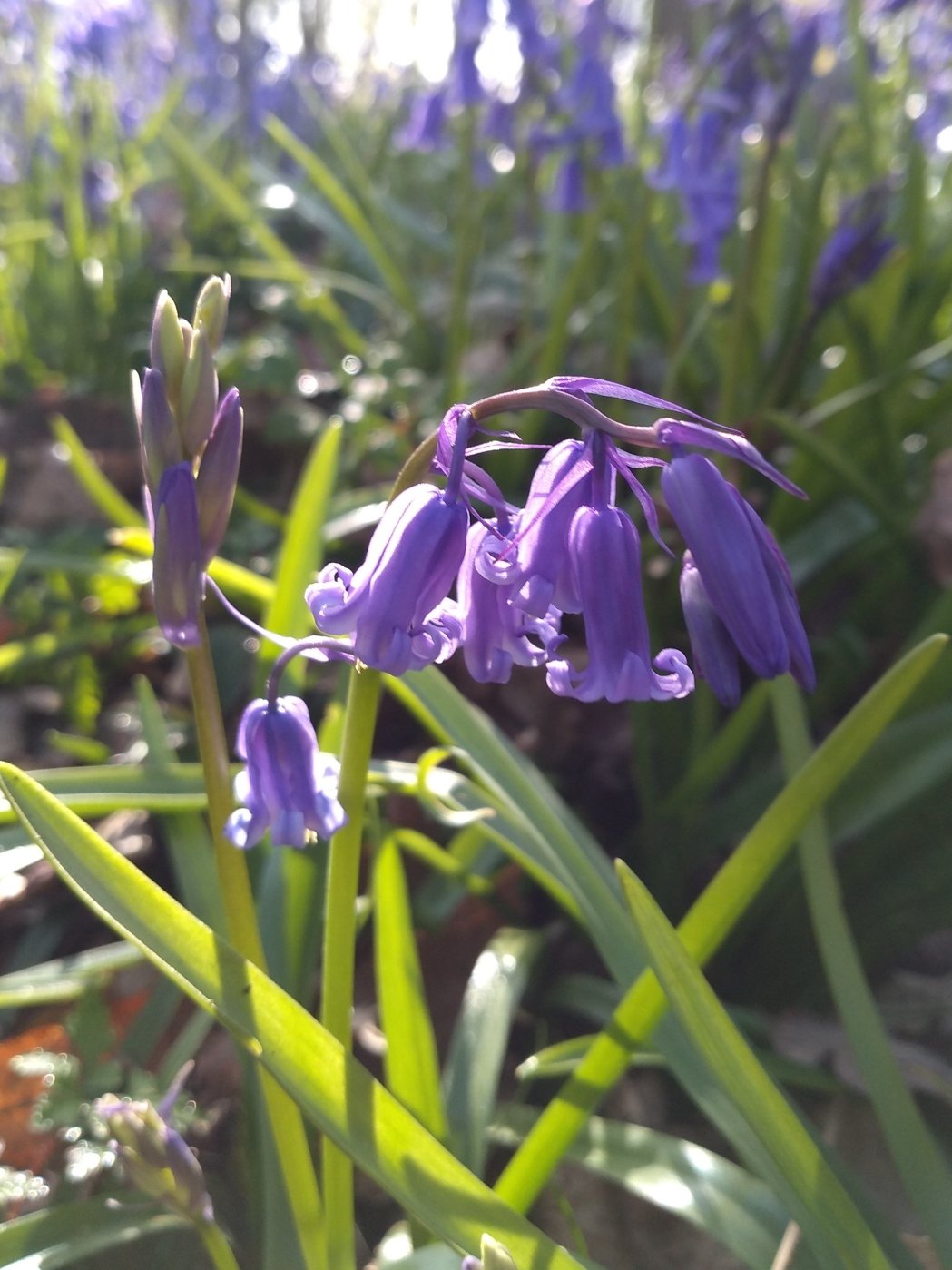
Last week the Bluebells (Hyacinthoides non-scripta) were just beginning to open. I always look forward to seeing these delicate flowers appear; it brings such joy to see their destinctive shade of blue on mass. Although not yet in full bloom, as I knelt down to take photographs I caught their delicate aroma.

Then later the same day, I got my first sighting of a Common carder (Bombus pascuorum) bee of the year, as it took advantage of the apple tree blosom.

I will never tire of hearing birdsong, it’s a wonderful soundtrack to have as I work. Not only is birdsong relaxing to me but it gives me the opportunity to keep learning too. The bird I became most aware of last Tuesday was the Nuthatch (Sitta europaea). Amongst all the birds I could here on that day, this was the clearest (it can be heard here on the RSPB website).

Unfortunately I didn’t get to see it. Having never seen one before I would have loved to see it’s mostly bluish grey and chestnut plumage (with hints white along with a black stripe across the eyes).

Similar in size to a Great tit (Parus major) these birds resemble a small Woodpecker as they climb trees. Nuthatches can be seen clinging to trunks or branches, as they climb up or down headfirst (the only British bird to descend trees in this way). They forage for insects and invertebrates, as well as feast on seeds and nuts (including beechmasts, hazel nuts and acorns) using tree crevices to store food for later. They also bury food and hide it beneath stones.

Nuthatches are found in mixed  broadleaf woodlands, parkland or urban gardens which have sufficient tree cover; occasionally eating from bird feeders. They particularly like areas with mature Oak (Quercus) trees. There was an established Oak nearby where I worked, so perhaps that’s where it was singing from.

They remain close to the nesting site where they fledged and are mostly seen in England and Wales; although their range is expanding into Scotland. Nests are holes in trees such as old Woodpecker nests.


Posted in nature

Garden Treasures

It feels like spiderweb season, the time when they become more prevalent, has arrived. I often get a face full of web when I accidentally walk into hidden ones as I work.

The spider’s web I come across most often is created by the European garden spider (Araneus diadematus). Also called the Diadem spider, Garden cross spider or Crowned orb weaver, due to the pattern on their abdomen and large circular webs they weave.

Males are 9mm in length, smaller than females (which grow to 15mm). Colouration can vary from light to dark brown and even burnt orange.

They are often found in gardens but also inhabit woodlands and meadows. The large orb webs (up to 40cms diameter) become more noticeable at this time of year in strong sunlight, due to the position of the sun, especially when glistening with dew in the mornings.

Those spiders which have survived summer will be mature adults now and start mating when autumn arrives. Males pluck the threads of the female’s web before he approaches, so he isn’t mistaken for food. However this tactic isn’t 100% successful as they can still become prey, even after mating. In late autumn a pregnant female will lay her eggs and spend every second protecting them until she eventually dies. Any adult spider still alive by November will succumb to cold weather.

The young spiderlings will survive winter inside a protective egg sac made of silk, to hatch in May the following year. Repeating the process of feeding on insects caught in webs (after being given a paralysing bite and wrapped in silk for later). They may not be the nation’s favourite garden helpers but they reduce pests and therefore should be treasured just like Ladybirds.

I also learnt a new plant last week. Standing out like a jewel amongst the other perennials was the beautiful Bog sage (Salvia uliginosa).

A Buff-tailed bumblebee (Bombus terrestris) visiting some Bog sage.

As it’s common name suggests this plant grows in damp areas. The one I saw was planted in a herbaceous border that used to be a pond which never completely dries out.

Originally from South American waterways (between Brazil to Argentina) this tall hardy perennial also requires a sunny position to survive. The beautiful blue flowers, loved by bees, bloom between August and October so this plant is a wonderful addition to gardens for extending the pollinating season.

Posted in nature

Song Finally Identified.

For several weeks I have heard lots of male Grasshoppers in the long grass next to my allotment plot. I have been hoping to see one so I can identify them. Finally last Saturday the opportunity arrived. Sitting on some carpet used as a weed suppressor, a Field Grasshopper (Chorthippus brunneus) was seen basking in the sun.

A Common Field Grasshopper (unsuccessfully) attempting to hide behind a stone.

At last I knew which grasshoppers were repeating that soft short chirruping ‘song’. The sound made as the hind legs are rubbed against their wings attracts females. With successful mating approximately 15 eggs are laid and remain in the soil until next year. The nymphs hatch from March onwards and after shedding their skins three or four times become adults in the subsequent summer. This common UK grasshopper feeds on grasses so they won’t go hungry living amongst the overgrown plot.

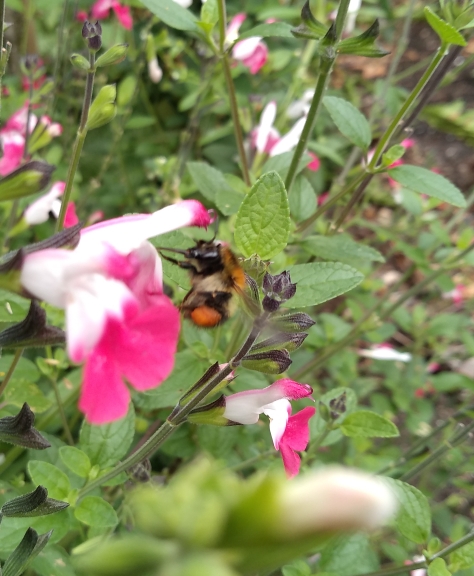
The other amazing thing I saw last week was another bee with spectacular coloured pollen baskets. A Common carder bee (Bombus pascuorum) with orange pollen baskets was visiting a Salvia flower.

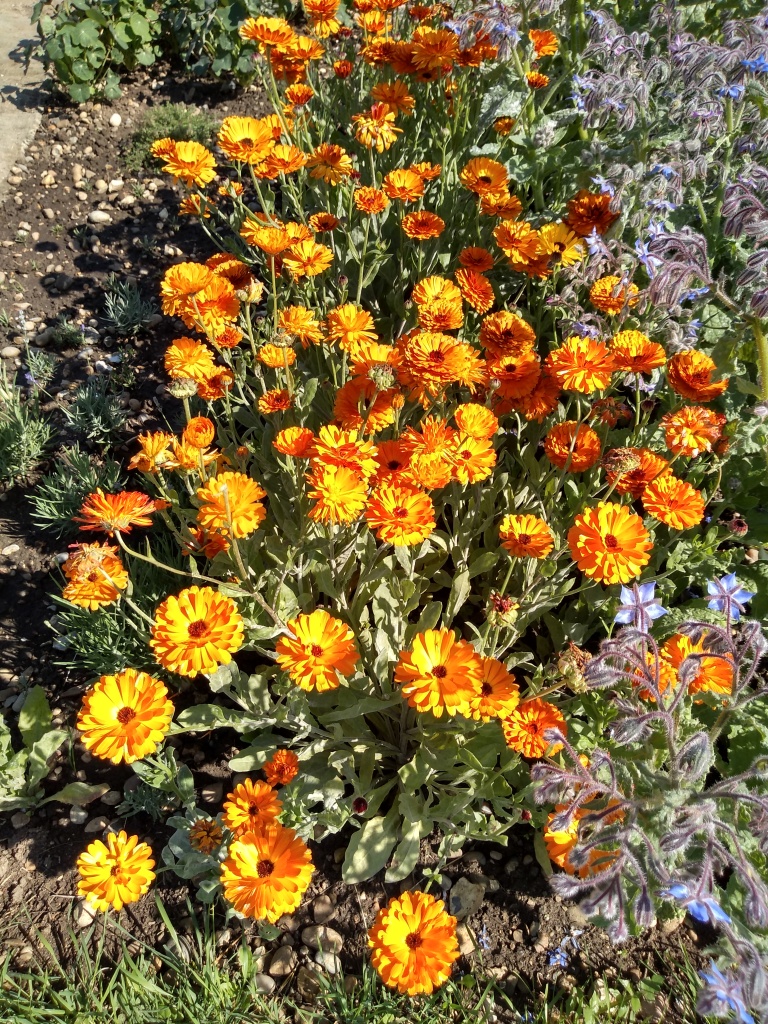
After checking a pollen colour chart, the source of the pollen it had collected was most likely from Calendula officinalis which are in full bloom at the moment (especially on my allotment).

Given the vibrant petals of Calendula I am not surprised that it’s pollen is deep orange. My Calendula is growing next to Borage which has been blooming for a while too. Loved by bees, Borage nectaries refresh every few minutes and the pollen is greyish blue in colour. I look forward to seeing bees with their pollen baskets full of Borage pollen.
Posted in nature

New House Build. 🐝

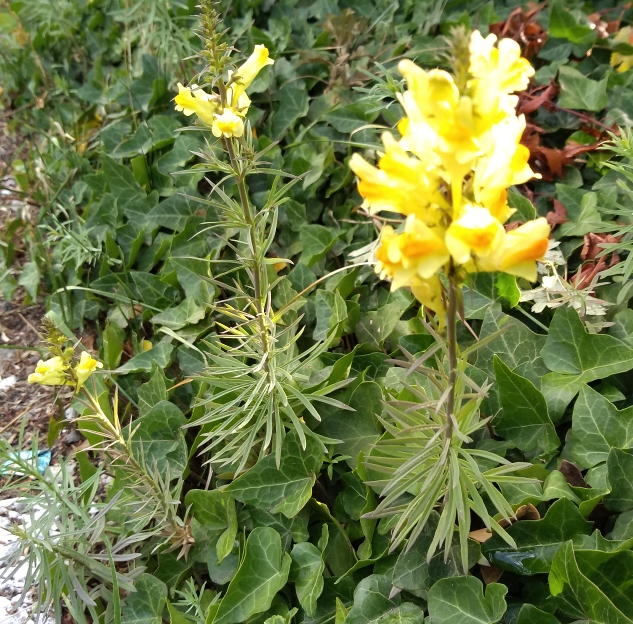
Some fields along my journey to and from work contain a lovely combination of pink Rosebay Willowherb (Chamaenerion angustifolium), purple Buddleia and white Wild carrot (Daucus carota) flowers. Not only do they compliment one another visually but they are all loved by pollinators too. Yellow toadflax (Linaria vulgaris) has started to bloom along the roadside as well.

One special moment occurred on the Monday. As I worked within a border I noticed a Buff-tailed bumblebee (Bombus terrestris) queen flying around a patch of grass. Eventually she began to settle and after a few more large sweeping flights began making a nest in the lawn.

It didn’t take her long to dig into the soil beneath the grass.

She will remain under ground until spring when she will start her own colony.

It was also great to finally get some photos of insects that have have alluded my photographic capture so far this year.

– The first is the Red admiral (Vanessa atalanta),

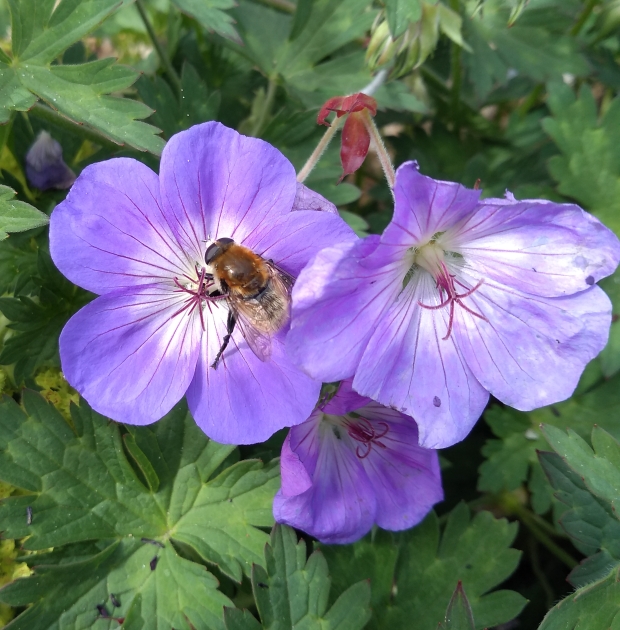
– Some Hoverflies, including a Hornet mimic (Volucella zonaria) hoverfly,

Hornet mimic Hoverfly pollinating Wisteria flowers that were still blooming.
Hoverfly pollinating Geranium flowers.

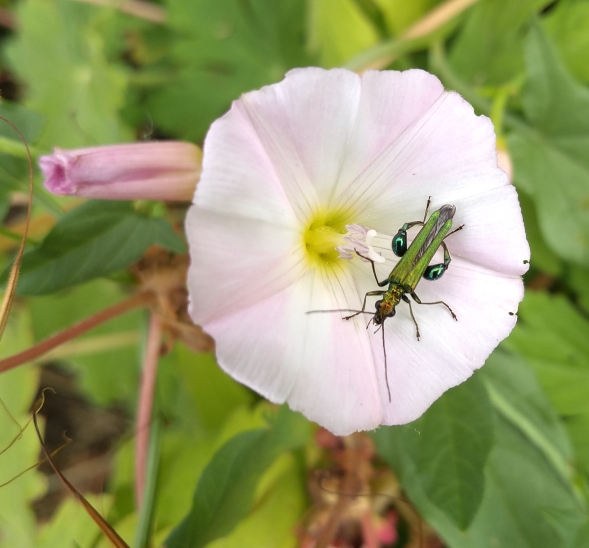
– as well as a Male False oil beetle (Oedemera nobilis), to compliment the female one seen on a walk earlier in the year.

A False oil beetle pollinating a Field bindweed (Convolvulus arvensis) flower.

The males are easily identified due to their large metallic thighs, explaining the reason behind the other common name for this insect the Swollen-thighed beetle.