It definitely feels like late summer now. Nights are noticeably drawing in, the sun is lower and my spidey senses have noticed a change in the air too.
The highlights of last week were seeing a Painted Lady (Vanessa cardui) on a Buddleja and noticing the harvests developing.
Autumn, my favourite season, is nearly here. The apples at the allotment are coming along nicely, almost ready to eat, along with the ripening blackberries. Plus hazelnuts and walnuts can be picked soon too.
Rowan berries have ripened now, their beautiful red colour showing through the green foliage. Last Thursday I noticed a female blackbird pick some before flying off with them.
It’s also been lovely to see my resident family of Blue tits on the Rowan tree (Sorbus), as I enjoy breakfast before my days work.
These small moments bring me so much joy and are a fantastic way to begin the day. I am grateful for natures restorative ability. Finding solace in it helps ground me while enabling me to remain in the moment and appreciate the small things. This time of year, when nature starts to slow down, also reminds me to take things more easily too. I do love this time of year. For me, the transition into Autumn, is a time of contemplation and preparation for the future.
During a particularly difficult week, once again, nature has given me solace. I went on local walks for exercise as well as watch birds from my sofa, while they visited the Rowan tree (Sorbus) next to my flat. Several bird species visited even though it’s mostly stripped of berries now. I noticed bud development on the branches already too.
I have recently spent time catching up on some reading. The first book I read was ‘Witch’s Garden’ by Sandra Lawrence.
This book contains botanical illustrations along with other pictures, including those of specimens from KEW. Folklore as well as natural medicinal properties of fifty well known plants are explored.
One of the plants written about is the Rowan tree. In the past it has been associated with fairies, the Norse God Thor, Goddesses Hebe and Brid as well as St Brigid.
Also known as the Witches tree, traditionally Rowans were believed to offer protection against evil. Other common names for them are Lady of the Mountain, Quicken tree, Wildwood, Whispering tree and probably the most well known Mountain ash. The latter name is due to its ability to thrive in high regions and a similarly in the leaves, however it isn’t actually an Ash (Fraxinus). In fact Rowans are part of the Rosaceae family alongside Apple trees (Malus) Roses (Rosa) and Hawthorn (Crataegus). Just as the haws of the Hawthorn and Rose hips contain vitamin C, Rowan berries are high in this vitamin too. Although all require cooking before they can be eaten they were traditionally used to treat scurvy, sore throats and other ailments, especially during the World War Two.
The second book I read was ‘Back to Nature’ by Chris Packham and Megan McCubbin.
Containing personal stories and factual explanations, this book looks at the importance of nature for humans along with what actions can be undertaken to protect it.
I grew up avidly watching the Really Wild Show and love Springwatch and Autumnwatch. Part of my enjoyment of this book was ‘hearing’ Chris’ voice as I read the parts he’d written. His descriptions contain both urgency and hopefulness. He speaks about various topics from the importance of nature as therapy to wildlife issues that exist at this time.
He also mentions how during lockdown verges sprung into life as wildflowers were allowed to bloom, something that was great for pollinators. Chris talks about the worrying loss by 97% of wildflower meadows since the 1930s, attributing to a decrease in insect numbers. Therefore reversing this by councils allowing verges to grow is great. Yet, having a small wildflower patch in gardens is another achievable action that we can all undertake that will have a big impact on helping wildlife thrive.
Both books are great reads, they are informative and enjoyable; I highly recommend them both.
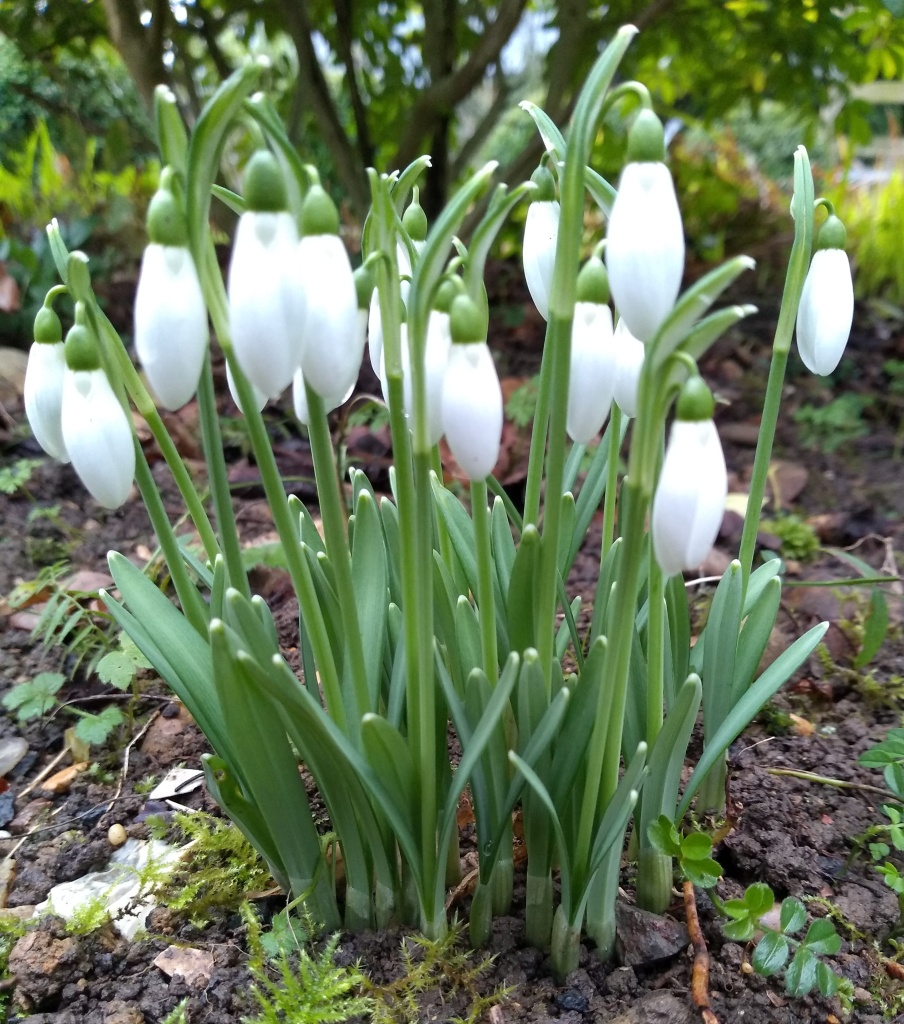
and Winter aconites (Eranthis hyemalis) starting to show themselves.
Robins (Erithacus rubecula) continued to follow me around, in the hope of a tasty meal, as I worked. Plus I noticed a Goldfinch (Carduelis cardueli) sing loudly on top of a fir tree, along with a Jay (Garrulusglandarius) retrieve buried acorns from a lawn.
However trees grabbed most of my attention last week. On Tuesday I noticed some lichen and moss on an old apple tree.
I love the different textures shown here.
Saturday was a glorious day, wonderfully warm in the sunshine. I spent the day in London, enjoying a picnic besides the Thames in Island gardens, under a large London plane tree(Platanus ×acerifolia)
These trees are a hybrid from the American sycamore (Platanus occidentalis) and Oriental Plane (Platanusorientalis). They were first discovered in the 17th century, although it is unlikely that trees from that century still exist. They are commonly found in cities, especially London, as this tree can tolerate pollution and compacted soil. London planes have a beautiful silhouette. Their seed clusters (seen below) hang like balls, remain on branches until spring when they are released and become airborne.
Male flowers are yellow while the female ones, also on the same tree, are red.
A close up of the bark on the trunk.
This camouflage patterned trunk occurs as bark flakes, when the tree grows, revealing newer bark beneath; meaning that pollution captured within it is discarded regularly.




 Bee in the Moment