Posted in nature

Glimpses of Warmer Weather

Last week the sun shone and temperatures increased; in fact some days were unusually warm for the time of year. However, as gardeners will testify, you shouldn’t get too carried away, colder temperatures and frosts (that nip unprotected tender seedlings) can quickly return. It was lovely to see nature basking in the sunshine though (eager to enjoy the moments of glorious weather just like the rest of us) as winter flowering plants are joined by spring blooms and insects, amphibians and birds become more active.

Last week I noticed the dawn chorus begin in earnest. On Wednesday morning I managed to identify ten birds (by sound) when bird calls were heard alongside singing; those birds were Jackdaws (Corvus monedula), Crow (Corvus corone), Robin (Erithacus rubecula), Pigeon (Columba palumbus), Blue tit (Cyanistes caeruleus), Coal tit (Periparus ater), Great spotted Woodpecker (Dendrocopos major), Ring-necked parakeet (Psittacula krameri), Magpies (Pica pica) and Sparrows (Passer domesticus).

I even heard Skylarks (Alauda arvensis) singing throughout the day on several occasions. As these birds are red on the UK conservation status (and therefore protected by The Wildlife and Countryside Act 1981) it is always wonderful to hear these birds located in different places as I worked nearby.

Robins could be seen in pairs, relinquishing their incredibly territorial need to be the only robin within a garden and allowing a mate to feed alongside them. I also saw frogs and newts becoming active in ponds; it won’t be long before we see frogspawn.

At the beginning of the week, there was a gentle buzz of Honey bees (Apis mellifera) around several shrubs; the intoxicating aroma enticing them to feed on the nectar and collect pollen.

A Honeybee enjoying a Mahonia japonica.
A Sarcococca confusa visted by a Honeybee.

Lots of Buff-tailed bumblebee (Bombus terrestris) queens emerged too, taking advantage of all the crocuses and heathers currently in bloom.

The diminutive flowers of Heathers are perfect for the short tongues of Buff-tailed bumblebees.
A Buff-tailed bumblebee asleep in a crocus, presumably exhausted from a days foraging.

Another shrub that started to put on a show were Camellias. Although these are beautiful, they don’t appear to entice wildlife to them.

Frosts can quickly turn flowers brown, however no damage occurs to the plant as a whole.

Wildflower seedlings started too pop up in gardens, although not every seed requires soil. On a weekend walk I saw vivipary in action. Vivipary is the germination of seeds while they are still inside the seedhead rather than when they fall to the ground.

Vivipary occuring within a Teasel (Dipsacus).


The next tree that has begun to bloom is the blackthorn. Buds and flowers appear before leaves unfurl. This is the opposite to Hawthorn which also blossoms slightly later in the year.

Blackthorn (Prunus spinosa) have hermaphrodite flowers that bloom in March and April. The white blossom is a joyful sight in early spring.

Blackthorn are good trees for for wildlife, the flowers providing nectar and pollen for bees at this time of year. The leaves too are a food source for caterpillars of several moths, including the Magpie (Abraxas grossularia), Swallow-tailed (Ourapteryx sambucaria) and Yellow-tailed (Euproctis similis); plus caterpillars of the Black hairstreak (Satyrium pruni) and Brown hairstreak (Thecla betulae) butterflies also feed on the Blackthorn foliage. These trees also feed birds as they feast on the sloes and any hiding insects throughout autumn and winter. Their dense canopy even make great places to nest amongst.

Blackthorn wood, once associated with wands of witches, is used for walking sticks and tool handles because it is hard wearing.

Traditional remedies using blackthorn bark, blossom and sloes were made to aid digestion and rhumatism as well as cleanse the blood. These days sloes are used to flavour gin as well as make wines and preserves.

The trees are under treat from blossom wilt due fungal diseases, as with other fruit trees. They can also get ‘pocket plum’ if infected by the Taphrina pruni fungus which produces galls and causes the sloes to remain small and shriveled.

While many things were eager to get going last week, not everything wanted to wake up. It was sweet to notice a few Seven-spot ladybird (Coccinella septempunctata) still hiding away.

One ladybird tucked up within some poppy foliage.
Another trying to hide inside the stem of a climber.

I can appreciate their wanting to cosy up for a while longer, it’s often how I feel when my alarm goes off.

Posted in nature

🎵It’s Beginning…

… to look a lot like springtime, everywhere you go. 🎶

There are lots of early flowering plants blooming at the moment; spring is definitely in the air.

Daffodils
Birdseye speedwell (Veronica persica)
Crocus tommasinianus
Anemone blanda
Lesser celandine (Ficaria verna)
Hellebores, Crocus tommasinianus, Iris reticulata and Winter aconites (Eranthis hyemalis)
Tete-a-tete and Muscari
Camellia
Iris unguicularis
Posted in nature

Silver Beauties

The Silver birch (Betula pendula) is from the Betulaceae family, just like Hazel (Corylus) and Alder (Alnus), which also have flowers in the form of catkins (see my previous two posts A Snowy Adventure and The Birds and the Trees).

At the moment only the immature male catkins are visible (as they have been since autumn) dangling at the end of tree shoots.

Silhouette of male catkins on the ends of high branches.

Female Catkins develop after the leaves unfurl in spring. They face upwards, are bright green and smaller than the male ones; flowering between April and May. Unlike the fertilized Alder catkins these do not become woody and remain on the tree for seeds to disperse from there. Instead seed dispersal occurs as the female catkins disintegrate and are carried away by the wind as they fall from the tree.

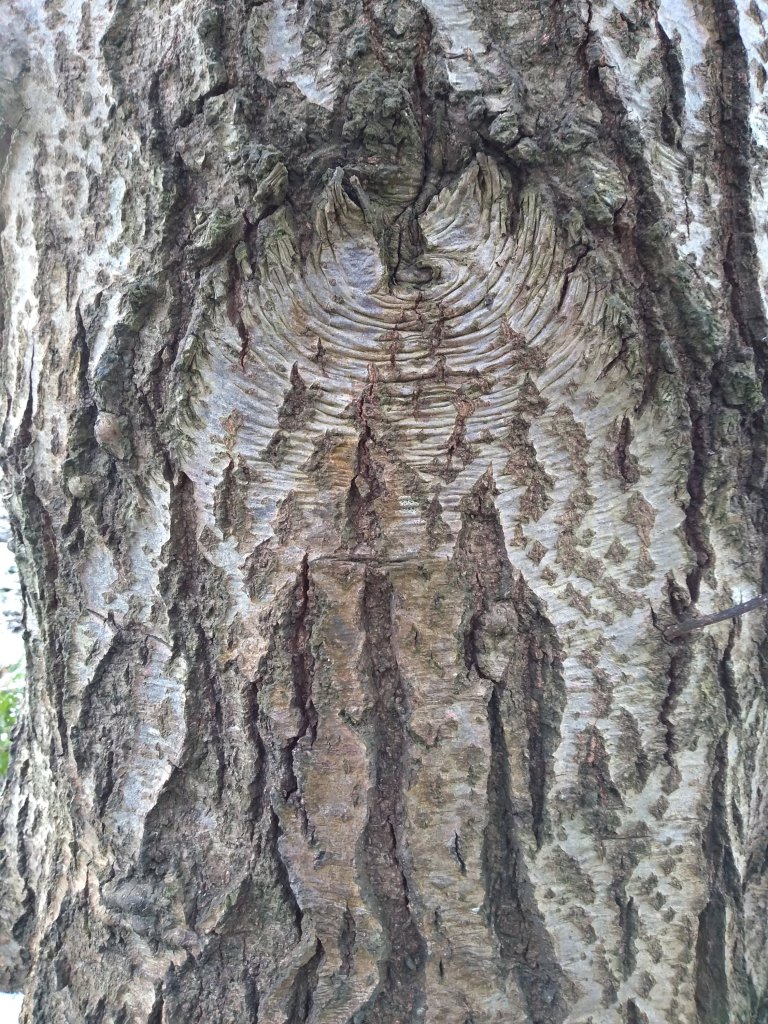
The paper like white bark of the Birch sheds to uncover newer, cleaner bark underneath; plus dark diamond shaped fissures develop as the tree ages.

Fissures developing on the trunk of a Silver birch from my local woodland park.

Two birch trees are native to the UK, the other is the Downy birch (Betula pubescens). It is possible for these to hybridize with one another however individually they can be differentiated. The Downy birch has hairy, single-toothed leaves and hairy shoots (which is how it gets its name); plus the leaf base is rounder. The leaves of the Silver birch are more angular, double toothed around the edges and hairless (the shoots are also hairless). The Downy birch also prefers damper soil than the Silver birch but both are naturally found in woodlands.

The Silver and Downy Birches have open canopies allowing flowers such as violets (Viola), Primrose (Primula vulgaris), Bluebells (Hyacinthoides non-scripta) and Wood anemone (Anemone nemorosa) to florish beneath them. Several fungi are linked with Birch trees too, such as Fly agaric (Amanita muscaria), Woolly milk cap (Lactarius torminosus), Birch milk cap (Lactarius tabidus), Birch brittlegill (Russula betularum), Birch knight (Tricholoma fulvum) and the Birch polypore (Fomitopsis betulina).

These trees can support over 300 insect species. They are a good food source for the caterpillars of Angle-shades (Phlogophora meticulosa), Buff tip (Phalera bucephala), Pebble hook-tip (Drepana falcataria), and Kentish glory (Endromis versicolora) moths. Several Bird species make use of these trees including woodpeckers (Picidae), which nest in the trunks, along with Siskins (Spinus spinus), Greenfinch (Chloris chloris) and Redpolls (Acanthis) that feed on the seeds.

Uses for Birch trees include the manufacture of furniture, handles and toys as well as the process of tanning leather.

In times gone by it was used to make bobbins, spools and reels for the Lancashire cotton industry as well. To the Celts Birches symbolised purity, renewal and love. Later on brooms were made using birch twigs in order to clean rooms. In Finland they are the national tree.

There are several threats to Birch trees, two fungal pathogens (Marssonina betulae and Anisogramma virgultorum) which can cause Birch dieback and eventual death. Bronze birch borer (Agrilus anxius) can also attack native trees.
More information on both can be found on the Forest research website, see the links Birch dieback and Bronze birch borer.

Posted in nature

The Birds and the Trees

On the 31st January, I undertook the RSPBs Big Garden bird watch. Most birds, I’d normally see, were clearly hiding but I did notice some within the hour. Those birds I saw were; 1 Carrion crow (Corvus corone), 2 Robins (Erithacus rubecula), 1 Coal tit (Periparus ater), 1 Blackbird (Turdus merula) and 2 Mistle thrush (Turdus viscivorus). I enjoy taking part in this citizen science project each year; it’s interesting to see how the results differ each time.

Due to the frozen ground last week, I was still able to go for my regular exercise in the local woodland park. Various tree species were waking up from their winter sleep. Beech (Fagus) and Oak (Quercus) had started budding while others were developing catkins.

Last years leaves and new buds on a Beech tree.
Old Oak leaves alongside new buds.

As well as the Hazel (Corylus avellana) other trees had catkins hanging from them too. Hazel catkins are the earliest to flower in the year, from January to March (see my previous post A Snowy Adventure).

Then the Alder (Alnus glutinosa) is the next tree to bloom with both male and female catkins. The male catkins are longer than the female ones which flower from February to March. Also hanging from the Alder trees were some small dark brown shapes. These woody cone-like fruit develop from the previous seasons fertilised female catkins; these can remain on the tree (even when the seeds have been shed) well into the following year alongside the newly formed catkins. I also noticed leaf buds growing on the trees last week too. When the buds burst, I shall update the Woodland trust Nature’s calendar with my findings.

Unfortunately I was unable to capture decent photos on location so I collected part of a fallen branch to take home.

One small female catkin above a group of larger male catkins. On the tree (before fertilisation when they develop into the rounder, woody fruit) the female catkins point upwards while the male ones hang down.
A magnified view of two unfertilised female catkins.
A leaf bud with one of last years fertilised female catkins.
A magnified view of the Alder tree seeds that had remained in last seasons female catkin.

I find Alder trees fascinating and the rough, fissured bark beautiful.

Alder are native to Britain and found on wet land, next to water or in marshes and woodlands. They naturally thrive in moist conditions although can also grow in drier areas such as the edges of mixed woodland. Alder wood is durable when wet and actually becomes stronger rather than rot when submerged in water; a characteristic that makes them useful in flood mitigation, boat building, sluice gates, and even the construction of Venice which is mostly built on Alder piles. Alder wood is also used in the creation of charcoal, gunpowder and making clogs.

The pale wood turns a deep orange colour at the point at which it’s cut (while the rest of the wood remains pale); leading to a superstition, in Ireland, that it was bad luck to walk past an Alder tree on your travels. However, traditionally alder branches were also taken into houses to prevent Woodworm. Alder wood is particularly liked by various species of beetle larvae (collectively referred to as Woodworm). It is hoped that the beetles will lay eggs in the Alder rather than the furniture or fixtures; the branches once infested can then be removed.

There is also a traditional use for Alder flowers as a green dye; believed to be used as camouflage by outlaws like Robin hood and fairies.

For fun, I looked up Alder wands used in the Harry potter series. Only one is mentioned, that owned by Quirinus Quirrell. The wands qualities are described on the Wizarding world website.

The roots of Alder are nitrogen fixers. Nitrogen from the air is fixed into the soil, replenishing the levels and aiding soil fertility, through the bacterium Frankia alni.

As well as improving soil, Alder are great for wildlife too. The seeds are eaten by Redpoll (Acanthis flammea), Siskin (Spinus spinus) and Goldfinch (Carduelis carduelis). The leaves are food for the caterpillars of the Alder kitten (Furcula bicuspis), Pebble hook-tip (Drepana falcataria), Autumn green carpet (Chloroclysta miata) and Blue-bordered carpet (Plemyria rubiginata) moths. Bees visit the catkins for an early source of nectar plus Alders provide habitats for the Checkered skipper (Carterocephalus palaemon) butterfly, Small pearl-bordered fritillary (Boloria selene) butterfly, some species of Crane fly, Otters (which create nests amongst the roots) along with mosses, lichens and fungi that like damp conditions.

However, these trees are also threatened through infection by the Phytophthora fungus (together with some other broadleaf tree species). In Alder this disease is referred to as Alder dieback and eventually causes the death of any infected tree. For more information see the Forest research website. There aren’t many Alders in my local woodland park compared to other tree species so it would be sad to see them disappear. Given my newly acquired knowledge I will keep a special lookout for any ill health in these trees; thankfully no infection is being exhibited at the moment.

Posted in nature

A Snowy Adventure

The previous Sunday brought a little light relief as snow covered most of the UK. My childhood excitement of seeing the snow returned, so the days exercise was a walk through the local woodland park.

As I wondered past trees I began to notice odd glimpses of colour amongst the white and greys. Upon closer inspection I could see catkins already dangling along with female flowers ready to bloom on the Hazel (Corylus avellana) trees.

The male catkins are more showy than the tiny female flowers (which appear at the end of buds and harder to spot).
A very enlarged photo showing the red styles of the female flowers.

I also saw female flowers and cones on several Scots pine (Pinus sylvestris).

A closer view of the female flowers at the end of new shoots.

Surprisingly, given it was still snowing at the time, lots of birds were about too. I saw Redwing (Turdus iliacus), Blue tits (Cyanistes caeruleus), a small group of noisy Long tailed tits (Aegithalos caudatus) as well as a male Chaffinch (Fringilla coelebs) amongst the trees.

Redwings are migratory birds, from Iceland, Scandinavia and even Russia. Named after the red area under the wings, they can be seen in the UK between October and spring.

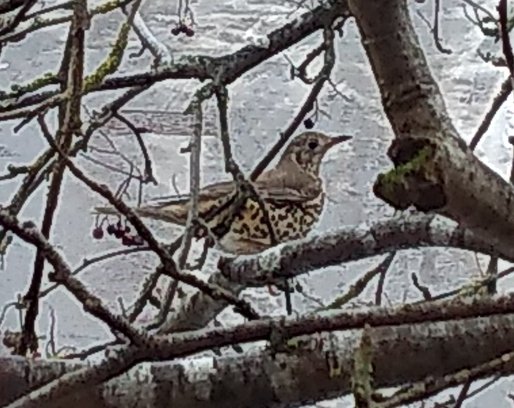
Throughout the week, as the snow slowly disappeared, I saw different birds visiting my Rowan (Sorbus) tree. I had never seen a Mistle thrush (Turdus viscivorus)

or male Chaffinch (Fringilla coelebs) visit the tree before.

Perhaps the reduced availability of food, during the snowy weather, made them search further afield than usual. Thankfully they found the remaining, mostly dried, berries on the Rowan tree outside my window.

Mistle thrush, so named because of their love of eating mistletoe (and guarding trees where it grows) also visit Rowan and Holly (Ilex) trees for their berries as well as eat worms, slugs and insects. They are larger and duller in colour than Song thrush (Turdus philomelos). Their spots are darker and rounder plus they have white tips to their tails. In fact they are larger than Blackbirds (unlike Song thrushes).

Wonderfully, there were even more flowers blooming in the garden too. I saw

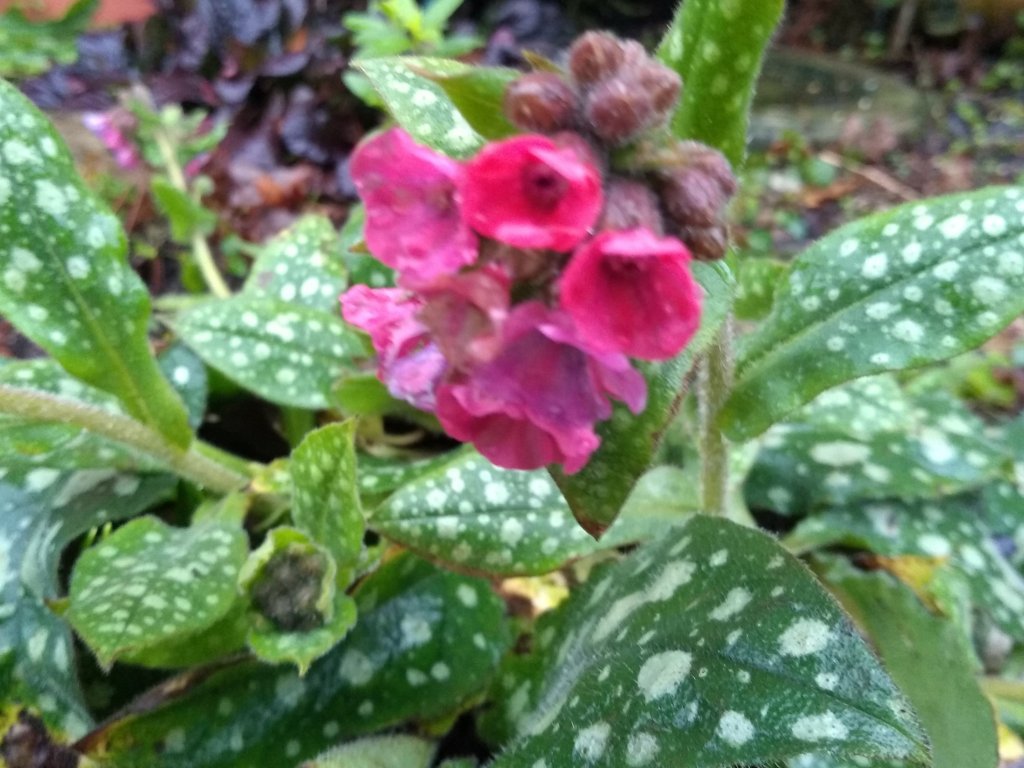
Lungwort (Pulmonaria officinalis),

Crocus and

lots of Cyclamen.

Posted in nature

Early blooms

It was lovely to see some flowers beginning to show themselves last Tuesday.

Wildflowers I noticed as I walked were,

Cow parsley (Anthriscus sylvestris),
Daisies (Bellis perennis),
Red deadnettle (Lamium purpureum),
and White deadnettle (Lamium album).

However I also saw flowers in gardens too. The cultivated plants that were also blooming were

Small white periwinkle (Vinca minor f. alba)
as well as Snowdrops (Galanthus).
Posted in nature

Splashes of Red and Gold

The walk on Sunday 10th January was an adventure, having wondered down a previouly unwalked route.

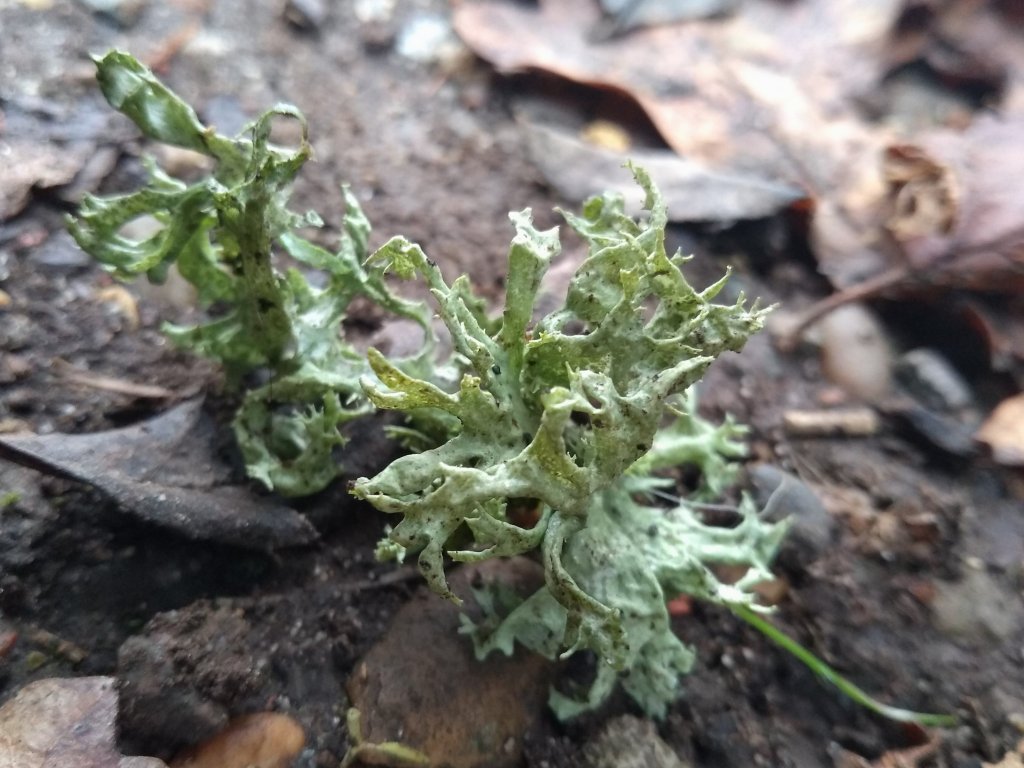
One thing I noticed on the roadside as I walked, was some Oakmoss (Evernia prunastri) which must have fallen from a nearby tree.

Oakmoss

It’s also called Stag lichen, a slightly more appropriate name given that it’s a lichen and looks like a collection of antlers. It isn’t exclusively found on Oaks trees (Quercus) either. Oakmoss can grow on other broadleaf tree species along with conifers. In fact when it grows on conifers it takes on a turpentine aroma rather than a mossy earthy one.

Traditionally Oakmoss is used in the perfume industry, for its earthy scent and fixative properties, as well as in soaps, hair products and pot pourri. Thankfully it is grown commercially for this purpose. A couple of examples in which Oakmoss is used are the perfume Channel No. 19 and Ralph Lauren’s ‘Polo’ aftershave.

Since that Sunday I’ve also had new visitors to the Rowan tree (Sorbus). Most days afterwards I saw five goldfinch (Carduelis carduelis) eat the leftover dried out rowan berries. It was lovely to see the splash of colour these birds provide on gloomy days. 

The best photos I could obtain through a window.
Posted in Allotment, nature

Magic on the Winter Solstice

As a gardener and wildlife lover following the seasons is important to me. I celebrate seasonal festivals throughout the year to acknowledge the importance of nature in my life.

During the winter solstice I take time out to observe the sunrise, reflect on the past twelve months as well as think about the year to come. I also go for a walk to collect greenery for my home and give presents to the local wildlife. This year I planted some Heather and Mahonia for any winter foraging bumblebees and made fat balls for my bird feeder.

I am glad that even in tier 4 I can still go for walks amongst nature and visit my allotment for exercise; for me these are essential for healthy body and mind.

Last week I checked on plant growth on my plot. I currently have seedlings and cuttings safe in a small greenhouse; all remain healthy and continue to grow. I also noticed buds on my fruit trees along with borage still growing in the beds.

On monday I also witnessed a Kestrel (Falco tinnunculus) hover above a road (More information on Kestrels can be found at the RSPB). I don’t get to see these amazingly beautiful birds often enough. It was a magical sight on the longest day of the year which began with me watching the sunrise at Stonehenge (online) while at home and listening to bird song; plenty of positivity on a gloomy day.

Posted in nature

A Rare Visit

Last Sunday five Greenfinch (Chloris chloris) came to visit the Rowan tree outside my flat. Seeing these lovely finches is a rare occurrence for me, I tend to hear their wheezy call rather than see them; although even this isn’t often. The Greenfinch call can be heard on the RSPB website.

Along with Chaffinch (Fringilla coelebs) the greatest decline in bird numbers over the years has been in Greenfinches; due to the parasite Trichomonas gallinae. This parasite was first recorded in the UK in 2005 and believed to be transmitted via bird saliva around food and water sources especially in gardens. Greenfinch are social birds that often rely on garden feeding stations and bird baths. It is incredibly important to keep on top of good hygiene around these areas, if you feed birds, in order to prevent the spread of this parasite. Clean bird feeders, tables and bird baths thoroughly each week and fill little and often is the best strategy to combat it’s spread. For further information see the BBC news report on the Trichomonas gallinae parasite.

On a more positive note from last week, it was lovely to hear the occasional gentle buzzing of a Buff-tailed bumblebee (Bombus terrestris) around Mahonia japonicas which are currently blooming; it is such a relaxing sound.

Unfortunately the bee was camera shy.

This plant is great for bumblebees and will flower well into spring. If like me, you prefer not to have spiky plants in your garden then there is a Mahonia for you. Mahonia eurybracteata subsp. ganpinensis ‘Soft Caress’ (see the RHS website) is smaller than Mahonia japonica and as the name suggests can be handled without risk of skin being punctured. Along with Heathers (see my post from 18th November this year What Present Would you Buy for Bees?) this plant is on my list of must buys.

Posted in nature

Gardens and Nature Never Sleep

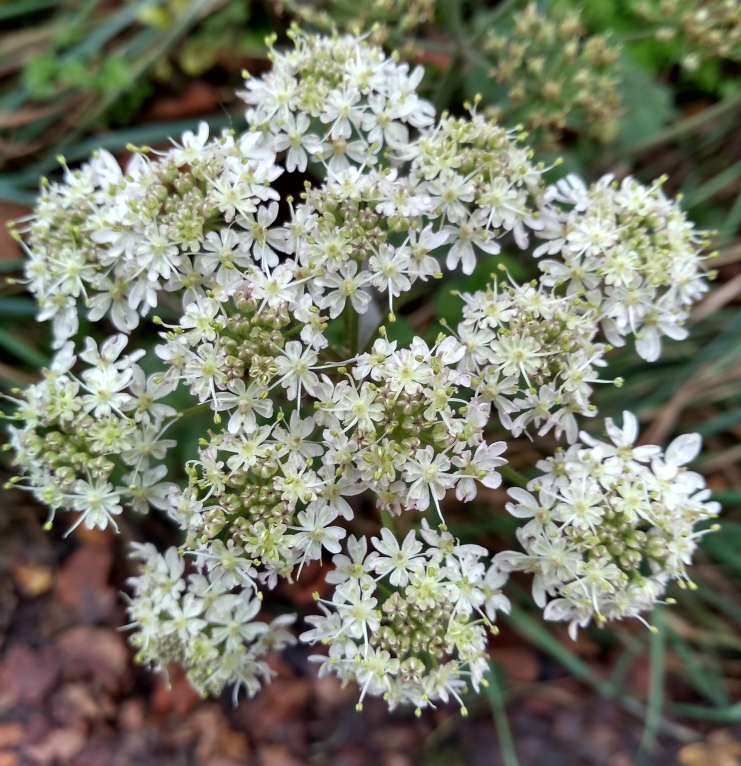
It is always nice to see flowers begin to bloom while others, that have performed throughout the year, wain. On one walk last week I came across a patch of Common Hogweed (Heracleum sphondylium) flowering.

It usually blooms between June and September so it must have been having one last flourish.
Common hogweed is from the same plant family as Ground elder (Aegopodium podagraria) and Cow parsley (Anthriscus sylvestris). All three native umbellifer plants are great for pollinators like hoverflies, Soldier beetles, some butterflies along with short-tongued bees, because these insects need flat flowers in order to gain access to pollen and nectar. Common hogweed is a tall wildflower growing up to six feet in damp conditions along waysides, open woodland, next to riverbanks and amongst rough grassland. It is also called Cow parsnip and had some other interesting names in the past, including Limberscrimps (in Cornwall), Wippul-Squip (Northamptonshire), Cowbumble (gloucestershire).

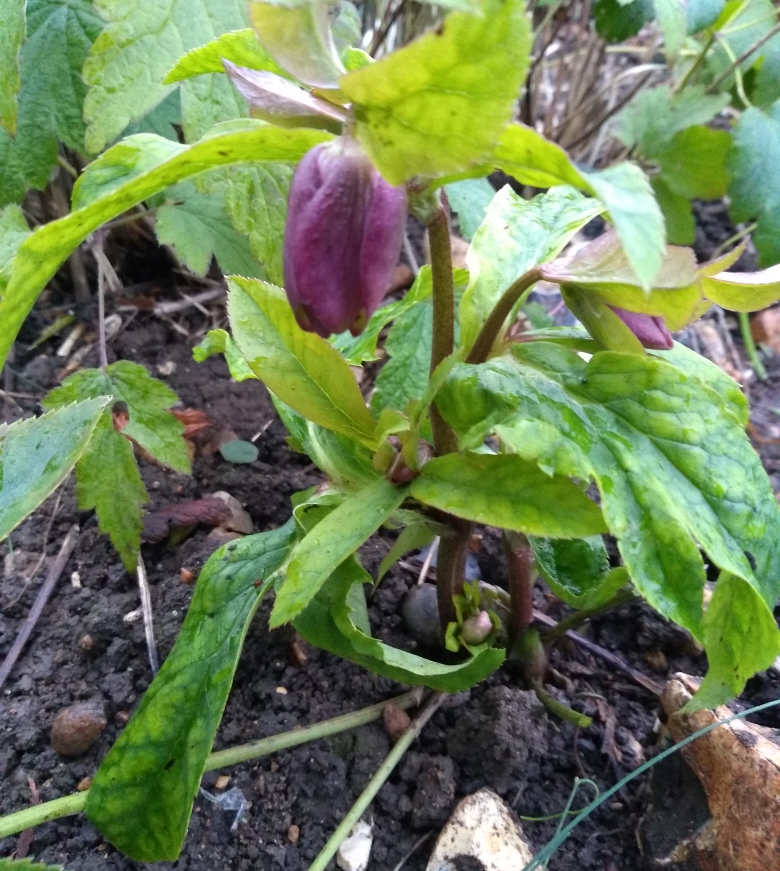
Gardens also continue to show signs of life at this time. The phrase ‘putting gardens to bed’ in winter is often a misnomer and rarely happens. They are never entirely in hibernation as something is usually awake, even if it is only visiting birds. Plus winter or spring flowering plants begin to bloom and grow now. Last week I noticed Hellebores starting to flower

along with Snowdrops (Galanthus)

and Daffodils (Narcissus)

peaking through the soil.

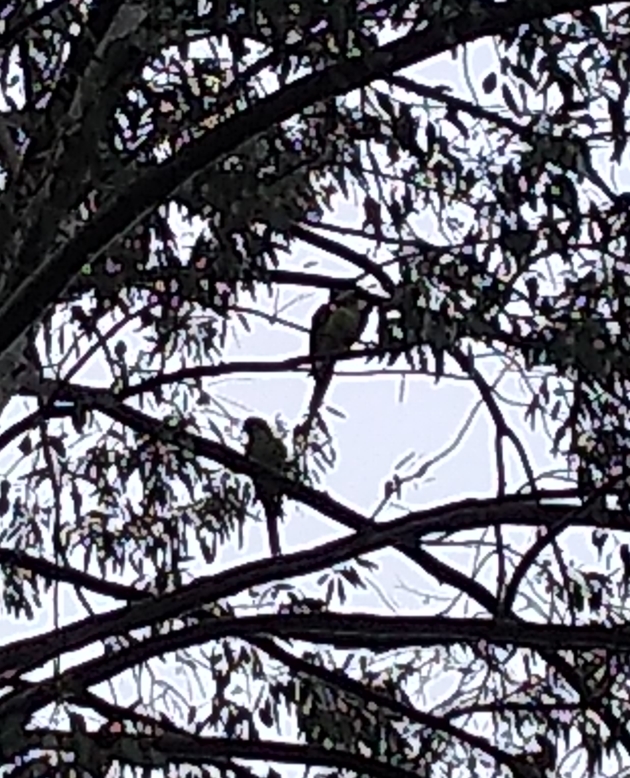
A bird that is easier to see these days are Ring-necked parakeets (Psittacula krameri). They were particularly prominent in one garden I worked at last week where a group kept flying between several trees, before eventually settling within a Eucalyptus tree.

Two parakeets silhouetted in a Eucalyptus tree.

These birds and trees were introduced into this country from warmer areas of the world, yet both species can cope with the colder uk climate.

The evergreen Eucalyptus tree leaves are a bluish green colour when mature. Eucalyptus oil is obtained from the mature leaves, known for its antiseptic properties together with a distinctive aroma.  Immature leaves are more rounded and a bluish shade. The tree flowers from July to October and are especially liked by bees and other pollinators.

Ring-necked parakeets (Psittacula krameri) are parrots that originated from Asia. The history of their introduction to the UK is explained by the RSPB here.

These birds have successfully breeded in this country for years to become a familiar sight in the south-east, particularly urban areas of Hertfordshire, Kent, Surrey and Sussex; their range extending further and further from London. Although they can be observed (and more often heard) throughout the year winter, when the trees are bare, is the best time to see them perched upon branches; unless you are lucky enough to have them visiting bird tables in your garden. They eat a variety of food, having developed an omnivorous diet as they naturalised over here (even though they remain vegetarian in Asia). While they usually eat seeds, fruit, nuts and berries they have been known to feast on scraps left out, including meat scraps. In fact it’s believed they can survive UK winters because they feed from bird tables.

Ring-necked parakeets are very social and can be seen in large flocks containing hundreds of birds. This can make them very noisy and therefore a nuisance in some peoples eyes. Yet whatever your opinion on these birds there is no denying their beautiful colours which seem to become more vivid at this time of year. Even on bleak days beauty exists; sometimes you just have to amend your focus to see it.